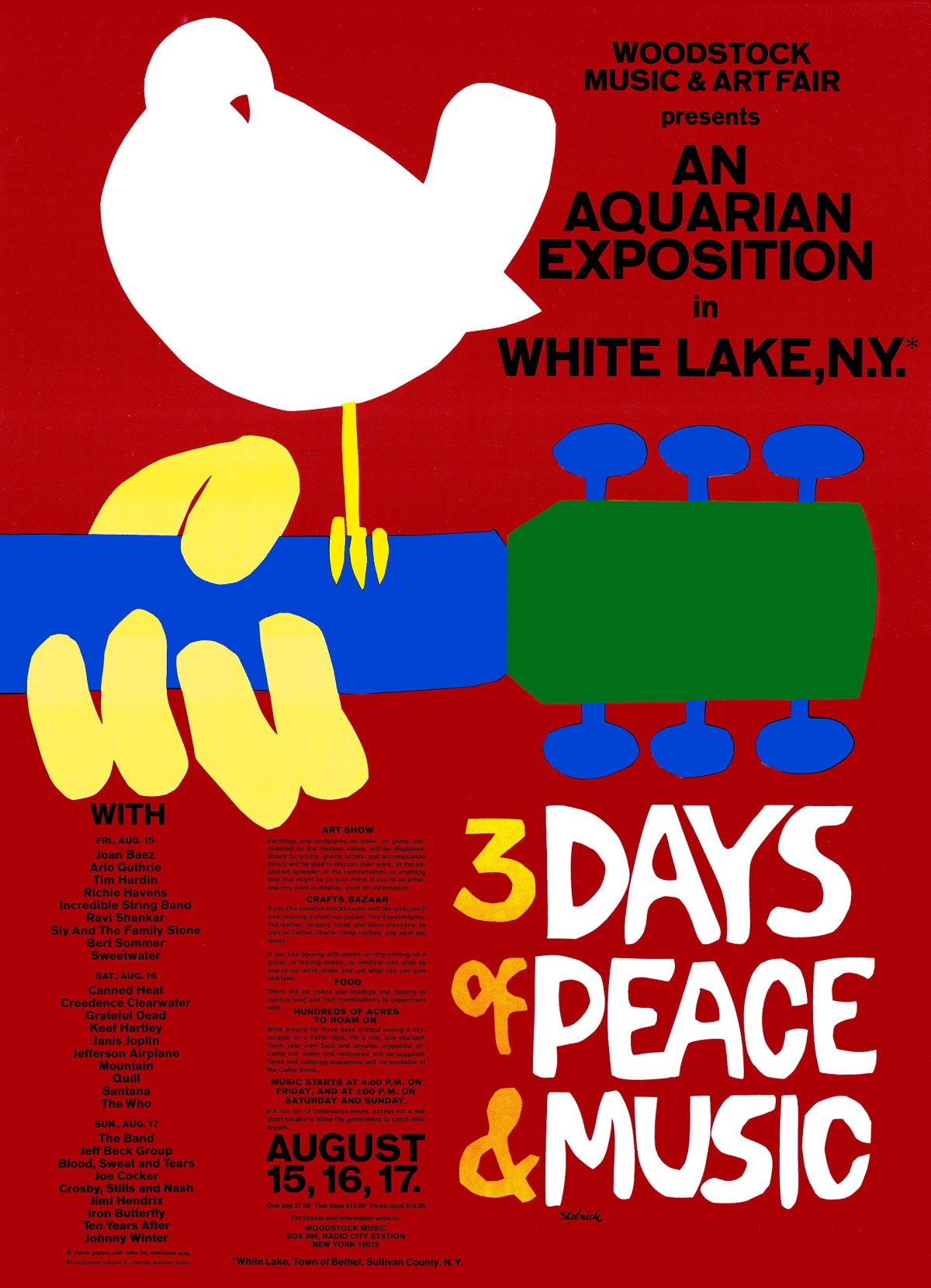
Even though I wasn’t there then, it felt like I was. Woodstock was the kind of event that is seared in your memory, even for those who only heard about what happened later. I’ll always wonder what it would have been like to be part of it.
Recently, I was with an old high school friend, George Kachoogian, who had managed to make it there. But, like so many, he had mostly forgotten everything that happened. We were here at Bethel Woods now to trace back four days, August (15-18), 1969. That was 57 years ago, but reminiscing about it made it seem like it was yesterday.
I’m going down to Yasgur’s Farm
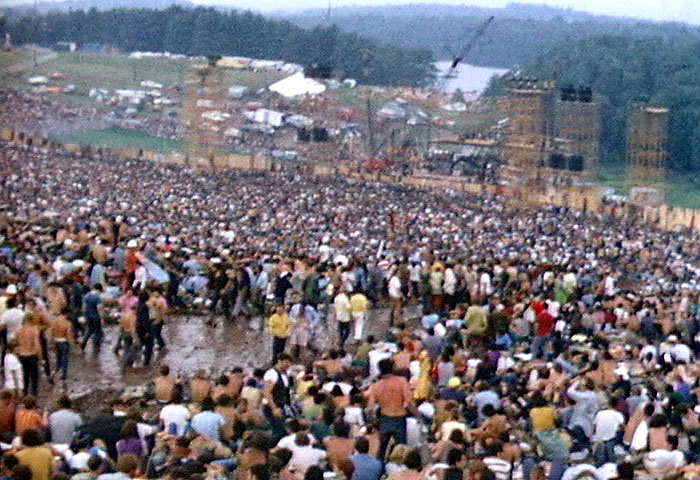
Photo Source: Derek Redmond and Paul Campbell, Wikimedia Commons
Bethel Woods is the current name of the location where the actual Woodstock Music Festival took place. The story goes that the plan was originally set for an area near Woodstock, NY, but permits were cancelled. The promoters scrambled for a new venue and eventually found a willing landowner in Max Yasgur. His dairy farm in Bethel, NY, about an hour south, was within driving distance of New York City. Although there had been other outdoor concert events at the time, this was to be the biggest by far with 32 of the top acts spread over three days. Organically, word got out and spread like wildfire. To everyone’s surprise an estimated 400,000 to 500,000 showed up at the single largest musical event then and even today.
By the time we got to Woodstock
George called me that Friday in August 1969 with a surprise. Would I like to join him and his friends on a trip to this big concert that the DJs were talking about on FM radio? He had sent for tickets that never arrived, but decided to go anyway. I, unfortunately, had made other plans and turned down his offer.
Word got out about incredible traffic jams and huge crowds that were storming the gates. It quickly seemed like no one actually paid to attend and everyone was welcome. I was left wondering if I really missed something special. We would not really know what happened until days later. At that time news traveled slowly with no mobile phones and little news coverage. Imagine trying to call home with just a few pay phone available for thousands.
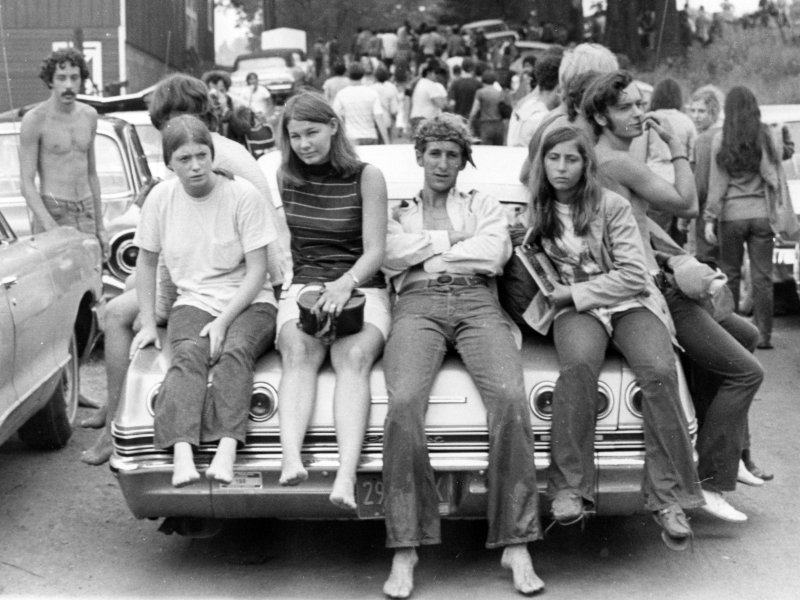
Photo by Ric Manning via Wikimedia Commons
George and his friends became part of the traffic jam, abandoned their car and walked to the concert venue. They would pitch a tent somewhere nearby and camp there for the next couple days.
Back to the garden
Today, we were here at the Museum at Bethel Woods, a shrine to Woodstock to explore. Maybe, we could even locate where George and his crew “crashed” for a couple days!
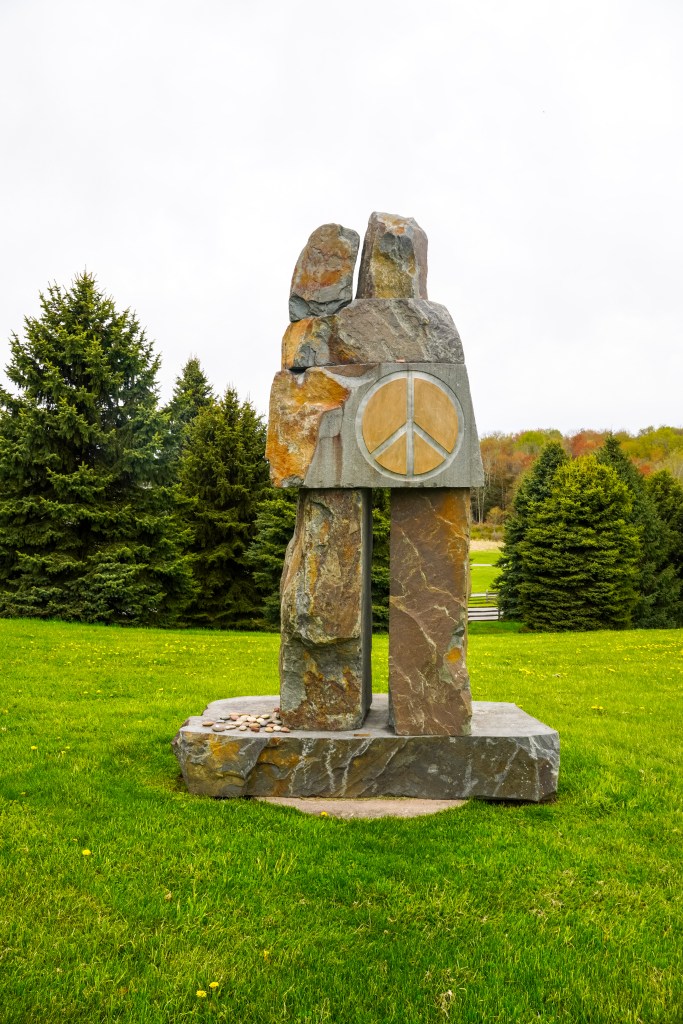
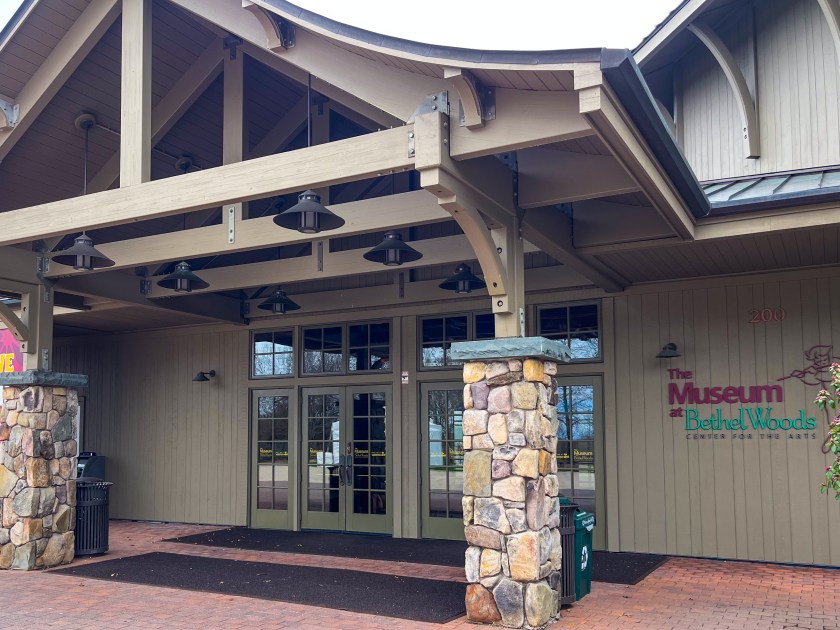
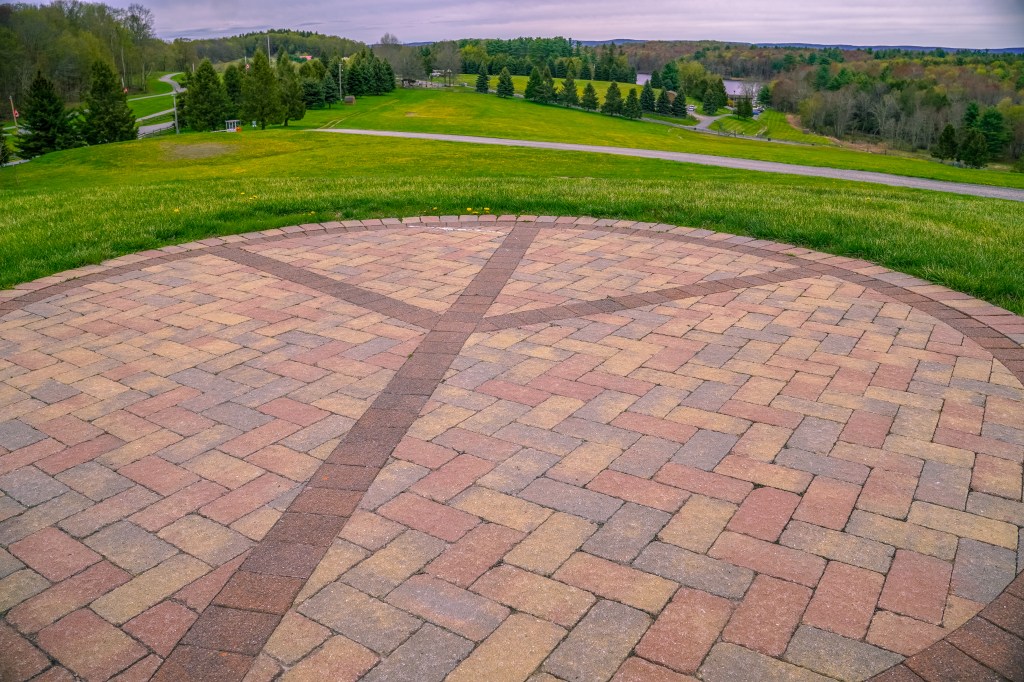
The museum and grounds of Bethel Woods represent a sacred memorial to a time and place that came to be thanks to one man, Alan Gerry. Gerry, a local resident of the area and founder of Cablevision, memorialized this event by purchasing 1,000 acres of land where the concert took place. His non-profit Bethel Woods Center for the Arts would continue to promote the spirit of the event in its museum and ongoing live events that benefit the local area.
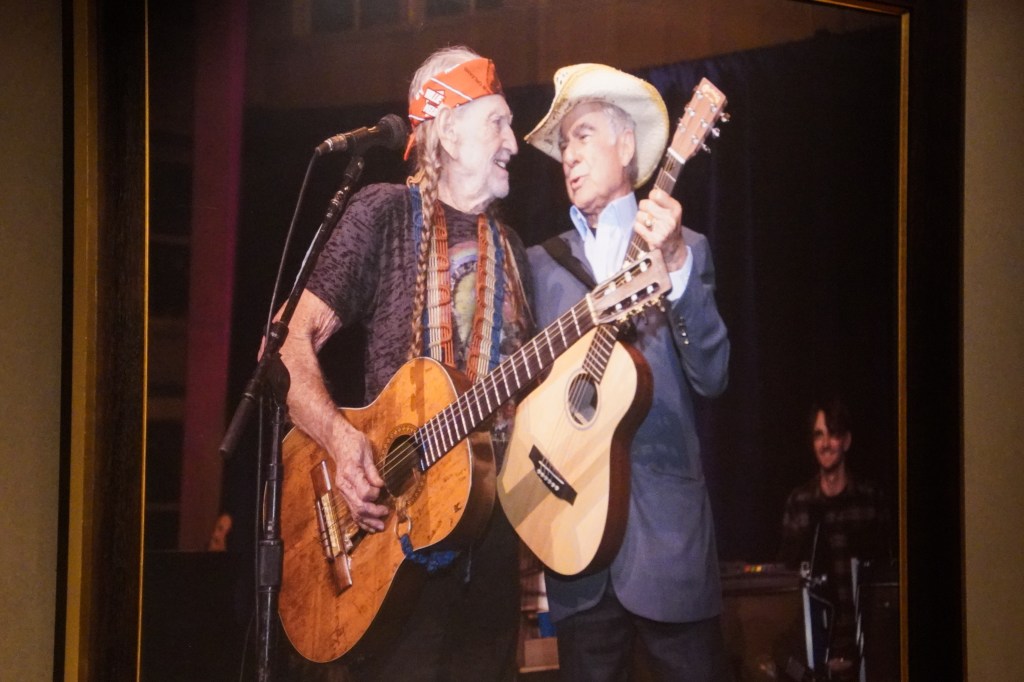
Museum painting of Willie Nelson with Alan Gerry, visionary of Bethel Woods and founder of Cablevision.
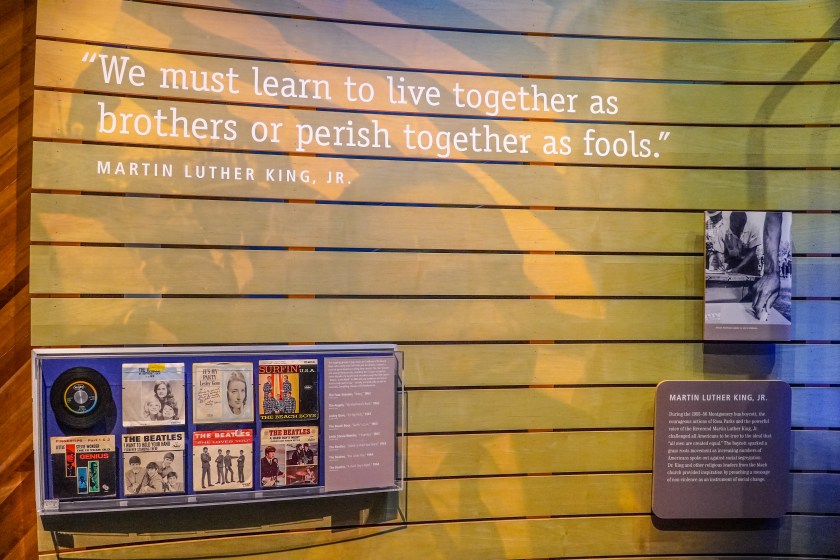
The museum has an exhibition area that leads the visitor through the time frame of the late 1960s. Woodstock did not happen without a major cultural shift which is hard to imagine today. Chief among the causes was our involvement in the Vietnam war, civil rights, the youth and women’s movements and, of course, the music. Little did we know it was to be the culmination of the new music and hippie lifestyle.
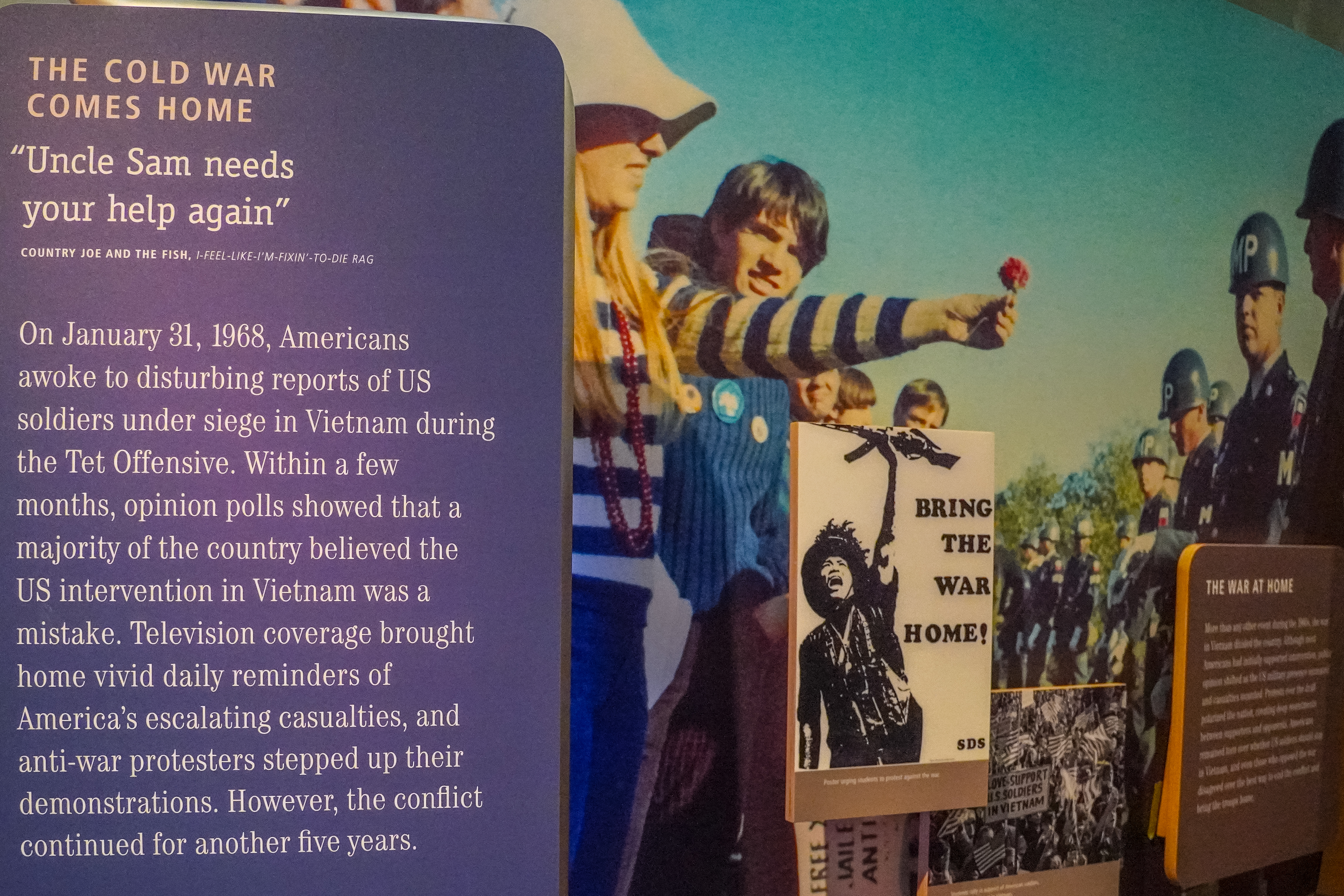
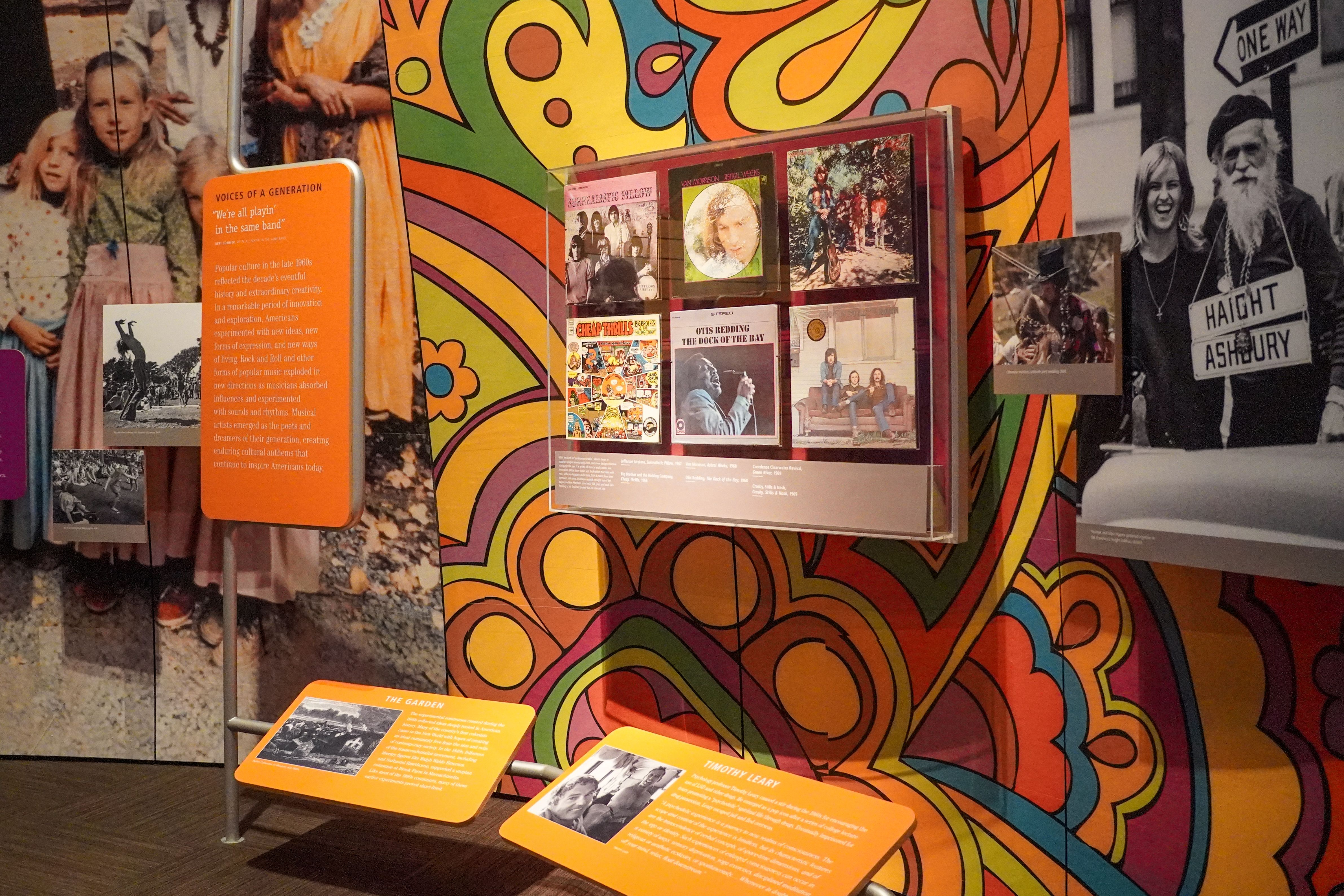
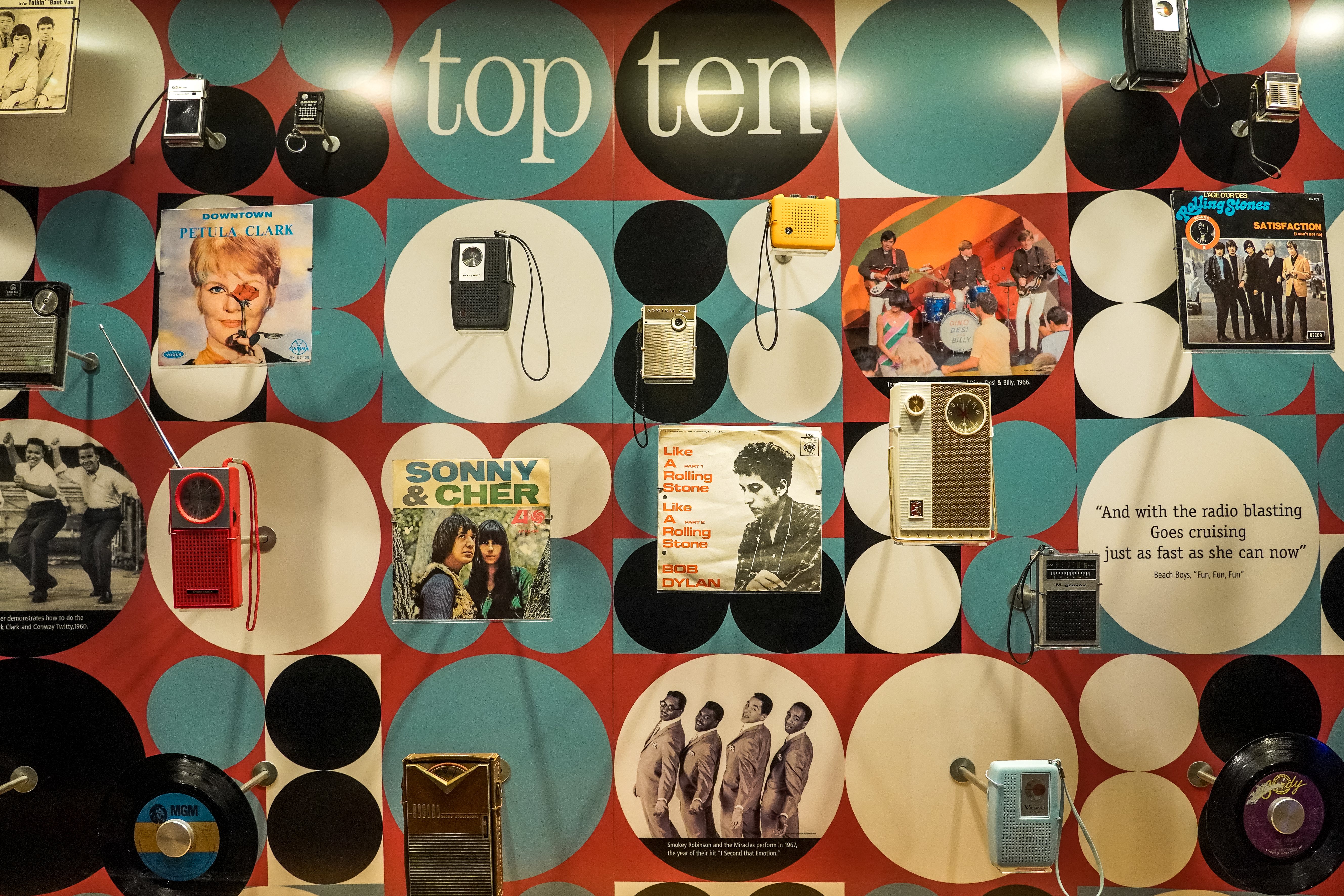
The exhibits brought back that feeling back then of a seismic change in almost everything all at once. But to our 19-year-old selves, the concert was mostly about the lure of sex, drugs, and rock and roll. Not that most of us lived out that desire or even knew what it was all about. We were strangers in a strange land.
And everywhere was a song and a celebration
The museum walls recall the incredible lineup of bands and unique peaceful spirit. The demand for this concert overcame the logistical planning and it became a friendly free-for-all. Never had as many popular bands played in one place. Everyone was there to enjoy the moment as much as possible, in spite of the overcrowding, medical emergencies, food shortage, and torrential rain that fell for half the event.
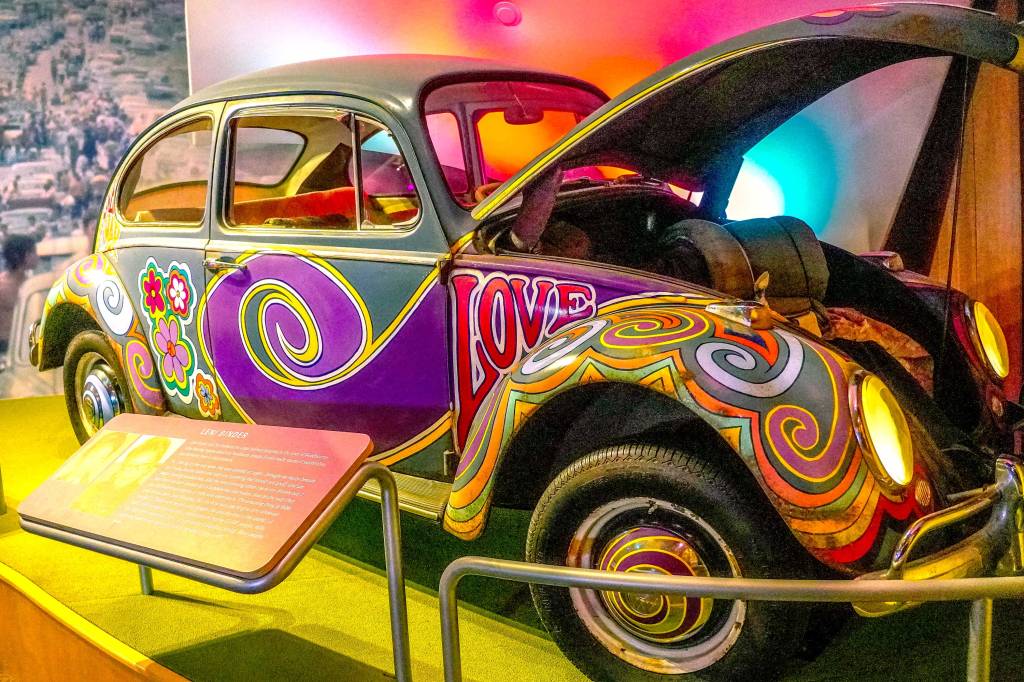
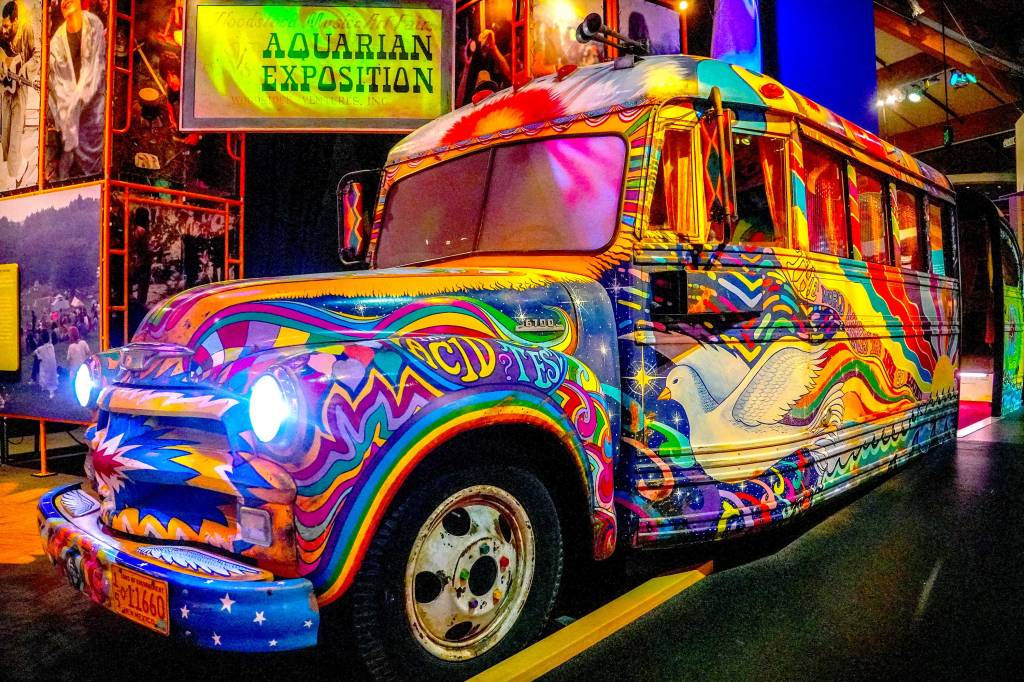
The museum exhibition has interactive panels that describe what it was like, including music, comments and the roar of the crowd. A “hippie” bus and a “love bug” Volkswagen Beetle help to quickly bring back those icons of the day. Clips from the movie Woodstock and other videos taken at the event show what it was like to be at a party of half a million people. Remarkably, only a small number of minor arrests occurred, and no violence was reported.
We mostly remember Woodstock for the music these days. There were so many unforgettable performances from top Rock and Roll bands of the day. Even if the Beatles, the Rolling Stones and Dylan were not there, the performances of Richie Havens, Santana, Joe Cocker, The Who, Janis Joplin and Jimi Hendrix, to name a few, are still legendary. Rain delays extended the planned three-day concert to Monday as Hendrix played unforgettably to the 50,000 that remained that morning.
And this he told me
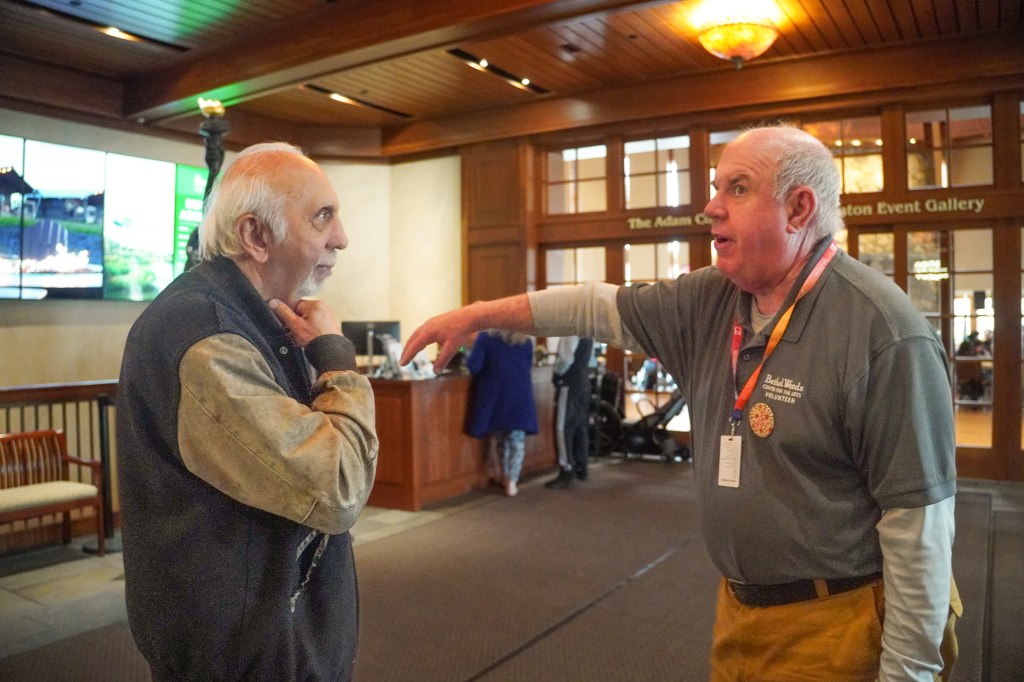
When we left the exhibit area George asked a docent a few questions about the event and places he remembered – or thought he did. Our docent “Jimmy” was at the event in 1969 and encouraged George to share his memory with the museum’s online audio archive. Jimmy tipped us off to where George might have parked, camped and maybe had a few beers down the road a few miles. We headed to the next small town, White Lake, to see if George could resurrect some memories.
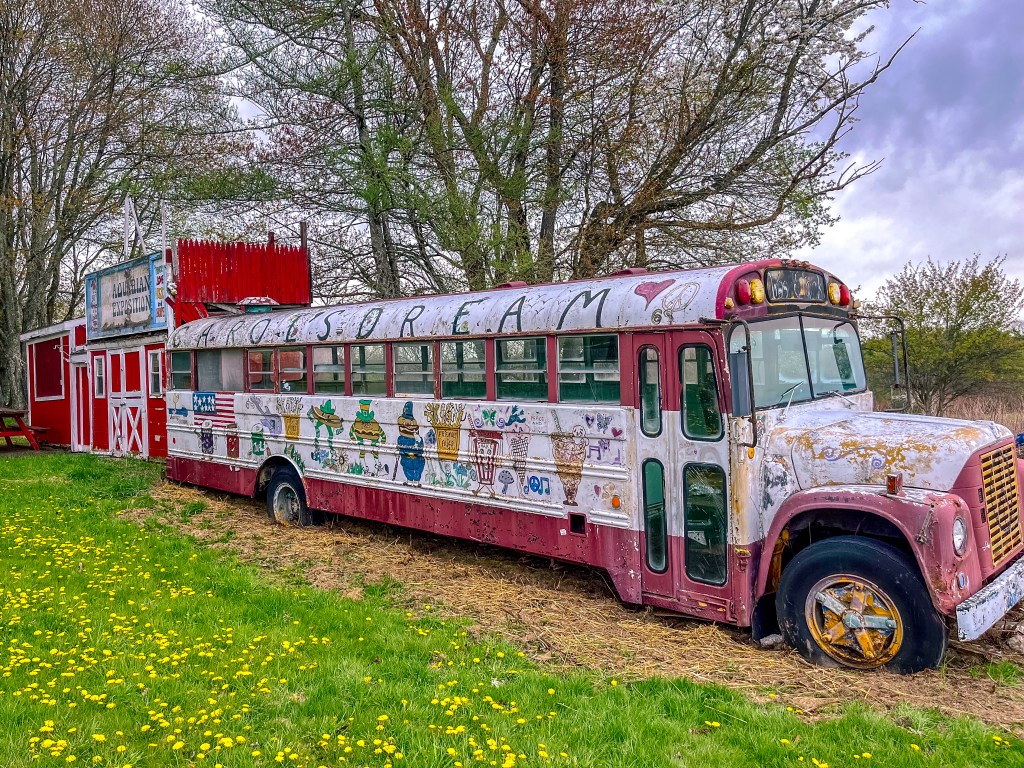
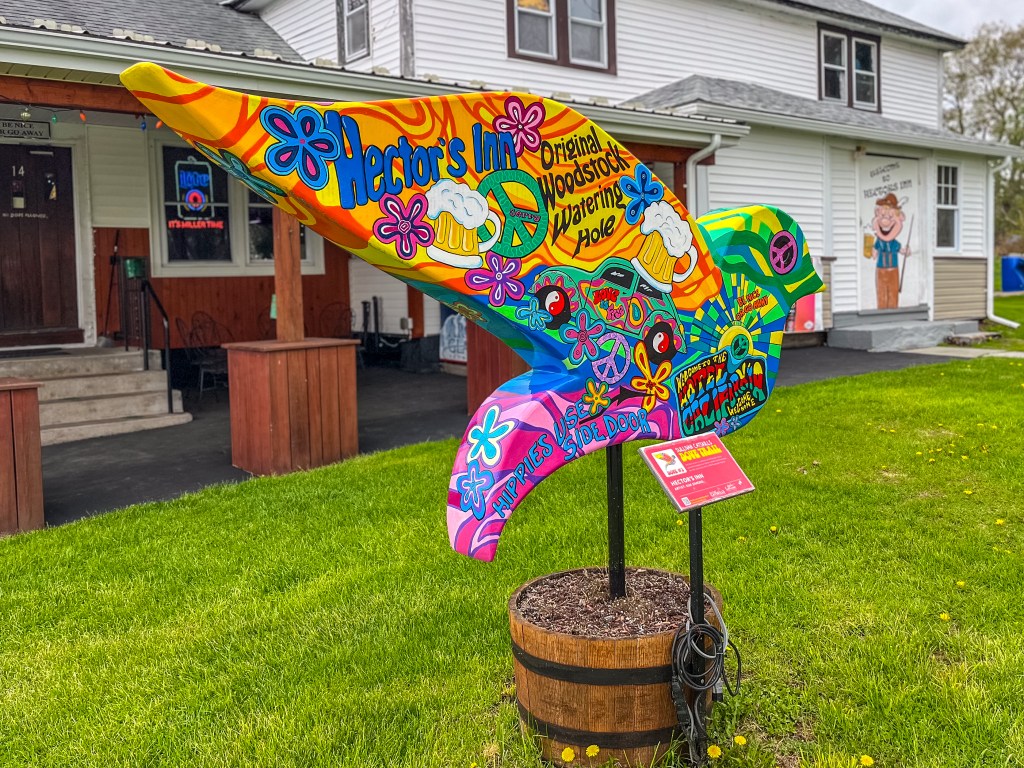
The road and the lake seemed familiar but not enough to recognize. Jimmy felt that the bar George mentioned must have been a nearby bar called Hector’s. So, after cruising the lake area we located this old bar (circa 1949) along Route 17B. This is an authentic dive bar that honors blue collar clients as well as its historical connection to Woodstock. It was a shot-and-beer kind of place with remnants of the hippie culture nearby in the form of a peace dove sign and an old hippie bus parked nearby.
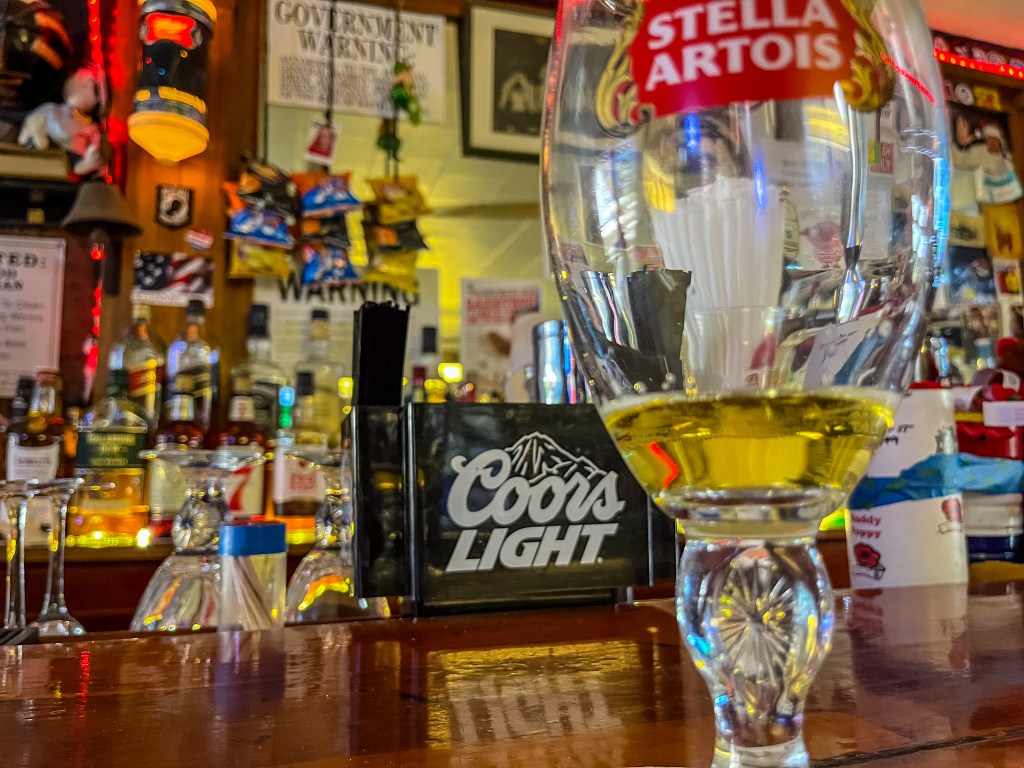
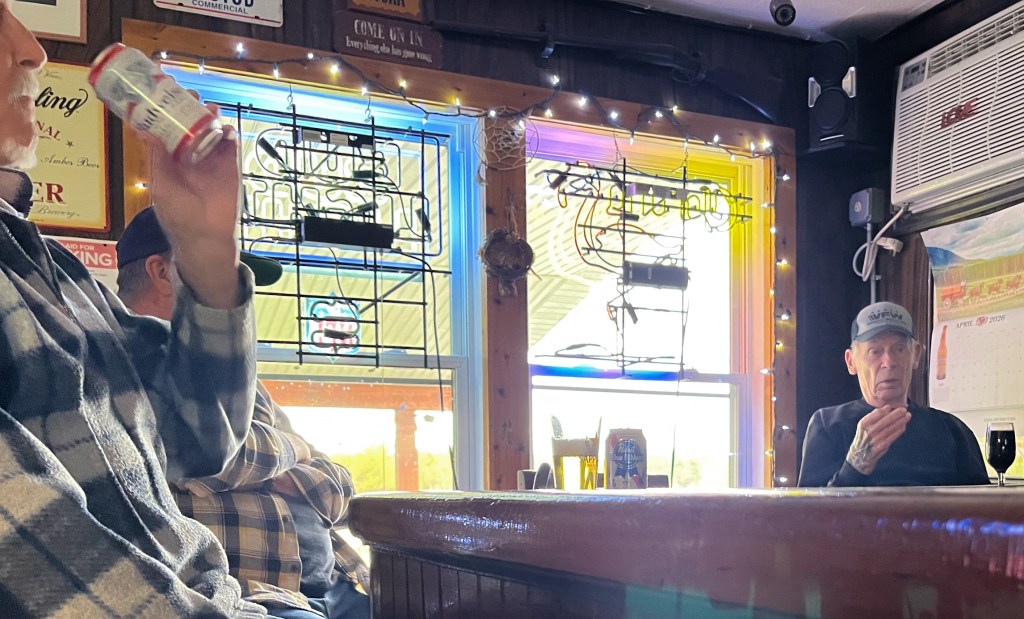
We talked with our bartender and three locals nursing their beers at the bar about Woodstock days and our story. Our bartender said she had heard it all from her folks but she was only 3 years old (Embarrassing!) at the time. The wisened old-timer at the end of the bar spoke of the time he bought Melanie and Janis Joplin a beer right where we were sitting at the bar. I’m sure there have been hundreds of these memorable stories told here!
We are stardust, we are golden
Many of the local residents fought against Woodstock then and even later as the area developed into a tourist destination. Today, Bethel remains a remote village, too small to be a busy town, but too important in history to be forgotten. George had recalled some details and could at least relive that time, if only in small fragments. To me it was a trip down memory lane which jogged my memory as to who we were and what I missed.
It seems to me that in our currently divided world we could sure use another Woodstock! Or, some other peaceful, enjoyable and memorable event together, if only for a few days? It happened once. Maybe it could happen again.
Explore Woodstock Further
Visit
Bethel Woods Center for the Arts is located at the historic site of the 1969 Woodstock festival. It is committed to providing extraordinary experiences and access to the arts with a Pavilion, Event Gallery, creative learning Studios, award-winning Museum, and Campground. Visit the museum, grounds and take the Woodstock tour.
Music
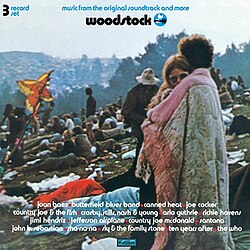
Woodstock: Music from the Original Soundtrack and More is a live album of selected performances from the 1969 Festival. Produced by Eric Blackstead. Originally released on Atlantic Records as a triple album on May 11, 1970, it was re-released as a four-CD box (along with Woodstock Two)
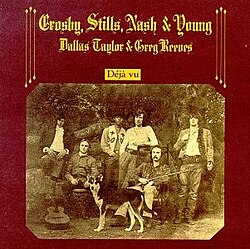
The popular song “Woodstock” written by Joni Mitchell and recorded by Crosby, Stills, Nash & Young appeared on their album Déjà Vu in March 1970. It seemed to encapsulate the event. Mitchell, who was unable to perform at the festival, was inspired to write the song after she heard about it from her then boyfriend Graham Nash. Play here.
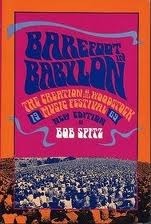
Barefoot in Babylon (book). The story of the creation of the Woodstock music festival was more complicated than the magical, peaceful portrait visitors recieved. Woodstock was as replete with scandal, graft, and corruption as it was with fellowship and high ideals. This book is considered one the best to understand the phenomenon.
Video
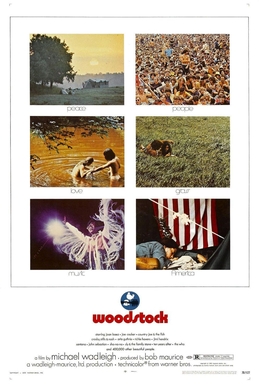
Woodstock (1970) is an American documentary film directed by Michael Wadleigh that chronicles the landmark 1969 Woodstock Music and Art Fair in Bethel, New York. This award-winning film helped popularize one of the greatest musical and cultural events of our lifetime.
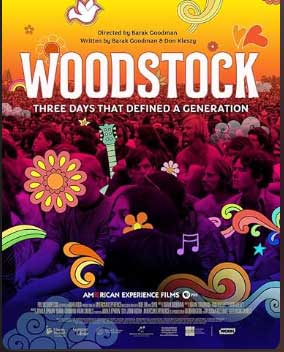
Woodstock: Three Days That Defined a Generation is one of the best sources of historical and cultural information produced by PBS’s American Experience Productions (2019).
Here’s a short preview of the film below: