After decades of staying quiet, I stepped into the streets. What I discovered surprised me: protesting isn’t just a political act—it’s a personal practice that builds resilience, awareness, and a sense of belonging.
Like running, protesting requires practice, discipline, and belief that your effort matters—even when you feel alone.
After joining six protests over the past two months, the experience finally started to feel familiar. I began to understand what it was all about. There’s a reason, a rhythm, and even a reward to protesting that I hadn’t grasped before. Still, something instinctual pushed me into it—more impulse than logic.
Protesting doesn’t come naturally. In everyday life, when things are relatively calm, most of us try not to rock the boat. We avoid confrontation, sidestep discomfort. We’re taught to “suck it up” and “don’t be a complainer.” After all, there’s always someone worse off, right? And then there’s the risk—stirring the pot can bring consequences, especially from those who’d rather you simply “behave.” At my age—77—I could easily ask, who needs the trouble?
But what do you do when logic, reason, and normality seem to vanish? Do you just complain? Do you tune out? Seek comfort from friends? That’s where protesting comes in—not just as a solution, but as a kind of therapy.
Fifty years ago, before fitness was even trendy, I took up running as a personal challenge. Back then, adult recreational running was unusual. But as marathons and Olympic athletes captured public attention, the idea caught on. We began to believe that even the average person could strive for something great—even if the race was personal.
Running took a leap of faith. It demanded hard physical work, but promised positive results—mental clarity, health, confidence. It was lonely at first, with little guidance and few role models. But it became a habit. And eventually, the world caught up. Running went from fringe to mainstream.
Now, since January 20th, I’ve taken up a new “sport”: protesting. Frustrated with the state of the nation and the new administration, I turned to activism not just as civic duty—but for my own mental fitness. And like running, protesting requires practice, resilience, and a belief that effort matters.
First, it takes mental toughness to shake off apathy. You need to believe that one person can make a difference—especially when standing with others. And yes, there’s a kind of performance involved. Maybe you’re just holding a sign in silence. Maybe you’re shouting chants or singing satirical songs about a congressman or the president. It can feel awkward or corny at times. But it can also feel exactly right—like you’re doing what needs to be done. Like you’re part of something larger, and your voice is finally being heard.
There’s power in simply showing up. A sign in hand can be the first step toward change.
So, I’ve come to believe we must train ourselves—just like athletes—to overcome political passivity. With every new day of shock and awe, we grow stronger, more aware, more ready to push back. Protesting may not fix everything, but it sends a clear message: we will not sit quietly and watch democracy fade.
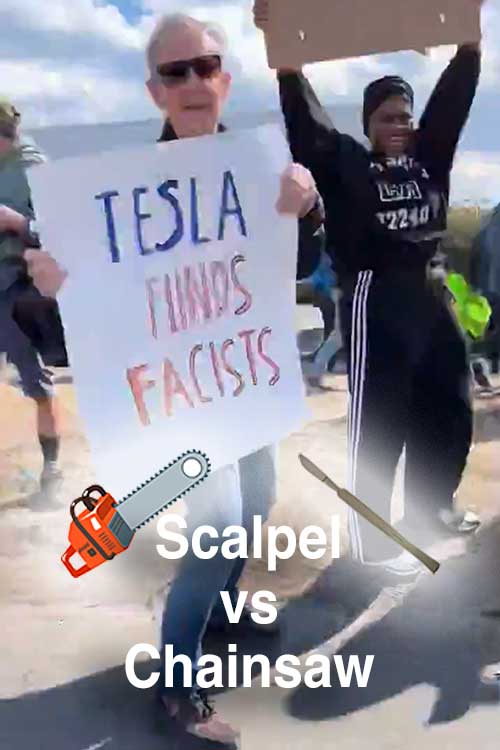
A chainsaw cuts through the trunk but roots remain. Protests are like a thousand surgical cuts, exacting a slow painful death for Tesla.
It was my second protest.
Our target was a newly born corporate giant – Tesla, Inc.
It had the potential to grow into mighty beneficial force only to turn lately into a funding source for a fascist.
Tesla is a corporation led by a charismatic leader who promised a new world of consumer choice with environmental benefits, a cool modern design and a refreshingly new use of energy; only to use his influence and money he earned from his venture to tear down our democracy.
Fortunately, then unfortunately, Tesla grew up to become the step-child of Elon Musk who is a larger-than-life leader responsible for building a good intentioned company; only to become a pawn in his egotistical fantasy and global politics.
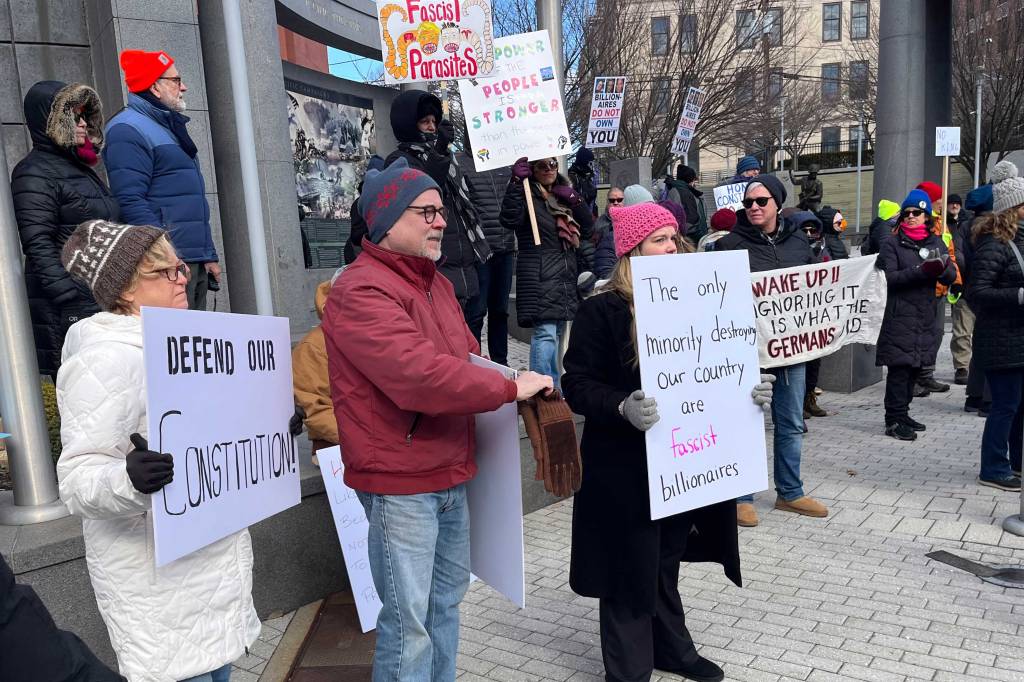
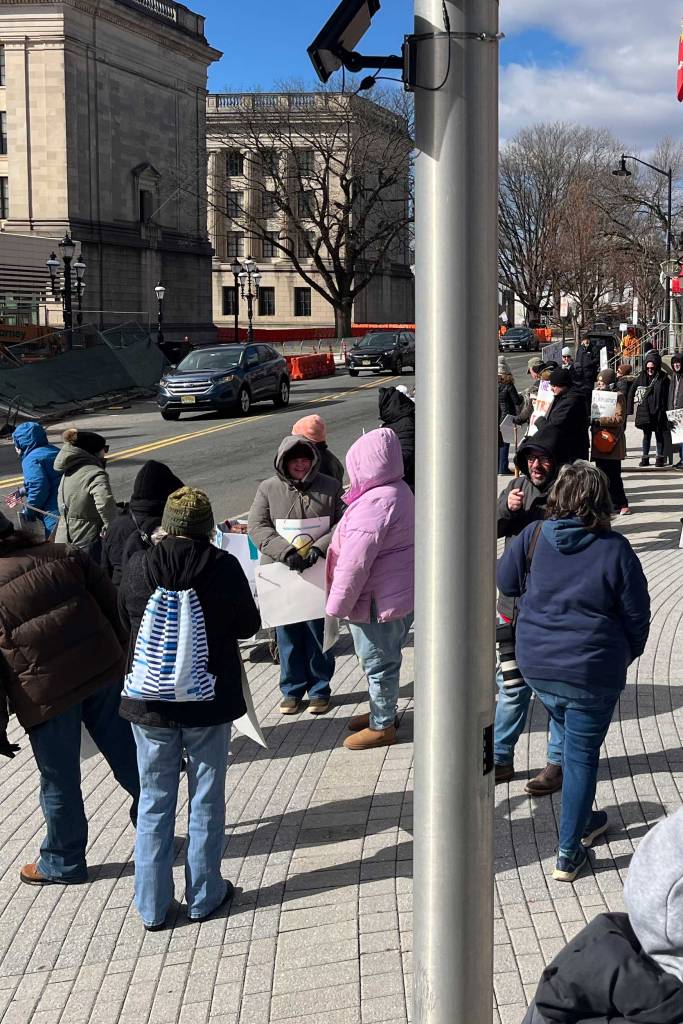
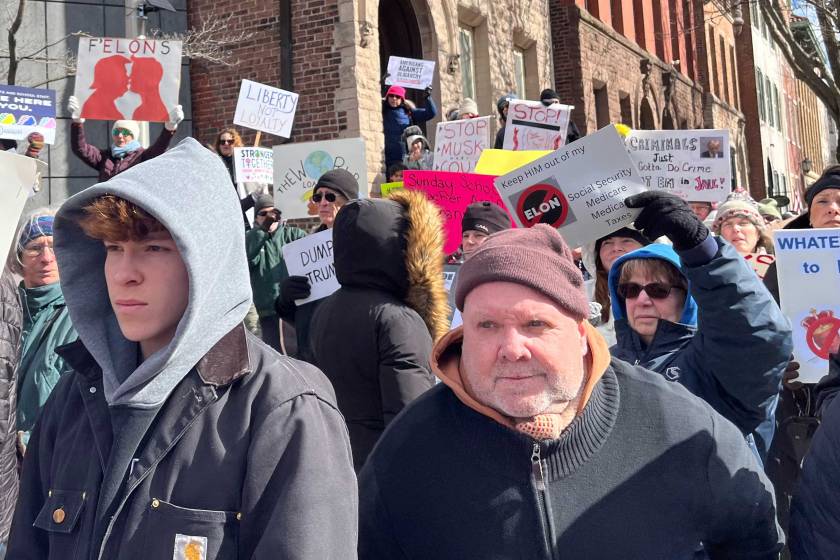
About a week ago, I protested in Trenton at the state capitol building as a general protest of the policies and executive orders of Trump and Musk. I considered that protest a warm-up and learning experience for a rookie. Being a quiet President’s Day in the city, it became apparent that we (about 500) were mostly preaching to the choir. You can’t help but ask yourself at the scene, “Who knows we we are here with our message?” With little traffic and little press coverage, I left there thinking it was worth the effort but it could have been much more. Confessions of a Reluctant Protester.
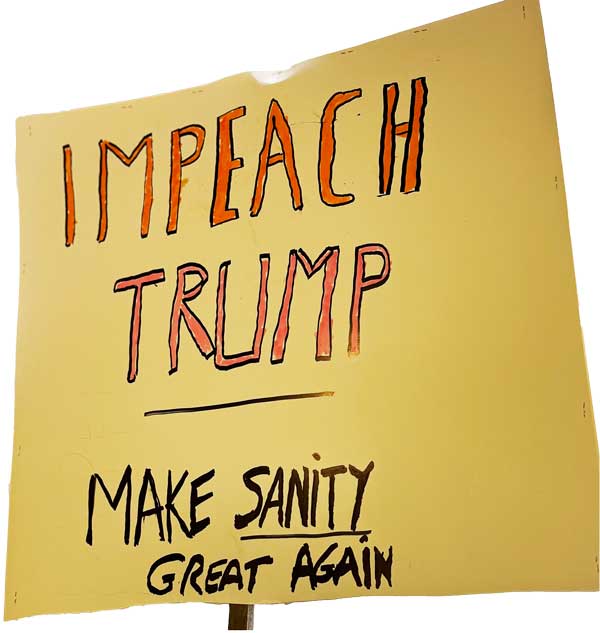
Paul’s sign for Tesla protest
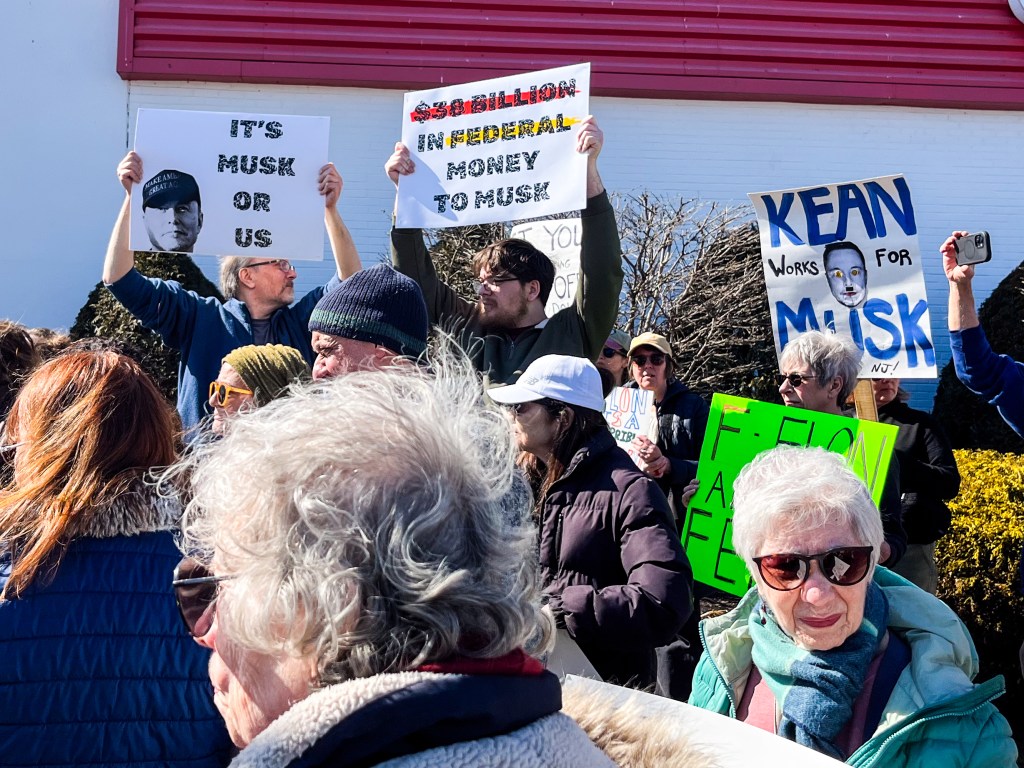
But today, Saturday, March 1, 2025, promised to be a more targeted effort. A Tesla Takedown. We were after Elon Musk’s primary source of wealth and income by loudly demonstrating in front of a Tesla showroom on Route 22, Springfield NJ – a notoriously busy commercial highway. It happens that Tesla vehicles can only be bought online. But, they are typically picked up and serviced at the few regional showrooms. Since, there are no dealerships, any effect that can be made at a showroom is directly on the company and not any independent dealer.
I heard of the hastily planned protest by SOMA Action thru posts on Facebook Group Lean On Us and registered for the event. Our group (estimated at 220) met across the street near a Staples, ready with signs and some general guidelines – Don’t block the showroom, don’t interact if there are counter-protesters and always safety-first. Luckily, there was plenty of parking nearby and a grassy shoulder right in front of the Tesla showroom facing Route 22.
The weather was cold and windy but the traffic was constant and moving slowly as they saw an impressive protesting crowd yelling loudly and waving signs they could not miss. Our enthusiastic group of all ages yelled to chants such as “Hey, hey, ho, ho, Elon Musk has got to go!” As cars were going by at 20 mph, horns were blaring in support. Even more strangely, many passengers (and even some drivers) were video-recording the protest on their smartphones as they passed by. It seemed mostly positive support, in spite of the fact that we were causing a major slowdown!
A steady stream of traffic, including local police and Tesla owners drove by from noon to 1:30. I felt tired yet relieved. We all came away with the feeling that this was an effective protest having been seen and heard by several hundred, if not thousands, in a very short time.
I know if I owned a Tesla, whether or not I believed in what Musk-Trump was doing, I might think hard about conveying a negative feeling. Does the car now represent a political point of view? Has the brand and value of my Tesla been trashed? Being able to generate those feelings is a victory, however small, for democracy by my account.
If Musk-Trump can “chainsaw” government services at the elevated organization level by cutting thousands of jobs at once, maybe enough motivated individuals can surgically cut into organizations like Tesla with a “scalpel” using various forms of protests that destroy the brand and negatively affect sales over time.
Tesla’s role as a pioneer in electric vehicles is over. Today, there are plenty of companies that can offer a better product without the dirty laundry. We can put capitalism to work if we all get out our scalpels and carve Tesla into a pariah. A slow death for Tesla, by a thousand cuts, would be sweet justice and a fitting contrast to a chainsaw massacre.
More Thomas Paine words of wisdom in troubled times….
What can the average person do to fight back? It’s never too early or too late to get involved. Take back our country before it’s too late.
It didn’t have to be this way. I’m a reluctant protester and I’m pissed off.
I have been enjoying an active, yet complacent retirement for the last eight years. At least that was the case until Trump clawed his way back to running our nation. Four days from today I’ll turn 77 years old. I’m at a time in my life where one usually mellows and winds down activities and ambitions. But, if Trump, at 78, can find the energy to ruin a country, then maybe I should at least try to help build it back. But how?
I’m still trying to understand what happened in just a few short weeks. What will happen tomorrow? And, how can anything be the same once the dust settles? I bemoan those who have lost their government jobs and noble ideals that they upheld. Collateral business, friendships and relationships may be permanently frayed. It will take a lot of effort to someday reconstruct a government and a community that are in basic harmony again.
I have to ask myself, “Is it me?” Why do those I care about not seem as troubled about the repercussions of what is happening? The news is filled with so many new catastrophes each day. It’s all shocking and numbing, yet still feels distant right now. Most of us have yet to see the effect these changes will have to employment, health, safety and peace – to name a few likely bad outcomes. And, for what?
Protest – “Not My President”
Last Monday I gathered for a protest at the New Jersey state capitol building in Trenton for a few hours, venting my frustrations and meeting others who had similar feelings. I had gotten a tip from my friend Bob who had posted some of his frustrations with the current state of affairs. He created a private Facebook group Lean On Us which linked to a national public site 50501 which listed a “Not My President Day” event. It seemed like the perfect celebration for this President’s Day. Understand, at this point most of us are just becoming active and have no idea how this works and what to expect.
I got there early and then watched as a handful of us became a large crowd of about 500 or more. Apparently, our small group was just one of many small organic groups of citizens that had become frustrated enough to get out in 20 degree weather with 20 mph winds to protest what Trump-Musk is doing to destroy our government. There were no speakers but plenty of motivated, energetic and loud people with great rebellious signs wanting to take back what we already lost and to stop the bleeding.
Protest Builds
The size of the crowd, chants and the waiving and beeping of cars was the only indication that we are on the right track. There was little press coverage, although similar protests were happening across the country at many state capital buildings.
I would not call protesting fun but it is rewarding. A least it feels like I’m actively doing something. Ultimately, you want your effort to pay off and have some effect, even it’s just to let others know that they are not alone. My dream is that everyone finds a way to express their anger and their will; enough to change what seems to be an inevitable train wreck.
If you feel frustrated too, find a way to get active. It's a new rebellion. Protesting, phone calls, writing letters, talking to others will help you cope as it did for me.

Remember what Thomas Paine wrote in the American Crisis..."These are the times that try men's souls."
We visit a charming Polish city before we embark on our hereditary journey.
June 10, 2024 Rzeszów, Poland
Our 8-hour LOT Polish Airlines flight from Newark Liberty flew into Rzeszów at 11:00 a.m. The two Ethan’s managed to catch a few hours sleep in our deluxe Business Class seats. In spite of my recent habit of catching daily naps (goes with the age) I could not sleep. Worse was the lack of WiFi and decent entertainment. Maybe it was the stress of the last couple days and the anticipation of what lie ahead that kept me up in spite of the excellent service and onboard meals.
We landed on time but had to wait for a back up driver to take us to our hotel in Rzeszów (pronounced shesh ov) about 10 miles away. Rzeszów is a regional capital of southeastern Poland bordering Ukraine. Much of our week would be close to an hour away from Ukraine. In fact, Ethan noticed when landing that we had passed several Patriot-type missile launchers along the way and we continued to see the subtle presence of military personnel. Poland is not currently threatened but their is a whiff of anxiety in the air and a common hatred of Russians.
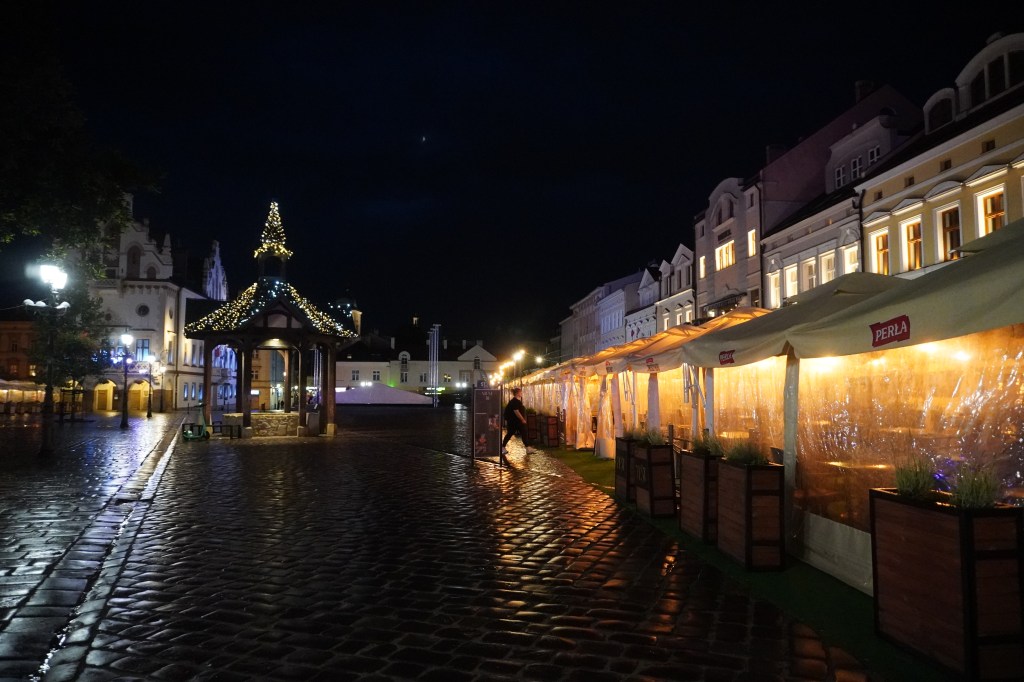
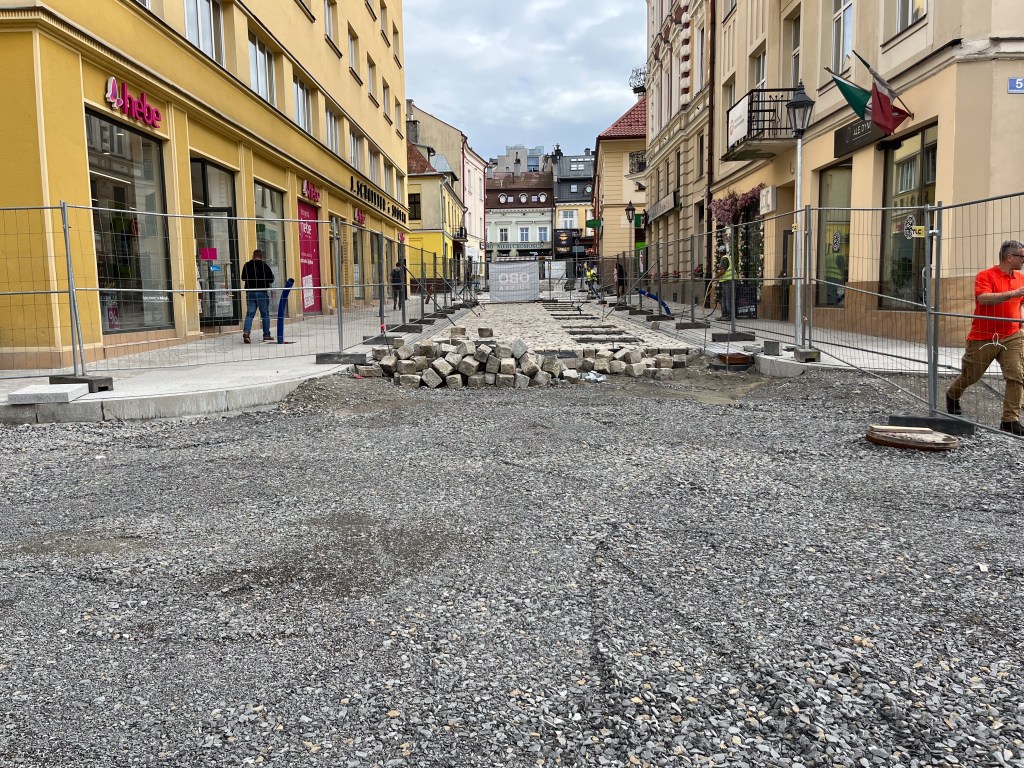
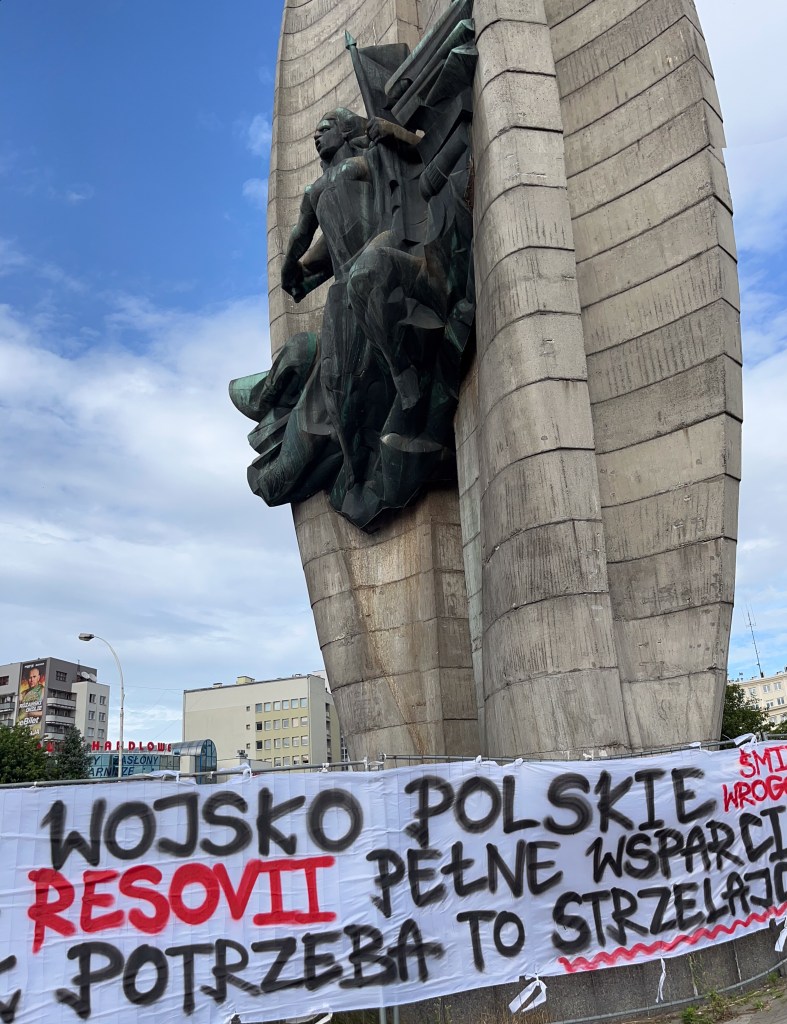
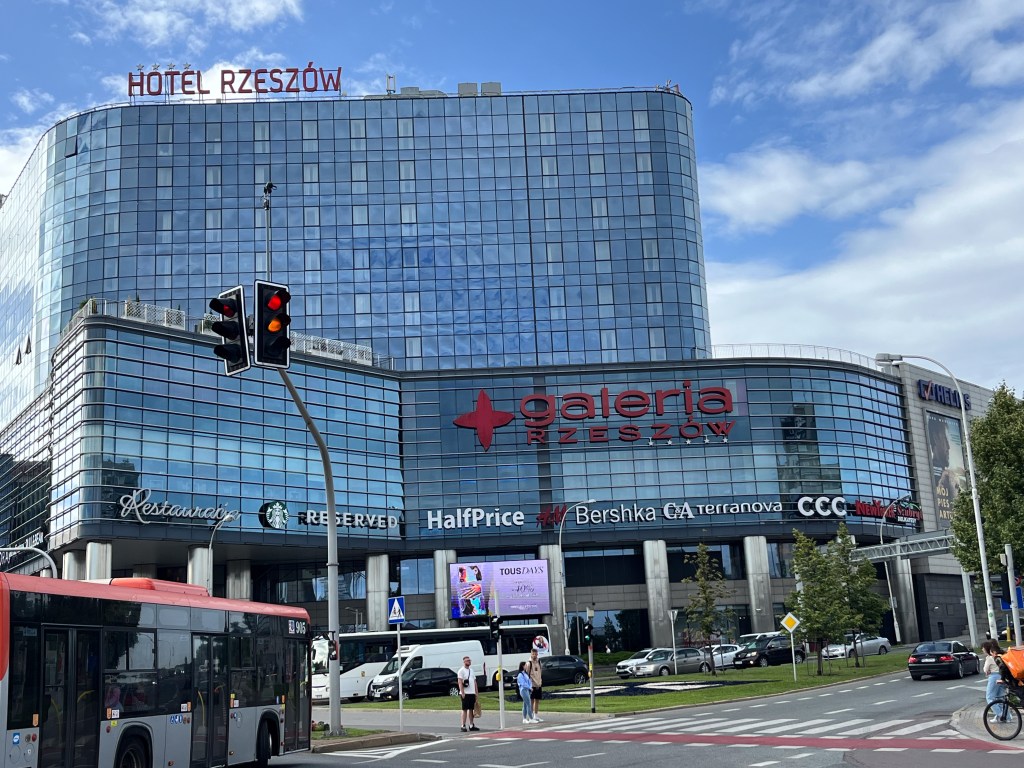
We were staying 2 nights in the boutique Grand Hotel in the heart of the old part of the city. While we had no real preconceptions of Rzeszów, we also knew it was not one of the big cities but had some interesting history going back centuries and future promise. Its an interesting blend of “Old European”, Soviet-styled cement buildings and monuments and brand new office buildings and even a shopping mall that resembled those in New York and New Jersey. In fact many of the stores were very familiar, including H&M, McDonalds’s and Starbucks. We loved the cobble stone streets and open piazza similar to Italy and Spain, with outdoor restaurants and cafes. To me its a modest city with lots of potential.
The Grand Hotel was pretty grand in its open court setting and service, although rooms were not particularly great or big, they had plenty of amenities like a spa area with exercise room, pool, hot tub and sauna which seemed were ours alone. In fact the hotel looked less than half full, although we could not figure if that was a seasonal thing. Even the outdoor cafes seemed relatively empty for this time of year. Maybe we were on the early side of the summer season.
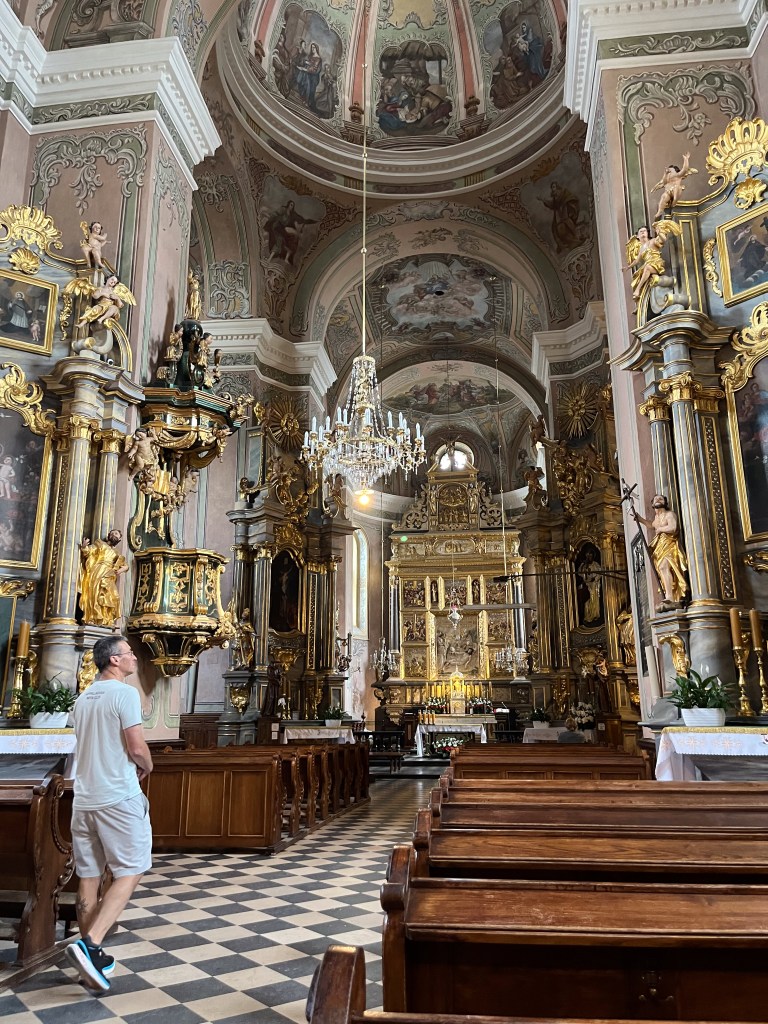
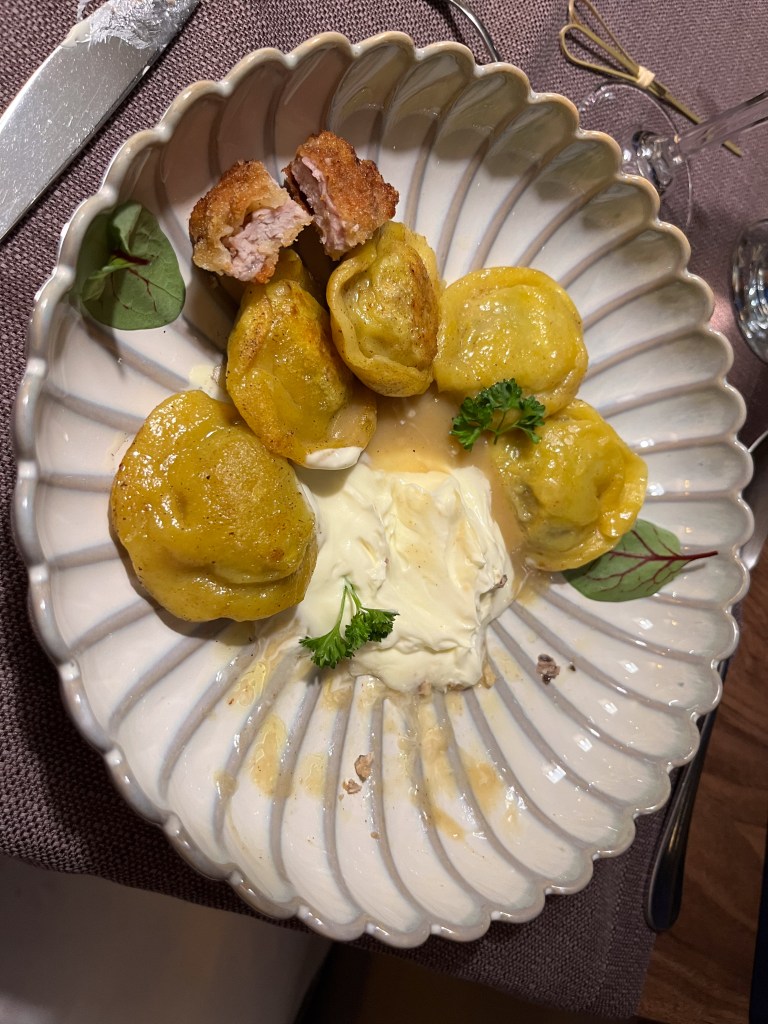
After going out for a burger lunch at one of the local cafes we headed back to the room for a “power nap” to try and get our bodies used to the 6-hour shift in timezone. The afternoon consisted of walking around, visiting churches, a big shopping mall and killing a couple hours at the spa/gym. A nice dinner followed at our hotel where we began to try the excellent local Polish cuisine, much of it brought back old memories of my Mom’s cooking as I grew up.
The more time we spent in Poland the more felt disappointed in myself for not studying the language more as Ethan and Ethan Luke were able to enthusiastically converse much more with the natives. They even had fun and enjoyed trying their new skills, even if they had a limited vocabulary. I think I am a hopeless case with a mental block. Languages were never my strong suit and Polish is a particularly hard language to learn.
Tomorrow (Tuesday) is a day in Zarębki and Šwierczów about an hour north of Rzeszów. This is ou first stop on exploring for relatives. This first stop involves my son Ethan’s mom, Judy’s family, in particular Judy’s mother’s side of the family. We have a few clues, birth records and an address to visit. With our trusty genealogist, Lujan, we hope to learn more. It seems a long shot but anything can happen.
Has your musical tastes changed over the years? Mine has been a slow transition that has only broadened my interest. Maybe Beyonce is trying to tell us something?
I’m adding this preface to my original post from March 2024 triggered by a Raul Malo concert at a small theatre in Newton, NJ. I recently learned that Raul had passed away last Monday, December 8, 2025, at age 60 after fighting a two-year battle with cancer. He was a unique talent that bridged musical genres. I’m thankful that I had the chance to attend one of his unforgettable performances. Here’s what Raul said of his medical challenge:
“In these past months, I’ve had to fight battles I’ve never imagined,” his note concluded. “But on the hardest of days, music remained my companion. Your letters, your stories of how a song helped you through loss, heartbreak, joy, those became our songs. You all carried me more than you know… Thank you for giving my voice a place to live, even when my body cannot be the one delivering it.”
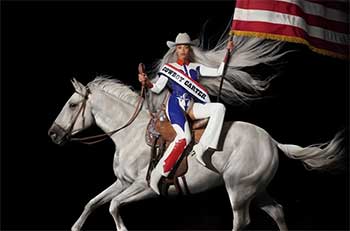
Little did I realize that Beyoncé and I may have something in common. Beyoncé has just released her genre-bending album “Cowboy Carter.” It features collaborations with Country music legends like Dolly Parton and Willie Nelson. It’s her latest evolution. And, it seems my musical tastes have changed too. Sad to say it has nothing to do with her, although we may be on the same track.
Cover of Beyoncé’s “Cowboy Carter” Album
Maybe it’s a product of getting older, or a mash of all the music I’ve come to like over the years. While I always have preferred rock or folk, I think my ear is bending a bit more toward progressive country, American Songbook classics and even the right Latin beat.
A few days ago, Mary Ann and I caught a famed singer, songwriter and musician at the Newton Theatre. Lately, I’ve been playing Raul Malo and his Grammy Award-winning band the Mavericks on my Spotify lists and noticed that we both were listening to the same music. Just a week ago Mary Ann found Raul had a one-night gig in NJ which gave us a rare opportunity to watch and listen to him perform.
You may remember the Mavericks for a few past popular hits but they have a strong following with a sound that always has been hard to categorize. Terms used start with progressive country, rockabilly, Tex-Mex, Americana, Cuban ballads, jazz and blues but Malo’s preferences are even broader than that. Raul Malo is the an American born singer with Cuban ancestry who has has a reputation as one of the most beautiful full baritone voices in music today. He also is a guitar virtuoso and plays numerous instruments. He’s that famous singer you probably never heard of.
Currently he is on a solo tour away from the Mavericks at smaller venues like the Newton Theatre which suits his talents perfectly.
The Newton Theatre
The town of Newton is about a 45-minute drive from Morristown and in a remote part of Northwest NJ. It’s the kind of place that’s easy to forget. Once a bustling town a century ago, it conjures up a nostalgic vision of an old western town which now seems charming with old storefronts and quiet narrow streets. And, it has restored its 1926 605-seat theater into an intimate performance space and occasional movie theater again with the help of SkyPAC, the local arts supporting organization. Maybe, this was the perfect place for tonight’s music.
It was a dark, wet and dreary Wednesday night so we hesitated for a moment before we decided to make the long schlep, having already purchased the tickets. The show started with the soothing sound of Seth Walker, a former Mavericks musician, playing upbeat and easy original tunes with a sound similar to Jack Johnson. It was a nice intro to what was to come.
The house was full of excited fans waiting as Raul came out around 8:30. Mary Ann and I looked around to judge the audience as we (seniors) often do these days. It was mostly gray-haired, pony-tailed or long-haired adults. For a typical “Country” concert it might be easy to conclude which way politically the audience leaned but we guessed this could be a rare situation with equal sides and in no mood to bicker. Raul is an actively progressive guy but never mixes politics with his gigs.
He dressed plain and casual on a spare stage with one stool and a single snare drum set, it seemed almost too little to deliver what was expected. This crowd called out to hear their favorites. But he just said, “Look there’s no play list, you may not hear songs you expect. I’m just going to play what I feel like tonight.” Luckily, we were all okay with that.
He started out with two ballads so Cuban that you felt transported to a cigar-smoked cafe in Havana. Then he changed to old classic songs of love and longing from Elvis to Sinatra to Nelson to Orbison. He mixed his material carefully in the playlist. His musical knowledge and taste is only matched by his perfect guitar playing and vocals.
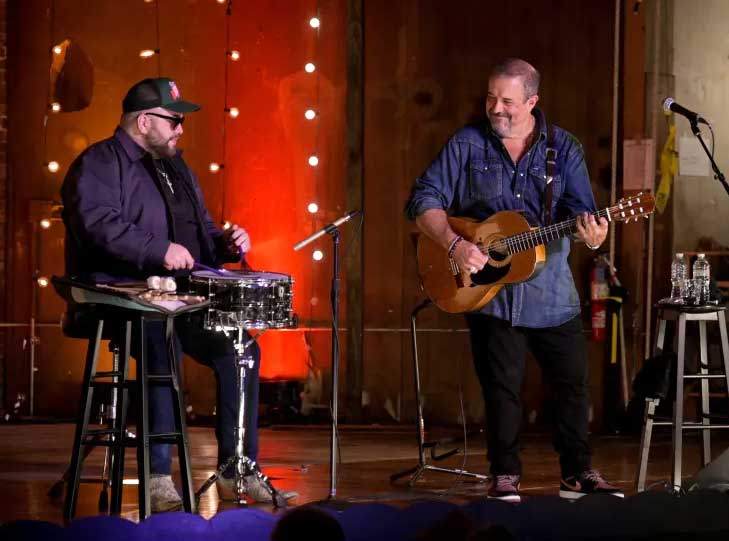
Dino and Raul Malo (photo by Jack Casey/What’sUp Newp)
Dino, his eldest son, joined him half-way through the set picking up the pace by playing smooth percussion. Together they performed maybe the best song all night, Neil Young’s “Harvest Moon.” Raul closed with what he noted was one of his top three songs of all time – Hoagy Carmichael’s “Stardust” which was in a category of its own. This may have been one of the most “intimate” sounding concerts I have ever attended.
Maybe music genres are blurring, are just too numerous to appreciate or you just outgrow them. Today, I’m looking for a performer to deliver the right mix. Perfect sounding music that speaks of everyday life, love and longing. Music that I can relate to at this time of my life. “Country” or some other category? No category seems right for my evolved musical taste. Has your musical tastes changed over the years too?
Here’s a taste of Raul Malo and his band The Mavericks:
Raul Malo, The Mavericks – Havana’s Midnight (Official Video)
Here’s one of my favorite cover songs sung by Raul Malo:
My career in the news business was on a roll until I outgrew it. But there were valuable life lessons and skills learned. Where have all the paperboys gone?
This post is a story I wrote for my Storyworth project. It represents an installment of a personal compilation of stories I hope to complete this year. While the Covid pandemic has delayed long bike trips, I guess I have no excuse to stop writing.
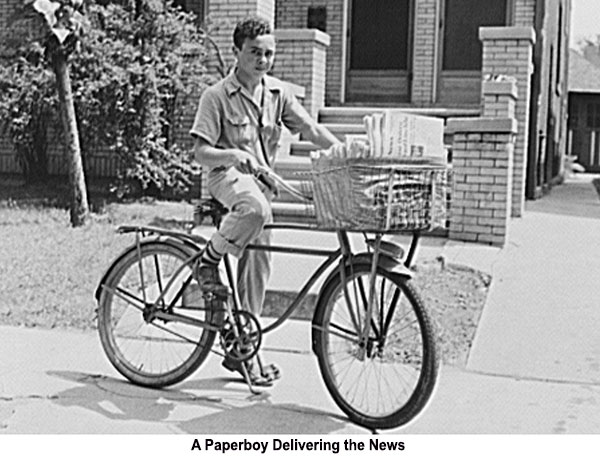
Sometime around 1960 I began my career in business. I was gladly working as a 12-year old paperboy (carrier) for the Newark Star-Ledger. This was my first job and real-life classroom on how to make money and work for a boss. My boss, the local circulation manager, was Mr. Danz, who was like a coach for a team of child laborers. Along with baby-sitting, acting and family farming, having a paper route has been one of a very few regular jobs that the Federal Government exempts from the child labor laws.
This was the heyday of print journalism. All families relied on the newspaper as the single most informative and trustworthy source of information. Television and radio, of course, were also important. But, newspapers delivered a long, dependable and regular flow of detailed national, regional and local news that you could choose to read when you wanted. Newspaper outlets were like nodes on the information network of the day. It seemed like delivering the news on my bike was a pretty important job as well as profitable and fun.
Getting Hired
Back then, most families would either buy the paper at a local corner store or subscribe to “home delivery”. In the 1950’s and 1960’s it seemed pre-teen and early teenage boys would deliver most newspapers including morning and afternoon papers. Newspapers advertised for “carriers” as a way to earn some money and be independent. Parents agreed and encouraged their kids to take on a paper route.
A paper route taught a young kid lessons in responsibility, accounting, customer service, sales and marketing. Best of all, most of time you were independent and on your own as long as you lived up to the responsibilities .
Learning Customer Service
Every day a bundle of 50 Star-Ledger newspapers were dropped at the curb in front of my house in the middle of the night or very early morning, with a thud. With newspapers to deliver in the morning before school, I would get up early at 6:00 a.m., break open the bundle and start folding or rubber banding each newspaper. There was an art to a simple fold when the weather was good and the paper was of a reasonable size. There was a feel and smell to the damp news that was evident by the newsprint left on your hands.
If the weather was bad, we wrapped the paper in wax paper (the use of plastics bags came years later). For Sunday, early sections had to be assembled with the latest news that arrived early Sunday morning. Sunday papers were usually an inch or more thick so they required special attention and more delivery time.
Developing Job Skills
The key to a successful paperboy route was preparation and developing a good toss. Because newspapers were so popular your route would usually be in your neighborhood or close by with maybe 33%-50% of the houses as your customers. It was my responsibility to get up early enough to deliver the newspaper before everyone was out the door. Come rain or come shine. No one wanted a late newspaper, one that landed too far away from the front door, or one that was wet. Failure to deliver under these standards could affect tips or worse yet – a complaint to the my boss, the circulation manager.
The “toss” was a zen-like skill that could be honed to perfection. It required executing the principles of balance, aerodynamics, centrifugal force, wind adjustments and deadly aim. While riding and steering the bike with one hand, you would grab a single newspaper and perform a toss across your body, thus causing a backhand spin so that the paper would float to the stairs near the front door. If done properly it was a thing of beauty and a gratifying experience.
Driving the Delivery Vehicle
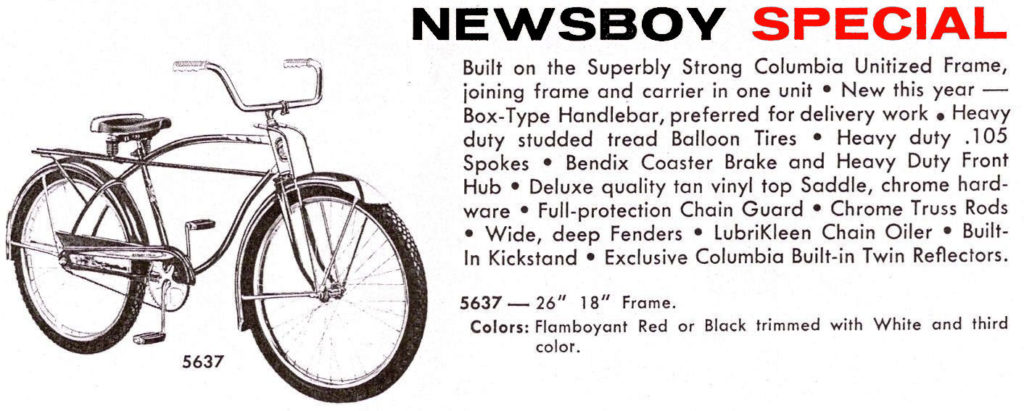
Most of the time my black Columbia cruiser bike with fenders and a big basket was all I needed. As soon as all papers were bound or folded I’d load up the bike and head out to work.
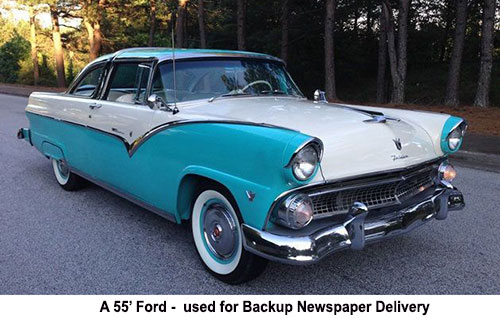
Bad or cold weather could be an obstacle and often would require my father to drive me around in the two-tone 55’ Ford before he went to work.
You had to get to know your customers and often their particular service requests, like where to deliver the paper and which customer got the paper on certain days, like weekdays or Sundays.
Collecting for the Boss
Near the end of the week was collection day. I’m pretty sure I collected every every couple weeks or maybe monthly. But it was by personal visit to each customer. I would carry around a large ring binder with one card for each customer. I would punch a hole for the weeks paid by that customer as I collected the cash.
On Saturday afternoon, Mr Danz would come by to pick up the payments I collected along with discussing problem customers, any complaints that might have come to him and any new contests I could win for getting new subscribers to sign up.
I was paid only on the number of customers I had and collected. Hey, looking back at this now, it seems like a whole lot like a junior bookie operation – working for the Star-Ledger gang. I remember Mr. Danz as being a nice guy but there was a certain amount of intimidation as a kid answering to an adult of authority.
Getting Paid
In the newspaper delivery business, it was customary to give tips but papers were not expensive. As I remember it, we earned about $20 to $30 per week between a fee per paper delivered and tips. You would lay out your customer cards and count you money less your tips in front of Mr. Danz and officially get paid. It was enough to be proud and make a small profit after considering expenses. You also learned that no one delivering newspapers was going to make a fortune. But you did learn some business skills, a few life lessons and a way to buy a few things on your own or learn how to save money.
Witnessing the Extinction
There has been cultural changes over the years. What used to be an admirable job for young kid began to be seen as potentially dangerous. Children’s freedom became even more restricted. Perhaps, more was given to them rather than requiring them to earn it. In any case, it would be rare to see a child delivering newspapers these days. Selling cookies or popcorn is the extent of our early real-life work experiences that we permit today.
But, beyond the cultural change the Internet has been the major disrupter of paper-based news. Today most news publishing companies rely on subscription service websites and online advertising. The change in the public’s choice of media has caused print ad spending to move to online advertising and news resources given to online stories. Meanwhile, the world of home delivery has changed too. We are consuming less print media and have less of a need for an actual newspaper to be delivered.
The Star Ledger in 1960 cost just $.10 per daily and $.25 per Sunday edition at the newsstand – and that did not change until 1980! In 1960 the typical delivery customer was paying something like $1 to $2 per week. Today, the newsstand cost is $3.00 per daily and $5.00 per Sunday with much less content. The paper is now owned by Advance Local Media LLC which promotes NJ.com as its digital partner preferring to promote a paper and virtual “home delivery” subscription of around $500 per year.
That’s a lot of money for the news to be delivered to you. If you chose to receive a physical newspaper, chances are it would be delivered by a man, or woman, throwing a paper out a car window randomly in the wee hours and whom you would never expect to meet. While there are plenty of reasons, including environmental ones, that make the old model unworkable today, there are also plenty of reasons that we should have thought more about what we lost in automating our news.
Today’s mishmash of online neighborhoods and social networks fracture the delivery of local and regional news. We now have to find where the news is and choose only the news we want. And, our sources are no longer unbiased or represent a higher ideal of truth. Are we getting more information delivered to us or are we less informed than we were 60 years ago?
And so it goes…
My career in the news business lasted a few years but helped me build an interest in business and an entrepreneurial spirit which lasts until today. Today, it seems the only news job a young adult can participate in is creating content for YouTube. That may seem strange but it’s where the eyeballs, fun and excitement are these days. As we move beyond the printing press, let us remember those heady days when newspapers were the boss!
“Were it left to me to decide if we should have a government without newspapers, or newspapers without a government, I should not hesitate a moment to prefer the latter.”












 My Plan C