Manufacturing Memory: Dylan @ Forest Hills 1965

As a teenager I witnessed Dylan perform his first electronic set after Newport. Little did I know the music, musicians and fans were to become the stuff of music legend.

So, I wondered, Is it possible to recall a vague memory that happened 60 years ago and make sense of it today? Could research reconnect sleeping neurons and help me understand what really happened on that one strange night? 

Watching A Complete Unknown, the Bob Dylan biopic with a memorable performance by Timothée Chalamet, recently triggered that long dormant memory. The Forest Hills concert was Dylan’s next public appearance after being booed at Newport just a month earlier for daring to plug in and play electric. Up until then, he’d been the lone troubadour: acoustic guitar, harmonica, and words that shook a generation. But the winds of change were already blowing.

For many, Dylan’s transformation felt like betrayal. For me, that night was simply bewildering. I couldn’t make sense of what I saw — but six decades later, I crave to.


The Times They are a-Changin’

We sat in Forest Hills Tennis Stadium in Queens, New York among 15,000 fans filling the horseshoe-shaped arena built for tennis, not rock. Forest Hills was an ideal outdoor venue for a large audience drawn from the New York metropolitan area, including the important Greenwich Village folk scene. Acts like the Beatles, Rolling Stones, and Frank Sinatra had previously played there. In fact, Dylan had played there just a year before, appearing with Joan Baez.

Older photo of tennis match at Forest Hills Stadium

At just 24, Dylan had already become the reluctant “spokesman of a generation.” His lyrics carried rebellion and poetry in equal measure — a mix of Woody Guthrie grit and James Dean defiance. America in 1965 gave him plenty to sing about: war, inequality, and political unrest.

Many think of Dylan as a protest activist. But he was never a joiner — he gave voice to movements without belonging to them. His songs were protest anthems, even when he refused the label “protest singer.”

Yet the times and the sound were changing. Rock music, born in the 1950s, had exploded. By 1965, Dylan sensed it was time to evolve. He began to push both his music and his audience toward a new hybrid of protest and power, folk-rock.

Like a Rolling Stone
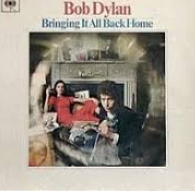
Dylan's Bringing It All Back Home Album cover

In March of 1965, Dylan released his fifth album Bringing It All Back Home. One side is solo acoustic; the other electric backed by a studio band. The album cover design and music were a clear sign to his fans that he was resetting his style.

Then came the single Like a Rolling Stone (listen) (lyrics) which was recorded in June and released July 20, 1965 before appearing on his next album. This was five days before his notorious appearance at the Newport Folk Festival (July 25, 1965).

Like a Rolling Stone - 45 RPM record label

The song quickly made the top radio charts even though it had an angry protest message, full use of electronic instruments, and was over six minutes long instead of the industry-standard three minutes. It violated all those norms while creating a popular bridge between folk lyrics and the infectious sound of rock music. 

The afternoon before the concert my friend Mike Kennedy called to say he had extra tickets, thanks to his older brother Tom, a Columbia student who was tuned into the changing scene. Mike and I were just 17 years old, Jersey high-schoolers trying to be cool. We’d heard some Dylan, but didn’t yet get Dylan.

We definitely weren’t ready for what we were about to witness.


With No Direction Home

On this unusual windy and cool August night, temperatures dropped from the 80s to the 50s and brought gusty winds. It was an omen of what was to come. We were sitting on bench seats in a steep upper deck of a very dark stadium. Everyone was focused on a single miasma of brilliant light shining on the platform stage where Dylan and his band would perform. You could immediately feel the nervous energy of the buzzing crowd in anticipation of Dylan’s appearance.  

Everyone wondered: would Dylan go electric again, like at Newport?

He would — but only halfway. The plan: an acoustic set first; then an electric one.

But the tension was already in the air.

He Really Wasn’t Where Its At
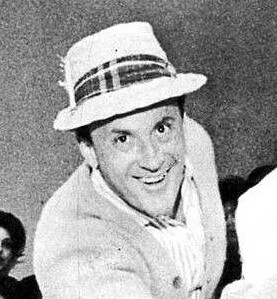
Photo of Murray Kaufman

The concert opened oddly with “Murray the K” Kaufman, a popular Top-40 DJ, as emcee. Folk purists booed loudly. To them, Murray symbolized the commercial rock world they despised. It was a taste of things to come.

Click to listen to Murray the K’s intro to the concert

You Say You Never Compromise

The first half of the concert went smoothly. It was the acoustic set which everyone recognized and seemed to enjoy. That is to say Dylan performed solo with guitar and harmonica in his usual style. The 45-minute set including She Belongs to Me, To Ramona, Gates of Eden, Love Minus Zero/No Limit, Desolation Row, It’s All Over Now and closed with Mr. Tambourine Man. This set featured the public debut of the ten-minute long “Desolation Row,” which went over very well with the entire crowd who appreciated its clever caustic lyrics

Click here to listen to the full Desolation Row recording
Dylan playing the first set solo on 
acoustic guitar at Forest Hills
Dylan playing solo acoustic guitar. Photo: Daniel Kramer

To Hang On Your Own

After a fifteen-minute break, everyone knew something big was coming. Dylan appeared accompanied by a band of four relatively unknown musicians at the time – Robbie Robertson (guitar), Levon Helm (drums), Al Kooper (organ) and Harvey Brooks (bass). Over the years they would create their own history in the world of rock and roll.

They launched into Tombstone Blues. The stadium erupted — not with joy, but outrage.

Click to listen to the raucous first minute of the electric set
Dylan’s band at Forest HillsPhoto: Daniel Kramer

Boos, shouts, insults. “Scumbag!” someone yelled. Dylan shot back, “Aw, come on now.” That was followed by a chorus of “We want Dylan.”

Listen to the negative reactions to the “new” Bob Dylan

Dylan had already anticipated the negative reaction. According to Harvey Brooks Dylan warned the band, “I don’t know what it will be like out there. It’s going to be some kind of carnival, and I want you to all know that up front. So go out there and keep playing no matter how weird it gets!”

And weird it got. The crowd seemed to quiet a bit after a few songs. But as the set went on the audience grew restless. Half-way through the set, fans ran across the grass toward the stage only to be tackled by security guards. Al Kooper’s organ was knocked over and Levon Helm had to hold off a couple protesters charging his drum set. Objects were thrown at the stage. Still, Bob and the band played on!
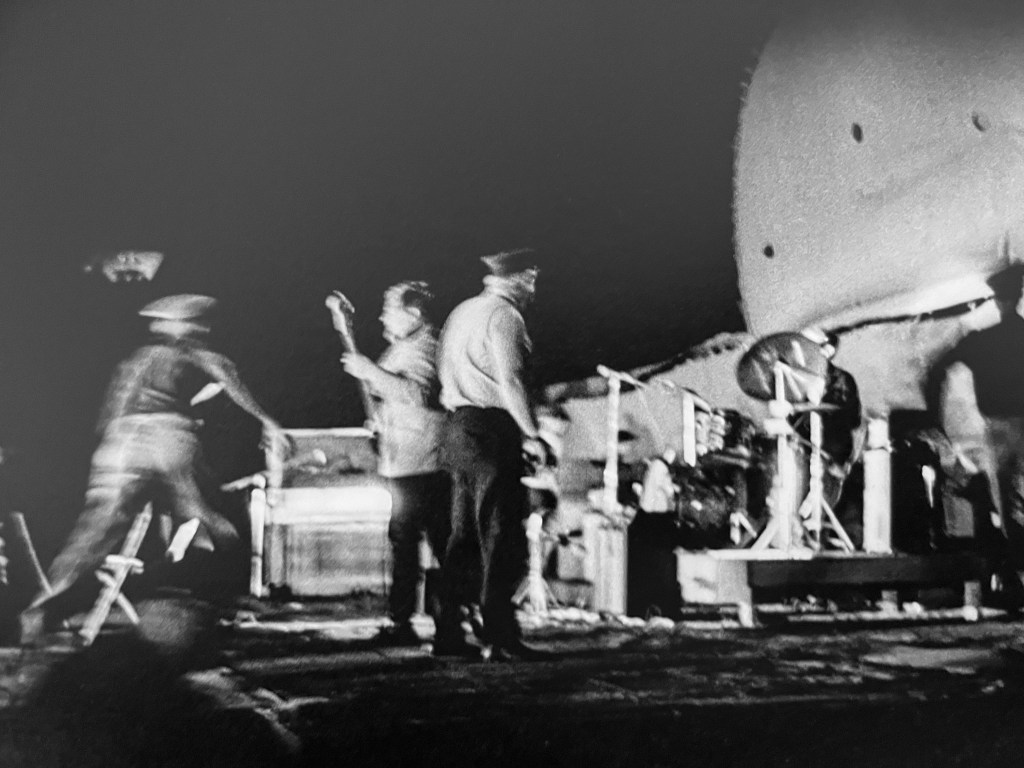
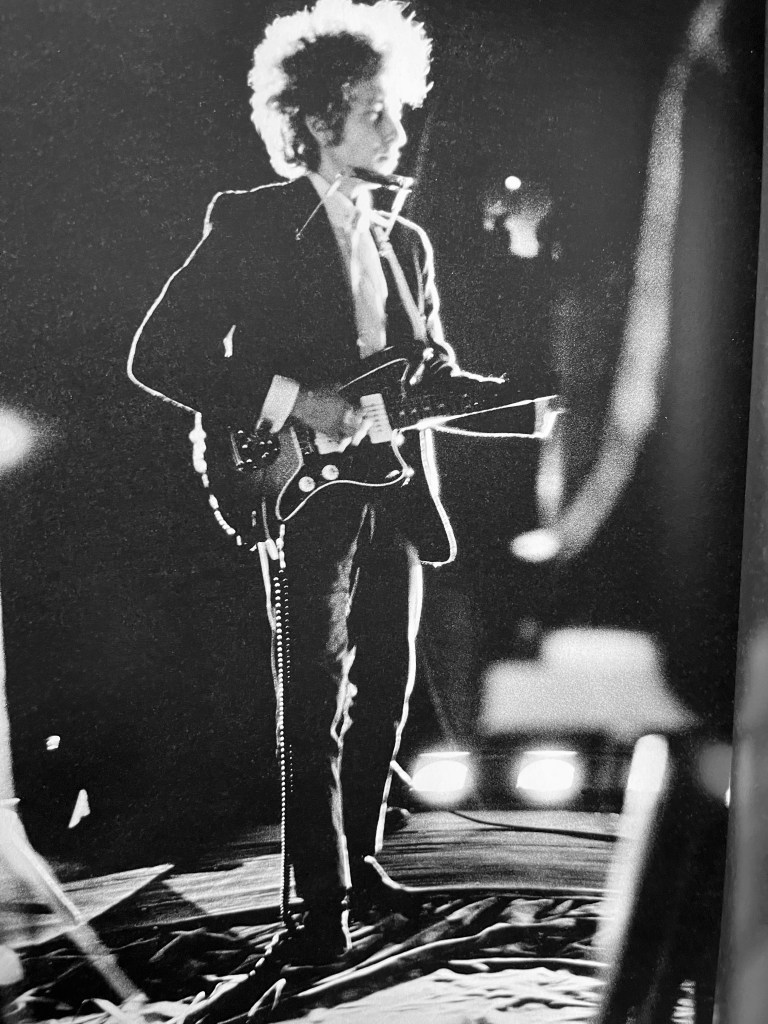
Unruly crowd storming the stagePhoto: Daniel Kramer
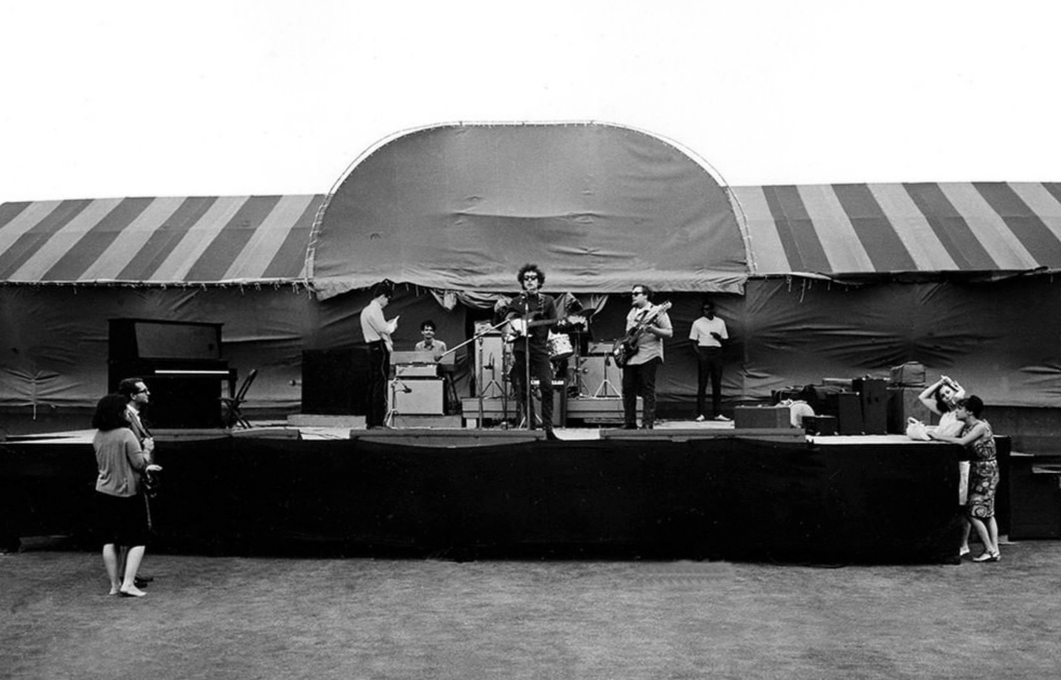
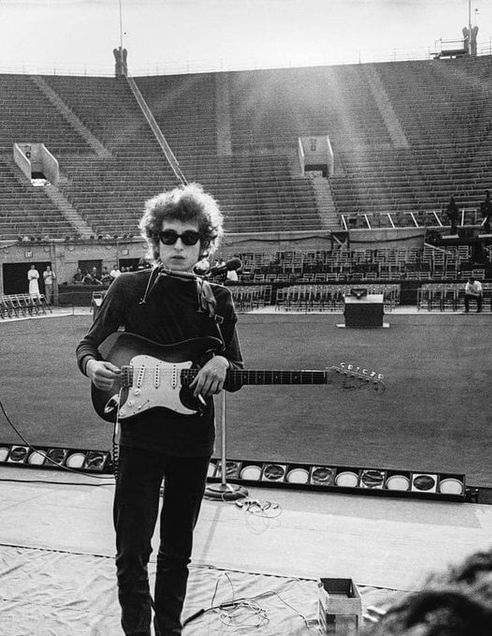
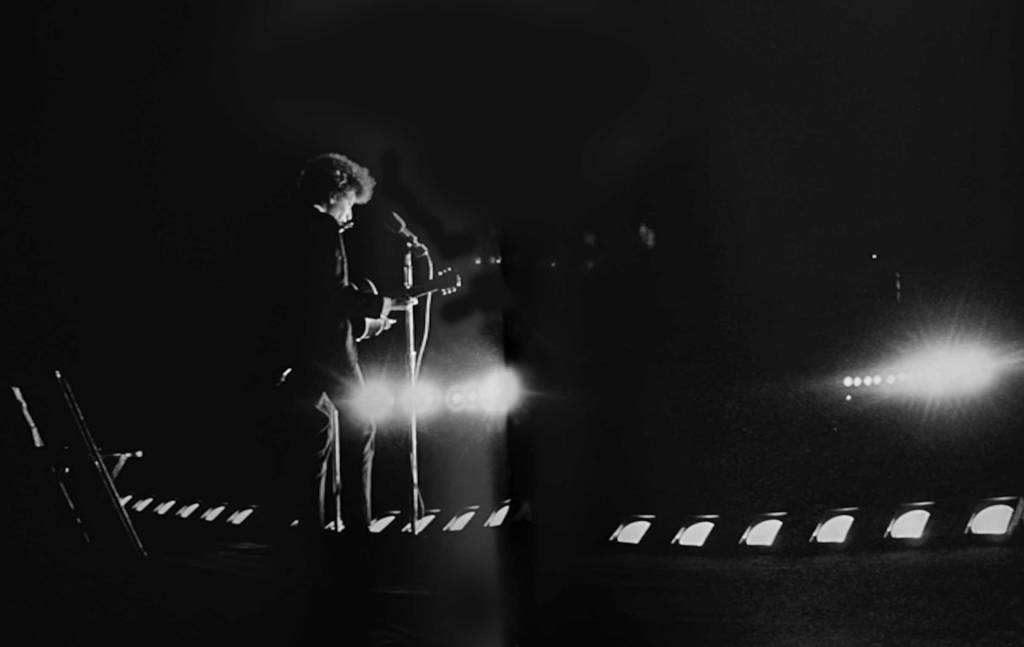
Prep for Concert at Forest Hills Stadium - Photo - Daniel Kramer

The electric set included Tombstone Blues, I Don’t Believe You, From A Buick 6, Just Like Tom Thumb’s Blues, Maggie’s Farm, It Ain’t Me Babe, Ballad Of A Thin Man, and Like A Rolling Stone. When he got to Ballad of A Thin Man, Bob played the intro over and over again until the audience quieted down. The concert ended with Like a Rolling Stone and a dozen teens rushing the stage amid the sound of cheers, jeers, and a sing-along! When the song ended Dylan said, “Thank you very much,” and walked off the stage without an encore.

Listen to part of Like a Rolling Stone

The reaction at this concert, and others that followed for over a year, often resembled what started in Newport as a revolt of his fans. That second set clearly split the audience into fans and enemies of the new Dylan.

I didn’t understand the reasoning and hostility but realized that it must have been important enough to have Dylan rebel against his own musical style. I can’t say I enjoyed the concert as much as watching the emotions in the crowd.

Dylan had played in a folk style for years, yet he appreciated the new rock sound. In fact, Dylan once said, “I just got tired of playing guitar by myself.” He felt he needed to draw other instruments and musicians into the process.

And Now You’re Gonna Have to Get Used to It

Other singers and rock groups such as the Byrds, Sonny and Cher, Barry McGuire, and the Rolling Stones either copied Dylan or carried their own anti-establishment and free-spirited messages in their songs. Dylan helped move the counter-culture movement that was already reaching a broader popular audience. Pure folk music continued with Pete Seeger, Joan Baez, and groups like Peter, Paul and Mary, and the Mamas and Papas, but would lose much of its momentum to a changing culture and sound. Music became more political, poetic, and electric, mirroring the headlines. 

How Does It Feel?

One interesting observation of the concert was that Dylan, while upset at the performance in Newport, was exhilarated by the crowd at Forest Hills. According to band members Kooper and Brooks at a post-concert party, Dylan bounded across the room and hugged both of us. “It was fantastic, a real carnival.” He began to appreciate that fans were reacting to his music. He said to one woman who was said to not have enjoyed the set, “You should have booed me. You should have reacted. That’s what my music is all about.”

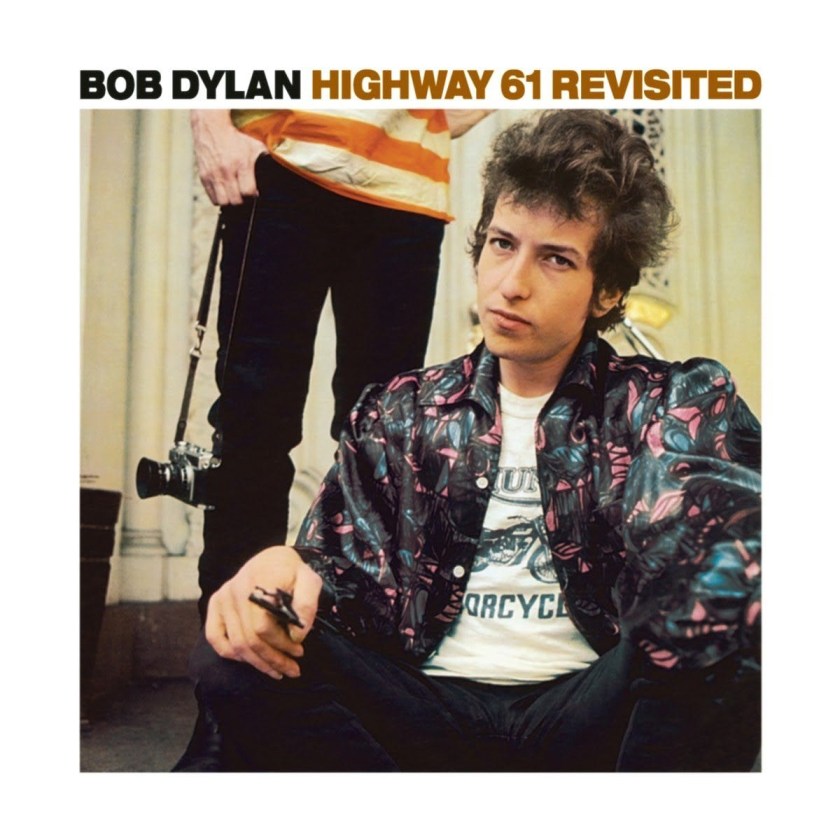
Album cover for Highway 61 Revisited

Two days after the Forest Hills concert, Dylan released Highway 61 Revisited, his first full rock album.  Its title was a play on U.S. Highway 61, known as the “Blues Highway.” It contained his hit single, Like a Rolling Stone, and was a mixture of songs that tied folk-blues to rock, some of which he introduced at Forest Hills. The album was a success and is considered among the greatest albums of all time.

Dylan went on a worldwide concert tour for the next year with his own band playing a similar format of half folk – half rock format, and fan anger continued. There would be no turning back.

Impressed by Robbie Robertson and Levon Helm at Forest Hills, Dylan soon brought in their bandmates — Rick Danko, Garth Hudson, and Richard Manuel — formerly of Ronnie Hawkins’ group, Levon and The Hawks. Together they would tour the world, then retreat to Woodstock to become The Band and record Music From Big Pink — one of the era’s masterpieces..


Epilogue
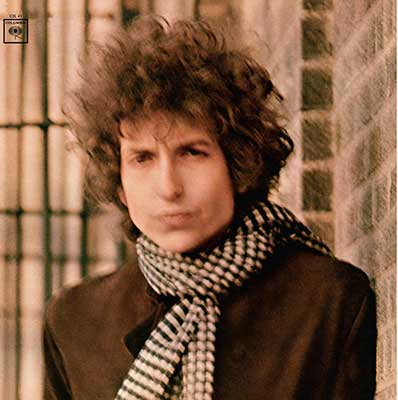
Album cover for Blonde on Blonde

Dylan’s folk-electric rock period would end abruptly in mid-year 1966 after he had released his seventh album Blonde on Blonde (June 1966), a highly creative double album. Some say this was maybe his most creative period with hits like “Rainy Day Women #12 & 35,” “I Want You,” “Just Like a Woman,” and “Visions of Johanna“.
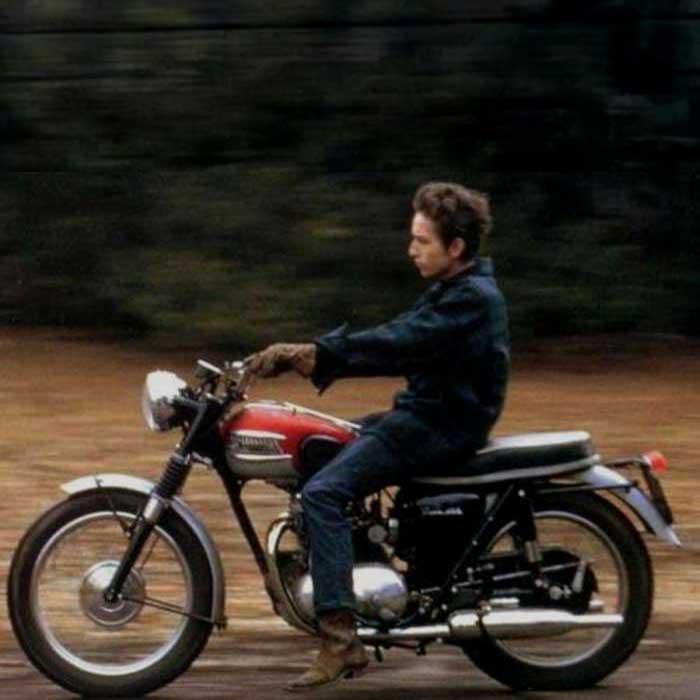
Dylan on Motorcyle

On July 29, 1966 he was seriously hurt in a motorcycle accident near his home in Woodstock, N.Y. Rumors surrounded him. Despite reports that he had serious neck vertebrate injuries, no hospital records were ever discovered. Some speculated that he had enough of the tour and wanted to retreat from the fame. He cancelled all tour dates and retreated out of public attention for the next year.
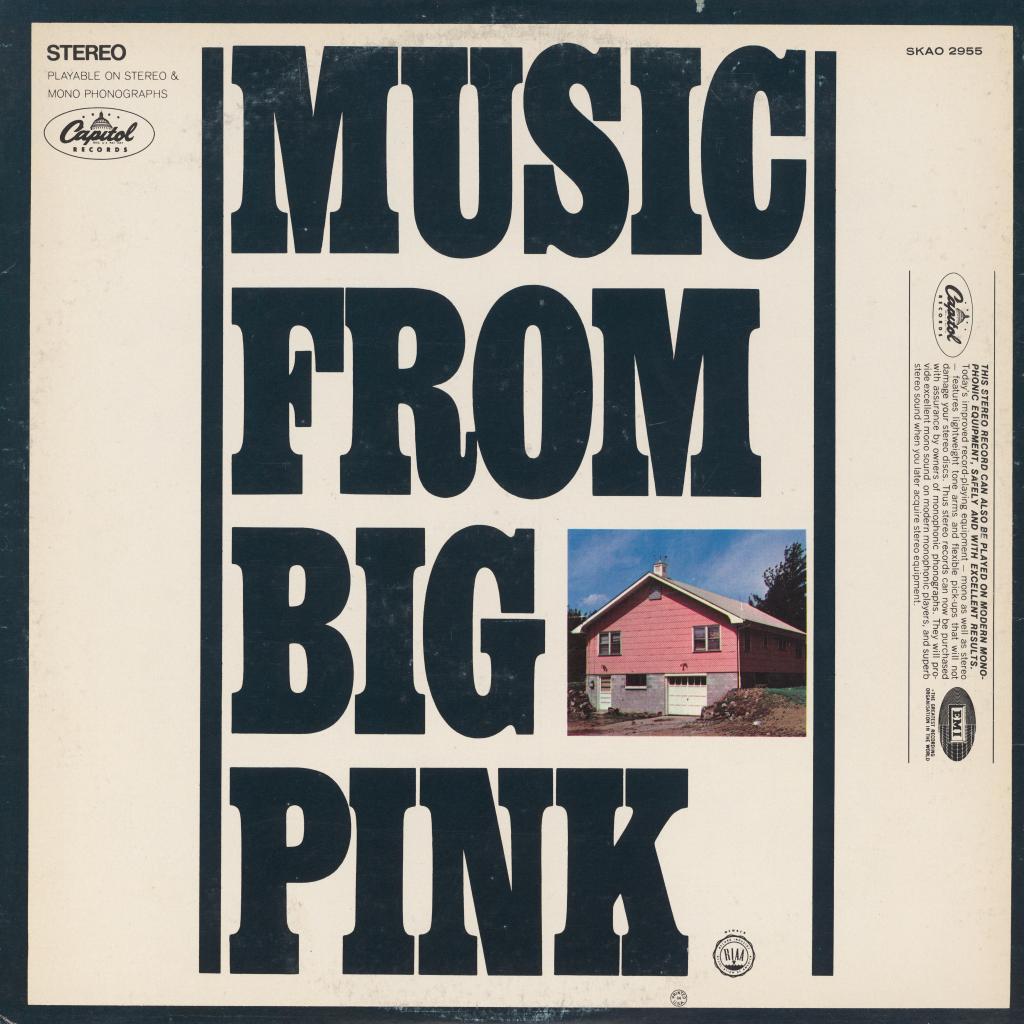
Album cover for Music from Big Pink

During that year off, he began to collaborate with his bandmates, formerly know as “The Hawks.” Meanwhile, they would release their own famous Music From Big Pink album created at nearby Saugerties. That album would be hailed as a masterpiece and launch their successful career as “The Band.”
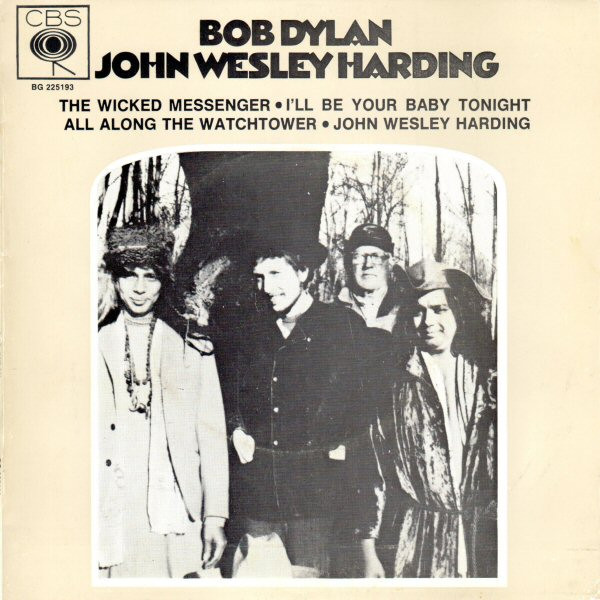
Album cover for John Wesley Harding

During his recuperation Dylan would work on music that would evolve into his eighth album, John Wesley Harding (December 27, 1967)- which had a distinct country and blues sound and included a new big hit I’ll be Your Baby Tonight. Once again, proving his musical style was always changing.

His style and audience had changed. In fact, throughout his long career to this day, he would constantly change his music, the way it is played, and his interests. Change has always been his one reliable constant.


Afterword

That night in Forest Hills was my first Dylan concert. I’ve seen him a few times since, always curious what he’ll sound like next. My search for reviews and recollections led me into a tangle of lore — Murray the K, Al Kooper, Harvey Brooks, Albert Grossman, Daniel Kramer, Tony Mart, and “The Band.”

No video exists of that concert; only a rough bootleg recording survives. But after revisiting it through memory and research, I realize how lucky I was — to have been there when music, and culture itself, shifted gears.

I may be too old now to recall every detail, but not too old to appreciate it anew.

Long live Dylan — and the memories he still manufactures.


Bonus Tracks

Harvey Brooks Remembers

Harvey Brooks played bass during that electric second set at the Forest Hills. He vividly remembers how strange the night was. Brooks was a renown studio bass player and played on the Highway 61 Revisited and Blonde and Blonde albums. He was asked by Dylan’s manager, Albert Grossman to play on tour for two concerts one at Forest Hills and the other the Hollywood Bowl. He would be replaced by Rick Danko of The Hawks (which would become The Band) for the rest of Dylan’s worldwide tour.

Harvey Brooks (bassist) discusses his memory of playing Dylan’s Forest Hills Concert August. 28, 1965
Al Kooper On His Most Famous Organ Riff

Studio musician Al Kooper played organ at Forest Hills behind Dylan. But the story behind how he got involved is an interesting combination of luck and one brilliant organ riff when recording Like a Rolling Stone . Kooper went on to a successful career as songwriter, record producer, and musician. He played behind many famous musical recordings and founded the group Blood, Sweat and Tears. Kooper was replaced in Dylan’s band after two concerts by Garth Hudson of The Hawks (which would become The Band).

Al Kooper discusses his accidentally famous organ playing on Like a Rolling Stone
Daniel Kramer on Photographing Bob Dylan

On August 27, 1964, the young aspiring photographer Daniel Kramer made a pilgrimage to Woodstock, NY to propose to act as personal photographer for Bob Dylan. Dylan agreed and Kramer went on to produce some of the most iconic and beautiful images of Dylan in his heyday – for exactly one year and a day. Those included album covers, time with friends and concerts such as Forest Hills. Here he shares some of his thoughts on that one-year assignment that brought him fame and added to Dylan’s legend.

DAniel Kramer's - A Year and a Day - book cover

Kramer’s opus “Bob Dylan: A Year and a Day” is a great story and source of beautiful images of Dylan in his heyday 1964-1965. This should be on the book shelf of every true Dylan fan. More on Kramer’s work.


Sources

Books

Articles

Media

Audio Recordings

Bob Dylan – The Forest Hills Concert (Swingin’ Pig Remaster) [Aug 28, 1965]
This is the only audio copy of the original concert. It’s a rough unprofessional recording but covers most of the concert.
Click here to listen

Documentaries
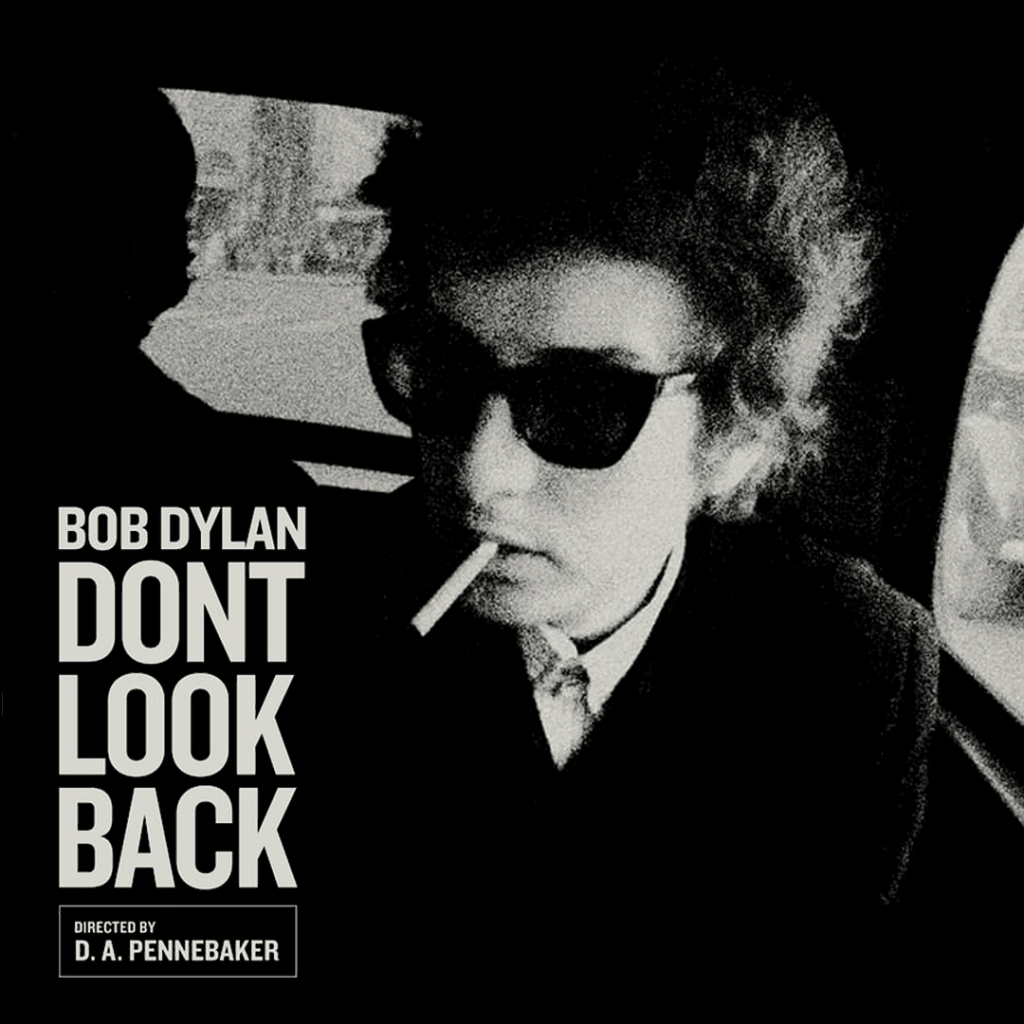
Dont Look Back cover

Dont Look Back, 1967
Director: D. A. Pennebaker
The definitive Dylan documentary — raw, handheld, and intimate. Dylan’s 1965 U.K tour. Captures him just as he’s leaving folk behind for rock. Led to the behind-the-scenes documentary format in film.
Watch options.
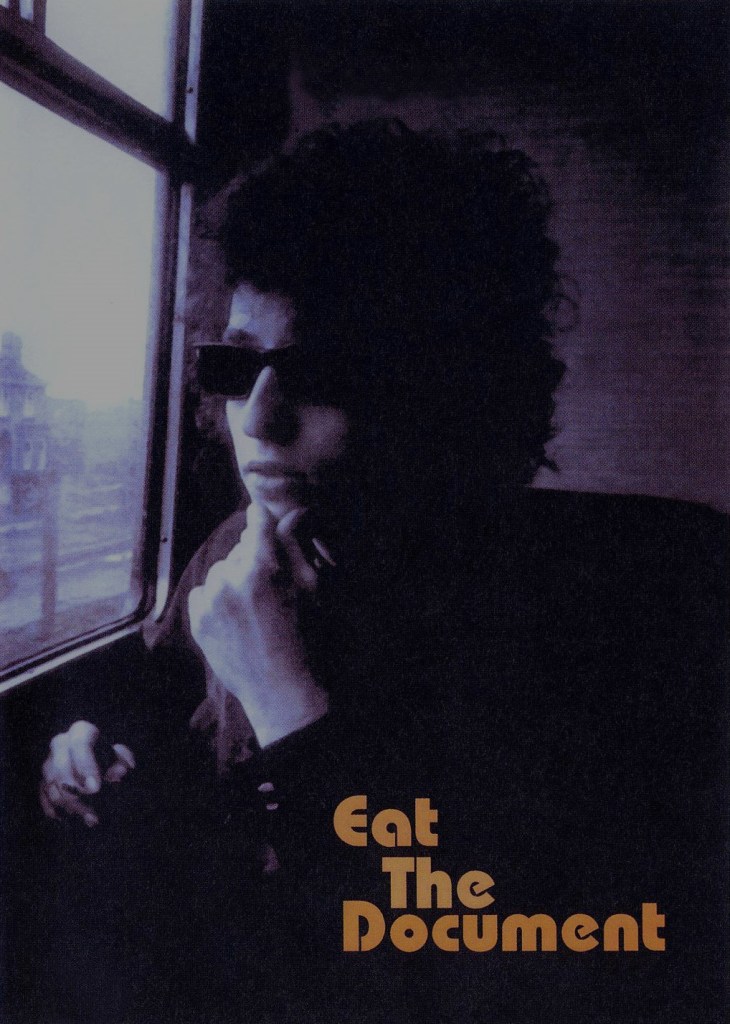
Eat the Document cover

Eat the Document, 1972
Directed by: Bob Dylan & D. A. Pennebaker
Dylan’s 1966 European tour with The Hawks (later The Band) This film shows Dylan’s onstage electricity and offstage exhaustion during his chaotic “electric” phase.
Watch options.
Last Waltz cover

The Last Waltz, 1978
Director: Martin Scorsese
The Band’s final concert and one of rock’s greatest films. Dylan appears near the end — his tribute to having been backed up by these performers on his 1966 tour. Other famous musicians including Neil Young, Joni Mitchell, and Eric Clapton join in.
Watch options.
No Direction Home cover

No Direction Home, 2005
Director: Martin Scorsese
Film produced with Dylan’s cooperation focusing on Dylan’s early years, 1961–1966. Includes archival footage from Newport Folk Festival and 1966 World Tour showing his evolution from folk hero to rock revolutionary.
Watch options.


A New Branch for STEM

My recent visit to Students 2 Science’s Apollo Technology Center offers hands-on STEM experiences, aiming to inspire underserved New Jersey students. By fostering curiosity and ambition, S2S cultivates future innovators, relying on corporate and individual support for its mission.

I recently had the opportunity to visit a new kind of technology center designed not just to educate, but to inspire students in STEM (Science, Technology, Engineering, and Math) through hands-on experiences. Students 2 Science’s Apollo Technology Center is an ambitious new facility devoted to giving every New Jersey student, especially those from underserved communities, access to real-world science.

Welcome to S2S Tech Center
Students 2 Science Welcome

As a self-identified techie (at least I used to be), I’ve always been drawn to science, even if math was never my strongest subject. What has always fascinated me is how science and technology can amaze us and improve our lives. That’s probably why my career centered on using technology to solve problems and make things work better.

Today, science faces growing skepticism and misinformation. Healthy questioning is one thing, but the outright rejection of evidence and expertise has become troubling and discouraging for young people who might otherwise pursue careers in the sciences.

My son-in-law, John Dempsey, a trustee of Students 2 Science (S2S), had long spoken highly of the organization and invited me to the opening of their brand-new Apollo Technology Center. I knew little about how science is taught today or what truly motivates students but I was eager to find out.

What I discovered was an impressive nonprofit that has spent years building a professional team of educators, corporate partners, and volunteers dedicated to one mission: making STEM education accessible to all. S2S has already reached nearly 250,000 students across Newark and 25 other New Jersey school districts. The Apollo Center in Whippany, a newly renovated, 20,000-square-foot facility in a once-vacant office building, represents the culmination of those efforts. I wanted to see firsthand how science itself could be re-imagined to inspire the next generation.

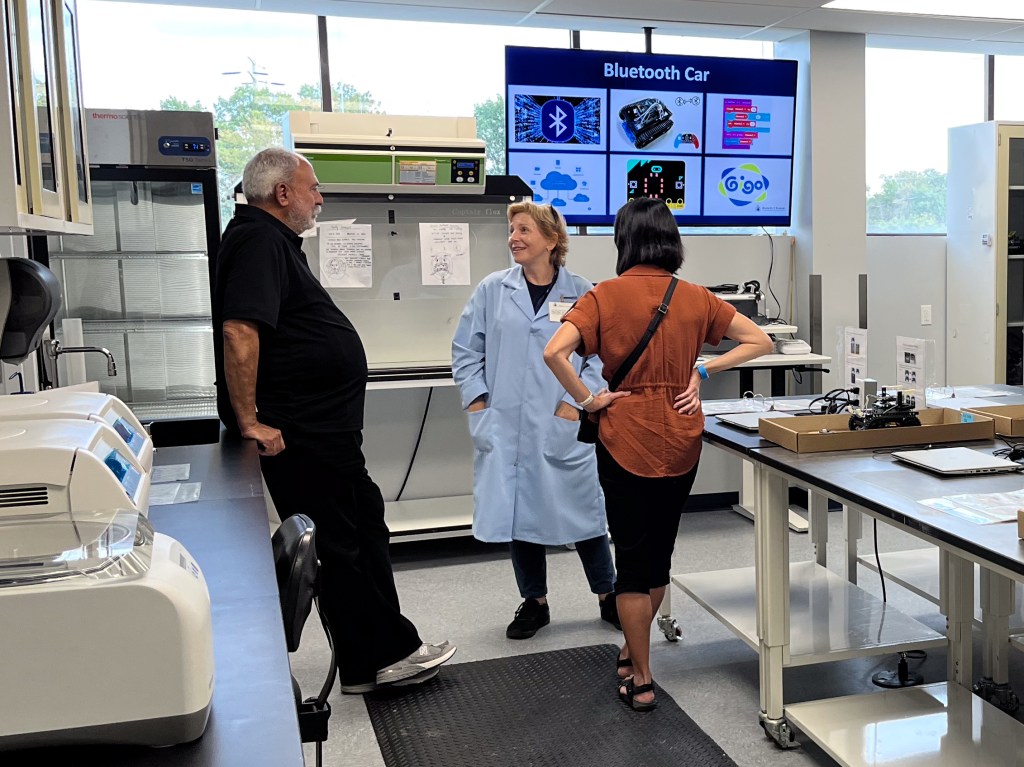
During the Open House, visitors could tour the labs and classrooms of this unique facility. I watched demonstrations in ecology, electronics, communications, biology, and medical science. The equipment was modern and professional-grade; the instructors and staff were enthusiastic and eager to share their work.

Two labs especially stood out. The Virtual Lab featured a microscope linked to a digital display, allowing instructors to project real-time images, like a magnified view of bees, to large monitors and even broadcast them live to classrooms across the state via Zoom. Few school districts could replicate this kind of technology and expertise on their own, but through S2S, they can all share in it.

Virtual Lab

The Medical Diagnostics Lab was equally impressive. Designed for high school students, it simulates real-world medical problem-solving. Teams of students are presented with a (hypothetical) patient in crisis and use vital signs and blood test results from actual diagnostic equipment to identify the condition and propose treatment. It’s the kind of immersive, problem-based learning that makes science come alive.

Medical Diagnostic Lab

Experiencing the energy of these labs and meeting the scientists, educators, and volunteers behind them convinced me that Students 2 Science offers something truly special. Programs like this not only teach skills, they spark curiosity, confidence, and ambition. With the growing demand for professionals in science and technology, we need more initiatives like this to cultivate future innovators.

Students 2 Science is a nonprofit organization that relies on the generosity of its corporate partners, volunteers, and donors. Companies can contribute equipment, expertise, and mentorship, while individuals can volunteer their time or make donations to support the mission.

If this new “branch” of STEM education is any indication, the future of science in New Jersey and beyond is looking bright and growing.

Catching Beatlemania

What was it like to be at the new Shea Stadium on August 15, 1965 to see the Beatles? Proof that serendipity happens every so often.

This is a TV video screen capture of the August 15, 2025 CBS News segment.
Note there is a slight window glare top middle part of screen.
There are not many moments in life where you find yourself witnessing and participating in a significant historical event. You know it even then because there has never been anything like it before. You are gobsmacked with what you see, hear and feel. And, to top it off, all this happens accidentally by a fortunate set of circumstances.

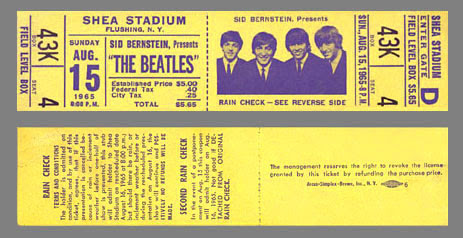
It was on August 15, 1965 that the Beatles were scheduled to play Shea Stadium in Flushing Meadows, New York. My sisters Chris and Barbara and their friend Gail were rabid Beatle fans and they made sure they had their tickets as well as their white go-go boots ready. These were the days when large concerts were rare. This one would be their second tour of the U.S. but the first-ever “stadium concert” and the largest concert crowd (55,600) at any concert at that time.

Strangers in a Strange Land

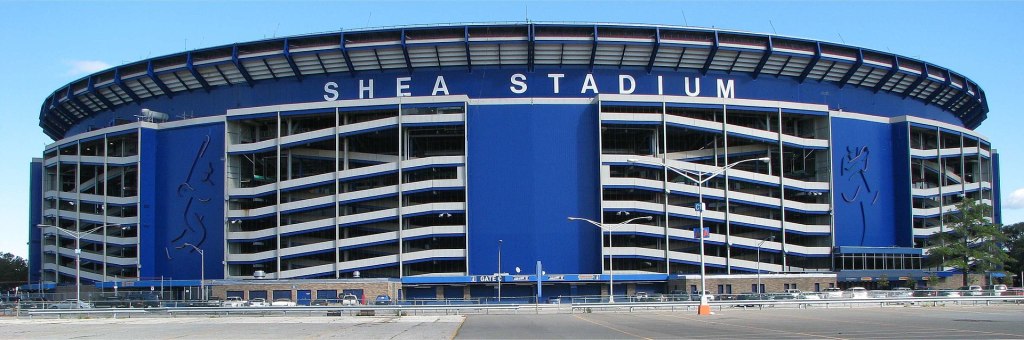
Shea was completed only a year before and as the latest project promoted by Robert Moses, the famed New York City planner, to develop the Queens area. It was located in Flushing Meadows next to the grounds of the World’s Fair of 1964-65 in Corona Park.

Most of us had visited the World’s Fair the year before and marveled at exhibitions. It was a fascinating look at the future and and offered a taste of other countries. I still remember the Lowenbräu beer pavilion where we could drink beer freely, just like being in Bavaria, even though we were underaged and about as naive as we could be about the rest of the world. It seemed like we were moving into the future and becoming part of a bigger world.

1964-65 New York City World’s Fair

Accepting the Mission

In the original plan, my dad was supposed to drive my sisters to and from Shea since they were young teens not old enough to drive. Well, it turned out my buddy Mike Hayser and I were hanging around my house that hazy 80-degree Sunday with nothing particular to do so we volunteered to take them instead. Why my father allowed us to drive I’ll never know but probably the long ride and the need to wait for them were factors. And, it was, after all, the 1960’s and there was a certain freedom and permission that’s hard to reconcile with today’s helicopter parenting.

We didn’t even think about how crazy this could be with thousands of screaming fans. But we sensed that there would be lots of girls and a great adventure awaiting. Little did we know we would be driving directly into history.

At 17 years old I considered my six months of experience enough to tackle the big-game driving in New York City’s traffic and its strange mysterious boroughs. Shea was then a big new and bold stadium. It was built to last for the New York Mets franchise, which started only a few years before. Both the stadium and the team represented new hope for us bitter and abandoned ex-Brooklyn Dodger fans.

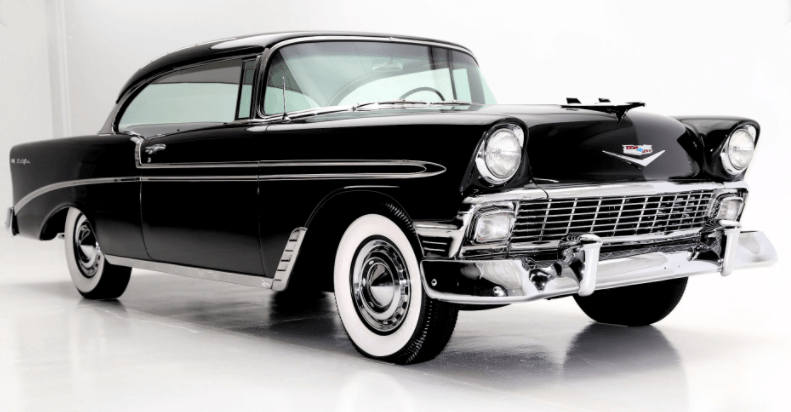
1956 Chevrolet Bel Air

The Way to Shea

This was my longest and most challenging drive with my hand-painted blue 56’ Chevy. Living in Roselle, the best way to get to Shea was to take the Goethals Bridge from Elizabeth to Staten Island and drive across the new and mammoth Verrazano-Narrows Bridge (which was another Robert Moses project.). The bridge had just opened in January 1964 and was an instant success allowing traffic to Brooklyn, Queens and Long Island via the Belt and Grand Central Parkways. To us on the Jersey side, these were legendary roads where we were warned daily of horrendous traffic conditions on the radio and assumed only brave and crazy drivers dare go. So, why not try?

Verrazano-Narrows Bridge led to a new world

The only way to get somewhere far away in those days was to rely on old-fashioned, artfully folded paper maps. Every car had dozens of maps in the glove compartment which were free to grab at any gas station. We relied on maps, intuition and signs (if they were still there) to find where we were going. So, we grabbed a map of New York and headed out like modern explorers to find Shea Stadium and experience the wild urban frontier.

Going with the Flow

As we approached Shea the traffic became heavy and led to a stop. A tremendous crowd was moving toward the stadium so we decided to find a parking spot along the road and walk to the stadium, even though our mission was to deliver my sisters and kill some time exploring the area – later to pick them up somehow. My sisters found the gates where ticket holders entered moving rapidly. Mike and I realized at this point that the action was inside the stadium and our best move would be to try and get in.

A $5.65 Box Seat Ticket to Ride

We studied the situation and realized that this was a sellout and there no tickets (Box seats cost $5.65 apiece!) to be bought and the security staff seemed only half-interested in checking tickets. So, we approached a guard to tell the story of our good deed of taking my sisters to the concert; only to be left outside waiting. Let’s just say on that day everyone was in a good mood. They turned away as we freely walked into the most important concert of our lives, without a ticket.

The Beatles had only broken into the U.S. market a couple years ago but by now they were known worldwide having created over a half-dozen albums and two films. This was the beginning of their North America tour having just released their album and film “Help!” less than two weeks ago and had appeared on the Ed Sullivan show the night before.

Experiencing Pandemonium

From dugout to stage

Pop concerts were not that common and were not believed to be big revenue generators. All that changed at Shea. The concert at Shea Stadium set a world record for attendance and gross revenue. The Beatles got $160,000 of the $304,000 box office sales and proved that there was money and other benefits in staging large concerts.

Lead off acts included Brenda Holloway, King Curtis, Sounds Incorporated, Killer Joe Piro and The Discothèque Dancers, The Young Rascals and Cannibal & the Headhunters. Hosts included Murray the K and Cousin Brucie Morrow. Television host Ed Sullivan introduced the band when they took the stage: “Now, ladies and gentlemen, honored by their country, decorated by their Queen, and loved here in America, here are The Beatles!”

The concert was ahead of the audio technology at the time and could not properly project the music in the massive stadium. Powerful stage amplifiers couldn’t play louder than the screaming crowd. Even the stadium’s P.A. system, normally used by baseball announcers, was also employed to help project the band’s sound. But, the roar of the crowd could be heard throughout their appearance.

Thousands of fans like these

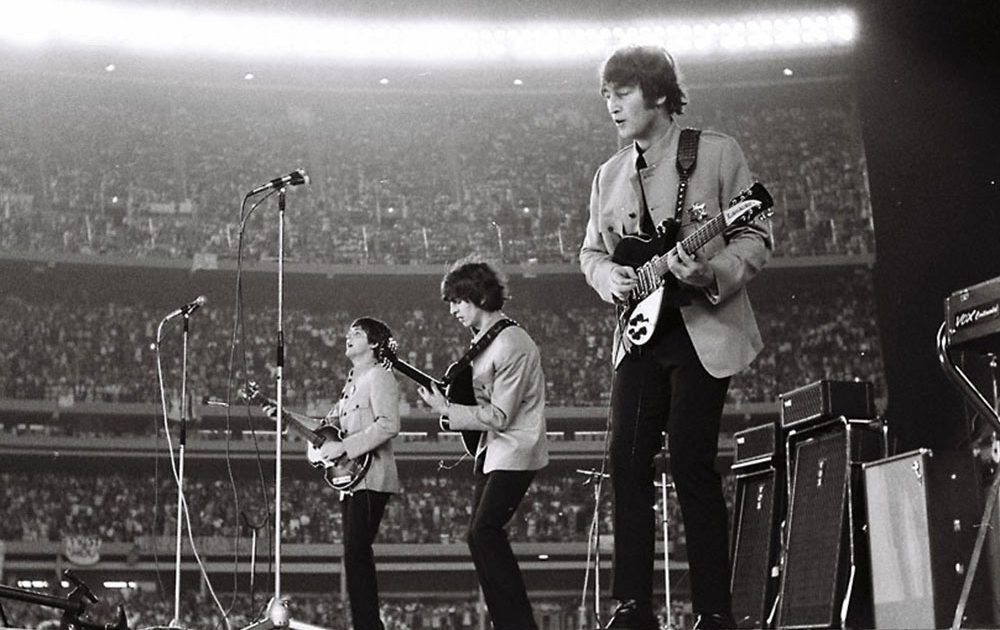
Once the Beatles started playing, it didn’t matter where your tickets were or if you had one. Everyone spilled into the lower levels and stood for the entire concert in awe of the band and the crowd of frenzied fans. They continued to play 12 songs lasting about an hour. We had traveled two hours, witnessed the largest crowd we had ever seen, managed to crash the gate and listen to some great music. But, nothing compared to the electric reaction of this huge crowd. Girls were out of control and screaming everywhere. I remember getting goosebumps by just witnessing the joy and excitement that was beyond our imagination. It was obvious that Beatles were having as great a time as their audience.

Playing to the ecstatic noisy crowd

After the concert fans stormed the field and we made our way out. I’m still not sure how we found my sisters in that crowd of over 55,000. I don’t remember a thing about the ride home but I’m sure we basked in the good vibes of the event knowing that we were there for a very special event with memories that will last a lifetime.

The Concert at Shea in the Beatles’ Words…

“I think we just went a bit hysterical that night; we couldn’t believe where we were and what was going on, we couldn’t hear a bloody thing and we thought ‘This isn’t very good, but it’s going down great.’ The hysteria started to kick in. That was a great one.”

Paul McCartney, Back To The World tour book

“Once you know you’ve filled a place that size, it’s magic; just walls of people. Half the fun was being involved in this gigantic event ourselves.”

Paul McCartney, The Beatles Bible

“What I remember most about the concert was that we were so far away from the audience. . . And screaming had become the thing to do. . . Everybody screamed. If you look at the footage, you can see how we reacted to the place. It was very big and very strange.”

Ringo Starr, The Beatles Anthology

“At Shea Stadium, I saw the top of the mountain.”

John Lennon, recalling the show in 1970 in a TV interview

Epilogue

It’s interesting to note that at the time of the concert the Watts Los Angeles riots were taking place with the black community angry about the police brutality and civil rights. Meanwhile, President Johnson signed the Voting Act of 1965 that very afternoon establishing new laws that were meant to provide free and fair elections forever.

The mighty Shea was demolished forty seven years later replaced by Citi Field, but the same roads and bridges remain. The Beatles were only in their 20s and at the height of their careers in 1965 but played their last concert together in 1970, just five years later. That last concert and the Beatles legend is still being explored with the release of the new Peter Jackson/Disney+ retrospective on the Beatles last project together, the making of “Get Back.”

History, it seems, is never written in stone and just takes time to understand and appreciate.

The Beatles at Shea Stadium Video

The following video was purchased years ago online and represents a rough cut of the original special recording which appeared on British and American TV as a special. It is approximately 52 minutes long.

Video of the August 15,1965 Concert at Shea

A Protester in Training: How Activism Became My New Form of Fitness

After decades of staying quiet, I stepped into the streets. What I discovered surprised me: protesting isn’t just a political act—it’s a personal practice that builds resilience, awareness, and a sense of belonging.

After joining six protests over the past two months, the experience finally started to feel familiar. I began to understand what it was all about. There’s a reason, a rhythm, and even a reward to protesting that I hadn’t grasped before. Still, something instinctual pushed me into it—more impulse than logic.

Protesting doesn’t come naturally. In everyday life, when things are relatively calm, most of us try not to rock the boat. We avoid confrontation, sidestep discomfort. We’re taught to “suck it up” and “don’t be a complainer.” After all, there’s always someone worse off, right? And then there’s the risk—stirring the pot can bring consequences, especially from those who’d rather you simply “behave.” At my age—77—I could easily ask, who needs the trouble?

But what do you do when logic, reason, and normality seem to vanish? Do you just complain? Do you tune out? Seek comfort from friends? That’s where protesting comes in—not just as a solution, but as a kind of therapy.

Fifty years ago, before fitness was even trendy, I took up running as a personal challenge. Back then, adult recreational running was unusual. But as marathons and Olympic athletes captured public attention, the idea caught on. We began to believe that even the average person could strive for something great—even if the race was personal.

Running took a leap of faith. It demanded hard physical work, but promised positive results—mental clarity, health, confidence. It was lonely at first, with little guidance and few role models. But it became a habit. And eventually, the world caught up. Running went from fringe to mainstream.

Now, since January 20th, I’ve taken up a new “sport”: protesting. Frustrated with the state of the nation and the new administration, I turned to activism not just as civic duty—but for my own mental fitness. And like running, protesting requires practice, resilience, and a belief that effort matters.

First, it takes mental toughness to shake off apathy. You need to believe that one person can make a difference—especially when standing with others. And yes, there’s a kind of performance involved. Maybe you’re just holding a sign in silence. Maybe you’re shouting chants or singing satirical songs about a congressman or the president. It can feel awkward or corny at times. But it can also feel exactly right—like you’re doing what needs to be done. Like you’re part of something larger, and your voice is finally being heard.

So, I’ve come to believe we must train ourselves—just like athletes—to overcome political passivity. With every new day of shock and awe, we grow stronger, more aware, more ready to push back. Protesting may not fix everything, but it sends a clear message: we will not sit quietly and watch democracy fade.

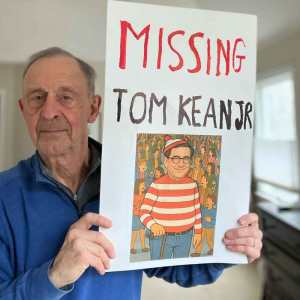
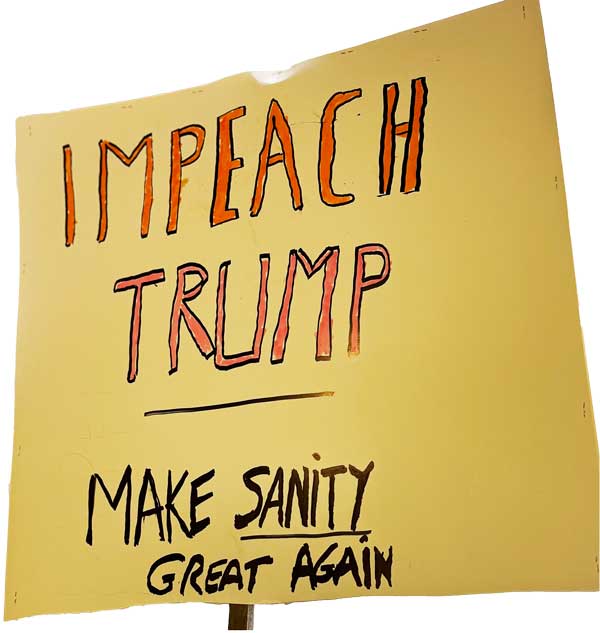
Poster for a Missing Tom Kean, Jr, who is notorious for not mneeting with his constiutents.

Confessions of a Reluctant Protester

What can the average person do to fight back? It’s never too early or too late to get involved. Take back our country before it’s too late.

It didn’t have to be this way.
I’m a reluctant protester and I’m pissed off.

I have been enjoying an active, yet complacent retirement for the last eight years. At least that was the case until Trump clawed his way back to running our nation. Four days from today I’ll turn 77 years old. I’m at a time in my life where one usually mellows and winds down activities and ambitions. But, if Trump, at 78, can find the energy to ruin a country, then maybe I should at least try to help build it back. But how?
I’m still trying to understand what happened in just a few short weeks. What will happen tomorrow? And, how can anything be the same once the dust settles? I bemoan those who have lost their government jobs and noble ideals that they upheld. Collateral business, friendships and relationships may be permanently frayed. It will take a lot of effort to someday reconstruct a government and a community that are in basic harmony again.

I have to ask myself, “Is it me?” Why do those I care about not seem as troubled about the repercussions of what is happening? The news is filled with so many new catastrophes each day. It’s all shocking and numbing, yet still feels distant right now. Most of us have yet to see the effect these changes will have to employment, health, safety and peace – to name a few likely bad outcomes. And, for what?

Protest – “Not My President”

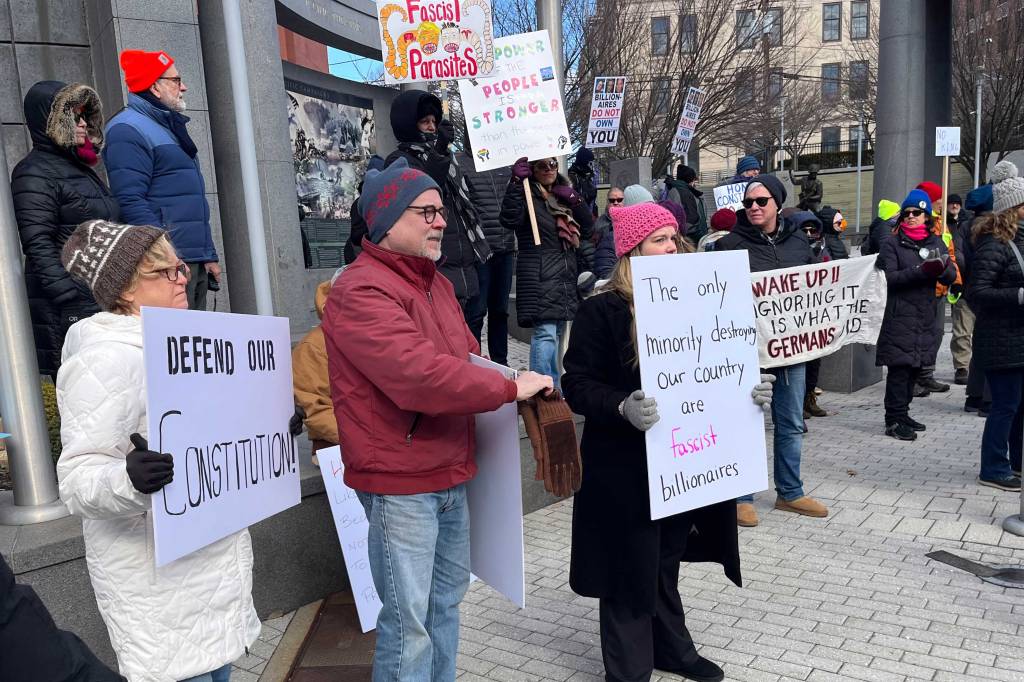
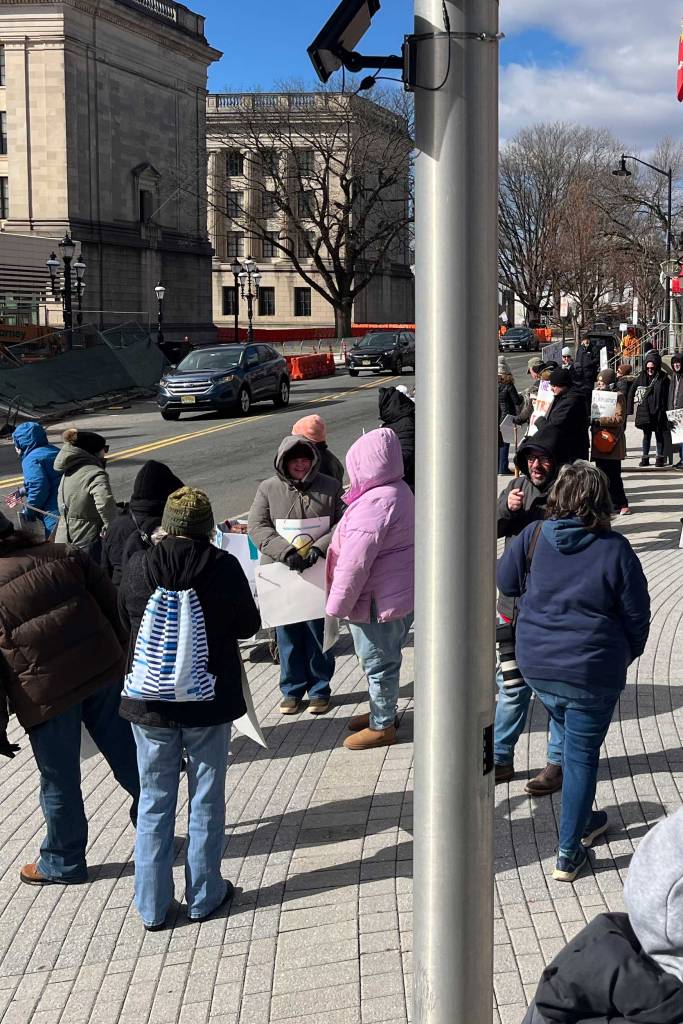
Last Monday I gathered for a protest at the New Jersey state capitol building in Trenton for a few hours, venting my frustrations and meeting others who had similar feelings. I had gotten a tip from my friend Bob who had posted some of his frustrations with the current state of affairs. He created a private Facebook group Lean On Us which linked to a national public site 50501 which listed a “Not My President Day” event. It seemed like the perfect celebration for this President’s Day. Understand, at this point most of us are just becoming active and have no idea how this works and what to expect.

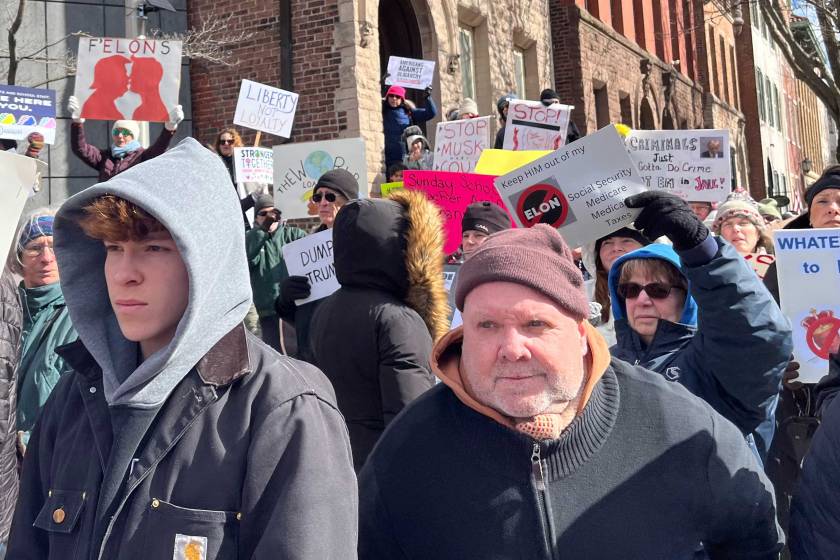
I got there early and then watched as a handful of us became a large crowd of about 500 or more. Apparently, our small group was just one of many small organic groups of citizens that had become frustrated enough to get out in 20 degree weather with 20 mph winds to protest what Trump-Musk is doing to destroy our government. There were no speakers but plenty of motivated, energetic and loud people with great rebellious signs wanting to take back what we already lost and to stop the bleeding.

The size of the crowd, chants and the waiving and beeping of cars was the only indication that we are on the right track. There was little press coverage, although similar protests were happening across the country at many state capital buildings.

I would not call protesting fun but it is rewarding. A least it feels like I’m actively doing something. Ultimately, you want your effort to pay off and have some effect, even it’s just to let others know that they are not alone. My dream is that everyone finds a way to express their anger and their will; enough to change what seems to be an inevitable train wreck.

If you feel frustrated too, find a way to get active. It's a new rebellion. Protesting, phone calls, writing letters, talking to others will help you cope as it did for me. 

Remember what Thomas Paine wrote in the American Crisis..."These are the times that try men's souls."

Notes from the Field

A recap of two days of gumshoe detective work, unique sites and the Polish countryside.

I expected this would happen.

There’s too much going on to keep all the interesting stories coming. Everything is going according to plan. In fact, much better than we imagined. More details to come about the last few days in future postings .

Yesterday we were spent a beautiful day touring Krakow. Today, we are heading to Auschwitiz so we expect the mood to change but feel excited about the new experience.

I should add that coincidentally it’s Father’s Day! I’m feeling something special about that on this trip.

As a quick update on some past days …

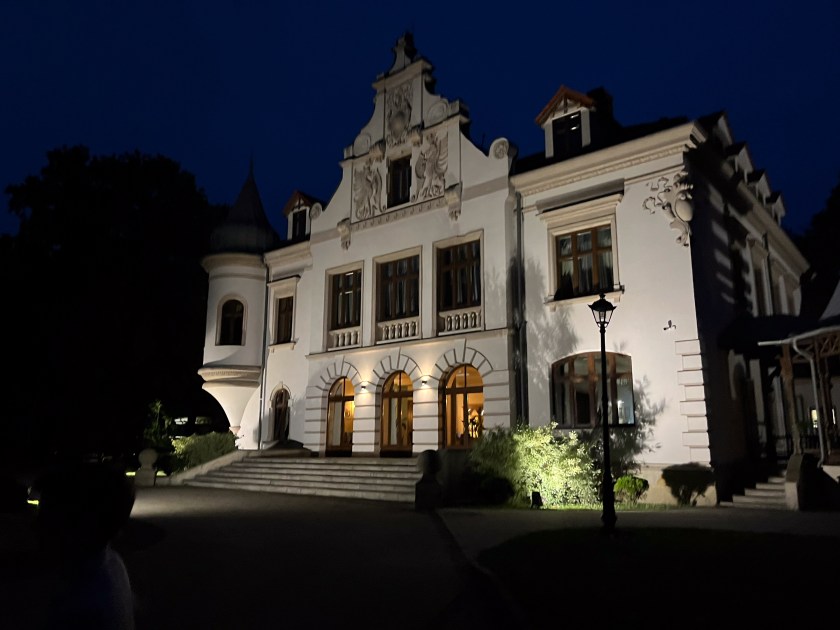
Last I left the notes on this trip, we were heading into heading to our hotel Polanca Palace in Krosno on Wednesday night. It was a beautiful restored mansion with a great restaurant.

Polanco Palace
Pałac Polanka Hotel

Thursday – June 13

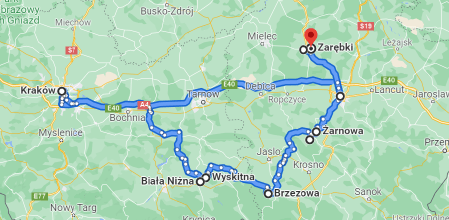
The next day (Thursday), we drove southwest another 40 or so miles to Brzezowa. Here we were on a hunt for traces of my grandmother’s family on my father’s side. Joseph Peter Kiczek had married Katarzyna Kuchnicka who records had shown were from this village town.

The hills became broader and steeper as we neared the Tatra Mountains range bordering Poland and Slovakia. We did not have much to go on but a record that she was from this town in either her immigration papers or marriage certificate.

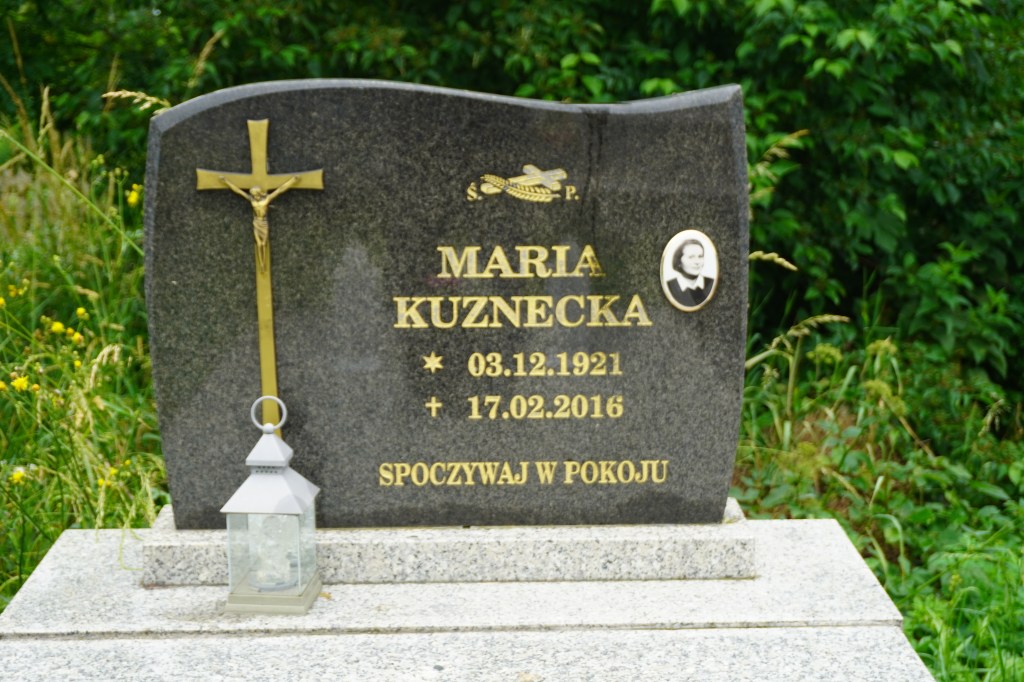
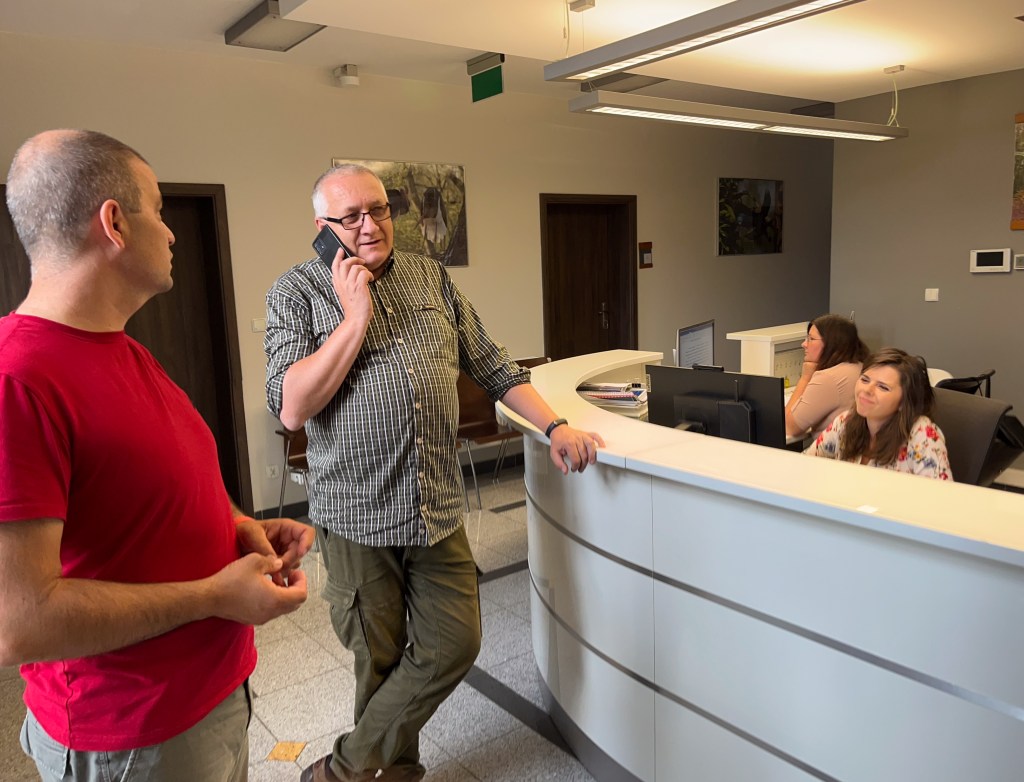
Our translator and guide’s, strategy was to visit the town hall records and see if they had either direct records for Katarzyna father or some other clue that could tie in the family. Basic detective work. This led us to several municipal records stops and a possible cemetery where others in the family had been buried. It was gumshoe work with small gains in our research. We found a woman who had Kuchnika roots but perhaps from another branch of the family. Name on gravestones and other records could not directly tie those past lives with our family.

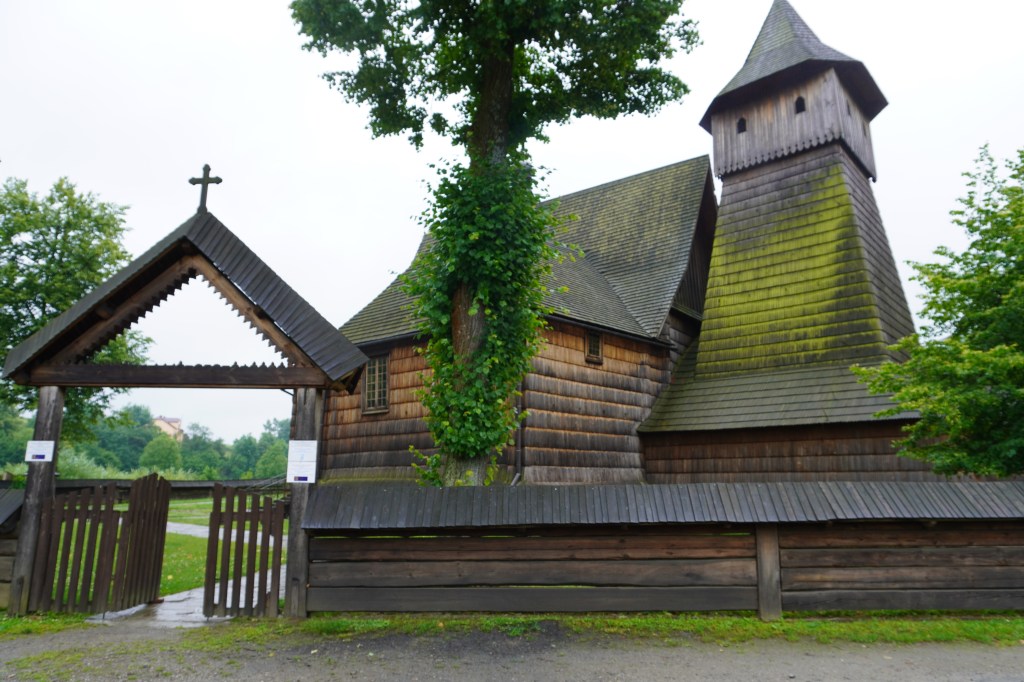
In nearby Binarowa, we visited the very unusual wooden church of Michael the Archangel, This church built in the early 1500’s is listed on UNESCO’s historical sites list. It’s one of several very old country wooden churches with unique wooden carvings and invaluable art located in a small country town. Many were destroyed by either the Nazis or Communists. There’s lot’s of pics to come on this.

At day’s end, in Stróże we we located Sadecki Bartnik, our most unique place to stay. It would be hard to categorize this place except to say it was a honey farm, and nature camp, a resort dedicated to nature and beekeeping. Sounds odd I know, but a beautiful resort with some interesting twists to buzz about later.

Friday – June 14

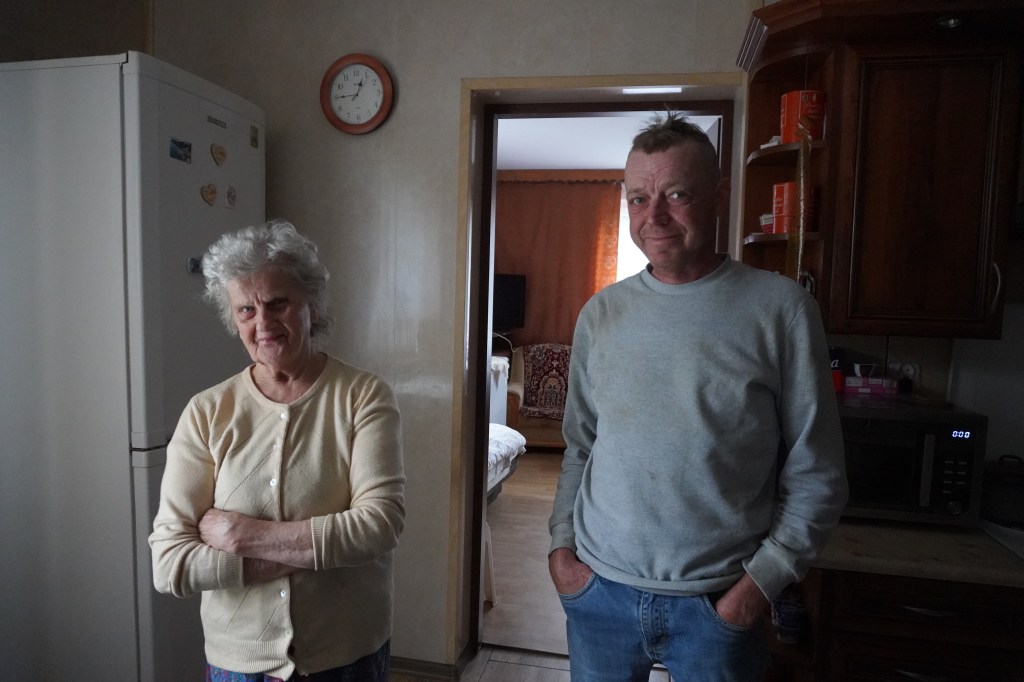
Our last day of family research. Records we had showed that my grandmother on my mother’s side, Anna Semla Kmak, had come from Wyskitna or Biala Nizna area not too far from Stróże. Again, we went to the municipal records offices and found a trace of the family which we followed with some success and met a few interesting characters along the way. It was an interesting day to end our research. We added more mystery finding and meeting a connection to the family.

Now, we were headed to Kraków about 40 miles awayas fast as we could go so Lucjan could return his van and catch his train back to Rzeszów and we could check in our hotel in Krakow for a 3-night stay.

And, what a beautiful city Kraków is! We learned that there was plenty to experience in this very old city. It’s unique in history, culture, education and now, maybe, a model for a melting pot for today’s immigrant refugees. We may be seeing both the past and the future here.

Let the Hunting Begin!

Our first day of relatives hunting began today. A combination of detective work and history.

It was Tuesday and our first day of relative hunting. Our guide Lucjan Cichochi arrived at our hotel in Rzeszów, Poland to take us to our first destination for the week. One big advantage we had was a personable tour guide who spoke both English and Polish was a professional genealogist who Ethan had consulted with on our family history. So, he already had some familiarity with our case(s).

What’s in a Name?

Ethan’s mom Judy’s mom was Helen Dolac (maiden name Stobierski). Her family was known to come from an area about 40 miles north of Rzeszów in the town of Świerczów. We had an address for a Stobierski and approached a woman living there who said no one with that name lived there and there were many families with that name. She suggested trying another address down the road where Halina lived who might be from that family.

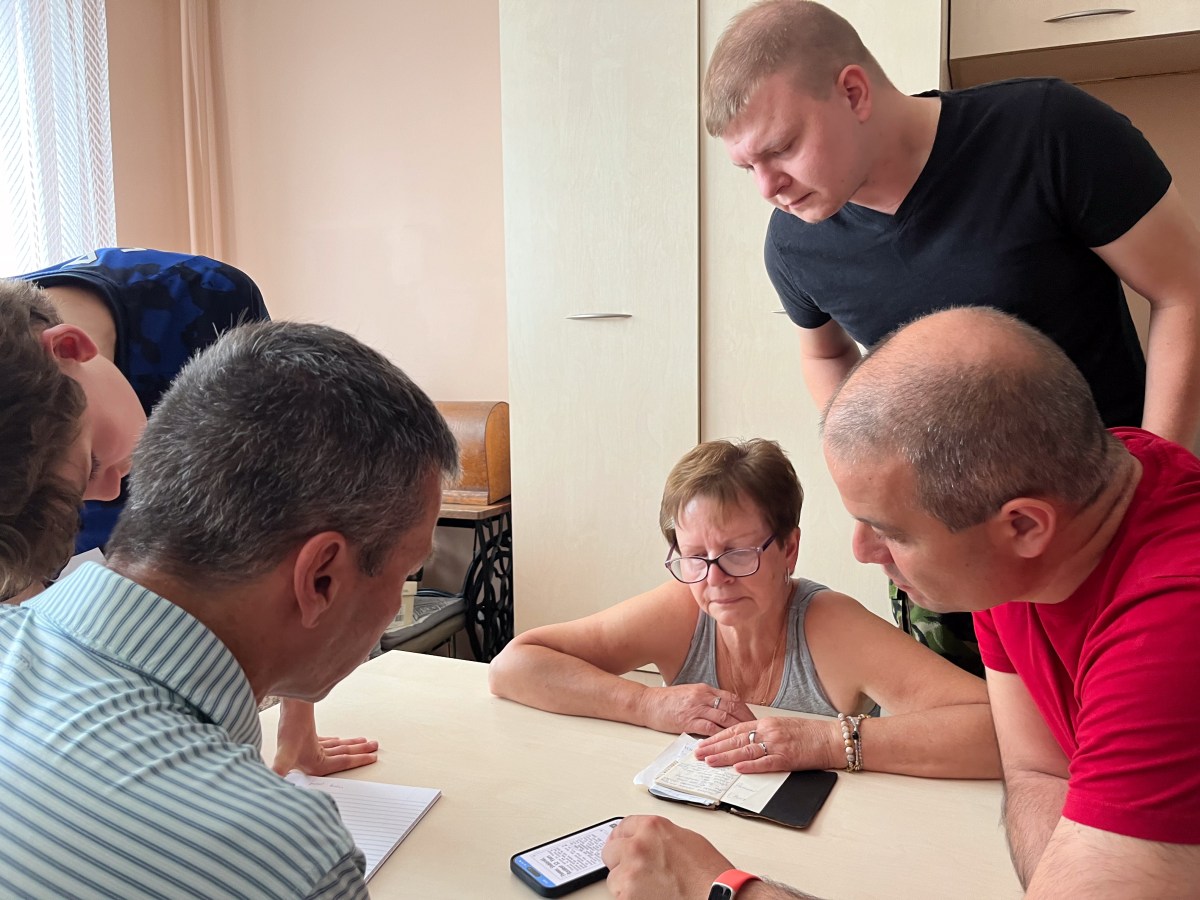
It was in a multi-family apartment building which seemed might be daunting for a stranger to ring a doorbell. Lucjan, however, never let that stop him from asking around. Through a neighboring park attendant, he called Halina Knipa (formerly Stobierski ) and asked if we could meet to discuss her family for the benefit of three strangers from the U.S. seeking family history.

Naturally, it seemed, she let us in her modest apartment and treated us to coffee and cake while he began asking questions to see if she was indeed connected to the Stobierski family who immigrated to the states. She spoke only Polish but her 28-year old son Bartek, spoke some English and joined us as we looked through old photos. Ethan and Lucjan agreed that there probably was a connection to the the U.S. Stabierski’s through a great grandfather. She even agreed to take us to the town hall records building to verify his birth record to see if he was a brother of Tomas Stobierski, Ethan’s great grandfather.

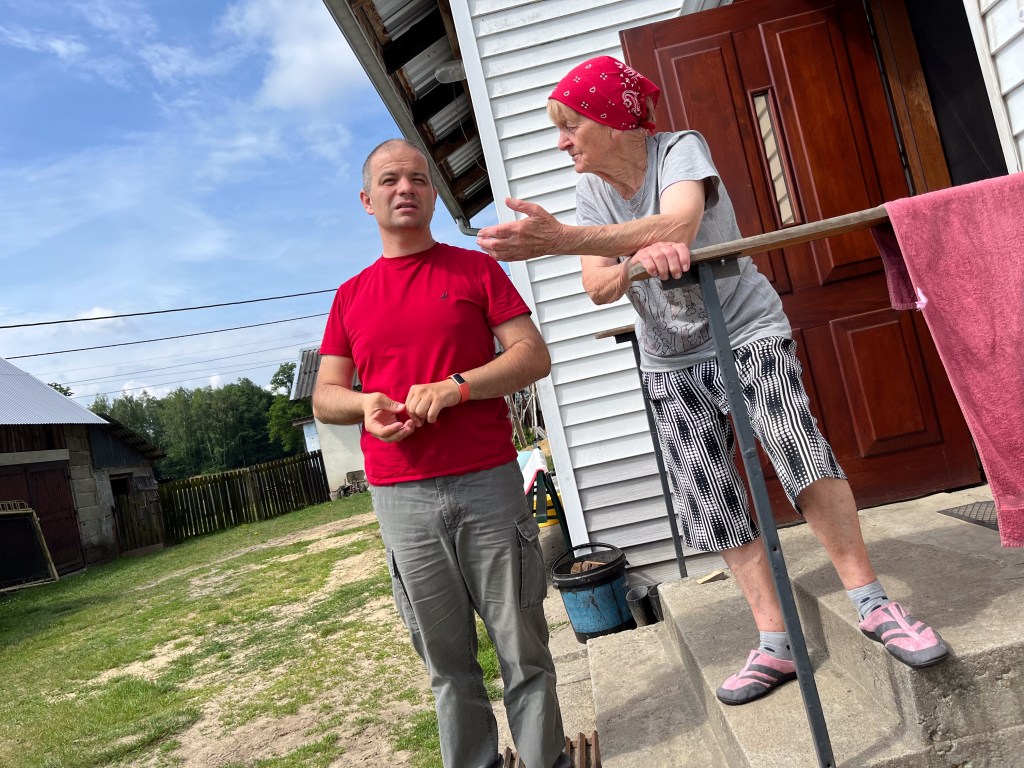
Halina and Bartok then took us to the house where she and the Stobierski family once lived which is now vacant along with many others in the area. Once mainly a farming community, commerce had settled in and the family moved on. With no one interested in a house in need of repair, a barn and acres of farming land, Helena’s sisters now owned the land and its future was uncertain. It seemed likely the family home would be sold off someday. We agreed to exchange emails and make a connection

The land in this area is mostly flat and fertile. It’s fairly busy with traffic although the population is not dense and there seems to be an oversupply of land with little influence from big agricultural companies. It seems like a place where time has stood still, at least for now.

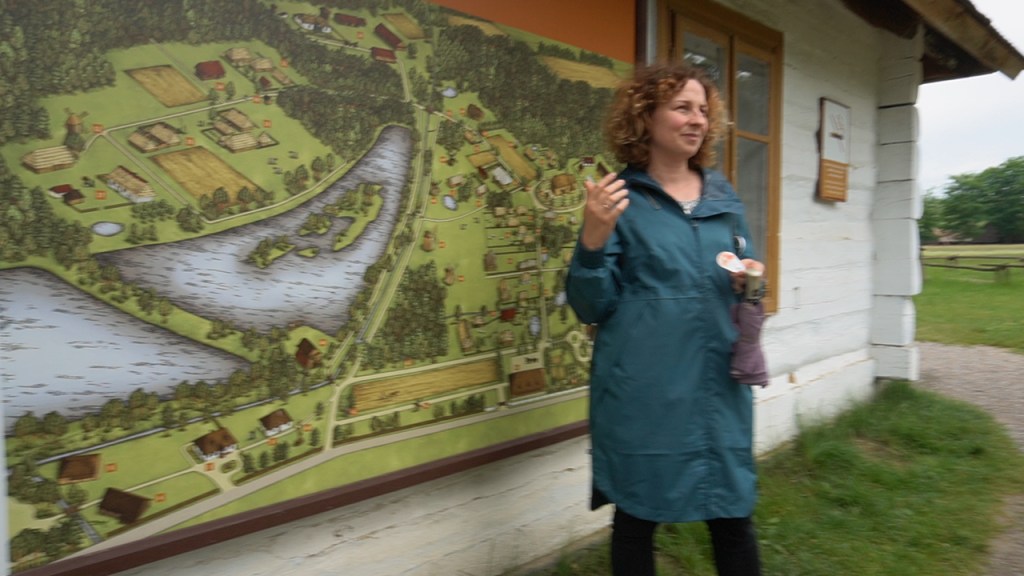
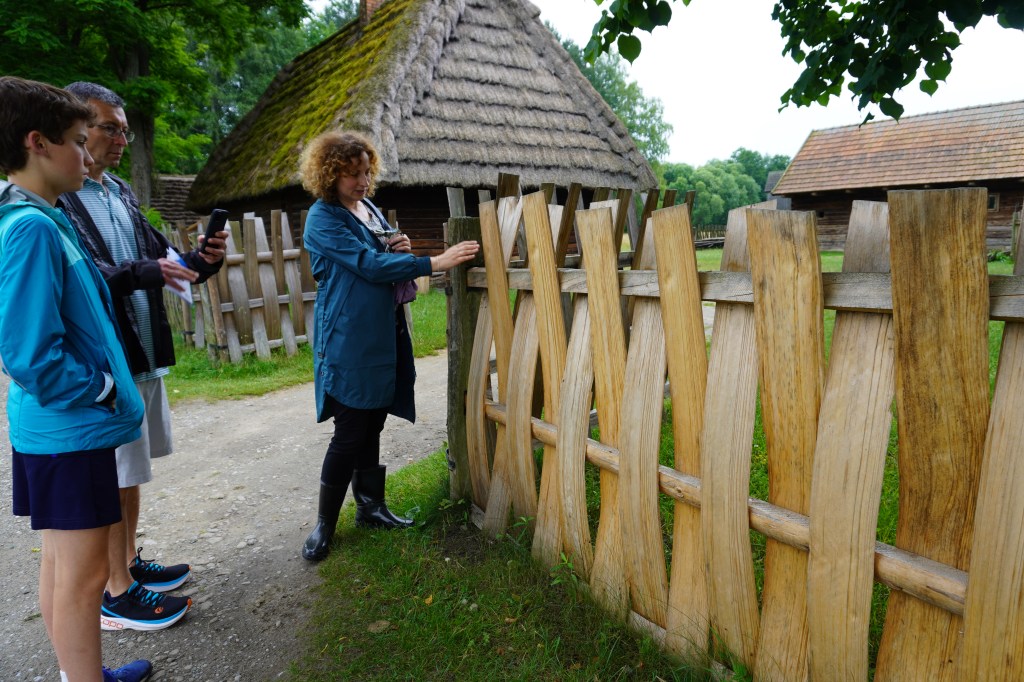
Visiting the Ethnographic Park

After a quick lunch we headed to the Ethnographic Park in Kolbuszowa a few miles away. The term “Ethnographic Park” is probably a more globally acceptable term for a recreation of a past time and culture. Williamsburg in the U.S. is considered as such. There are many such places in Europe reflecting past history and how people lived in those times.

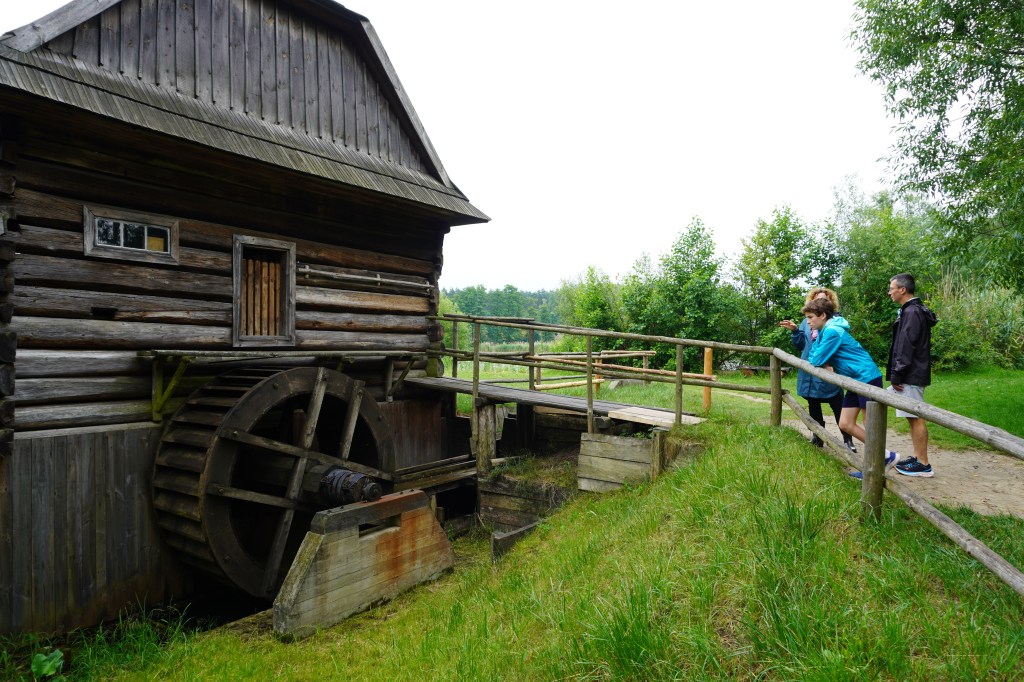
The southeastern part of Poland was mostly an agricultural area and the common village people who worked the land and raised farm animals, mostly for the benefit of wealthy landowner aristocracy. The park is an assembly of about 60 buildings in an area resembling what a Polish village might look like several hundred years ago.

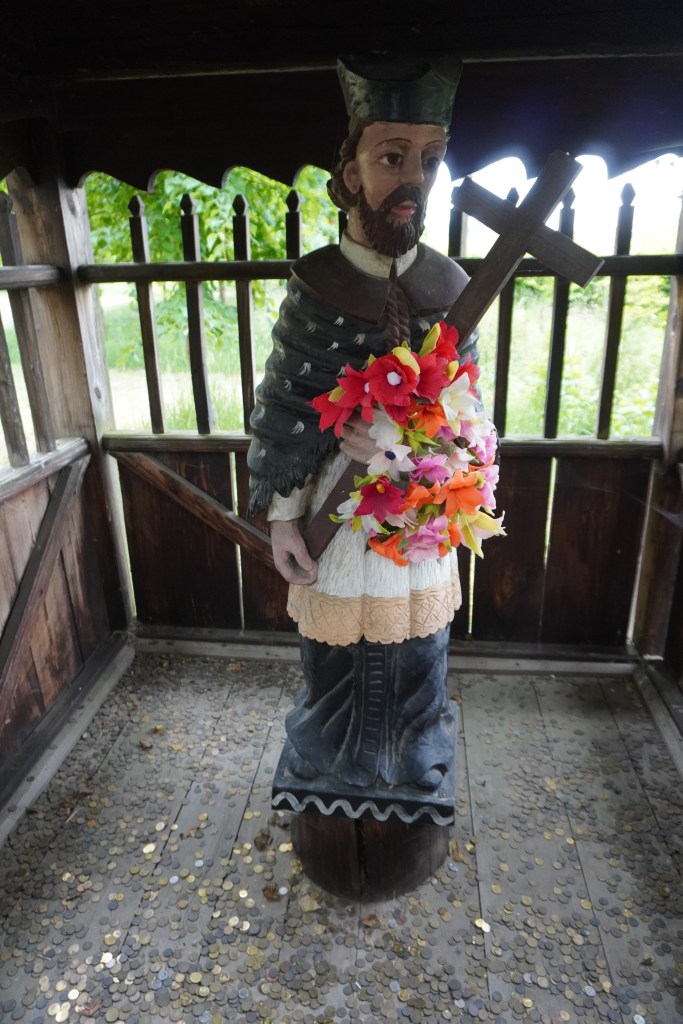
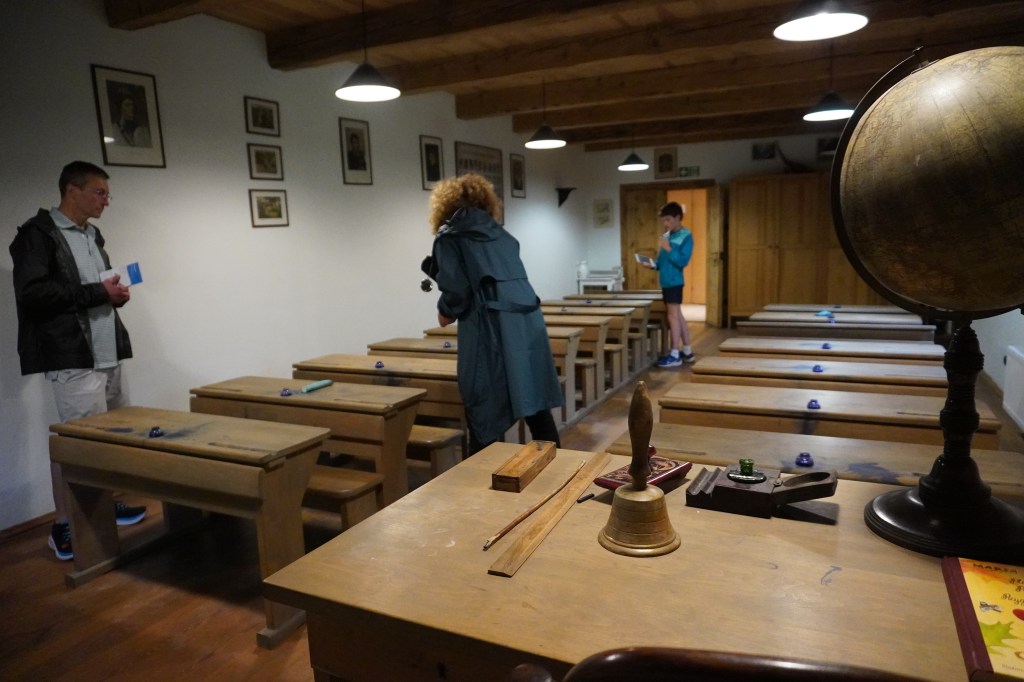
All buildings in this living exhibit were historically accurate and selected from the nearby areas then reassembled to create this reconstructed new village, including peasant houses, barns, shrines, schoolhouse, silos and manor house.

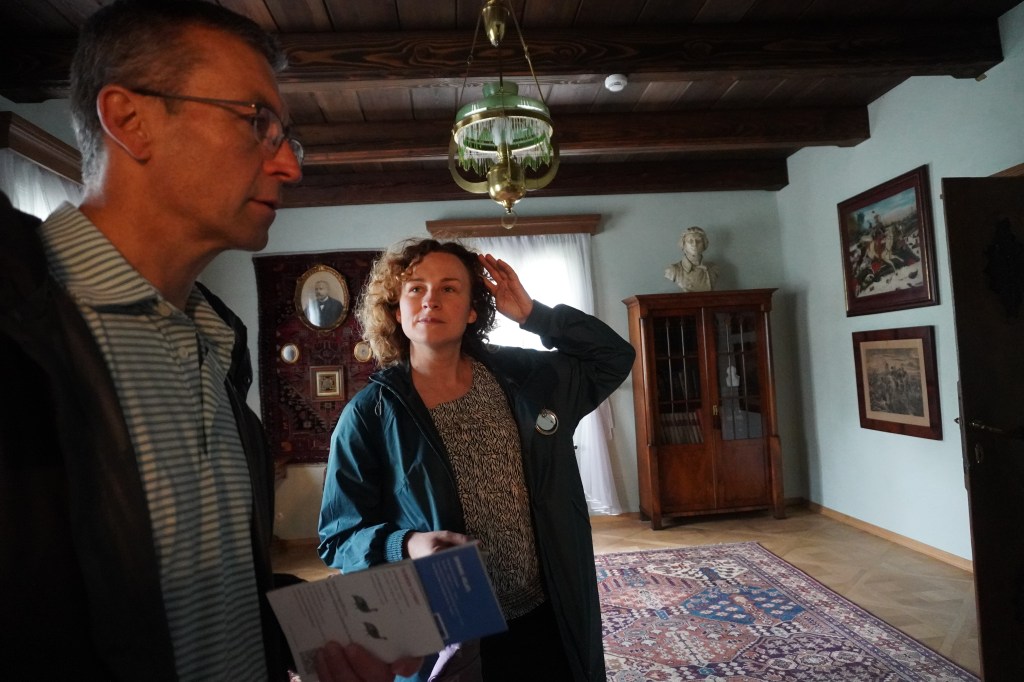
Ironically, our guide Sabina was married into the Stobierski family but we quickly realized that there was no direct connection to our’s. She became our private guide walking us through the village and explaining the history of the early settlers in this part of Poland. It was a great way to appreciate the past and think about how are history was both the same and different.

The Ethnographic park continues to expand and is a very popular destination for visitors from Poland and beyond. For a relatively new and small area of Poland, they are now attracting up to 50,000 visitors a year. Probably most important to many visiting these days is that a popular Netflix streaming comedy series (in Poland only?) called “1670” was shot here for its first season and a second season is in the works. We’ll be looking for it on Netflix when we get back to the states. I guess you could say it’s a virtual recreation of past, not unlike what we are trying to do.

Welcome to Bureaucracy

Who expected Soviet-style bureaucracy at a New Jersey airport? Is this a forewarning of things to come?

Newark Liberty Airport – June 9, 2024

To start our journey, Ethan and Ethan Luke arrived at our house in Morristown in time for lunch and a small family gathering wishing us a bon voyage! A car service picked us up in a stylish big black van which probably made us look like a neighborhood celebrity. It were high-flying until we reached Liberty National airport terminal B at about 6:00 for our 8:10 flight to Poland. Plenty of time, as it should be.

The LOT Airlines receptionist asked if we had any electronics. Duh! Who doesn’t? But what she meant was that ANY electronic device had to be carried onboard and NOT checked in our luggage. Seemed odd to us but we went into the suitcase and transferred our gear, including cameras and computers to our carry on bags. This was a minor inconvenience but we gladly complied. BTW – LOT does not offer onboard wifi.

With boarding passes and luggage checked we proceeded to the TSA screening. Since we were flying Business Class we were able to avoid the “Economy” screening line of about 100 people and were processed quickly…until the woman who looked as stern as a prison guard saw my passport and notice an irregularity. My name on the passport was “Paul Kiczek” but the ticket, which Ethan had bought months ago was issued to “Paul Robert Kiczek”. This was a big red flag and we were pulled out of line. The TSA clerk said she could not let me board unless the ticket read “Paul Kiczek”.

So, we go back to the LOT receptionist and plead with her to change the ticket. She said she could not but could add another line with “Paul Kiczek” showing so that might help. Fortunately, although the screening line was getting long the nasty TSA clerk must have now been on break and we all passed the name test this time. Now all that was left was for our carryon bugs and our bodies to be scanned.

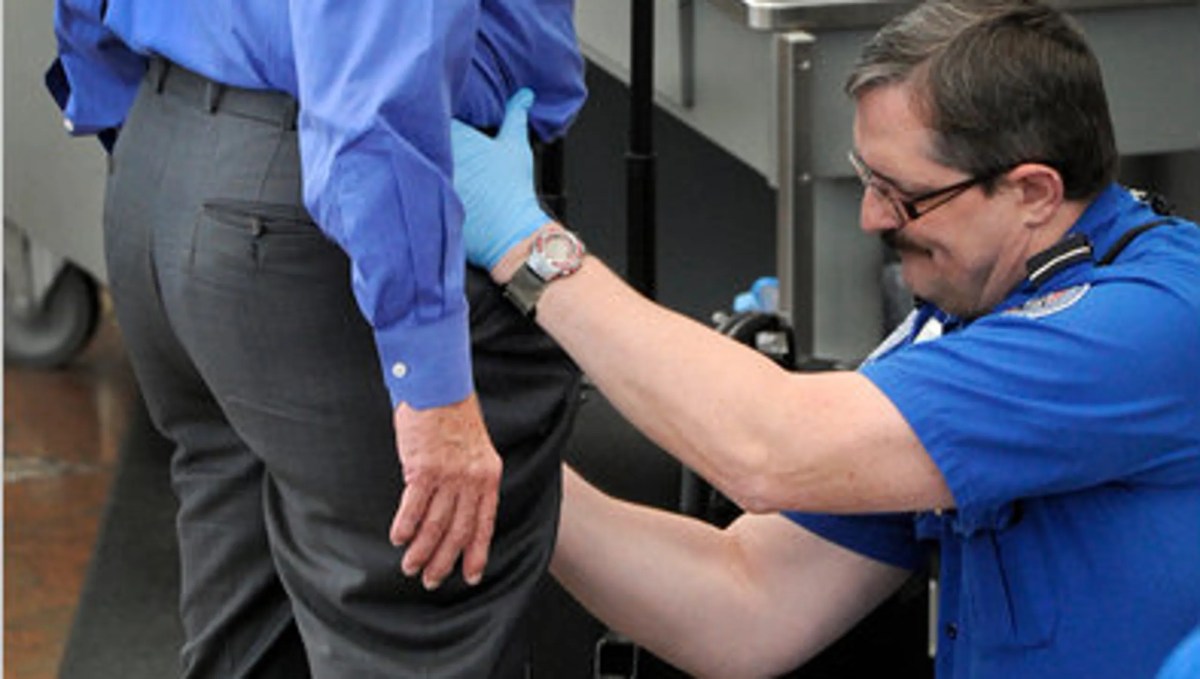
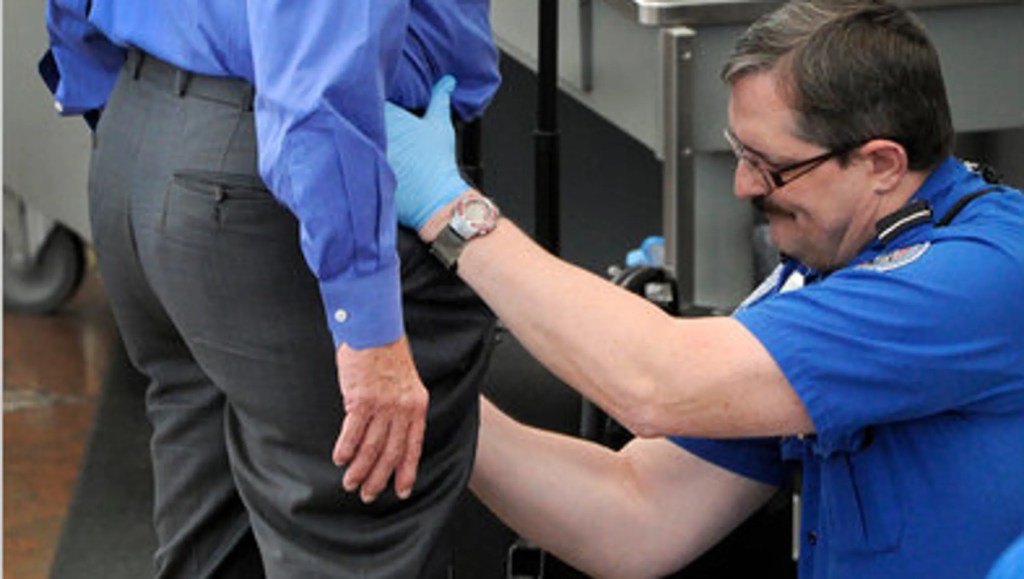
And, of course there was a new problem – my body. The x-ray somehow showed a metallic area at my crotch! Folks, I know of no reason that I could think of for me going “metal”. Naturally I was man-handled with a pat down but not cavity searched by a professional screener as he snapped on his latex gloves and found me to be free of at least dangerous metals. Yikes! It still makes me wonder. Why me?

Finally, post-body search I go to pick up my screened bag and its pulled out of line. Yes, this time it was a rookie mistake on my part. I had taken a can of seltzer with me to drink before we boarded. And, everyone knows that 12 ounces of liquid can be as dangerous as carrying a loaded gun onboard. Tossing out the drink, we were finally ready to board with just 45 minutes before departure.

This was an awkward start. Right now I am flying over the Atlantic and all things seem peaceful again and actually pretty nice in business class with 8 hours to go before landing. Fingers crossed. We will soon be entering an old Soviet-style world which we hope has changed its bureaucracy for the better.

A Time to Discover

Who are we and how did we get here? Difficult questions but learning about our Polish heritage might shed some light.

I’ve been itching for a challenge in these post-pandemic years, even as I get older. Something to match my curiosity and level of difficulty that makes the effort worthwhile. It was time for something intellectually and socially challenging rather than physical.

What is it about understanding your ancestry that makes it so compelling and frustrating? We learn little bits of obscure information as we grow up that become fragments of a bigger story as we get older. Just when you begin to appreciate the complexity of the world and your broader family picture, its easy to give up on trying to understand the mystery of it all. So, to my amazement, my interest in learning more about who I am and where I’m from came from my son Ethan (53 years young).

Ethan is a supreme techie and a naturally curious guy that got absorbed with the challenge of creating a family tree five or so years ago. He hunted for evidence of relatives such as ship manifests, photos, birth and death certificates. He joined Ancestry and explored other websites for information. For our Kiczek family (my father and mother’s side), the task was somewhat easy as we seemed to have settled in the southeastern section of Poland near Ukraine and Slovakia. Ethan’s mom’s family (Judy’s family) was also Polish so a there was a common history, even if those ancestors were from different towns, they were still from the same section of the country. My grandparents and Judy’s were first generation immigrants having been born in Poland around the turn of the century and having migrated to the U.S.

Coincidentally, we were fortunate to have met a distant cousin Krystyna Onacki, living in Roselle, NJ who was from Poland and helped us create the beginnings of the family tree. That meeting also gave us a renewed interest in learning more about life and history in Poland. Poland is now seen as a productive and progressive country. While it has had its recent share of right wing nationalists, it seems to have found away to move forward and become an independent country. Unique in its history, politics and pull of the Catholic religion its now become a destination for vacationers.

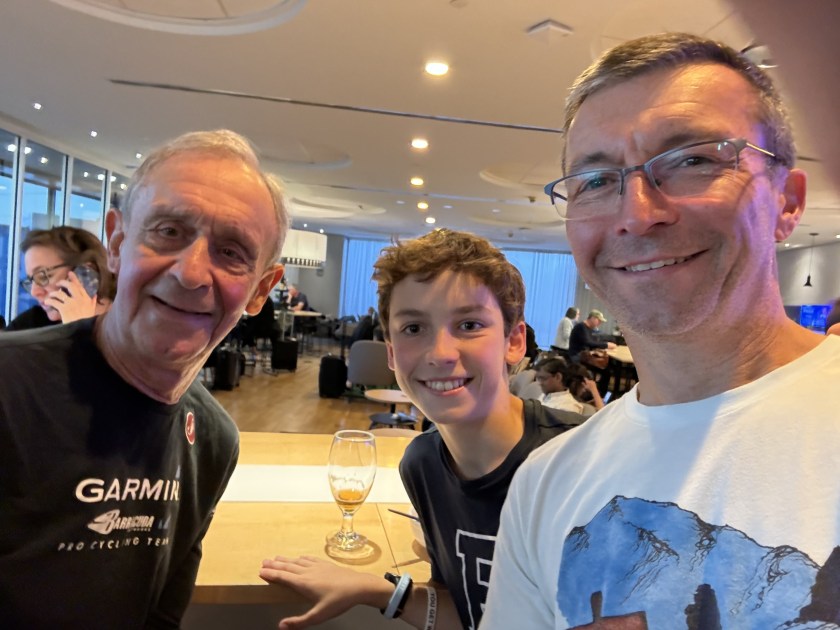
A few months ago Ethan proposed we take a trip to Poland and visit the places of our ancestry. He contacted a Polish genealogist, who helped tie up some loose ends in our family history. We geographically located the towns of our grandparents. Ethan’s son, Ethan Luke Pearson (14 years old), expressed an interest in joining our journey. I’m not at all sure other 14-yr olds would feel the same! But now we had three generations to explore a completely foreign country which binds us together. We fly out to Poland tomorrow, June 9th and expect to return in 10 days on June 17th with a circular itinerary that takes us around the southeastern region including Krakow and a tour of Auschwitz.

Of course there is the possibility that this will be a bust and boring – exploring too many small countryside villages, graveyards and churches. But it’s the mystery of it all, our planned visit to at least one relative and the likelihood that we’ll learn more about how alike and yet different we are that excites us. It should be fun and educational and a great way to connect generations.

Turn, Turn, Turn

For some reason, this upcoming experience made me think of the Byrds song “Turn, Turn, Turn” (aka Ecclesiastes 3:1-8 from the Bible). Always worth some contemplation… especially in a country such as Poland.

There is a time for everything, and a season for every activity under the heavens:
a time to be born and a time to die, a time to plant and a time to uproot,
a time to kill and a time to heal, a time to tear down and a time to build,
a time to weep and a time to laugh, a time to mourn and a time to dance,
a time to scatter stones and a time to gather them, a time to embrace and a time to refrain from embracing,
a time to search and a time to give up, a time to keep and a time to throw away,
a time to tear and a time to mend, a time to be silent and a time to speak,
a time to love and a time to hate, a time for war and a time for peace.

Update 6/9/24

We will soon be off flying from Newark to Rzeszów, Poland non-stop. We will have the benefit of using a custom genealogical tour by PolishOrigins Tours. In fact, it’s a good thing that we have a personal guide, Lucjan Cichocki, with us for the 10 days. He speaks both languages fluently which will definitely come in handy.

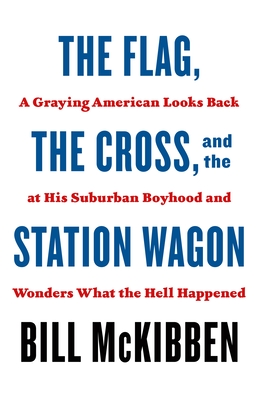
A Review – The Flag, the Cross and the Station Wagon

A thought provoking argument on how a 50-year timeline of trends and events have taken us to where we are today and what senior activism can do to change it.

The Flag, the Cross, and the Station Wagon: A Graying American Looks Back at His Suburban Boyhood and Wonders What the Hell Happened
by Bill McKibben

Paul Kiczek‘s Goodreads review
Feb 08, 2023  
5 stars

Bill McKibben, the renown environmental activist, has written a very easy to read and thought provoking book that attempts to explain how a 50-year timeline of trends and events have taken us to where we are today. It seems our lives are an unwitting product of many avenues of “progress” from politics to religion to technology. The changes we have experienced have been shaped by a “hyper” drive toward individualism, capitalism and new forms of communicating.

At age 75, I have even lived through a decade more change than Bill. I have learned to accept most of it. Employed at one time in the tech sector I once cheered on innovation, automation and efficiency. But, I’ll be damned if I can figure out why things have turned so negative, unreasonable and intractable. Tribalism permeates more and more of our lives every day. Surely, the amount and frequency of change has been a major factor. This book calls on us to stop and try to understand the injustice that exists from these changes.

The fact that McKibben is from the Lexington, MA area helps draw a clear comparison and contrast to today’s politics. Revolutionary America was largely an aspirational community of individuals that depended on each other and shared core beliefs. Today, we are not even sure what to aspire to other than wealth. And, foundational religious beliefs have withered in the face of individualism or have been diluted by the proliferation of religious sects. Frankly, a community based on shared higher ideals seems difficult to imagine these days.

The problem with technology has been an inability to see or predict the negative effect of its progress. Whether an unanticipated end product is pollution, inequality or a social breakdown, we don’t seem to know how to fix it without destroying the comfortable lives we built upon it. We are programmed to be transactional. There may be talk of reparations but what we really want is our money’s worth. We hesitate to take responsibility for previous generation’s mistakes while we minimize our cost and distress.

Can we change our way of thinking? Will we be better able to evaluate the long term and negative side of the latest technology or untethered capitalism. It seems like there’s no better time to give pause to what we are doing than right now, especially with the oncoming age of AI.

McKibben recently started an organization for people over 60, like me, called Third Act which is directed toward activism about big issues such as the environment. It seems many of us are out there wondering what went wrong too and how we might help. It’s a great idea since we have more free time and are probably healthier and wealthier than past seniors.

I recently joined Third Act and hope that I can play a role in helping solve problems that had seemed beyond the “old” me. Issues that seemed impossible to change might seem Quixotic but may be just what we are looking for. I still want the world to be a better place for my wife, three children and eight grandchildren and I want them to know I’m not too old to do something about that.