
Catching Beatlemania

What was it like to be at the new Shea Stadium on August 15, 1965 to see the Beatles? Proof that serendipity happens every so often.

This is a TV video screen capture of the August 15, 2025 CBS News segment.
Note there is a slight window glare top middle part of screen.
There are not many moments in life where you find yourself witnessing and participating in a significant historical event. You know it even then because there has never been anything like it before. You are gobsmacked with what you see, hear and feel. And, to top it off, all this happens accidentally by a fortunate set of circumstances.

It was on August 15, 1965 that the Beatles were scheduled to play Shea Stadium in Flushing Meadows, New York. My sisters Chris and Barbara and their friend Gail were rabid Beatle fans and they made sure they had their tickets as well as their white go-go boots ready. These were the days when large concerts were rare. This one would be their second tour of the U.S. but the first-ever “stadium concert” and the largest concert crowd (55,600) at any concert at that time.

Strangers in a Strange Land
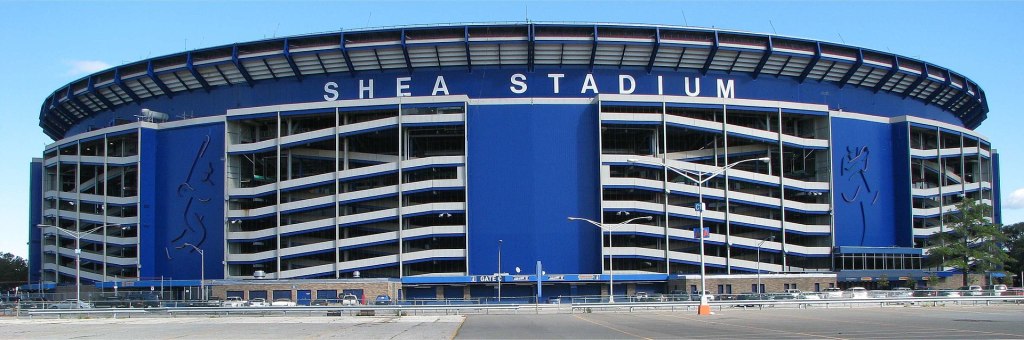
Shea was completed only a year before and as the latest project promoted by Robert Moses, the famed New York City planner, to develop the Queens area. It was located in Flushing Meadows next to the grounds of the World’s Fair of 1964-65 in Corona Park.

Most of us had visited the World’s Fair the year before and marveled at exhibitions. It was a fascinating look at the future and and offered a taste of other countries. I still remember the Lowenbräu beer pavilion where we could drink beer freely, just like being in Bavaria, even though we were underaged and about as naive as we could be about the rest of the world. It seemed like we were moving into the future and becoming part of a bigger world.

1964-65 New York City World’s Fair

Accepting the Mission

In the original plan, my dad was supposed to drive my sisters to and from Shea since they were young teens not old enough to drive. Well, it turned out my buddy Mike Hayser and I were hanging around my house that hazy 80-degree Sunday with nothing particular to do so we volunteered to take them instead. Why my father allowed us to drive I’ll never know but probably the long ride and the need to wait for them were factors. And, it was, after all, the 1960’s and there was a certain freedom and permission that’s hard to reconcile with today’s helicopter parenting.

We didn’t even think about how crazy this could be with thousands of screaming fans. But we sensed that there would be lots of girls and a great adventure awaiting. Little did we know we would be driving directly into history.

At 17 years old I considered my six months of experience enough to tackle the big-game driving in New York City’s traffic and its strange mysterious boroughs. Shea was then a big new and bold stadium. It was built to last for the New York Mets franchise, which started only a few years before. Both the stadium and the team represented new hope for us bitter and abandoned ex-Brooklyn Dodger fans.

1956 Chevrolet Bel Air

The Way to Shea

This was my longest and most challenging drive with my hand-painted blue 56’ Chevy. Living in Roselle, the best way to get to Shea was to take the Goethals Bridge from Elizabeth to Staten Island and drive across the new and mammoth Verrazano-Narrows Bridge (which was another Robert Moses project.). The bridge had just opened in January 1964 and was an instant success allowing traffic to Brooklyn, Queens and Long Island via the Belt and Grand Central Parkways. To us on the Jersey side, these were legendary roads where we were warned daily of horrendous traffic conditions on the radio and assumed only brave and crazy drivers dare go. So, why not try?

Verrazano-Narrows Bridge led to a new world

The only way to get somewhere far away in those days was to rely on old-fashioned, artfully folded paper maps. Every car had dozens of maps in the glove compartment which were free to grab at any gas station. We relied on maps, intuition and signs (if they were still there) to find where we were going. So, we grabbed a map of New York and headed out like modern explorers to find Shea Stadium and experience the wild urban frontier.

Going with the Flow

As we approached Shea the traffic became heavy and led to a stop. A tremendous crowd was moving toward the stadium so we decided to find a parking spot along the road and walk to the stadium, even though our mission was to deliver my sisters and kill some time exploring the area – later to pick them up somehow. My sisters found the gates where ticket holders entered moving rapidly. Mike and I realized at this point that the action was inside the stadium and our best move would be to try and get in.
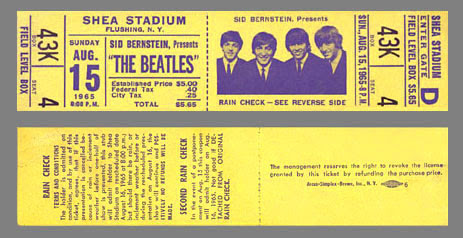
A $5.65 Box Seat Ticket to Ride

We studied the situation and realized that this was a sellout and there no tickets (Box seats cost $5.65 apiece!) to be bought and the security staff seemed only half-interested in checking tickets. So, we approached a guard to tell the story of our good deed of taking my sisters to the concert; only to be left outside waiting. Let’s just say on that day everyone was in a good mood. They turned away as we freely walked into the most important concert of our lives, without a ticket.

The Beatles had only broken into the U.S. market a couple years ago but by now they were known worldwide having created over a half-dozen albums and two films. This was the beginning of their North America tour having just released their album and film “Help!” less than two weeks ago and had appeared on the Ed Sullivan show the night before.

Experiencing Pandemonium

From dugout to stage

Pop concerts were not that common and were not believed to be big revenue generators. All that changed at Shea. The concert at Shea Stadium set a world record for attendance and gross revenue. The Beatles got $160,000 of the $304,000 box office sales and proved that there was money and other benefits in staging large concerts.

Lead off acts included Brenda Holloway, King Curtis, Sounds Incorporated, Killer Joe Piro and The Discothèque Dancers, The Young Rascals and Cannibal & the Headhunters. Hosts included Murray the K and Cousin Brucie Morrow. Television host Ed Sullivan introduced the band when they took the stage: “Now, ladies and gentlemen, honored by their country, decorated by their Queen, and loved here in America, here are The Beatles!”

The concert was ahead of the audio technology at the time and could not properly project the music in the massive stadium. Powerful stage amplifiers couldn’t play louder than the screaming crowd. Even the stadium’s P.A. system, normally used by baseball announcers, was also employed to help project the band’s sound. But, the roar of the crowd could be heard throughout their appearance.

Thousands of fans like these

Once the Beatles started playing, it didn’t matter where your tickets were or if you had one. Everyone spilled into the lower levels and stood for the entire concert in awe of the band and the crowd of frenzied fans. They continued to play 12 songs lasting about an hour. We had traveled two hours, witnessed the largest crowd we had ever seen, managed to crash the gate and listen to some great music. But, nothing compared to the electric reaction of this huge crowd. Girls were out of control and screaming everywhere. I remember getting goosebumps by just witnessing the joy and excitement that was beyond our imagination. It was obvious that Beatles were having as great a time as their audience.
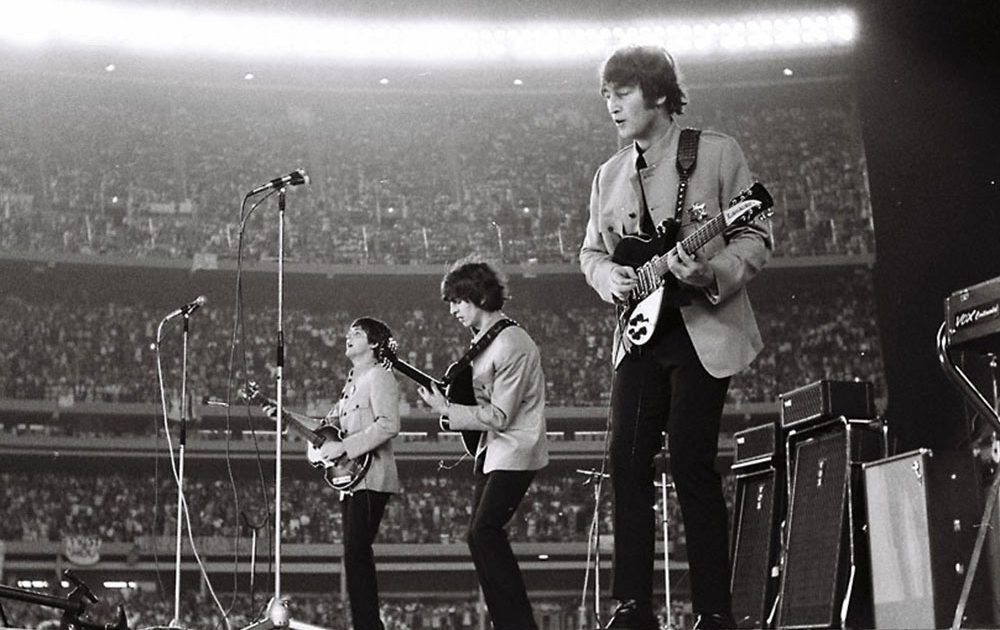
Playing to the ecstatic noisy crowd

After the concert fans stormed the field and we made our way out. I’m still not sure how we found my sisters in that crowd of over 55,000. I don’t remember a thing about the ride home but I’m sure we basked in the good vibes of the event knowing that we were there for a very special event with memories that will last a lifetime.

The Concert at Shea in the Beatles’ Words…

“I think we just went a bit hysterical that night; we couldn’t believe where we were and what was going on, we couldn’t hear a bloody thing and we thought ‘This isn’t very good, but it’s going down great.’ The hysteria started to kick in. That was a great one.”

Paul McCartney, Back To The World tour book

“Once you know you’ve filled a place that size, it’s magic; just walls of people. Half the fun was being involved in this gigantic event ourselves.”

Paul McCartney, The Beatles Bible

“What I remember most about the concert was that we were so far away from the audience. . . And screaming had become the thing to do. . . Everybody screamed. If you look at the footage, you can see how we reacted to the place. It was very big and very strange.”

Ringo Starr, The Beatles Anthology

“At Shea Stadium, I saw the top of the mountain.”

John Lennon, recalling the show in 1970 in a TV interview

Epilogue

It’s interesting to note that at the time of the concert the Watts Los Angeles riots were taking place with the black community angry about the police brutality and civil rights. Meanwhile, President Johnson signed the Voting Act of 1965 that very afternoon establishing new laws that were meant to provide free and fair elections forever.

The mighty Shea was demolished forty seven years later replaced by Citi Field, but the same roads and bridges remain. The Beatles were only in their 20s and at the height of their careers in 1965 but played their last concert together in 1970, just five years later. That last concert and the Beatles legend is still being explored with the release of the new Peter Jackson/Disney+ retrospective on the Beatles last project together, the making of “Get Back.”

History, it seems, is never written in stone and just takes time to understand and appreciate.

The Beatles at Shea Stadium Video

The following video was purchased years ago online and represents a rough cut of the original special recording which appeared on British and American TV as a special. It is approximately 52 minutes long.
Video of the August 15,1965 Concert at Shea

Witnessing Auschwitz

Our family of three generations of Polish-Americans tour Auschwitz-Birkenau in search of its history and cautionary message. Can anything so brutal ever happen again?

We decided to add a visit to the Memorial and Museum Auschwitz-Birkenau as a final point of interest on our genealogical trip to Poland. It was about an hour and a half cab ride north of Krakow. As you can imagine, touring a concentration camp is not a pleasant task, but it was an important one for a trip themed around life and death.

All of our sources suggested purchasing tour tickets well in advance, as it is an “important” tourist destination. Much of the concentration camp area is free and open to the public. However, the museum offers reasonably priced small group tours in various languages, including English. The professional guide leads about 30 ticket holders throughout Auschwitz and the neighboring Birkenau camp, providing the necessary historical background in a roughly 90-minute tour.

There were busloads of visitors this Sunday (June 16) starting at the new visitors’ center, which seemed well-equipped and organized to handle large daily crowds in the thousands. The visitors’ center, a year-old, mostly concrete structure, is sparsely designed but well-thought-out as a waiting area to keep visitors moving. There seemed to be a bit of irony as we followed our somber guide, almost blindly, in military order to Auschwitz and then by bus to Birkenau. The place naturally has that kind of aura.

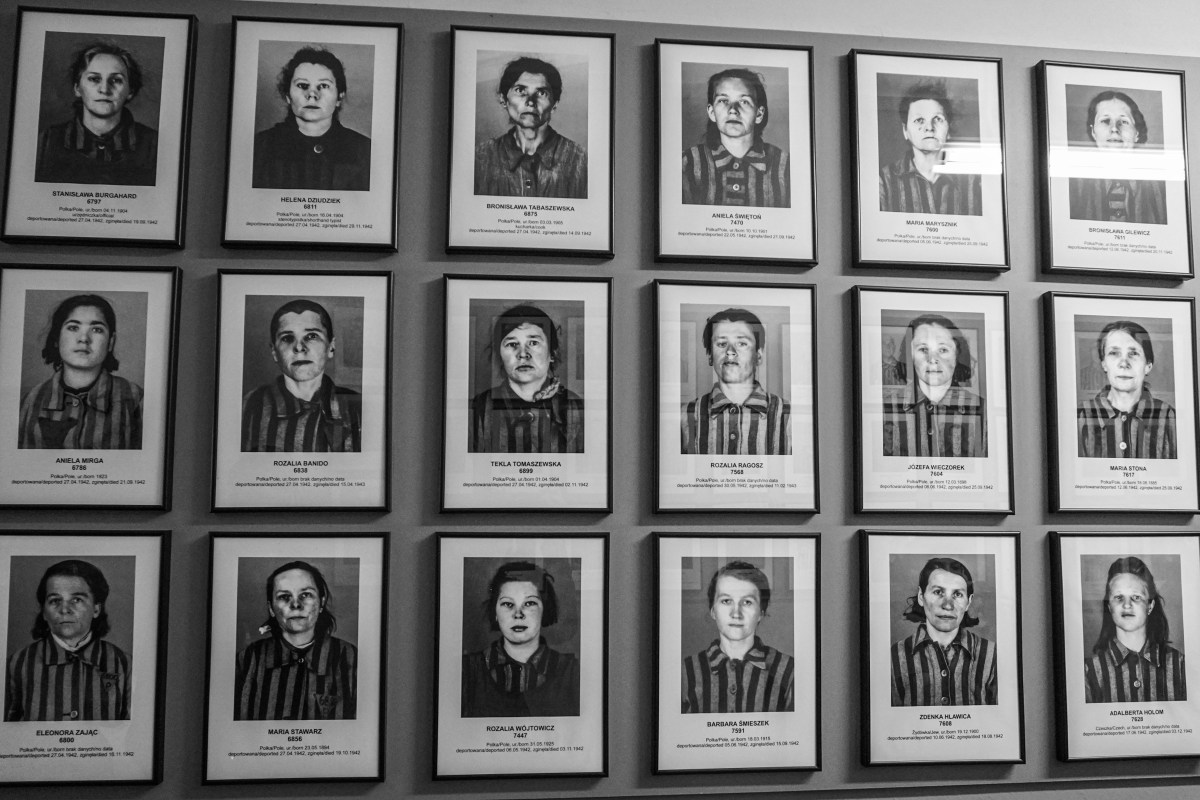
We visited a handful of the many buildings in a progression that seemed to heighten the senses to the scale of this horrific place. We started with an understanding of the scale of this project, which began in 1939 when the Nazis annexed the town of Oswiecim to create an industrial base with a work camp at Auschwitz, a former WWI Polish barracks. The success in exploiting and then murdering prisoners led to a huge expansion at nearby Birkenau and other smaller camps in the area. The camps held over 1.5 million prisoners, 1.1 million of whom were murdered. In just a few years, the Nazis had learned how to efficiently kill and plunder Jews (largest number by far), Poles, Russians, Gypsies, and others from all over Europe.

The tour, buildings, and grounds are preserved much as they would have been back then. Auschwitz does not look particularly threatening from the outside of the buildings until you learn what happened on the inside. The museum tour continues quickly through several buildings, each with a specific focus such as medical experimentation, extermination, proof of crime, interrogation, punishment, and cremation.

All this is explained and examined through the many glass-enclosed statements and artifacts. Surprisingly, the photos on display do not show the ravaged bodies of the starved and tortured, but rather pensive and scared individuals waiting for the worst to come. This is not a multimedia experience. We see and hear only the story, but by being in the actual place, we can more easily imagine what happened. Imagination here can be more powerful than simulation.

The final third of the tour was a short bus trip to Birkenau after touring Auschwitz. I was surprised by the larger scale of the Birkenau camp. Its 365 acres are wide open except for a dozen or so buildings and the ever-present electrified barbed wire fence. There is a dominant headquarters building and guardhouse with train tracks running right through it. The tracks and train end about a half-mile into the camp, where thousands of prisoners would end their final journey.

Auschwitz remains important as a reminder to all of us of man’s ability to do wrong, especially to each other. One can only imagine how anyone could be so cruel, although there is plenty of reason today to think that it could happen again. On the other hand, we know that people can change too. Germany and Japan today are positive examples. It’s worth a visit to Auschwitz at least once in your life to give that some serious consideration.

For this particular visit I chose to create one slide show video with pics we took while on the tour with the theme from Shindler’s List playing in the backgroud. While we were all lost for words, the pictures are memorable and speak much louder than words.

Slideshow Video of Photos taken at Tour of Auschwitz-Birkenau

The Family Dragnet

Here’s how we became genealogical detectives in Poland as we hunted for clues to our family history.

If the word “Dragnet” means something to you, my guess is you remember Sargent Friday saying “Just the facts, ma’am.” on the old popular TV show. Or the 1960’s comedy movie version of that show with Dan Ackroyd and Tom Hanks. Either way it was about how detectives solved crime (mysteries). It seemed they had odd and funny ways of discovering facts when they interviewed suspects or witnesses.

Dragnet Theme

Now, we were on the ultimate dragnet for any clue to our family history. Facts mattered. Leads needed to be followed. We were on a missing persons investigation in Poland.

Near the top of my personal mysteries is how we got here. Ultimately, we all come from the same relatives. But the road that was taken by each of our ancestors made us who we are today. Sometimes, it was a voyage to leave their country and family. Other times it was to stay and make the most of the life they had, even if it was harsh at times. Whatever path was taken, family connections remained strong in most situations.

Where This Investigation Begins

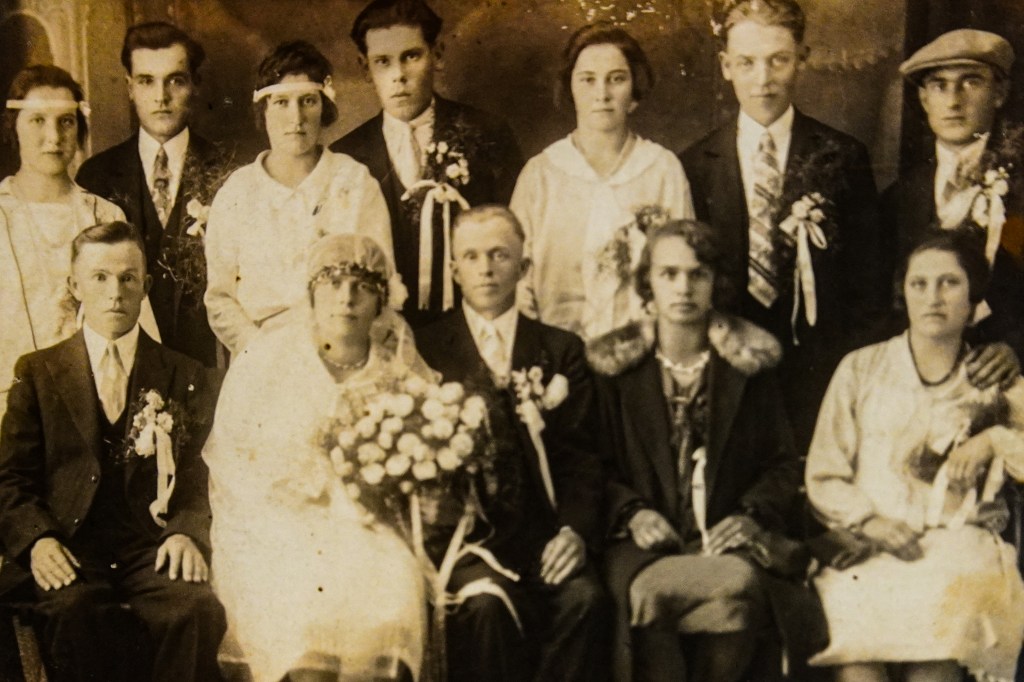
About 10 years ago, Krystyna Onacki, a distant cousin from Poland discovered our Kiczek family. A Polish citizen at the time, she met and later married John Onacki a U.S. citizen when he was studying abroad in Poland. They moved to Roselle, N.J., coincidentally, the same town in which I grew up. Our family connection was through her mom who was a descendant of Josef Kiczek, my great grandfather.

Little did I know then that Josef had a second wife after his first passed away which created a second branch of the Kiczek family. Just 10 years ago, I had little knowledge of who my grandfather was, let alone my great grandfather. And, my parents and their siblings had passed away years before so it seemed we had no one left to ask, until Krystyna found us.

Large families were desirable back then to help work the land, provide financial support and to replace those children that would die young. For our side of the Kiczek family, my grandfather would immigrate to the U.S., and have nine children. My father’s siblings included one brother who became a priest and three sisters who would live their lives as cloistered nuns. To most Polish families this might have been the ultimate career choice and source of family pride. It was also seen as a way to increase their blessings by bringing the family closer to the Catholic Church. 

Covid Creates a Time Warp

My oldest son, Ethan Kiczek, met the Onacki’s and understood the family connections better than I. Ethan has an engineering degree and has worked in technology his entire career, appreciating the complexity of large scale projects. In 2020, tied down by the pandemic and working remotely, he became absorbed in discovering more details about the family.

Often a search leads to a clue about another relative or the nature of a relationship. This usually needs to be verified. There’s digital sources, like ancestry.com and there are analog sources, like a town’s records of births, deaths and marriages or even finding tombstones. 

While it’s possible that a birth record can appear as a digital image, more often than not it simply needs to be found in a physical registry of births, deaths and marriages. This is especially true for older records. In Poland. registry books are often located in the town where the family lived – or in the registry of the local church where they prayed. All this would take time and concentration, which with Covid, we all had plenty of.

Ethan searched a few databases like the Mormon’s FamilySearch and Facebook’s genealogy groups to discover what sources could help and how to get more information, if the data was not available online. This led to outsourcing a remote genealogical researcher in Poland, Lucjan Cichocki, who could actually go to local Polish towns to search registries to validate and discover family connections. Lucjan became our Sargent Friday. But, that led us to considering getting involved in this Polish dragnet too.

Going Back in Time

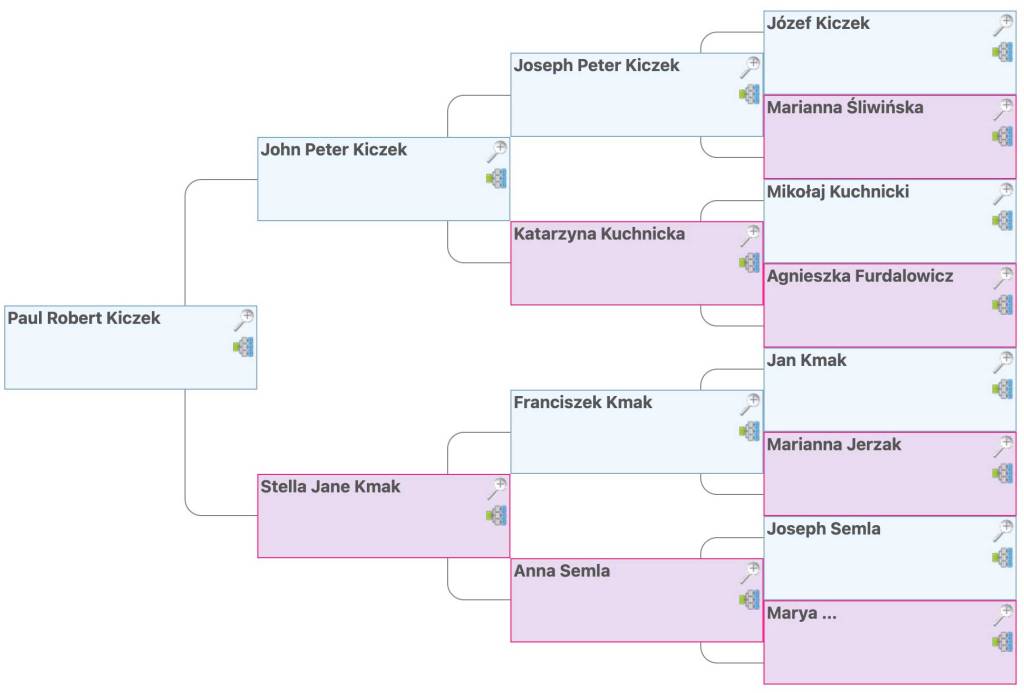
Ethan discovered, with the help of Lucjan, the towns where our family lived and even traced some ancestors to the 1700’s. But to dig deeper, we would need to view the registry records. Those records also state some other related information like the birth date, name of parents, religion and towns they came from. Ethan began to construct a large family tree that opened up our imagination as to who were our ancestors and how we were related.

PK’s Family Ancestors to Investigate

In 2022, we began to plan for a trip to Poland to discover our relatives – assuming we could find them and they would talk to us. But it was then that the Ukrainian-Russian war started. The area where our family was from was only about 50 miles from the Polish-Ukraine border. At that point we had no idea if the war would spill over to Poland. Poland’s borders have been moved often and the area we were planning on visiting was once even considered part of Ukraine. So, we postponed the trip for safety reasons. But the dragnet research continued.

Our Case History

Plans were set in late 2023 to visit the following year all the towns where my family seemed to have originated or once lived. Ethan’s mom, Judy’s (Dolac) mom had a clear connection to a town in the same region too. So, Ethan worked with a special touring company called PolishOrigins and created a custom tour that would take us to most places we had confirmed had a family connection. We hoped to visit those places, hopefully discover more connections and perhaps meet some relatives!

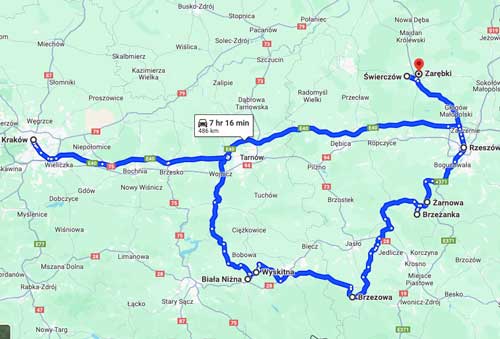
We spent four days investigating our ancestors in Poland, mixed with some interesting sightseeing along the way. Here’s a brief case history of what actually occurred during our investigation part of the trip:

Our Ancestry Tour Route from Rzeszòw to Kraków
Tuesday, June 11, 2024

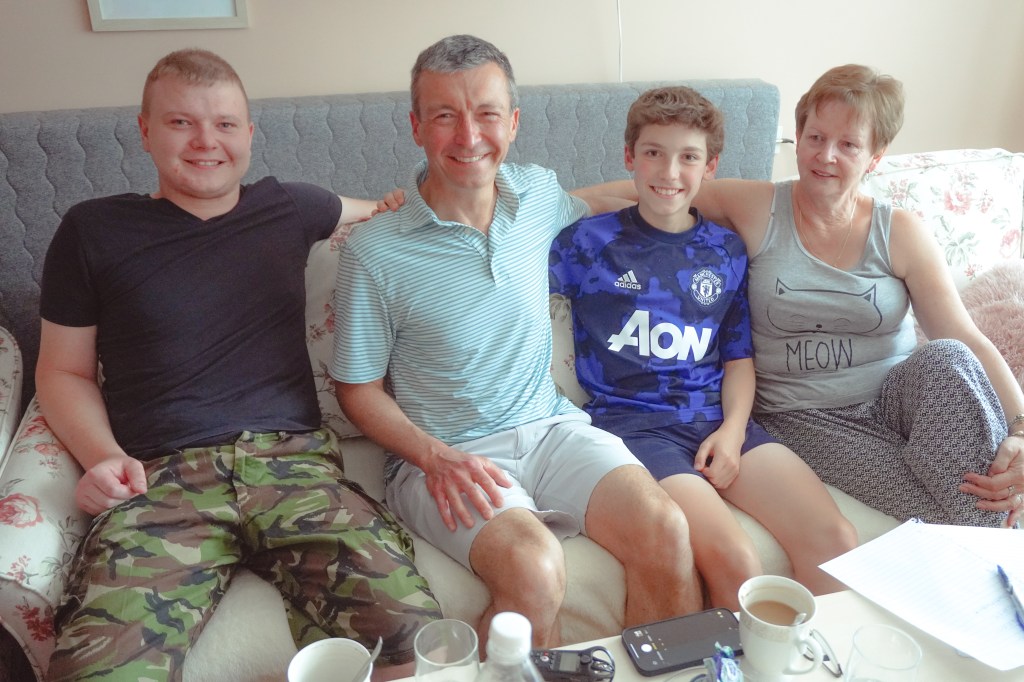
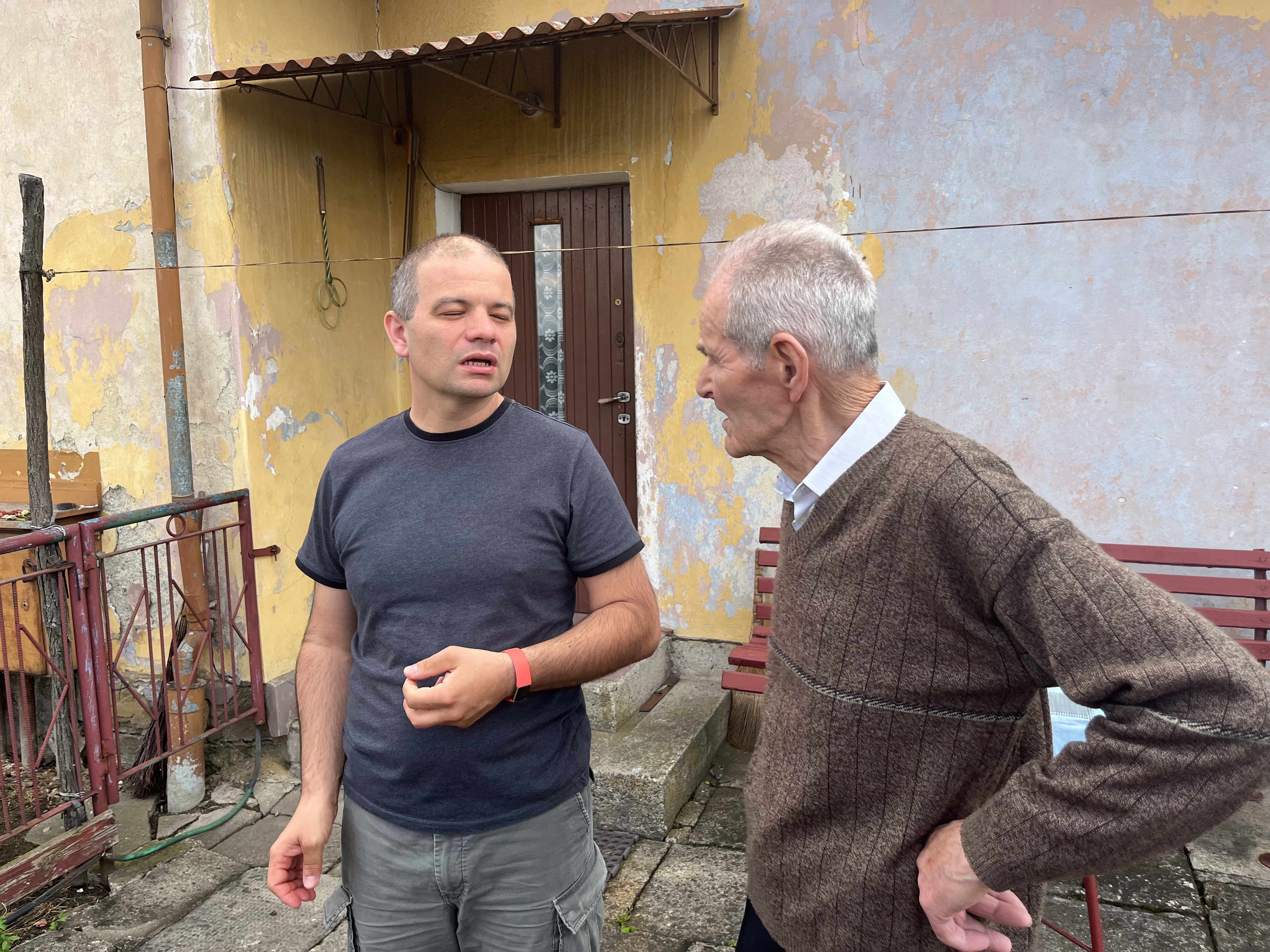
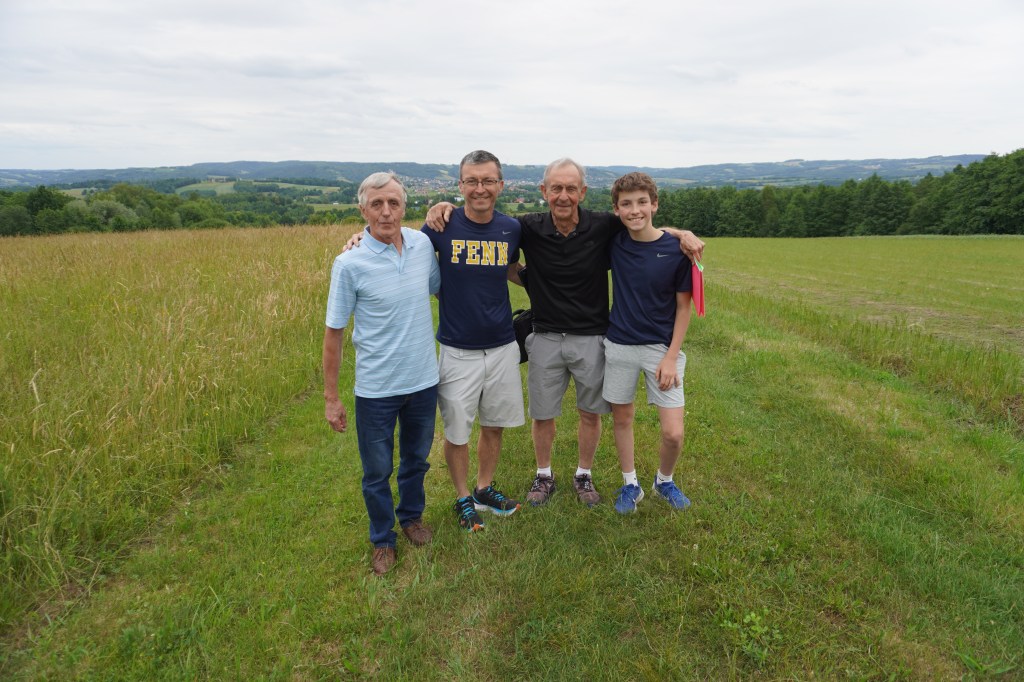
Świerczów – About 20 miles north of Rzeszów, our starting base, we sought family connections to the Stobierki’s (Ethan’s grandmother on his mother’s side). We had an address to go to from previous research. Found a distant cousin Halina Knipa and son Bartek. They share a great great grandfather Michal Stobierski with Ethan. We visited the town hall for records, the old family farm where his grandparents lived and a local cemetery. We exchanged emails for future follow-up. See the earlier post for more details on this visit.

Bartek, Ethan, Ethan Luke, Helina

Wednesday, June 12, 2024 – morning

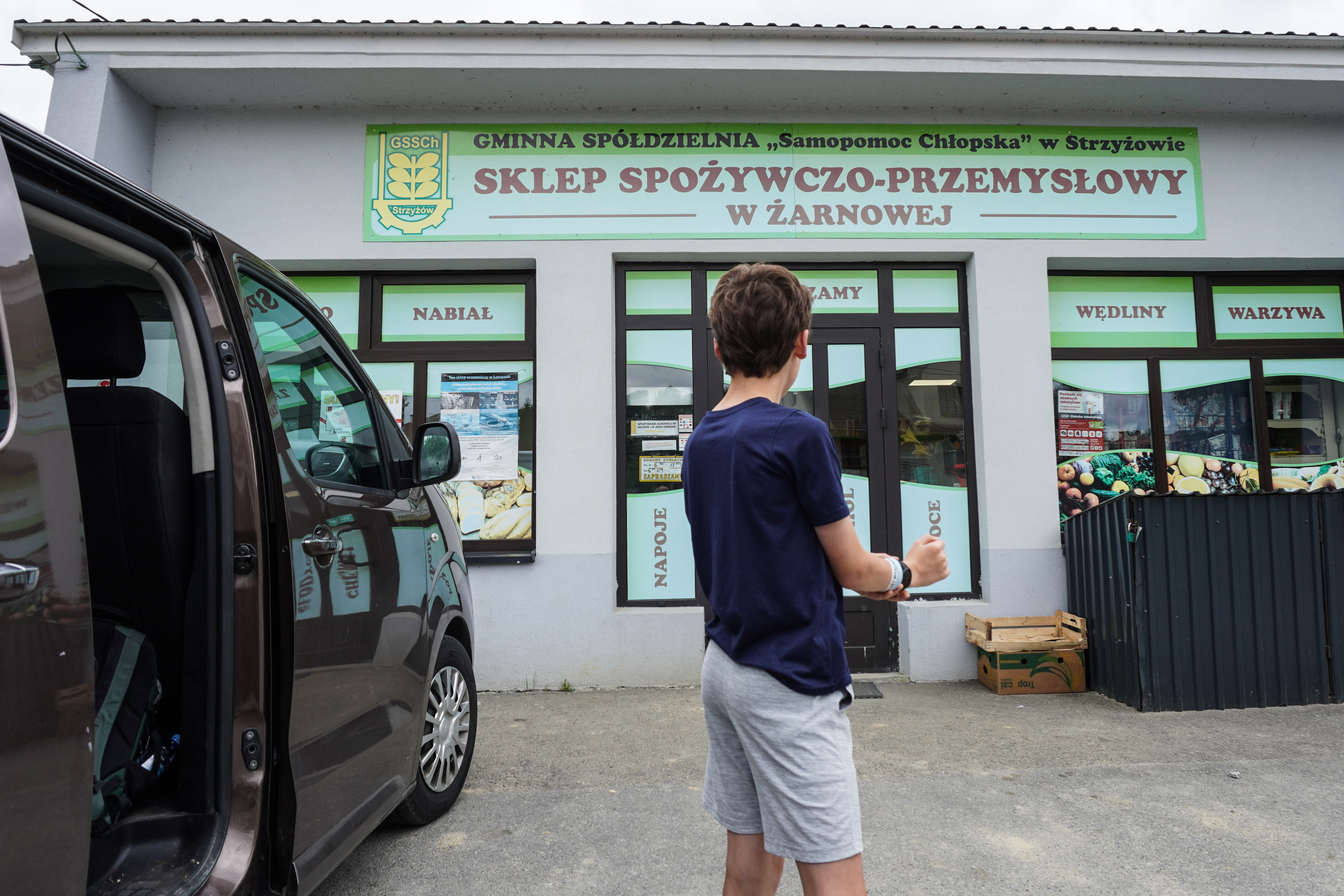
Żarnowa – In search of Sliwinska family (or possibly Sliwinski). Marriage records showed that great grandmother Marianna Sliwinska (born 1847) had married Josef Kiczek (born 1827) and was originally from this town, about 20 miles south of Rzeszów. We had a possible address or location but it seemed wrong. We went to the nearby convenience store to ask around if anybody knew a Sliwinska family and followed a lead to an address that might be a descendant. No one was home but a neighbor corroborated that there might be a connection. They called the possible relative and we promised to send a letter explain our relationship. Low odds on connecting here, but maybe they will respond.

Wednesday, June 12, 2024 – afternoon

Brzeżanka – a neighboring town to Żarnowa, we had our best clues and even arranged a meeting with Bogumila and Zdzislaw Furtek. Bogumila is a sister of Krystyna Onacki, our cousin who helped start this whole investigation back in the states. This was pay-dirt for us.

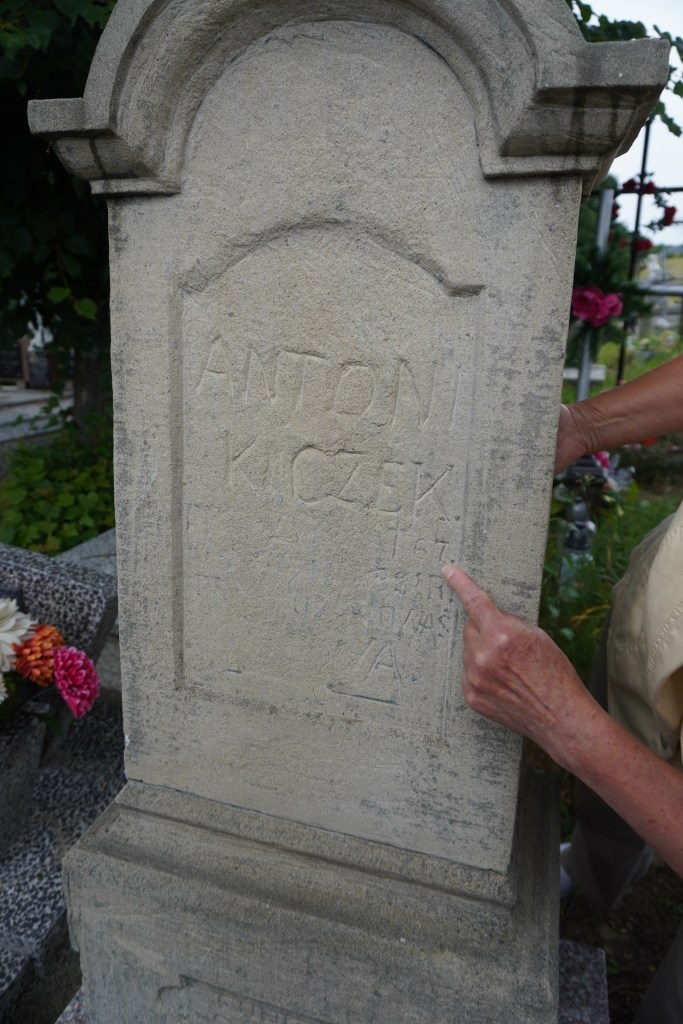
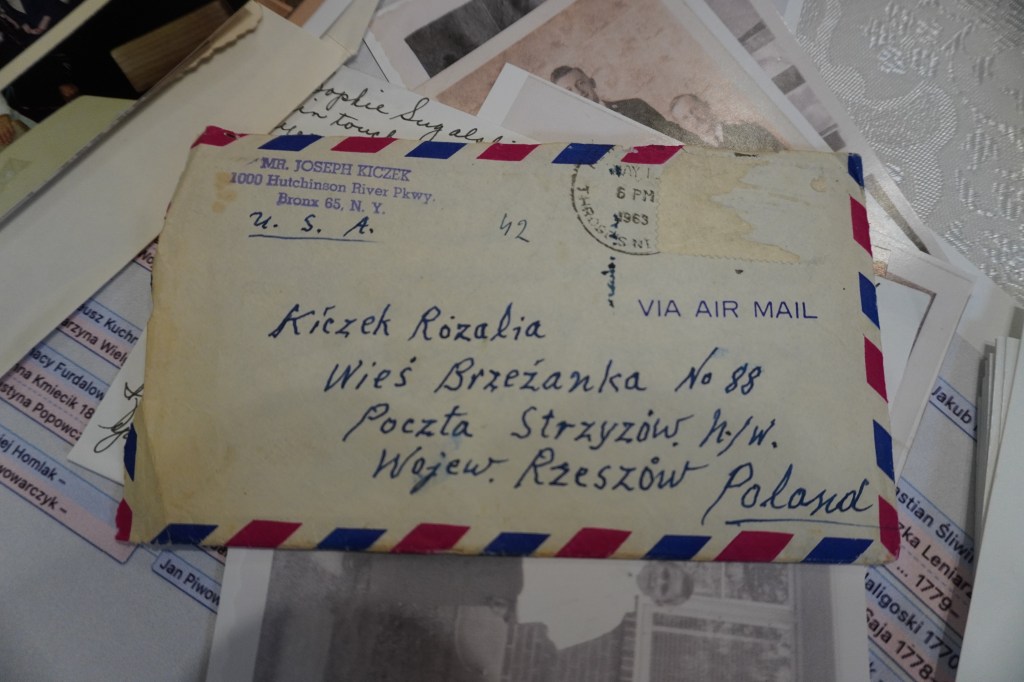
We now had a direct connection from the other branch of the Kiczek family. Antoni Kiczek was a half-brother of my great grandfather, Josef Kiczek. His descendants included Bogumila and Krystyna. It seemed Josef married once had eight children and married again having four more. Not so uncommon back then. One of Antoni’s sons was our familiar “Uncle Joe”(Joseph Kiczek) as he became the messenger between the U.S. and Poland Kiczek families. We just never realized what the exact family relationship was.

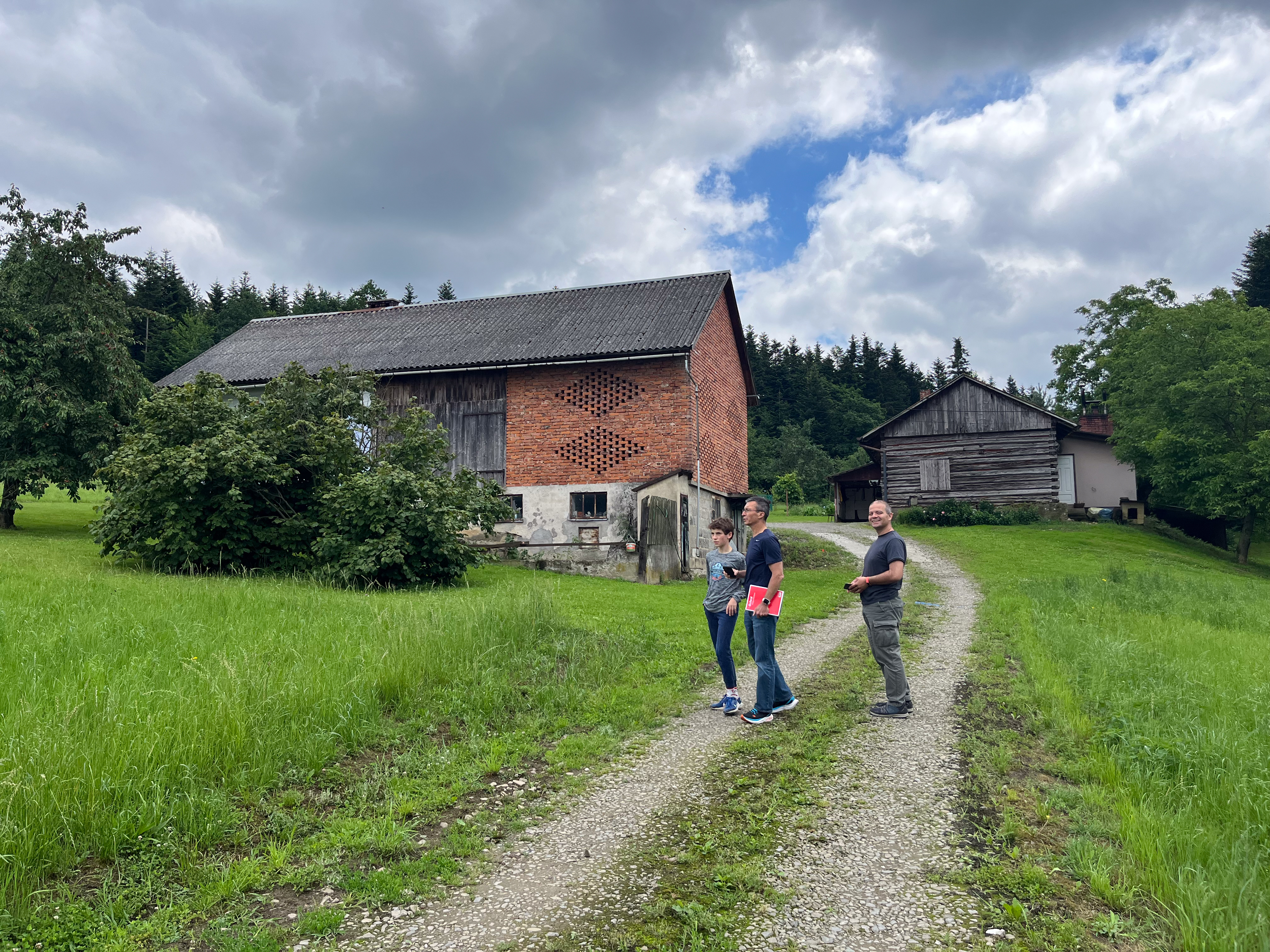
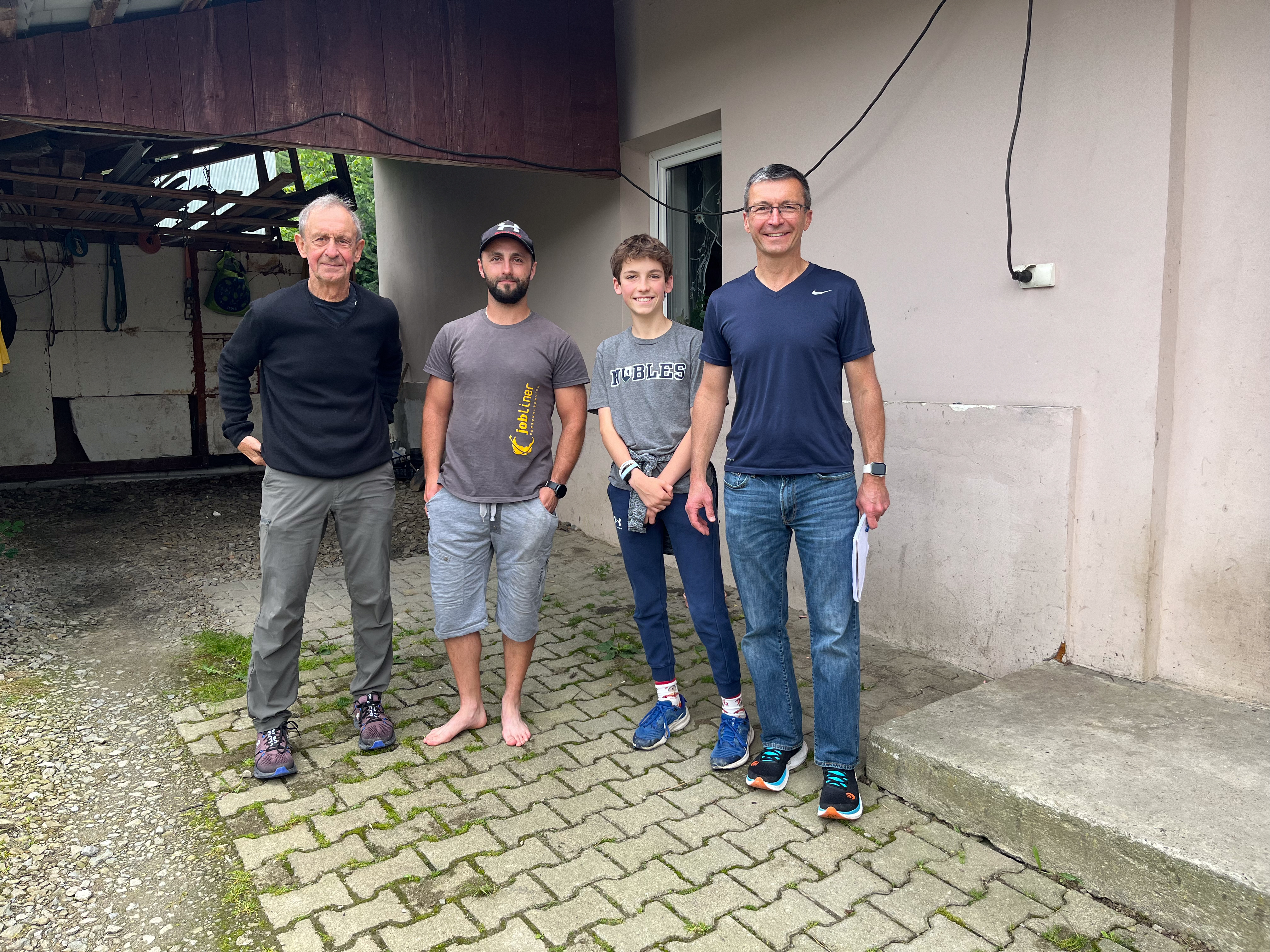
This was the highlight of our trip from a social and genealogical point of view and the main objective. We met a distant but direct relative, had a warm inviting visit, saw where my great grandfather and some of his descendants lived and tilled the land, even until today. We ate together, exchanged gifts and promised to keep in touch. We had an open ended welcome to come back. More than that, we discovered the land where our ancestors lived and worked was a beautiful peaceful place. See the earlier post for more details on this visit.

Thursday, June 13, 2024 – morning

Brzezowa – Our investigation moves on as we travel 30 miles southwest toward the foothills of the Carpathian Mountains and closer to the Slovakian border. There we searched for traces of my paternal grandmother’s (maiden name Katarzyna Kuchnika) family. After visiting the town hall records we found a possible relative’s address. We went to a cemetery and the home of to a a Kuchnika descendant and her son but they did not seem terribly interested in relating anything to us. We made the connection but in this case there wasn’t much interest in continuing communication.

Friday, June 14, 2024 – morning

Grybow/w – We travel west another 10 miles in search of my maternal grandfather’s ( Kmak) family. We started in Grybow, the area where we had a record of his family. We went to the local town hall to explore records. We found a clue that Kmak’s were still in town and a relative might be living nearby. We visited Richard and discovered another lead to a younger generation relative. For our last investigation we went to a local farm and met Kamil Radzik, 28 years old, our youngest relative we met. He offered his email and promised to connect.

Friday, June 14, 2024 – afternoon

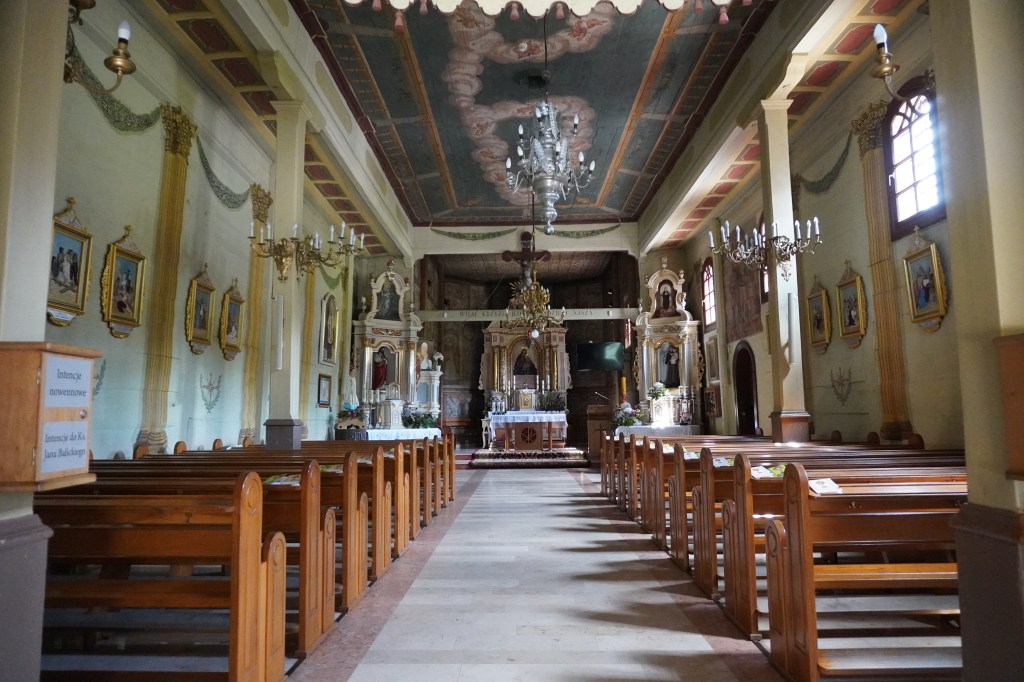
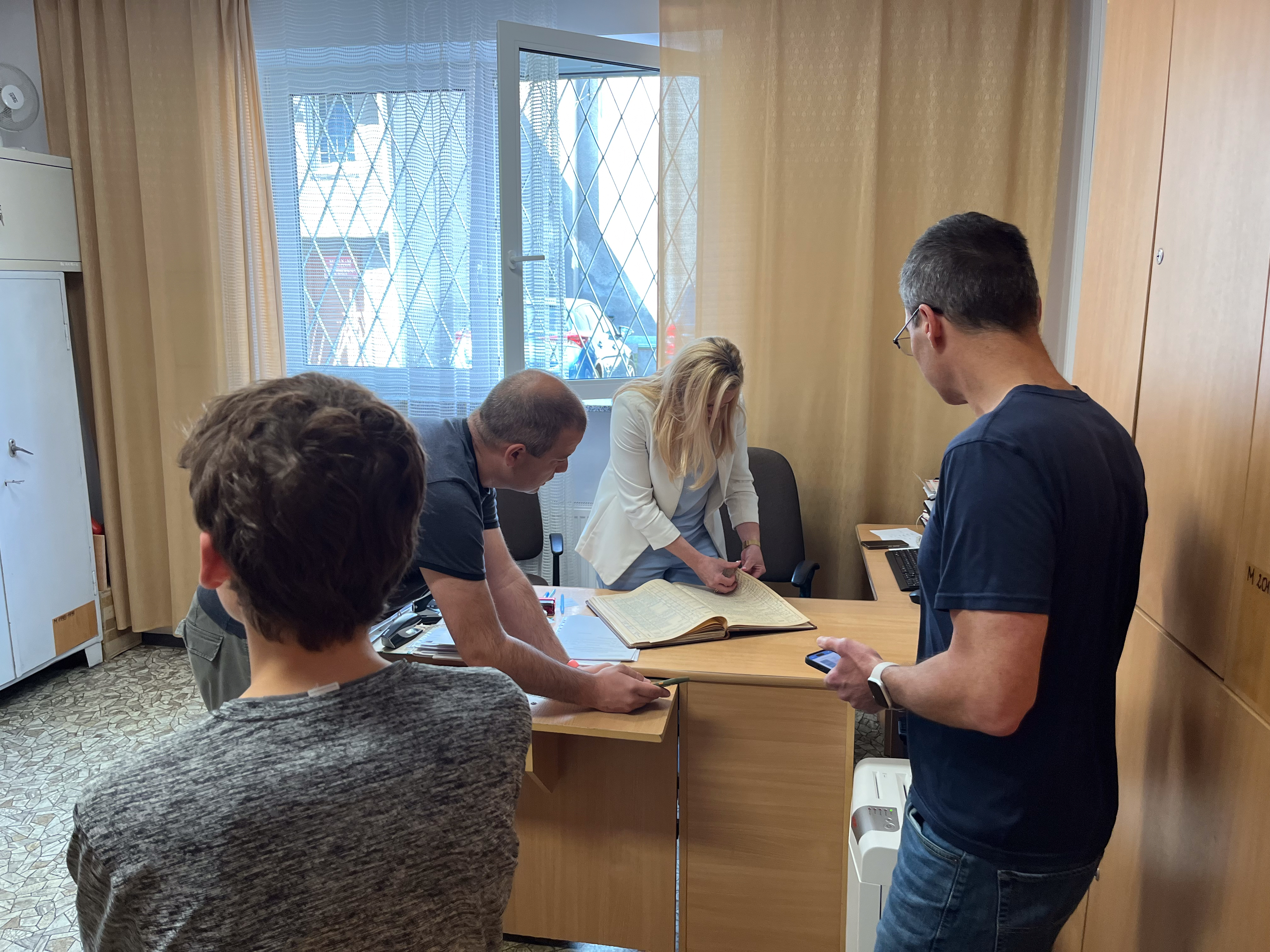
Bobowa – Our last investigation started in the local town hall. Through Lucjan’s charm and two very conscientious staffers we spent over an hour pouring through records to find my maternal grandfather’s family.

Case Closed?

Four days of investigation had ended. With the help of Lucjan as our translator and charmer, we had managed to discover new facts, meet family members and potentially open up further communications. Eventually, Lucjan mentioned that he was interested in police detective work, his skills fit perfectly for that job.

More than that, we had a real feeling of what it was like living in Poland. It is truly a beautiful country, not unlike America. There are small quaint towns, small shops, even American fast food (e.g., McDonald’s) and town halls with vital records. Beyond that there is a huge landscape of open fields and undulating mountains. It changed my perspective about who are ancestors were and where they were from and why many chose not to leave.

I couldn’t stop myself from thinking of one of my favorite Elvis Costello songs that seem to relate to us being amateur detectives, if only for a while and in a friendlier way. The following video has nothing to do with genealogy, but it too is a great mysterious song and video about being a detective….

Elvis Costello: Watching the Detectives

Discovering Relative Gold

Day two on the road looking for relatives and we uncover some of the mysteries of the family.

It’s day two of actual relative hunting. Our first objective was to find a Slawinska family relative which was the maiden name of my paternal grandmother, Marianna Kiczek. We knew she was born in 1847 in Poland through a marriage record which showed she was from a small village area called Źaranowa, about 40 miles south of Rzeszów, where we had stayed the last two days. The terrain became more hilly and rural the further we traveled.

Convenience Store Clues

We did not have a specific address so our guide Lucjan suggested we stop and ask at a convenience store if anyone knew of a Slawinska family. To him this was a logical professional move. To us it was more like following a detective trying to track a criminal.

While the store clerk was not able to help, we stumbled upon a nice looking, fit older woman outside the rough-looking store who said she knew of a family that might have had a family connection with the Slawinska’s and could be related. We volunteered to drive her to her home a couple miles away. Like amateur detectives ourselves, we deduced this was how she kept in shape, walking up and down these hills these steep hills would be tough for any of us.

No one seemed to be home at the possible family house but a next-door neighbor took our email address and promised to pass on our interest. We had made a loose connection but could not be sure if our detective work would pay off. Now, we began to realize this could be a slow process and may turn up as a dead end. On the other hand, luck might be on our side and practically everyone we met seemed eager to help.

There’s Gold in These Hills

Our second goal for the day was actually a planned visit to Bogumila and Zdzislaw Furtek. Bogumila is the sister of Krystyna Onacki, my distant cousin who had discovered our family connection many years ago. We share the same great grandfather but have different great grandmothers.

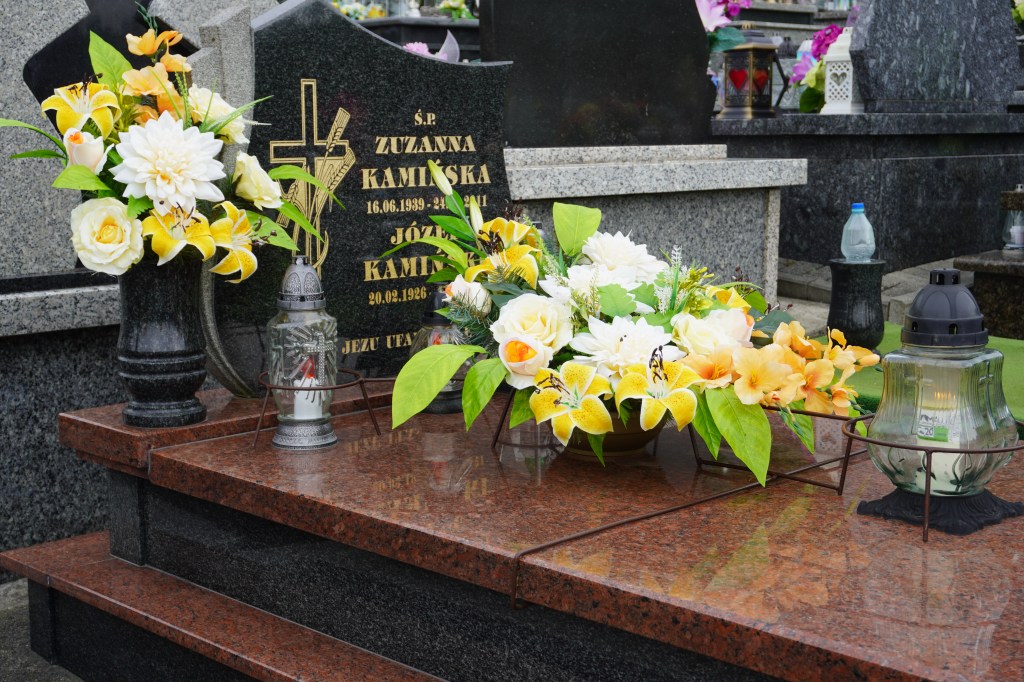
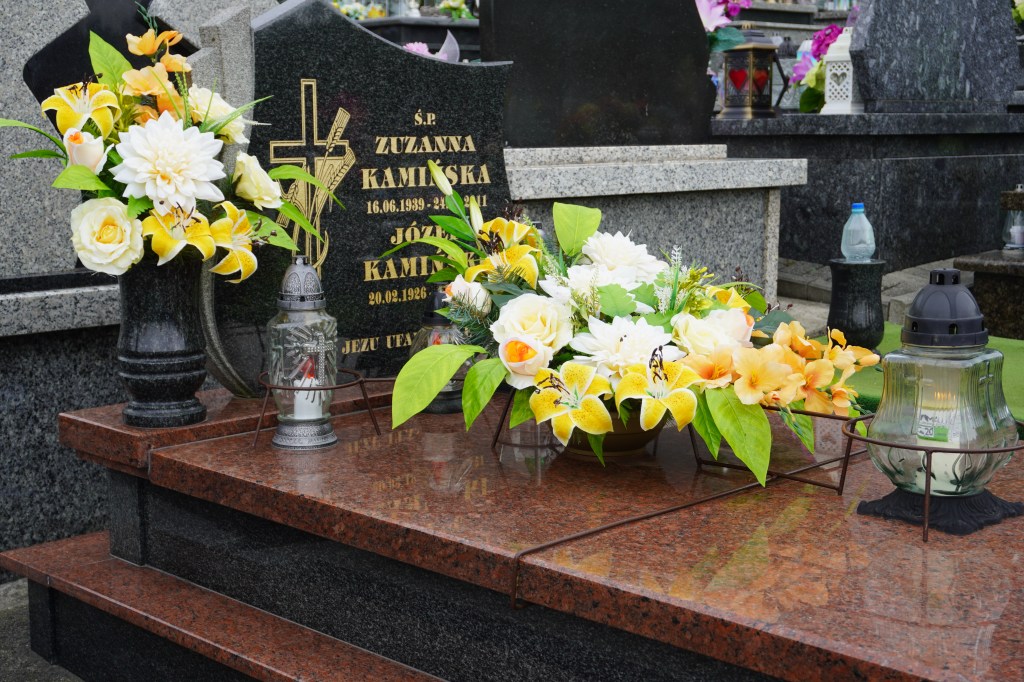
Josef Kiczek married Zofia Kielar and had three children before she passed away, one of which was Zusanna. Zuzanna married Victor Kaminska and had three children of her own, among them was Bogumila and Krystyna. Josef remarried Marianna Slawinska after Zofia’s death and had three more children, one of which was Joseph Kiczek, my paternal grandfather. Whew!

Krystyna and her husband John Onacki currently live in Roselle, NJ and are extremely warm people that embrace our shared Kiczek family connection. We have kept in touch over the years but this trip was an ideal way to share in our family heritage since much of her family still either lived in Poland or maintained connections there. This was a perfect time to actually meet and understand more about our family. And, Bogumila was the perfect personal connection to make it happen. While Krystyna could not join us physically she set up our meeting with Bogumila at her home in Breźanka just a few miles away from Źaranowa.

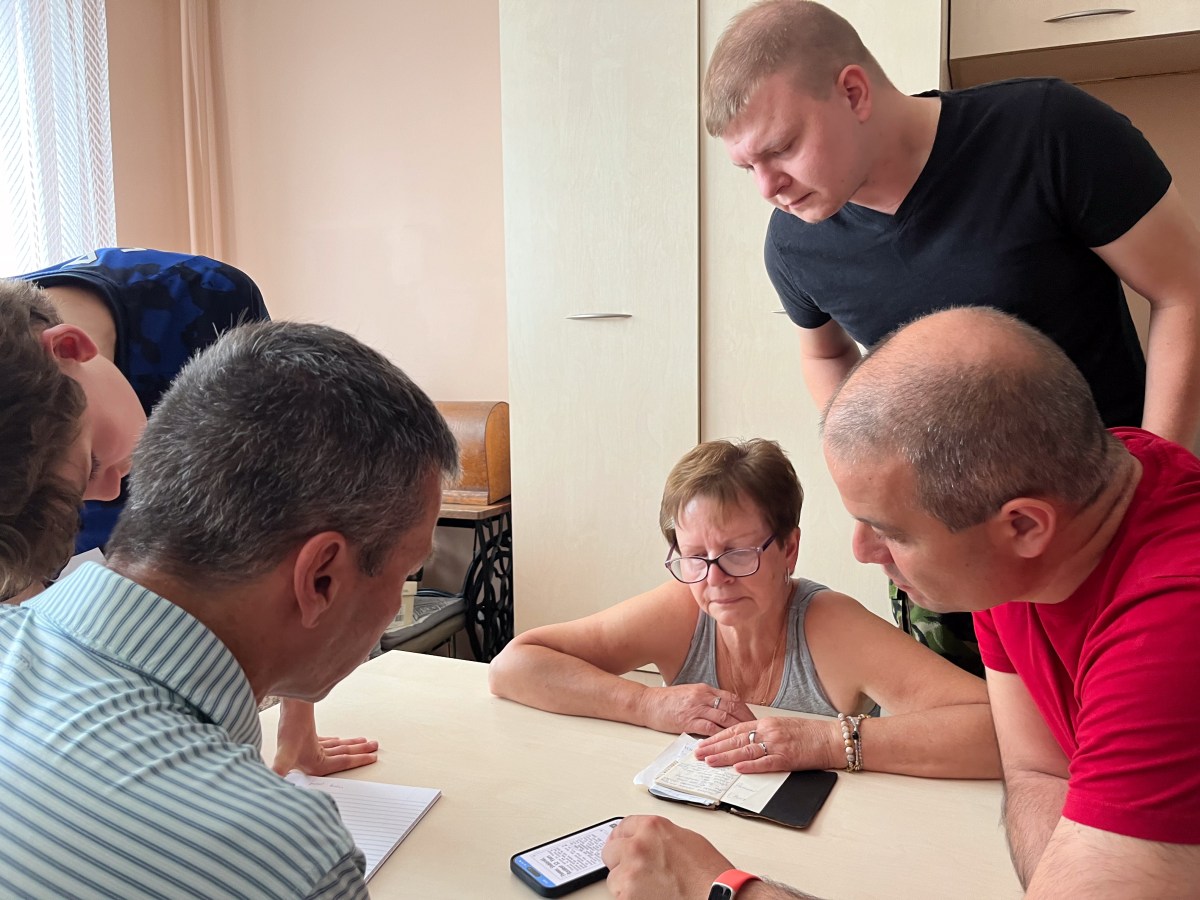
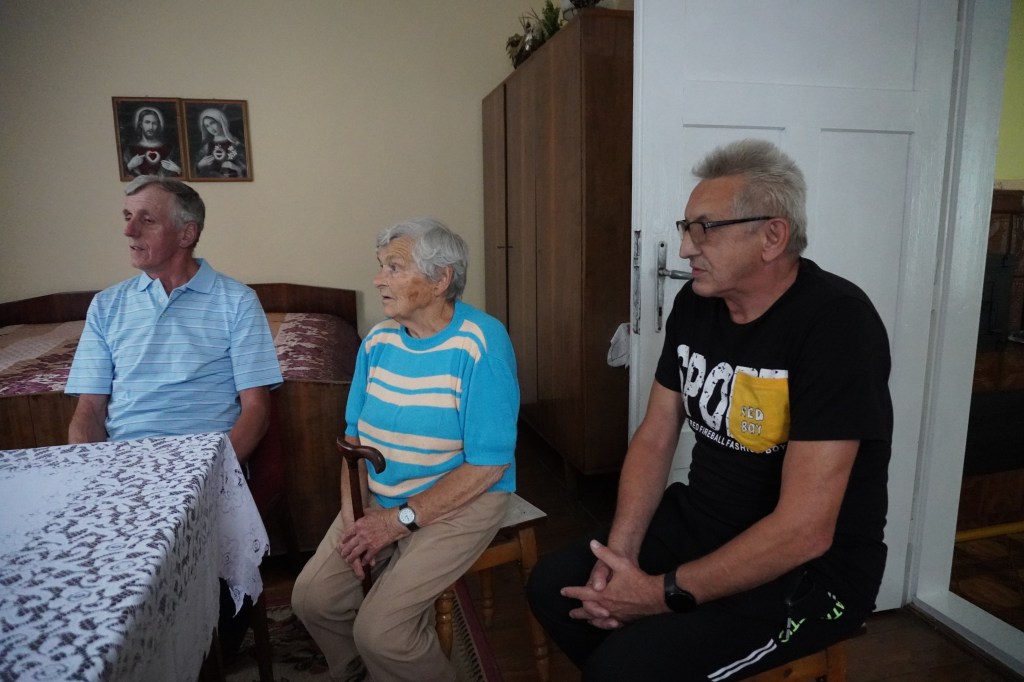
You could see both a physical and personal connection between the sisters. While Krystyna is younger they both have a warm beauty and personality. Bogumila and her husband, Zdzislaw, invited us into her home in the dining room and immediately talked about the family with Lucjan acting as our translator.

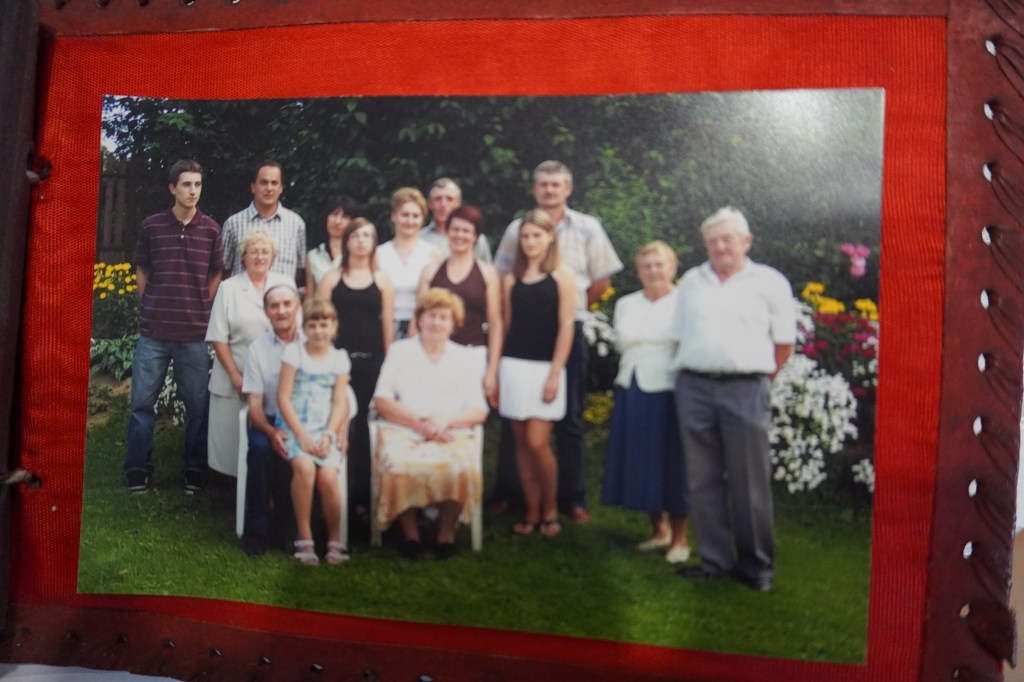
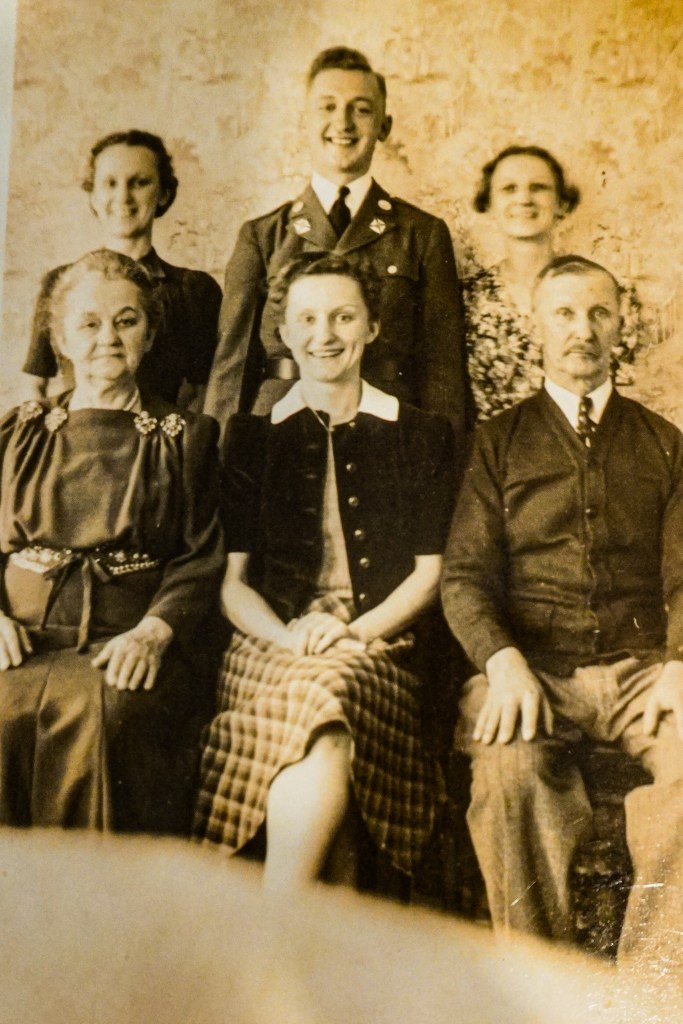
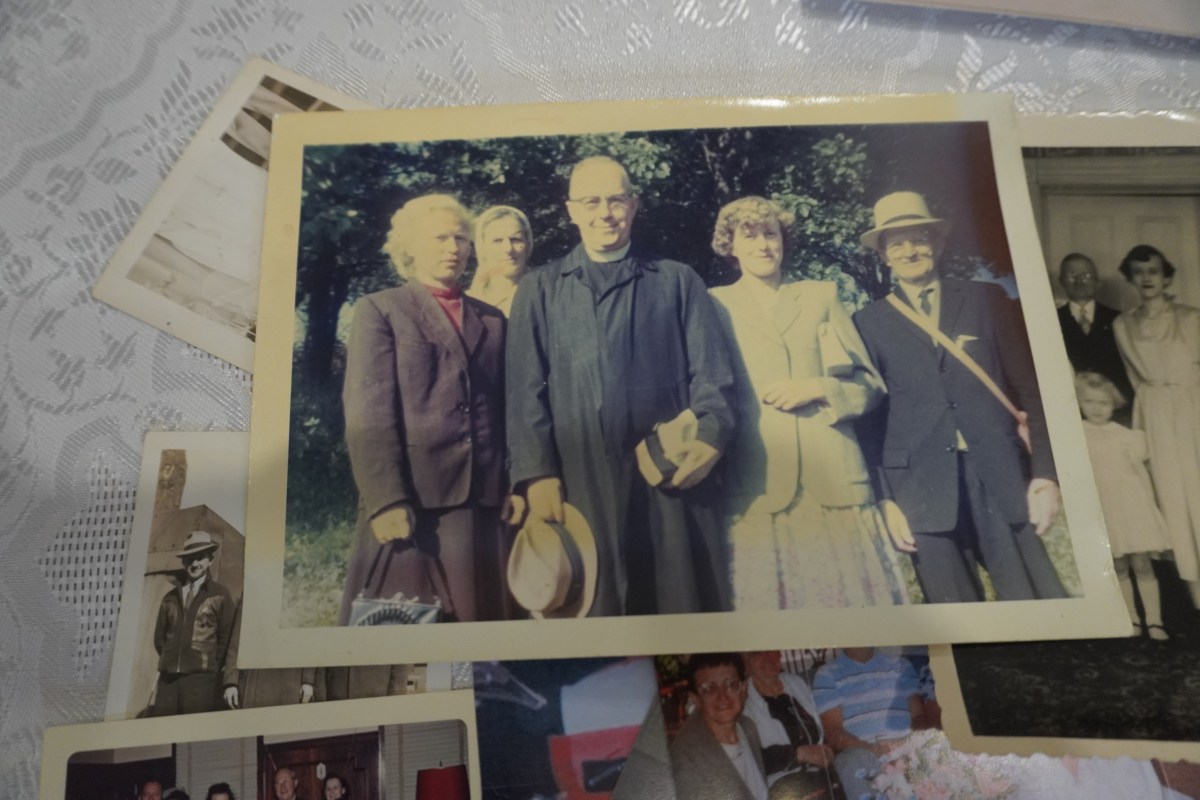
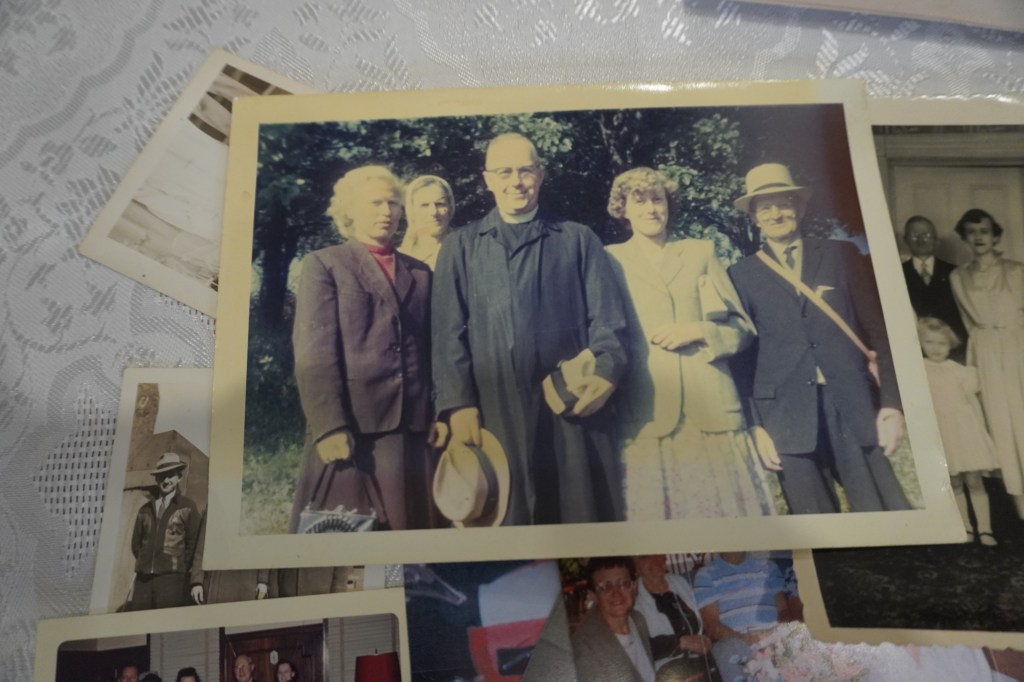
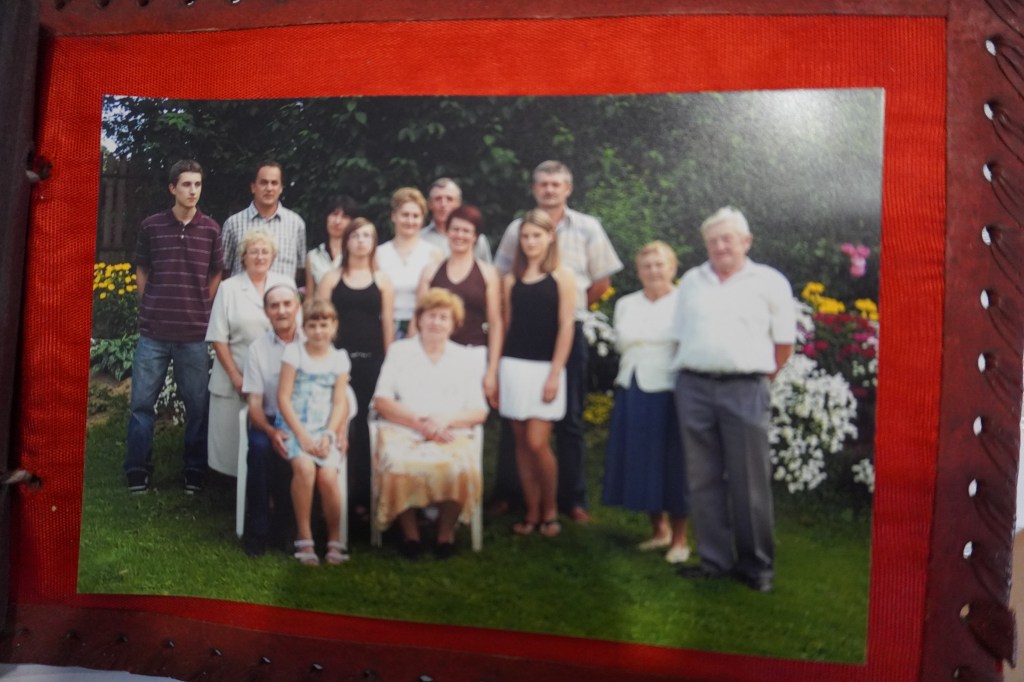
It seemed awkward at first but we quickly grew accustomed to the dialog. Next, she brought out several photo albums with old and new family pictures. I, in turn, had brought some of our old and new family pictures to share. We laughed when we realized that we both actually had a few of the same photos.

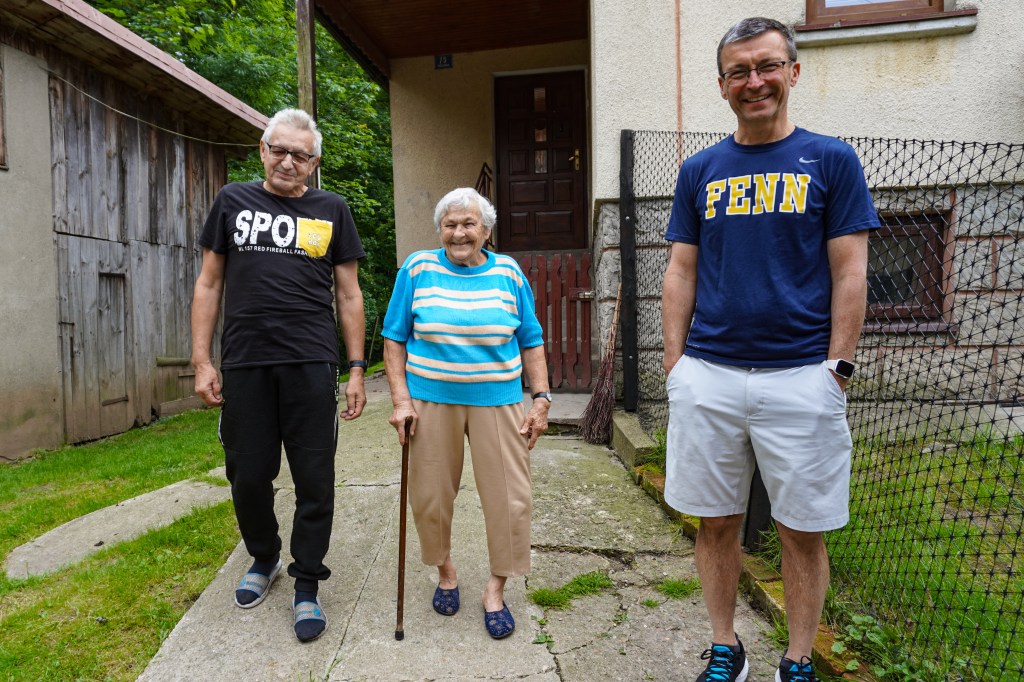
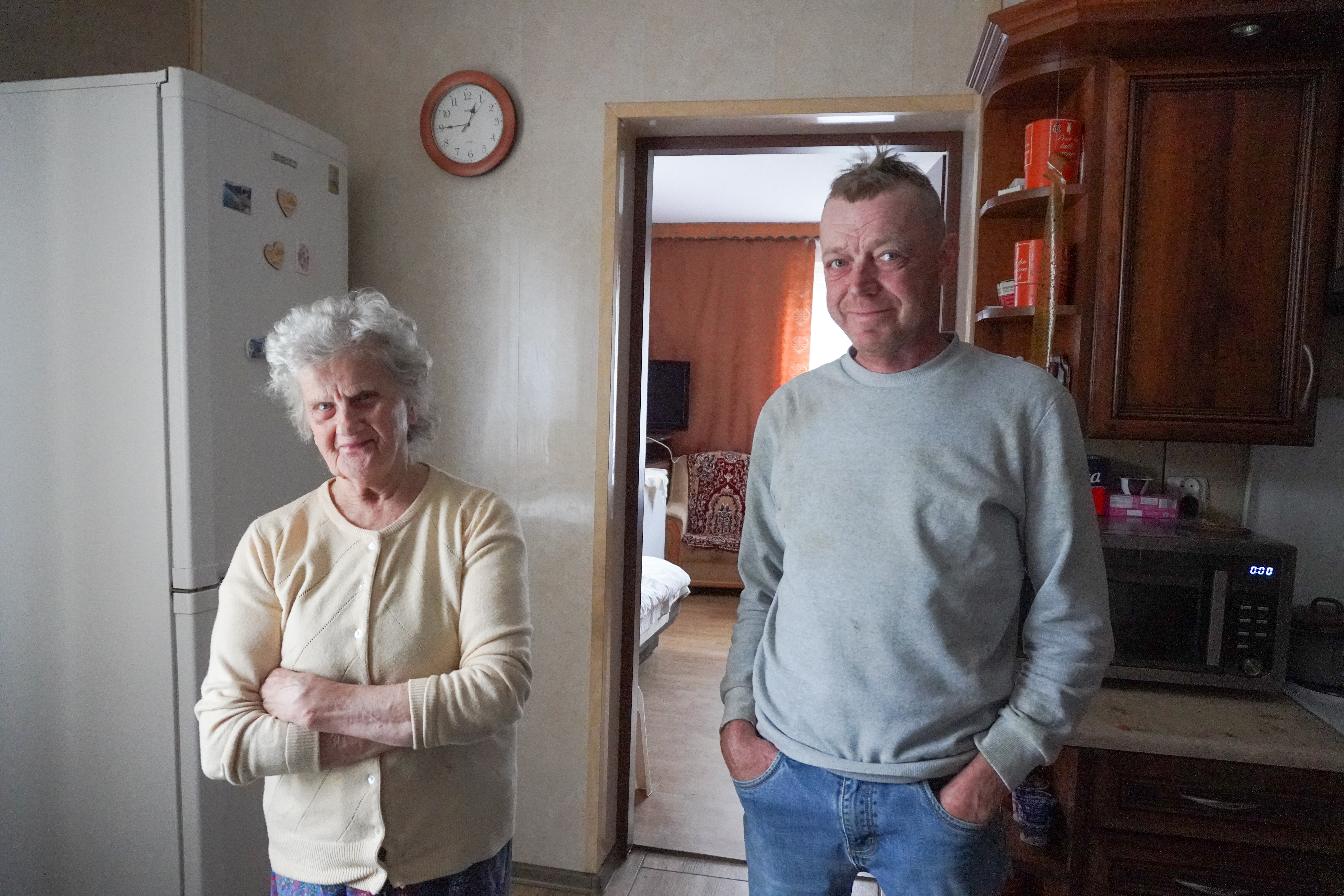
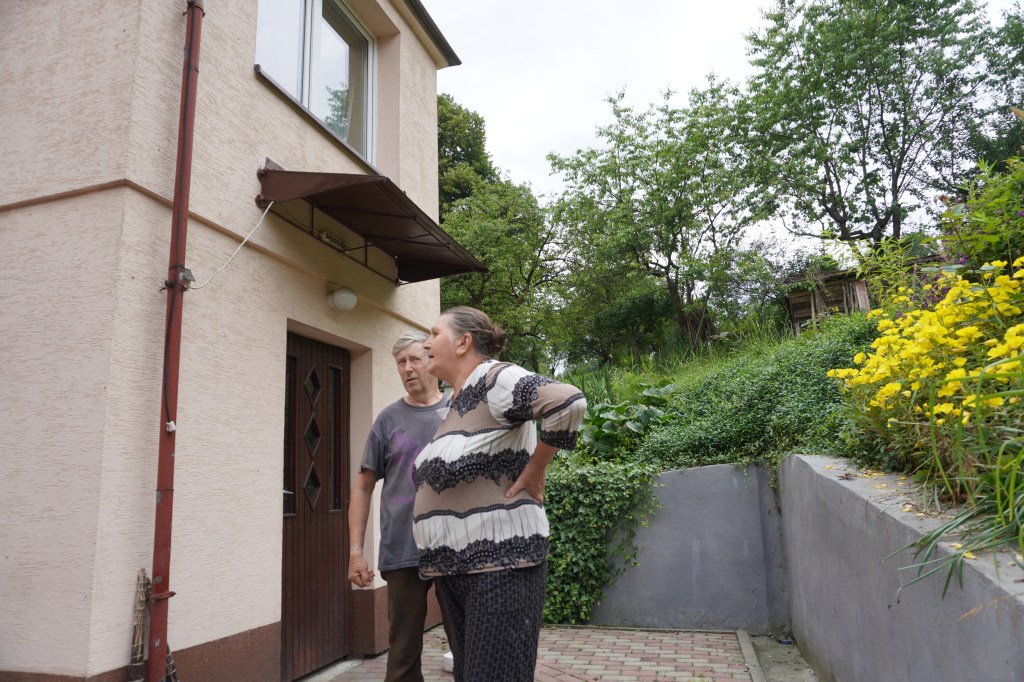
Bogumila planned lunch with us and a visit to the land and house where our common great grandfather Josef had lived. There was a new owner now and the place had been renovated many times over the years. An older woman and her nephew lived there now. Her husband had passed away and her nephew had come to take care of her. They graciously invited us in for coffee and cake as we spoke about old times there. You can’t seem to escape hospitality here!

We eventually returned to Bogumila’s home where a full lunch of Polish food including soup, salad, roast pork and dessert awaited us. After lunch we took a walk around her property, a large tract of land which they continue to farm part-time.The house and farm are situation on beautiful rolling countryside hills broken occasionally by patches of forest. It reminded me of those alive hills in the Sound of Music.

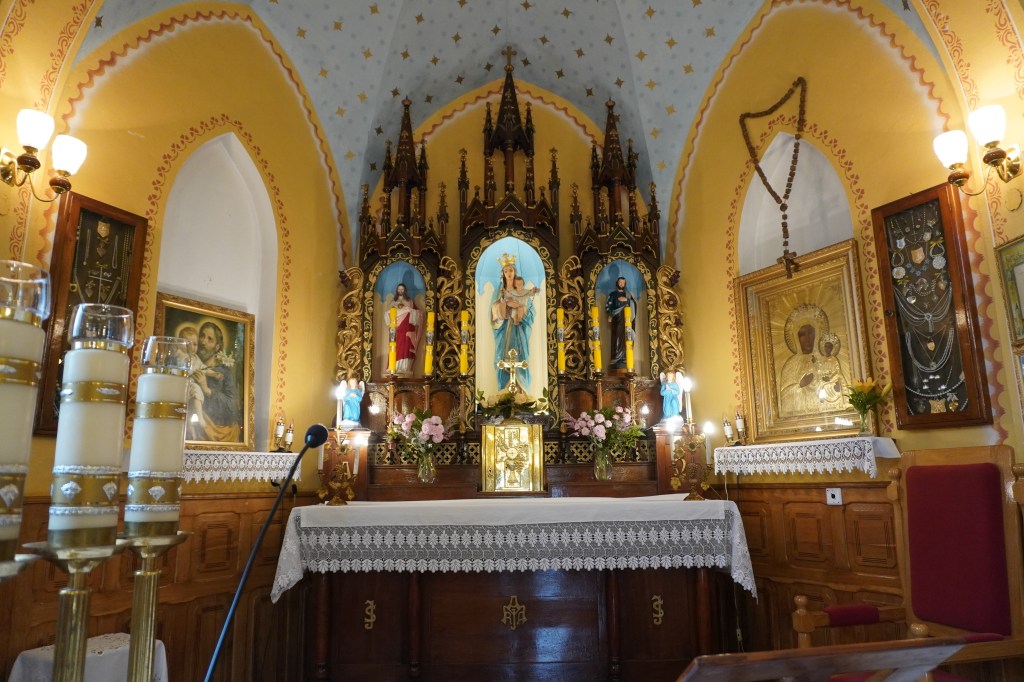
Late in the afternoon we exchanged gifts and goodbyes. But that was not before calling Krystyna in Roselle and telling her all about our adventure. Finally, we agreed to go with Bogumila and Zdzislaw to visit the local church and cemetery to see the graves of many in the family.

The Legend of Uncle Joe

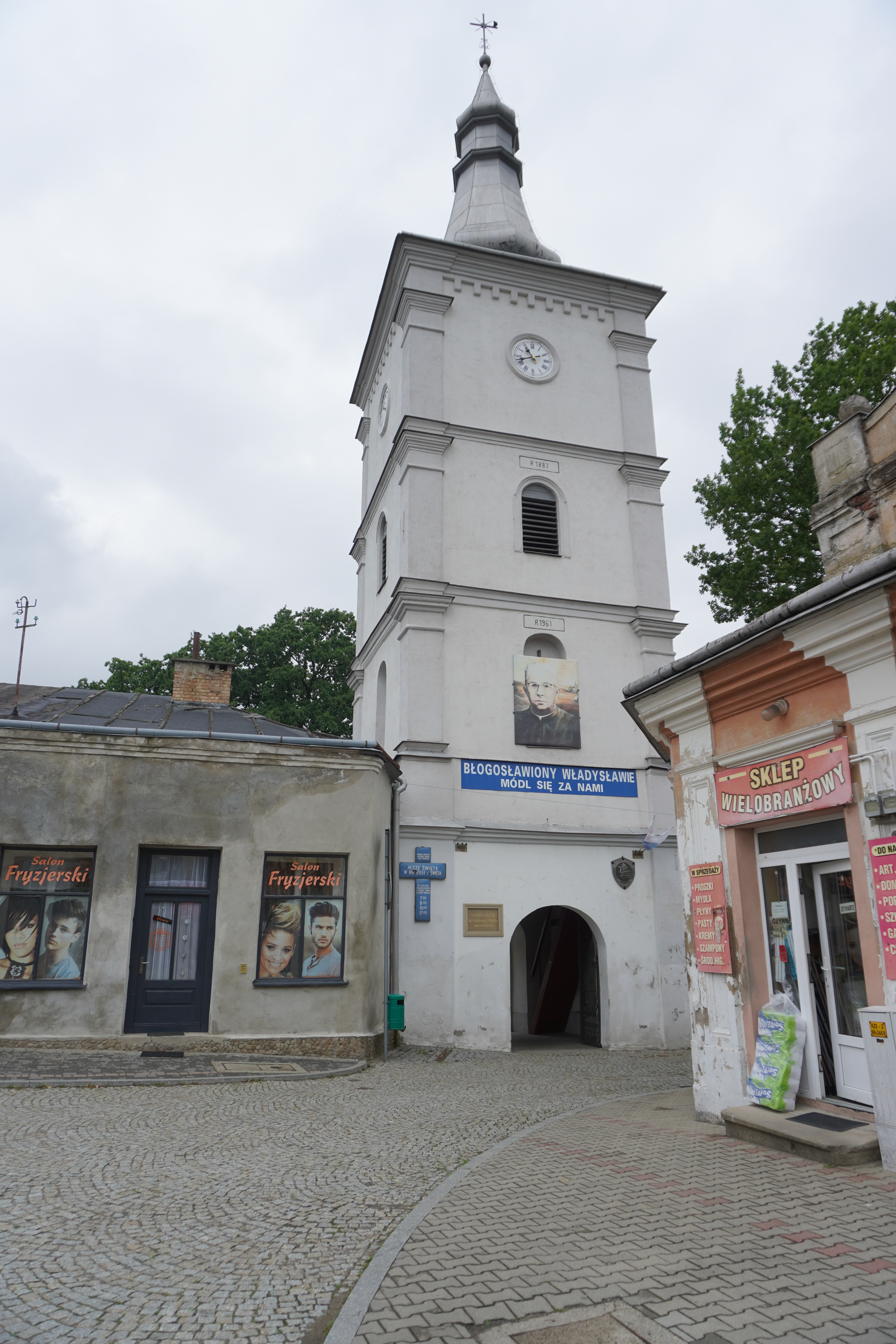
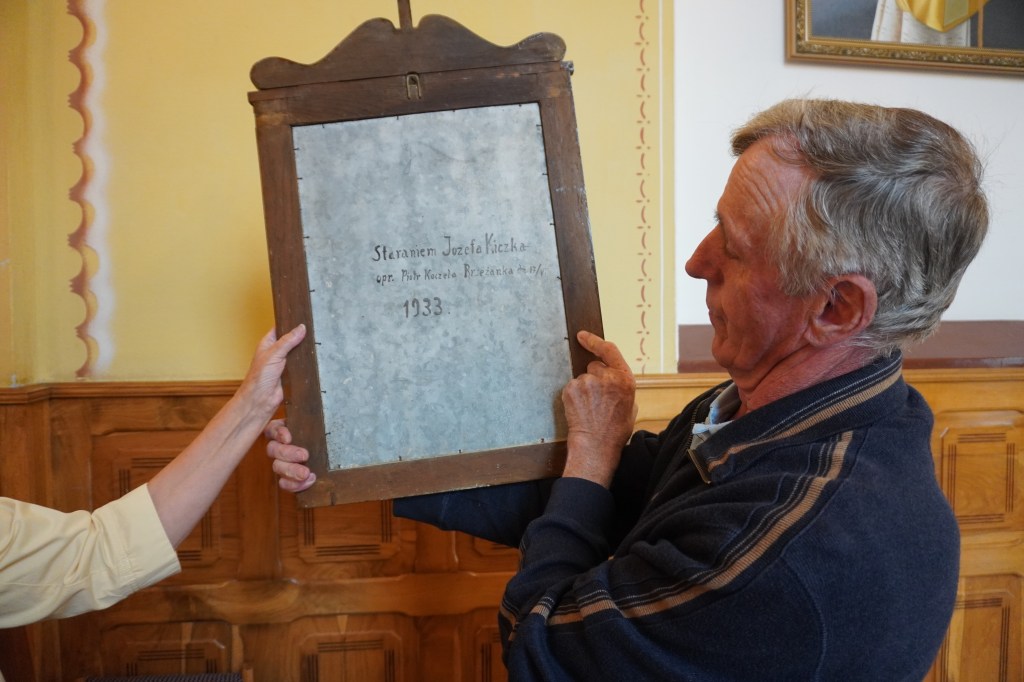
My father had a close cousin Joe who was always a mystery to me growing up. He was the physical connection to the old country, living in Bayonne and working for a school for the deaf in New York City. He was a sharp dresser and a very buttoned-up character who had a worldly view traveling frequently between the U.S. and Poland and having us help our distant family in Poland in many ways. Joe also was responsible for helping to build the neighborhood church, earning him such respect that he still seeems to have earned sainthood here in the town of Breźanka.

Cemetary Life

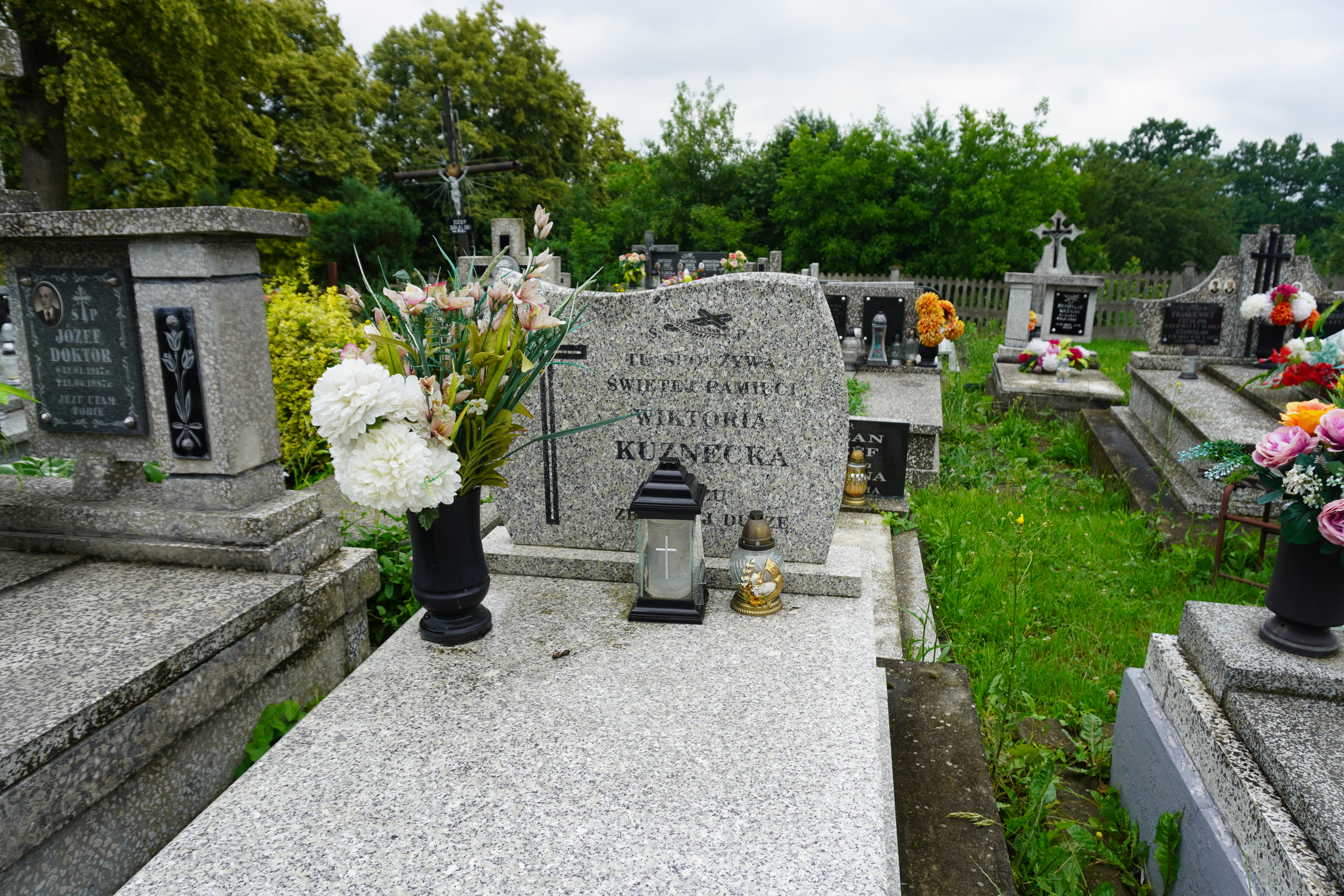
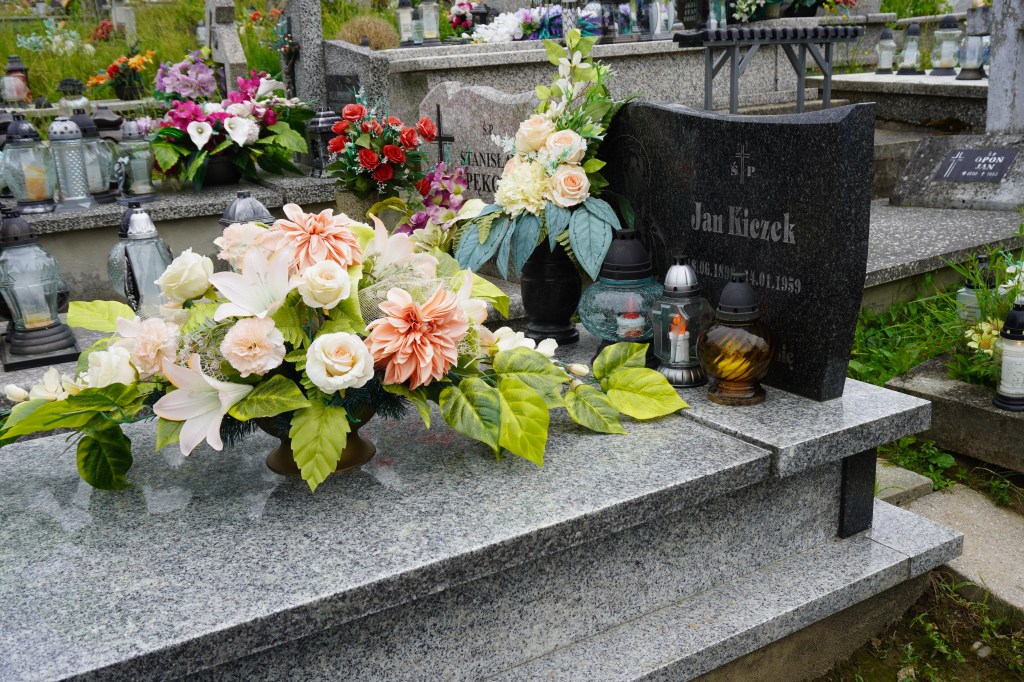
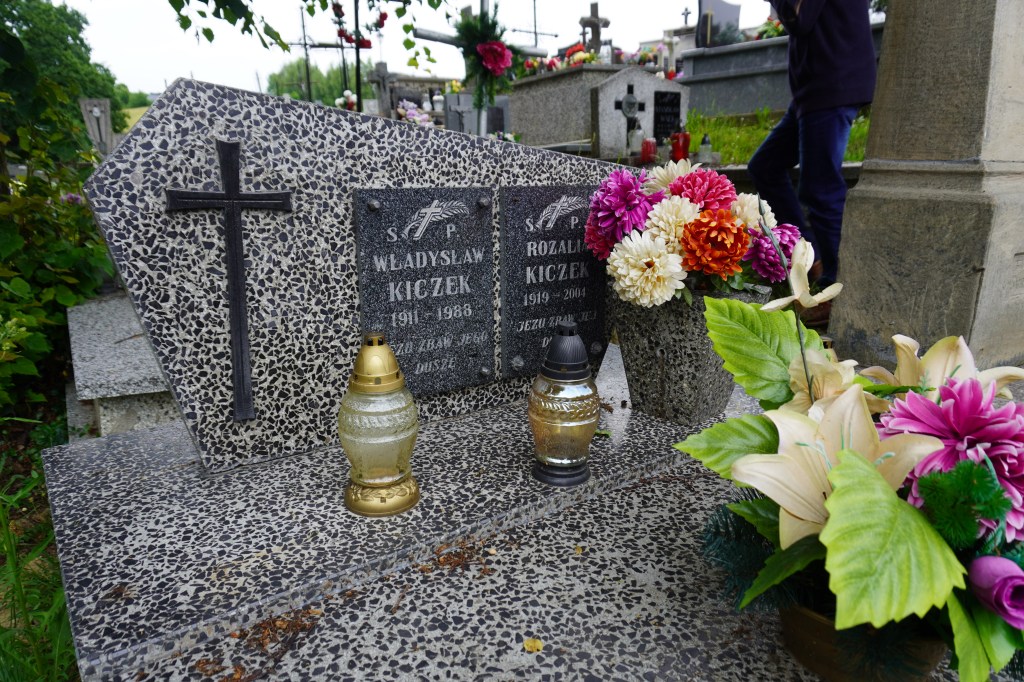
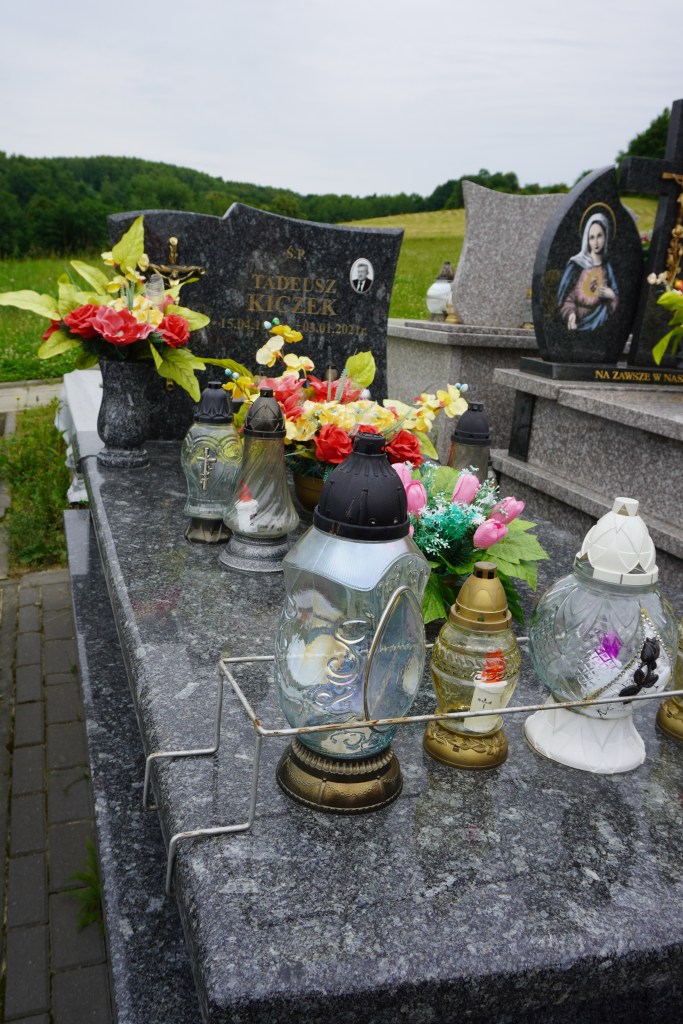
The Poles have a special reverence for the dead and for past generations which we seem to have lost here in the U.S. It’s the final evidence of lives lived and gone. And, maybe reminding us that we’ll all be gone too someday. Nothing lasts forever but memories can linger for generations.

Let the Hunting Begin!

Our first day of relatives hunting began today. A combination of detective work and history.

It was Tuesday and our first day of relative hunting. Our guide Lucjan Cichochi arrived at our hotel in Rzeszów, Poland to take us to our first destination for the week. One big advantage we had was a personable tour guide who spoke both English and Polish was a professional genealogist who Ethan had consulted with on our family history. So, he already had some familiarity with our case(s).

What’s in a Name?

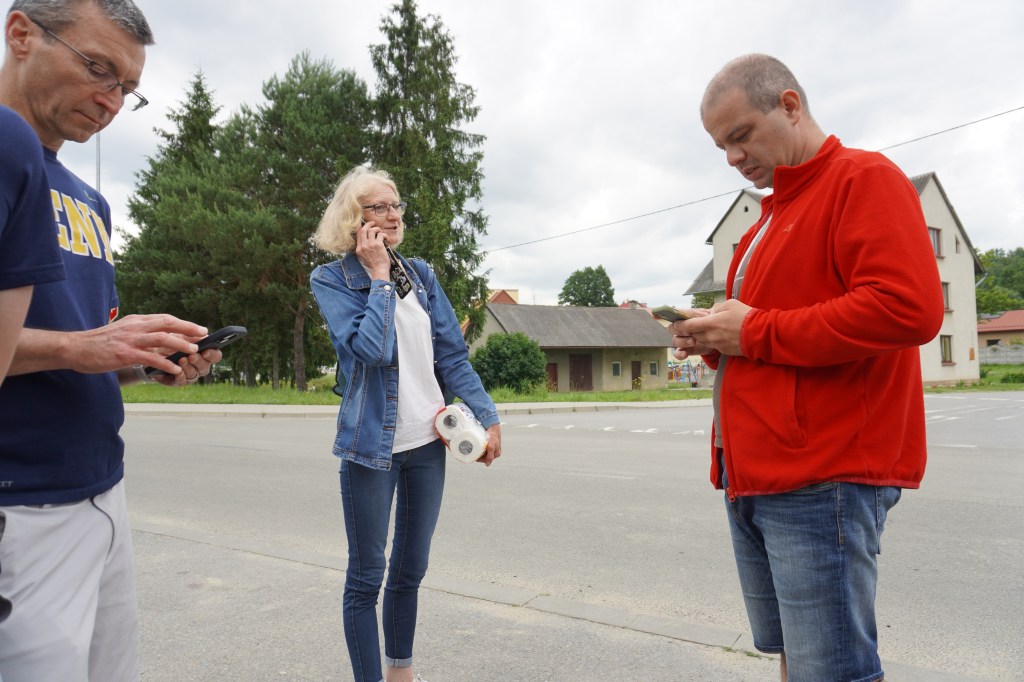
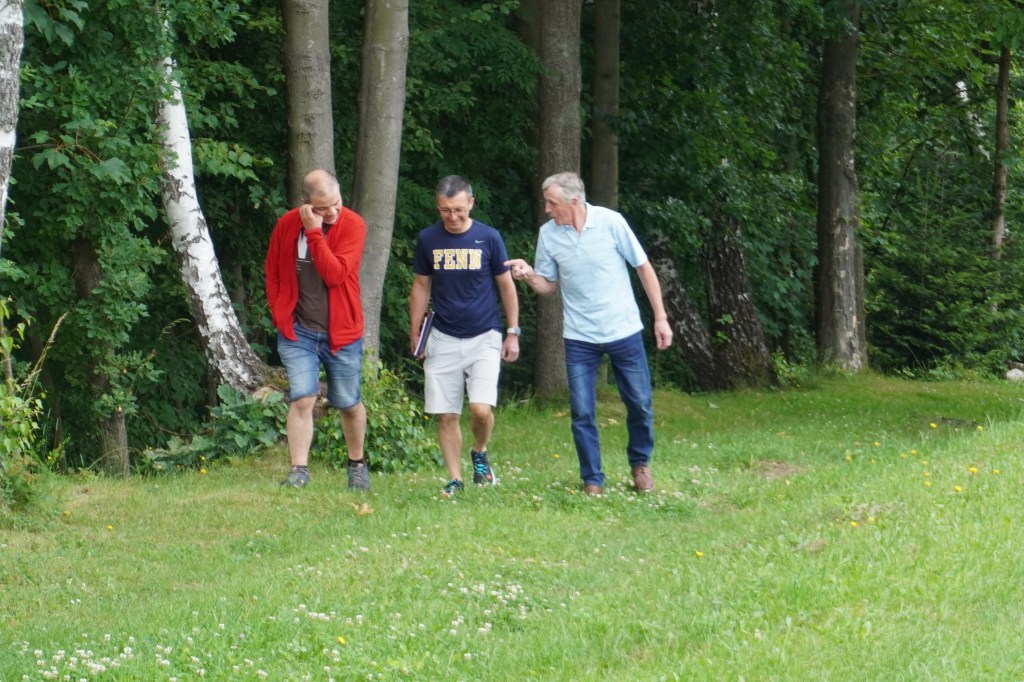
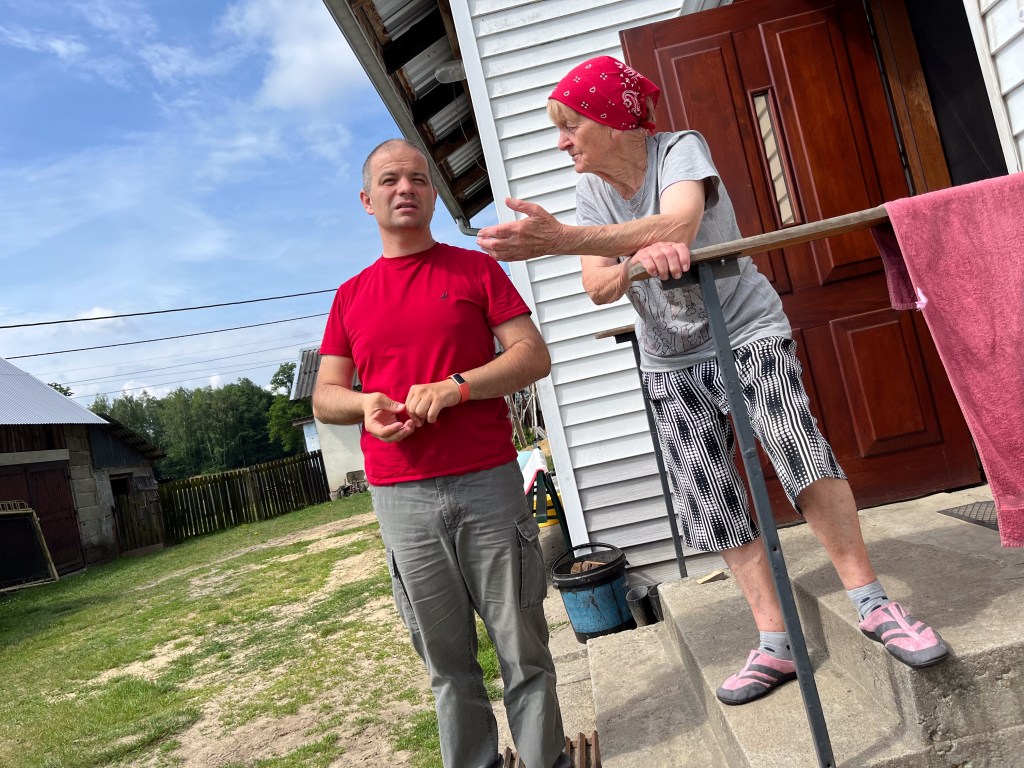
Ethan’s mom Judy’s mom was Helen Dolac (maiden name Stobierski). Her family was known to come from an area about 40 miles north of Rzeszów in the town of Świerczów. We had an address for a Stobierski and approached a woman living there who said no one with that name lived there and there were many families with that name. She suggested trying another address down the road where Halina lived who might be from that family.

It was in a multi-family apartment building which seemed might be daunting for a stranger to ring a doorbell. Lucjan, however, never let that stop him from asking around. Through a neighboring park attendant, he called Halina Knipa (formerly Stobierski ) and asked if we could meet to discuss her family for the benefit of three strangers from the U.S. seeking family history.

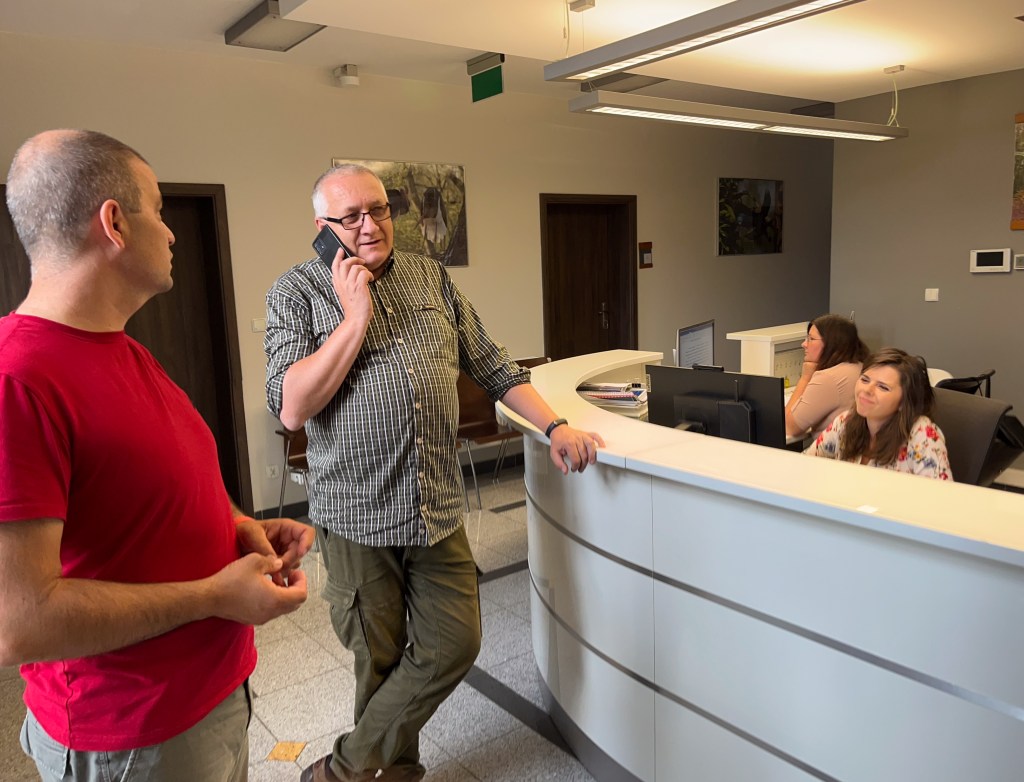
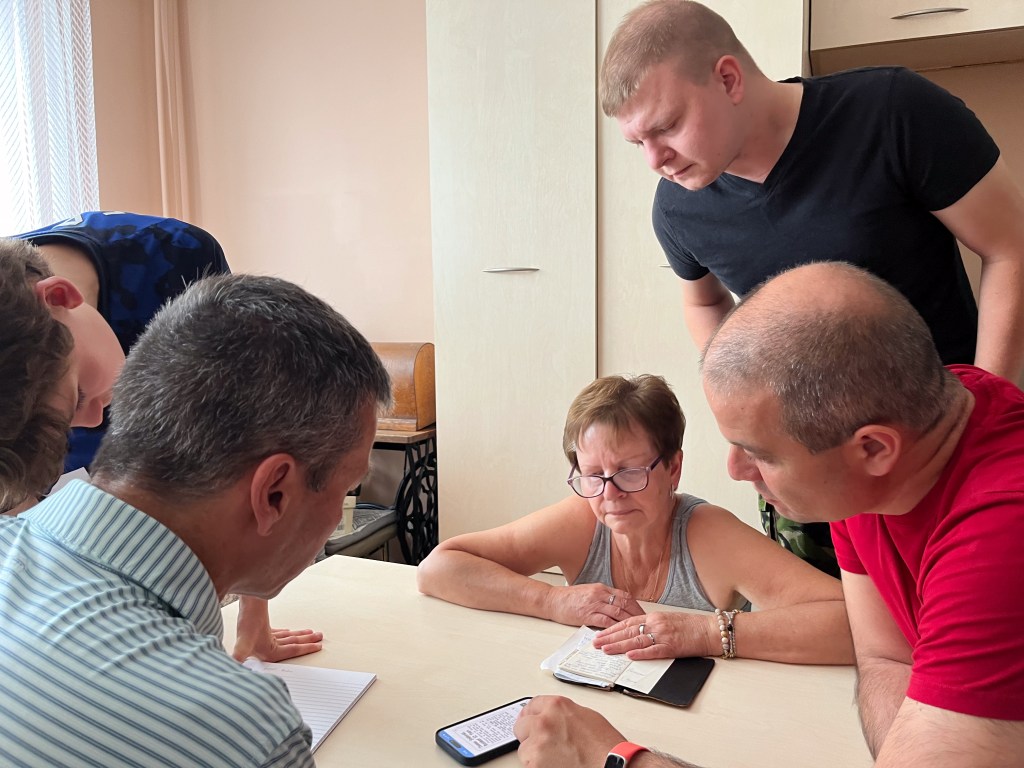
Naturally, it seemed, she let us in her modest apartment and treated us to coffee and cake while he began asking questions to see if she was indeed connected to the Stobierski family who immigrated to the states. She spoke only Polish but her 28-year old son Bartek, spoke some English and joined us as we looked through old photos. Ethan and Lucjan agreed that there probably was a connection to the the U.S. Stabierski’s through a great grandfather. She even agreed to take us to the town hall records building to verify his birth record to see if he was a brother of Tomas Stobierski, Ethan’s great grandfather.

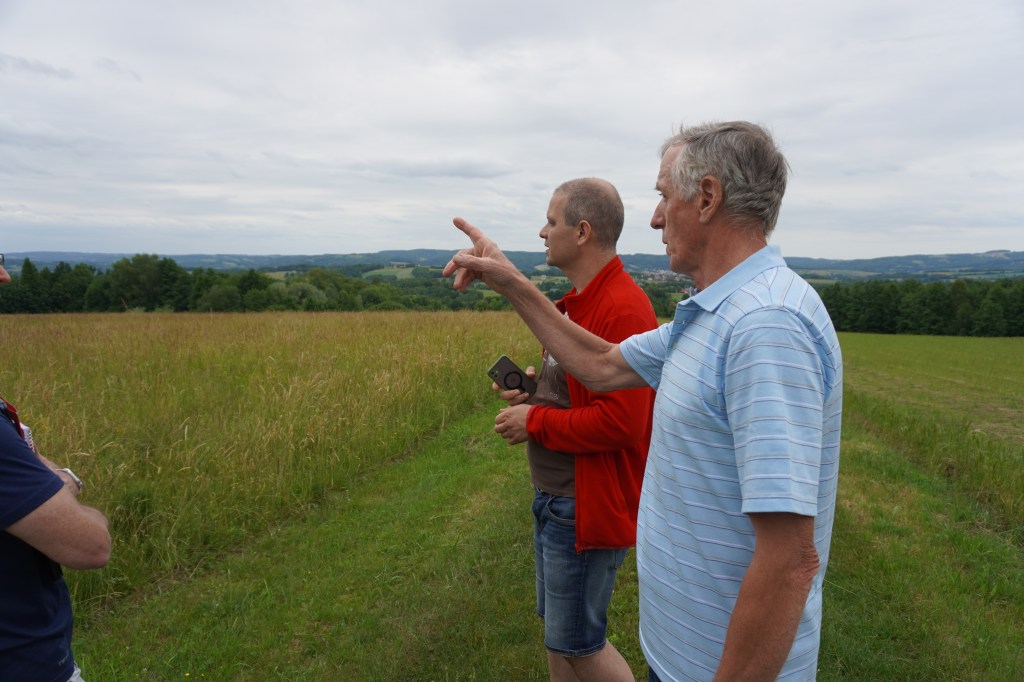
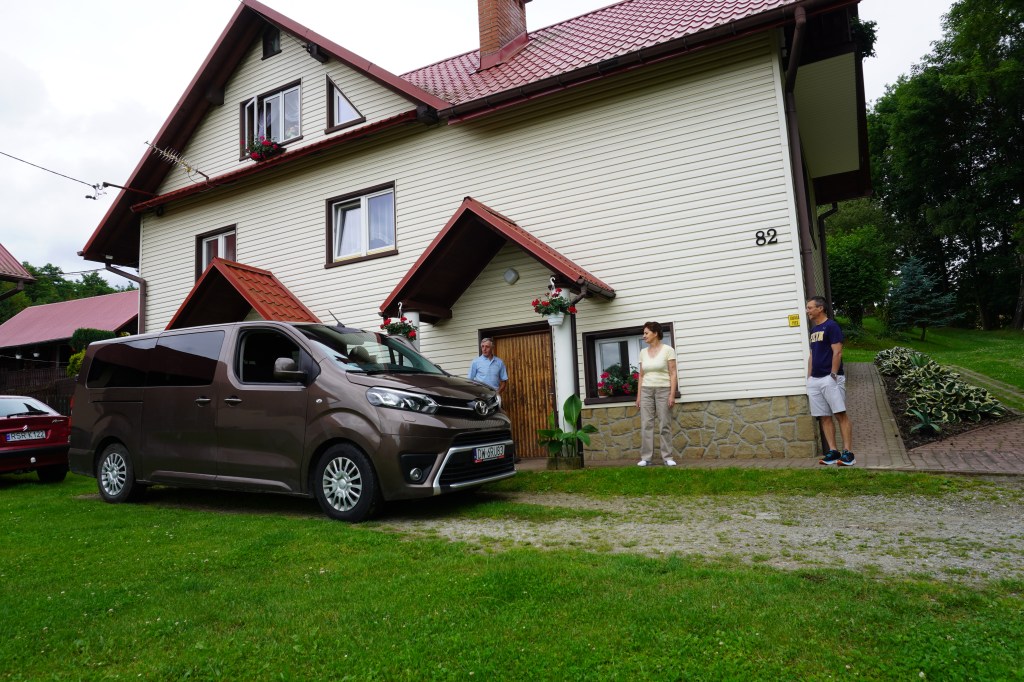
Halina and Bartok then took us to the house where she and the Stobierski family once lived which is now vacant along with many others in the area. Once mainly a farming community, commerce had settled in and the family moved on. With no one interested in a house in need of repair, a barn and acres of farming land, Helena’s sisters now owned the land and its future was uncertain. It seemed likely the family home would be sold off someday. We agreed to exchange emails and make a connection

The land in this area is mostly flat and fertile. It’s fairly busy with traffic although the population is not dense and there seems to be an oversupply of land with little influence from big agricultural companies. It seems like a place where time has stood still, at least for now.

Visiting the Ethnographic Park

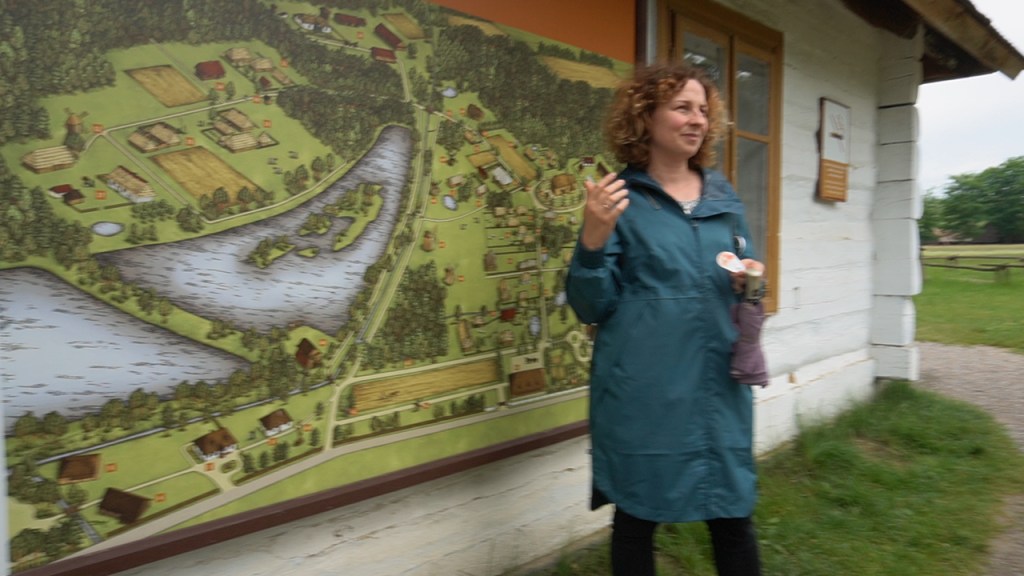
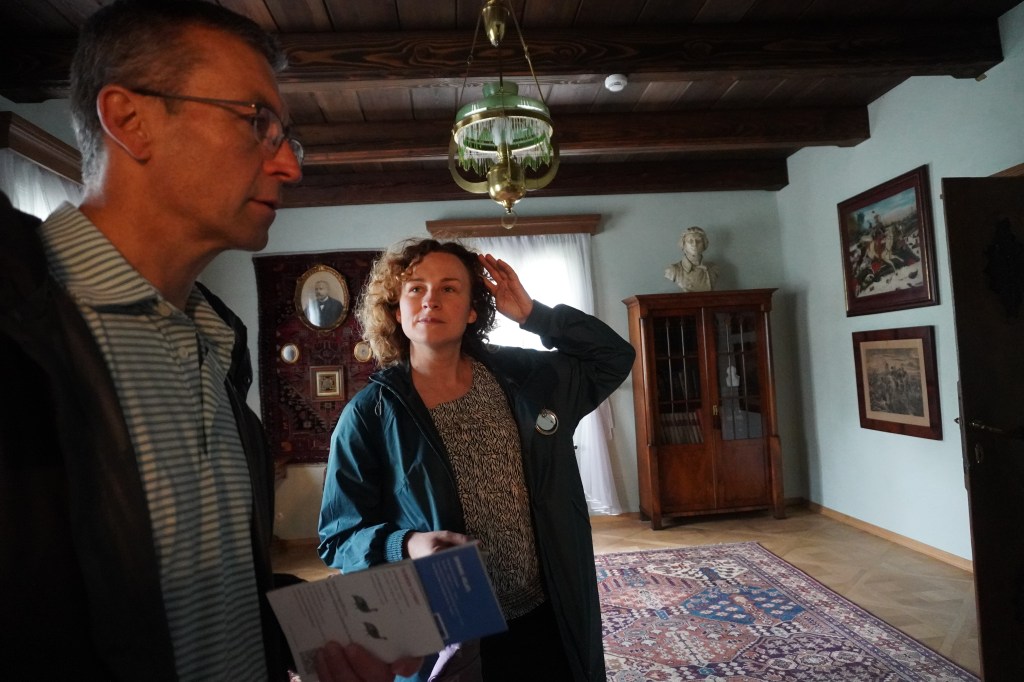
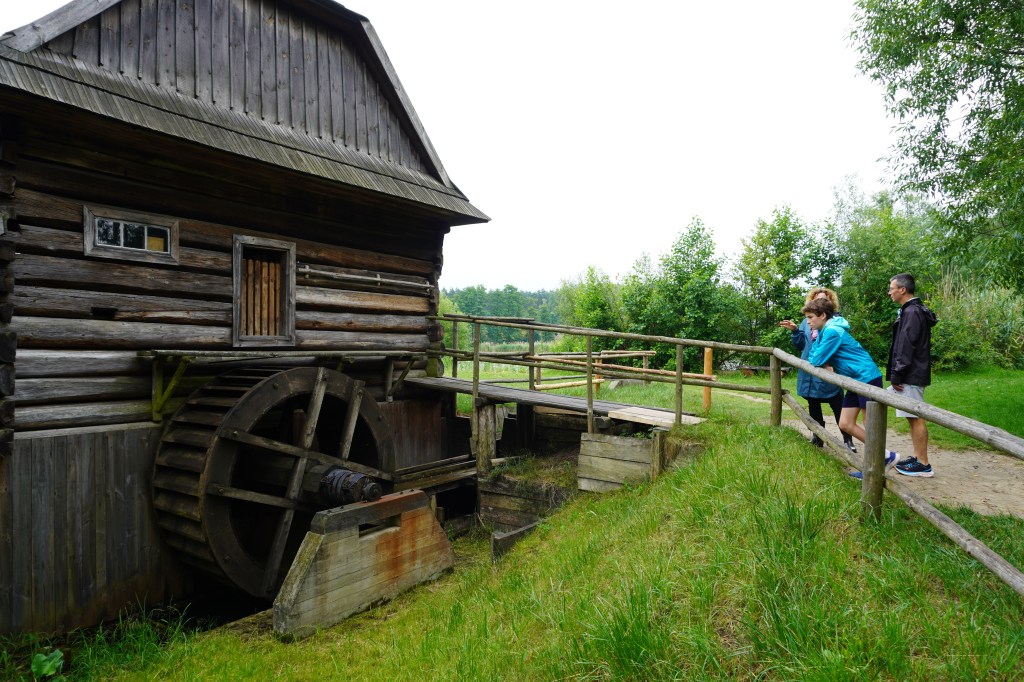
After a quick lunch we headed to the Ethnographic Park in Kolbuszowa a few miles away. The term “Ethnographic Park” is probably a more globally acceptable term for a recreation of a past time and culture. Williamsburg in the U.S. is considered as such. There are many such places in Europe reflecting past history and how people lived in those times.

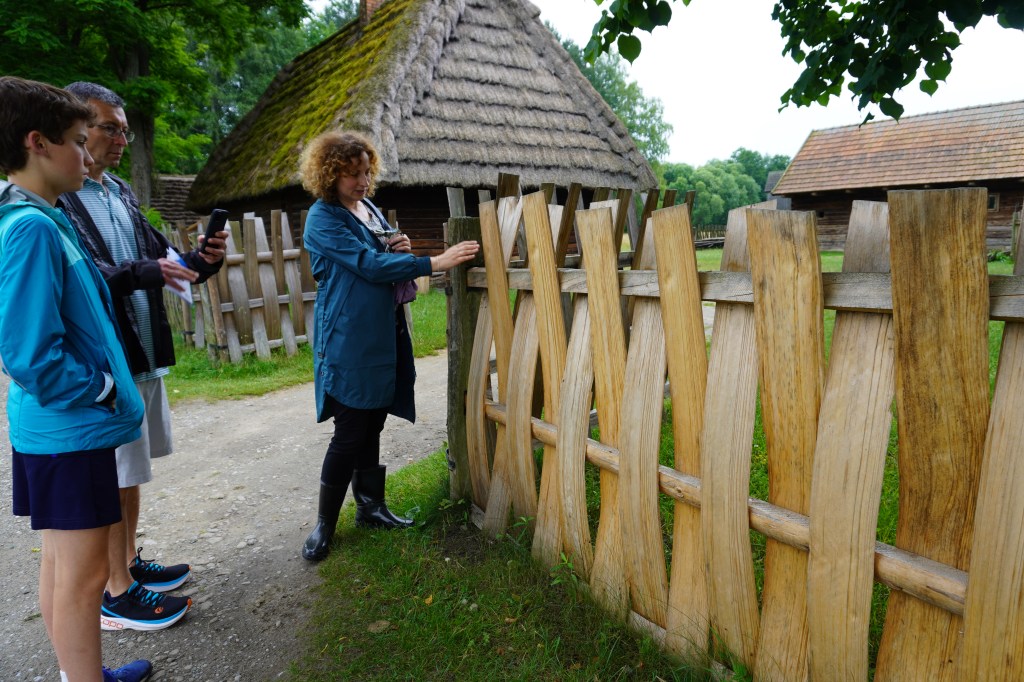
The southeastern part of Poland was mostly an agricultural area and the common village people who worked the land and raised farm animals, mostly for the benefit of wealthy landowner aristocracy. The park is an assembly of about 60 buildings in an area resembling what a Polish village might look like several hundred years ago.

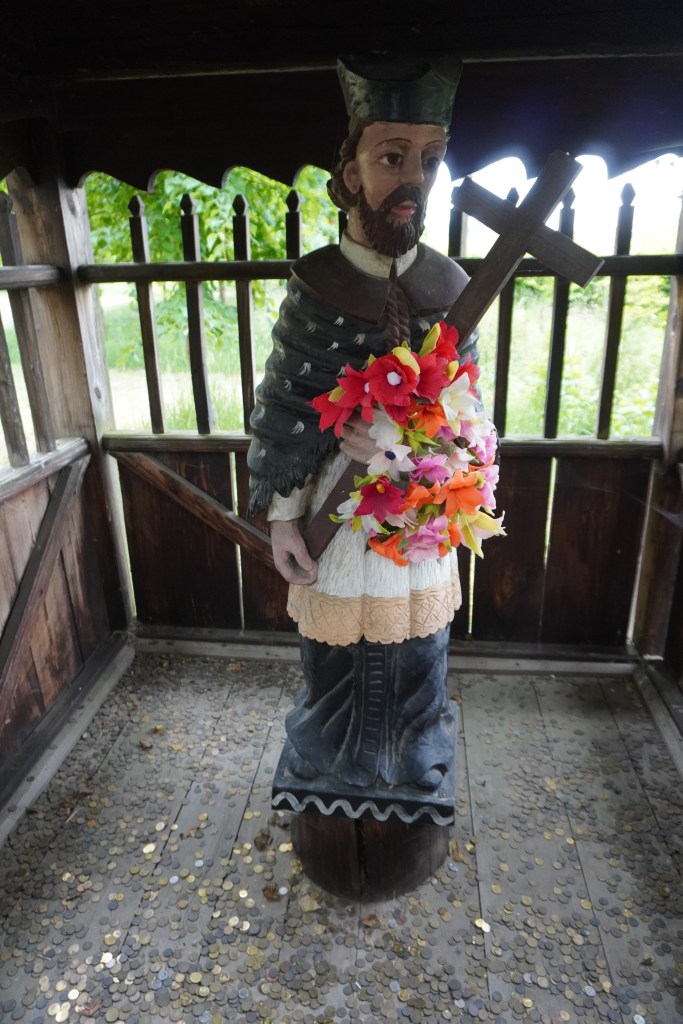
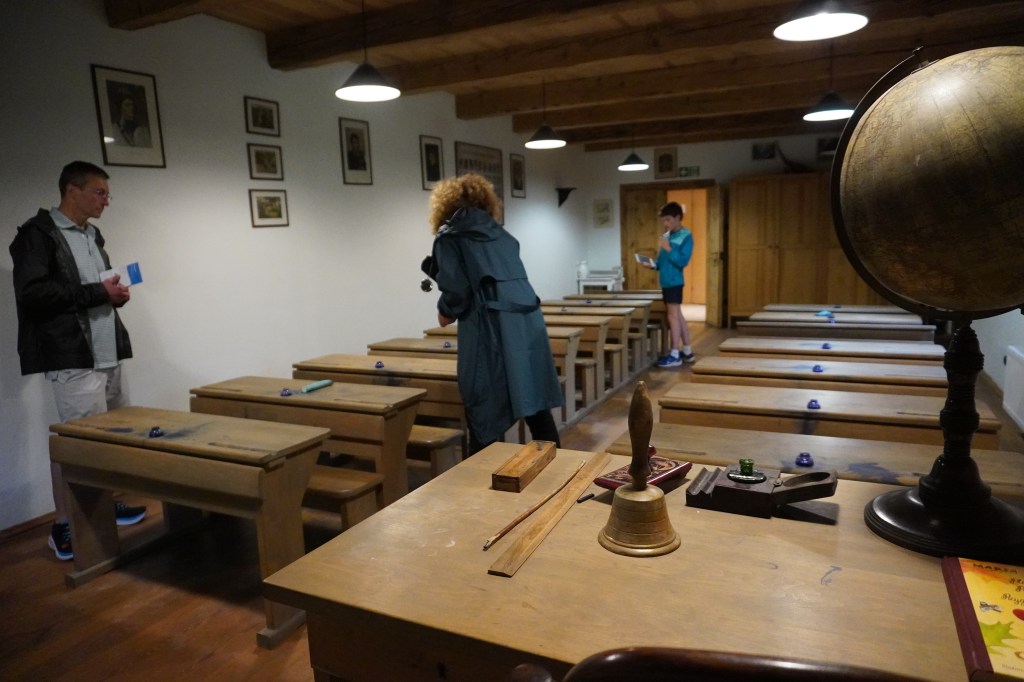
All buildings in this living exhibit were historically accurate and selected from the nearby areas then reassembled to create this reconstructed new village, including peasant houses, barns, shrines, schoolhouse, silos and manor house.

Ironically, our guide Sabina was married into the Stobierski family but we quickly realized that there was no direct connection to our’s. She became our private guide walking us through the village and explaining the history of the early settlers in this part of Poland. It was a great way to appreciate the past and think about how are history was both the same and different.

The Ethnographic park continues to expand and is a very popular destination for visitors from Poland and beyond. For a relatively new and small area of Poland, they are now attracting up to 50,000 visitors a year. Probably most important to many visiting these days is that a popular Netflix streaming comedy series (in Poland only?) called “1670” was shot here for its first season and a second season is in the works. We’ll be looking for it on Netflix when we get back to the states. I guess you could say it’s a virtual recreation of past, not unlike what we are trying to do.

Visiting Rzeszów: Polish City with Promise

We visit a charming Polish city before we embark on our hereditary journey.

June 10, 2024 Rzeszów, Poland

Our 8-hour LOT Polish Airlines flight from Newark Liberty flew into Rzeszów at 11:00 a.m. The two Ethan’s managed to catch a few hours sleep in our deluxe Business Class seats. In spite of my recent habit of catching daily naps (goes with the age) I could not sleep. Worse was the lack of WiFi and decent entertainment. Maybe it was the stress of the last couple days and the anticipation of what lie ahead that kept me up in spite of the excellent service and onboard meals.

We landed on time but had to wait for a back up driver to take us to our hotel in Rzeszów (pronounced shesh ov) about 10 miles away. Rzeszów is a regional capital of southeastern Poland bordering Ukraine. Much of our week would be close to an hour away from Ukraine. In fact, Ethan noticed when landing that we had passed several Patriot-type missile launchers along the way and we continued to see the subtle presence of military personnel. Poland is not currently threatened but their is a whiff of anxiety in the air and a common hatred of Russians.

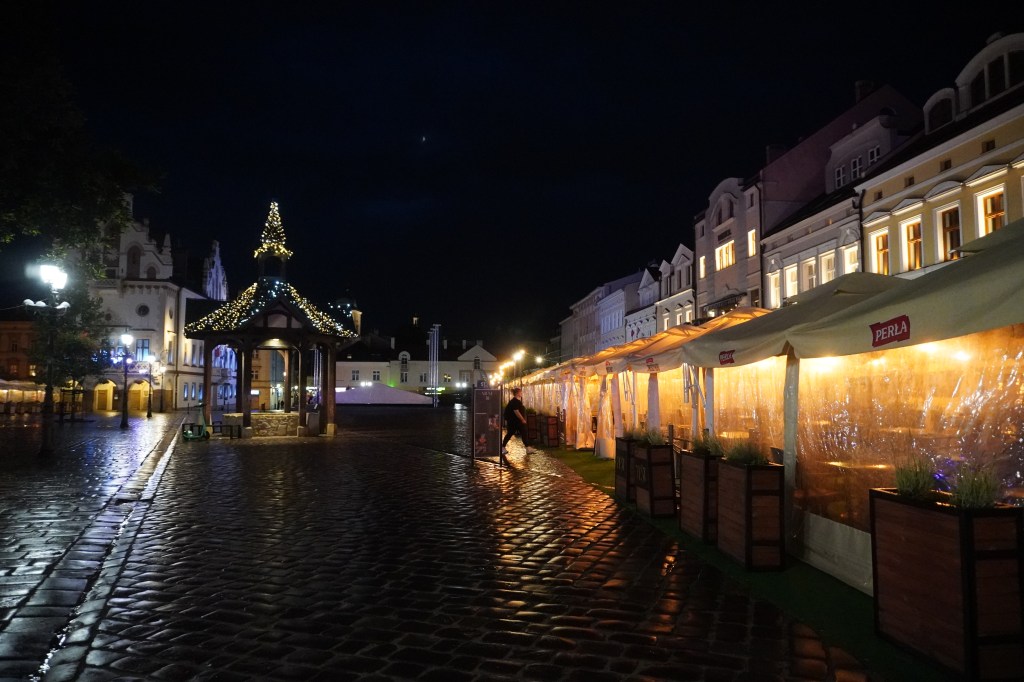
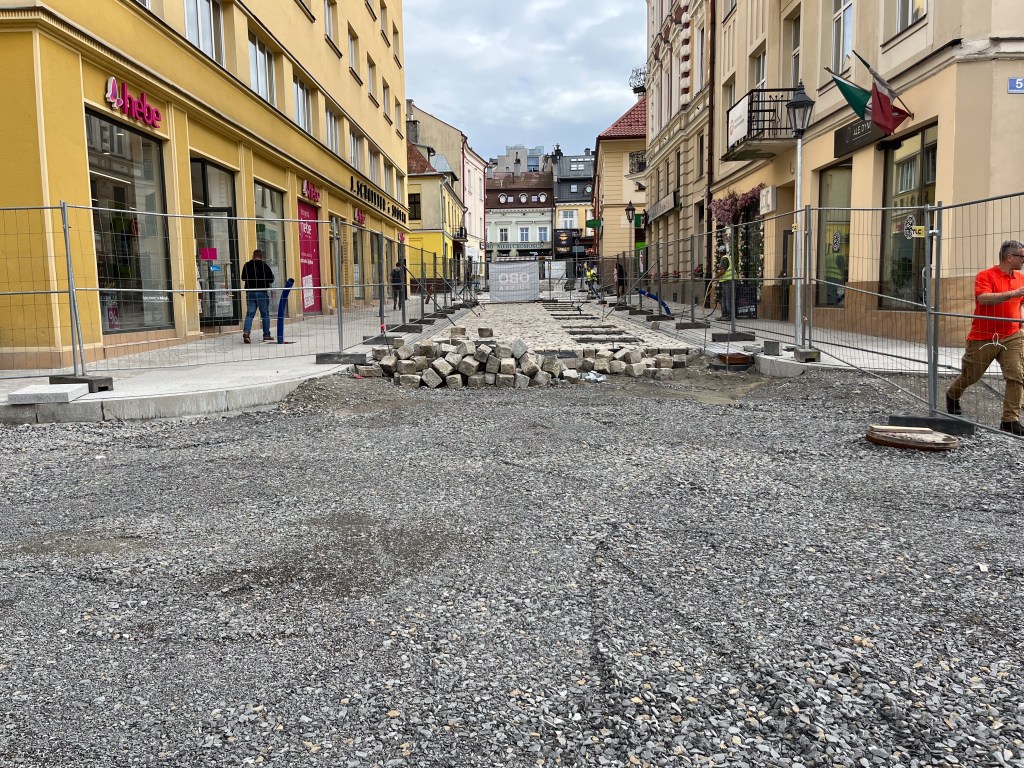
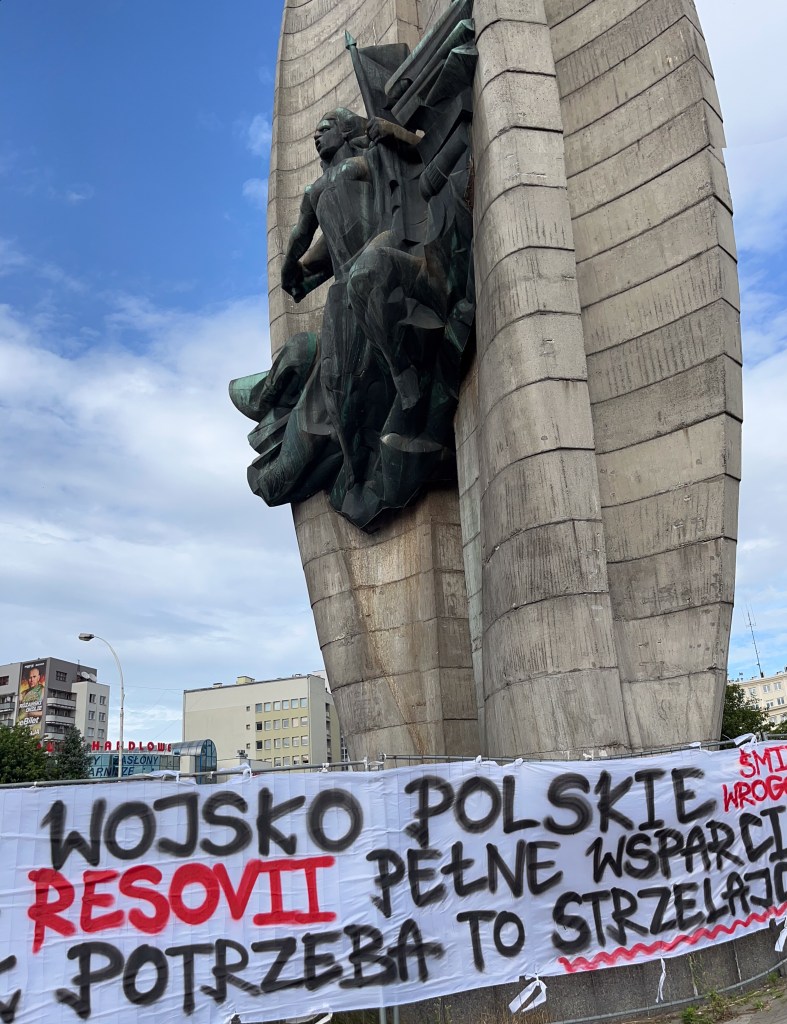
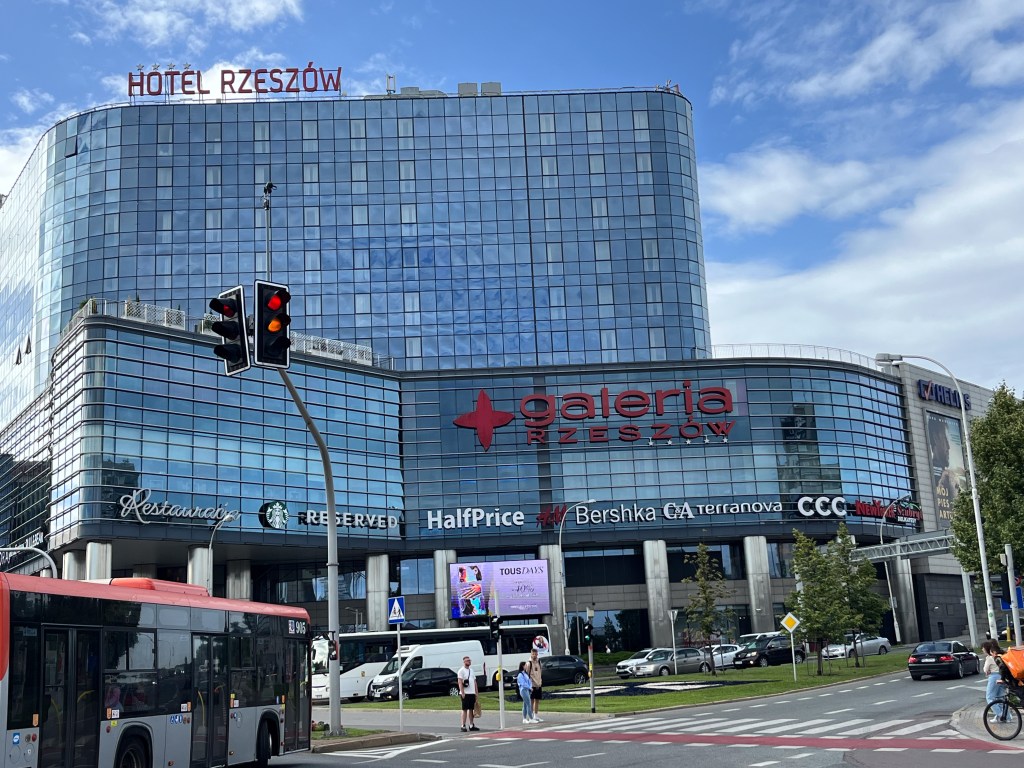
We were staying 2 nights in the boutique Grand Hotel in the heart of the old part of the city. While we had no real preconceptions of Rzeszów, we also knew it was not one of the big cities but had some interesting history going back centuries and future promise. Its an interesting blend of “Old European”, Soviet-styled cement buildings and monuments and brand new office buildings and even a shopping mall that resembled those in New York and New Jersey. In fact many of the stores were very familiar, including H&M, McDonalds’s and Starbucks. We loved the cobble stone streets and open piazza similar to Italy and Spain, with outdoor restaurants and cafes. To me its a modest city with lots of potential.

The Grand Hotel was pretty grand in its open court setting and service, although rooms were not particularly great or big, they had plenty of amenities like a spa area with exercise room, pool, hot tub and sauna which seemed were ours alone. In fact the hotel looked less than half full, although we could not figure if that was a seasonal thing. Even the outdoor cafes seemed relatively empty for this time of year. Maybe we were on the early side of the summer season.

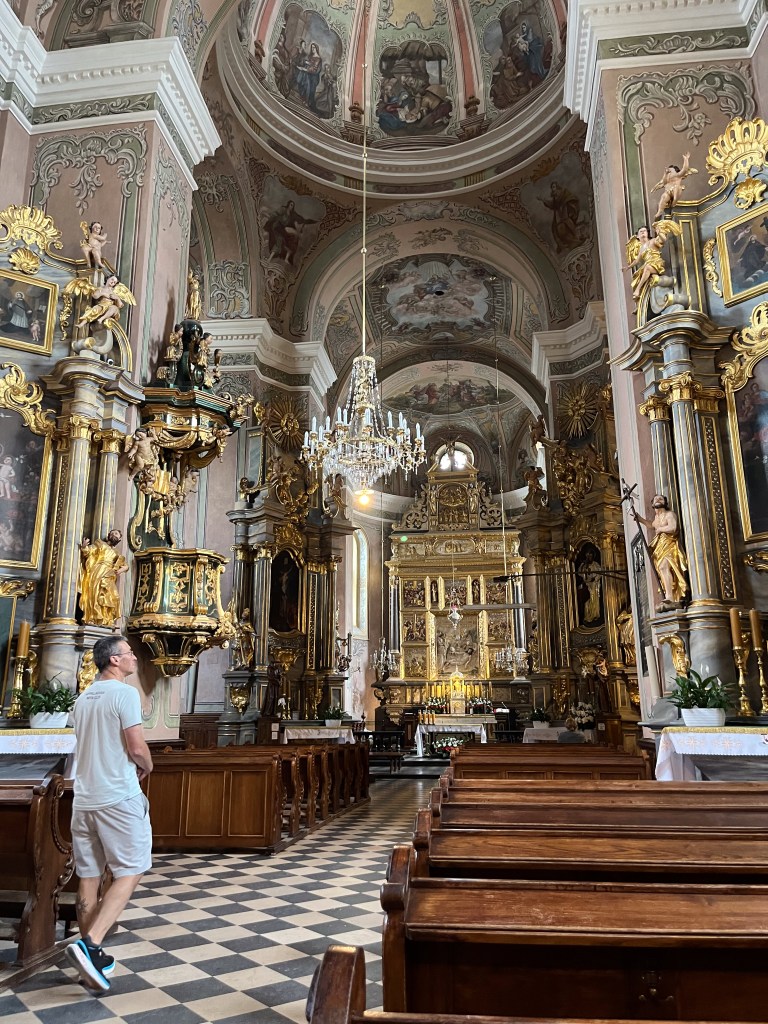
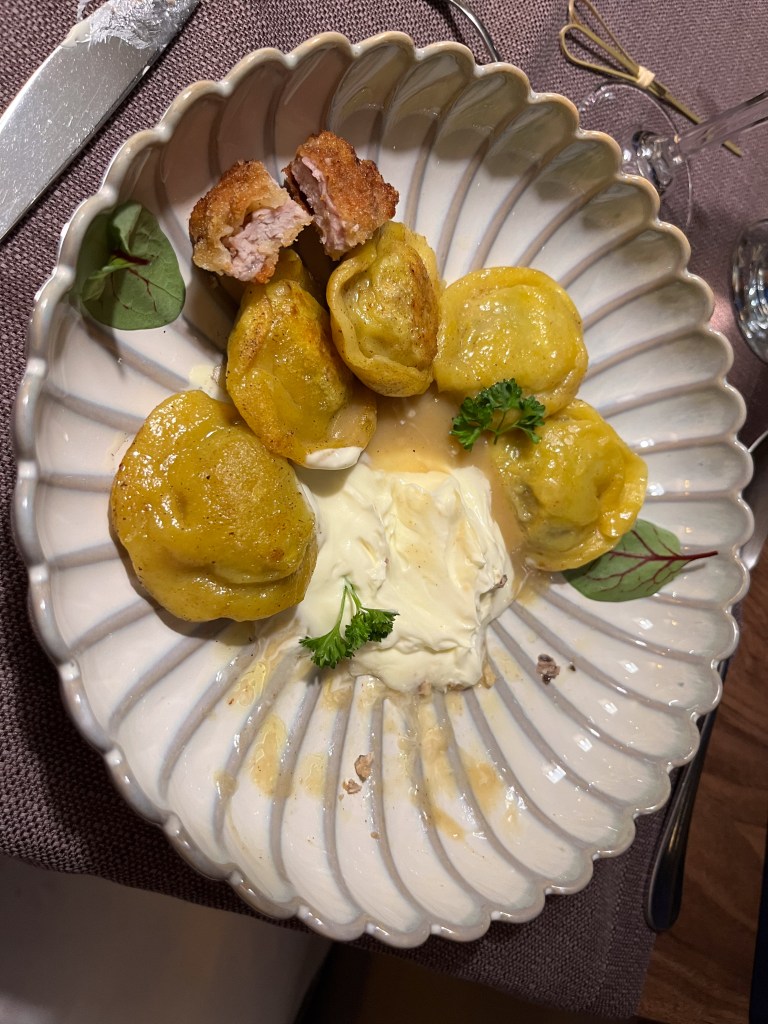
After going out for a burger lunch at one of the local cafes we headed back to the room for a “power nap” to try and get our bodies used to the 6-hour shift in timezone. The afternoon consisted of walking around, visiting churches, a big shopping mall and killing a couple hours at the spa/gym. A nice dinner followed at our hotel where we began to try the excellent local Polish cuisine, much of it brought back old memories of my Mom’s cooking as I grew up.

The more time we spent in Poland the more felt disappointed in myself for not studying the language more as Ethan and Ethan Luke were able to enthusiastically converse much more with the natives. They even had fun and enjoyed trying their new skills, even if they had a limited vocabulary. I think I am a hopeless case with a mental block. Languages were never my strong suit and Polish is a particularly hard language to learn.

Tomorrow (Tuesday) is a day in Zarębki and Šwierczów about an hour north of Rzeszów. This is ou first stop on exploring for relatives. This first stop involves my son Ethan’s mom, Judy’s family, in particular Judy’s mother’s side of the family. We have a few clues, birth records and an address to visit. With our trusty genealogist, Lujan, we hope to learn more. It seems a long shot but anything can happen.

Romancing the Stone

How do you react when you get hit by a stone? Adjust to where you are and move on.

This essay reflects personal thoughts that were written and collected to be passed on later to the family for my Storyworth project - a personal collection of life's memories. Today, is a memorable moment for me reaching age 75 and staring a health issue in the face. It's all part of growing older and being thankful for good health. 

"Long may you run...", as Neil Young has often sung.  

I’ve been thinking a lot about my health and my age lately. I’ll be 75 tomorrow. Unbelievable! It’s a birthday that all my immediate ancestral family never lived long enough to pass. Dad had the record making it to 74. Mom was 70 when she passed a year after Dad. My three sisters are still in the running with me, being a bit younger. My older brother John, died in 1976 at the young age of 30 in a tragic accident. Now, I’m pondering, ‘What controls the length and quality of life?’ …as if I could control it. You can take your pick: genetics, environment, stress, exercise, relationships, diet and/or just plain luck. Some you are dealt. Some you choose. 

I’ve managed to live through it all to retirement, raise a fine family with grandkids to enjoy. I think I figured out what life style works best for me with adequate exercise, a healthy diet, and maintaining relationships. Actually, I don’t usually think consciously about how old I am or how I feel. I’ve been lucky to have no real health issues. That is until recently.

Being Stoned

About a week ago, after a Saturday bike ride, I started to feel a mid-left back pain. Shortly after, I started to feel queasy, nauseous and fatigued. I had not done anything out of the ordinary that would have caused a muscle to be strained so I knew it had to be something else. Two days went by and on Monday my back and abdomen pain had increased tremendously. It was time to seek medical help, which I normally avoid like the plague, whenever I can. My suspicion was that it was a kidney stone that was causing the pain.

I remembered years ago, on a tough long-distance walk, I was pretty sure I had passed a kidney stone near the end of that day. My wife, Mary Ann, had a couple similar bouts with stones, as did my father as I recalled. At the time of the walk, I had not properly hydrated and had to deal with an excruciating pain in my lower back. Then miraculously, it stopped an hour or so later once I rested and hydrated myself. I learned that severe dehydration is one way to bring on a kidney stone. I also learned that pain is easy to forget once it has passed. My kidney stone nightmare, which I had buried in my memory, suddenly came to life again. 

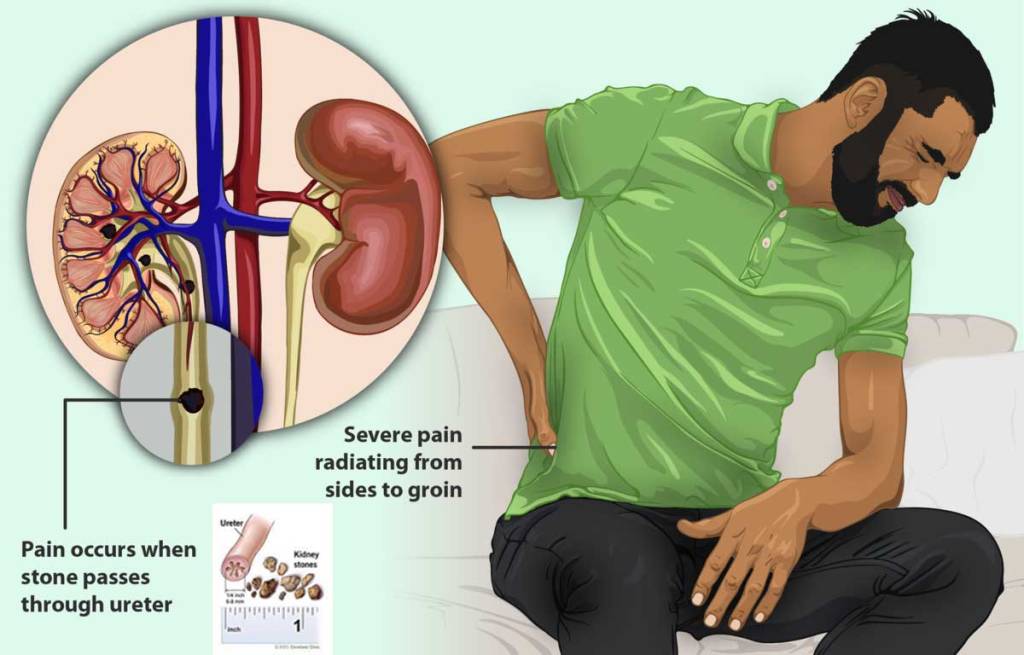
Kidney stone pain is legendary. Some have said it is worse than childbirth, which I would not want to judge, even if I could. The pain usually appears after crystals build up into a stone which moves from the kidney to the ureter tube which carries it to the bladder then beyond. My primary doctor noticed a small amount of blood in my urine on Monday and ordered an ultrasound the next day which confirmed the location of a 3 mm stone, large enough to become an all-encompassing problem for me by Wednesday morning. Then, I had to wrangle an “asap” appointment the with my Urologist for the next day, promising to provide stronger pain medicine and a plan to get my life back. But, I wasn’t sure I could make it another day as the pain worsened.

After realizing I might have to wait another 24 hours for relief, I sat on my front steps hunched over in pain. Then, miraculously the pain stopped! The stone had apparently moved down to a more welcoming spot and was probably expelled soon after, without a proper goodbye. I did not get to see or determine the type of stone. Strange how a tiny stone can alter your life so quickly and make you suddenly appreciate life – with and without pain.

Stone-Cold Facts

As painful and debilitating as kidney stones can be, they are quite common and rarely fatal. More than 1 in 10 people are affected and most often seen in people aged 30 to 60.. Kidney stones are usually troublesome when discovered in the kidneys or in the ureter, the tube that connects the kidneys to your bladder. Stones can be of several types based on which chemical builds up in the kidney, most are calcium oxalate or uric acid stones. Besides the pain, stones can cause a urinary tract infection which can lead to complications.

Adequate hydration, a certain diet and a hereditary disposition may help explain the presence of a stone or chances of an occurrence again. In my case, my conclusion is I have a hereditary situation, a need to hydrate better and because I probably had an incident before and now, there’s a good chance I may have another. That’s not a pleasant thought, but one I can accept and hope to avoid.

My Stepping Stone

I read recently that 20 percent of American adults — some 50 million people — suffer from a form of chronic pain. As I age I see pain present more and more. If not myself, my wife and friends are faced with dealing with painful joints, operations, treatments and disease that we all face at one time or another in our lives. Fortunately, kidney stones don’t last very long. But even a few days in extreme pain is more than one should bear.
For now, I see being pain-free as a gift. When that monster is on your back there is not much you can do or say that draws attention away from the suffering and the empty feeling that there is nothing you can do to stop it. With opioid pain-killers like Fentanyl and Oxycontin all over the news, its hard to avoid the subject of pain and the downside of finding a way to make it stop. In my darkest moment, I prayed for something stronger. It’s not difficult to see how someone would be willing to bend their principles and exchange one form of hell for another under the right circumstances.

Hopefully, I’m done with this stone and ready to move on. The question before me, at age 75, is “How should I change because of it”? The older you get the more advice and requirements you receive. Eat properly, consume less alcoholic drinks, get more sleep, see more doctors, avoid stressful situations and enjoy life when you can. 

I would never say the stone was a blessing, but it reminded me to give thanks for what I have and to be vigilant at my ever-ripening age of what will be coming. That’s not to say I’ll change much at this stage, but maybe make a few lifestyle adjustments to keep the rest of this body going for as long as I can. Growing older is all about adapting to change… when you have to.
Welcome / Bienvenue

The 125 miles (171 km) in New Brunswick Canada we walked proved to be a welcoming experience, just as advertised.

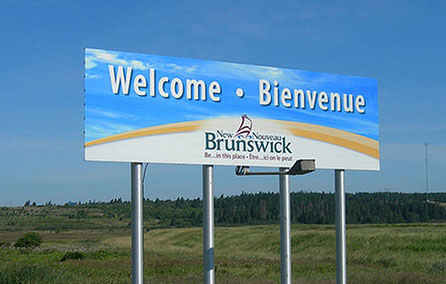
The most common sign in New Brunswick is “Welcome / Bienvenue” which seems to not only be a slogan but a north star for most Canadians. In our week-long Beyond Borders Walk walking journey along the Coastal Link Trail in New Brunswick we were fortunate to have experienced, many times, what Canadian hospitality and friendliness is all about. 

All public signs issued by the federal government, but only those issued by the Province of New Brunswick, must be in French and English. This area values its tourism and its importance as a melting pot for all making their way east and west or even north and south from the U.S.

A Welcome Promise

Our excursion into Canada was a direct result of a welcome pledge our group was given four years ago. At that time, Loredana Delucchi, a member of our U.S.-based FreeWalkers, walking group, crossed the border with Ken Kurland And Nancy Jonap to St. Stephen to present Mayor Allan MacEachern a Canadian penny, a New York City subway token and a knitted bear doll as a gesture of a special friendship and their accomplishment of walking along the East Coast Greenway from New York to Canada over a period of years. Borders were crossed and lives were changed by reaching out. That effort culminated in a promise by the mayor, in turn, to not only welcome them back again but to build a new pedestrian trail along the St. Croix River.

Going Beyond Borders … Again

Our plan was to walk the 125-mile (171-km) newly charted Coastal Link Trail from Saint John ending in St. Stephen. We started our journey walking across the U.S./Canadian border in St. Stephen where Cherie Stewart, Implementation Manager of the Coastal Link Trail waited to drive us for over an hour to Saint John where we would start our week of walking. We had just driven over 12 hours to the border. Without her help to get to the start, the entire walk would not have happened. 
Beyond Borders Walk – Jul 31 – Aug 6, 2022 – Canadian Coastal Link Trail

Canadian Hospitality

Tracking us throughout our journey was Susan Hill, Executive Director Charlotte County Tourism. From the start, Susan tracked our movement throughout New Brunswick. About a third into our trip, she met us in Pogologan and popped up occasionally all day long to check in on how we were doing. She was there to see us off, invite us to her home in Penfield and show us the harbor and fishing industry in St. George, where her husband and many of the population worked. Susan became our guide about the area and the fishing business that has become the most successful industry in the area. Now, it was time for tourism to add even more to the economy.

Welcomes are most obvious when staying at a B&B. One host couple in St. John was eager to share their story of the dream of immigrating to Canada to create a better life over a generous breakfast.

Another host, Dave, proudly talked of his days working in radio and his love of rock music easily displayed in walls of vinyl records. Dave and I both shared a passion for the music of Bruce Springsteen, a New Jersey icon, who often transcends geographic, generational and cultural boundaries. Dave was also kind enough to lend me his bicycle to ride around the town, saying “Don’t bother locking the bike!”, backed by lessons learned years living in this area.

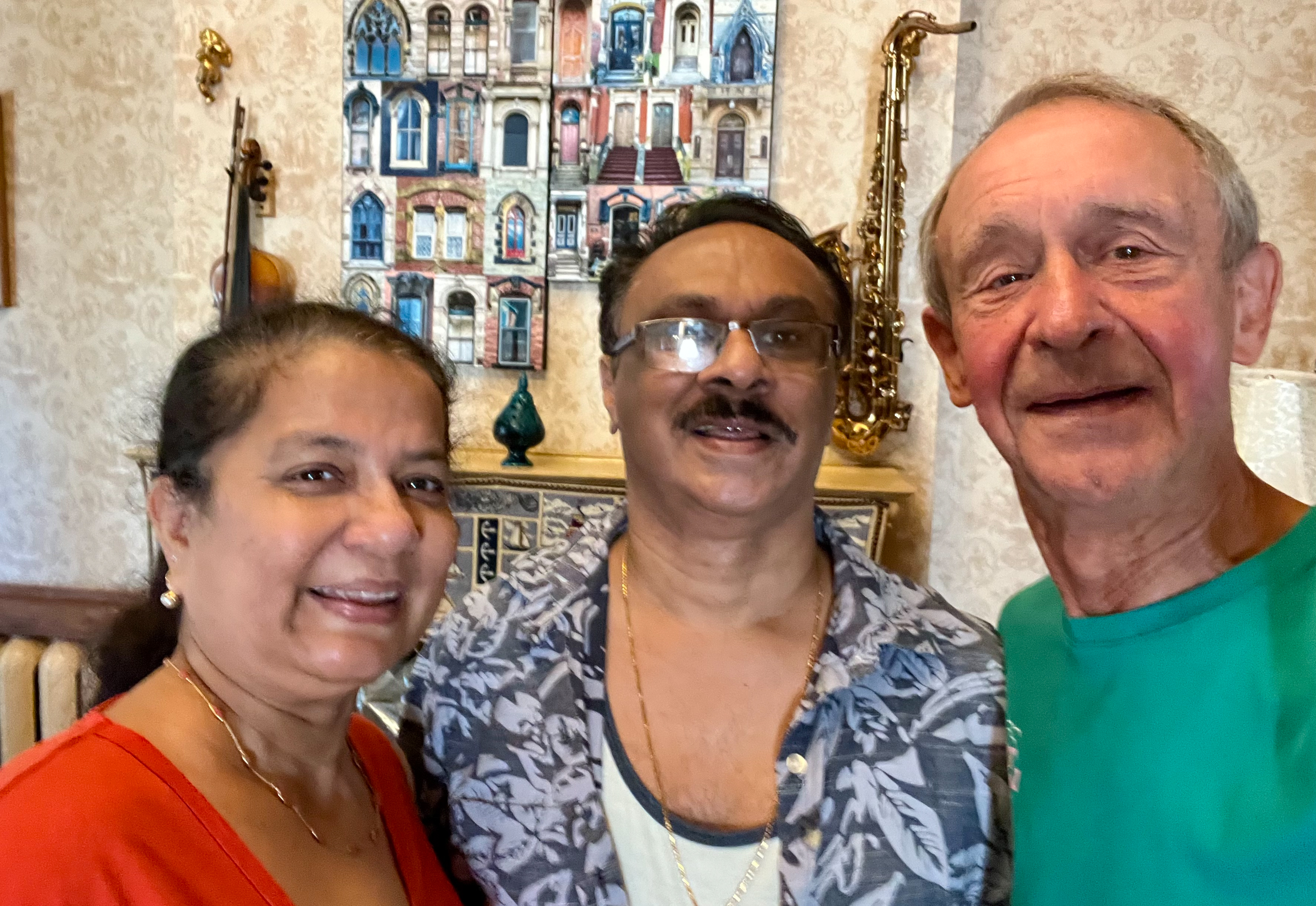
Don was the welcoming, thoughtful and philosophical B&B host. This old Victorian home in the Chamcook area where we stayed was filled with curious pictures, furniture and curios that spoke of mystery and a different time that was still treasured. He represented an interesting dichotomy of the old and new. He respected the old but was an advocate of building new trails and opening up the area to tourism. He was even kind enough to drive us a few miles into St. Andrews for dinner and pick us up while giving us a brief history of the resort town and the places to see. 

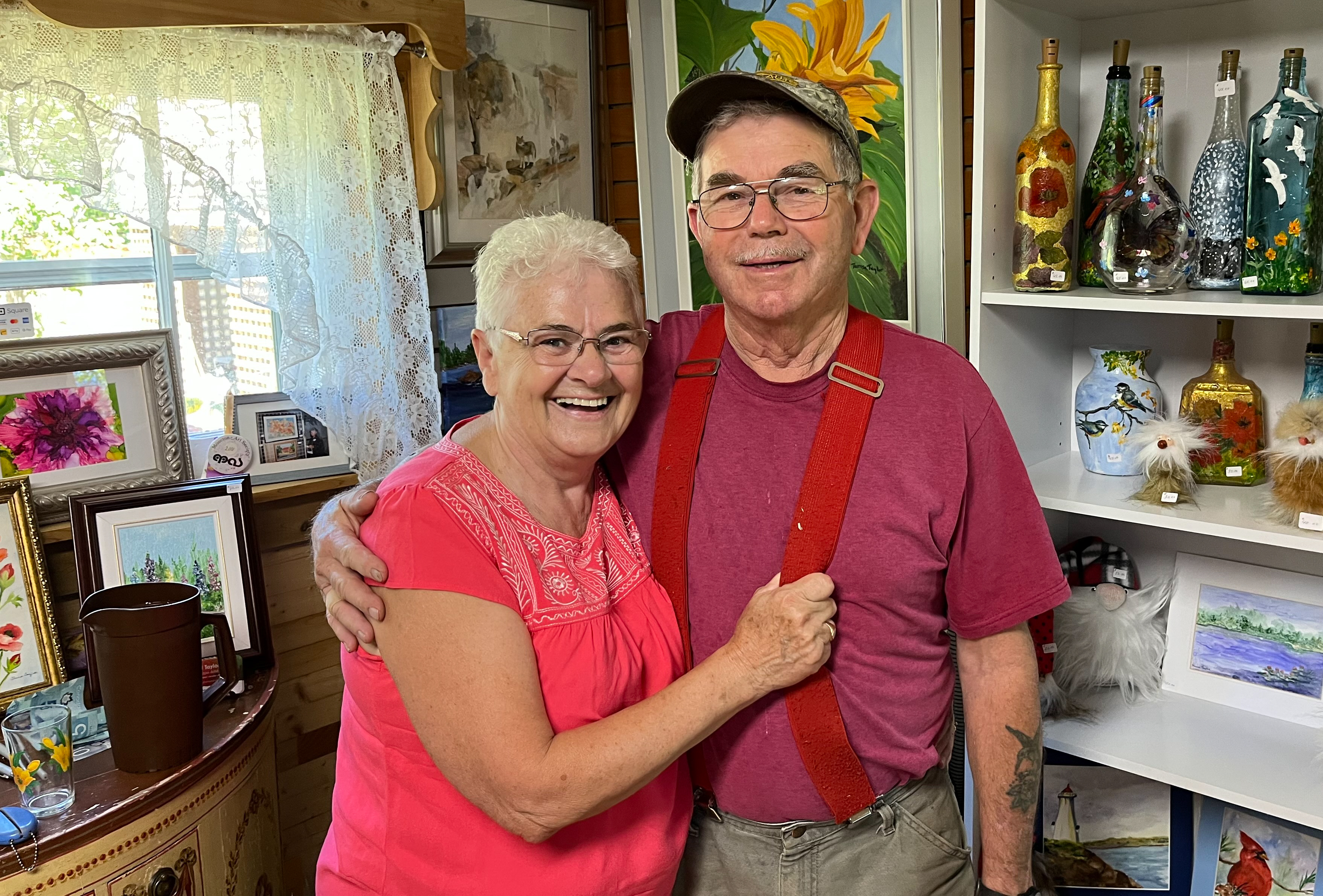
Just as noticeable were small gestures of friendship along the way: Kathy and Junior opened up the Musquash Rec center to provide water, a friendly ATV operator, Stephen, stopped to see if we needed help, the EMS tech that helped get Ken to the hospital after a muscle spasm, the restaurant owner Rachel from Comeau’s Seafood Restaurant who gave us free lunch, the Taylor’s who shared water, their art and their life story, the St. Andrews retiree, Hans who said although his job had taken him all around the world, there was nothing better than where he was now, or the golfer’s surprise at seeing me accidentally riding a bike onto the Algonquin course at Joe’s Point in the middle of his teeing up and just saying, “Isn’t it beautiful? But, you know beauty can be found anywhere, if you look hard enough.”

A St. Stephen Welcome

On Saturday, August 6 we met  with Cherie and Mayor Allan and other trail officials for a casual walk on the new pedestrian path that the Mayor had led over the last four years. In addition, the mayor led us to a large mural that was in the process of being finished. To our surprise, the artist would paint into the mural both the image of FreeWalker Loredana and Mayor Alan walking together on the newly created riverfront trail. 

FreeWalker Loredana Delucchi and Mayor Allan MacEachern at new mural wall

The trip was about fulfilling a promise to return, renew friendships and walk the new trails of New Brunswick. We had become the first group to walk the full Coastal Link Trail, a trail that now connects the enormous Trans Canada Trail system with the East Coast Greenway in the U.S.providing access to thousands of miles (or kilometers) of walking, hiking, and biking trails.

We discovered that what we all cherish most is more access and less borders and obstacles that keep us apart.
Ken, Paul, Loredana and Tom @ the U.S. / Canadian Border in St. Stephen

Simple Pleasures Updated

Lessons from another pandemic and unpredictable year. Being thankful for the good things that still happen.

A similar story was originally written a year ago as part of my Storyworth writing project. I'm updating it for our unique times in February 2022. These essays reflect personal thoughts that are written and collected to be passed on later to the family. I include this story in this blog to help remember and savor the simple and good things that we were able to enjoy and are often overlooked. As we work our way through another pandemic year in 2022, we are optimistic that the Covid Omicron variant is passing. But we still need to slowly adjust our behavior and come back to a "normal" lifestyle.  

The writing challenge was to discuss, “What simple pleasures in life do you enjoy?” This question forced me to think about what I take for granted and yet value, even if they seem like small parts of my life. Unfortunately, you soon realize that many simple pleasures have had to be forgone or change over the last two years. You can find my thoughts on this same question a year ago here. Here’s to recognizing and enjoying them lately and again in the near future.

Hugging the Kiddies: Upgraded 👍

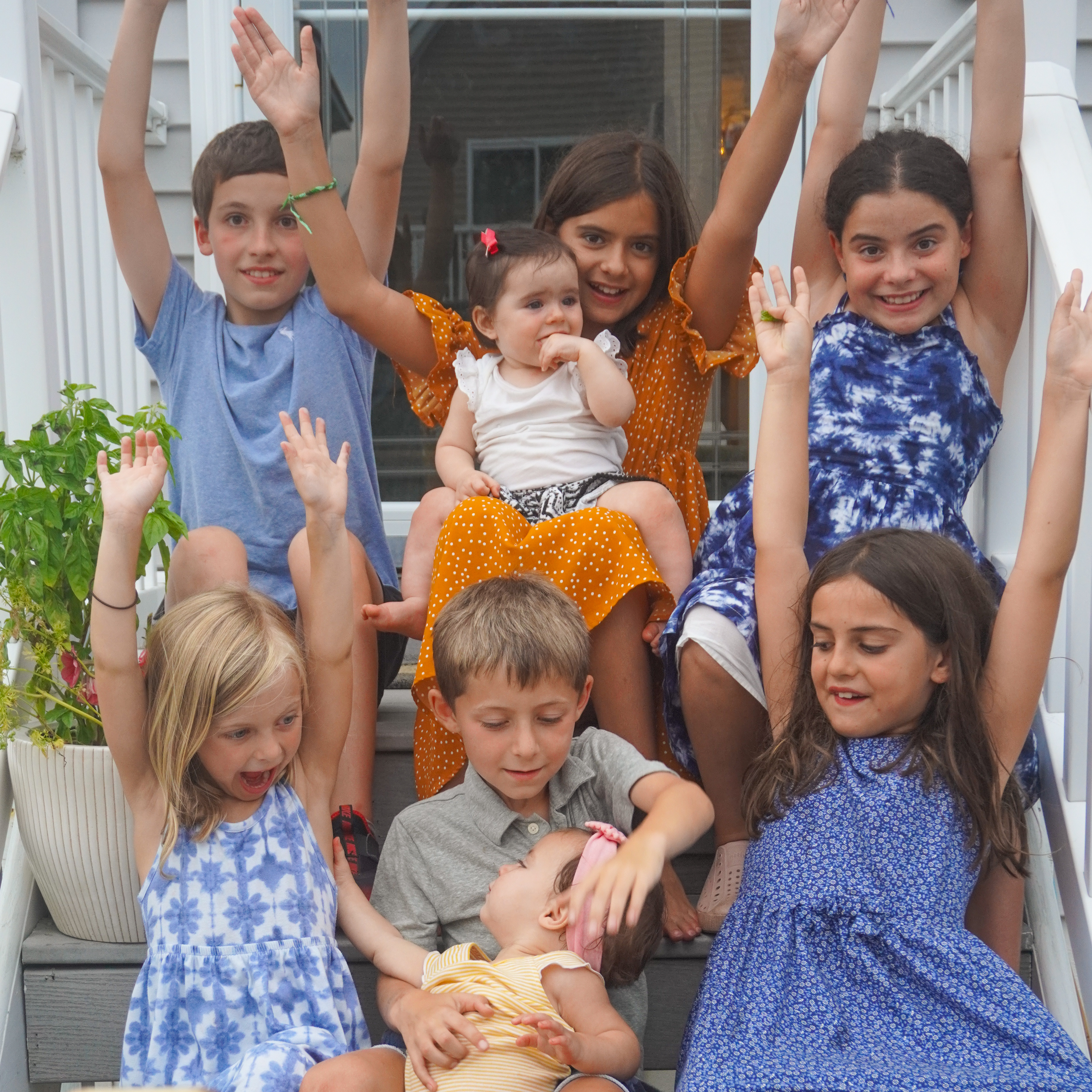
My 8 Grandkids on Vacation at Ortley Beach

Throughout last year we made great progress, or so it seemed, until December 2021 when we had to change our behavior again! Still, there was progress – in spite of contradictory advice, vaccines, sicknesses, trial and error, minor emergencies, masks, and taking reasonable risk. No one in our family got Covid, even though there was plenty of it around us!

What that meant for me was that I gradually got to get back to a normal show of hugs and kisses to all my eight grandkids. Mary Ann and I are still cautious, often seeking news of local covid cases and at-home tests, all of which reduce stress somewhat. Probably the peak of the year was the summer season where we all got together at the Jersey shore, including our two newest members of the family: Maeve and Claire, who reached their first birthday unscathed by pandemic times. Its still not unbridled love and happiness but I’m grateful for what we have.

Live Music: It’s Still Alive 👏

While YouTube did offer some recordings and virtual streaming of performances, it was still nothing like being part of a live audience. Some concerts were held after vaccines became available and they usually required showing proof of vaccination or recent negative testing. Attendance at these concerts was often limited and sometimes attendees were spaced apart. But, it seemed that musicians and venues were ready to make up for lost time.

That summer MaryAnn and I usually played it safe and only occasionally dropped by Ruthie’s in Montclair for some live Blues played outside. There was ample room behind this juke joint and we were feeling good about the possibilities of overcoming Covid by the end of the summer. Here’s one of the very informal, fun and cool presentations of a musician we both like, Dean Shot.

Dean Shot @ Ruthie’s in Montclair

On a whim, my son Ethan who lives in Lexington, MA, suggested I join him and his friend Andy at the Leader Bank Pavilion in Boston for a Wilco concert. Luckily, I was able to book cheap $29 Amtrak tickets from Metropark to South Station (one of the few benefits of this pandemic) and effortlessly traveled to Boston and back home within 24 hours! Besides getting to see him and his family, this was my first live large concert in years with about 3,000 fans in a 5,000 seat open air seasonal arena.

Maybe it was just the freedom to travel or the rarity of such an opportunity but the band and everyone there seemed to really appreciate being part of the event. The following video was a tribute to the Rolling Stones’ Charlie Watts who had just passed away two days before.

Wilco concert in Boston – August 2021

Over the last two years I’ve gained an appreciation of how hard it must be to be an artist, especially in a restricted world. We all need to show those that work for almost nothing these days that their efforts count. I’ve decided to actively click that pervasive “like” button or give a little to my favorite artists, like Sean Tobin, through Patreon and play a small part in helping keep music alive.

Riding a Bike: Born-to-Ride + Gravel 💪

I consider myself lucky that I chose cycling as my primary exercise sport, especially as I get older and especially in these times. Besides the obvious cardio workout, it probably is the best sport for a pandemic. Cyclist can chose to ride anywhere a road or path takes you. And, we, who are notorious for gathering in groups, can usually safely exercise together without masks because of the space and moving air between us. The Omicron wave, however, challenged even those assumptions last year. Donning a mask when we end a ride at our favorite coffee stop is not a big ask at all.

Born to Ride

I’ve organized a long distance (85 miles), end-of-season (early October) bike ride for several years called “Born to Ride” which wraps up the regular cycling season. After taking a year off because of Covid, our group managed to get the ride going again. The ride idea started about 10 years ago on a wave of Bruce Springsteen nostalgia. This year we targeted spots along the route from Ortley Beach to Sandy Hook and back that had some connection with Bruce. (BTW – We have no idea whether Bruce rides a bike. It always seemed like he should.) It was the highlight of my cycling activity for the year.

Official Born to Ride 2021 documentary video

discovering gravel

Over the last few years, a new popular trend has developed in cycling called gravel or multi-surface riding. When I had a custom designed Seven Cycles bike built a few years ago for my 1,600 mile Epic Ride, we chose a design that would allow touring and as a “cross” bike, i.e., a sturdier frameset that could ride well on-road and off-road.

Riding gravel usually means choosing a route that is primarily an unpaved dirt or gravel road. Where I live in Morristown almost all roads are paved. However, only 10 or 15 miles away I have discovered extensive areas of dirt roads, usually around farms, estates or wooded trails. Gravel riding is usually slower, bumpier and requires more attention. But the benefit is seeing and being in nature – and maybe best of all; little or no traffic. I hope riding gravel will add to my interest and options for cycling for years to come.

Walking: The Routine Exercise 🚶🏻‍♂️

Walking seems to be a good compliment to cycling and universally accepted. It’s low impact, anybody can do it and it adds a nice social element. Mary Ann and I have developed a daily routine of a one hour walk, usually in town, but sometimes on a trail. Walking is a great way to just get out of our rut and get back into the world. Interestingly, I notice more cyclists lately are also walking as a low intensity alternative exercise.

My history of leading the FreeWalkers, the long distance organization that I created over 1o years ago, is now a past fond memory. Although I have walked with them and will again in the future, these pandemic times have still limited my involvement which feels appropriate right now.

Sunrises and Sunsets: A Better Show 😎

There must be an explanation for it. Sunsets seemed to have been consistently outstanding this year, in particular this past fall and winter. The cloud formations and low horizon light have been stunning. It’s a welcome consolation for a trying year.

Gardening: Bumper Crop 🍅 🥕 🧑‍🌾

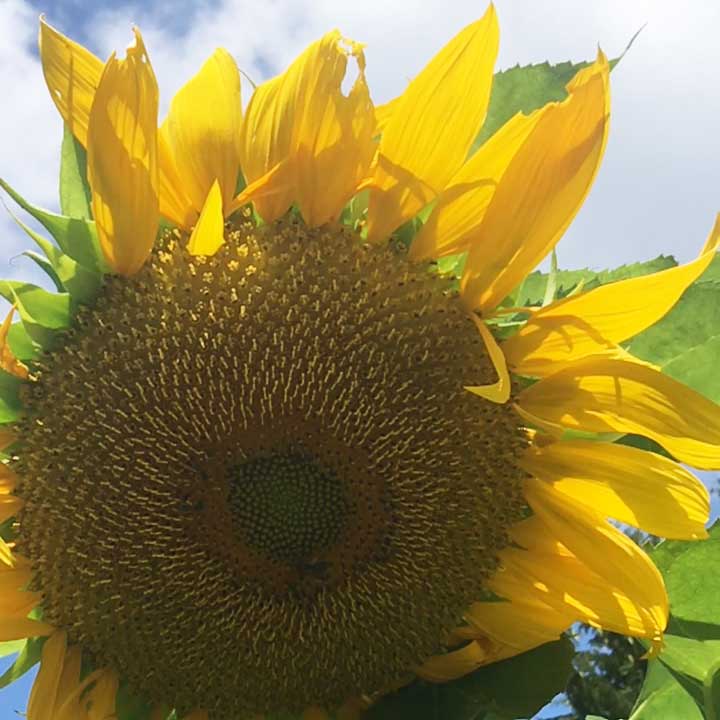
My community garden plot grew a bumper crop this past year. Most gardeners would agree that the weather conditions were near perfect. There was sufficient precipitation and seasonal temperatures. Insects seemed controllable. Lots of tomatoes and other vegetables. While cucumbers had a bad year for some reason, my grandson Jack’s sunflower seeds became the tallest plants in the whole garden with giant 18 inch heads!

Dining Out: Fun While it Lasted 🍝🦞🍔🍕

Over the past year, we gradually adventured out to restaurants where there was outdoor seating. By the summer, we had a few chosen spots near Morristown and at the shore where we felt comfortable enough to eat outside weather permitting. But by December, that seemed like a dream between the weather and the threat of Omicron, we have not eaten out in several months. We are now plotting our next meal, possibly indoors, as the threat seems to recently be reduced.

Short Hiking Getaways 🚶🏻‍♂️

Round Valley Camping

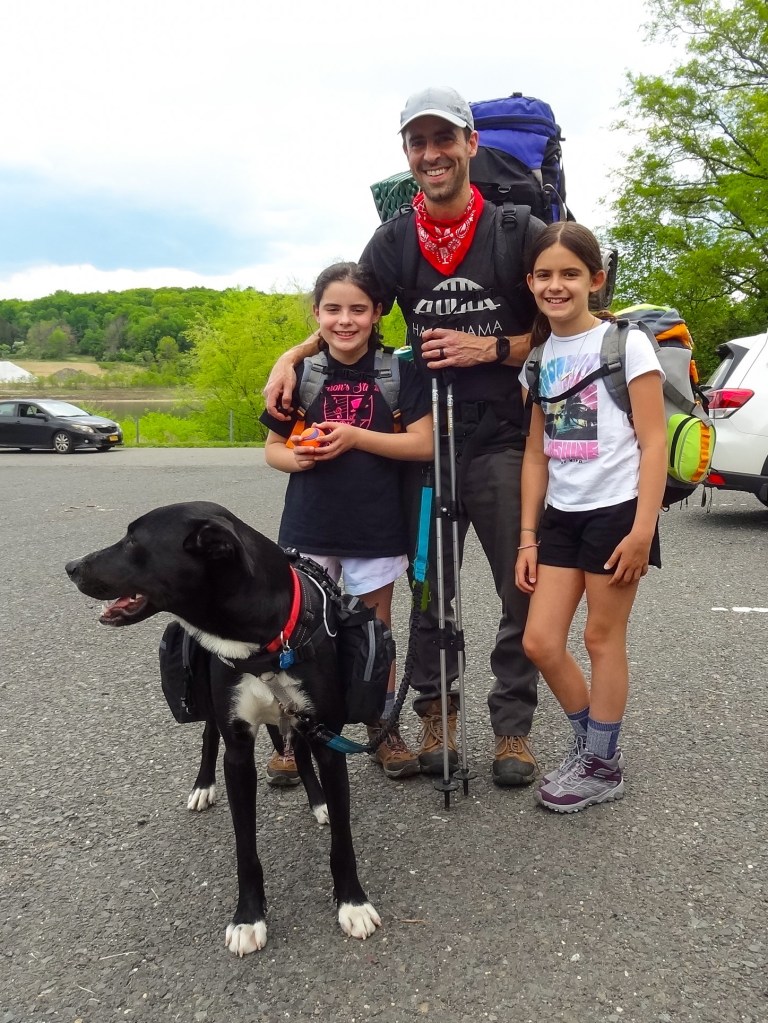
In the spring, son Justin, granddaughters Charlotte and Anna and granddog Arlo hiked five miles with packs for an overnight camping adventure at Round Valley Reservoir. It felt great to do an outdoor adventure again, especially with people you love and admire.

Hiking the Berkshires

In the fall, I managed to get away to Williamstown for a few days, hike Mt. Greylock (highest point in Massachusetts) and see a little bit of the Berkshires with my old friend Mike Kennedy. It was great to just get away, see something new and feel some freedom again.

Playing Handyman: Renovations 🔨🪚🔩🧰

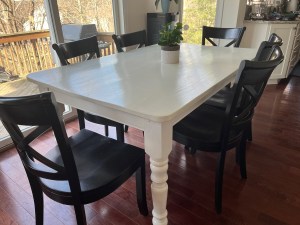
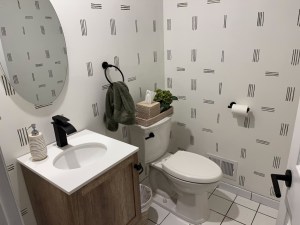
It was well past time to renovate our master bathroom, particularly the formica double vanity. Many years ago when I was younger I enjoyed rebuilding kitchens, baths and other rooms in the house. Watching This Old House was the closest I got to a major construction project in decades. So, retirement offered an opportunity to see if I still remembered skills like plumbing, electricity, carpentry and painting.

Mary Ann found a great deal on a double vanity. After planning this out I got to demolish the current setup, install the vanity and rebuild a set of fixtures. Luckily the rest of the bathroom was fairly modern looking and only required minor improvements. It took a couple months to complete but came with great satisfaction. So much so that I recently switched the vanity in the powder room downstairs and refinished our farmhouse kitchen table. I had forgotten how much satisfaction you can get by doing a project on your own.

And a few other things…

In summary, I have a lot to be thankful for. Here’s a few more to add to the list of what I was able to enjoy this past year….

  • The benefits of upgrading to a new iPhone 13
  • The warmth and convenience of converting our wood fireplace to gas
  • The challenge of finishing jigsaw puzzles
  • Helping to build and share our ancestry roots with the family
  • Watching the grandkids enjoy and improve in sports
  • Reading other people’s life stories (shoutout to Bob, Loredana and Barb!)
  • Recording the family talent show “Live From Lavalette 2021” (sample below)
Our Family Talent Show – August 2021

My Early Christmas Memories

Here’s some memories of Christmas when I was a kid. Originally written for my Storyworth project in January 2020.

This recollection of Christmas as a child was written a year ago as part of my Storyworth writing project. These are essays reflecting personal thoughts that are written and collected to be passed on later to the family. I believe we all have fond memories at this time of the year. 

I include this story in this blog to help remember and savor those simple and good times as a child, especially as we work our way to the end of another tough year in 2021. Many traditions will be paused or changed due to Covid this year. I trust children will still see the best in this holiday season and remember it fondly anyway, even if it's not all it could be. 

Christmastime brings back old memories more than any other time of the year. Regardless of how old you are (I’m 72 as I write this), or where you were that Christmas, there’s always a warm memory of giving and sharing with others. It’s a time of mystery, music and carrying forth customs from long ago. Even corny decorations, questionable food choices and extreme commercialization can’t get in the way of enjoying the spirit of the season, especially as a child.

For as long as I can remember, Christmas has been a personal family tradition that we gratefully accept, look forward to and even add to as the years go on. Some Christmas traditions fade over time. And, rightly so. This year we have been forced to change or eliminate many routines that might be called traditions. Hopefully, good old traditions will make it back in future years. Or, we move on with new traditions, still keeping fragments of memories of what used to be.

Here’s some of my memories of Christmas before I turned into a teenager and became a product of the 1960’s. By then I think we had our mind on other things but we always looked forward to coming home for Christmas.

Christmas Presents at Christmas

Some of my oldest memories as a kid were of toys and presents of the day. Boys wanted guns and outfits like those worn in westerns or the military. We wanted to look like Davy Crockett or The Lone Ranger. We took our play seriously with cool toys and games that were interactive. At the time, Monopoly, Electric Football and Rock ‘Em Sock ‘Em Robots were popular. Girls wished for dolls that shed tears like Tiny Tears or talked like Chatty Cathy by pulling on a string or those that looked like a teenage Barbie.

Wanna-be Cowboys in the mid 1950’s – Me, John, Cousin Bernadette and sister Chris

My brother John (two years older) and I had hobbies that kept us busy over many years; collecting stamps, coins, trading cards and building our HO train set in the basement. Stamp collecting, filling coin books and collecting baseball cards were ongoing, year-round projects. While that miniature HO town spent much of the year in storage. It came to life in glorious detail, like a lot of things do, each Christmas season.

When I was very young, we rode trains, buses or walked more than we used cars. Most major highways had yet to be built. My father and mother moved to Roselle from Jersey City when I was just a few years old but still connected to family using the Jersey Central Railroad. They did not even have a drivers license or car for several years.

It was easy to see how you could build a miniature imaginative city around a HO train line including a smoking engine, switch tracks, an elevated trestle, street lights, miniature farms, factories and parks. We plowed back the money we made on our newspaper routes into our growing town, which became really special at Christmas.

Typical wishlist presents in the 1950’s – 1960’s

Hobby stores were fairly common businesses in those days and a great place for gifts. There were Revell plastic model kits that taught you the parts of a 32’ Duce Coup, a B-52 bomber or even the parts of a body like “The Visible Man” (or Visible Woman). You could even get creative by customizing your “Hot Rod” car with paint, decals and optional parts like fender skirts and a continental kit.

As we got older there were more challenging kits to build working models like airplanes, boats and cars. Companies like Heathkit and Radio Shack encouraged building real electronic devices that worked, like transistor radios and TVs. Model kits helped us understand a complicated world but one where you could still take something apart – to learn how it works – or to fix it.

Commercializing Christmas

Christmas represented a once-a-year chance to earn some real cash for a pre-teen with a newspaper route. It instilled in me a love of being an entrepreneur and learning customer service and how to interact with adults. You would be extra careful each year at this time to deliver your papers on time and at the doorstep. Of course, you would sneak a Christmas card into the newspaper a couple weeks before to butter up your clients. In those days, you went door-to-door each month collecting, hopefully receiving a special season tip or gift from many of your customers. This bonus money would help fund our ongoing interests in trains, stamps, trading cards, coins and sports equipment.

As I got a bit older, I added to my resume selling Christmas trees. Our Stewart’s Root Beer drive-in, a couple blocks away, sold trees during the holiday and I quickly learned that there were big tips to be had for a kid with a little hustle.

Decking the Halls

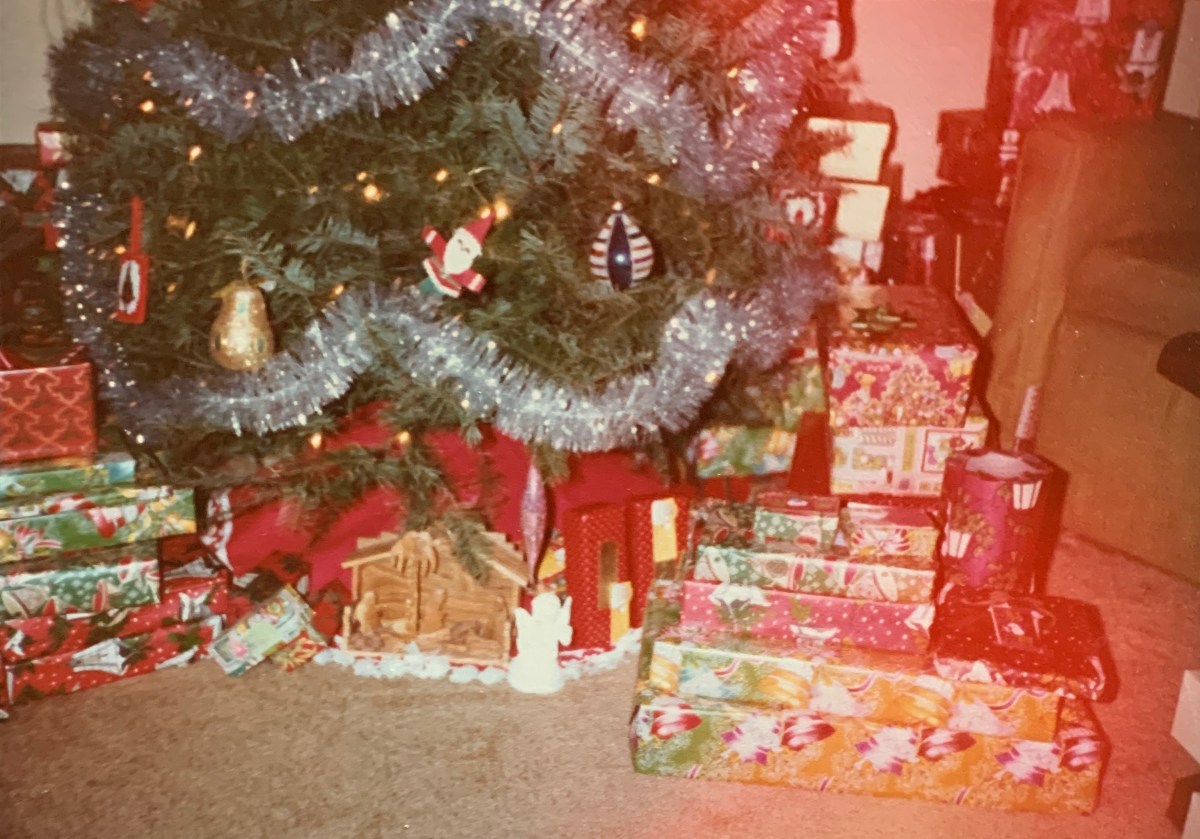
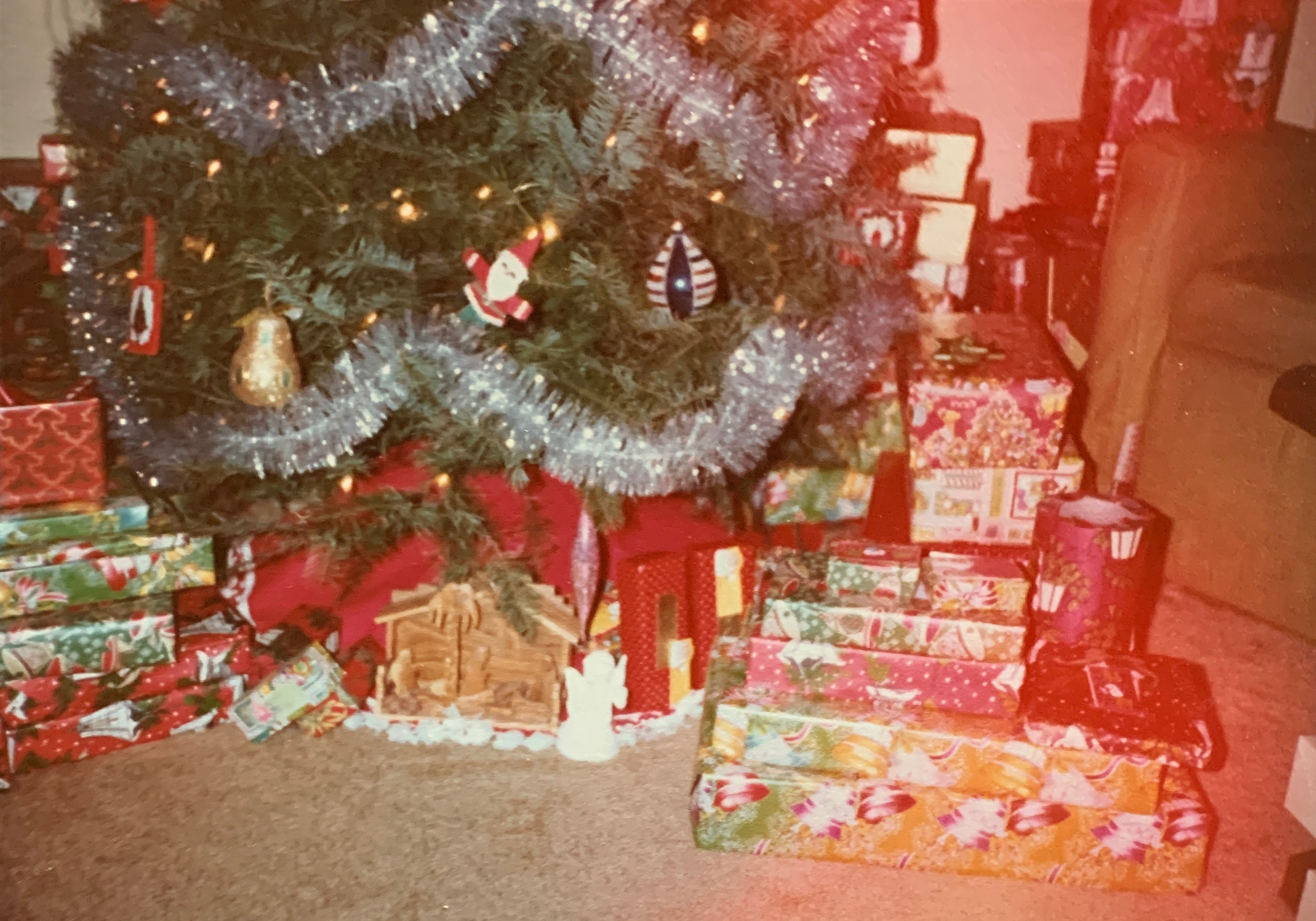
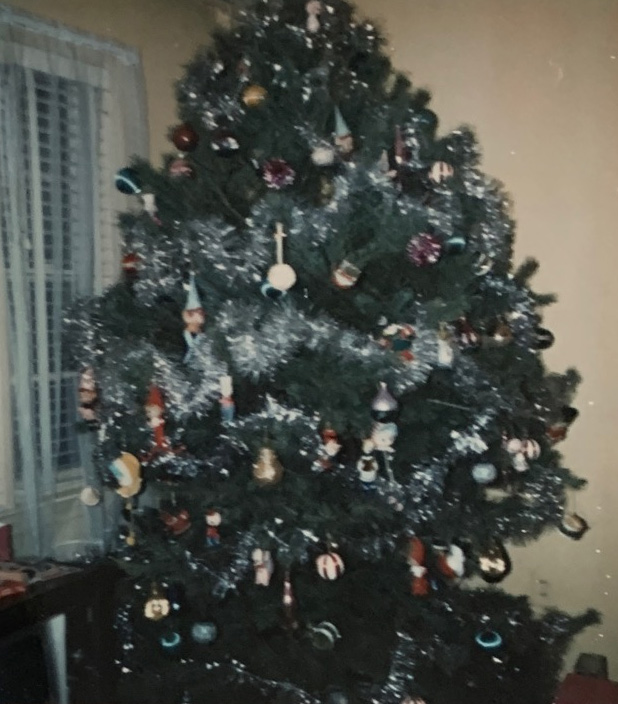
A string of lights, a big illuminated Santa face on the front door and plastic statues of carolers decorated the outside of our house at 626 East 2nd Ave. The Christmas tree took up a third of the living room with its soft glowing screw-in light bulbs, shining glass ornaments and silver tinsel or garland. Of course, there was the nativity scene with plaster-cast characters of wisemen, shepherds and the holy family, which always seemed to need some glue repair from the previous year’s wear.

Holiday Music in the Air

At least as important as the tree was the Sylvania TV to see the holiday specials and the sounds of our our Zenith stereo set with its radio, record player with odd-looking cone speakers.

These were the early days of  ​33 1⁄3 rpm LP vinyl record albums. Ordinary people obsessed over “stereo” and “high fidelity” and improving sound quality with the right “diamond” needle that played in the record grooves. We bought our “stereo” at a local radio/TV store to provide the best holiday music. And, in our family it was watching Christmas specials or playing albums of Perry Como, Frank Sinatra, Mitch Miller, and of course, Lawrence Welk.

My father, an amateur harmonica player (learned in the Army), believed in the beauty of music and wouldn’t mind singing along if the occasion called for it. The popular musical instrument to learn at the time, especially if you were Polish, was the accordian.

One year the family broke down and bought a Yamaha organ which my youngest sister Carolyn (11 years younger than me) took lessons. My other sisters, Christine and Barbara and even Mom and Dad took some free lessons but did not get far. John and I were not motivated enough to learn any instrument. In time, the musical fad faded and I think we passed the organ  to an aspiring neighbor, which probably became a tradition. I’m still wondering how it fit in that small living room.

Christmas Mass

John (altar boy) Me (choir boy)

Christmas Mass was always a center of time during the holiday. I remember in grade school being in the special Christmas choir dressed in a red cassock, starched collar and a big bow. Our parish, St. Joseph’s, took this seriously. It was probably a Latin mass at that time. Also, an altar boy, you had to know the Latin responses during the Mass, but we had no idea what they translated to. We typically went to either the special Christmas Eve mass with the singing or midnight Mass which was “Standing Room Only”.

A Polish Christmas Eve

My Parents: Stella and John Kiczek

Since my Mom (Stella) and Dad (John, Sr.) had very ethnic and religious childhoods growing up in Jersey City, there was a strong desire to carry on some of the sacred Polish traditions at Christmas. My Dad was the youngest of 9 children. My Mom was an only child. Dad’s closest siblings were aunt (Polish: “Cioci”) Frances and aunt Josephine who lived next door to us in Roselle.

A new look at our old family house.

His oldest brother, Father Al, a well-respected priest and pastor at St. Casmir’s and Sacred Heart in Newark, his cousin Joe and his sister Mary “May” Slawinski with her family might visit and we usually made the long journey out to Jersey City to visit them after Christmas.

As kids, holiday old country traditions were almost dreaded. It was hard to be on your best behavior with the company of strange food, a strange language being spoken and relatives that seemed to come from a different world. Jersey City was rough, noisy and crowded. We wondered why everyone lived there in small apartments when they could move out to the suburbs. Little did I know then that my son Justin and daughter Alison would gladly choose to settle there once they started their careers.

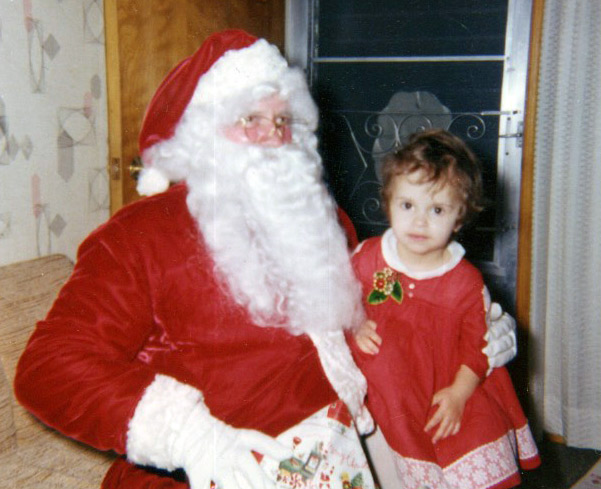
My uncle Stan (Slawinski, Sr., husband of May) was a jolly old, stout guy. He set a light hearted-tone for their family and our gatherings. He had a distinctive mustache, much like Charlie Chaplin. I do remember vaguely (spoiler alert) that he showed up at our place on at least one Christmas Eve dressed perfectly as the real Santa Claus. Can you imagine that!

Uncle Stan (aka Santa) with sister Carolyn (1962)

For our family there was probably no tradition more memorable than the Christmas Eve celebration otherwise known as Wigilia. With aunts Frances and Josephine  next door in Roselle, we ate this sacred meal either at home or at their place. Cousin Joe or Father Al might drop by. This is a time where it is traditional to get together and invite others for a polish meal with 12 meatless dishes (12 signifying the 12 apostles). It’s also a tradition to set an extra empty plate for anyone who might drop by representing a true Christmas spirit.

But the first thing that night was to say a family prayer and share opłatek, the Christmas communion wafer. The custom is to take a larger piece and allow each person to break off a piece of yours and eat it, while you do the same to theirs. This commemorates the Last Supper and is a nice social way to wish everyone individually a Merry Christmas.

The meal began late because, as I learned recently, it was customary to start when “the first star can be seen” commemorating the Star of Bethlehem. The two most prominent dishes were a beet borscht soup and fish. Mushroom dishes (Poles are big on mushrooms) were many and varied. First, was the deep red beet soup served with potato dumplings then fried fish, then a mushroom dish. Pickled herring was also an option as it was seen as a sign of good luck for the new year.

Needless to say once the borscht and fish came out, all the kids would bolt away from the table or eat little, until better choices arrived like pierogis and/or potato pancakes (placki). Our favorite polish foods like kielbasa or gołąbki, stuffed cabbage, could not be served, at least not today. We were fasting from meat. Somewhere between dishes we were probably singing or at least listening to Polish and English Christmas songs.

My fondest food memory of the season was probably the buttery kolaczki cookies for dessert made by my Aunt Frances with raspberry, apricot, poppy and prune filling.  With 12 dishes to get through, conversation and some drinking it was a sit-down party lasted late into the night as we were sent to bed with beautiful visions of Santa on his sleigh and nightmares of borscht and fish in our heads.

Tradition Continues at Christmas

Old rituals that have stayed the same or maybe improved over time are especially significant to me as I get older. As kids, I’d like to think we behaved a little bit better during the season and learned the valuable lessons of giving and receiving . All this we experienced through the same legends of a jolly old man and a baby being born and through the lens of our own family customs. Tradition helps make the magic.

We might not have understood these mysteries, but we instinctively respected the forces around us and solemnness of the season. Christmastime is still the best of times which we continue to cherish and hope to pass on to other generations.