Avid cyclist and walker. Interested in writing about life's observations, retirement, pushing yourself in your later years and living a healthy lifestyle.
Has your musical tastes changed over the years? Mine has been a slow transition that has only broadened my interest. Maybe Beyonce is trying to tell us something?
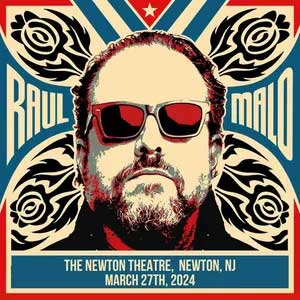
I’m adding this preface to my original post from March 2024 triggered by a Raul Malo concert at a small theatre in Newton, NJ. I recently learned that Raul had passed away last Monday, December 8, 2025, at age 60 after fighting a two-year battle with cancer. He was a unique talent that bridged musical genres. I’m thankful that I had the chance to attend one of his unforgettable performances. Here’s what Raul said of his medical challenge:
“In these past months, I’ve had to fight battles I’ve never imagined,” his note concluded. “But on the hardest of days, music remained my companion. Your letters, your stories of how a song helped you through loss, heartbreak, joy, those became our songs. You all carried me more than you know… Thank you for giving my voice a place to live, even when my body cannot be the one delivering it.”
Little did I realize that Beyoncé and I may have something in common. Beyoncé has just released her genre-bending album “Cowboy Carter.” It features collaborations with Country music legends like Dolly Parton and Willie Nelson. It’s her latest evolution. And, it seems my musical tastes have changed too. Sad to say it has nothing to do with her, although we may be on the same track.
Cover of Beyoncé’s “Cowboy Carter” Album
Maybe it’s a product of getting older, or a mash of all the music I’ve come to like over the years. While I always have preferred rock or folk, I think my ear is bending a bit more toward progressive country, American Songbook classics and even the right Latin beat.
A few days ago, Mary Ann and I caught a famed singer, songwriter and musician at the Newton Theatre. Lately, I’ve been playing Raul Malo and his Grammy Award-winning band the Mavericks on my Spotify lists and noticed that we both were listening to the same music. Just a week ago Mary Ann found Raul had a one-night gig in NJ which gave us a rare opportunity to watch and listen to him perform.
You may remember the Mavericks for a few past popular hits but they have a strong following with a sound that always has been hard to categorize. Terms used start with progressive country, rockabilly, Tex-Mex, Americana, Cuban ballads, jazz and blues but Malo’s preferences are even broader than that. Raul Malo is the an American born singer with Cuban ancestry who has has a reputation as one of the most beautiful full baritone voices in music today. He also is a guitar virtuoso and plays numerous instruments. He’s that famous singer you probably never heard of.
Currently he is on a solo tour away from the Mavericks at smaller venues like the Newton Theatre which suits his talents perfectly.
The Newton Theatre
The town of Newton is about a 45-minute drive from Morristown and in a remote part of Northwest NJ. It’s the kind of place that’s easy to forget. Once a bustling town a century ago, it conjures up a nostalgic vision of an old western town which now seems charming with old storefronts and quiet narrow streets. And, it has restored its 1926 605-seat theater into an intimate performance space and occasional movie theater again with the help of SkyPAC, the local arts supporting organization. Maybe, this was the perfect place for tonight’s music.
It was a dark, wet and dreary Wednesday night so we hesitated for a moment before we decided to make the long schlep, having already purchased the tickets. The show started with the soothing sound of Seth Walker, a former Mavericks musician, playing upbeat and easy original tunes with a sound similar to Jack Johnson. It was a nice intro to what was to come.
The house was full of excited fans waiting as Raul came out around 8:30. Mary Ann and I looked around to judge the audience as we (seniors) often do these days. It was mostly gray-haired, pony-tailed or long-haired adults. For a typical “Country” concert it might be easy to conclude which way politically the audience leaned but we guessed this could be a rare situation with equal sides and in no mood to bicker. Raul is an actively progressive guy but never mixes politics with his gigs.
He dressed plain and casual on a spare stage with one stool and a single snare drum set, it seemed almost too little to deliver what was expected. This crowd called out to hear their favorites. But he just said, “Look there’s no play list, you may not hear songs you expect. I’m just going to play what I feel like tonight.” Luckily, we were all okay with that.
He started out with two ballads so Cuban that you felt transported to a cigar-smoked cafe in Havana. Then he changed to old classic songs of love and longing from Elvis to Sinatra to Nelson to Orbison. He mixed his material carefully in the playlist. His musical knowledge and taste is only matched by his perfect guitar playing and vocals.
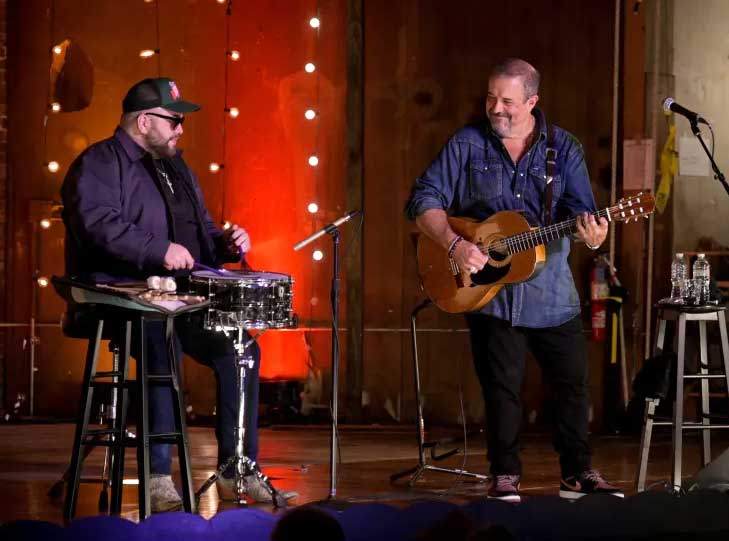
Dino and Raul Malo (photo by Jack Casey/What’sUp Newp)
Dino, his eldest son, joined him half-way through the set picking up the pace by playing smooth percussion. Together they performed maybe the best song all night, Neil Young’s “Harvest Moon.” Raul closed with what he noted was one of his top three songs of all time – Hoagy Carmichael’s “Stardust” which was in a category of its own. This may have been one of the most “intimate” sounding concerts I have ever attended.
Maybe music genres are blurring, are just too numerous to appreciate or you just outgrow them. Today, I’m looking for a performer to deliver the right mix. Perfect sounding music that speaks of everyday life, love and longing. Music that I can relate to at this time of my life. “Country” or some other category? No category seems right for my evolved musical taste. Has your musical tastes changed over the years too?
Here’s a taste of Raul Malo and his band The Mavericks:
Raul Malo, The Mavericks – Havana’s Midnight (Official Video)
Here’s one of my favorite cover songs sung by Raul Malo:
What happened to my college? After 102 years it was no more. Hard to grasp this happening to a great school which lost touch with reality. Or, maybe reality never gave it a chance. Not as uncommon as you might think. Will it happen to other schools?
Upsala College Seal Vincit omnia veritas (truth conquers all)
As time passes, inevitably we lose an intimate connection with the past. People and places that were once essential to our lives become distant ephemeral memories. The truth is nothing is the same as it once was. But every so often it’s worth stopping and asking why. Why did something change so drastically? Why did an esteemed educational institution utterly fail when it once seemed so competent and permanent?
I graduated Upsala College in East Orange, N.J. in 1970 with a B.A. in Economics. Twenty-five years later it was no more. Over that period, the school would change from one of the top three New Jersey private colleges to the bottom triggered by low enrollment, sliding academic standards, unpaid bills and blatant mismanagement. The press reported that the closing was due to its inability to pay off its $12.5 million debt. But, that was only the obvious reason to close. There was much more that had gone wrong.
Its last commencement on May 14, 1995 (Mother’s Day) was a funeral of sorts. Upsala closed its doors and soon abandoned the 45-acre hilltop campus. Along with celebration and fond memories, there were the physical and mental scars created for all those that learned, socialized and lived around the campus area.
I could never explain to anyone exactly why the death of my 102-year old college happened and I still wonder about its story. Today, fewer and fewer people remember the school. I became obsessed with Upsala’s story and began to explore it again looking for answers. Here’s what I learned about “what” happened. There’s still more yet to tell as to “why” it happened.
My College No More
Upsala maintained its 45-acre city-campus there for 71 years after relocating from Kenilworth in 1924 and Brooklyn in 1897, where it was founded. A Lutheran Synod ministry created the school in 1893 to educate Swedish immigrants and named it in honor of the great Swedish Uppsala University. It was known over the years as a quality liberal arts college comparable to nearby Drew, Fairleigh Dickinsen, Wagner, Muhlenberg and other private colleges. Its connection to the Lutheran church and religious learning faded over time, long before I attended.
For the first half of the 20th century, East Orange, a smaller city on its own, was the wealthier outgrowth of a migration from the larger commercial hubs of Newark, Elizabeth and New York. Only a few miles from the great metropolis, it had superior highway and rail access with a spacious natural beauty. It had the feel of a suburb with the commercial benefits of a city. In other words, it seemed a perfect place to operate a well-respected college.
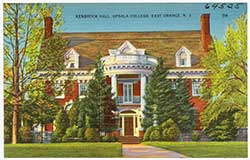
1900 Kenbrook HallBeck HallAerial Campus ViewUpsala College had a Proud 102-Year History
In 1968, I transferred to Upsala with an A.A. degree from Union County College, a two-year community college. Without enough family financial resources, the choice was simple – commute to UCC and then Upsala while working part-time and benefitting from a small NJ State scholarship. I was able to attend UCC paying cash, while taking a small loan to cover my last two years of tuition at Upsala. A few years later, I earned an MBA from Rutgers with the help of tuition assistance by my employer. In summary, I was relatively debt-free in my mid-twenties with an advanced degree, a business career and a marriage. There was little reason to look back and much to look forward to.
While my time at Upsala was rewarding and productive, it was hardly the “full” college experience, being a “commuter” student. There was little reason to connect again with Upsala except when I needed a transcript. Occasionally, I’d hear or read about their sports teams, which were usually fairly good and competitive. I don’t recall receiving requests for alumni donations or campaigns. I never knew about the school’s financial problems or thought much about the changing demographics. But working in the greater Newark area, it was obvious that the whole urban landscape was deteriorating. Over the years, the word came from the press and friends that Upsala had fought for years to remain open but eventually gave up and closed.
News of its demise was something like hearing a distant uncle had died at an early age. It seemed like my two brief years at the school should not justify much sympathy. The problems that closed the school were not at all evident when I was there. Maybe its human nature to remember the good times and forget the bad.
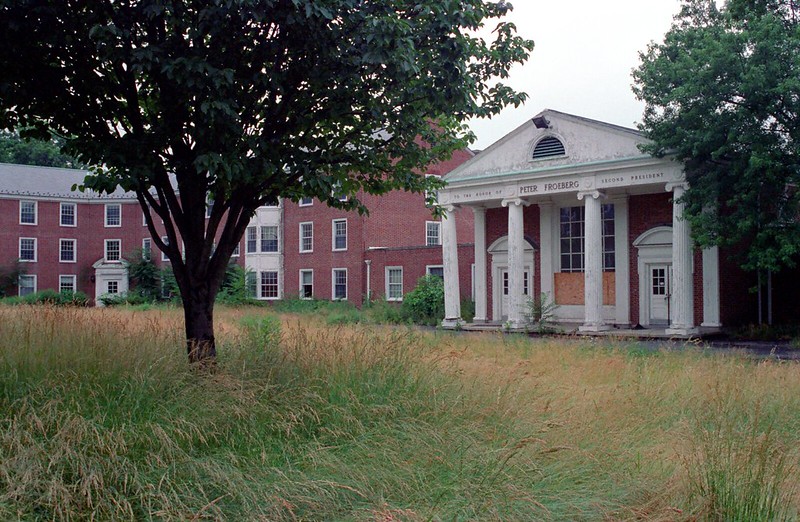
In 1970 the campus was a beautiful private school perched on a hill with Georgian-style buildings mixed with an old classic mansion and quad. In fact, the campus seemed to be improving and expectations where high. My professors and courses there were excellent with reasonable class sizes. Instructors were smart and demanding, with 80% holding PhD’s in their fields.
How Did it Die?
There were lots of reasons for its downfall. Unfortunately, East Orange suffered from the migration out of the cities after the Newark riots of the late 1960’s. A substantial decrease in enrollment occurred. Enrollment peaked in the 1950’s around 2,000. But, even at 1,600 in 1969 it seemed to be thriving only to fall below 500 by the 1990’s.
A neglect of maintenance at the school began to match the deteriorating neighbor around it. And with an increase in competition from other colleges, It lost its ability to draw quality students. This led to an almost open admissions policy which drew more minorities and foreign students, many of which were unprepared and needed financial aid. But financial aid and student loans could only be sustained if enrollment was large enough to pay its operating expenses and debt payments.
Ironically, to add to their financial woes, the college was granted a 245-acre tract of land in Wantage, (Sussex County, NJ) by a benefactor, Wallace Wirths, to be used as a new campus site. After rejecting the idea of moving its entire operation to Wantage, it opened as a new small satellite campus, with all its expense and logistics, only adding to its operational woes.
Upsala continued to operate for years in debt, although being a private school it had no obligation to report that to the public. However, it did have to report to the Middle States Association of Colleges and Schools for accreditation, which began to warn of problems by the late 1980’s. By 1994, that organization threatened to take away their accreditation due to its ongoing financial problems unless the college came up with a workable plan.
There were efforts along the way to save the college near its end with negotiations, merger discussions with other schools and protests. 200 faculty and staff jobs were at stake. Sports programs were dropped. The school even promised that they had turned the corner.
But, by the time the student body and faculty understood the depth of the problem it was too late. A $12.5 million debt with a school facing a projected enrollment of about 500 could not work, even if costs could be cut dramatically and additional funds could be found to keep it temporarily afloat. It’s time had passed.
May 31, 1995, was the last day of operation for the school. The Trustees had hired an interim president to handle the sticky closing details as the college went into bankruptcy. All offices offices and classrooms were shut and emptied and all the that could be sold would go to the highest bidder – unless it would be later ransacked, as much of it was.
Even the entire satellite 245-acre Wantage campus was liquidated by selling it back to its benefactor’s family, the Wirths family, adding a mere $75,000 to the bankruptcy proceeds.
At The Final Commencement
Only one city official, Councilwoman Carolyn Meacham, attended the final graduation of the last 200 seniors. Here’s a summary of the mood of the day and a feeling of what would follow:
“It was like a funeral. What happened in Upsala is a travesty… Things should have been done to circumvent the process of closing. It’s not only affecting the people who went to the school and worked there but the closing is affecting the residents of the area.”
…once it closes down, vandalism is going to take place.”
Carolyn Meacham, East Orange Councilwoman (May 14, 1995)
A Campus Resurrected
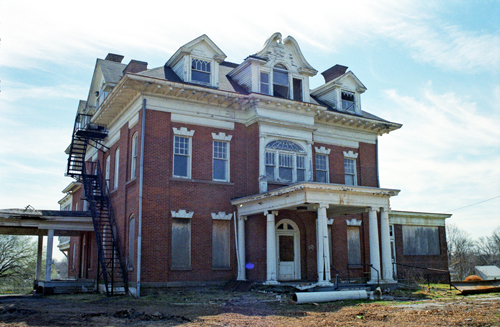
Campus EntranceKenbrook HallThe QuadWest Campus – abandoned by city from 1995 – 2006
The abandoned campus became a blight on the once prestigious neighborhood. The East Orange school board bought the entire campus for $4 million as Upsala was liquidated. It then split the campus in half with a plan to consolidate all its high schools into the “East Orange Campus High School” and sell the west half to the town for $1, with the hope of redeveloping it. The east retained some of the beautiful but tattered buildings like Puder, Beck and Viking Memorial Halls and connected them together with new construction in the style of the original campus. Today, the east campus still looks like a small college campus.
East Orange Campus High School – formerly Upsala’s East Campus
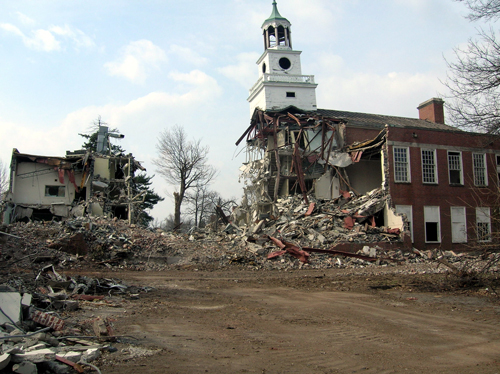
The 20-acre west campus was originally marked for upscale residential development. However, it languished for years and became a blighted and crime-ridden area even though it was the responsibility of the city to manage. West campus buildings became dilapidated. The old 1900 Charles Hathaway mansion (aka Kenbrook Hall), administration offices, dorms, chapel and library were demolished.
Old Main – Demolition 2006Library Demolition 2006
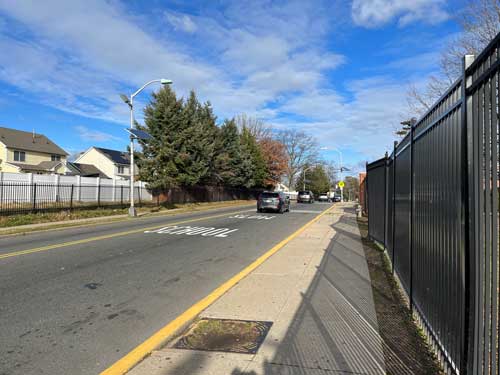
The city sold the west campus to a developer for $1.5 million to build upper-income residential houses in a semi-private enclave. Today, on the west side of Prospect Avenue at least, there is no trace of a once thriving college, just a $17 million, fenced-in community of 48 homes and 16 townhouses called “Woodlands at Upsala.”
20-acre West Campus becomes a development – “Woodlands at Upsala”Prospect Ave 2024 <- West Campus | East Campus – >
Epilogue
Besides the unfortunate place and time Upsala found itself in, there’s a substantial argument that mismanagement and bad business decisions led to its demise. Maybe, it was an impossible situation as revenues declined, competition grew and costs for salaries, maintenance, improvements and security increased.
In a recent article in the New York Times “A Private Liberal Arts College is Drowning in Debt, Should Alabama Rescue It”, a small private college that nearly fits the same profile as Upsala, has many of the same problems. Its financial woes have laid it low as it looks to state funds to rescue it lest it close and abandon its campus.
Perhaps the model of a small liberal arts college belongs to the past. As the expense of education has risen dramatically and students and parents are questioning the value of higher education and are seeking majors in new careers. But cities do come back. And, colleges may need to reinvent themselves too.
There’s at least a couple lessons to learn here. No educational institution is immune to the forces of the market and the incompetency of its leaders – regardless of its lofty goals. And, perhaps things could have been different if the college had followed its own motto, “Vincit omnia veritas.” Truth conquers all.
Sources
Swedes And Deeds: The Ups And Downs Of Upsala College; Schaad, Jacob, Jr.; {Meadville, PA: Christian Faith Publishing, Inc., 2021
Various articles from Star-Ledger, Newark NJ – referenced from online access to NewsBank‘s Star-Ledger archive via Morris County Library system. Period reviewed Jan 1970 to Dec 2023. Probably the most comprehensive source of public information on the various problems and issues of Upsala.
Various articles from New York Times, New York, NY – referenced from access to Timesmachine‘s New York Times archival system. Period reviewed Jan 1970 to Dec 2023.
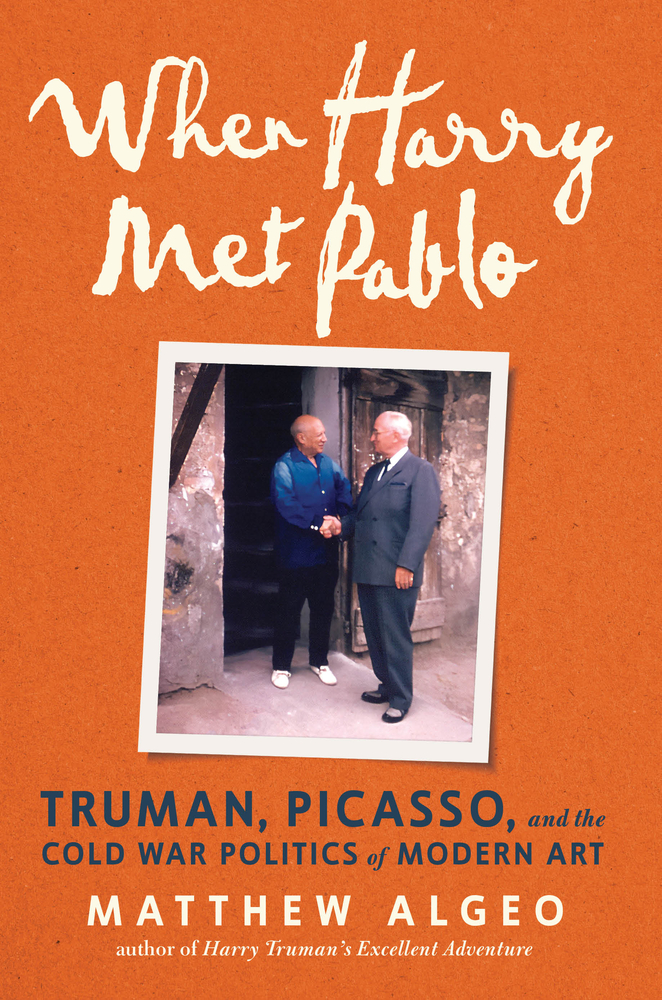
An interesting and obscure story of how cultural change in art and politics clashed and came together – at least briefly and symbolically – when Truman meets Picasso.
The following is my Goodreads review of an interesting historical period of change in the art world and in politics during the Cold War period. Truman, who was responsible for using the Atom bomb to end the war and in the act destroyed thousands of lives, meets Picasso who was a staunch pacifist and communist supporter. Truman sees “modern art” as “ham and eggs art” but recognizes Picasso’s talent and fame. Both are at the twilight of their careers.
Through a brief history of how modern art began to flourish and how politics was woven into art, Algeo provides and entertaining look at how the times changed art, politics and maybe even personal attitudes.
In the great tug of war of existential beliefs, there’s always a point and counterpoint. But, it’s a universal law that everything changes with the passing of time. Maybe we soften or maybe we learn to live with opposing points of view. This is a story of how contradictory lives and beliefs co-exist and come together, at least briefly, in odd and unexpected ways.
A photo of Picasso shaking hands with Truman seemed to have been the perfect set piece for Algeo’s travel back in time to explore a hopeful period where stark contractions co-existed. It was clear. There was a good, bad and ugly. But, in the post World War II era everything was re-aligning in art, music and politics.
Their 1958 meeting occurred during the cold war after one of the most violent and consequential periods known to man. Truman, a popular democratic everyman, used his might to win a war by unrepentantly authorizing the killing of millions to justify the end. Picasso, on the other hand, was a famous recluse artist who promoted peace and was an unrepentant communist. They were polar opposites in almost every way. If a photo is worth a thousand words this one was worth a thousand questions,
When Harry Meets Pablo provides an intriguing history of how the definition of art was changing in the mid 1900’s. The first half of the book paints a picture of how America was reacting to the awakening of a new form of “modern art” exemplified by Picasso and other European artists. The book discusses how the new art form was received and nurtured by creating such institutions as MoMA. Special gallery events and even a traveling show were promoted to allow the public to experience the new form of art. Even the government promoted a cultural awakening to art through the Advancing American Art program.
At the time of the “red scare”, a relatively unknown, but deeply conservative, Republican Michigan congressman named George A. Dondero played an outsized role in stopping government art programs, much as was played out in the McCarthy hearings at the time. He declared modern art an infiltration of communism and blacklisted many artists as communist sympathizers – even though communist dictators like Stalin would have nothing to do with it.
Slowly, in America, the existing convention of realistic art gave way to an acceptance of the modern style by the middle of the century. But not everyone agreed that this was “art”. Truman, for one, often called it “ham and eggs” art disparaging the skill and impact it had. He was not alone. But at least Harry appreciated the difference of opinion and fought for an artist’s freedom of expression.
The second half of the book offers a unique look at a world attempting to regain its post-war balance. After his presidency, Truman planned to slip away to his Missouri home from Washington on a public train and once again lead a normal civilian life. Harry soon learned that the public was still interested in his life and thoughts. He was chased down by fans and the press everywhere he went.
Sam Rosenman, an ex-judge and close advisor to Franklin Roosevelt helped create the New Deal strategy. He was to continue to become a “consiglieri” to Harry while he was president. He and his wife Dorothy became close personal friends with Harry and Bess. Sam’s law partner Ralph Colin, a well-known collector of modern art and trustee at MoMA, educated Sam on the new modern style. Soon, Rosenman and Truman were two friends with at least one contrary point of view – “What is art”?
Truman asked Rosenman and his wife Dorothy to join him and Bess on a European vacation in mid-1958. The cross-Atlantic voyage by ship would take them to ports in Italy and eventually Cannes in France. Coincidentally, Picasso’s home was in Vallauris, in the hills above Cannes
A plot for a meeting was apparently hatched clandestinely by Alfred Barr, founder and chief executive of MoMA who had helped Picasso gain recognition in America and wanted to promote modern art. Truman a family man of modest means was to meet Picasso, a rich and famous womanizer at Picasso’s home. No doubt Sam Rosenman also had a hand in arranging the meeting. But how was that to be done when the two men, in the twilight of their careers, seemed to have nothing in common except their age?
Here’s where the story becomes hazy as Picasso, famously a recluse, graciously agrees to meet with Truman at his Villa La Californie for the day. The Truman’s and Rosenman’s spend most of the day together with Picasso graciously showing them around his studio and nearby town famous for his pottery. There is no real reporting of what transpired between them but photos seem to reveal a cordial if not enjoyable visit. We see photos and speculate what that day might have been. The rest is up to our imagination.
The meeting made a small story buried in the news, as other world events stole the limelight. We don’t know if the meeting made an impact on anyone. Perhaps it just was a courteous and friendly call or maybe a sign that time had soften the difference between different points of view. Not knowing the details, leaves the reader with unanswered questions of what might have happened when opposites come together.
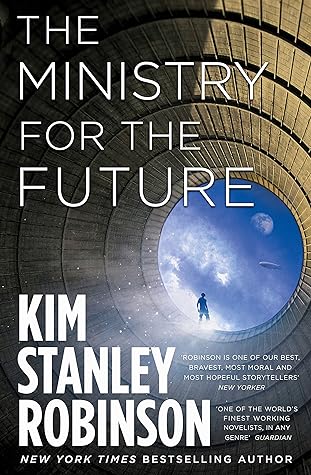
A review of a 2021 sci-fi book of how we confront a huge world-wide crisis, globally join forces to avert environmental disaster and create a new future for the planet. Is it wishful thinking?
The following is my Goodreads review of a 2021 sci-fi book that may be fiction but optimistically expands on current technology, some new scientific ideas and a global willingness to confront our environmental disaster. Where most science fiction stories paint a grim picture of the future, this one is a story of how we beat the odds and created a wiser and more humane world.
While much of Robinson’s works have described the far away future, this book contemplates a horrific disaster only years away that is the catalyst for finally changing the way we treat our environment on a global scale. Totally impossible to believe on its timescale and scope of change, it nevertheless provides some hopeful consolation that a bright future may still be possible for our planet.
I’m generally not a sci-fi reader unless a book is strongly recommended or I hear it contains some interesting new ideas. The author KSR is obviously well known for his thinking and writing about the future by extrapolating present ideas or emerging technologies. I learned about this book while following Molly Wood’s “Everybody In the Pool” newsletter and podcast on environmental tech. There really is a growth of invention and investment in that sector – affirming a reality that there is capital and interest in solving our doomsday environment conundrum.
While this book has a weak storyline, it grabs the reader at the beginning with Frank living through the horrors of “The Great Indian Heat Wave” an event that kills millions within a single week. It shocks the entire world into finally becoming aware that the environmental problems need to be addressed. What seems to be implausible is that India becomes the model for solving these issues and the rest of the world seems willing to actually act together in solving it on a global scale. The Ministry of the Future become the catalyst for laying out big plans and our protagonist, Mary, is the cool director of the Ministry that can save the planet.
KSR asks us to believe that countries just a few years into the future will be willing to see past the politics and change their nationalistic attitudes for the good of the planet. Even China is seen as an enlightened, wise collaborator. This collaborative approach causes the planet to see benefits quickly with innovative solutions and within one lifetime.
Like most who read this book, I really enjoyed the innovative solutions that KSR presents like a carbon capture coin investment strategy (similar to bitcoin), pumping up trapped water from the polar icecaps, swarm drones, wide use of airships and the birth of a new beneficial social network. There’s even a mind-bending thought of using sanctioned positive terrorism on the bad environmental actors. His material is best with creative new ideas that have some basis in fact today. If only they were that simple to evolve.
After the initial few exciting chapters, the book shifts back and forth between different points of view and how the evolution of the Ministry creates the bureaucratic plan. The environment improves quickly. The storyline seems lost but observations on possible new solutions are worth the read. The Ministry has helped create a world that works together living peacefully on the same planet.
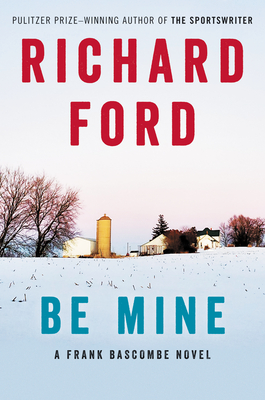
Here’s a review of Richard Ford’s latest novel in the Frank Bascombe series. Frank has his son’s health problem to deal with as well as reconciling his past, present and future as he ages.
The following is my Goodreads review for this new Richard Ford book, one of my favorite authors. Ford’s famous for his character Frank Bascombe, a fictitious character now appearing in a fourth Bascombe novel. He’s full of wisdom and wit and always a pleasure to read. His everyman characters live ordinary, yet unique lives set in places and people you recognize – including many places in New Jersey! This one takes place mostly in a cold mid-west winter under uncomfortable circumstances. Not a joyful read, but always entertaining.
Wisdom is the currency Frank Bascombe has to offer readers who choose to explore the pages of Be Mine, or for that matter any of the other four Bascombe novels on living a life in these times. When I plumb my life (I’m 75) at the age of Frank (He’s 74), I can’t help but think he knows exactly where I am and what I’m thinking and experiencing.
Crafted by an extraordinarily talented writer and storyteller, Ford can make even the drollest facts interesting and draw you into a storyline that might otherwise turn off readers. The art is in the storytelling. His subtle magic will suck you in as you begin to discover a reality and hope that exists at any age.
Here he starts by posing the question, “What exactly is happiness”? Putting the messy details aside, he posits that it may be as simple as the “absence of unhappiness”. Yet how do we become and stay happy? Frank is reminded of this by memories of his mother and a high school reunion which impress upon him the secret of life is just to be happy; as if we could tailor our our actions and our circumstances to make it so.
Frank is in the that retirement stage of life of being partially connected to an old career by shifting into an easy, part time job working for Mike Mahoney, his ex-real estate partner who remains a friend and ally to Frank. Those past tumultuous years (documented so well in all the Frank Bascombe novels) of being a writer, teacher, real estate agent, husband, father, lover and friend have gone by. Life is simpler now with a stressless job, a few trusted friends, a comfortable home and a realization of his successes and failures in his life, family and career. In a word, Frank is “happy”. That’s not in a joyful way but in resignation. The absence of unhappiness gives him no right to complain.
Frank has previously survived a young child dying, a divorce, an estranged daughter, a second wife leaving him and numerous other challenges that life has put in front of him. Yet through all this he has found that life is good and there’s little left to go after. It is a waiting game as to what’s coming up next?
Frank’s immediate dilemma that has shaken his world is the fact that his 47-year old bachelor son, Paul, has been given a terminal diagnosis of fast staging ALS. Paul lives alone but near his dad. His sister can provide limited help remotely. So, Frank decides his life must change as he moves from his comfortable home in New Jersey to Minnesota to assist him. Suddenly, Frank is shaken from his comfortable “happy” life with the idea that he must do something to help Paul.
Knowing Paul’s ildeocycrancies – he has many – Frank offers to take him on a crazy last car trip to visit the Badlands and Mt. Rushmore. It’s a quirky road adventure that fit both their personalities and the bizarre timeline they find themselves in. This is mid-winter, February (around Valentine’s Day) at the Mayo Clinic where Paul is a participant in an advanced ALS research program which only leads to the prognosis that he has little time left.
It’s a story of both father and son estrangement and love for each other. Maybe the biggest gift they can give each other is their remaining time together. Both share a similar sense of humor in their dialog that offers the reader a hundred different funny and entertaining moments they share together, for the last time. Both are self-deprecating. Despite his serious disease Paul insists on calling his ALS condition “Al’s). Paul’s life career goal was to be a ventriloquist which never fully materialized. But his years developing greeting cards for Hallmark shows in his dialog with Frank.
Ford knows how to make the most of words and branding to help bring home the commercial and absurd aspects of our everyday lives. For example, he points out businesses like “Free Will Cleaners, Lint Free or Dye”, “Little Pharma Drugs” and “Vietnamese-American Hospitality”. One of Paul’s favorite t-shirts says “Cornhole IS America”. Many commercial brands from Walmart to Starbucks to Dunkin Donuts are woven into the story which lends to its legitimacy.
The adventure takes him through mid-western America as two keen observers like modern-day Tocqueville’s. Visits to the Comanche Mall, the Northern Lights Octoplex. the Corn Palace, Fawning Buffalo Casino and Mt. Rushmore tell a different story of today’s America. They meet medical staff, protestors, nurses, ex-military, loving couples and ethnic strivers. Just common good folks out in this cold unforgiving land of promise.
On Comanche Mall…
Shopping malls all emit the same climate of endgame up and down their carnivorous expanse. (They were never meant to be places where people belonged.) The mealy light emanates from nowhere. Air is a warm-cool Temperature found only here, and riding it is a cotton candy aroma, like at a state fair. “When you wish upon a Star” sung by a cricket is being piped in on top of everything.”
On Mt. Rushmore…
(Paul’s observation to Frank)– “It’s completely pointless and ridiculous, and It’s great.” His eyes are jittering and gleaming. “There’s not enough in the world that’s intentionally that stupid.” (Frank’s observation)He is smiling beatifically, as if he’s experienced an extraordinary discovery and surprise. A confirmation. I’m merrily happy to believe we see the same thing the same way once – more or less. It is pointless and it is stupid. And if seeing it can’t fix him, it can a little. “We’re bonded,” Paul says slyly still smiling, gazing with complete awareness toward the presidents. I am his favorite turd.
There’s no happy ending to this story as you might expect. Frank appears to have reached a new awareness of his late stage in life and a resignation that he had done all he could. Maybe it’s time to look at things fresh again and renew friendships. With Paul gone, he has eliminated the “unhappiness” of seeing his child pass but re-gained a stable“happiness”. At least for now. With happiness there is hope.
How do you react when you get hit by a stone? Adjust to where you are and move on.
This essay reflects personal thoughts that were written and collected to be passed on later to the family for my Storyworth project - a personal collection of life's memories. Today, is a memorable moment for me reaching age 75 and staring a health issue in the face. It's all part of growing older and being thankful for good health.

"Long may you run...", as Neil Young has often sung.
I’ve been thinking a lot about my health and my age lately. I’ll be 75 tomorrow. Unbelievable! It’s a birthday that all my immediate ancestral family never lived long enough to pass. Dad had the record making it to 74. Mom was 70 when she passed a year after Dad. My three sisters are still in the running with me, being a bit younger. My older brother John, died in 1976 at the young age of 30 in a tragic accident. Now, I’m pondering, ‘What controls the length and quality of life?’ …as if I could control it. You can take your pick: genetics, environment, stress, exercise, relationships, diet and/or just plain luck. Some you are dealt. Some you choose.
I’ve managed to live through it all to retirement, raise a fine family with grandkids to enjoy. I think I figured out what life style works best for me with adequate exercise, a healthy diet, and maintaining relationships. Actually, I don’t usually think consciously about how old I am or how I feel. I’ve been lucky to have no real health issues. That is until recently.
Being Stoned
About a week ago, after a Saturday bike ride, I started to feel a mid-left back pain. Shortly after, I started to feel queasy, nauseous and fatigued. I had not done anything out of the ordinary that would have caused a muscle to be strained so I knew it had to be something else. Two days went by and on Monday my back and abdomen pain had increased tremendously. It was time to seek medical help, which I normally avoid like the plague, whenever I can. My suspicion was that it was a kidney stone that was causing the pain.
I remembered years ago, on a tough long-distance walk, I was pretty sure I had passed a kidney stone near the end of that day. My wife, Mary Ann, had a couple similar bouts with stones, as did my father as I recalled. At the time of the walk, I had not properly hydrated and had to deal with an excruciating pain in my lower back. Then miraculously, it stopped an hour or so later once I rested and hydrated myself. I learned that severe dehydration is one way to bring on a kidney stone. I also learned that pain is easy to forget once it has passed. My kidney stone nightmare, which I had buried in my memory, suddenly came to life again.
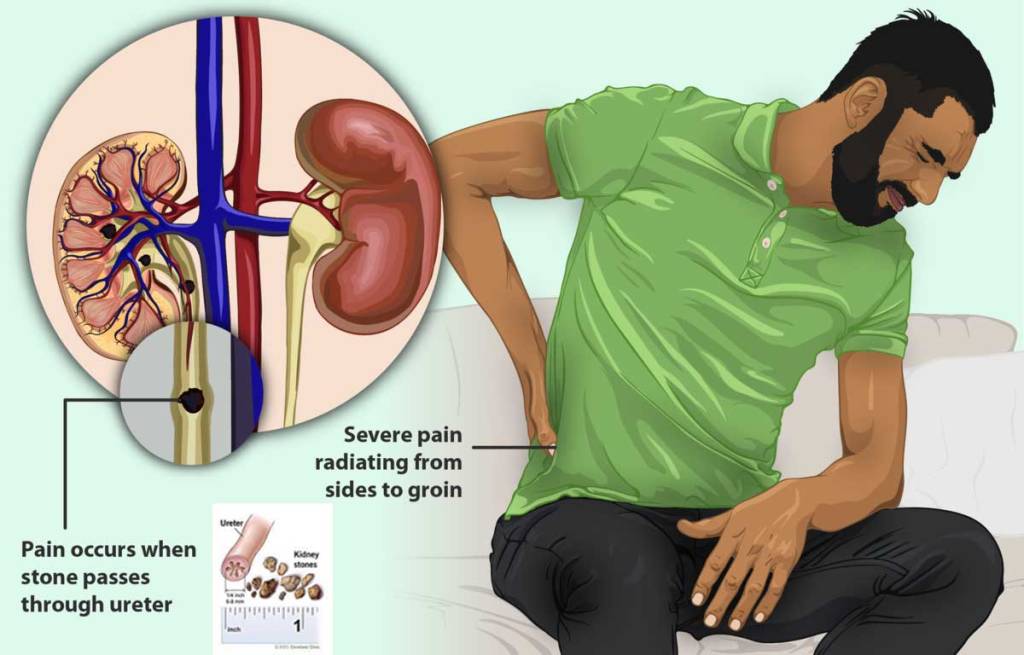
Kidney stone pain is legendary. Some have said it is worse than childbirth, which I would not want to judge, even if I could. The pain usually appears after crystals build up into a stone which moves from the kidney to the ureter tube which carries it to the bladder then beyond. My primary doctor noticed a small amount of blood in my urine on Monday and ordered an ultrasound the next day which confirmed the location of a 3 mm stone, large enough to become an all-encompassing problem for me by Wednesday morning. Then, I had to wrangle an “asap” appointment the with my Urologist for the next day, promising to provide stronger pain medicine and a plan to get my life back. But, I wasn’t sure I could make it another day as the pain worsened.
After realizing I might have to wait another 24 hours for relief, I sat on my front steps hunched over in pain. Then, miraculously the pain stopped! The stone had apparently moved down to a more welcoming spot and was probably expelled soon after, without a proper goodbye. I did not get to see or determine the type of stone. Strange how a tiny stone can alter your life so quickly and make you suddenly appreciate life – with and without pain.
Stone-Cold Facts
As painful and debilitating as kidney stones can be, they are quite common and rarely fatal. More than 1 in 10 people are affected and most often seen in people aged 30 to 60.. Kidney stones are usually troublesome when discovered in the kidneys or in the ureter, the tube that connects the kidneys to your bladder. Stones can be of several types based on which chemical builds up in the kidney, most are calcium oxalate or uric acid stones. Besides the pain, stones can cause a urinary tract infection which can lead to complications.
Adequate hydration, a certain diet and a hereditary disposition may help explain the presence of a stone or chances of an occurrence again. In my case, my conclusion is I have a hereditary situation, a need to hydrate better and because I probably had an incident before and now, there’s a good chance I may have another. That’s not a pleasant thought, but one I can accept and hope to avoid.
My Stepping Stone
I read recently that 20 percent of American adults — some 50 million people — suffer from a form of chronic pain. As I age I see pain present more and more. If not myself, my wife and friends are faced with dealing with painful joints, operations, treatments and disease that we all face at one time or another in our lives. Fortunately, kidney stones don’t last very long. But even a few days in extreme pain is more than one should bear.
For now, I see being pain-free as a gift. When that monster is on your back there is not much you can do or say that draws attention away from the suffering and the empty feeling that there is nothing you can do to stop it. With opioid pain-killers like Fentanyl and Oxycontin all over the news, its hard to avoid the subject of pain and the downside of finding a way to make it stop. In my darkest moment, I prayed for something stronger. It’s not difficult to see how someone would be willing to bend their principles and exchange one form of hell for another under the right circumstances.
Hopefully, I’m done with this stone and ready to move on. The question before me, at age 75, is “How should I change because of it”? The older you get the more advice and requirements you receive. Eat properly, consume less alcoholic drinks, get more sleep, see more doctors, avoid stressful situations and enjoy life when you can.
I would never say the stone was a blessing, but it reminded me to give thanks for what I have and to be vigilant at my ever-ripening age of what will be coming. That’s not to say I’ll change much at this stage, but maybe make a few lifestyle adjustments to keep the rest of this body going for as long as I can. Growing older is all about adapting to change… when you have to.
A thought provoking argument on how a 50-year timeline of trends and events have taken us to where we are today and what senior activism can do to change it.
Paul Kiczek‘s Goodreads review Feb 08, 2023 5 stars
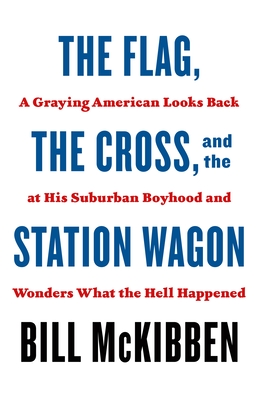
Bill McKibben, the renown environmental activist, has written a very easy to read and thought provoking book that attempts to explain how a 50-year timeline of trends and events have taken us to where we are today. It seems our lives are an unwitting product of many avenues of “progress” from politics to religion to technology. The changes we have experienced have been shaped by a “hyper” drive toward individualism, capitalism and new forms of communicating.
At age 75, I have even lived through a decade more change than Bill. I have learned to accept most of it. Employed at one time in the tech sector I once cheered on innovation, automation and efficiency. But, I’ll be damned if I can figure out why things have turned so negative, unreasonable and intractable. Tribalism permeates more and more of our lives every day. Surely, the amount and frequency of change has been a major factor. This book calls on us to stop and try to understand the injustice that exists from these changes.
The fact that McKibben is from the Lexington, MA area helps draw a clear comparison and contrast to today’s politics. Revolutionary America was largely an aspirational community of individuals that depended on each other and shared core beliefs. Today, we are not even sure what to aspire to other than wealth. And, foundational religious beliefs have withered in the face of individualism or have been diluted by the proliferation of religious sects. Frankly, a community based on shared higher ideals seems difficult to imagine these days.
The problem with technology has been an inability to see or predict the negative effect of its progress. Whether an unanticipated end product is pollution, inequality or a social breakdown, we don’t seem to know how to fix it without destroying the comfortable lives we built upon it. We are programmed to be transactional. There may be talk of reparations but what we really want is our money’s worth. We hesitate to take responsibility for previous generation’s mistakes while we minimize our cost and distress.
Can we change our way of thinking? Will we be better able to evaluate the long term and negative side of the latest technology or untethered capitalism. It seems like there’s no better time to give pause to what we are doing than right now, especially with the oncoming age of AI.
McKibben recently started an organization for people over 60, like me, called Third Act which is directed toward activism about big issues such as the environment. It seems many of us are out there wondering what went wrong too and how we might help. It’s a great idea since we have more free time and are probably healthier and wealthier than past seniors.
I recently joined Third Act and hope that I can play a role in helping solve problems that had seemed beyond the “old” me. Issues that seemed impossible to change might seem Quixotic but may be just what we are looking for. I still want the world to be a better place for my wife, three children and eight grandchildren and I want them to know I’m not too old to do something about that.
The 125 miles (171 km) in New Brunswick Canada we walked proved to be a welcoming experience, just as advertised.
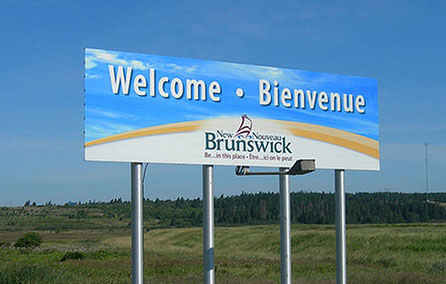
The most common sign in New Brunswick is “Welcome / Bienvenue” which seems to not only be a slogan but a north star for most Canadians. In our week-long Beyond Borders Walk walking journey along the Coastal Link Trail in New Brunswick we were fortunate to have experienced, many times, what Canadian hospitality and friendliness is all about.
All public signs issued by the federal government, but only those issued by the Province of New Brunswick, must be in French and English. This area values its tourism and its importance as a melting pot for all making their way east and west or even north and south from the U.S.
A Welcome Promise
Our excursion into Canada was a direct result of a welcome pledge our group was given four years ago. At that time, Loredana Delucchi, a member of our U.S.-based FreeWalkers, walking group, crossed the border with Ken Kurland And Nancy Jonap to St. Stephen to present Mayor Allan MacEachern a Canadian penny, a New York City subway token and a knitted bear doll as a gesture of a special friendship and their accomplishment of walking along the East Coast Greenway from New York to Canada over a period of years. Borders were crossed and lives were changed by reaching out. That effort culminated in a promise by the mayor, in turn, to not only welcome them back again but to build a new pedestrian trail along the St. Croix River.
Going Beyond Borders … Again
Our plan was to walk the 125-mile (171-km) newly charted Coastal Link Trail from Saint John ending in St. Stephen. We started our journey walking across the U.S./Canadian border in St. Stephen where Cherie Stewart, Implementation Manager of the Coastal Link Trail waited to drive us for over an hour to Saint John where we would start our week of walking. We had just driven over 12 hours to the border. Without her help to get to the start, the entire walk would not have happened.
Beyond Borders Walk – Jul 31 – Aug 6, 2022 – Canadian Coastal Link Trail
Canadian Hospitality
Tracking us throughout our journey was Susan Hill, Executive Director Charlotte County Tourism. From the start, Susan tracked our movement throughout New Brunswick. About a third into our trip, she met us in Pogologan and popped up occasionally all day long to check in on how we were doing. She was there to see us off, invite us to her home in Penfield and show us the harbor and fishing industry in St. George, where her husband and many of the population worked. Susan became our guide about the area and the fishing business that has become the most successful industry in the area. Now, it was time for tourism to add even more to the economy.
Welcomes are most obvious when staying at a B&B. One host couple in St. John was eager to share their story of the dream of immigrating to Canada to create a better life over a generous breakfast.
Another host, Dave, proudly talked of his days working in radio and his love of rock music easily displayed in walls of vinyl records. Dave and I both shared a passion for the music of Bruce Springsteen, a New Jersey icon, who often transcends geographic, generational and cultural boundaries. Dave was also kind enough to lend me his bicycle to ride around the town, saying “Don’t bother locking the bike!”, backed by lessons learned years living in this area.
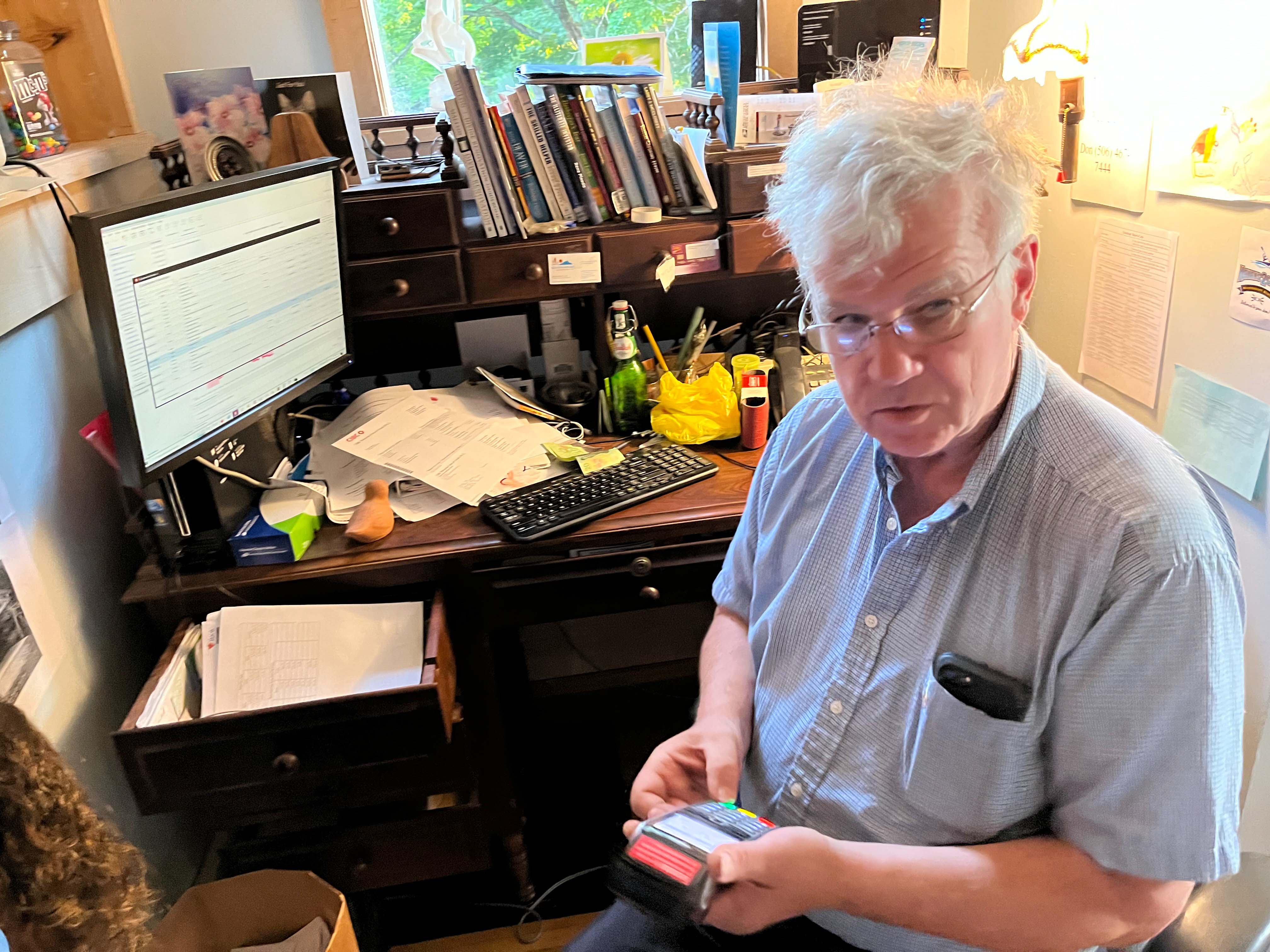
Don was the welcoming, thoughtful and philosophical B&B host. This old Victorian home in the Chamcook area where we stayed was filled with curious pictures, furniture and curios that spoke of mystery and a different time that was still treasured. He represented an interesting dichotomy of the old and new. He respected the old but was an advocate of building new trails and opening up the area to tourism. He was even kind enough to drive us a few miles into St. Andrews for dinner and pick us up while giving us a brief history of the resort town and the places to see.
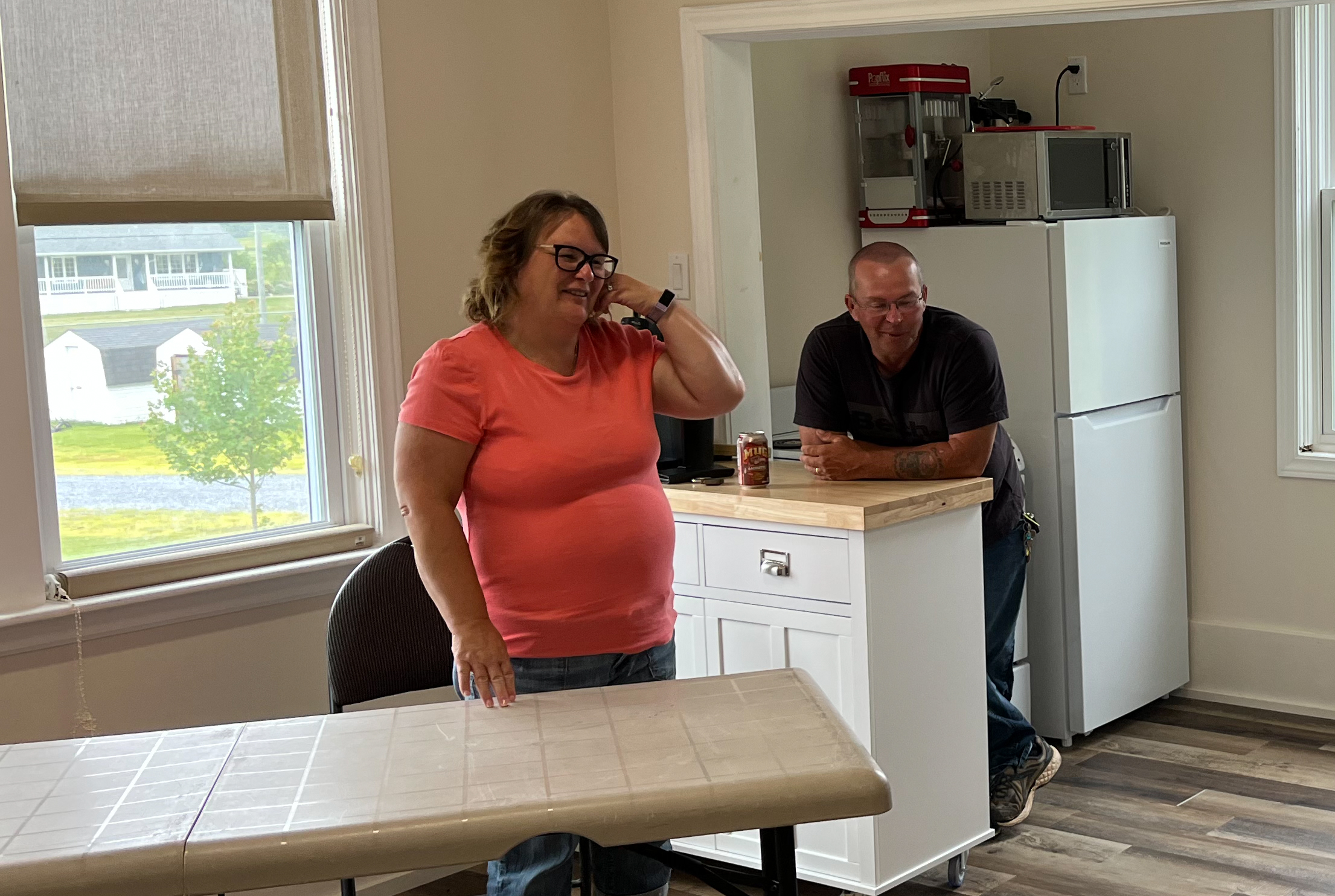
Just as noticeable were small gestures of friendship along the way: Kathy and Junior opened up the Musquash Rec center to provide water, a friendly ATV operator, Stephen, stopped to see if we needed help, the EMS tech that helped get Ken to the hospital after a muscle spasm, the restaurant owner Rachel from Comeau’s Seafood Restaurant who gave us free lunch, the Taylor’s who shared water, their art and their life story, the St. Andrews retiree, Hans who said although his job had taken him all around the world, there was nothing better than where he was now, or the golfer’s surprise at seeing me accidentally riding a bike onto the Algonquin course at Joe’s Point in the middle of his teeing up and just saying, “Isn’t it beautiful? But, you know beauty can be found anywhere, if you look hard enough.”
A St. Stephen Welcome
On Saturday, August 6 we met with Cherie and Mayor Allan and other trail officials for a casual walk on the new pedestrian path that the Mayor had led over the last four years. In addition, the mayor led us to a large mural that was in the process of being finished. To our surprise, the artist would paint into the mural both the image of FreeWalker Loredana and Mayor Alan walking together on the newly created riverfront trail.
FreeWalker Loredana Delucchi and Mayor Allan MacEachern at new mural wall
The trip was about fulfilling a promise to return, renew friendships and walk the new trails of New Brunswick. We had become the first group to walk the full Coastal Link Trail, a trail that now connects the enormous Trans Canada Trail system with the East Coast Greenway in the U.S.providing access to thousands of miles (or kilometers) of walking, hiking, and biking trails.
We discovered that what we all cherish most is more access and less borders and obstacles that keep us apart.
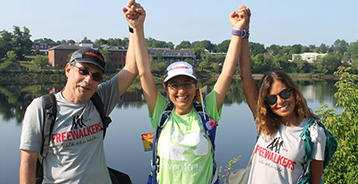
Ken, Paul, Loredana and Tom @ the U.S. / Canadian Border in St. Stephen
Serendipity happens when you most need it. A retired New Brunswick couple share their lives with us.
It was hump-day, Wednesday, probably the hardest day of our 125-mile (171 km), week-long, Beyond Borders Walk from Saint John, New Brunswick to St. Stephen, the last Canadian border town near the tip of Maine.
Walking a lonely road
Today, there were 23 miles of walking from St. George to the Chamcook Forest Lodge near St. Andrews. Ken, our fourth team member was out with a back spasm. We started walking country roads which eventually turned into highways. It was not quite like walking an Interstate, but close. By mid-afternoon, the temperature reached the high 80’s, only made hotter by the asphalt, so much so you could feel heat through your shoes. The only relief was an occasional bay breeze near the top of a hill.
This is a relatively undeveloped area of the Provence of New Brunswick just a few miles from the shore. St. George’s lush woods soon gave way to a desolate area with few houses and no commercial business for miles. Even traffic seemed rare. The only thing interesting out here is dead porcupine roadkill.
As the day heated up, I realized I had made a rookie mistake. A long hot day walking requires more than a couple bottles of water, especially when there is no place to refill. About 18 miles (6 hours) into the walk I find myself light-headed and completely empty in every respect. I’m in that state where you watch the heat create mirage waves on the road and begin to wonder “How am I going to make it to the end?”
Miraculously, while heading up a long stretch of highway there appears a sign in the road saying, “Taylor’d Art” an “Open” flag waving underneath. This area was dotted with lakes with a few homes set back. This one though could be seen clearly. Although, we did not come this far to see and appreciate local art, we had no choice and no willpower left to pass this by.
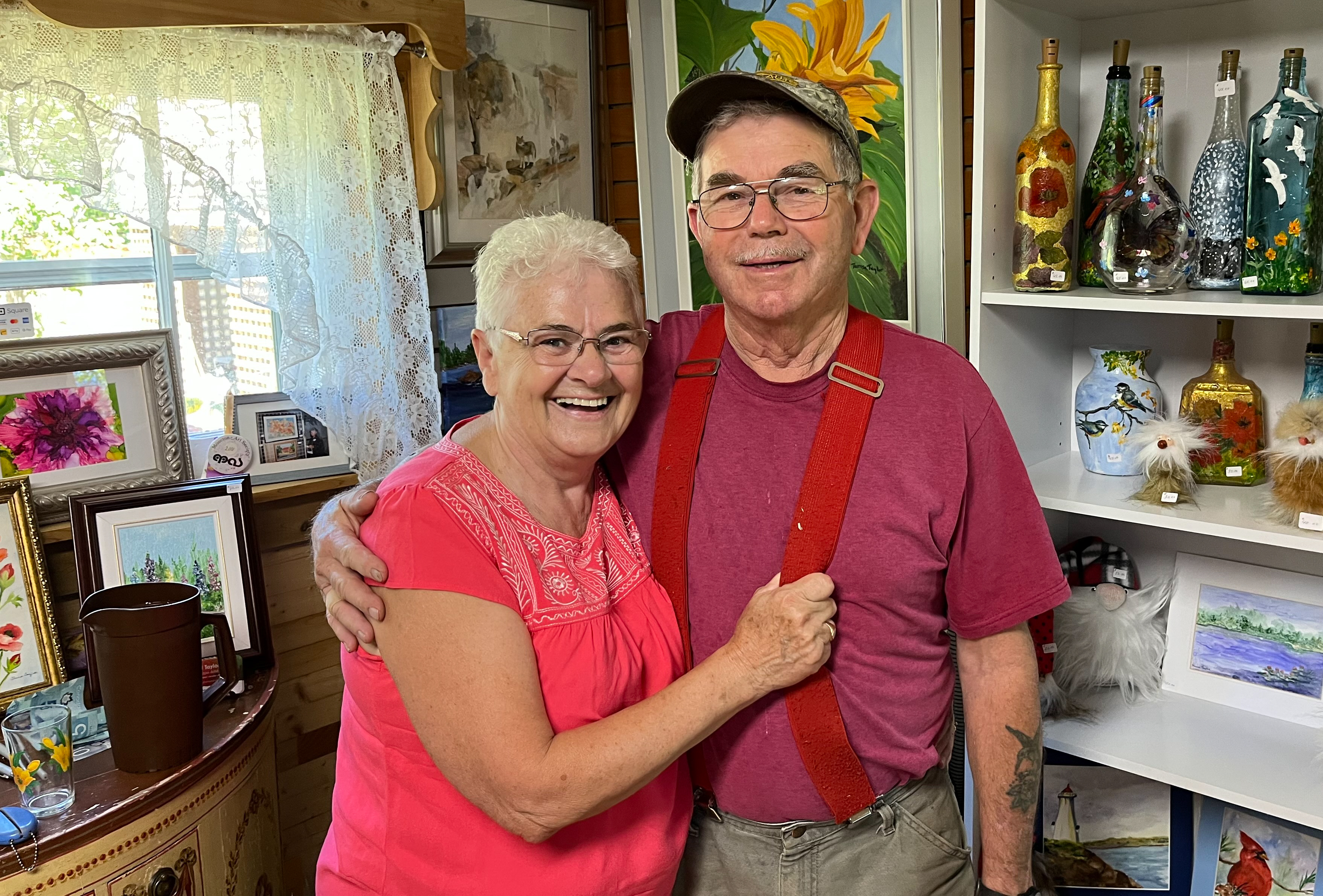
Theresa and Burl Taylor are about as happy couple as I ever met. Married just 52 years ago they were most welcoming to the three of us as we asked (we would have begged) for water. Theresa has maybe 200 natural setting paintings here in a small shed which she had created. She has experimented with various artistic methods from watercolors to oils, flock to canvas and many other methods I had never heard of. Being efficient walkers, we opted to buy a few beautiful refrigerator magnets that pretty much exemplified her work in miniature.
Burl came by with a big pitcher of water and we began talking about life out here as we began to revive. They had moved into a smaller version of this home 50 years ago and discovered this was the place they always wanted to be. Years went by and Burl expanded the house, built a garage, chicken coop, workshop and swimming pool. Much of this prior to his retiring as a forestry engineer. His property and projects look like he put a lot of thought into them.
Theresa is a self-taught artist. As she describes it, one day she just started scribbling and copying things until she began painting a scene, going over and over it until it was right. She presented it to Burl and said this is what she wanted to do and he agreed. Decades later she continues to paint, mainly for the pleasure of it. She painted so much they needed to move some out pieces and Taylor’d Art was born.
They had a son who Theresa mentions often as he developed into an talented artist who’s paintings she still sells. Unfortunately, he passed away a while ago but you can tell he’s very much part of their lives.
There are no other children but a very large extended family. Theresa was one of 21 children! Her mother, whom they speak about with reverence, gave birth to all 21 children individually, no twins or triplets! And, she passed away at the age of 46 due to cancer. Theresa said she spent a great deal of her time with her many siblings and keeps in touch with them often. We are in awe. Can you imagine what a family reunion must look like?
After much water and talk we had to go. Time is very unforgiving when you are walking. I think they enjoyed our company as much as we did their’s. We could have easily stayed for hours learning more about how Theresa and Burl share what they do together – their art, building, hunting, fishing, getting by in the winter and the life between them.
When you are out here you have to be flexible, forgiving, innovative and self-reliant. The Taylor's have figured a way to make the most of their lives and offer an oasis to others.
Just getting started on our walk. Getting adequate sleep in strange places is a must.
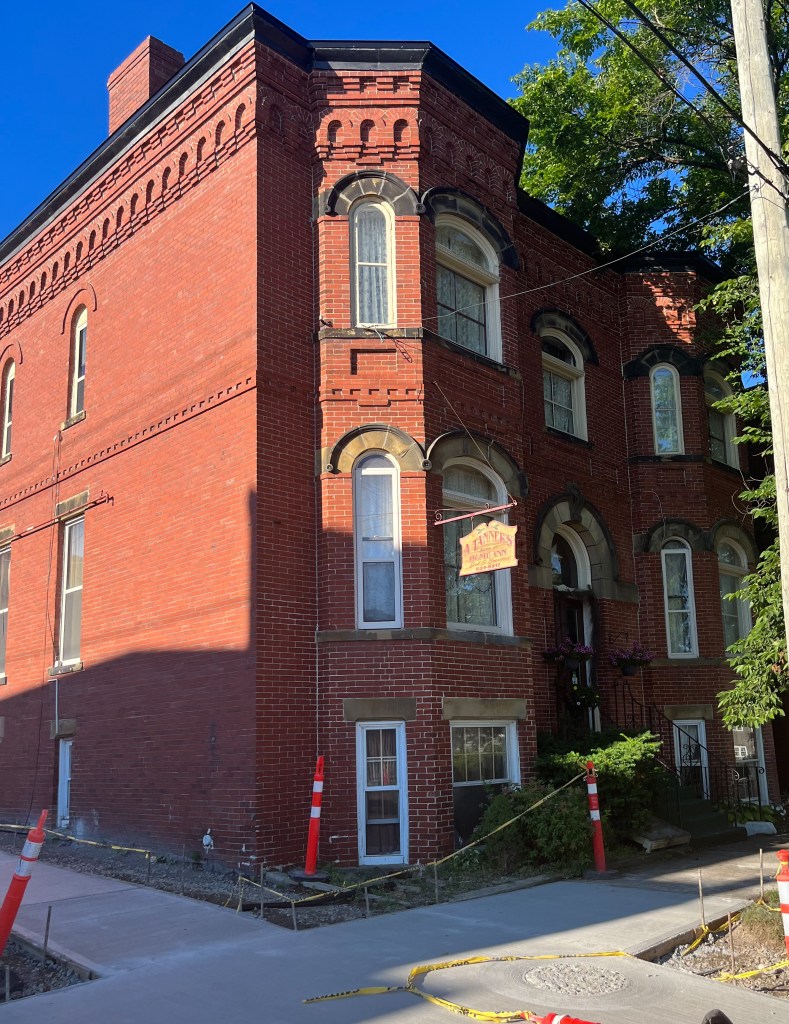
Jul 31 – Day 1 Walking – Sunday was our first full day in Canada. Tom and I stayed Saturday night at “A Tanner’s Home B&B” which was once a curiously old (148 years old) home of a wealthy gentleman who made his fortune in tanning leather goods and real estate. Today, it was an airbnb-like home which had a 1800s historical vibe but updated to accommodate tourists. It’s still a work in progress.
A Tanners Home B&B, Saint John NB
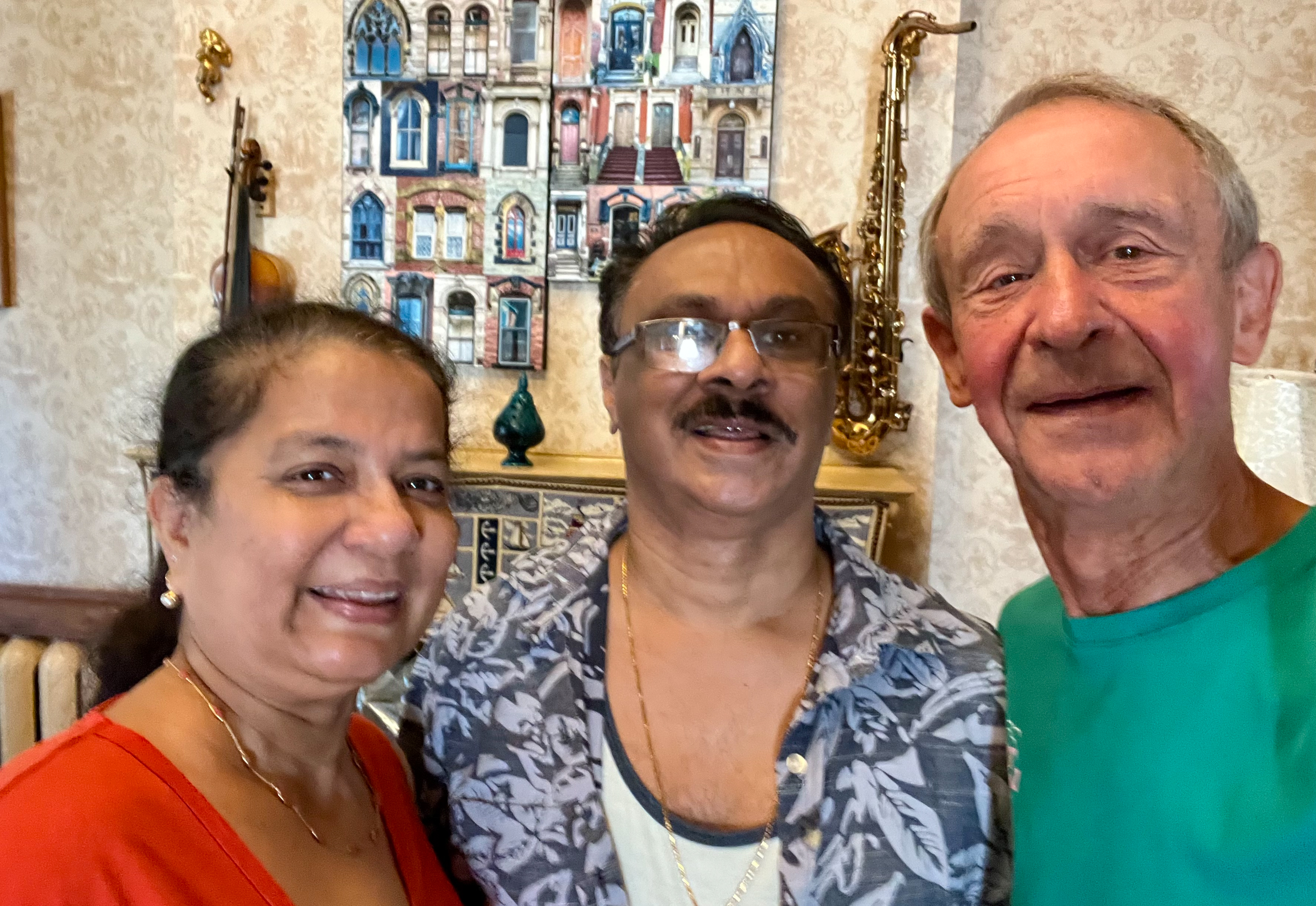
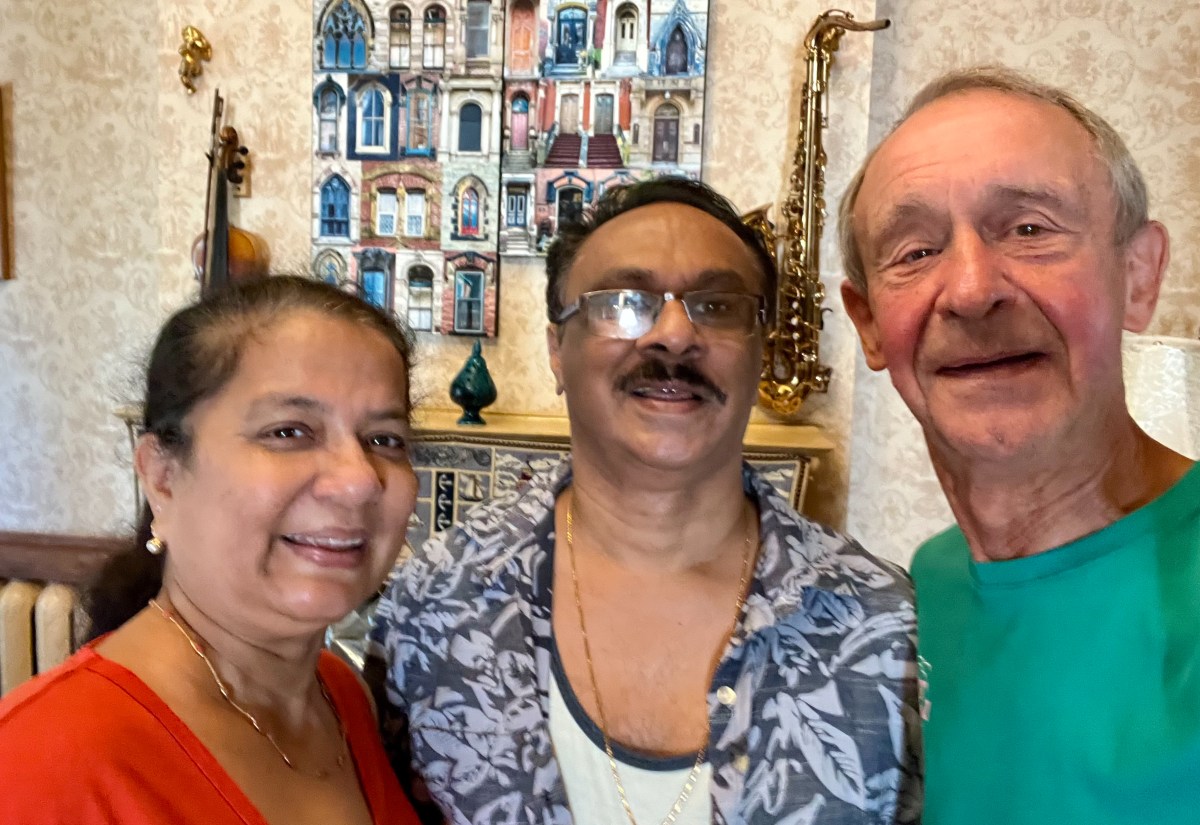
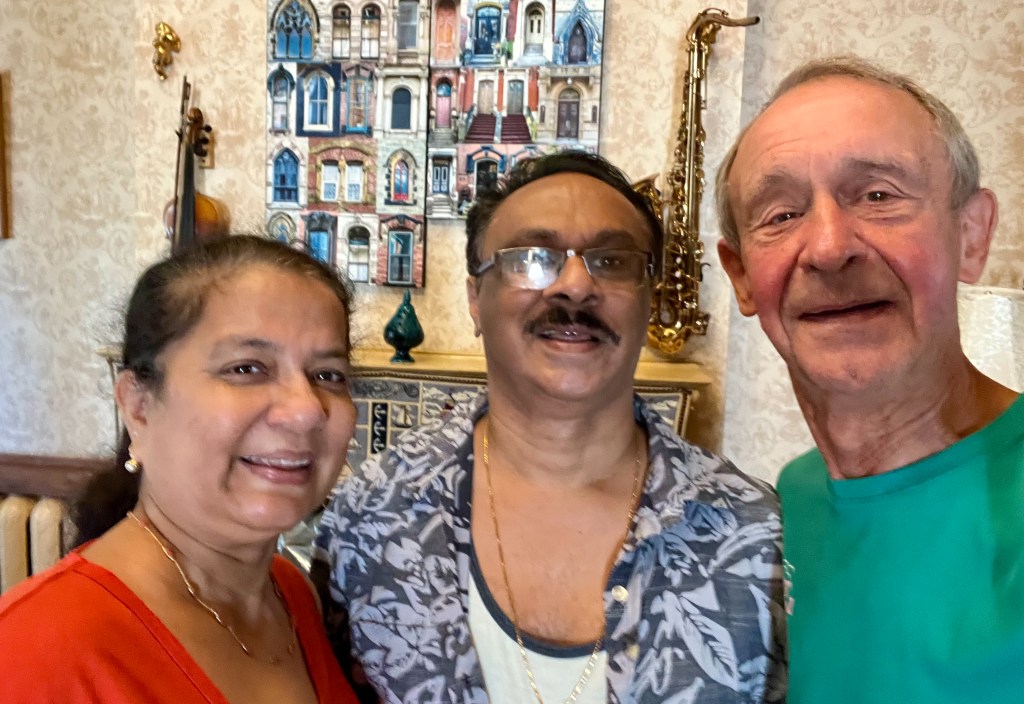
Our hosts, Doreen and Sebastian were proud ex-pat Indians who found their formula for retirement hosting this B&B in the warmer months and flying back to Mumbai the rest of the year. Sebastian, a former sea captain, hates the cold but loves Canada.
Like many parents in search of the best for their family while planning for the next phase of retirement, Canada seemed to fit. There is an active Indian population here in Saint John and a government more inclined to take in immigrants than most. The price you pay is an investment of capital in a legitimate ongoing business to get the benefits of citizenship. This enabled Sebastian to send his kids to Canadian universities where they established residency in Toronto.. They are planning that big wedding for their daughter who had to marry quietly during the pandemic. Hope is that grandchildren will soon be in the picture.
Tom and Loredana – Proud of finishing the half marathon in Saint John
Meanwhile, Tom and Loredana set out on on Sunday to run a half marathon before we started our long Beyond Borders Walk later that day. The “Marathon by the Sea” mostly follows the pedestrian trail along the waterfront and ends around noon. After a shower and change, the four of us begin walking the trail out of Saint John, heading for St. Stephen an almost unimaginable 125 miles away. But today we planned an easy day of only 7 miles to get to our next destination, the Regent Hotel just on the outskirts of Saint John.
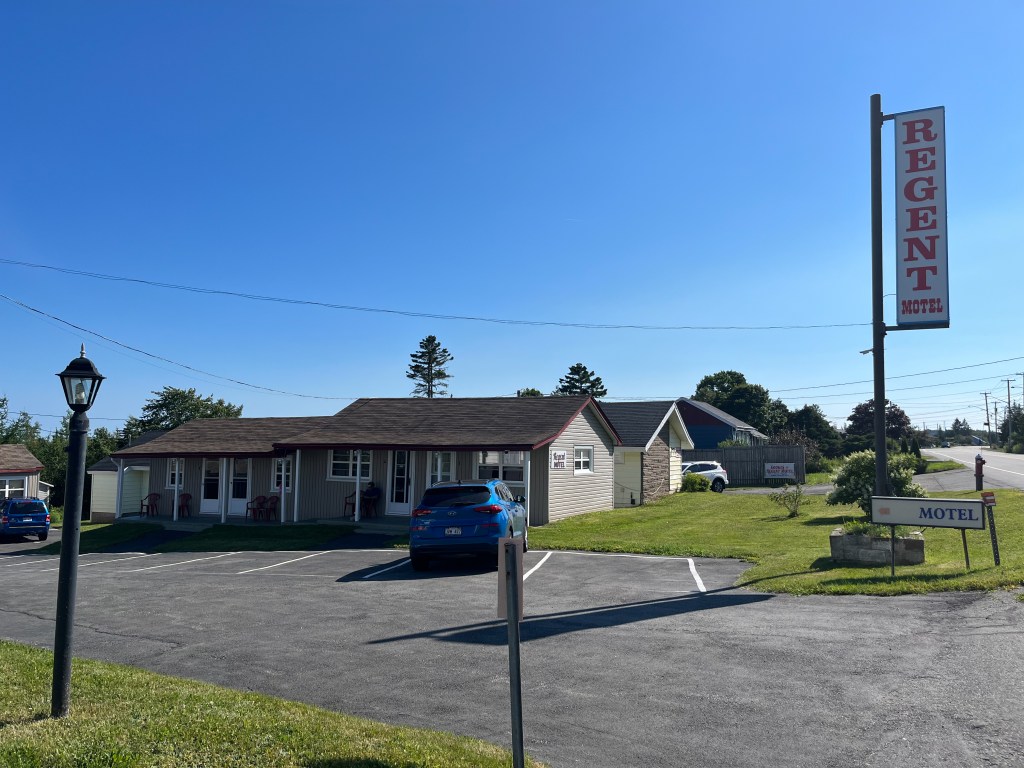
Regent Motel – 2nd night
The Regent was as basic a motel as you could get. But it helped us get a start on the journey. Rooms were dingy but clean. Little tiny soap bars, shampoo in sealed envelopes and no air conditioning. Luckily the single ceiling fan was all we needed. The only problems were no coffee and no place to eat within walking distance. Luckily we found a restaurant that delivered in this remote outskirts of Saint John. With pleasant weather and a single outdoor picnic table the four of us shared a good-enough Chinese dinner.
Its not difficult to find people that want to talk to strangers here at the motel or anywhere in this area. One couple was coming from Manitoba with plans to retire in Nova Scotia. Another guy, with sunburned face and head, struck up a conversation about how he had moved to Alberta only to find his partner had decided she need to be alone. Now he was back to rekindle a relationship with his children and grandkids. Glad to be back “home” he looked forward to seeing his son drive race cars. His sunburned head and face were proof of how he just witnessed a drag car hitting 210 miles per hour. A happy camper glad to be back.
Motels and B&B’s serve a useful purpose in helping us move on. We need sleep to move forward in the morning. But, every host and guest has a story from the past and a story yet to come.
Check out more information and stay up to date on the Beyond Borders Walk here.


















 My Plan C