Three Days in Kraków

A brief look at three days in the cultural capital of our motherland. It was our reward for a week’s worth of exploring family history in Poland.

Three days were not enough! But we gave it our best shot. There’s plenty to see and do in this old classic European City. It’s probably the best place to truly understand Poland and its rich history.

As we approached Kraków, the highway gave way to a grand boulevard. Stylish pedestrians strolled past modern storefronts housed in historic buildings. After five days as an odd trio of Americans navigating a land both unfamiliar yet strikingly reminiscent of suburban America, we found ourselves in a quintessential European city. Kraków exuded all the charm, energy, and grandeur of the world’s great cities.

Thanks to our guide and translator, Lucjan Cichochi, we had managed to overcome the language barrier during our PolishOrigins tour. As we prepared to part ways with him and venture out on our own, we reflected on how a few key phrases and a friendly attitude could go a long way in bridging communication gaps. Now, it was time for a little indulgence: the ease of English accessibility, the freedom of being a tourist, and the vibrancy of Kraków awaited us.

Ethan (my son), Ethan Luke (my grandson), and I had traveled over 200 miles across southeastern Poland by van, tracing our family roots. Over the past week, we experienced moments of wonder and joy as we discovered familial connections, met new relatives, and explored beautiful locales. Even when our leads seemed to run dry, the journey offered insights into Polish life and history, connecting us with our ancestors’ world. 

After an enriching week in Poland’s rural heartlands, we turned our attention to Kraków—our final destination. Over the next three days, we planned to immerse ourselves in the city’s rich history and culture, which serve as a proud testament to Poland’s enduring spirit.

See all posts for this 2024 Poland tour here.

A Timeless City

Kraków, one of Poland’s oldest and most significant cities, became the country’s capital in 1038. Situated along the Vistula River, it has long been a hub for trade, linking the Baltic and Black Seas. During the Middle Ages, Poland grew into one of Europe’s most influential nations, with shifting borders reflecting its complex history of alliances, invasions, and leadership changes. Though the political capital moved to Warsaw in 1596, Kraków remained the intellectual, cultural, and historical heart of the nation.

Kazimierz: A Neighborhood with a Soul 

Friday, June 14, 2024

We arrived in the afternoon at the Queen Boutique Hotel, a four-star gem nestled in the heart of Kraków’s Kazimierz district. With spacious rooms priced at a reasonable $130 per night, the hotel’s central location made it an ideal base for exploring nearby landmarks, including Wawel Castle, Old Town, and Podgórze.
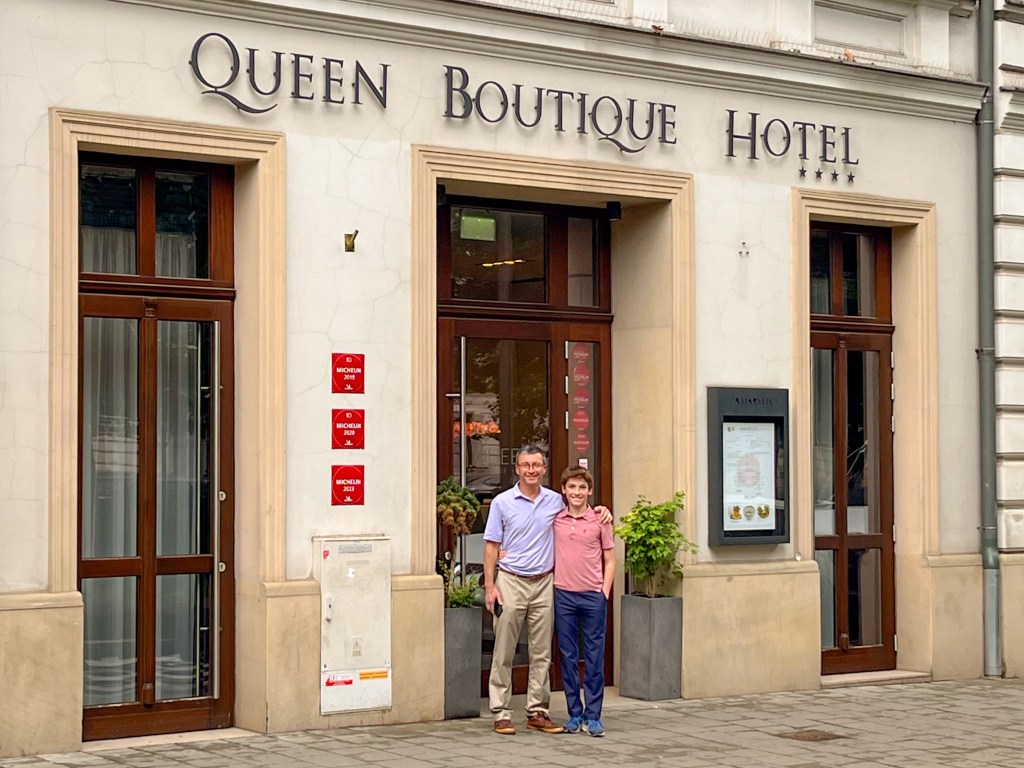
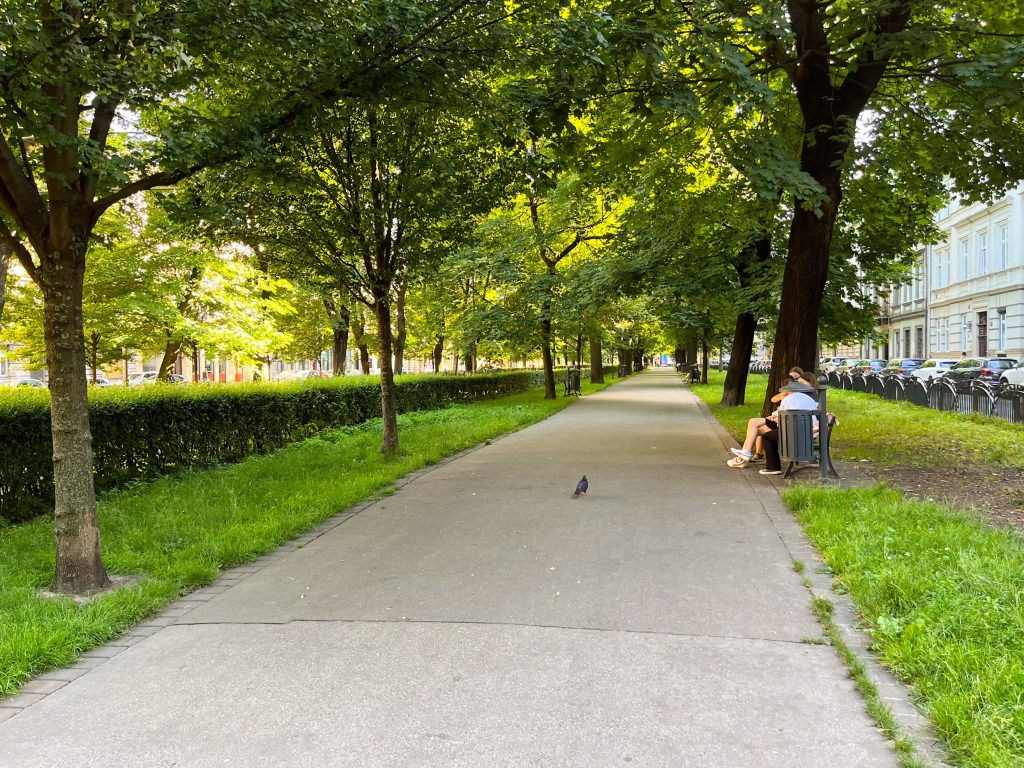
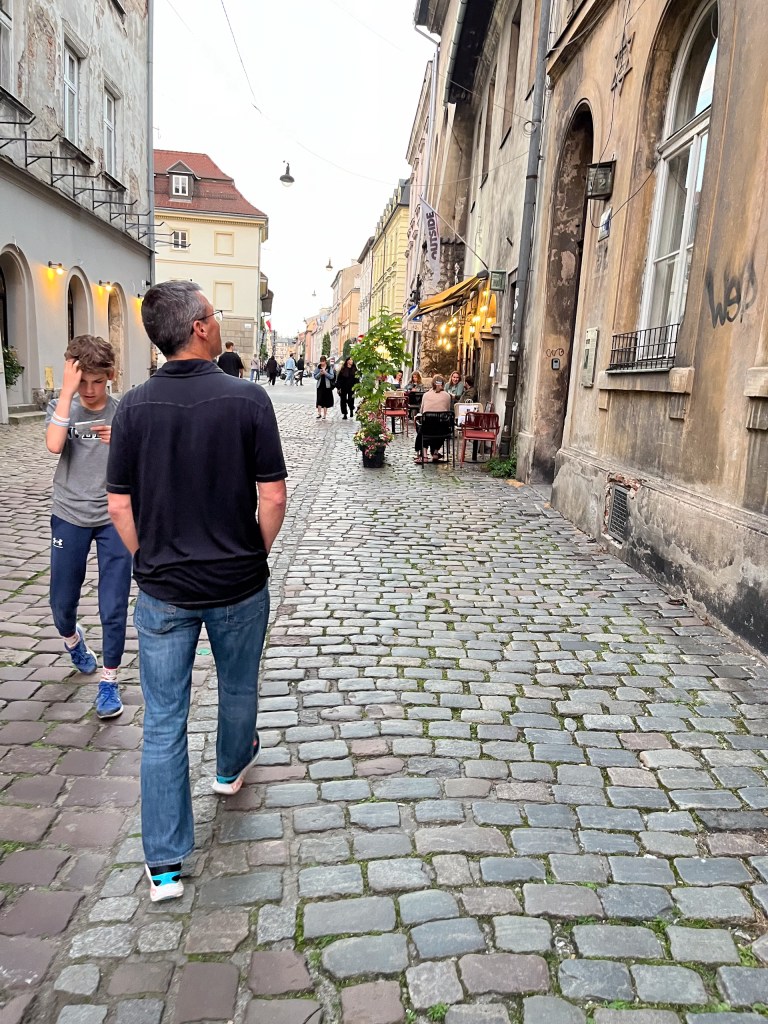
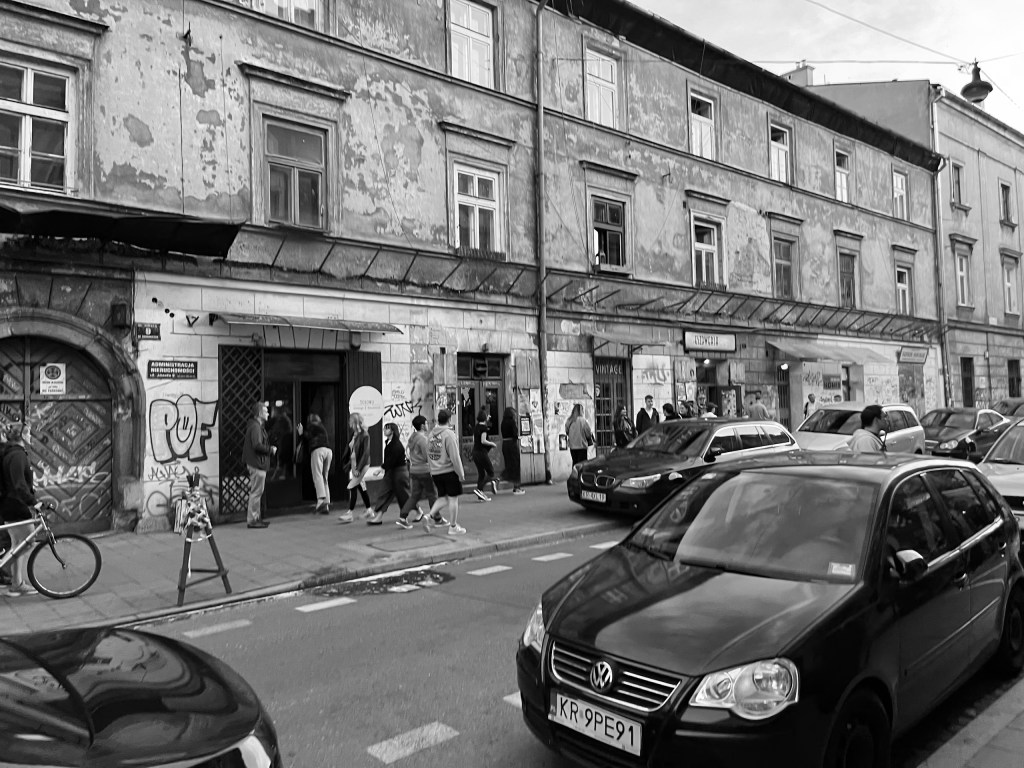
That evening, we ventured out, guided by local restaurant recommendations. Just beyond our hotel, we crossed the leafy Dietla boulevard and entered Kazimierz. The area’s weathered facades, adorned with graffiti and steeped in history, told a story of resilience and rebirth.
A Challenging History

Once an independent town, Kazimierz became a haven for Jewish refugees fleeing persecution. By World War II, it had evolved into Kraków’s Jewish quarter, only to be devastated by the Nazis. During the communist era, Kazimierz remained neglected until the 1990s, when the movie Shindler’s List sparked a cultural revival.

Savoring Flavors and Music

Drawn by lively music, we stumbled upon a cozy plaza surrounded by restaurants. The weather at 7:30 p.m. in mid-June was still bright (darkness around 10:00 p.m.) and comfortable, perfect for eating outside and watching the crowd of visitors. We dined outside at AWIW, a Jewish-Polish café, as we broadened our culinary tastes with a mix of Polish, Jewish, and Middle Eastern dishes, all accompanied by traditional klezmer music.

After dinner we decided to explore more of Kasimierz. While looking rundown and dirty, this was the liveliest and most creative section in town, filled with historical buildings, galleries, and restaurants.

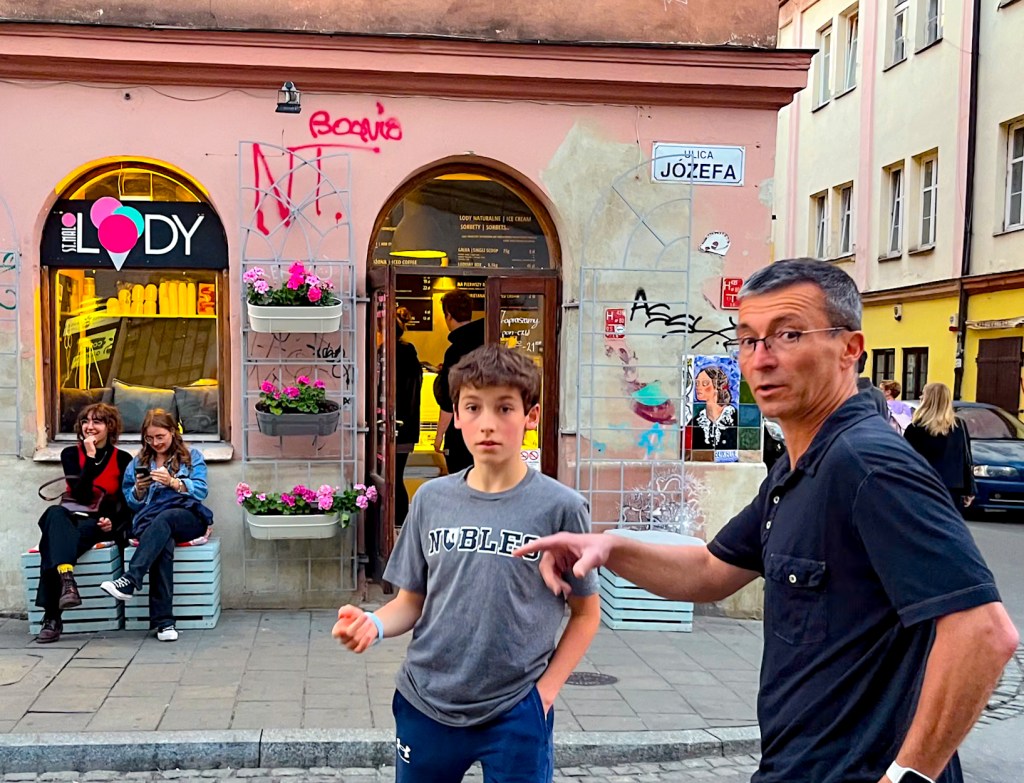
Tonight we set aside our hunt for the past and searched for the best homemade ice cream for dessert. It was not easy. There were too many places to choose from and it seemed we were not the only ones on that mission.   


A Day in Polish History

Saturday, June 15, 2024
Wawel Hill

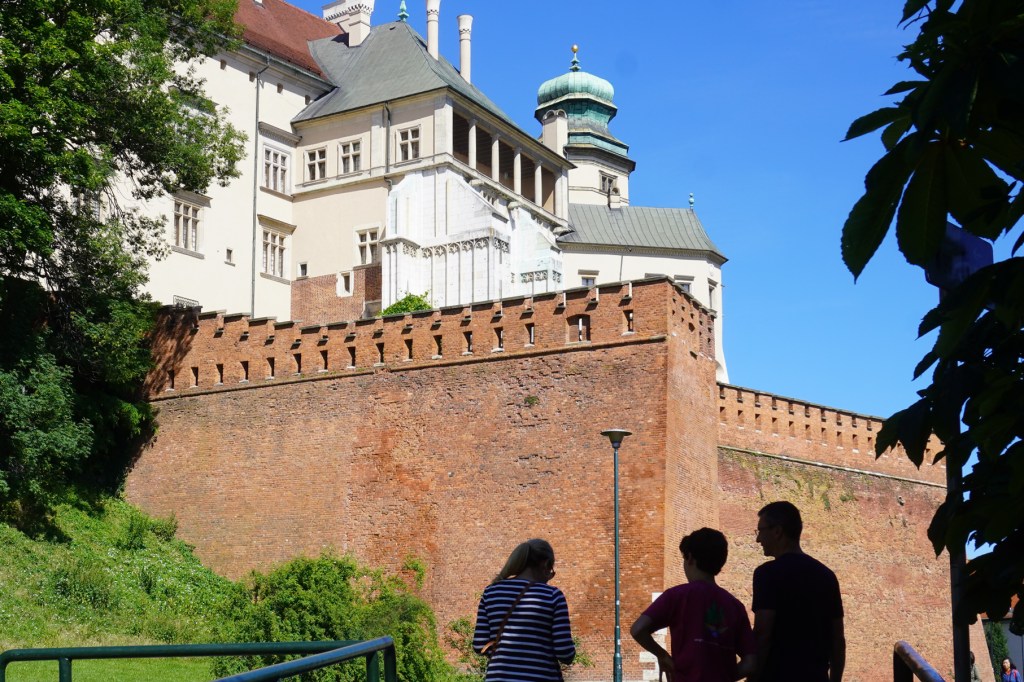
The next morning, we met our guide Johanna and walked to Wawel Hill, home to Kraków’s iconic Wawel Castle. Perched above the Vistula River, the castle complex dates back to the 14th century, though the site has been inhabited since the 4th century.

The Legend of the Wawel Dragon

One version of the legend (there are many) of Smok Wawelski, the dragon, claims that this troublesome monster lived in the limestone cave at the base of Wawel Hill and liked to eat maidens. Knights came from all over to slay the dragon but instead were eaten alive. It took a shoemaker to devise a plan to kill the dragon by offering it a sheep with sulfur sewn inside which the dragon ate and then died. For his reward he married the princess. Today, there is a statue of the dragon that occasionally spews fire at the base of Wawel Hill reminding us of the city’s very own famous dragon.
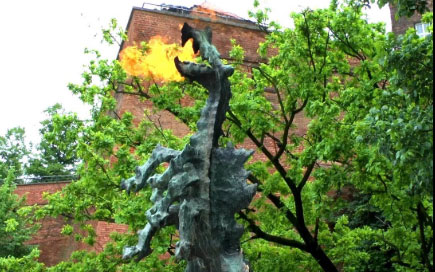
Fire-breathing Krakow Dragon Monument
Wawel Castle

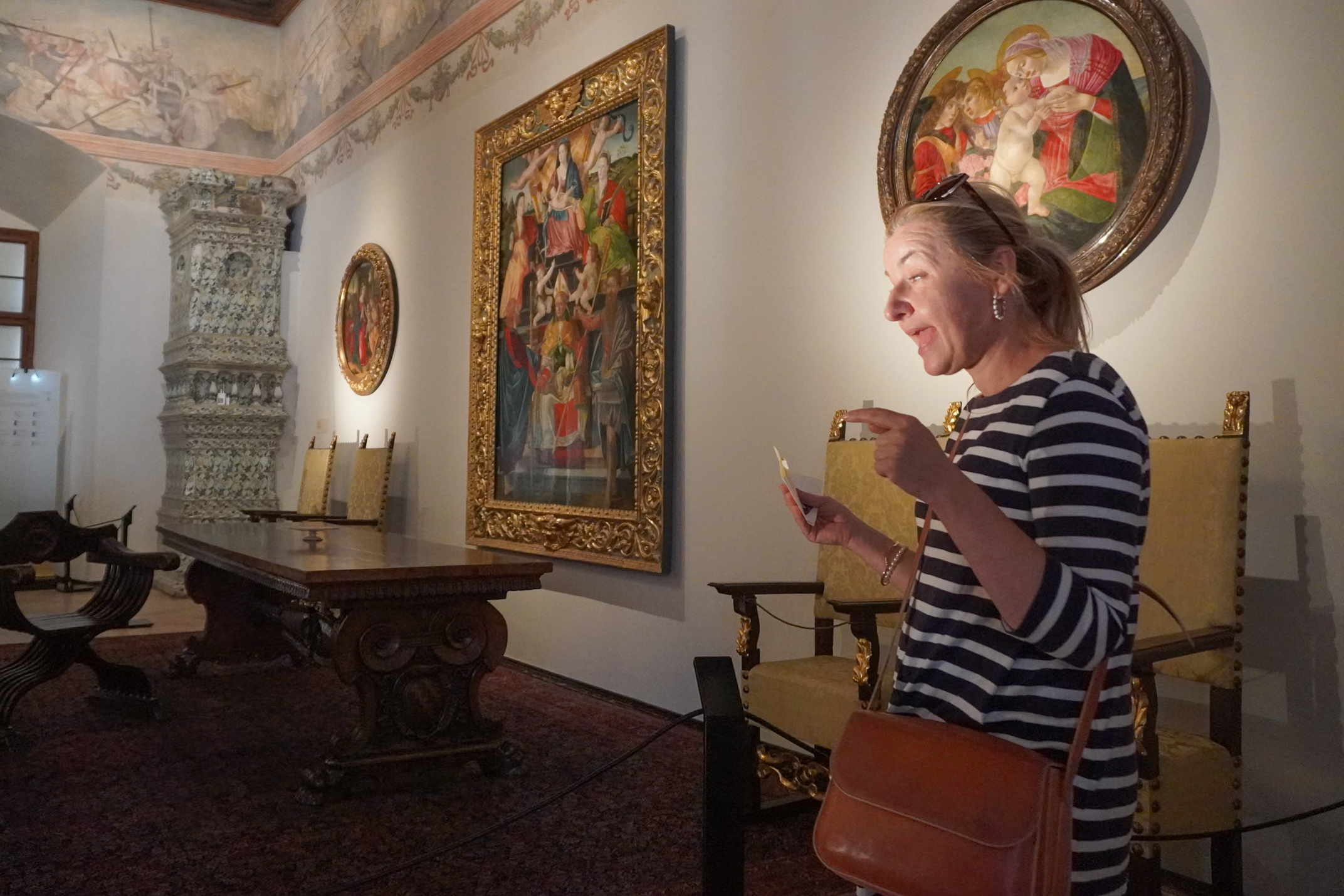
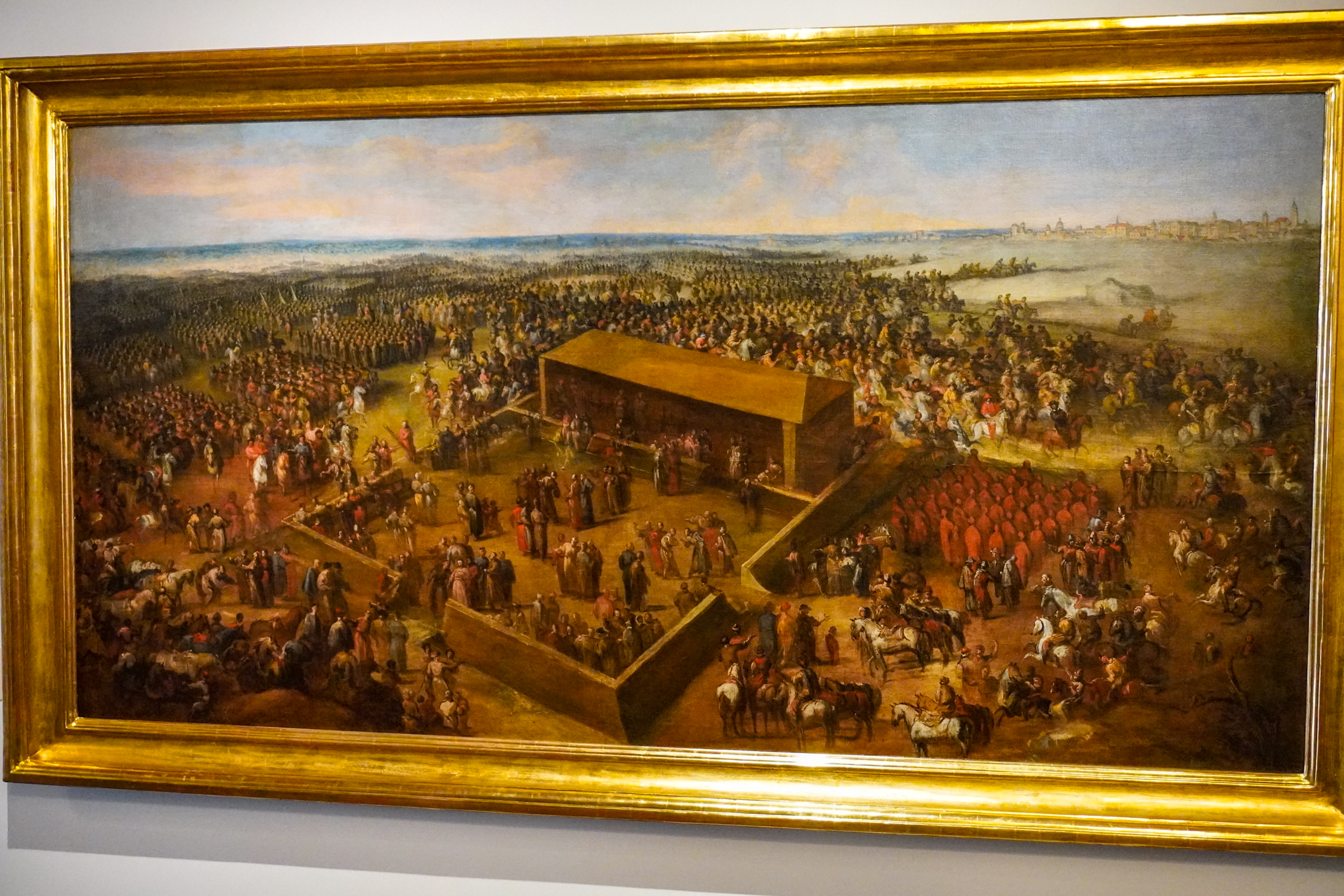
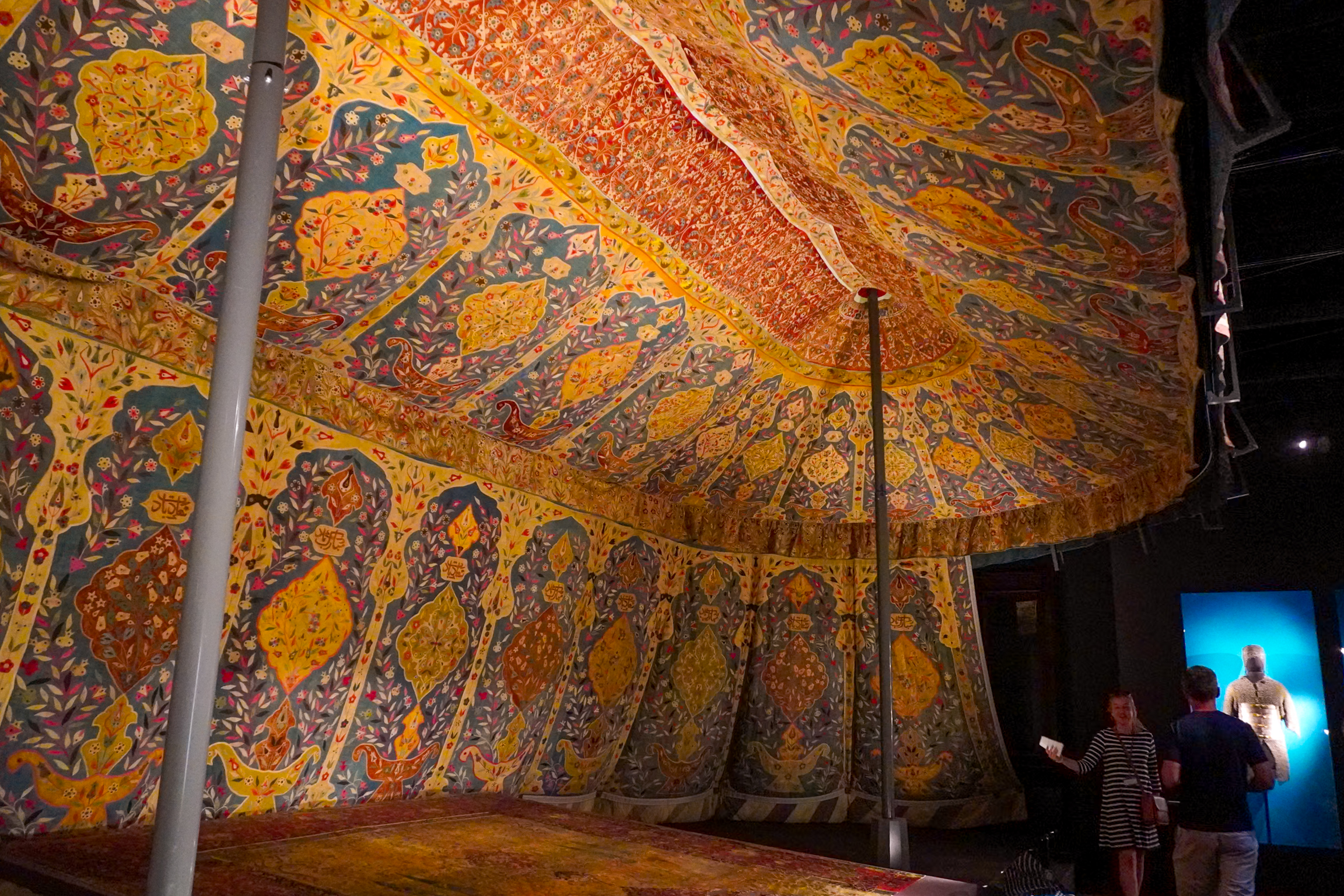
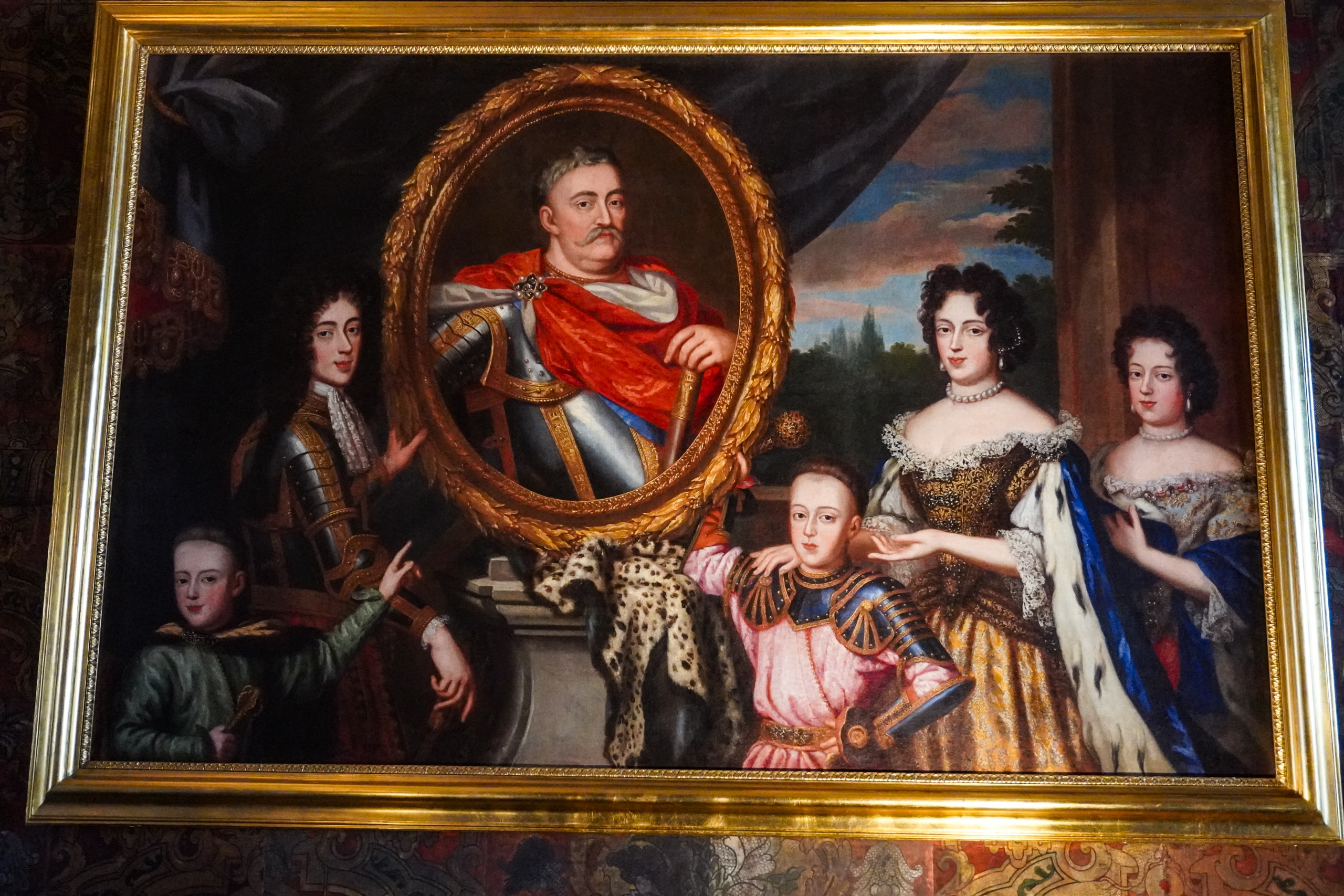
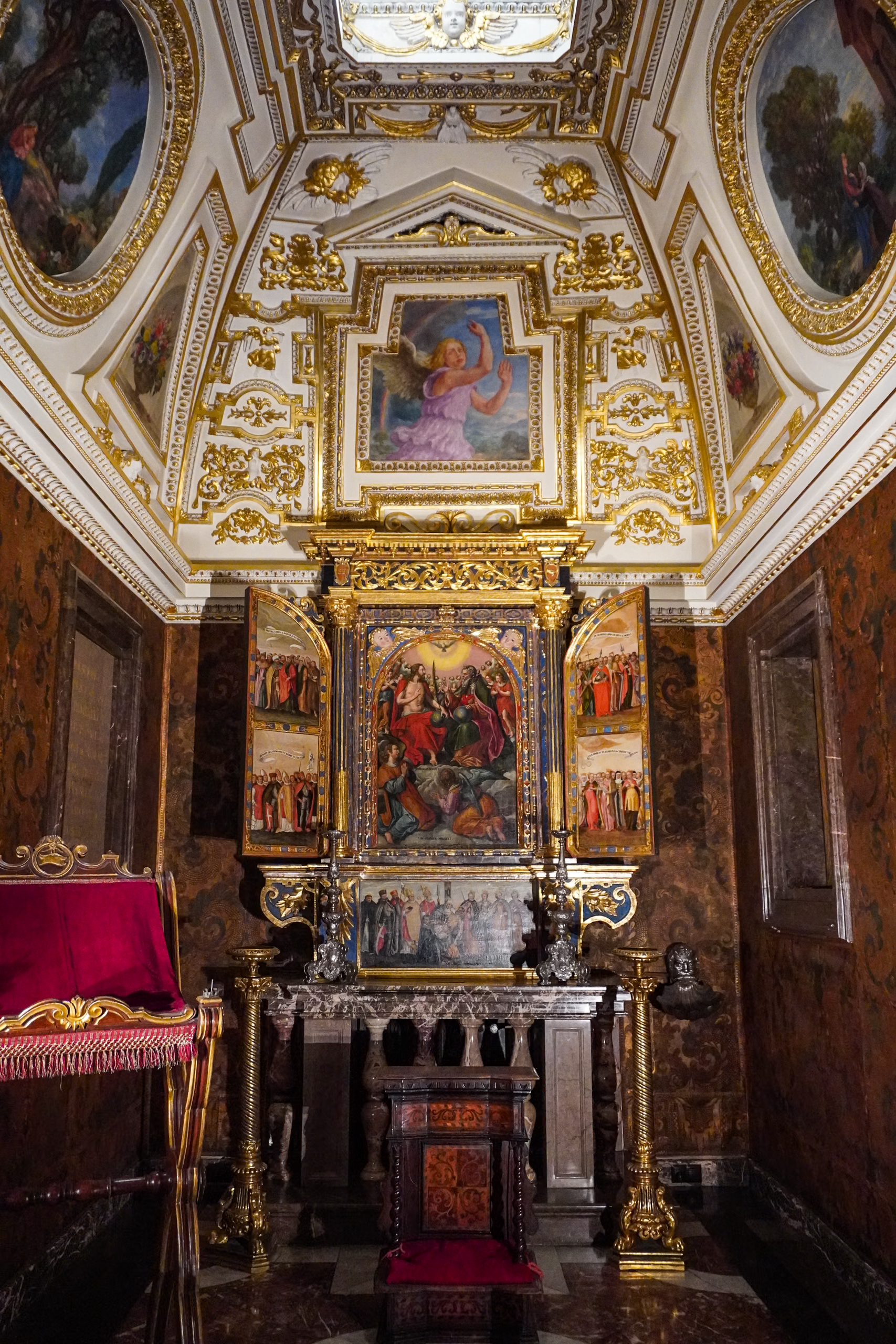
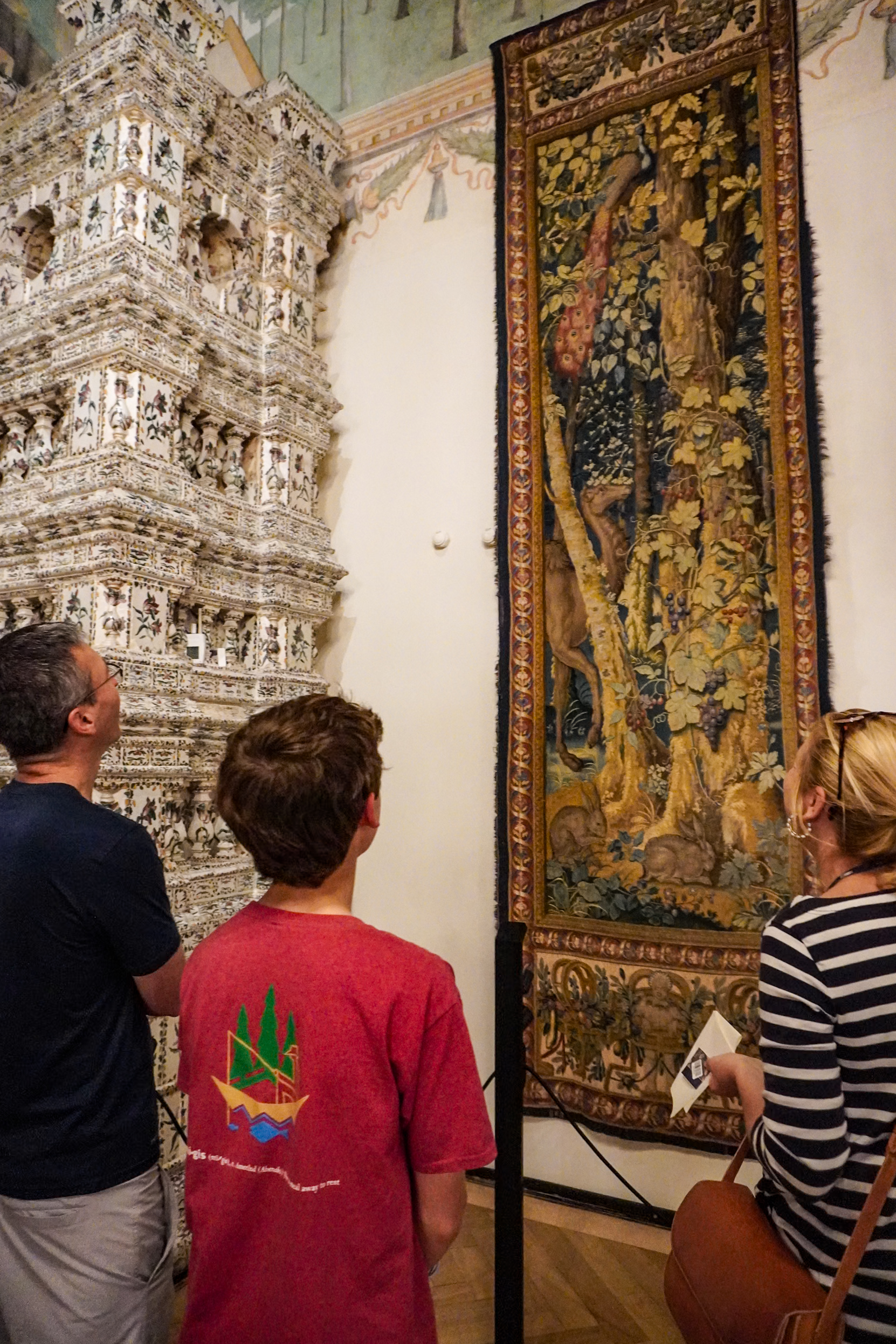
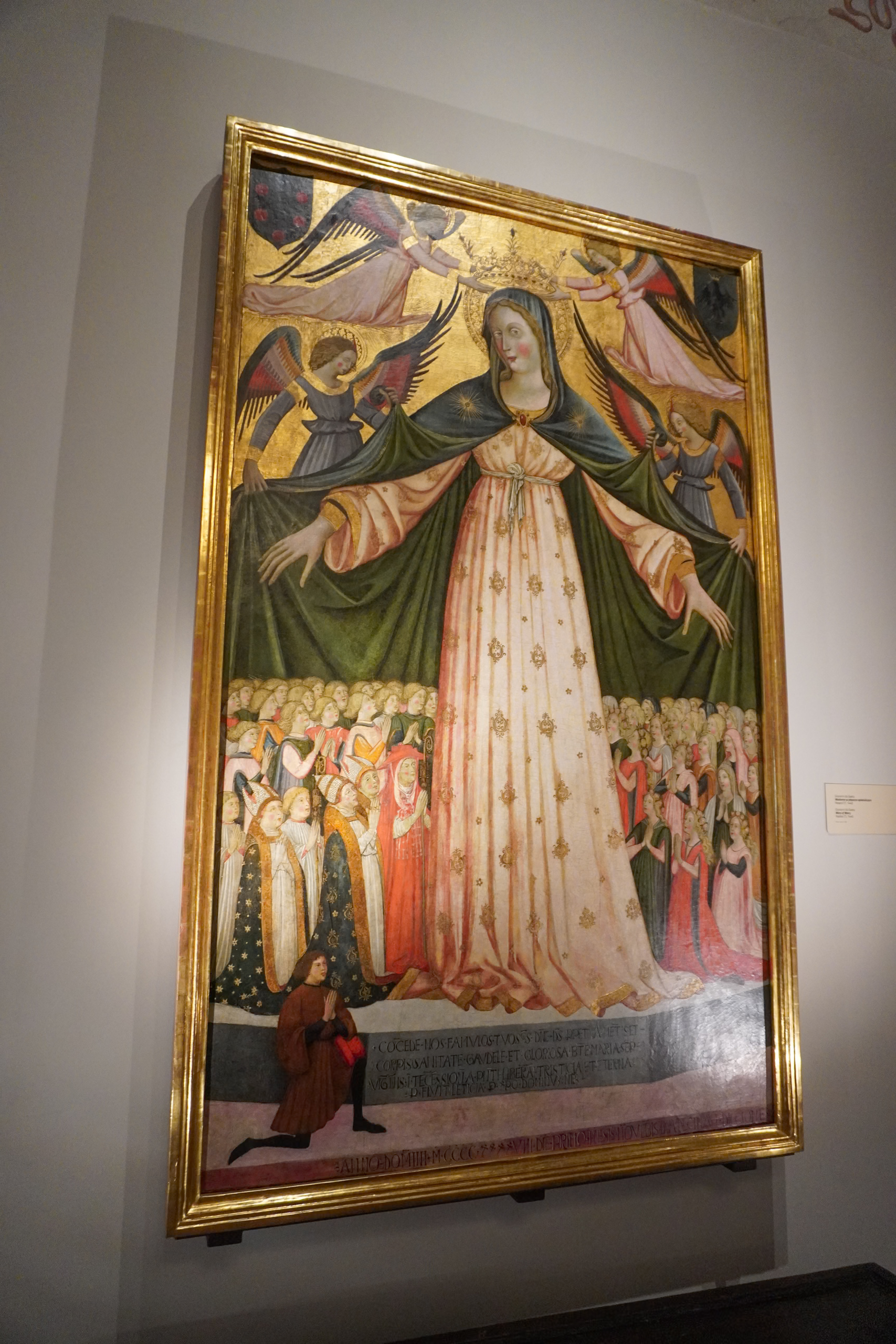
Our tour began with the castle’s Royal Apartments, brimming with centuries-old treasures: ornate armor, tapestries, and murals depicting Poland’s storied past. We also explored an Oriental Art exhibition, featuring intricate artifacts from 17th-century Turkey.
The National Shrine
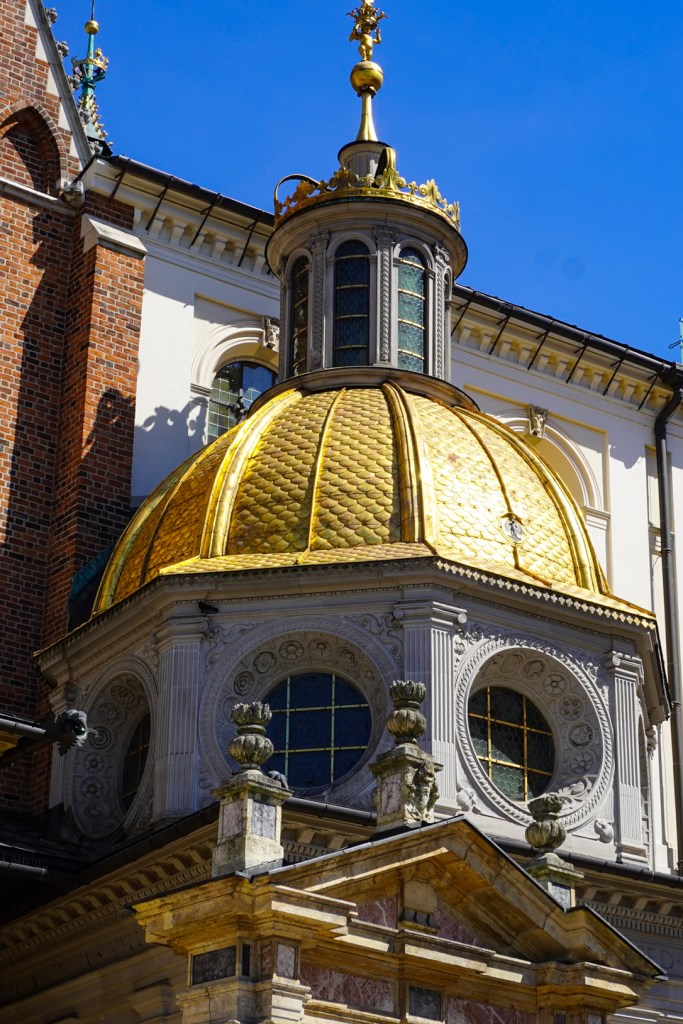
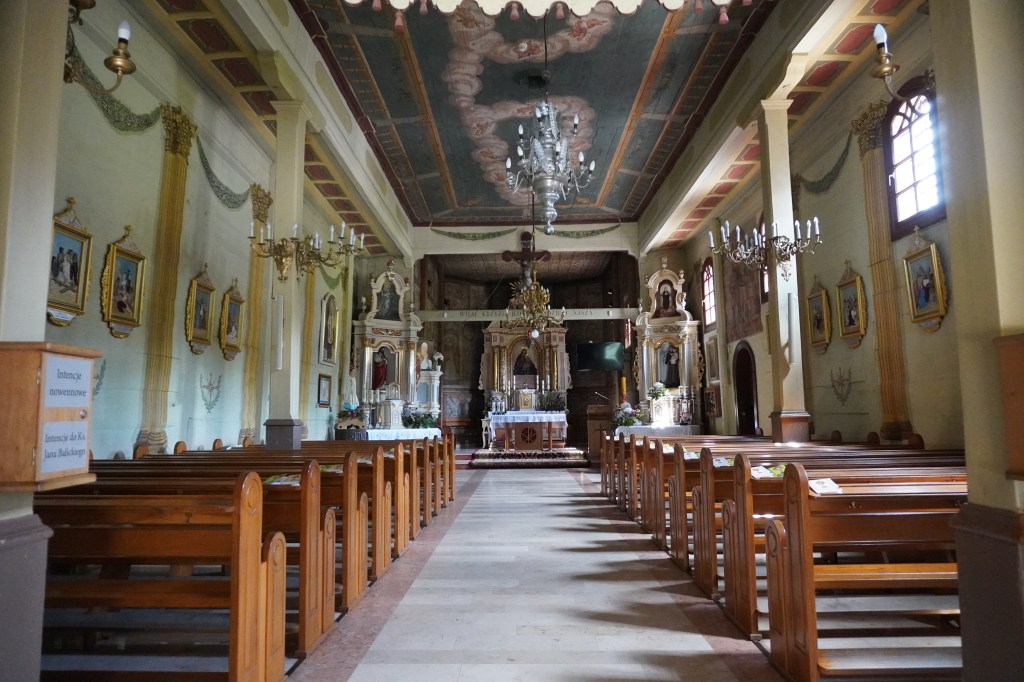
Next up was a visit to Wawel Cathedral is the sacred center of Krakow and possibly the entire country. Sigismund Chapel is notable for its 24kt gold domb. Since the 1300’s kings and other notable Poles have been coronated and buried here. You can see the actual sarcophagi tombs carved with images of the dead. Even the national hero, Tadeusz Kosciusko, who led American troops during the Revolutionary War, is buried here.  

For Whom the Bells Toll

Of special interest, is climbing the 70 tight wooden steps up to the Cathedral bell tower. Here there is a great view of the castle and old town areas. But, our destination was the huge bells above us as we climbed.
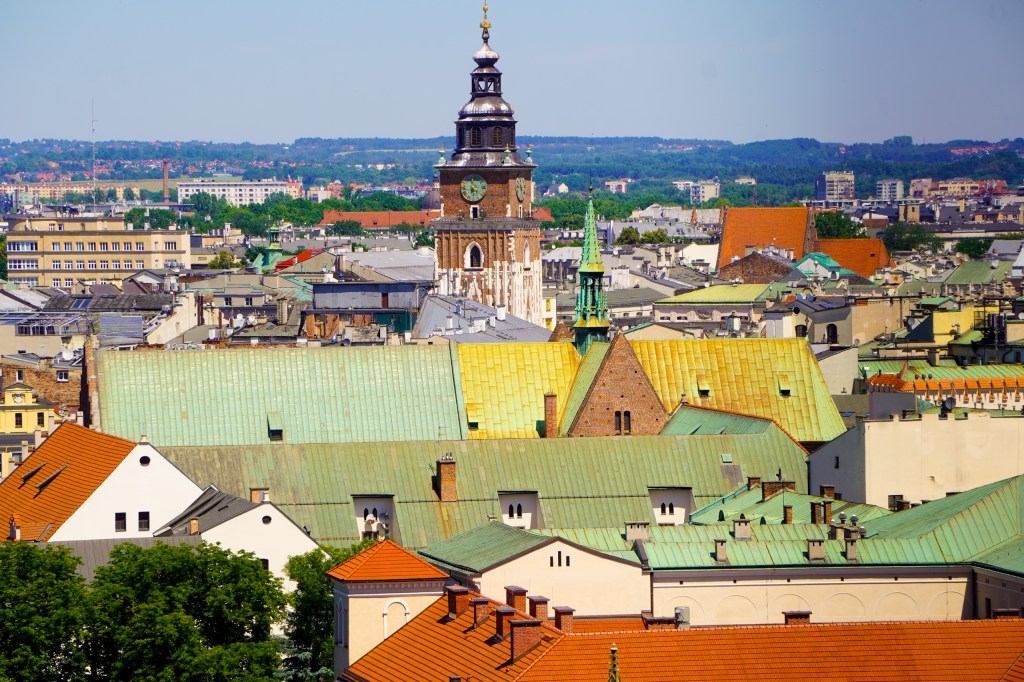
View from the Wawel Cathedral Bell Tower

The huge, 12-ton Sigismond Bell (cast in 1520), is said to have a magical sound and is only rung on momentous occasions for Poland, such as national celebrations, major religious holidays, or times of great sorrow. 
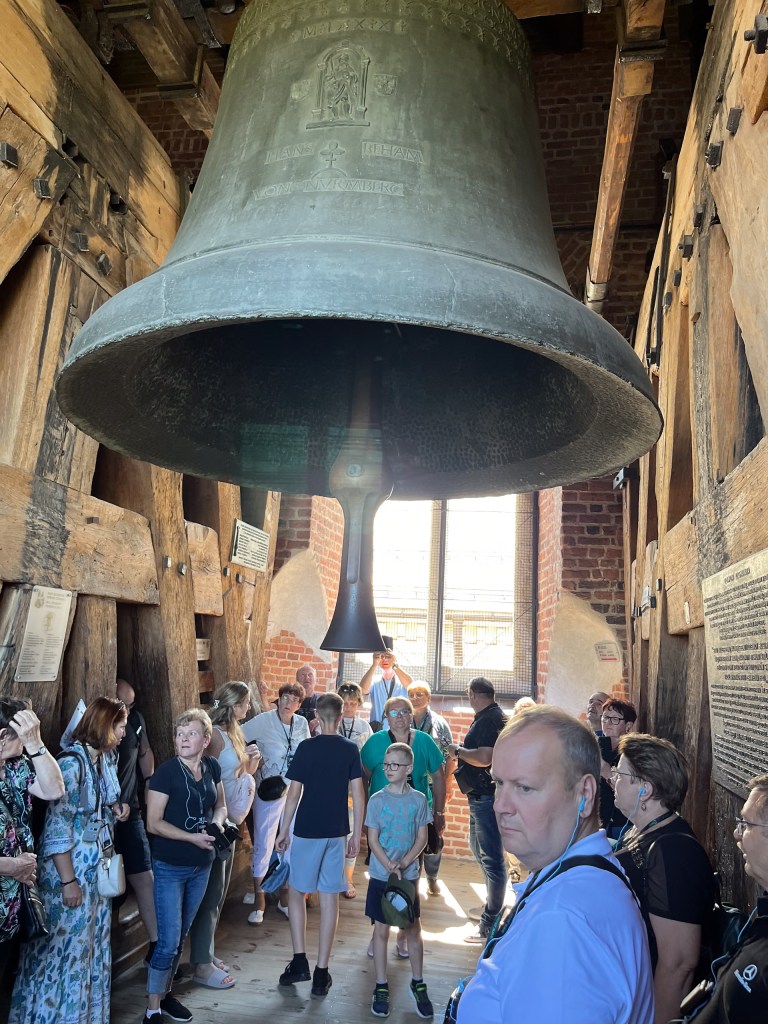
Sigismond Bell

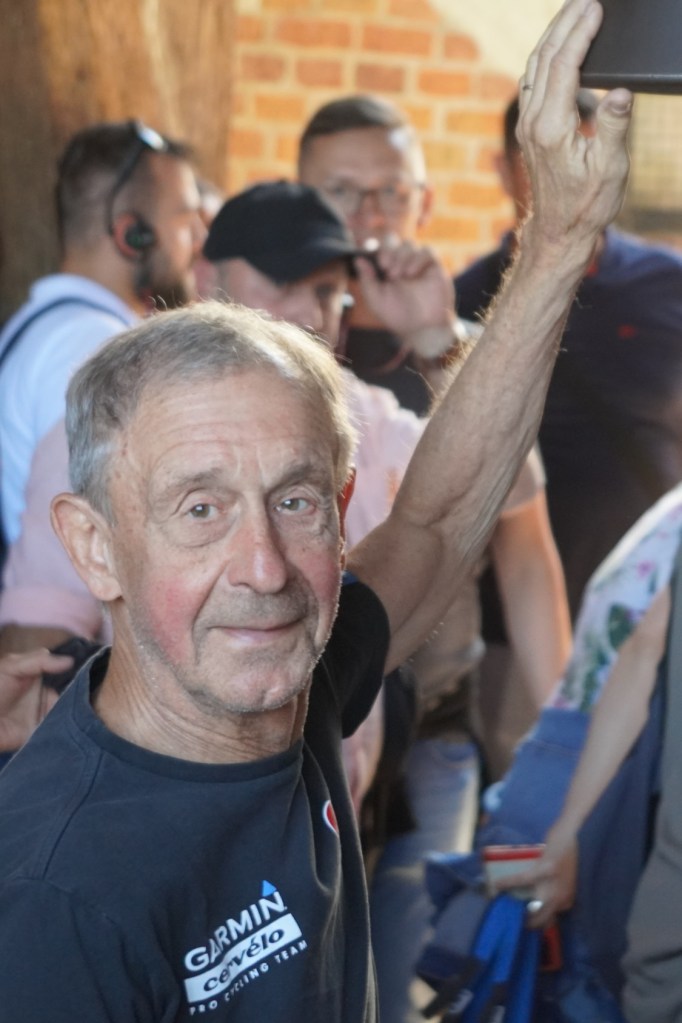
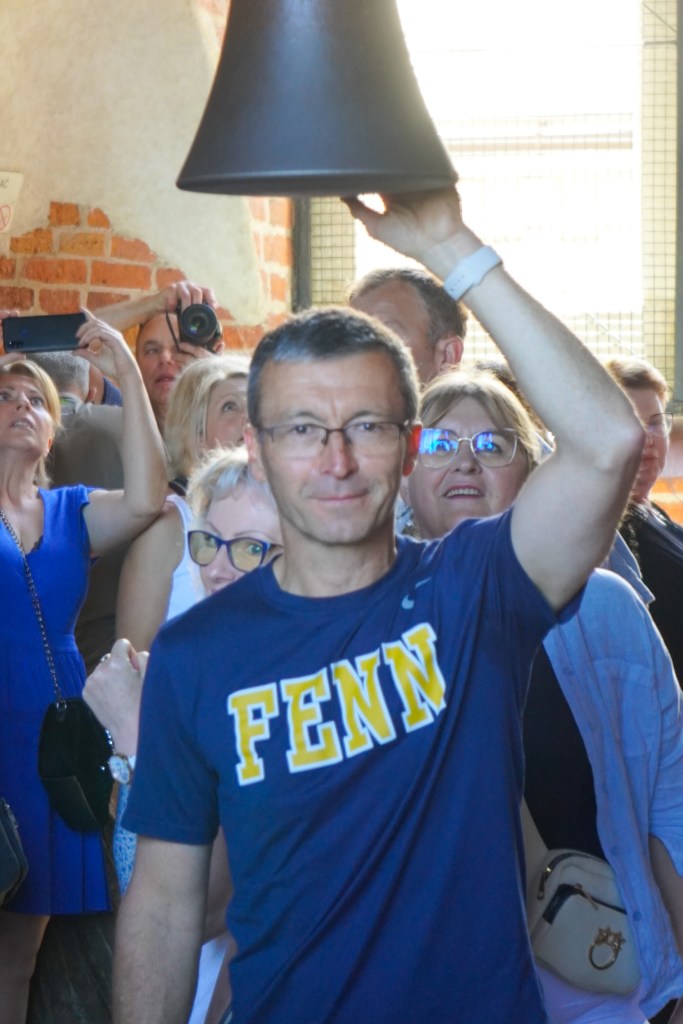
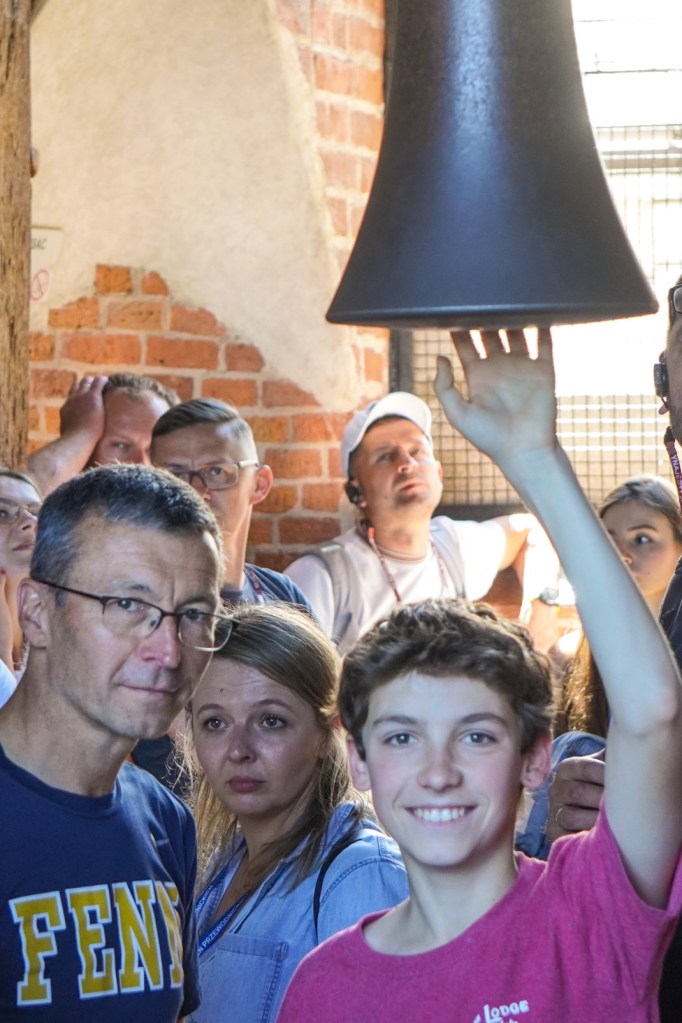
Of lesser importance, in the bell tower, but even more popular, is the Bell of St. John. The bell should be touched with the left hand while making a wish. especially in matters of the heart, such as love and marriage. Each of us touched the bell with our own private wish.
Old Buildings in the Old Town

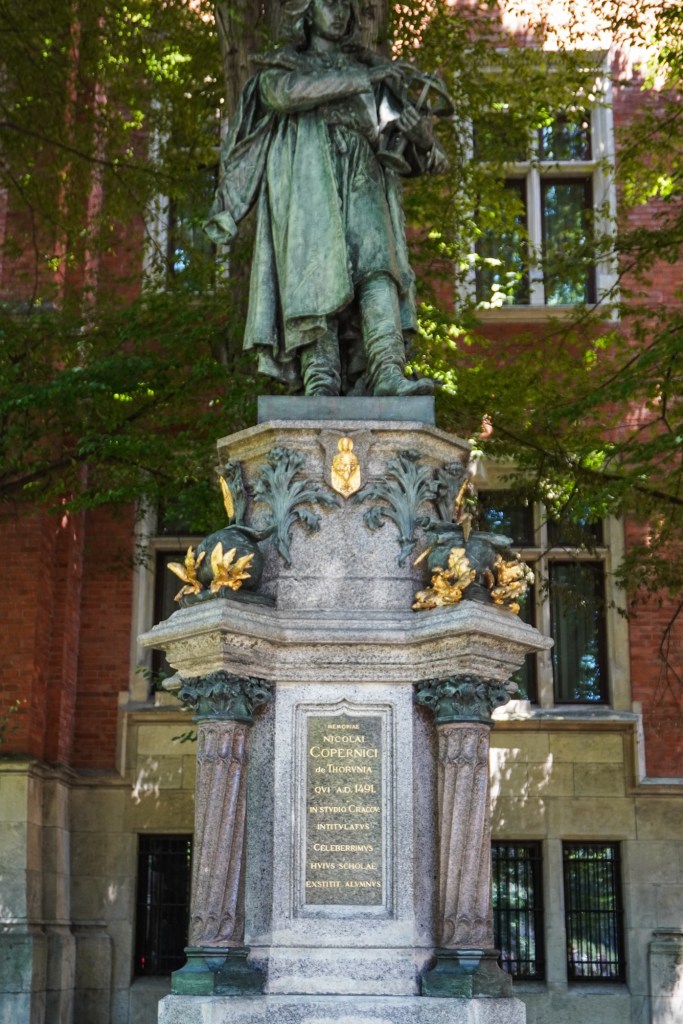
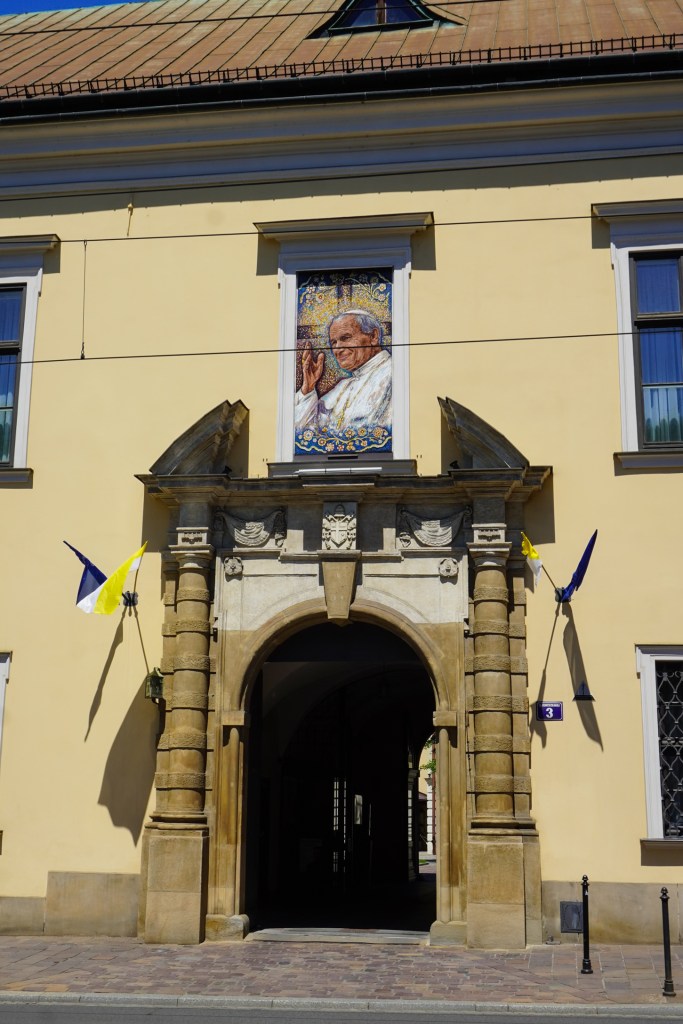
We left the castle area to briefly view a few other historical buildings. The Papel Window in the bishop’s palace where favorite-son Karol Wojtyla (who later became Pope John Paul II) would address his followers, the Church of Saints Peter and Paul and the Jagiellonian University, one of the oldest universities in Europe (1364).
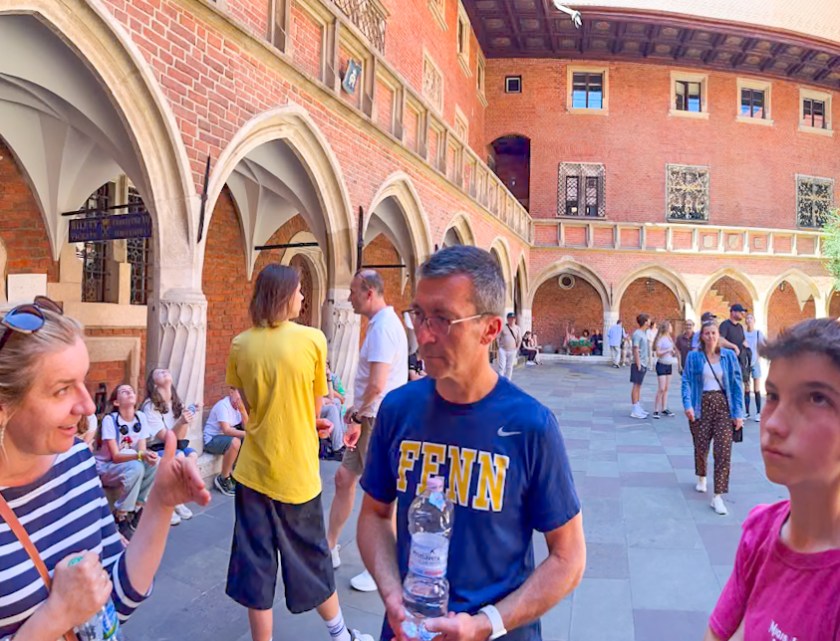
A Gothic Masterpiece

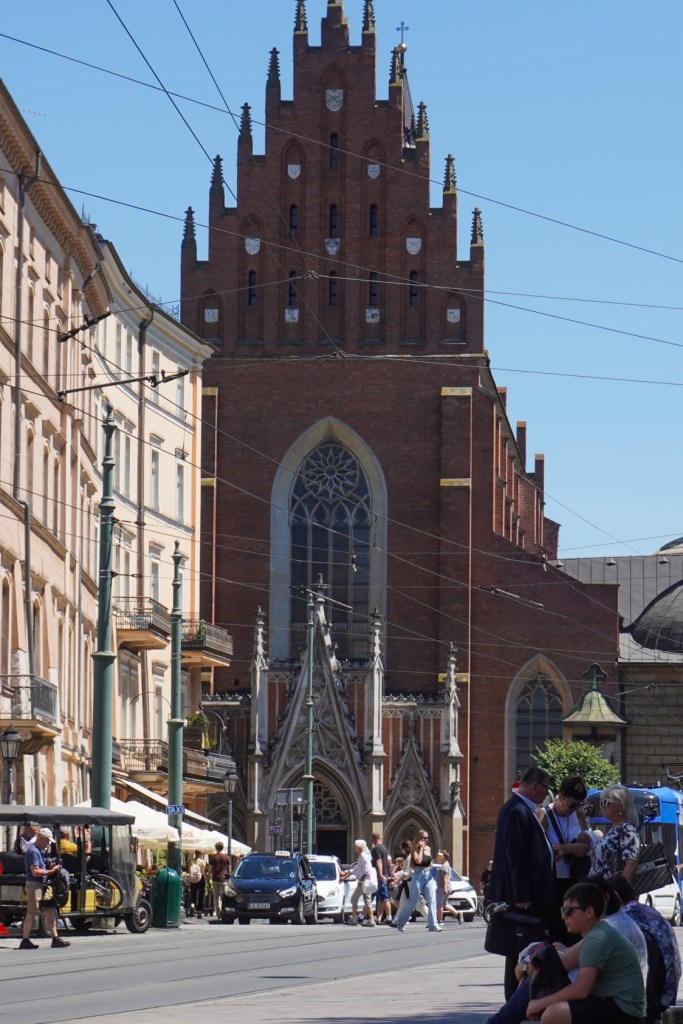
Chief among other nearby historical buildings St. Mary’s Basilica know for its magnificent stained-glass windows and famous altarpiece, a pentaptych by Veit Stoss, is said to be the greatest Gothic work of art in Poland.

Roaming Around

Our three hour tour ended with us heading toward Rynek Glowny (aka Rynek Main Marketplace) for lunch and then a nap back at our hotel, only a few blocks away.

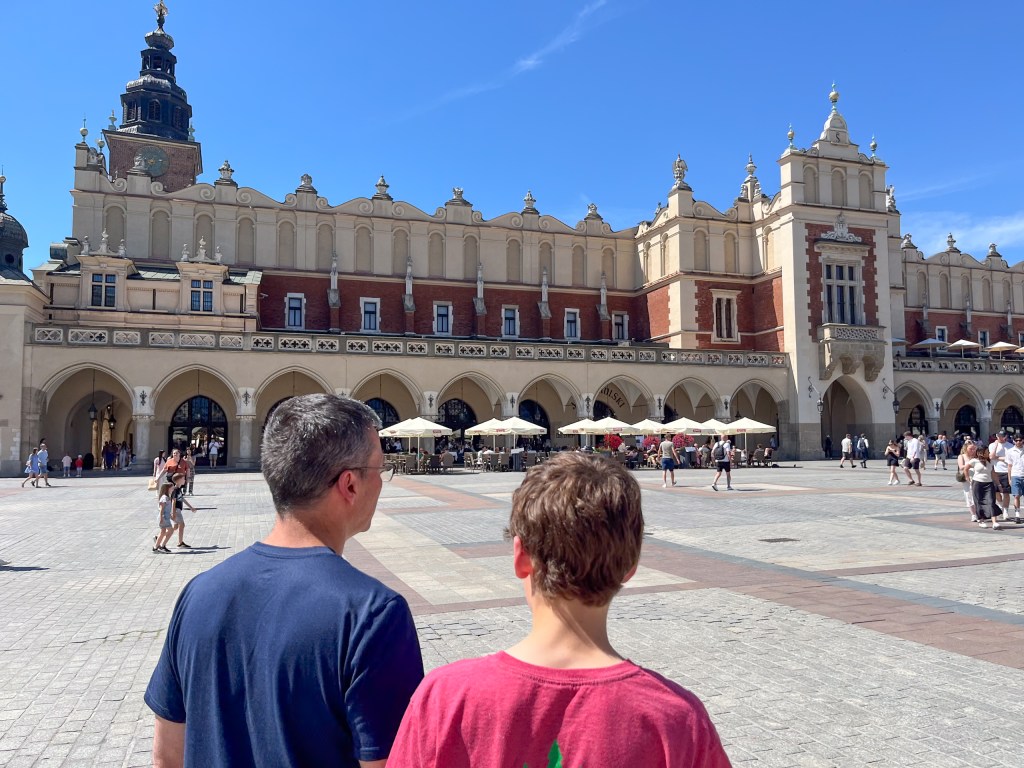
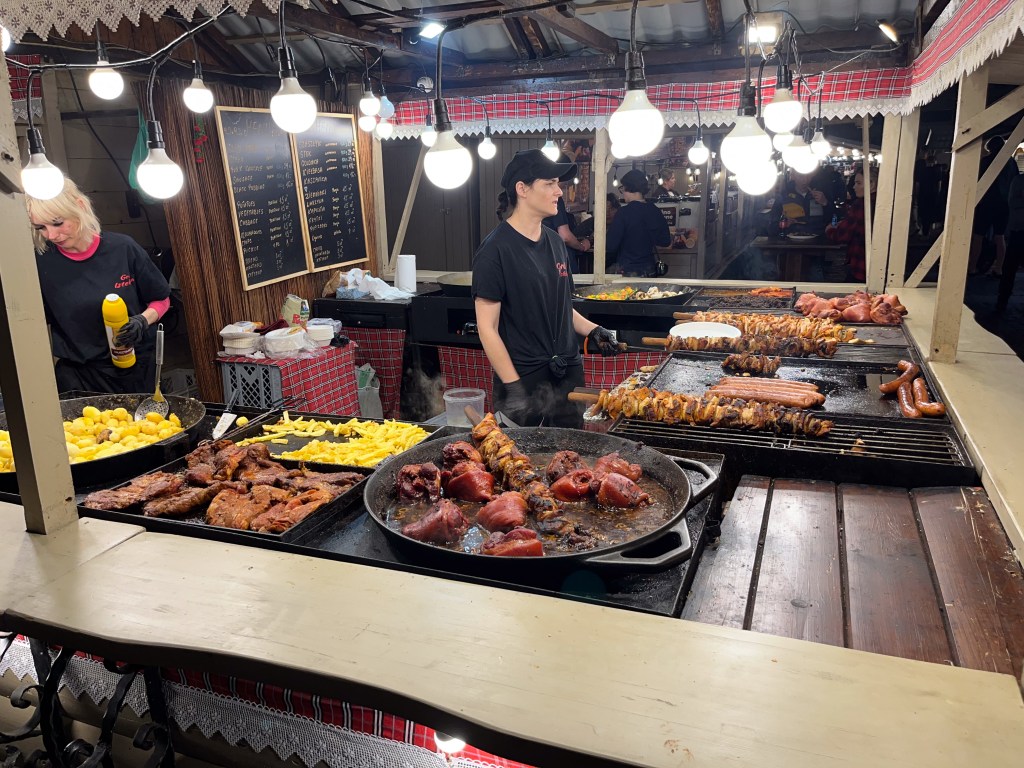
We were surprised by the size of this plaza, said to be the biggest in Europe. In the middle of the plaza, was a large building called Cloth Hall, a very old medieval marketplace where vendors would sell goods, especially clothing. Tip: Here was a great place to buy amber jewelry and Boleslawiec pottery, specialties of this area. We found just what we needed to bring home at a reasonable price solving our souvenir anxiety quickly.
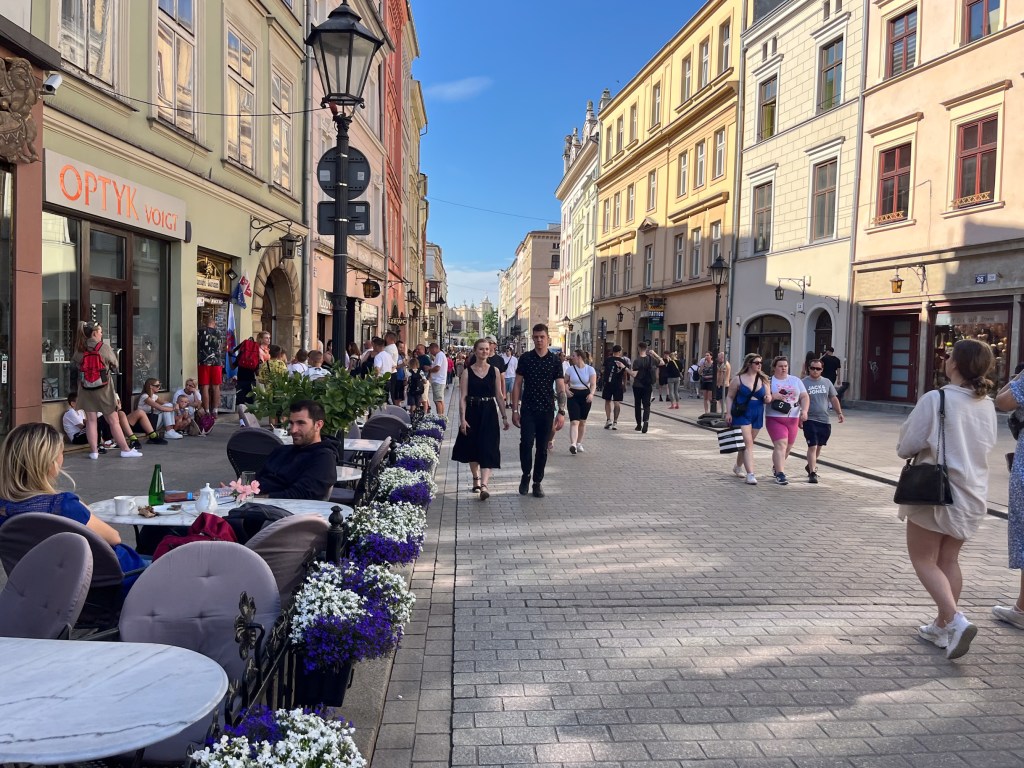
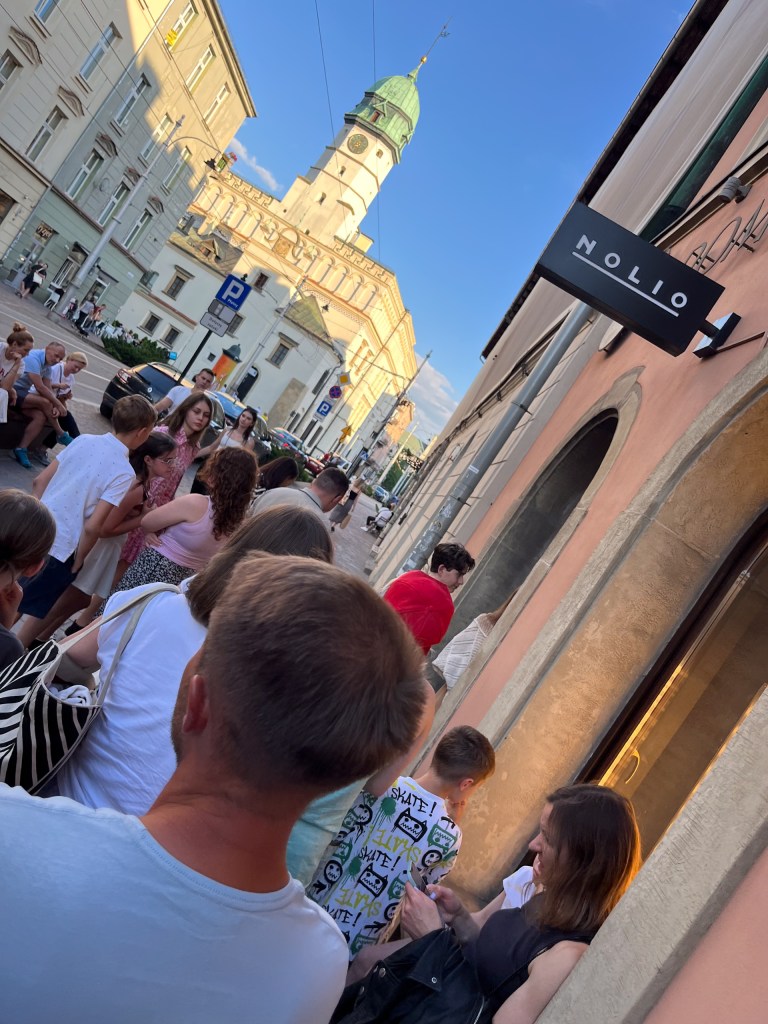
That evening we explored more of the Kazimierz and Old Town sections. We followed the crowds and found maybe the best Italian/pizza restaurant in town, Nolio’s. It was a very lively night with people of all ages, appreciating the good vibes and weather.
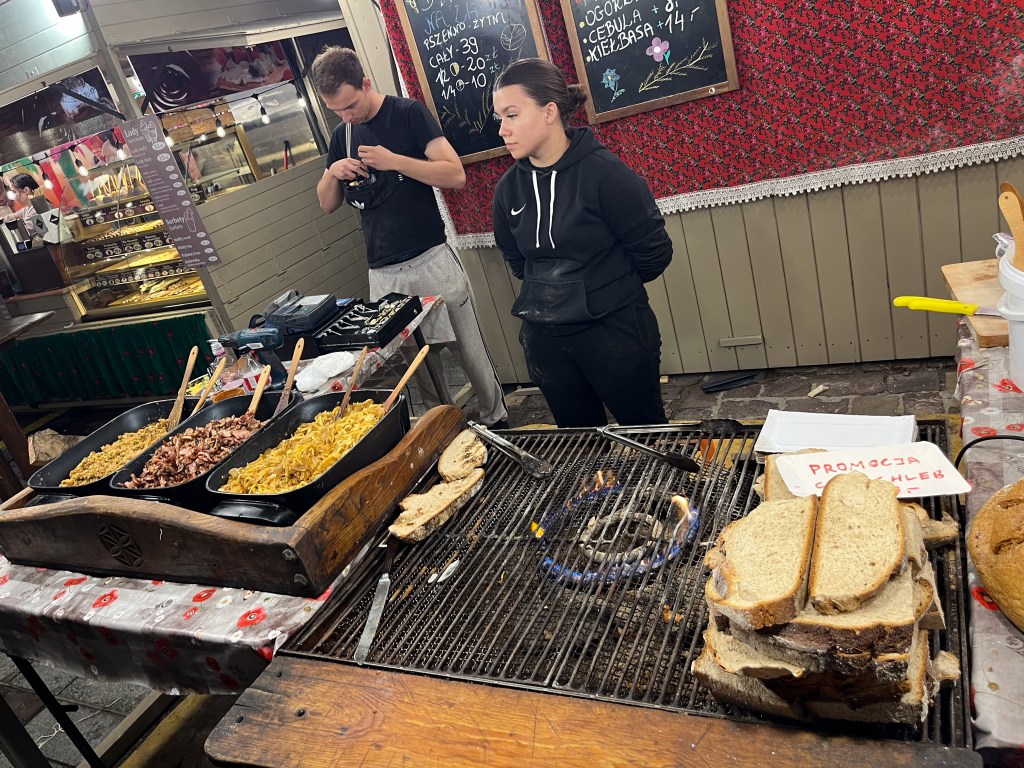
A Day of Reflection

Sunday, June 16, 2024
Auschwitz-Birkenau


Our final day in Kraków took a somber turn with a visit to Auschwitz-Birkenau. Located a short drive from the city, the concentration camp stands as a harrowing reminder of humanity’s capacity for cruelty. Touring the grounds was a powerful, emotional experience, leaving us with a renewed commitment to remembering and learning from history.
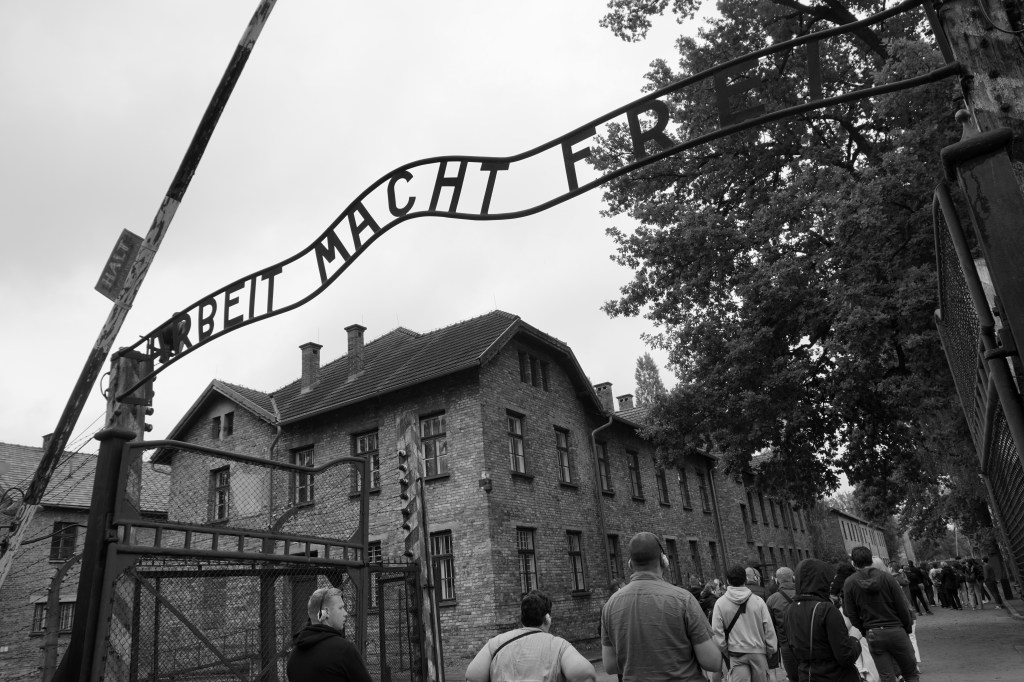
Auschwitz Entry Gate – (translation) “Work Will Set You Free”

Click here for my post on that visit including a video of our experience at Auschwitz- Birkenau.

A Celebration of Family

Returning to Kraków that evening, we marked Father’s Day with a celebratory dinner at Kogel Mogul, a Michelin-star restaurant specializing in gourmet Polish cuisine. The meal, a gift from Ethan’s wife Amanda, was the perfect way to cap off our journey.
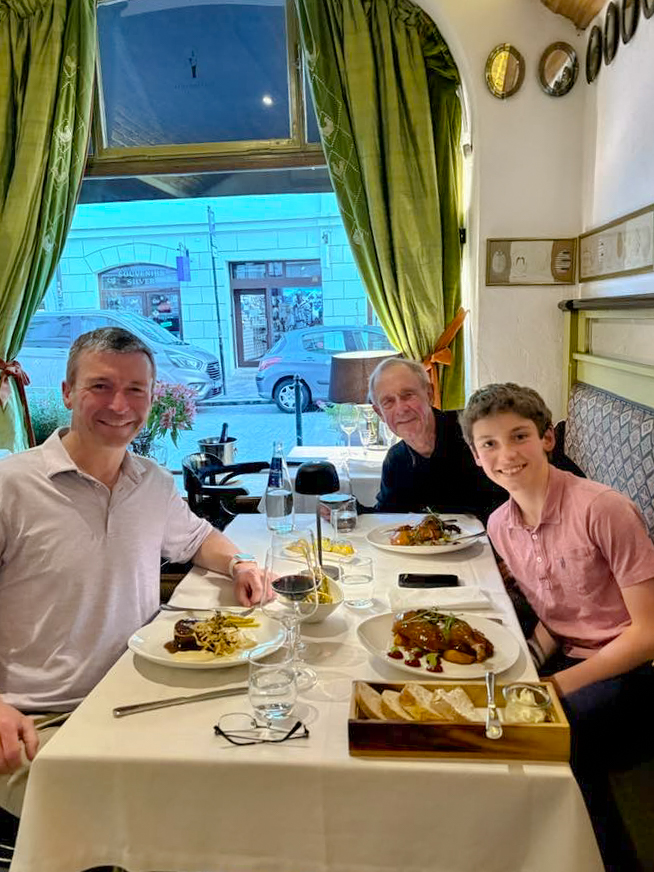
A Michelin-star restaurant in Old Town called Kogel Mogul had been recommended to me by a friend. They specialized in gourmet Polish food. Both the food and service was outstanding and prices were reasonable for that level of quality. We would recommend it to anyone looking for a special dinner in Krakow.

Click here for my post “Eating Polish” for a broader review on eating everywhere on this tour in Poland.

England in Poland

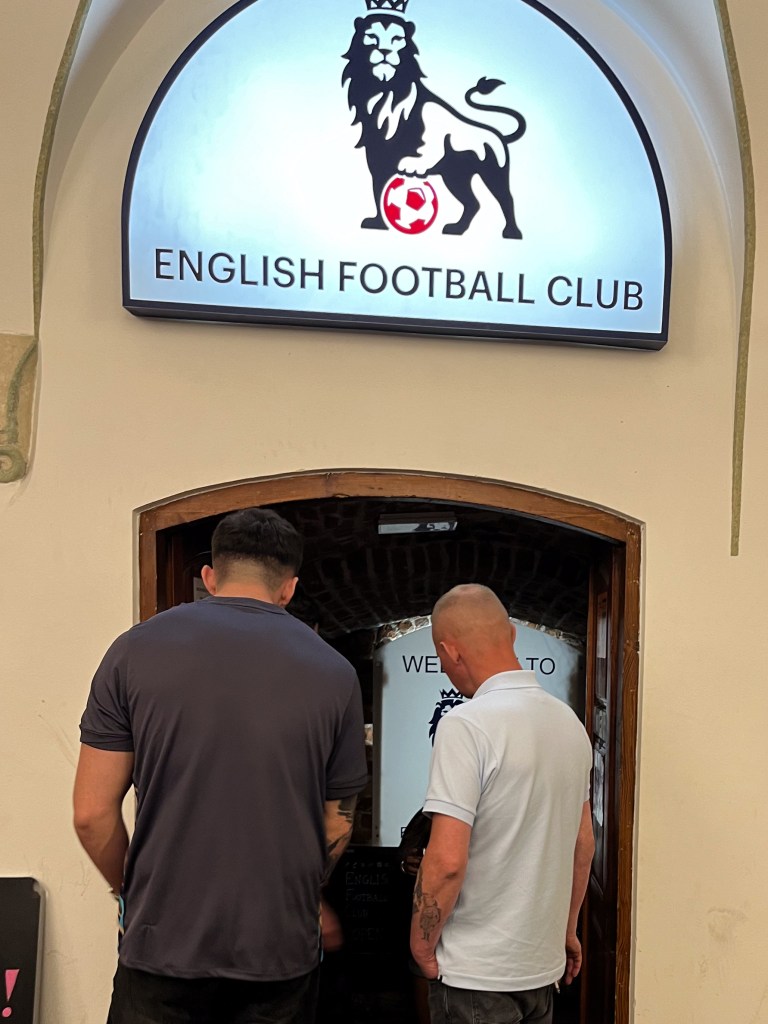
Leaving the restaurant after a leisurely meal we walked around the old town which was still lively but less crowded. We followed a stream of people heading to what looked like a cellar bar  with called the “English Football Club”. Seemed a bit out of place here in Poland but especially relevant because the Euro 2024 Tournament was underway, as my young grandson Ethan Luke (15 years old and a BIG “soccer” fan) reminded us.

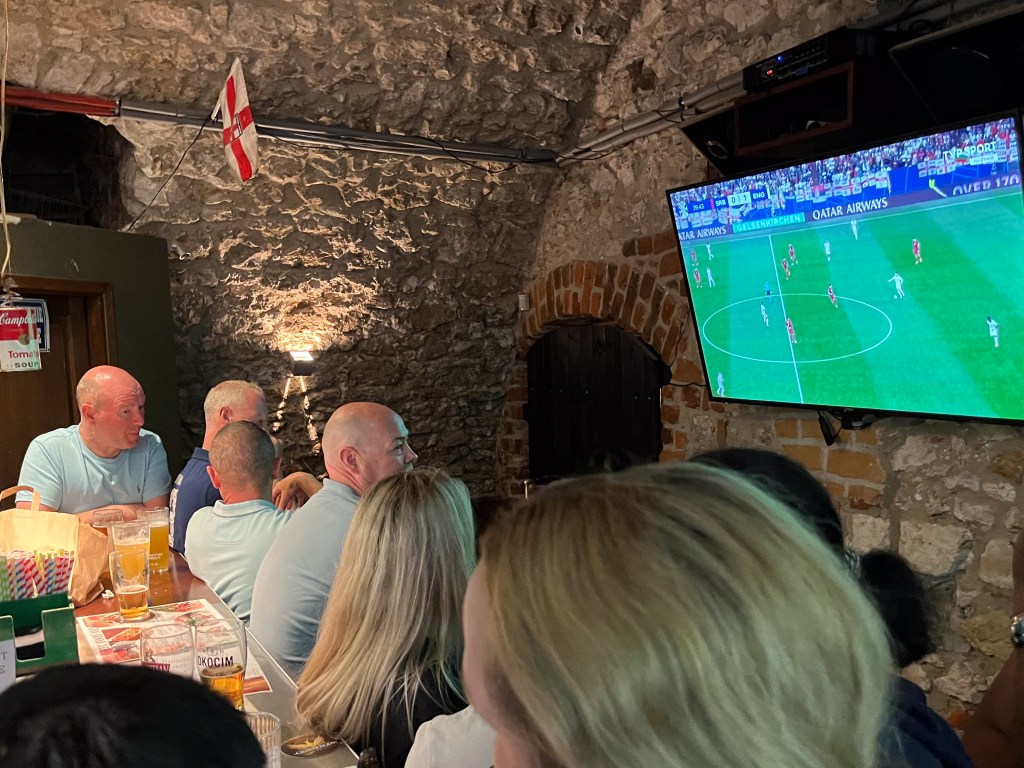
We ended up in a jam-packed bar of what we presume were mostly British ex-pats cheering on the England against Serbia. Wow! For a few moments we were transported to a different part of Europe with all the spirit and camaraderie we seek in our travels. The crowd was so tight that we could not even buy a drink, which would have been nice but not necessary to enjoy the fun.
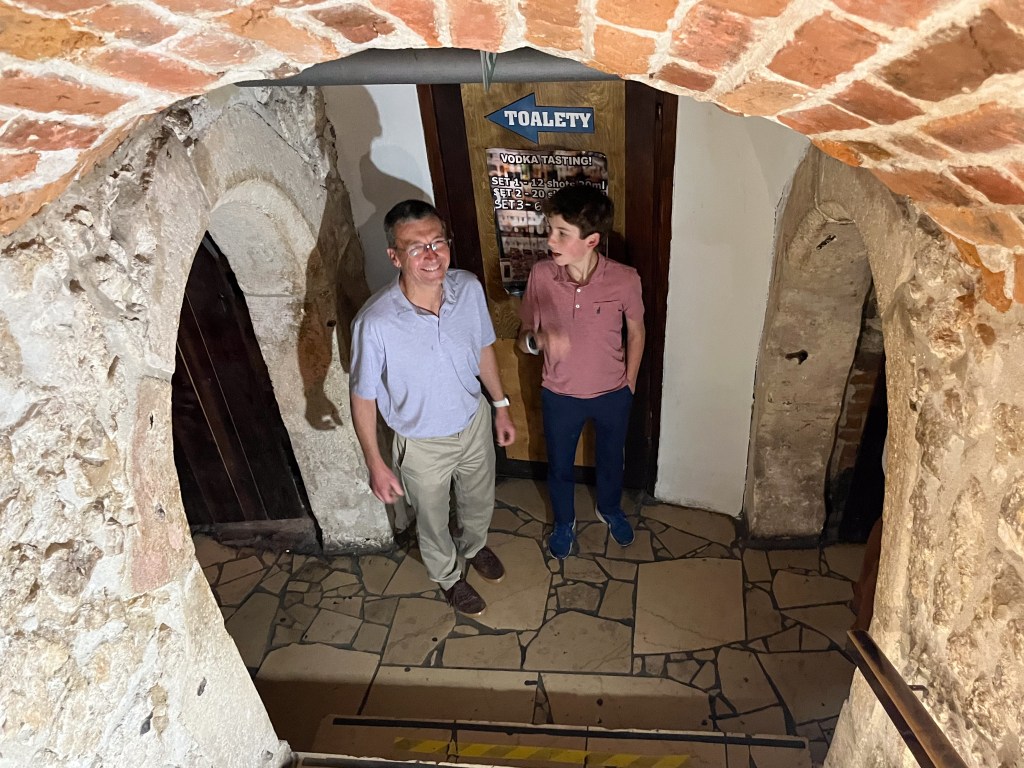
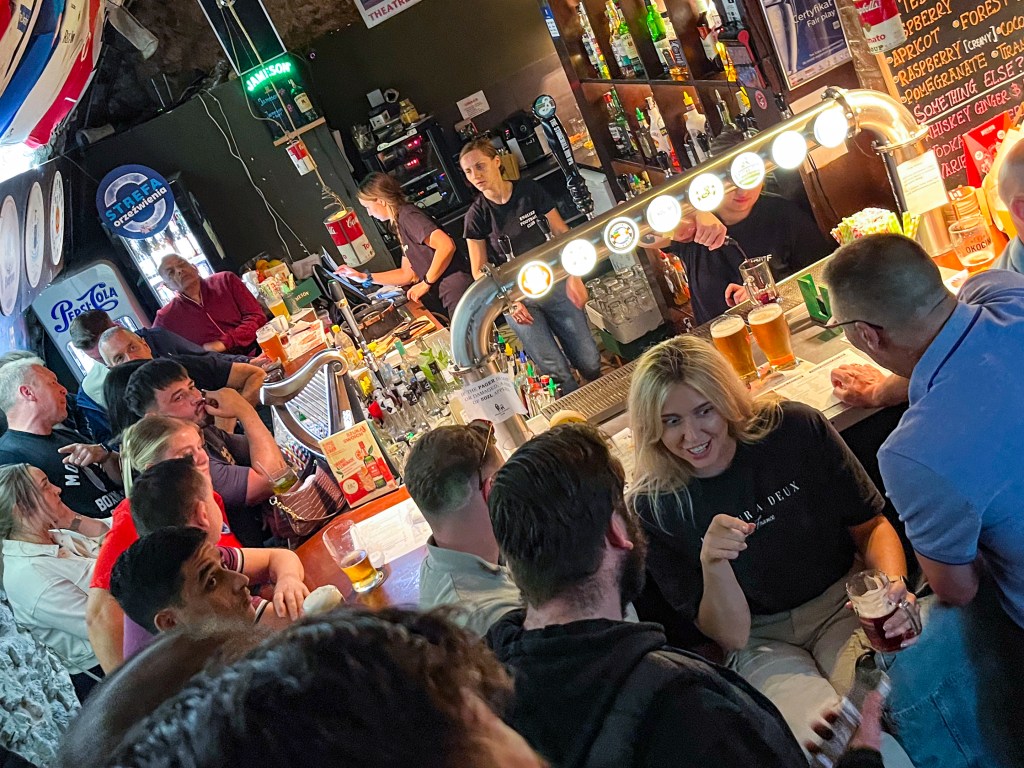
We continued exploring the Old Town section for a while that last night while father and son duked it out on where to go next. Next, would be back to the hotel for some sleep after a long day.


Final Thoughts

Kraków captivated us with its unique blend of history, culture, and modernity. Its welcoming atmosphere, vibrant neighborhoods, and proud heritage left an indelible impression. While we regretted not having time to explore every corner, we left with a deep appreciation for the city and its people—and a resolve to return.

As a Polish American, this journey was more than a vacation; it was a homecoming.


More On Our Polish Heritage Tour

See all photos for this tour here.

The Family Dragnet

Here’s how we became genealogical detectives in Poland as we hunted for clues to our family history.

If the word “Dragnet” means something to you, my guess is you remember Sargent Friday saying “Just the facts, ma’am.” on the old popular TV show. Or the 1960’s comedy movie version of that show with Dan Ackroyd and Tom Hanks. Either way it was about how detectives solved crime (mysteries). It seemed they had odd and funny ways of discovering facts when they interviewed suspects or witnesses.

Dragnet Theme

Now, we were on the ultimate dragnet for any clue to our family history. Facts mattered. Leads needed to be followed. We were on a missing persons investigation in Poland.

Near the top of my personal mysteries is how we got here. Ultimately, we all come from the same relatives. But the road that was taken by each of our ancestors made us who we are today. Sometimes, it was a voyage to leave their country and family. Other times it was to stay and make the most of the life they had, even if it was harsh at times. Whatever path was taken, family connections remained strong in most situations.

Where This Investigation Begins

About 10 years ago, Krystyna Onacki, a distant cousin from Poland discovered our Kiczek family. A Polish citizen at the time, she met and later married John Onacki a U.S. citizen when he was studying abroad in Poland. They moved to Roselle, N.J., coincidentally, the same town in which I grew up. Our family connection was through her mom who was a descendant of Josef Kiczek, my great grandfather.

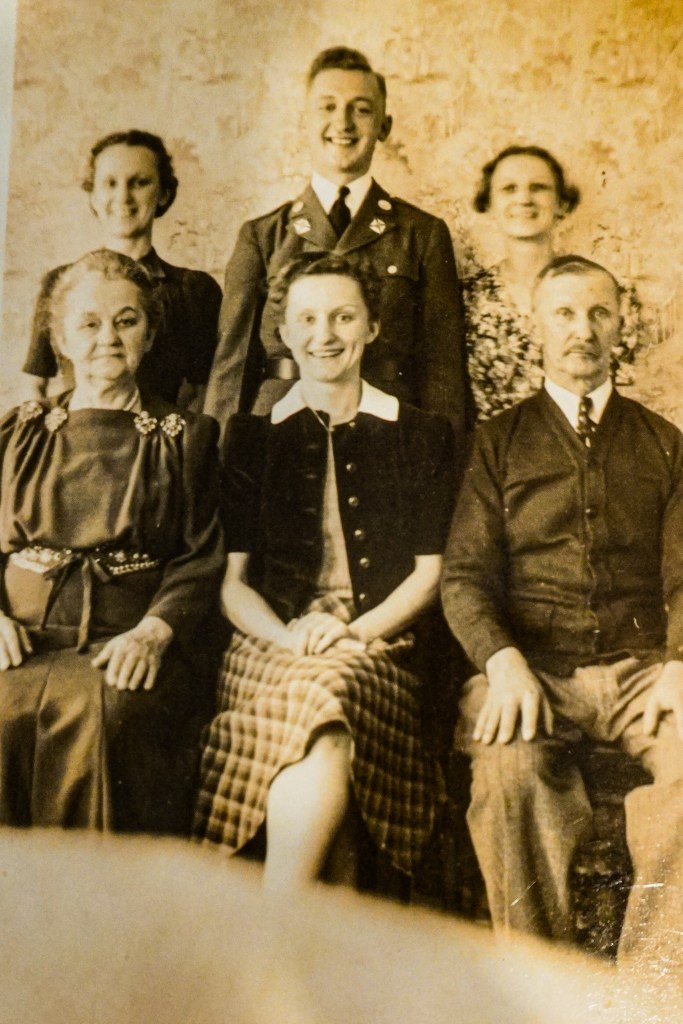
Little did I know then that Josef had a second wife after his first passed away which created a second branch of the Kiczek family. Just 10 years ago, I had little knowledge of who my grandfather was, let alone my great grandfather. And, my parents and their siblings had passed away years before so it seemed we had no one left to ask, until Krystyna found us.

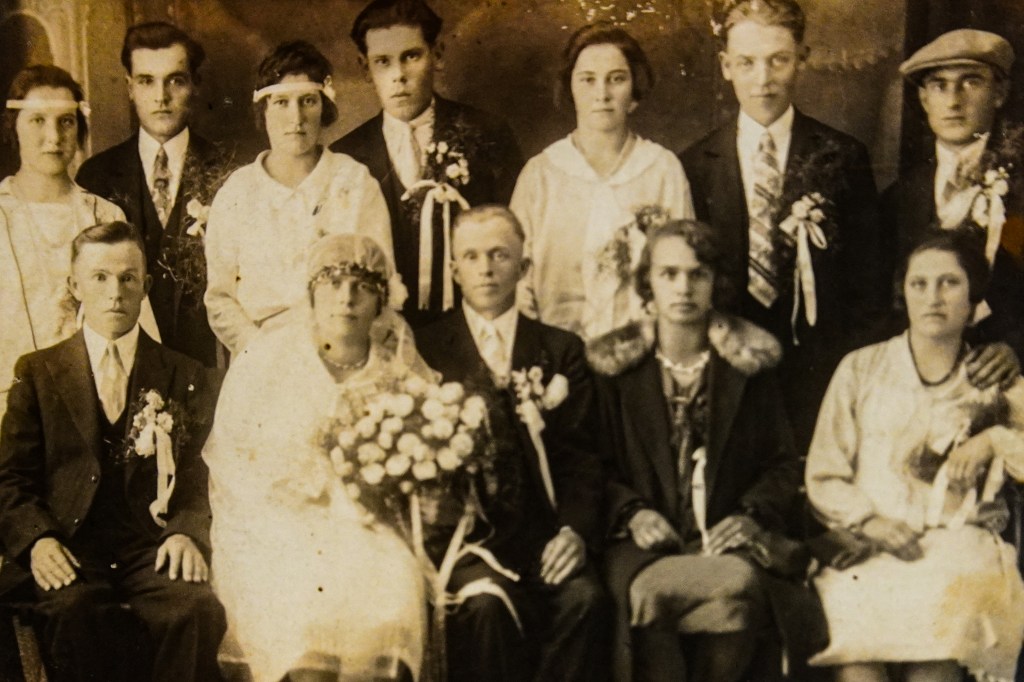
Large families were desirable back then to help work the land, provide financial support and to replace those children that would die young. For our side of the Kiczek family, my grandfather would immigrate to the U.S., and have nine children. My father’s siblings included one brother who became a priest and three sisters who would live their lives as cloistered nuns. To most Polish families this might have been the ultimate career choice and source of family pride. It was also seen as a way to increase their blessings by bringing the family closer to the Catholic Church. 

Covid Creates a Time Warp

My oldest son, Ethan Kiczek, met the Onacki’s and understood the family connections better than I. Ethan has an engineering degree and has worked in technology his entire career, appreciating the complexity of large scale projects. In 2020, tied down by the pandemic and working remotely, he became absorbed in discovering more details about the family.

Often a search leads to a clue about another relative or the nature of a relationship. This usually needs to be verified. There’s digital sources, like ancestry.com and there are analog sources, like a town’s records of births, deaths and marriages or even finding tombstones. 

While it’s possible that a birth record can appear as a digital image, more often than not it simply needs to be found in a physical registry of births, deaths and marriages. This is especially true for older records. In Poland. registry books are often located in the town where the family lived – or in the registry of the local church where they prayed. All this would take time and concentration, which with Covid, we all had plenty of.

Ethan searched a few databases like the Mormon’s FamilySearch and Facebook’s genealogy groups to discover what sources could help and how to get more information, if the data was not available online. This led to outsourcing a remote genealogical researcher in Poland, Lucjan Cichocki, who could actually go to local Polish towns to search registries to validate and discover family connections. Lucjan became our Sargent Friday. But, that led us to considering getting involved in this Polish dragnet too.

Going Back in Time

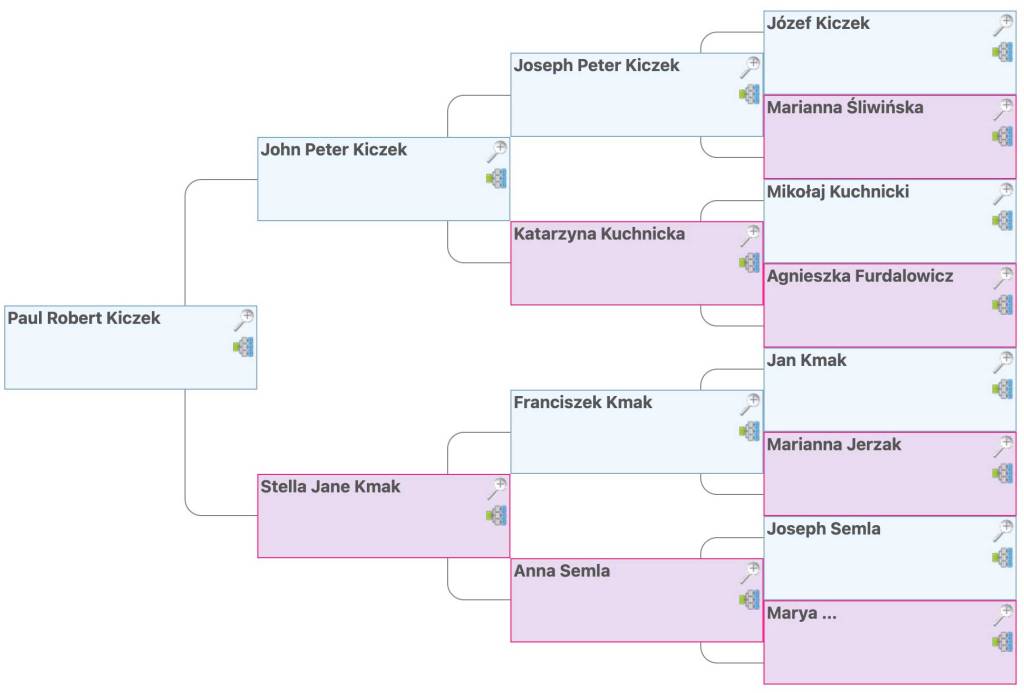
Ethan discovered, with the help of Lucjan, the towns where our family lived and even traced some ancestors to the 1700’s. But to dig deeper, we would need to view the registry records. Those records also state some other related information like the birth date, name of parents, religion and towns they came from. Ethan began to construct a large family tree that opened up our imagination as to who were our ancestors and how we were related.

PK’s Family Ancestors to Investigate

In 2022, we began to plan for a trip to Poland to discover our relatives – assuming we could find them and they would talk to us. But it was then that the Ukrainian-Russian war started. The area where our family was from was only about 50 miles from the Polish-Ukraine border. At that point we had no idea if the war would spill over to Poland. Poland’s borders have been moved often and the area we were planning on visiting was once even considered part of Ukraine. So, we postponed the trip for safety reasons. But the dragnet research continued.

Our Case History

Plans were set in late 2023 to visit the following year all the towns where my family seemed to have originated or once lived. Ethan’s mom, Judy’s (Dolac) mom had a clear connection to a town in the same region too. So, Ethan worked with a special touring company called PolishOrigins and created a custom tour that would take us to most places we had confirmed had a family connection. We hoped to visit those places, hopefully discover more connections and perhaps meet some relatives!

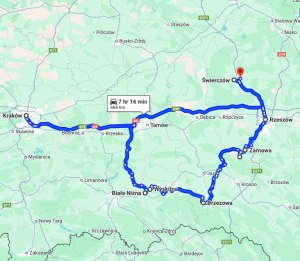
We spent four days investigating our ancestors in Poland, mixed with some interesting sightseeing along the way. Here’s a brief case history of what actually occurred during our investigation part of the trip:

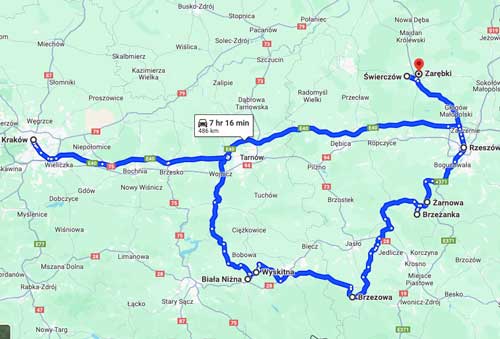
Our Ancestry Tour Route from Rzeszòw to Kraków
Tuesday, June 11, 2024

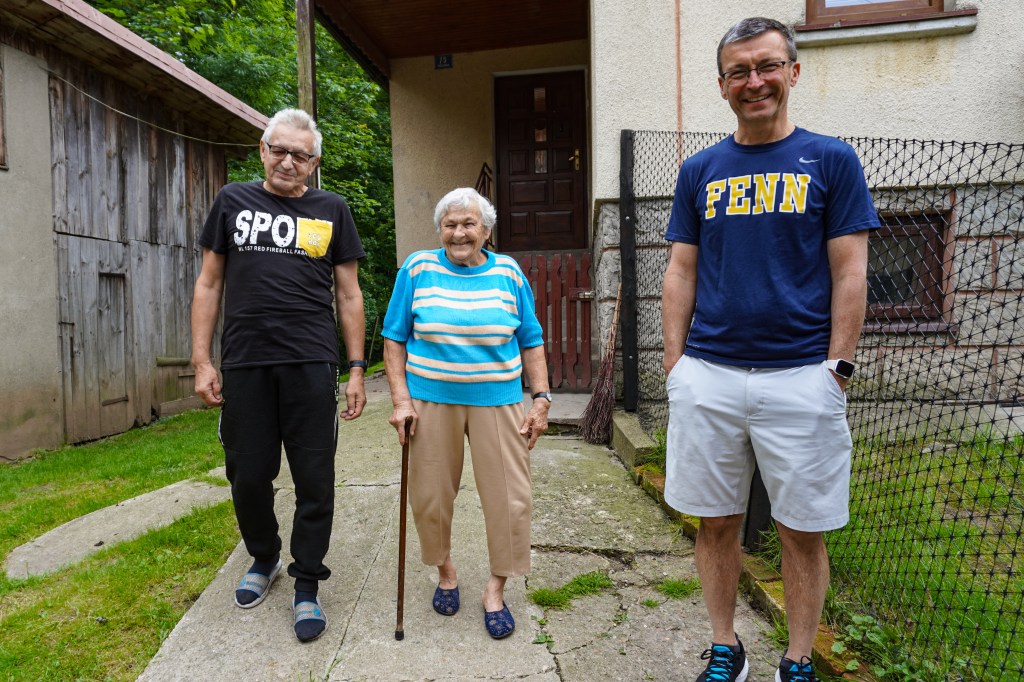
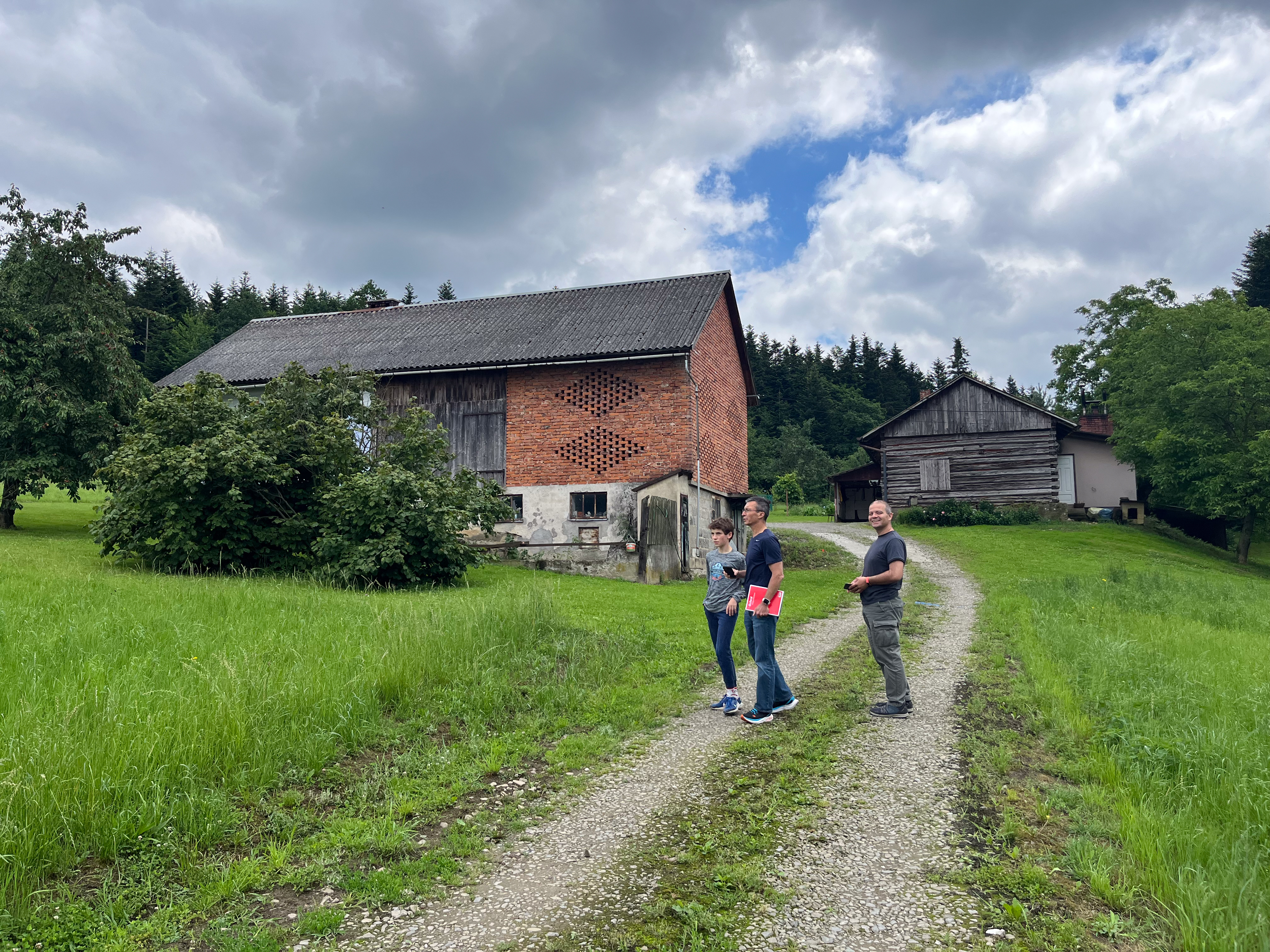
Świerczów – About 20 miles north of Rzeszów, our starting base, we sought family connections to the Stobierki’s (Ethan’s grandmother on his mother’s side). We had an address to go to from previous research. Found a distant cousin Halina Knipa and son Bartek. They share a great great grandfather Michal Stobierski with Ethan. We visited the town hall for records, the old family farm where his grandparents lived and a local cemetery. We exchanged emails for future follow-up. See the earlier post for more details on this visit.

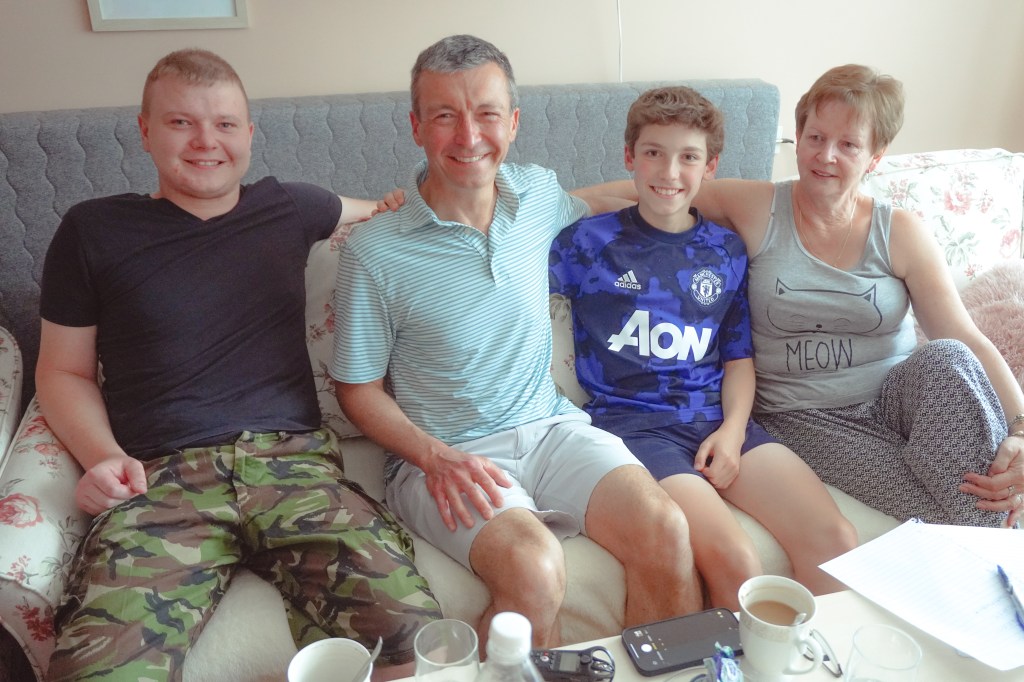
Bartek, Ethan, Ethan Luke, Helina

Wednesday, June 12, 2024 – morning

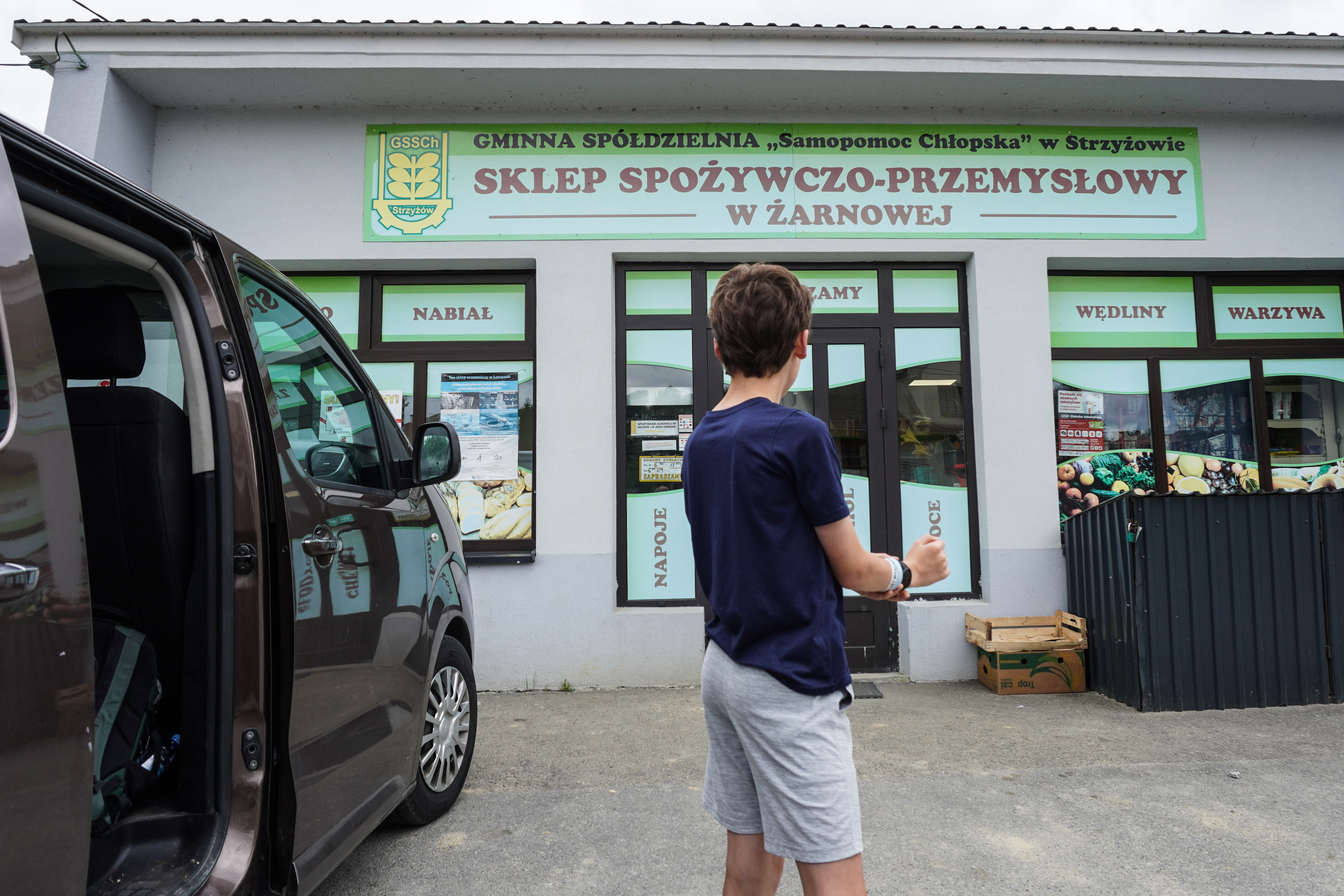
Żarnowa – In search of Sliwinska family (or possibly Sliwinski). Marriage records showed that great grandmother Marianna Sliwinska (born 1847) had married Josef Kiczek (born 1827) and was originally from this town, about 20 miles south of Rzeszów. We had a possible address or location but it seemed wrong. We went to the nearby convenience store to ask around if anybody knew a Sliwinska family and followed a lead to an address that might be a descendant. No one was home but a neighbor corroborated that there might be a connection. They called the possible relative and we promised to send a letter explain our relationship. Low odds on connecting here, but maybe they will respond.

Wednesday, June 12, 2024 – afternoon

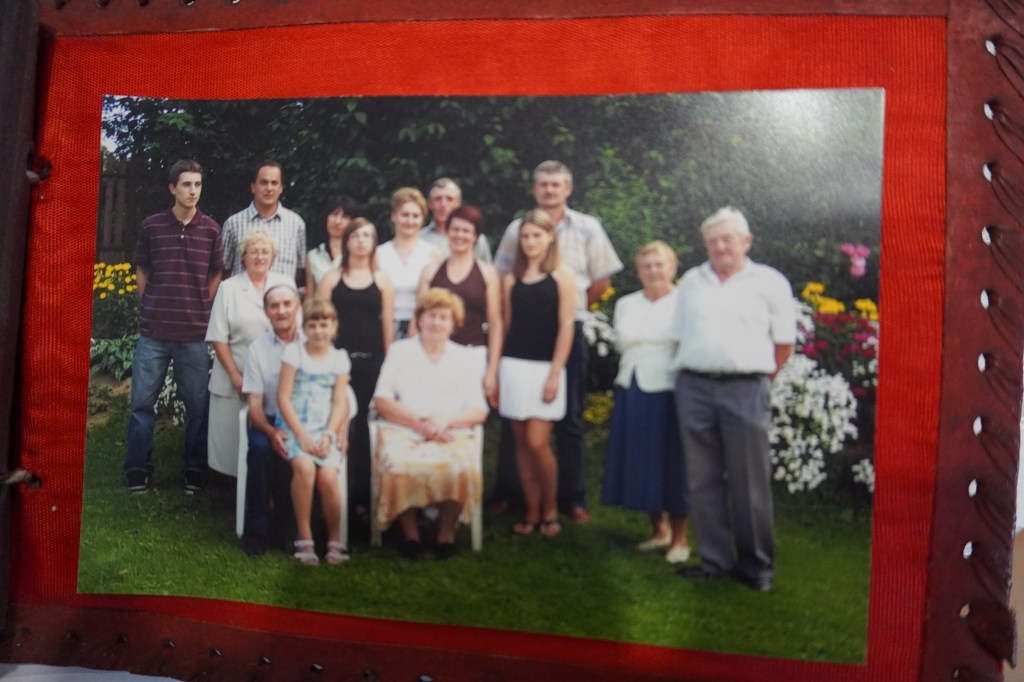
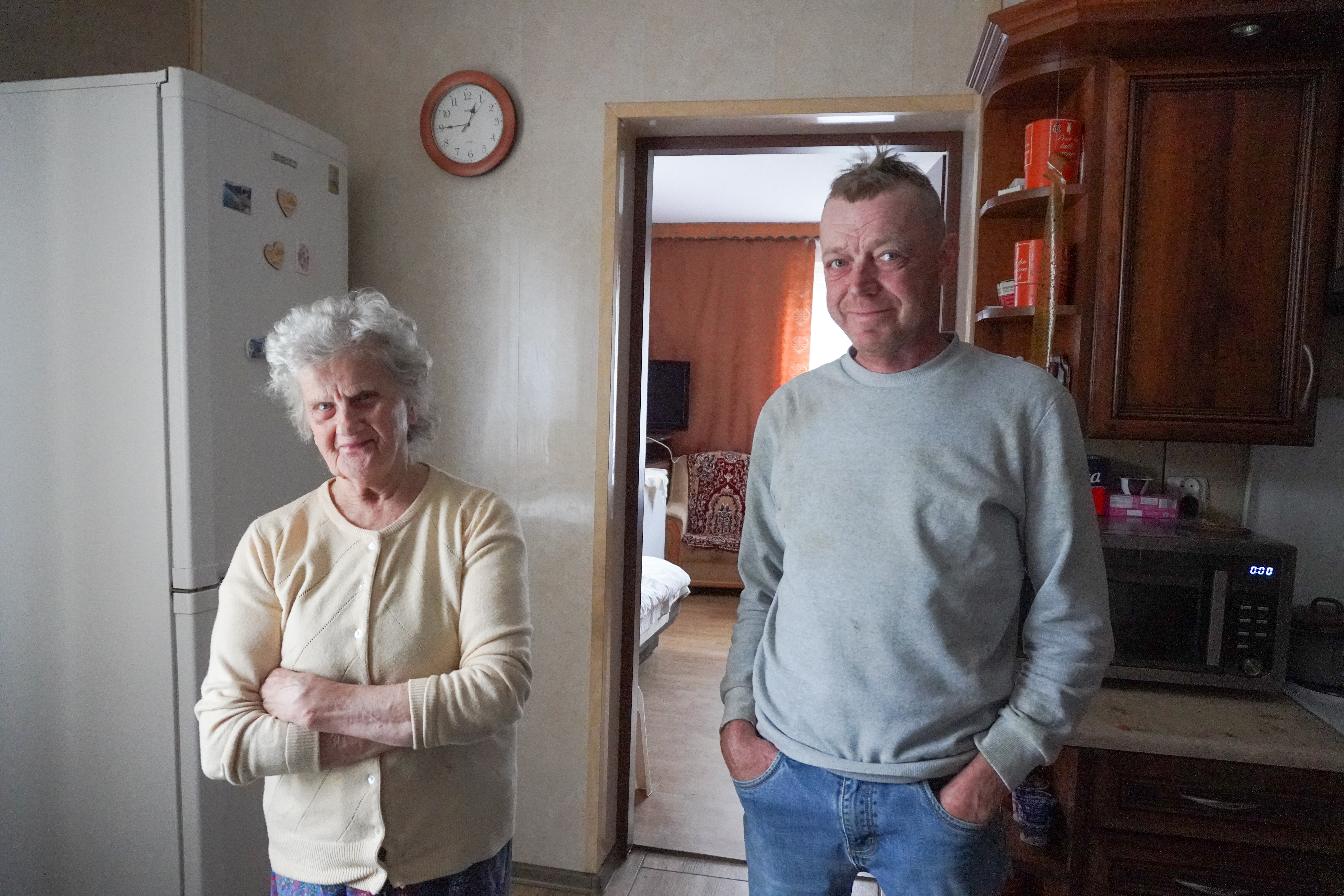
Brzeżanka – a neighboring town to Żarnowa, we had our best clues and even arranged a meeting with Bogumila and Zdzislaw Furtek. Bogumila is a sister of Krystyna Onacki, our cousin who helped start this whole investigation back in the states. This was pay-dirt for us.

We now had a direct connection from the other branch of the Kiczek family. Antoni Kiczek was a half-brother of my great grandfather, Josef Kiczek. His descendants included Bogumila and Krystyna. It seemed Josef married once had eight children and married again having four more. Not so uncommon back then. One of Antoni’s sons was our familiar “Uncle Joe”(Joseph Kiczek) as he became the messenger between the U.S. and Poland Kiczek families. We just never realized what the exact family relationship was.

This was the highlight of our trip from a social and genealogical point of view and the main objective. We met a distant but direct relative, had a warm inviting visit, saw where my great grandfather and some of his descendants lived and tilled the land, even until today. We ate together, exchanged gifts and promised to keep in touch. We had an open ended welcome to come back. More than that, we discovered the land where our ancestors lived and worked was a beautiful peaceful place. See the earlier post for more details on this visit.

Thursday, June 13, 2024 – morning

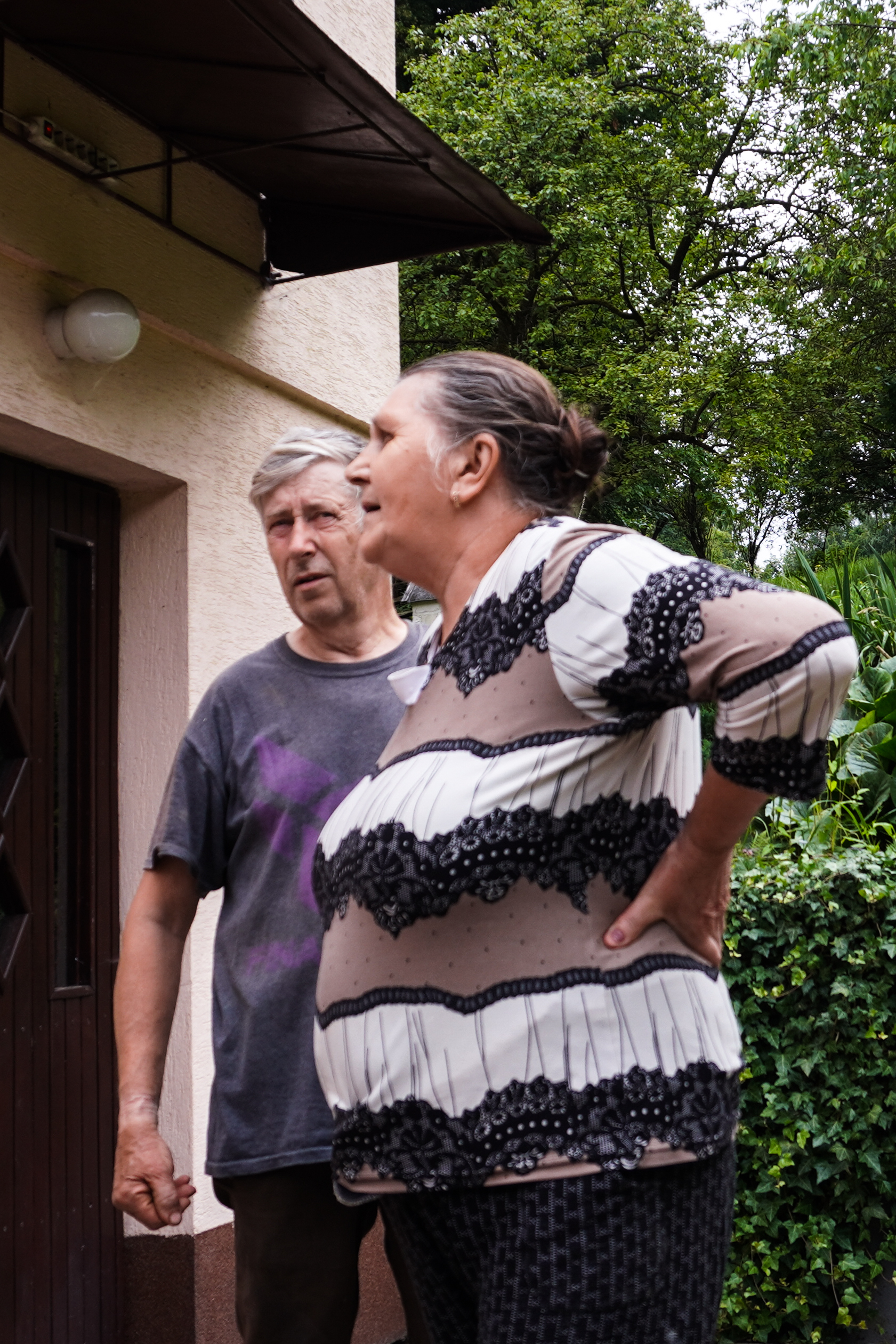
Brzezowa – Our investigation moves on as we travel 30 miles southwest toward the foothills of the Carpathian Mountains and closer to the Slovakian border. There we searched for traces of my paternal grandmother’s (maiden name Katarzyna Kuchnika) family. After visiting the town hall records we found a possible relative’s address. We went to a cemetery and the home of to a a Kuchnika descendant and her son but they did not seem terribly interested in relating anything to us. We made the connection but in this case there wasn’t much interest in continuing communication.

Friday, June 14, 2024 – morning

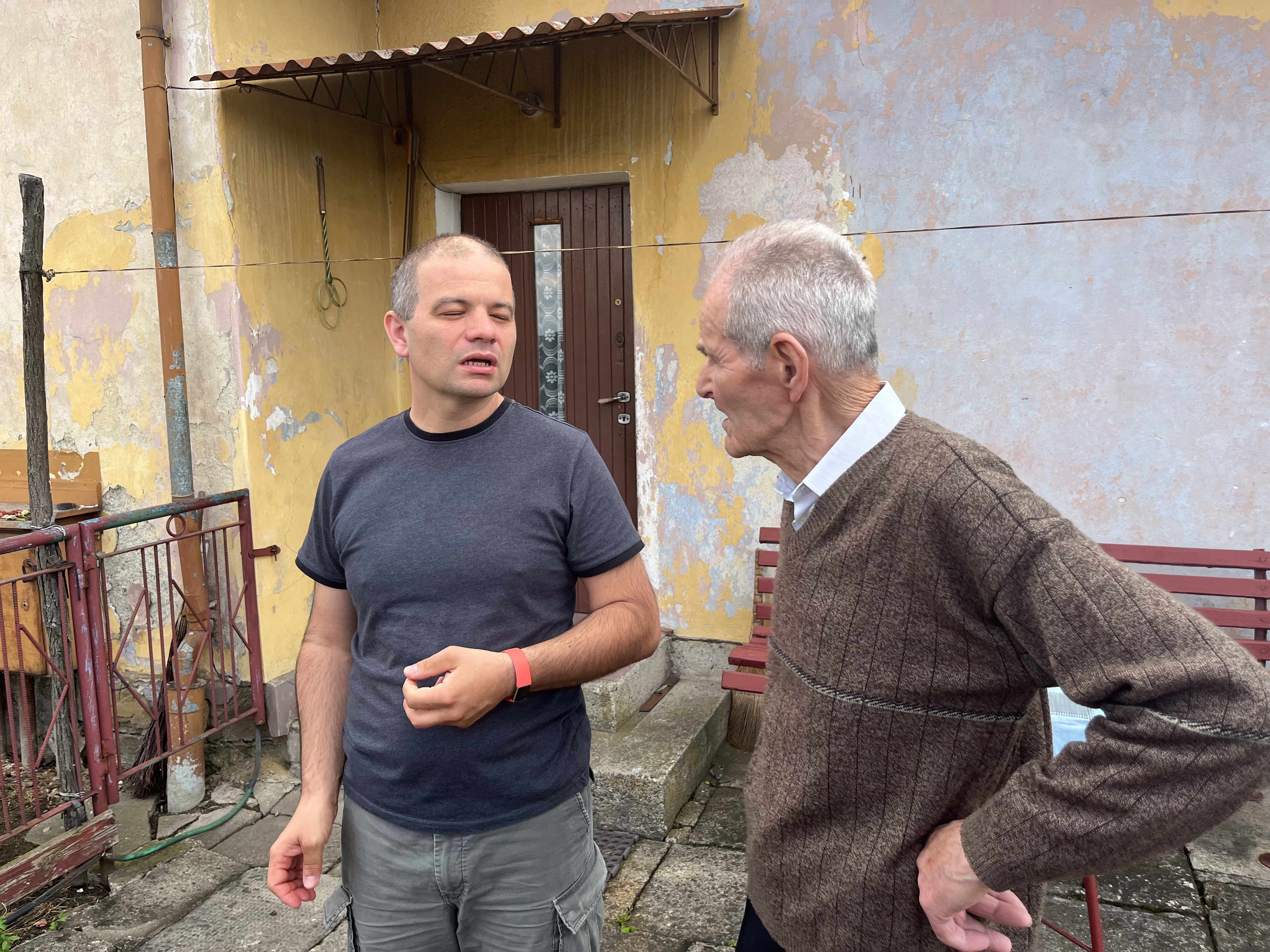
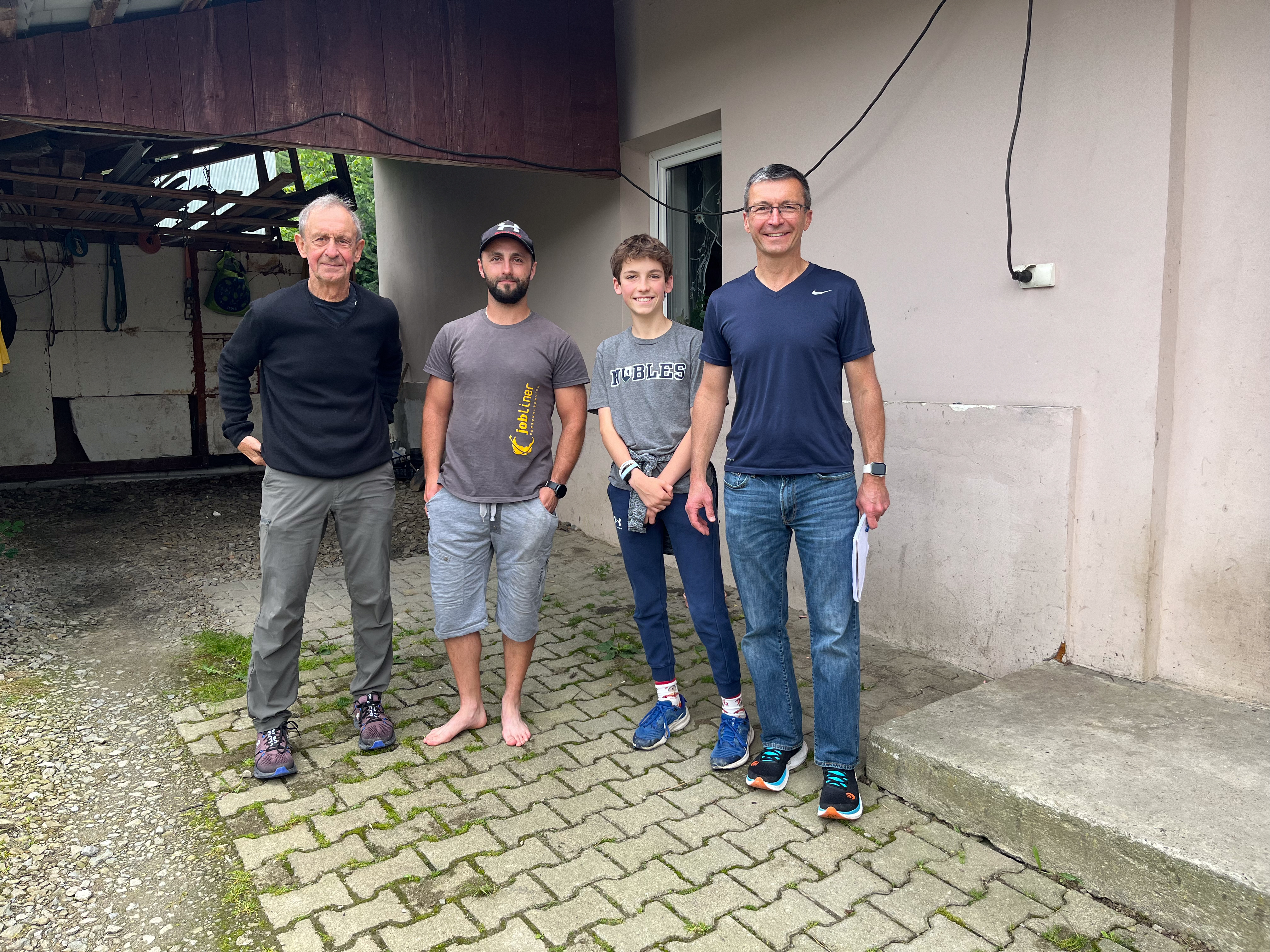
Grybow/w – We travel west another 10 miles in search of my maternal grandfather’s ( Kmak) family. We started in Grybow, the area where we had a record of his family. We went to the local town hall to explore records. We found a clue that Kmak’s were still in town and a relative might be living nearby. We visited Richard and discovered another lead to a younger generation relative. For our last investigation we went to a local farm and met Kamil Radzik, 28 years old, our youngest relative we met. He offered his email and promised to connect.

Friday, June 14, 2024 – afternoon

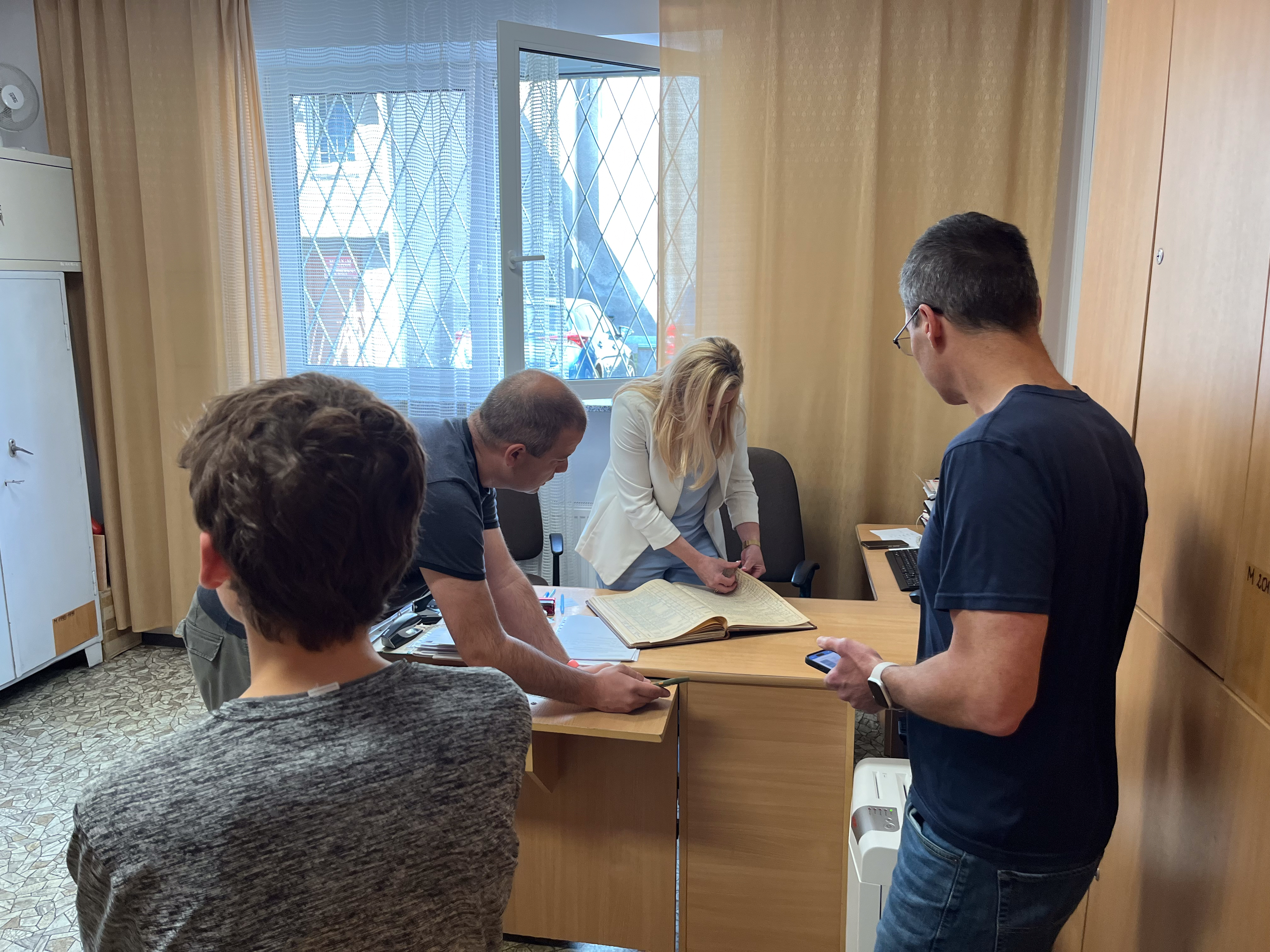
Bobowa – Our last investigation started in the local town hall. Through Lucjan’s charm and two very conscientious staffers we spent over an hour pouring through records to find my maternal grandfather’s family.

Case Closed?

Four days of investigation had ended. With the help of Lucjan as our translator and charmer, we had managed to discover new facts, meet family members and potentially open up further communications. Eventually, Lucjan mentioned that he was interested in police detective work, his skills fit perfectly for that job.

More than that, we had a real feeling of what it was like living in Poland. It is truly a beautiful country, not unlike America. There are small quaint towns, small shops, even American fast food (e.g., McDonald’s) and town halls with vital records. Beyond that there is a huge landscape of open fields and undulating mountains. It changed my perspective about who are ancestors were and where they were from and why many chose not to leave.

I couldn’t stop myself from thinking of one of my favorite Elvis Costello songs that seem to relate to us being amateur detectives, if only for a while and in a friendlier way. The following video has nothing to do with genealogy, but it too is a great mysterious song and video about being a detective….

Elvis Costello: Watching the Detectives