
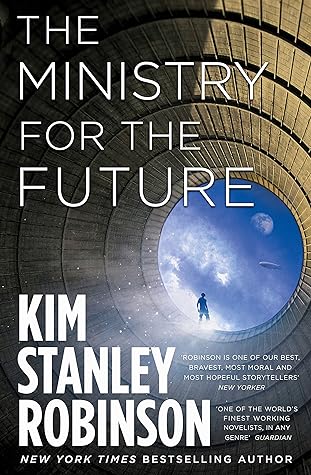
A Review – The Ministry for the Future

A review of a 2021 sci-fi book of how we confront a huge world-wide crisis, globally join forces to avert environmental disaster and create a new future for the planet. Is it wishful thinking?

The following is my Goodreads review of a 2021 sci-fi book that may be fiction but optimistically expands on current technology, some new scientific ideas and a global willingness to confront our environmental disaster. Where most science fiction stories paint a grim picture of the future, this one is a story of how we beat the odds and created a wiser and more humane world.

While much of Robinson’s works have described the far away future, this book contemplates a horrific disaster only years away that is the catalyst for finally changing the way we treat our environment on a global scale. Totally impossible to believe on its timescale and scope of change, it nevertheless provides some hopeful consolation that a bright future may still be possible for our planet.

PK

The Ministry for the Future
 by Kim Stanley Robinson

 My rating: 3 of 5 stars


I’m generally not a sci-fi reader unless a book is strongly recommended or I hear it contains some interesting new ideas. The author KSR is obviously well known for his thinking and writing about the future by extrapolating present ideas or emerging technologies. I learned about this book while following Molly Wood’s “Everybody In the Pool” newsletter and podcast on environmental tech. There really is a growth of invention and investment in that sector – affirming a reality that there is capital and interest in solving our doomsday environment conundrum.

While this book has a weak storyline, it grabs the reader at the beginning with Frank living through the horrors of “The Great Indian Heat Wave” an event that kills millions within a single week. It shocks the entire world into finally becoming aware that the environmental problems need to be addressed. What seems to be implausible is that India becomes the model for solving these issues and the rest of the world seems willing to actually act together in solving it on a global scale. The Ministry of the Future become the catalyst for laying out big plans and our protagonist, Mary, is the cool director of the Ministry that can save the planet.

KSR asks us to believe that countries just a few years into the future will be willing to see past the politics and change their nationalistic attitudes for the good of the planet. Even China is seen as an enlightened, wise collaborator. This collaborative approach causes the planet to see benefits quickly with innovative solutions and within one lifetime.

Like most who read this book, I really enjoyed the innovative solutions that KSR presents like a carbon capture coin investment strategy (similar to bitcoin), pumping up trapped water from the polar icecaps, swarm drones, wide use of airships and the birth of a new beneficial social network. There’s even a mind-bending thought of using sanctioned positive terrorism on the bad environmental actors. His material is best with creative new ideas that have some basis in fact today. If only they were that simple to evolve.

After the initial few exciting chapters, the book shifts back and forth between different points of view and how the evolution of the Ministry creates the bureaucratic plan. The environment improves quickly. The storyline seems lost but observations on possible new solutions are worth the read. The Ministry has helped create a world that works together living peacefully on the same planet.


View all my reviews

A Review – The Flag, the Cross and the Station Wagon

A thought provoking argument on how a 50-year timeline of trends and events have taken us to where we are today and what senior activism can do to change it.

The Flag, the Cross, and the Station Wagon: A Graying American Looks Back at His Suburban Boyhood and Wonders What the Hell Happened
by Bill McKibben

Paul Kiczek‘s Goodreads review
Feb 08, 2023  
5 stars

Bill McKibben, the renown environmental activist, has written a very easy to read and thought provoking book that attempts to explain how a 50-year timeline of trends and events have taken us to where we are today. It seems our lives are an unwitting product of many avenues of “progress” from politics to religion to technology. The changes we have experienced have been shaped by a “hyper” drive toward individualism, capitalism and new forms of communicating.

At age 75, I have even lived through a decade more change than Bill. I have learned to accept most of it. Employed at one time in the tech sector I once cheered on innovation, automation and efficiency. But, I’ll be damned if I can figure out why things have turned so negative, unreasonable and intractable. Tribalism permeates more and more of our lives every day. Surely, the amount and frequency of change has been a major factor. This book calls on us to stop and try to understand the injustice that exists from these changes.

The fact that McKibben is from the Lexington, MA area helps draw a clear comparison and contrast to today’s politics. Revolutionary America was largely an aspirational community of individuals that depended on each other and shared core beliefs. Today, we are not even sure what to aspire to other than wealth. And, foundational religious beliefs have withered in the face of individualism or have been diluted by the proliferation of religious sects. Frankly, a community based on shared higher ideals seems difficult to imagine these days.

The problem with technology has been an inability to see or predict the negative effect of its progress. Whether an unanticipated end product is pollution, inequality or a social breakdown, we don’t seem to know how to fix it without destroying the comfortable lives we built upon it. We are programmed to be transactional. There may be talk of reparations but what we really want is our money’s worth. We hesitate to take responsibility for previous generation’s mistakes while we minimize our cost and distress.

Can we change our way of thinking? Will we be better able to evaluate the long term and negative side of the latest technology or untethered capitalism. It seems like there’s no better time to give pause to what we are doing than right now, especially with the oncoming age of AI.

McKibben recently started an organization for people over 60, like me, called Third Act which is directed toward activism about big issues such as the environment. It seems many of us are out there wondering what went wrong too and how we might help. It’s a great idea since we have more free time and are probably healthier and wealthier than past seniors.

I recently joined Third Act and hope that I can play a role in helping solve problems that had seemed beyond the “old” me. Issues that seemed impossible to change might seem Quixotic but may be just what we are looking for. I still want the world to be a better place for my wife, three children and eight grandchildren and I want them to know I’m not too old to do something about that.