Haunted by Images: Review of “The Rest is Memory” by Lily Tuck

The dreams and nightmares of a 14 yr old Auschwitz prisoner is part of what has been haunting me. Ghosts are all around and are trying to warn us.

Visiting Auschwitz was a profoundly emotional, yet strangely analytical experience. Your senses and mind struggle to comprehend the unimaginable atrocities that unfolded there.

Since that visit, I’ve often felt haunted by echoes of what I witnessed. Evidence of this haunting continues to surface.

Shortly after our trip to Poland, I watched A Real Pain, a film about two Jewish cousins, David (Jesse Eisenberg) and Benji (Kieran Culkin), on a Polish heritage tour. While the film is mostly a comedy, their visit to the Majdanek concentration camp bore an unsettling resemblance to my own experience.

Not long after, The Zone of Interest was released. The film focuses on Auschwitz commandant Rudolf Höss and his wife Hedwig, who live a comfortable family life just beyond the fence of the concentration camp. In their home, domestic routines play out against the distant backdrop of prison sounds and the ever-present specter of death.

More recently, I read a review of Lily Tuck’s book in the New York Times. The book, inspired by a single photograph of a 14-year-old girl, imagines the life of an inmate before and during the Holocaust. That led to my expanded interest in the holocaust.

Then came Holocaust Remembrance Day, marking the 80th anniversary of Auschwitz’s liberation. Media coverage was filled with stories from the few remaining survivors, all children during that horrific time. Their voices served as reminders that the past still lingers.


My Goodreads Book Review: The Rest is Memory

It was less than a year ago, on a heritage tour of Poland, that I had an opportunity to visit the Auschwitz-Birkenau Museum. That visit was still fresh in my mind. So, when I learned of Lily Tuck’s new book The Rest is Memory,” a portrayal of a young prisoner, I immediately dove into the book to see if it could provide a perspective of what it was like as a teenager to experience this manufactured hell.

Visiting Auschwitz is an otherworldly experience. The tour is an extremely efficient, almost military process, led by knowledgeable docents who lead you through various buildings and exhibits. The guide touches on who was imprisoned there, how they were treated and the unfathomable amount of death and destruction that occurred. The fact that over a million prisoners died in this one camp, the great majority between just 1942 and 1944, is hard to comprehend.

To see my personal remembrance of the tour click here.

There is a special quiet and solemn feeling shared by all throughout the tour. Occasionally, you would hear someone in the tour breakdown in tears. But, most of us were absorbed in trying to comprehend what happened and how we could reconcile that with our understanding of humanity. Our tour guide explained in simple, cold terms the operation of the camp and how a prisoner might live and die here. The grounds and exhibits were obvious evidence of the holocaust.

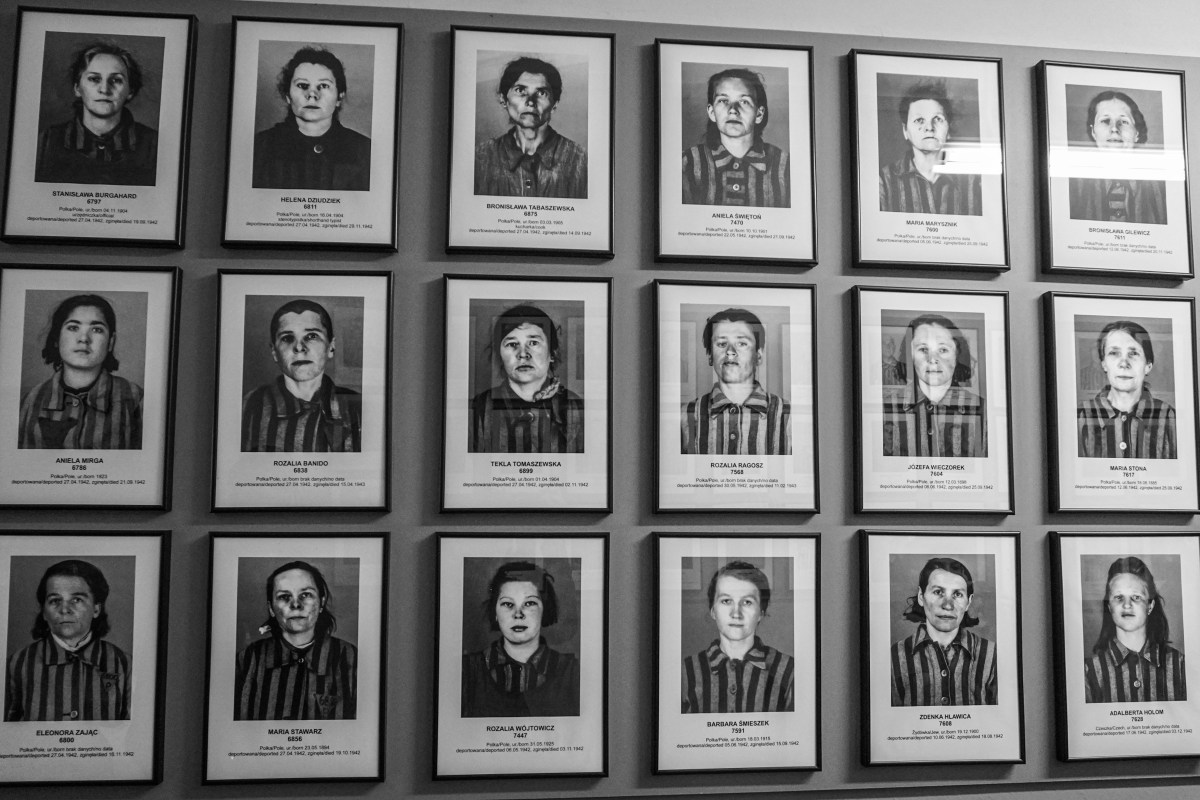
Seeing prisoner ID portrait photos on a wall was my most vivid memory. They personalized life in a concentration camp. No photo could even begin to tell the story of what a person went through, although they looked like they knew what was ahead. However, there were some survivors, including the camp photographer, Willhelm Brasse, who managed to save 40,000 photos along with his memories.

The Rest is Memory is a story of the star-crossed life of Czeslawa Kowka, a 14-year old female prisoner, who’s camp portrait became an obsession for Tuck as she imagined what it must have been like for her. It is told in a style that recalls my Auschwitz tour guide’s careful, factual and unemotional telling. The language is sparse and almost banal. There’s no need here for elaboration or exaggeration when imagination based on facts is a more powerful agent.

Czeslawa’s personal story is necessarily made up by Tuck. Czeslawa was tattooed as prisoner number 26947 and immediately lost her identity when she arrived in Auschwitz in 1942. There is little trace of her real life, except for a few basic facts like birth date (August 15, 1928), internment date (December 13, 1942) and death (March 12, 1943). Tuck appears to have looked back at her hometown area and constructed a possible tale of a normal life before the Nazi invasion. Its a life of a pre-war ordinary teenager with a romantic interest in Anton, an older guy with a motorcycle. She’s close with her mother Katarzyna, friends, community and church (she is Polish Catholic). Although she has an abusive, distant father, she has an enjoyable life and a promising future, maybe even as a teacher. All this will be violently taken from her within a couple of years.

Tuck seems just as committed to telling the horrific story of how the Polish people were completely controlled and abused. The Nazis declared war on Poland in September 1939 and in twenty-six days gained full control of the entire country. Hitler declared “The destruction of Poland is our primary task.” Germany needed “Lebensraum” (living space) for its survival and expansion. Most of the populations of Central and Eastern Europe would have to be removed permanently through mass deportation, extermination, or enslavement. The country of Poland was to be resettled with Germans.

Czeslawa lived in the small town of Wólka Złojecka outside of the historic eastern city of Zamosc. This area would be among the first to be repopulated in 1941. Over 110,000 would eventually move. She and her mother were forced off their farm with other women and eventually sent to Auschwitz to do forced labor. We learn her father (Pawel), uncle and other farmers in her village are shot and buried in a mass grave. Her would-be boyfriend Anton escapes on his motorcycle only to be beaten, imprisoned and die in Russia. Even though Russia fought Germany, it also had its designs on Polish territory and inflicted its own cruelty on the Poles. There appeared to be no escape for the Poles.

The book alternates timelines: from a broad historical view, to the innocent mind of a young girl before all this happens and then to the mundane sadness of a prisoner of which there is no hope. Although we don’t dwell on the suffering it seems to be everywhere. If you juxtapose that with the privileged life of the SS guards and their Commandant Rudolph Höss, it becomes hard to imagine a crueler place.

Pleasant and unpleasant memories are all that are left for Czeslawa. Occasionally, there are flashes of what might have been. Dreams of food, friends, wizards, dragons and even dogs are all warped by the environment where scarcity is everywhere and hope is nowhere to be found.

The book weighing in at 112 pages is a blessedly short read. My normal reading self would have craved for more details. But, I think in this case, Tuck sets the limit on what we need to know. For me, reading The Rest is Memory was like re-visiting Auschwitz. It is not a pleasant experience but a re-awakening of my senses and imagination. Unfortunately, we see many of the same cruel signs of those times around us today. Its always worth considering what are the limits of humanity and acknowledge that if it happened once, it can happen again.

Three Days in Kraków

A brief look at three days in the cultural capital of our motherland. It was our reward for a week’s worth of exploring family history in Poland.

Three days were not enough! But we gave it our best shot. There’s plenty to see and do in this old classic European City. It’s probably the best place to truly understand Poland and its rich history.

As we approached Kraków, the highway gave way to a grand boulevard. Stylish pedestrians strolled past modern storefronts housed in historic buildings. After five days as an odd trio of Americans navigating a land both unfamiliar yet strikingly reminiscent of suburban America, we found ourselves in a quintessential European city. Kraków exuded all the charm, energy, and grandeur of the world’s great cities.

Thanks to our guide and translator, Lucjan Cichochi, we had managed to overcome the language barrier during our PolishOrigins tour. As we prepared to part ways with him and venture out on our own, we reflected on how a few key phrases and a friendly attitude could go a long way in bridging communication gaps. Now, it was time for a little indulgence: the ease of English accessibility, the freedom of being a tourist, and the vibrancy of Kraków awaited us.

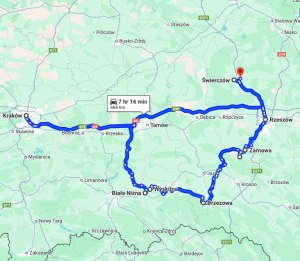
Ethan (my son), Ethan Luke (my grandson), and I had traveled over 200 miles across southeastern Poland by van, tracing our family roots. Over the past week, we experienced moments of wonder and joy as we discovered familial connections, met new relatives, and explored beautiful locales. Even when our leads seemed to run dry, the journey offered insights into Polish life and history, connecting us with our ancestors’ world. 

After an enriching week in Poland’s rural heartlands, we turned our attention to Kraków—our final destination. Over the next three days, we planned to immerse ourselves in the city’s rich history and culture, which serve as a proud testament to Poland’s enduring spirit.
See all posts for this 2024 Poland tour here.

A Timeless City

Kraków, one of Poland’s oldest and most significant cities, became the country’s capital in 1038. Situated along the Vistula River, it has long been a hub for trade, linking the Baltic and Black Seas. During the Middle Ages, Poland grew into one of Europe’s most influential nations, with shifting borders reflecting its complex history of alliances, invasions, and leadership changes. Though the political capital moved to Warsaw in 1596, Kraków remained the intellectual, cultural, and historical heart of the nation.

Kazimierz: A Neighborhood with a Soul 

Friday, June 14, 2024

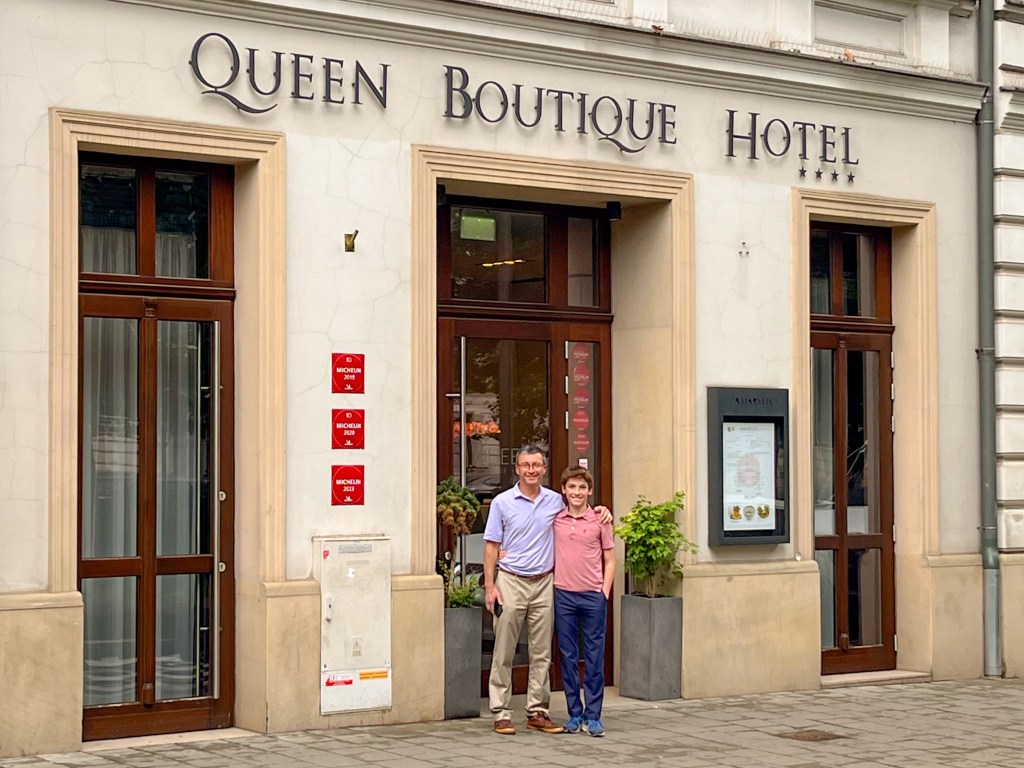
We arrived in the afternoon at the Queen Boutique Hotel, a four-star gem nestled in the heart of Kraków’s Kazimierz district. With spacious rooms priced at a reasonable $130 per night, the hotel’s central location made it an ideal base for exploring nearby landmarks, including Wawel Castle, Old Town, and Podgórze.

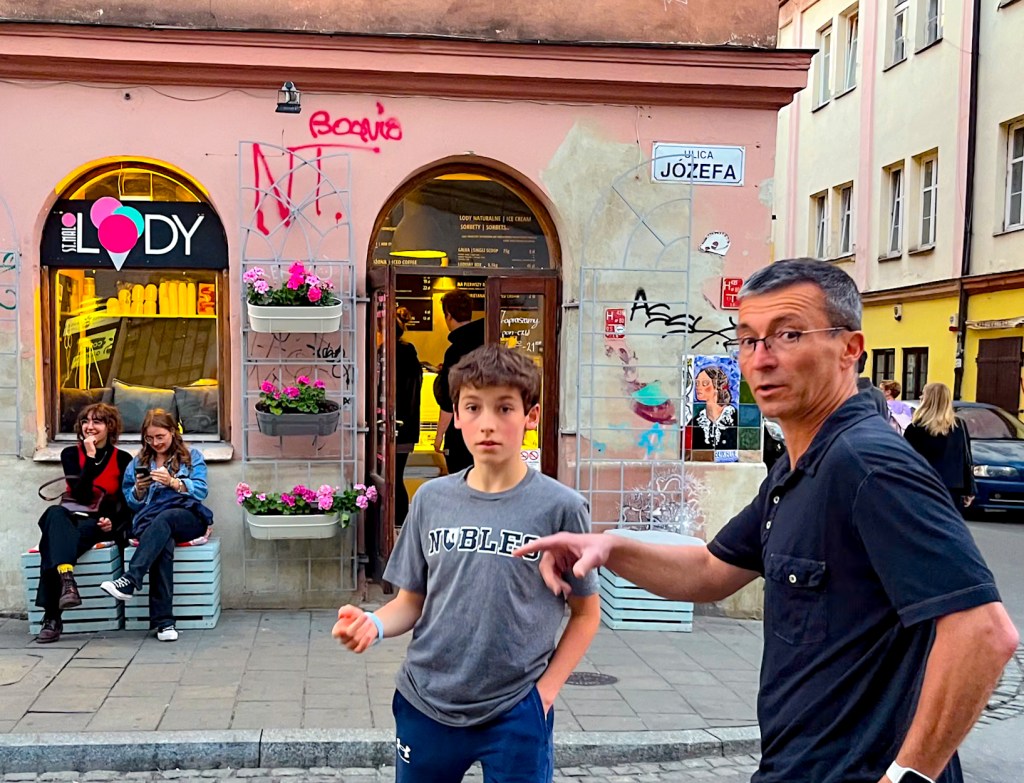
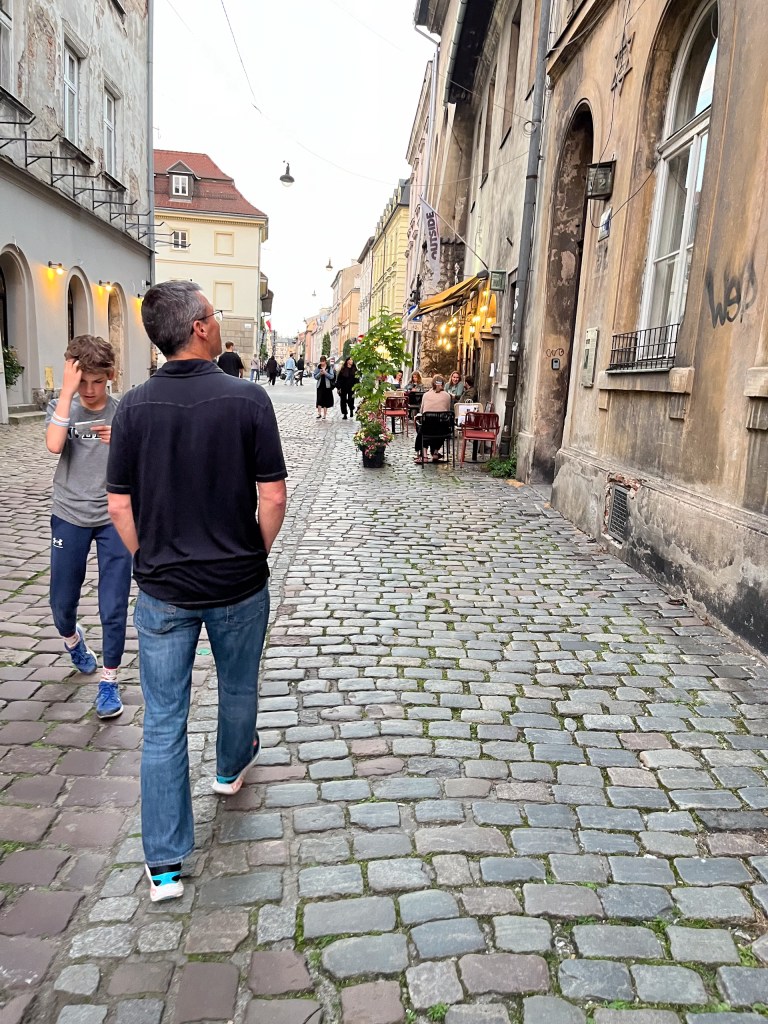
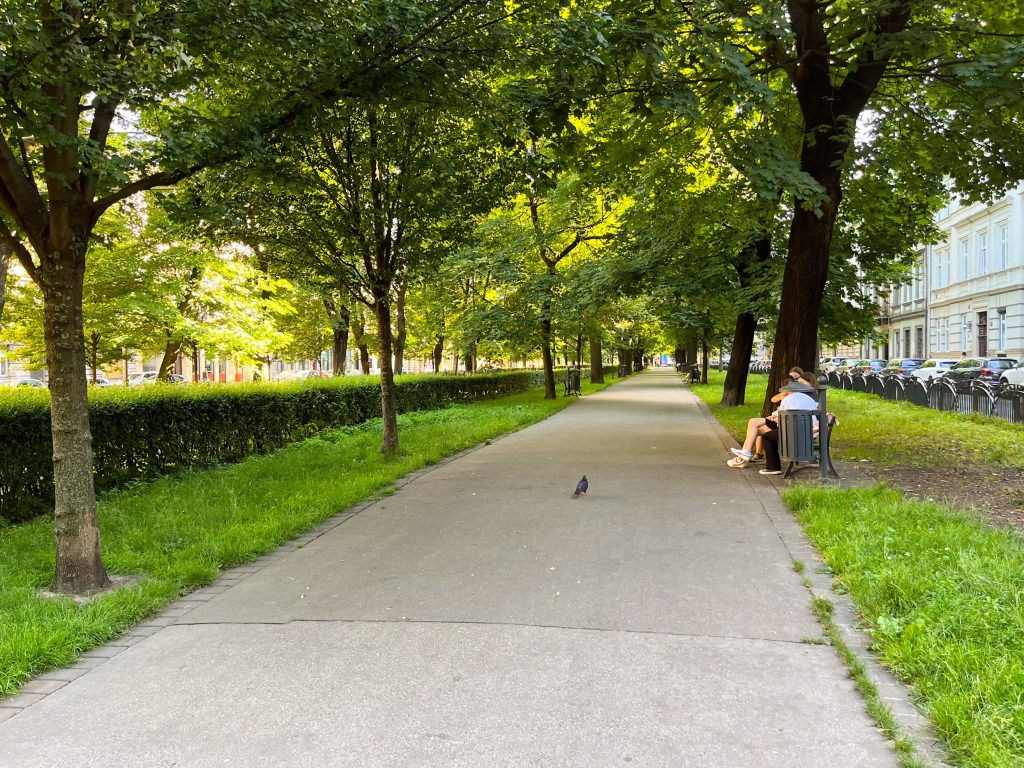
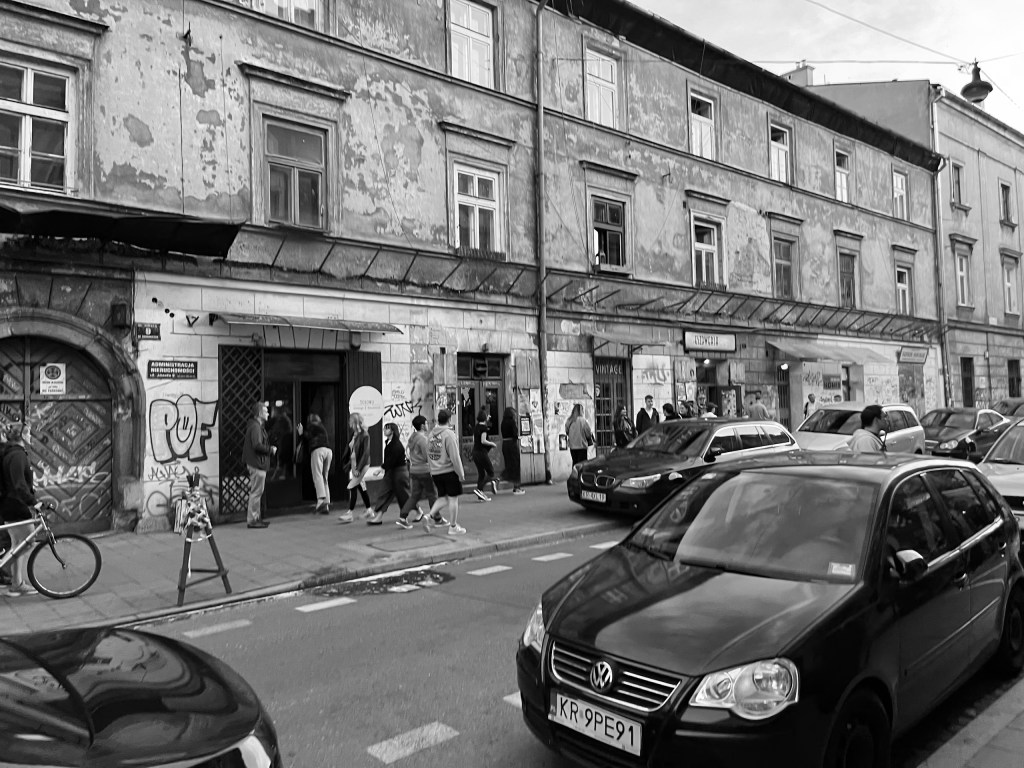
That evening, we ventured out, guided by local restaurant recommendations. Just beyond our hotel, we crossed the leafy Dietla boulevard and entered Kazimierz. The area’s weathered facades, adorned with graffiti and steeped in history, told a story of resilience and rebirth.

A Challenging History

Once an independent town, Kazimierz became a haven for Jewish refugees fleeing persecution. By World War II, it had evolved into Kraków’s Jewish quarter, only to be devastated by the Nazis. During the communist era, Kazimierz remained neglected until the 1990s, when the movie Shindler’s List sparked a cultural revival.

Savoring Flavors and Music

Drawn by lively music, we stumbled upon a cozy plaza surrounded by restaurants. The weather at 7:30 p.m. in mid-June was still bright (darkness around 10:00 p.m.) and comfortable, perfect for eating outside and watching the crowd of visitors. We dined outside at AWIW, a Jewish-Polish café, as we broadened our culinary tastes with a mix of Polish, Jewish, and Middle Eastern dishes, all accompanied by traditional klezmer music.

After dinner we decided to explore more of Kasimierz. While looking rundown and dirty, this was the liveliest and most creative section in town, filled with historical buildings, galleries, and restaurants.

Tonight we set aside our hunt for the past and searched for the best homemade ice cream for dessert. It was not easy. There were too many places to choose from and it seemed we were not the only ones on that mission.   


A Day in Polish History

Saturday, June 15, 2024
Wawel Hill

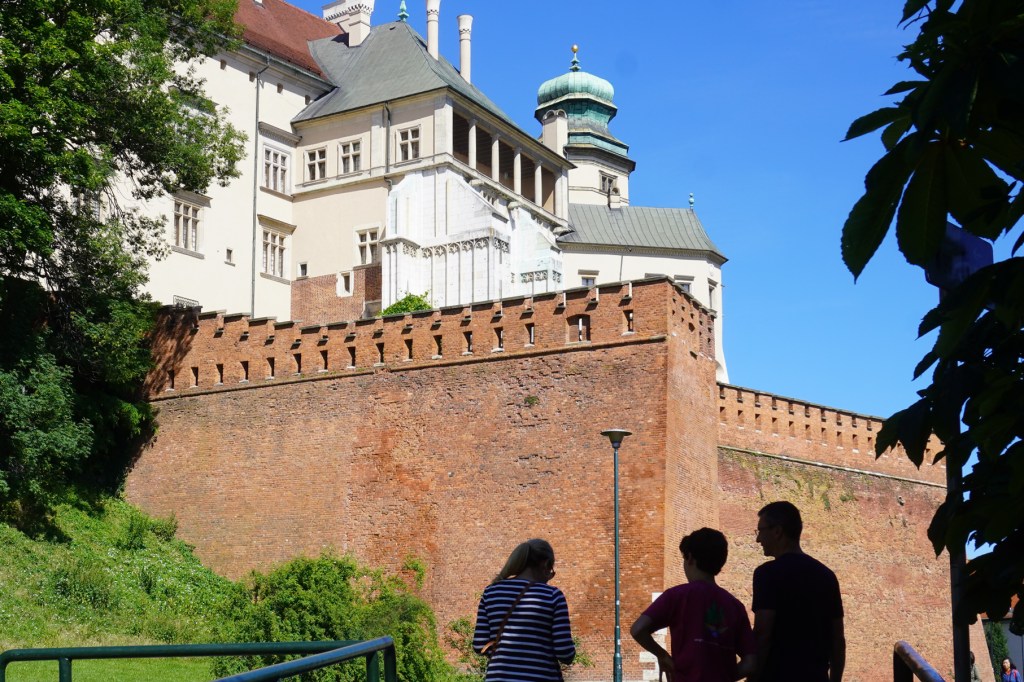
The next morning, we met our guide Johanna and walked to Wawel Hill, home to Kraków’s iconic Wawel Castle. Perched above the Vistula River, the castle complex dates back to the 14th century, though the site has been inhabited since the 4th century.

The Legend of the Wawel Dragon

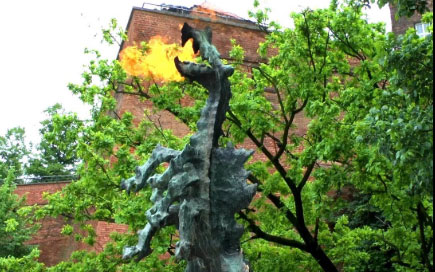
One version of the legend (there are many) of Smok Wawelski, the dragon, claims that this troublesome monster lived in the limestone cave at the base of Wawel Hill and liked to eat maidens. Knights came from all over to slay the dragon but instead were eaten alive. It took a shoemaker to devise a plan to kill the dragon by offering it a sheep with sulfur sewn inside which the dragon ate and then died. For his reward he married the princess. Today, there is a statue of the dragon that occasionally spews fire at the base of Wawel Hill reminding us of the city’s very own famous dragon.

Fire-breathing Krakow Dragon Monument
Wawel Castle

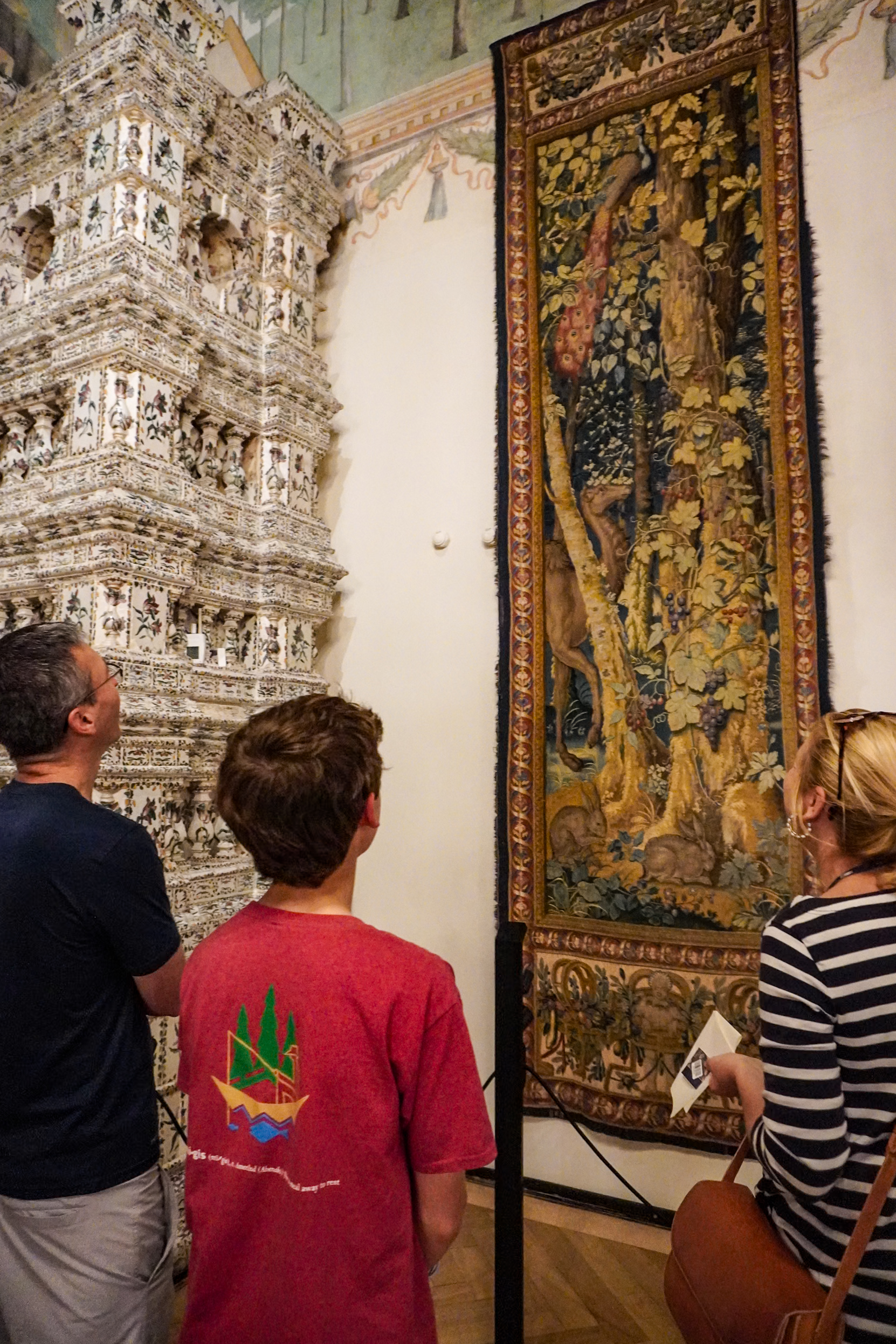
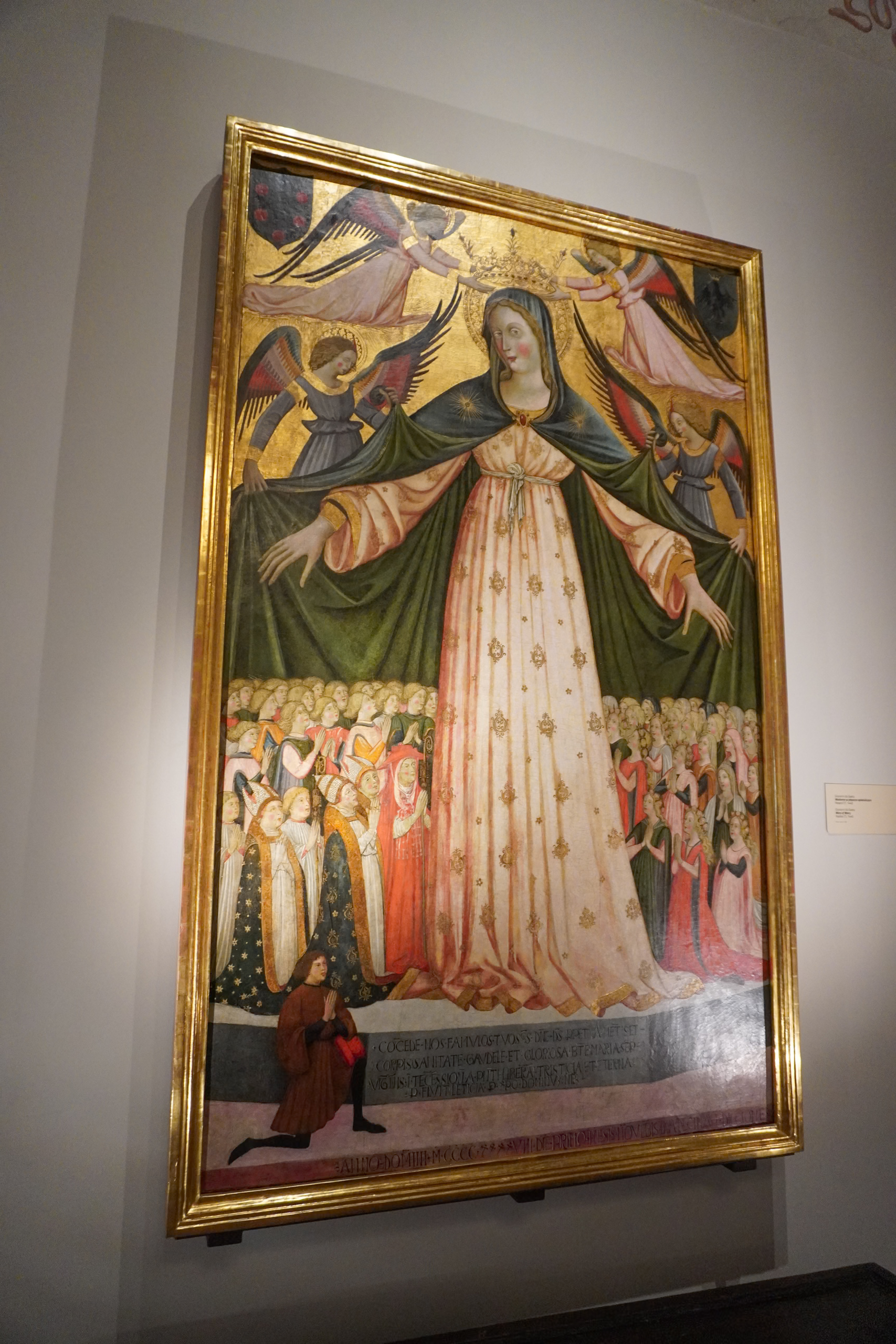
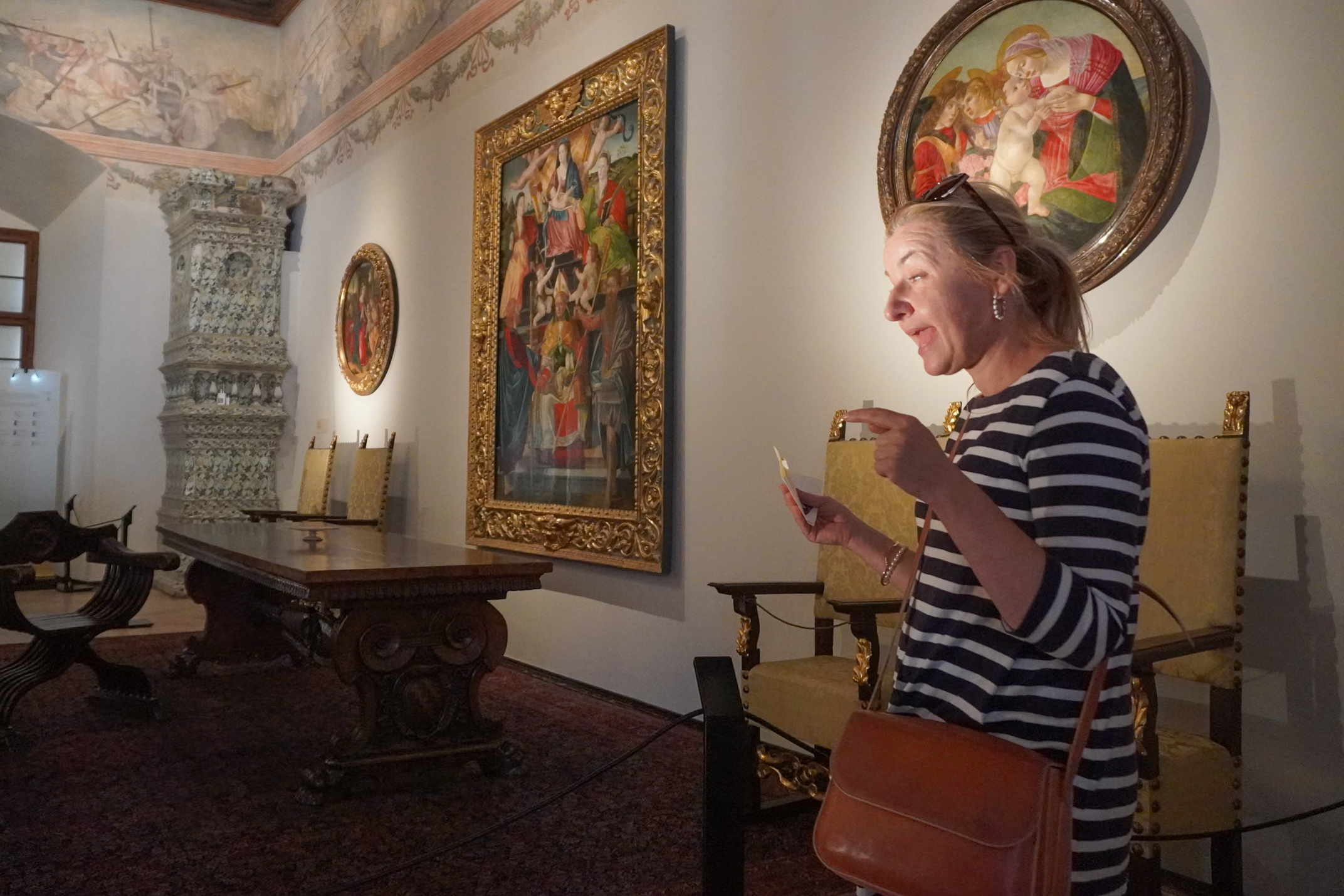
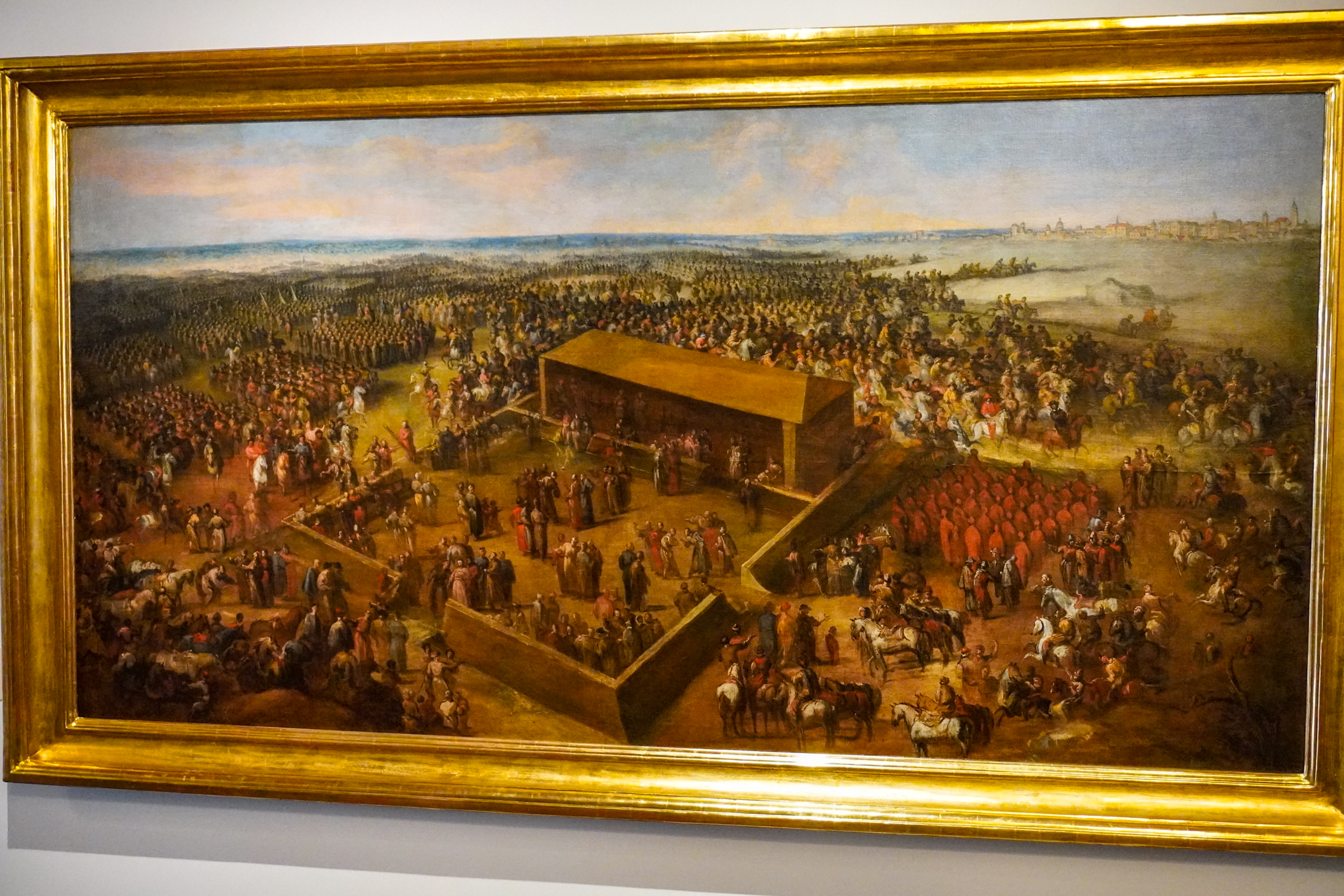
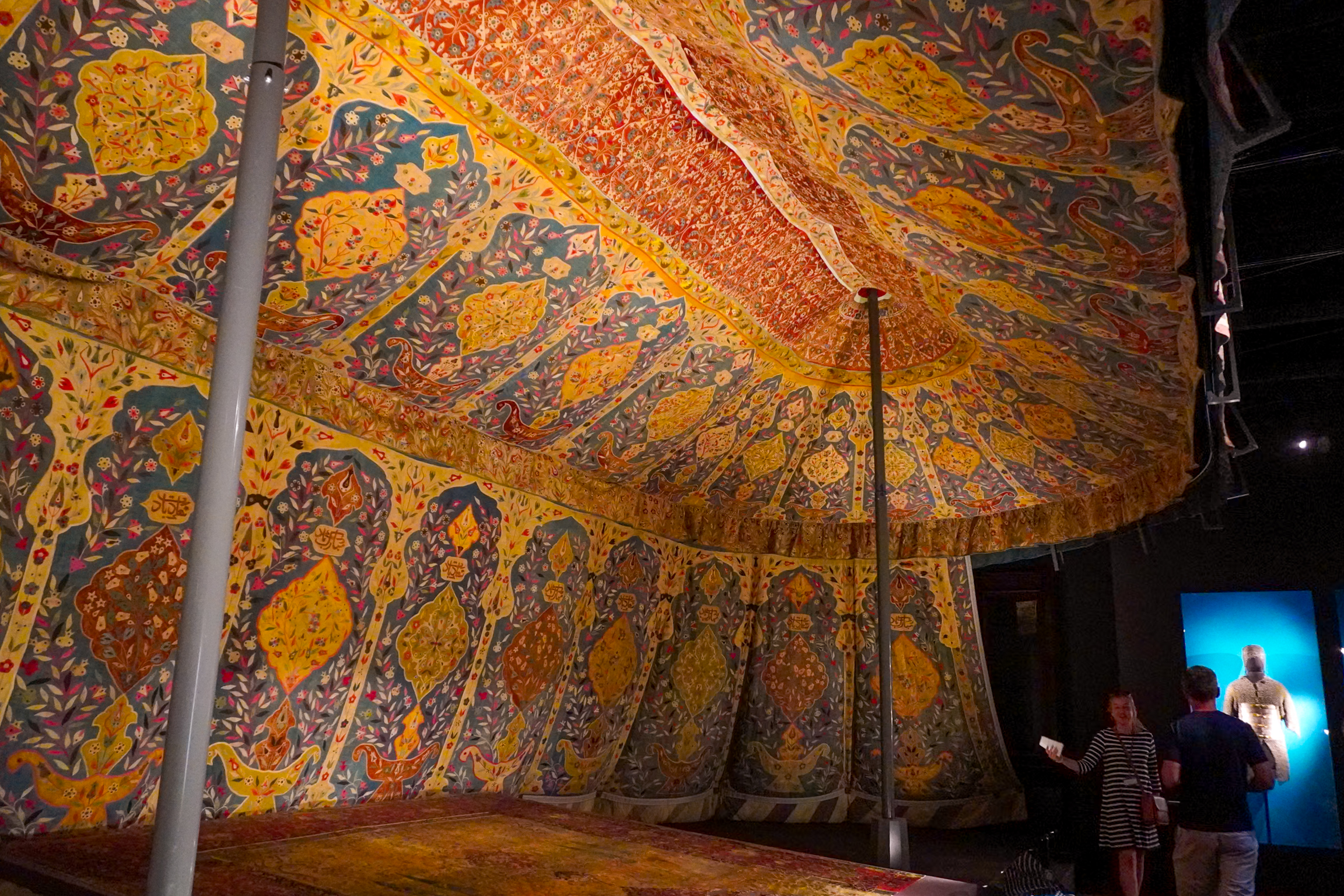
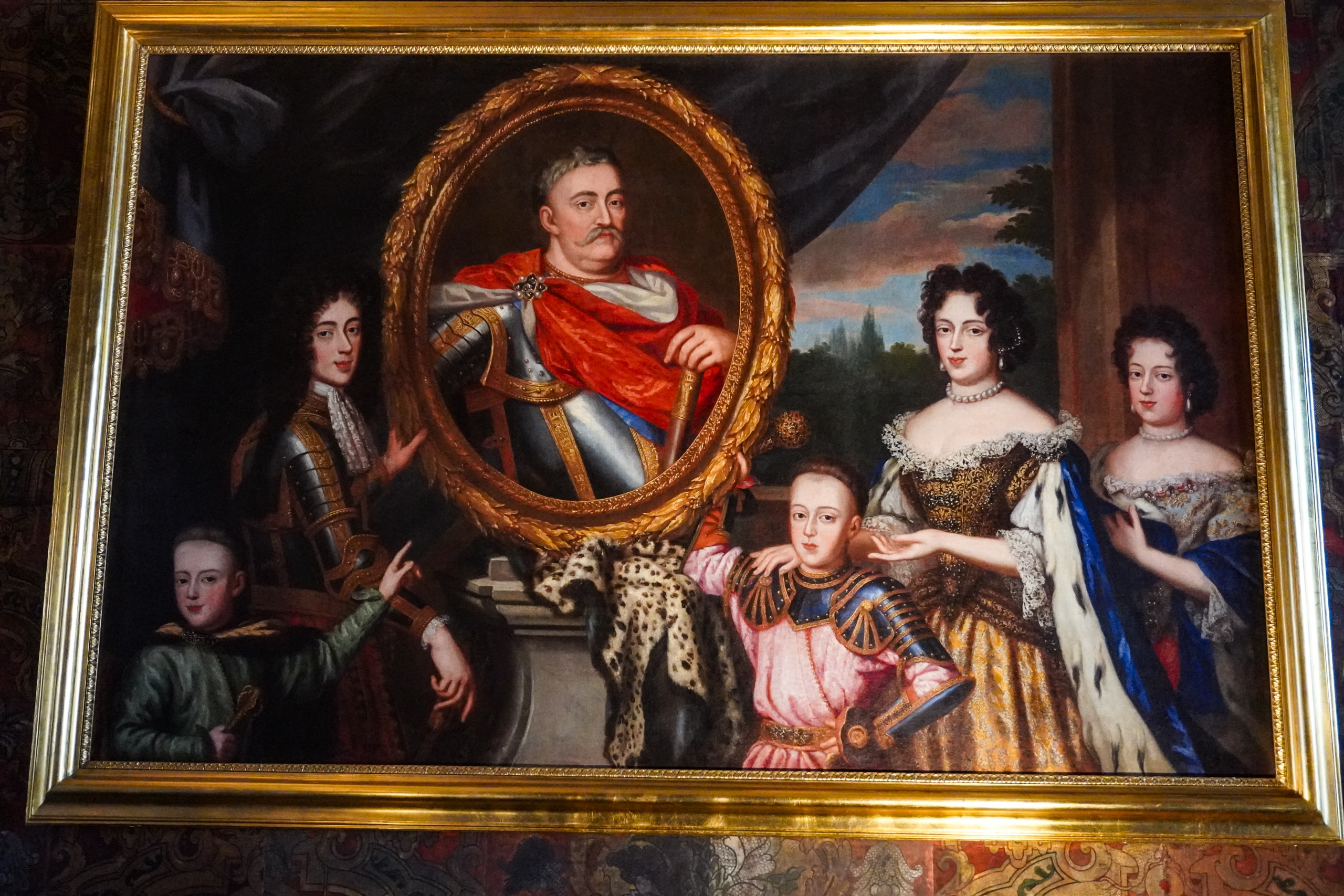
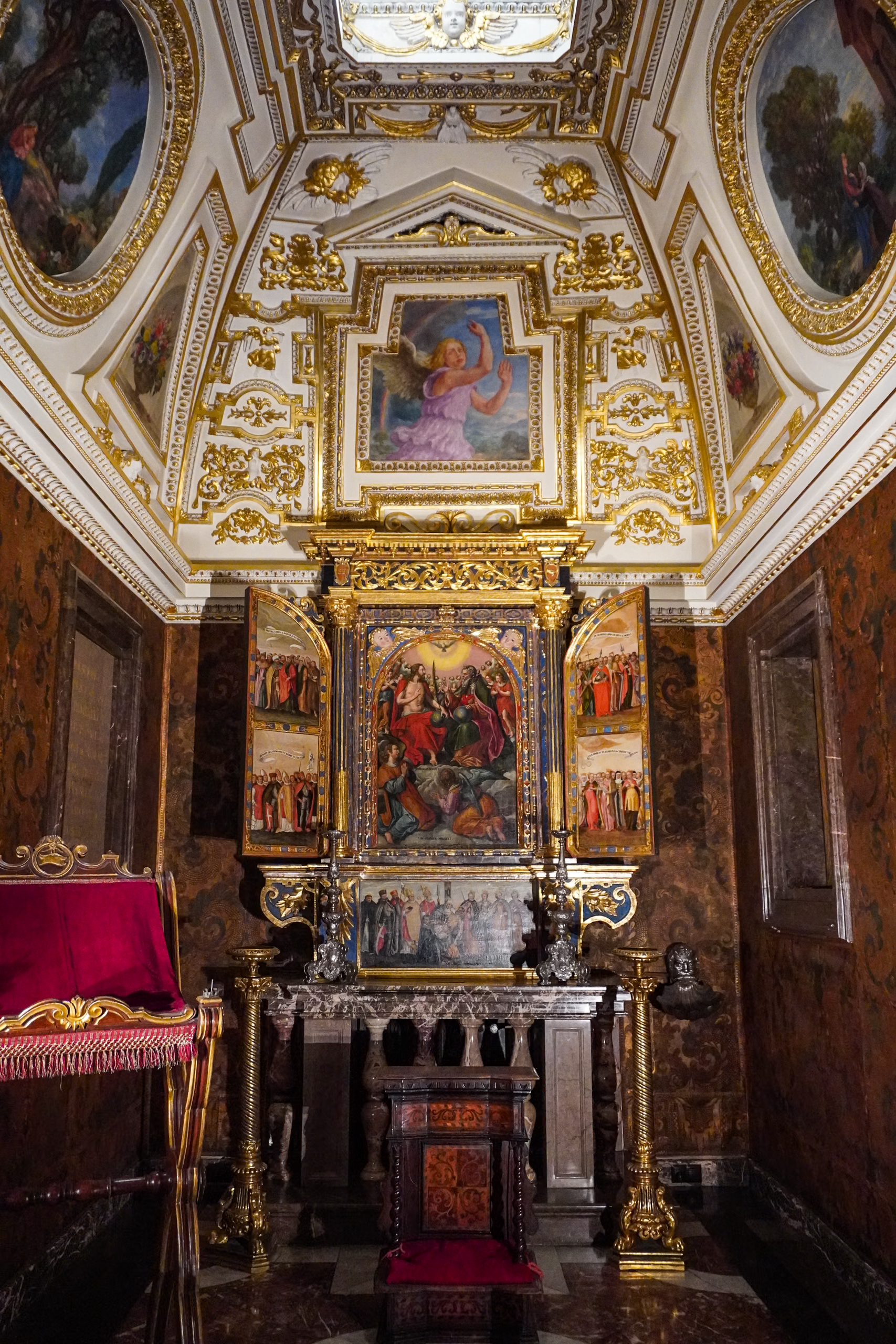
Our tour began with the castle’s Royal Apartments, brimming with centuries-old treasures: ornate armor, tapestries, and murals depicting Poland’s storied past. We also explored an Oriental Art exhibition, featuring intricate artifacts from 17th-century Turkey.

The National Shrine

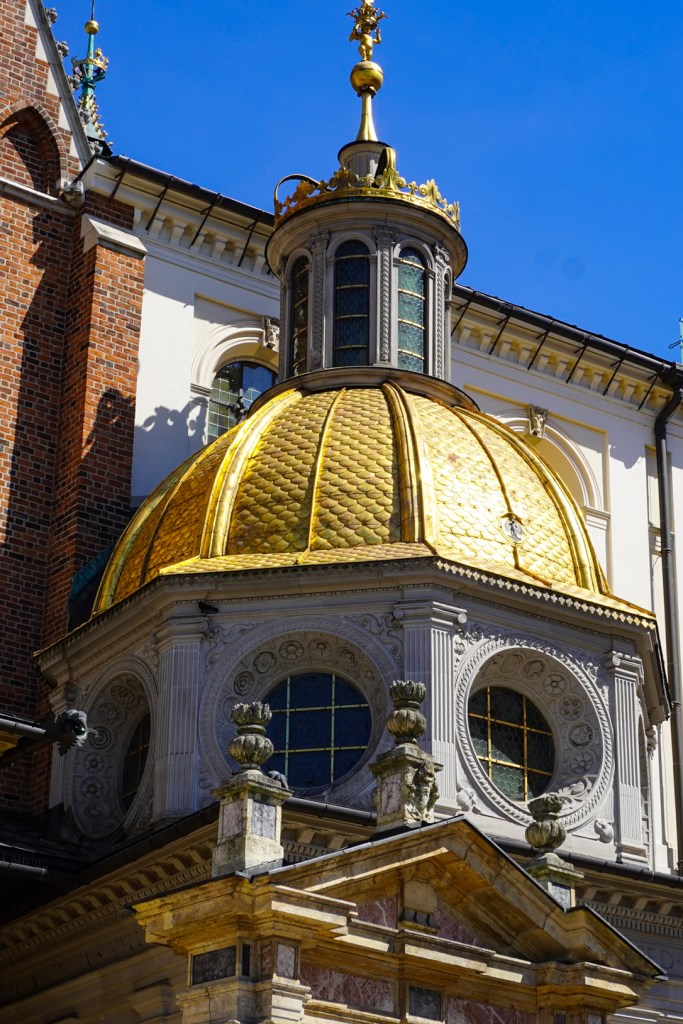
Next up was a visit to Wawel Cathedral is the sacred center of Krakow and possibly the entire country. Sigismund Chapel is notable for its 24kt gold domb. Since the 1300’s kings and other notable Poles have been coronated and buried here. You can see the actual sarcophagi tombs carved with images of the dead. Even the national hero, Tadeusz Kosciusko, who led American troops during the Revolutionary War, is buried here.  

For Whom the Bells Toll

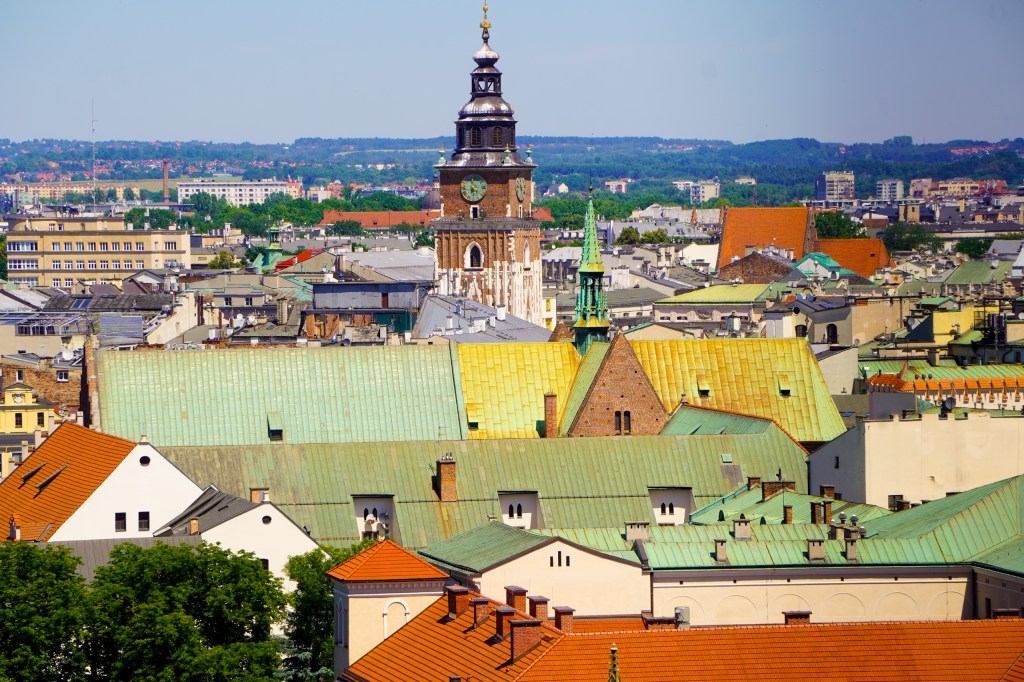
Of special interest, is climbing the 70 tight wooden steps up to the Cathedral bell tower. Here there is a great view of the castle and old town areas. But, our destination was the huge bells above us as we climbed.

View from the Wawel Cathedral Bell Tower

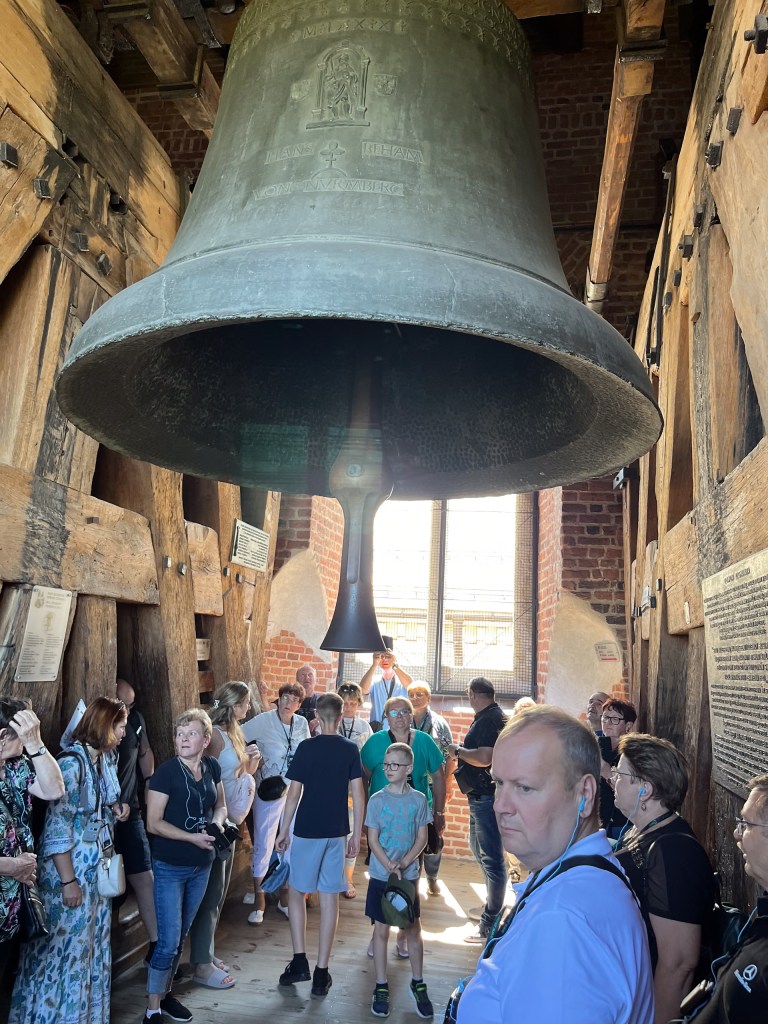
The huge, 12-ton Sigismond Bell (cast in 1520), is said to have a magical sound and is only rung on momentous occasions for Poland, such as national celebrations, major religious holidays, or times of great sorrow. 

Sigismond Bell

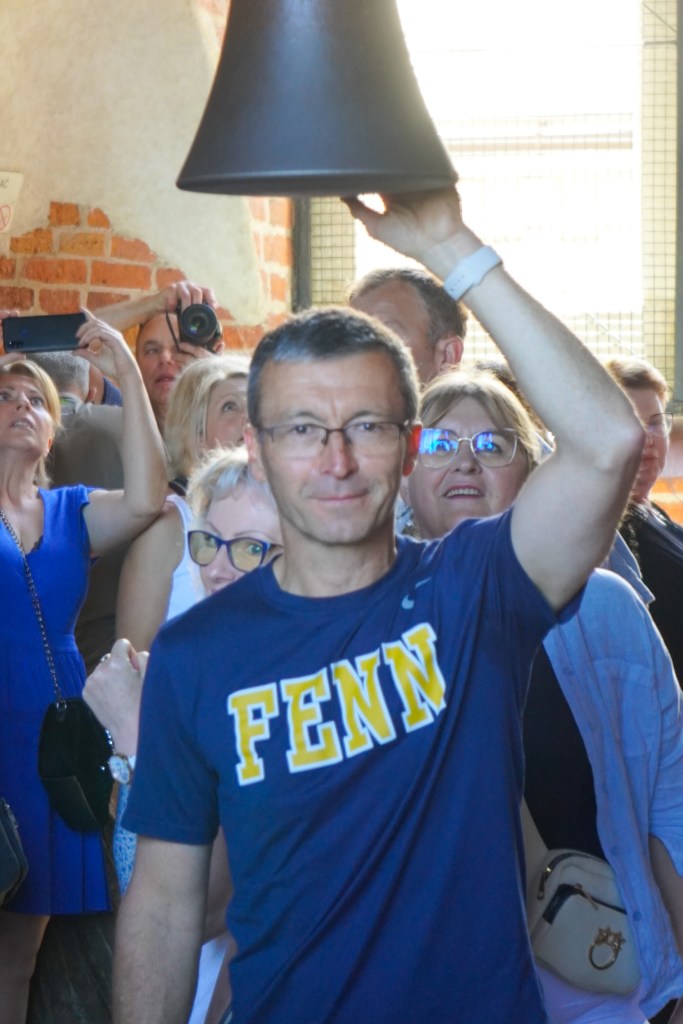
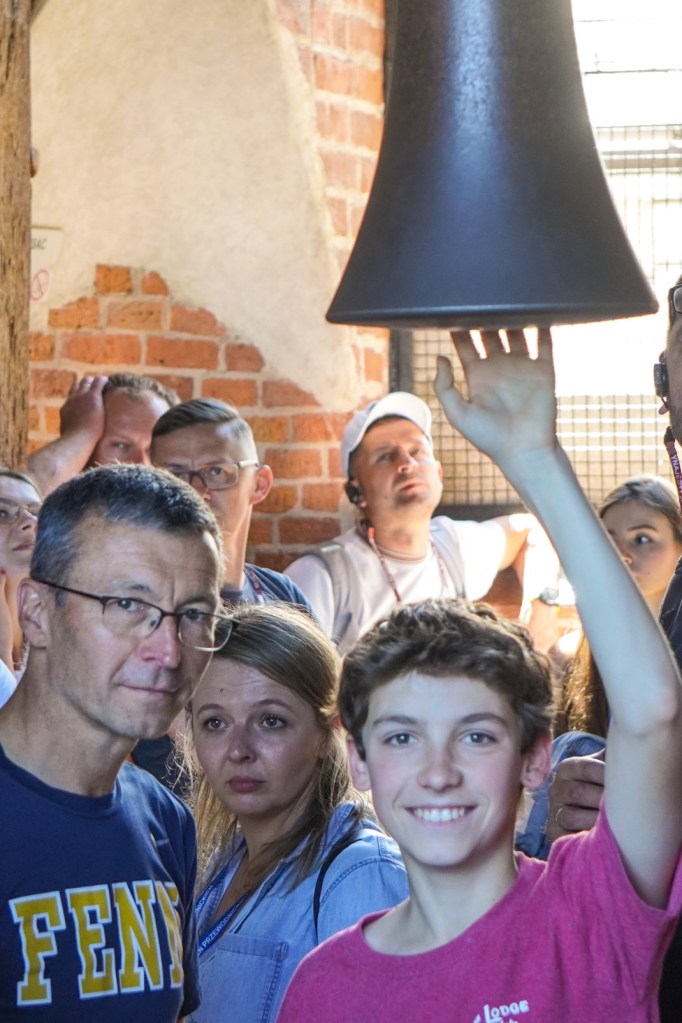
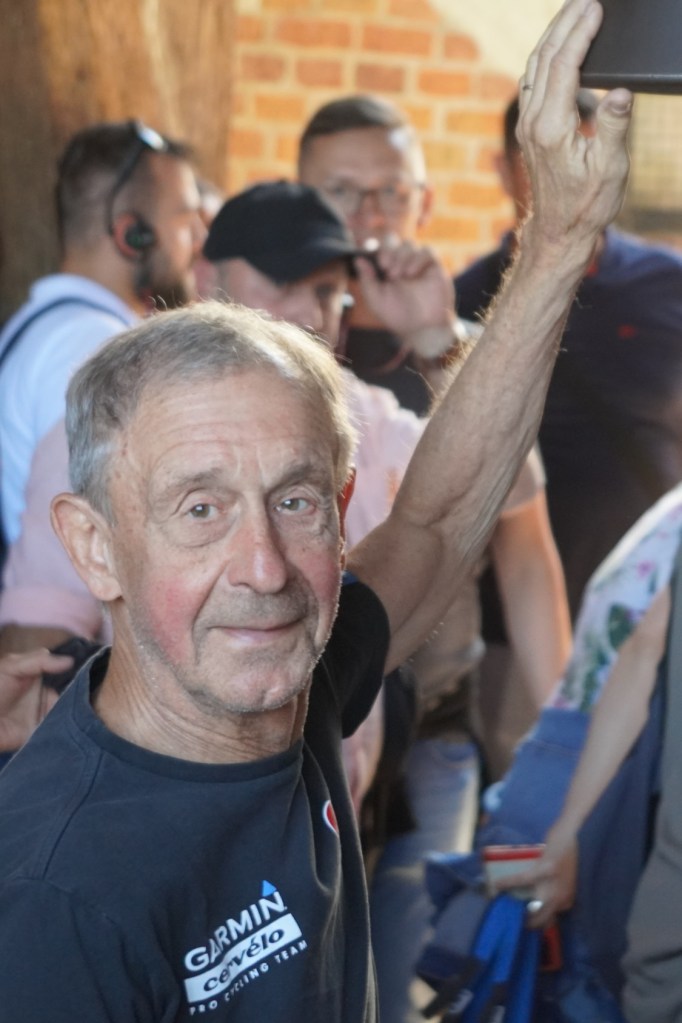
Of lesser importance, in the bell tower, but even more popular, is the Bell of St. John. The bell should be touched with the left hand while making a wish. especially in matters of the heart, such as love and marriage. Each of us touched the bell with our own private wish.

Old Buildings in the Old Town

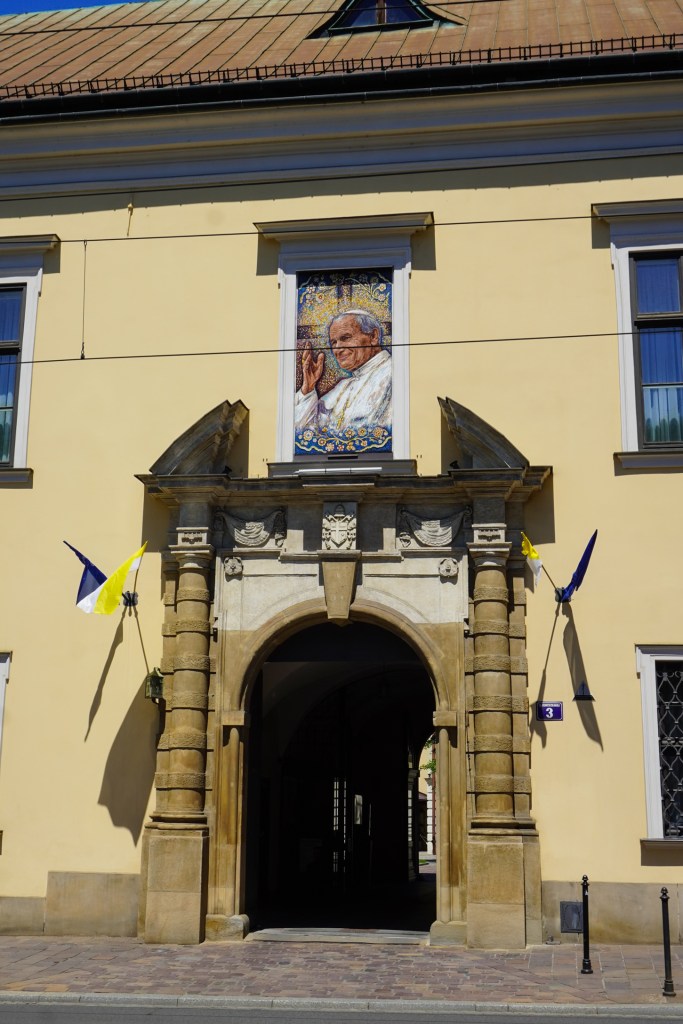
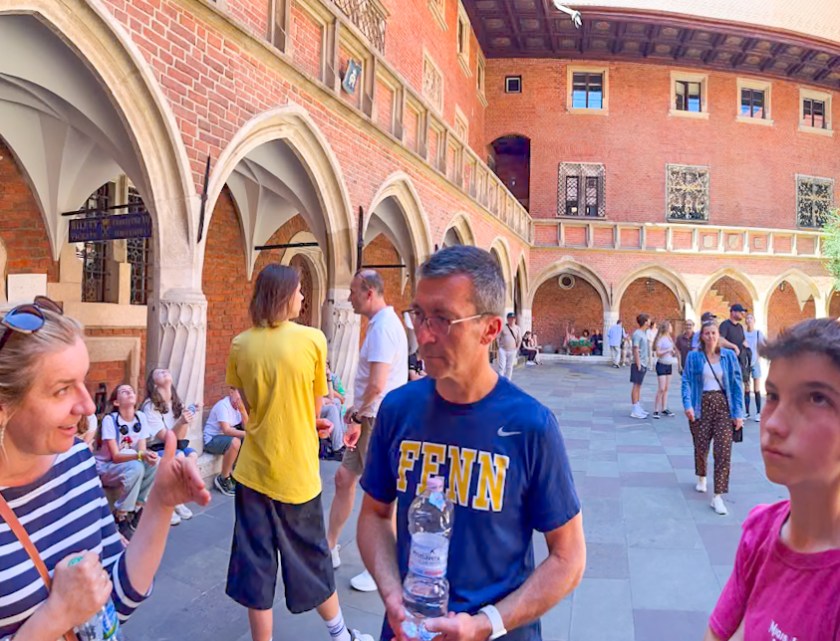
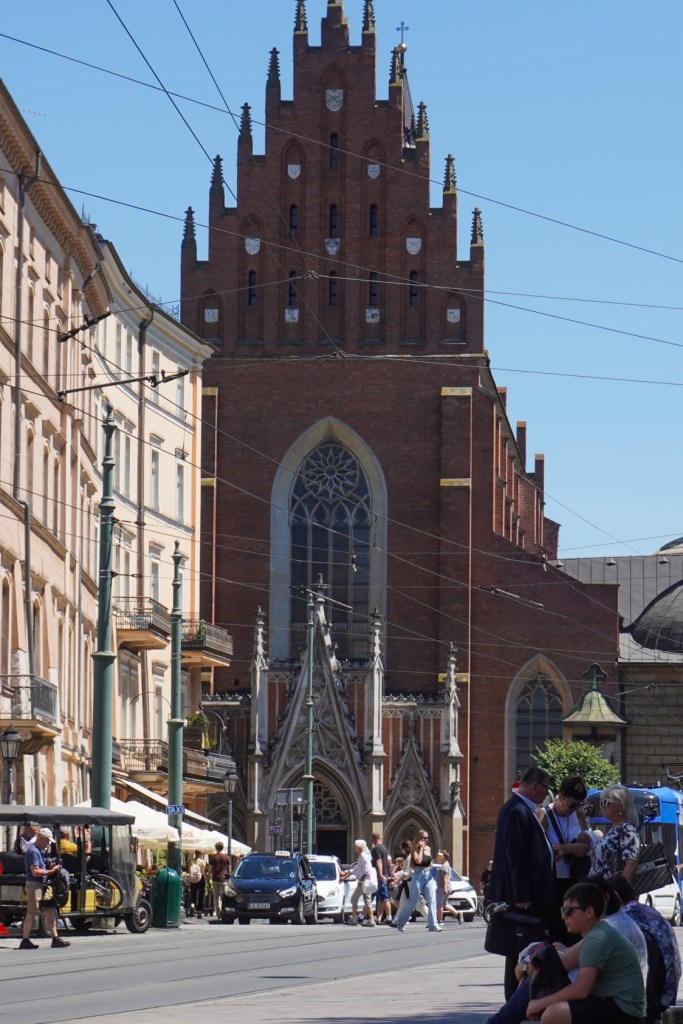
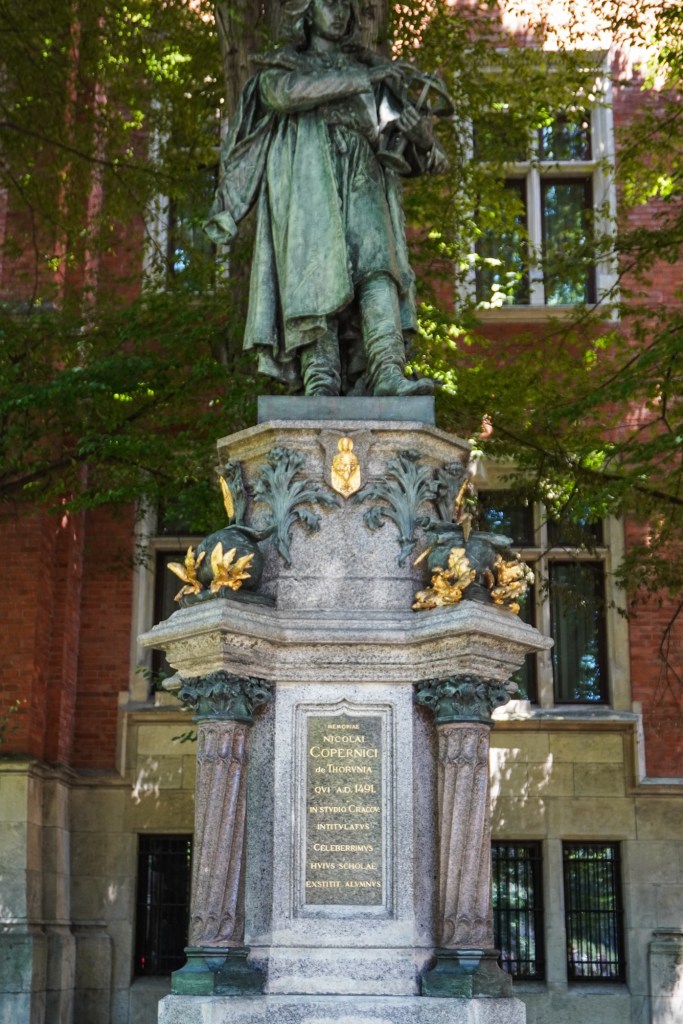
We left the castle area to briefly view a few other historical buildings. The Papel Window in the bishop’s palace where favorite-son Karol Wojtyla (who later became Pope John Paul II) would address his followers, the Church of Saints Peter and Paul and the Jagiellonian University, one of the oldest universities in Europe (1364).

A Gothic Masterpiece

Chief among other nearby historical buildings St. Mary’s Basilica know for its magnificent stained-glass windows and famous altarpiece, a pentaptych by Veit Stoss, is said to be the greatest Gothic work of art in Poland.

Roaming Around

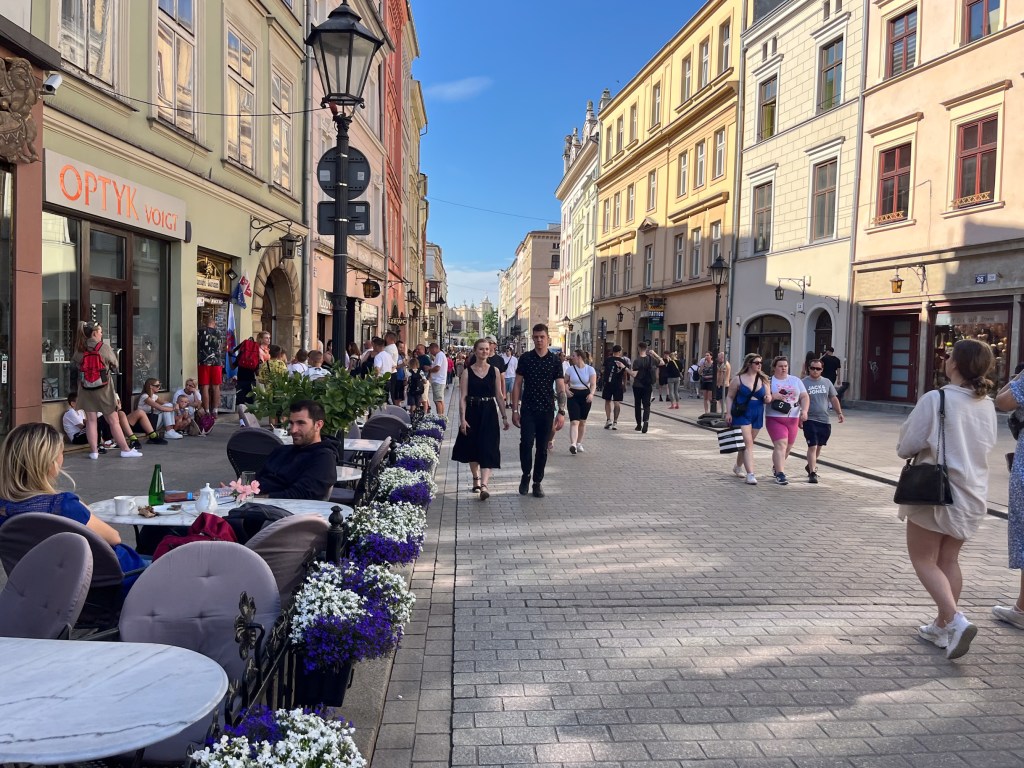
Our three hour tour ended with us heading toward Rynek Glowny (aka Rynek Main Marketplace) for lunch and then a nap back at our hotel, only a few blocks away.

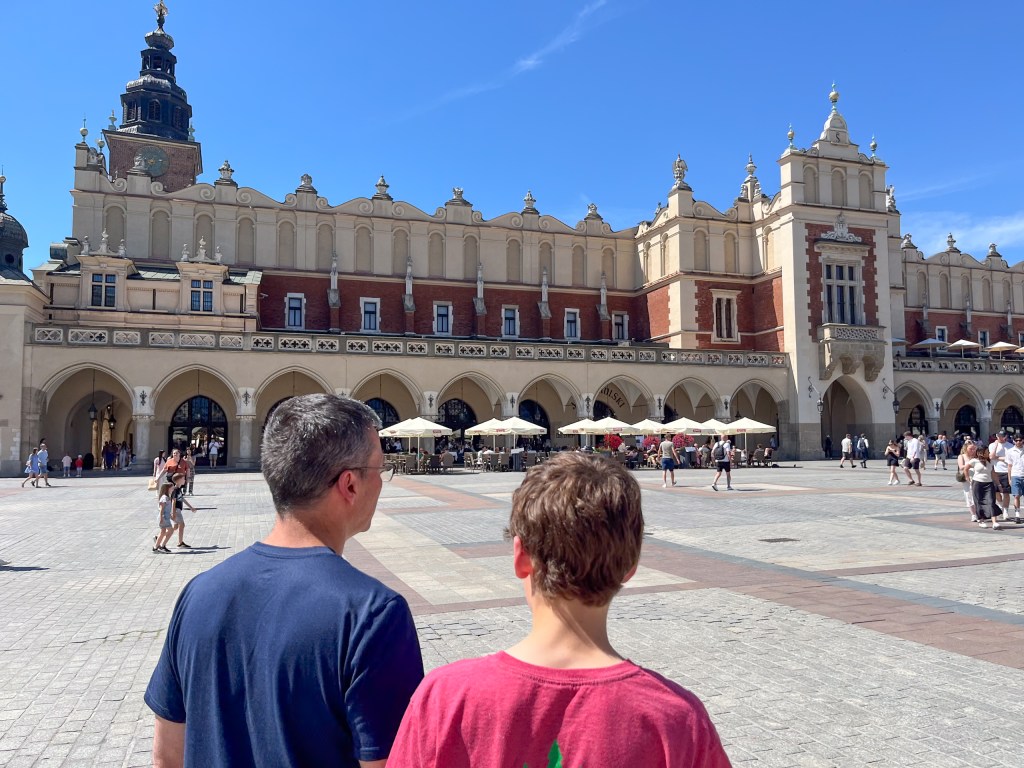
We were surprised by the size of this plaza, said to be the biggest in Europe. In the middle of the plaza, was a large building called Cloth Hall, a very old medieval marketplace where vendors would sell goods, especially clothing. Tip: Here was a great place to buy amber jewelry and Boleslawiec pottery, specialties of this area. We found just what we needed to bring home at a reasonable price solving our souvenir anxiety quickly.

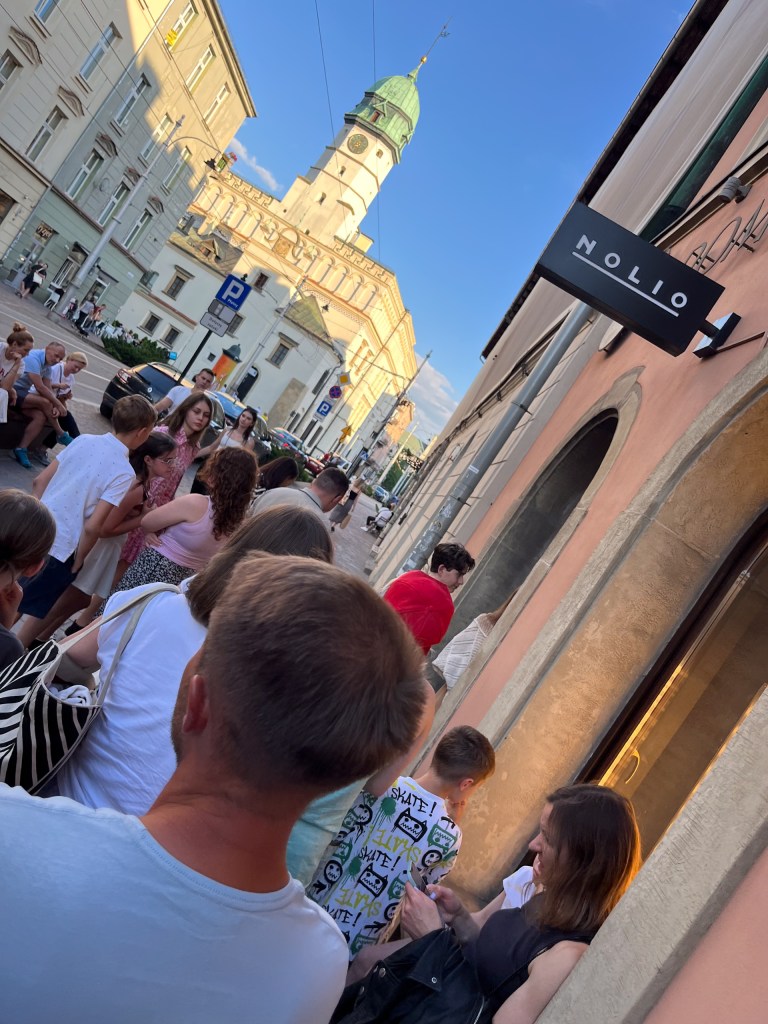
That evening we explored more of the Kazimierz and Old Town sections. We followed the crowds and found maybe the best Italian/pizza restaurant in town, Nolio’s. It was a very lively night with people of all ages, appreciating the good vibes and weather.


A Day of Reflection

Sunday, June 16, 2024
Auschwitz-Birkenau


Our final day in Kraków took a somber turn with a visit to Auschwitz-Birkenau. Located a short drive from the city, the concentration camp stands as a harrowing reminder of humanity’s capacity for cruelty. Touring the grounds was a powerful, emotional experience, leaving us with a renewed commitment to remembering and learning from history.

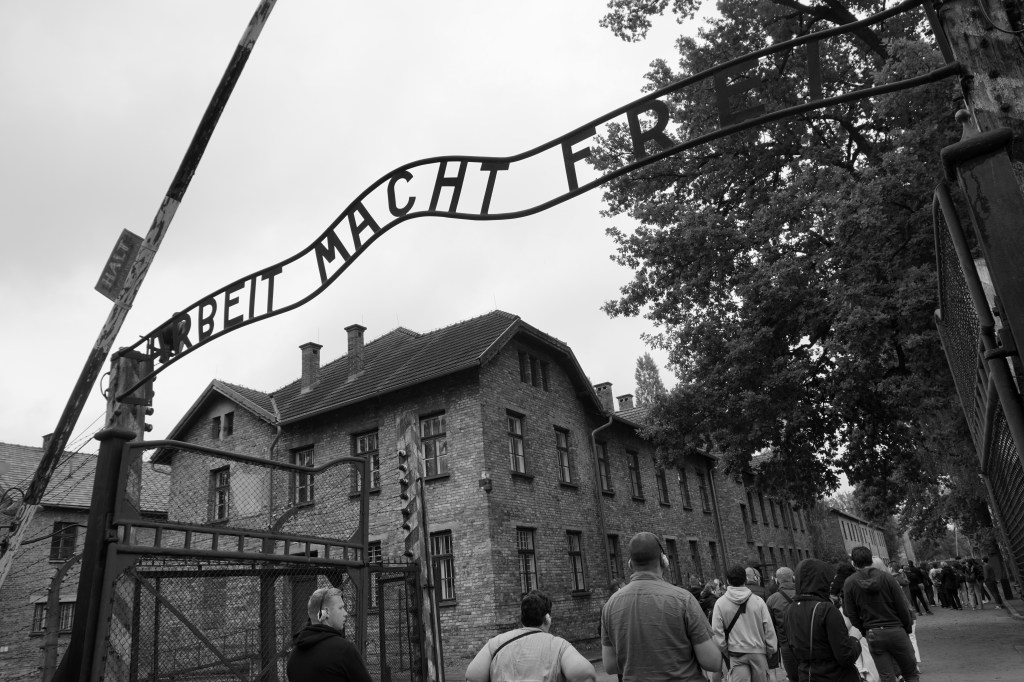
Auschwitz Entry Gate – (translation) “Work Will Set You Free”

Click here for my post on that visit including a video of our experience at Auschwitz- Birkenau.

A Celebration of Family

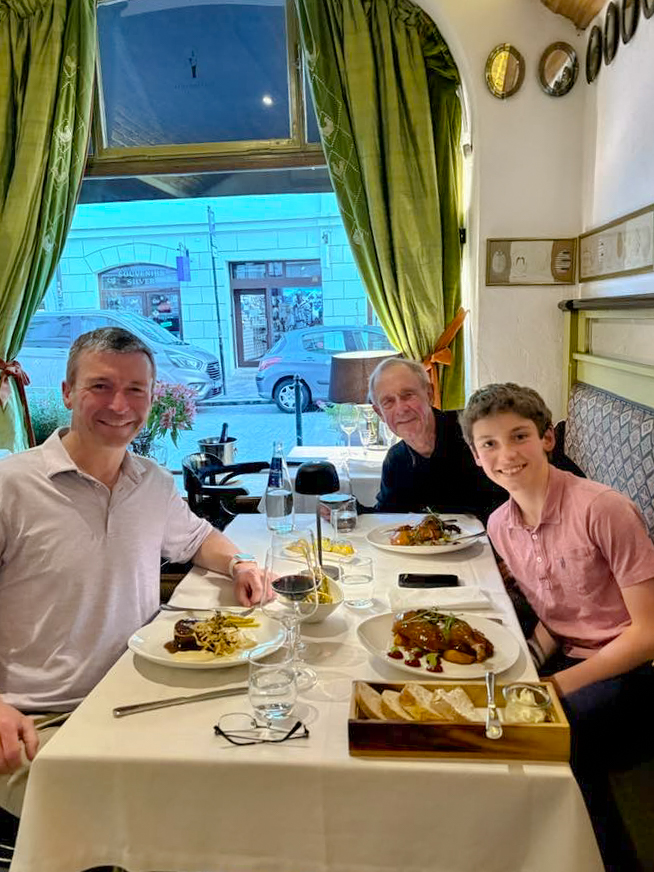
Returning to Kraków that evening, we marked Father’s Day with a celebratory dinner at Kogel Mogul, a Michelin-star restaurant specializing in gourmet Polish cuisine. The meal, a gift from Ethan’s wife Amanda, was the perfect way to cap off our journey.

A Michelin-star restaurant in Old Town called Kogel Mogul had been recommended to me by a friend. They specialized in gourmet Polish food. Both the food and service was outstanding and prices were reasonable for that level of quality. We would recommend it to anyone looking for a special dinner in Krakow.

Click here for my post “Eating Polish” for a broader review on eating everywhere on this tour in Poland.

England in Poland

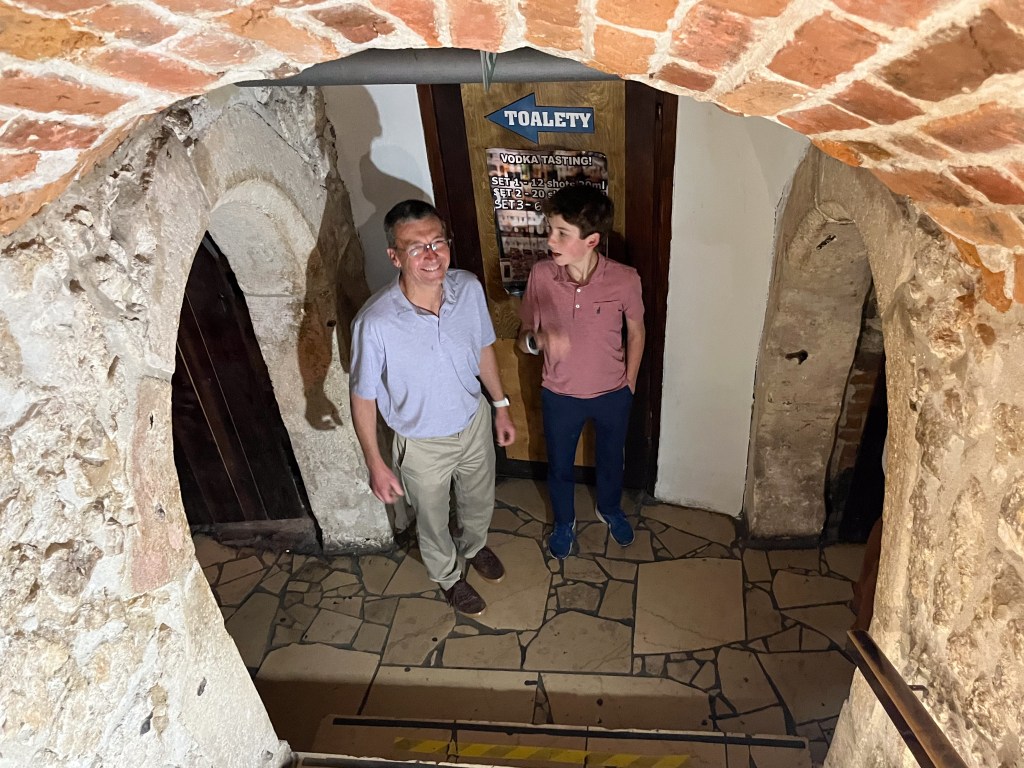
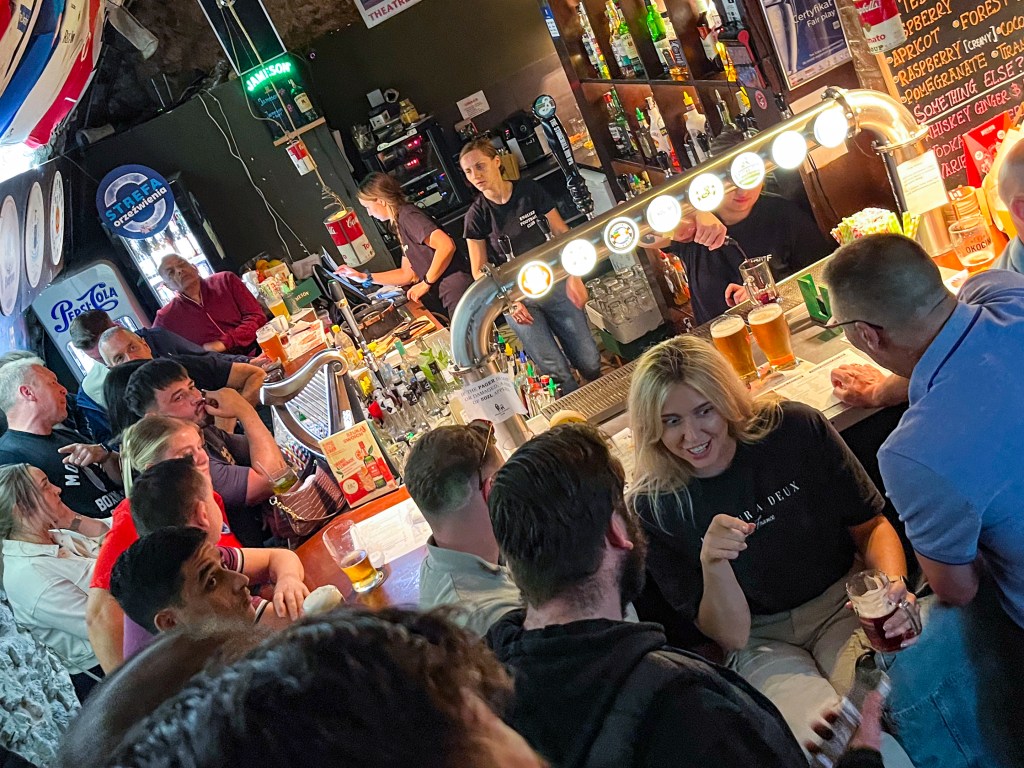
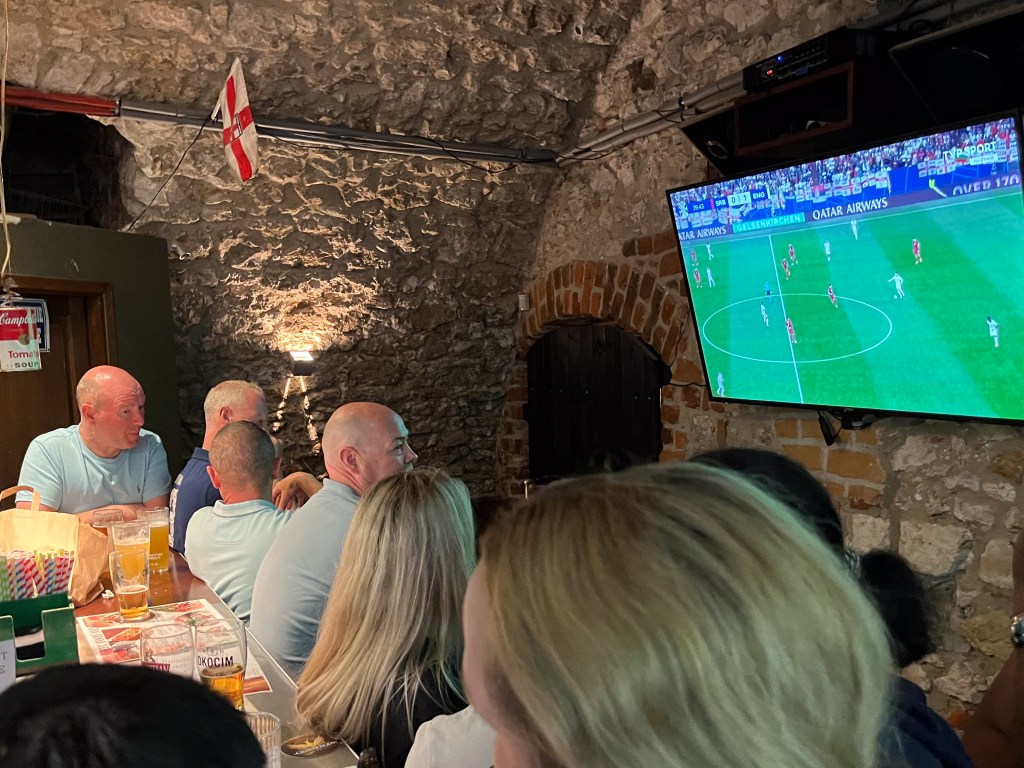
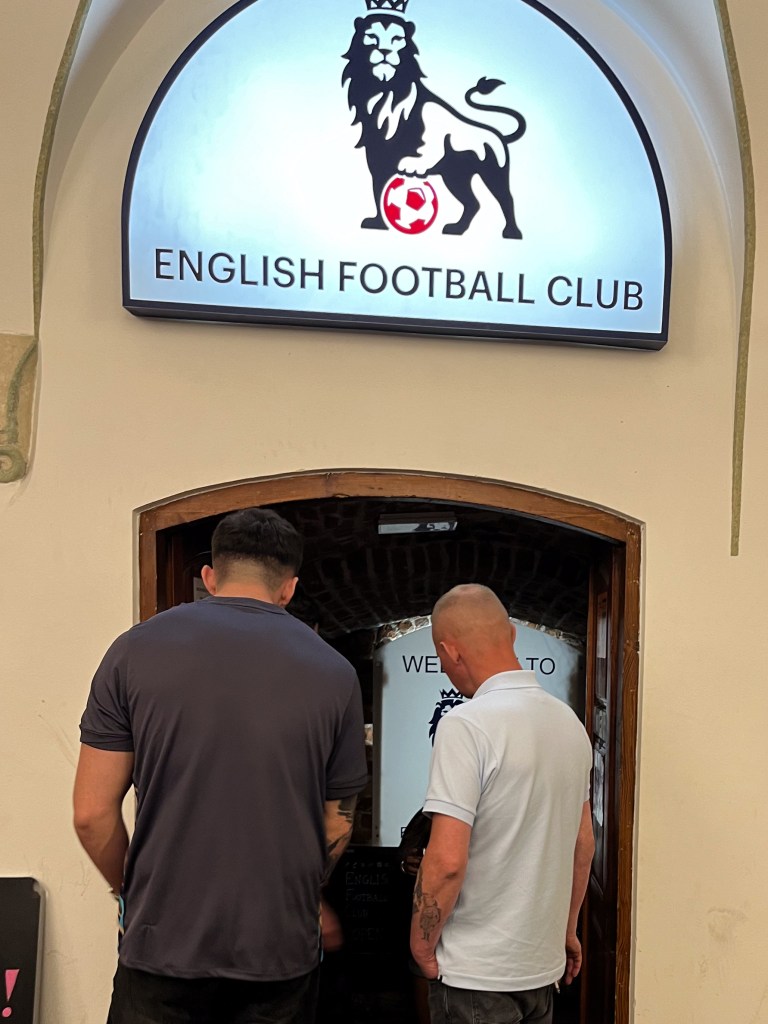
Leaving the restaurant after a leisurely meal we walked around the old town which was still lively but less crowded. We followed a stream of people heading to what looked like a cellar bar  with called the “English Football Club”. Seemed a bit out of place here in Poland but especially relevant because the Euro 2024 Tournament was underway, as my young grandson Ethan Luke (15 years old and a BIG “soccer” fan) reminded us.

We ended up in a jam-packed bar of what we presume were mostly British ex-pats cheering on the England against Serbia. Wow! For a few moments we were transported to a different part of Europe with all the spirit and camaraderie we seek in our travels. The crowd was so tight that we could not even buy a drink, which would have been nice but not necessary to enjoy the fun.

We continued exploring the Old Town section for a while that last night while father and son duked it out on where to go next. Next, would be back to the hotel for some sleep after a long day.


Final Thoughts

Kraków captivated us with its unique blend of history, culture, and modernity. Its welcoming atmosphere, vibrant neighborhoods, and proud heritage left an indelible impression. While we regretted not having time to explore every corner, we left with a deep appreciation for the city and its people—and a resolve to return.

As a Polish American, this journey was more than a vacation; it was a homecoming.


More On Our Polish Heritage Tour

See all photos for this tour here.

Witnessing Auschwitz

Our family of three generations of Polish-Americans tour Auschwitz-Birkenau in search of its history and cautionary message. Can anything so brutal ever happen again?

We decided to add a visit to the Memorial and Museum Auschwitz-Birkenau as a final point of interest on our genealogical trip to Poland. It was about an hour and a half cab ride north of Krakow. As you can imagine, touring a concentration camp is not a pleasant task, but it was an important one for a trip themed around life and death.

All of our sources suggested purchasing tour tickets well in advance, as it is an “important” tourist destination. Much of the concentration camp area is free and open to the public. However, the museum offers reasonably priced small group tours in various languages, including English. The professional guide leads about 30 ticket holders throughout Auschwitz and the neighboring Birkenau camp, providing the necessary historical background in a roughly 90-minute tour.

There were busloads of visitors this Sunday (June 16) starting at the new visitors’ center, which seemed well-equipped and organized to handle large daily crowds in the thousands. The visitors’ center, a year-old, mostly concrete structure, is sparsely designed but well-thought-out as a waiting area to keep visitors moving. There seemed to be a bit of irony as we followed our somber guide, almost blindly, in military order to Auschwitz and then by bus to Birkenau. The place naturally has that kind of aura.

We visited a handful of the many buildings in a progression that seemed to heighten the senses to the scale of this horrific place. We started with an understanding of the scale of this project, which began in 1939 when the Nazis annexed the town of Oswiecim to create an industrial base with a work camp at Auschwitz, a former WWI Polish barracks. The success in exploiting and then murdering prisoners led to a huge expansion at nearby Birkenau and other smaller camps in the area. The camps held over 1.5 million prisoners, 1.1 million of whom were murdered. In just a few years, the Nazis had learned how to efficiently kill and plunder Jews (largest number by far), Poles, Russians, Gypsies, and others from all over Europe.

The tour, buildings, and grounds are preserved much as they would have been back then. Auschwitz does not look particularly threatening from the outside of the buildings until you learn what happened on the inside. The museum tour continues quickly through several buildings, each with a specific focus such as medical experimentation, extermination, proof of crime, interrogation, punishment, and cremation.

All this is explained and examined through the many glass-enclosed statements and artifacts. Surprisingly, the photos on display do not show the ravaged bodies of the starved and tortured, but rather pensive and scared individuals waiting for the worst to come. This is not a multimedia experience. We see and hear only the story, but by being in the actual place, we can more easily imagine what happened. Imagination here can be more powerful than simulation.

The final third of the tour was a short bus trip to Birkenau after touring Auschwitz. I was surprised by the larger scale of the Birkenau camp. Its 365 acres are wide open except for a dozen or so buildings and the ever-present electrified barbed wire fence. There is a dominant headquarters building and guardhouse with train tracks running right through it. The tracks and train end about a half-mile into the camp, where thousands of prisoners would end their final journey.
Auschwitz remains important as a reminder to all of us of man’s ability to do wrong, especially to each other. One can only imagine how anyone could be so cruel, although there is plenty of reason today to think that it could happen again. On the other hand, we know that people can change too. Germany and Japan today are positive examples. It’s worth a visit to Auschwitz at least once in your life to give that some serious consideration.

For this particular visit I chose to create one slide show video with pics we took while on the tour with the theme from Shindler’s List playing in the backgroud. While we were all lost for words, the pictures are memorable and speak much louder than words.

Slideshow Video of Photos taken at Tour of Auschwitz-Birkenau