Watching Ken Burns’ ‘The American Revolution’ brought back memories of my 15-mile historical reenactment walk eight years ago. There’s nothing like being there to appreciate the sacrifices our forefathers made for our country.
It was January 7, 2017, near midnight when we started.
The plan was to walk with a Revolutionary War re-enactment group from Trenton to Princeton to reenact the famous Battle of Princeton. What that actually meant to a crazy group of long distance walkers remained to be seen.
Battle Briefing
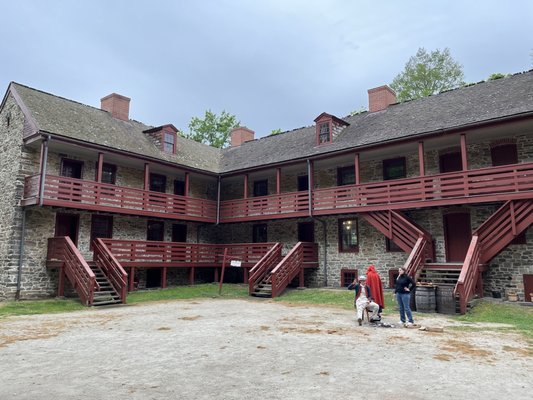
As we approached the Old Barracks of Trenton there was an eerie silence. The old wooden two story building was wrapped in a fort-like fence barely lit by faint street lights in the middle of a post-industrial city. There was no trace of life, let alone preparations for a battle.
Our rag-tag group of six FreeWalkers were here as volunteers to experience what it might have been like to be part of a crucial Revolutionary War battle by following reenactors in an event labeled “To Princeton with Peale!.” To be accurate these were Charles Wilson Peale’s Company of Philadelphia Associators who would march through the night to surprise the British at the Battle of Princeton.
We were experienced long distance walkers but not battle tested, as they were. We were used to marching long distances and even cold temperatures. Our march on Princeton event provided new challenges for both pedestrian civilians and enacting soldiers.
The Battle of Princeton was a crucial event in turning the tide against the British and surprising Cornwallis’s troops. Only days before, Washington had held off the British at Trenton and captured a Hessian garrison after crossing the Delaware.
Now, bolstered by their current successes and desperate for victory, Washington planned a surprise, nightime offensive attack on the British. They needed to somehow quietly march the troops 15 miles around the British flank with a surprise attack on Princeton. Reenactors and observers like us would re-create what it was like to be there and be part of it.
Getting Ready for Battle
The general informs us the troops are still sleeping
Our first problem appeared at the stroke of midnight when we were set to start. We learned the troops were actually still sleeping in the barracks and would start this year at 1:00 a.m.! Where would the Continentals go if they had to wait an hour?“To a pub!” someone replied. As we started walking away, a faint bar light of the Smoke House (aka 1911BBQ) on Front Street appeared. Naturally, we took shelter in preparation of the upcoming battle walk.
At the Smoke House … waiting.
After about an hour at the Smoke House, we were primed for some kind of battle as we spilled out of toward our Continental troops mustering outside the barracks. Orders were given. We were headed to Princeton. Soon we headed down the old streets of Trenton following the troops. There was a positive energy in the air, in spite of the hour, five inches of snow and bitterly cold temperatures.
It’s Time to March
Peale’s Philadelphia Associators at attention and ready to move out
This was our first experience interacting with reenactors. Reenactors take their roles seriously. We managed to chat briefly with couple soldiers but most kept quiet on the march or talked quietly – just as it was ordered by Washington. We learned that historical reenactments are more than just dressing up and marching to this event. There is a sincere attempt to mirror history as best they can.
Quietly marching through the streets of Trenton at 1:30 a.m.
In 1777, history recorded that the temperatures were probably in the 20s and snow had fallen a week before. It had thawed and refroze leaving a crusty snow to walk on. That was an important fact in deciding to attack, as too much mud or deep snow would have made a successful attack impossible. This day we had to face the cold temperature and five fresh inches, enhancing the experience. Our conditions, at least for weather, were worse this year of 2017 than 1777.
We continued past the old colonial homes and townhouses of Trenton into the Chambersburg section. Then continued on a broad Hamilton Avenue into Mercerville, Hamilton and eventually turned on Quaker Bridge Road toward Princeton. This was a roundabout route around Cornwallis’s troops. Now, these are well-travelled commercial roads.
As we walked in the middle of the quiet night in these suburbs the only sign of life was a single Wawa convenience store where we could take shelter for a 15-minute break. The troops were not so lucky. They kept going, presumably because convenience stores are a post-revolution concept.
Our objective was finally reached about 6 a.m. when we approached the Thomas Clarke House on the Princeton Battlefield. This was where the soldiers would come together for the battle reenactment. The only problem with this was that we still had a couple hours before the reenactment began. There was one campfire and one house for all to share and the temperature was said to be in the single digits.
Our history lesson organized by the Princeton Battlefield Society started at 6:45 a.m. It was fascinating and helped put the actual event in perspective. The British Army historian William P. Tatum III, Ph.D. told the story of the battle.
Our History Lesson
We all recognize Washington’s crossing of the Delaware which occurred on December 26, 1776 where he attacked the Hessian troops in the Battle of Trenton. With that success he moved into Trenton and held back the British who attacked him at the Battle of Assunpink Creek on January 2, 1777. Then, in a surprise move, Washington’s troops led by General Mercer continued marching that night toward Princeton to capture the British garrison before heading to Morristown for winter quarters.
Trumbull’s Death of General Mercer
Mercer was mortally wounded. Reinforcements under General Cadwalader turned back after seeing Mercer under fire (Peale’s unit was under Cadwalder). But, eventually Washington sent troops who overcame the British and took over Nassau Hall, a strategic British garrison. The victory helped drive the British out of New Jersey and helped turn the tide of the war. It gave new confidence to the Colonials and helped enlist more soldiers.
On the battlefield where we watched, soldiers fire cannon at costumed British troops on the snow covered fields, amazed at the difficulties of war. Moving heavy cannon in the snow, wadding bullets and gunpowder, meanwhile being shot at in the open. If nothing else this had to be a nerve-wracking experience for both sides. Then, if you consider that most of these men had just been through several major battles in recent days, were lacking sleep and were at the end of their supplies, the effort and outcome seems all the more amazing.
Taking Solace in Victory
The combination of bitter cold, warmth of a fire, shelter in historical homes and the presence of colonial soldiers had created a new, yet old, reality show. After this long 10-hour bitter cold night, learning first-hand about war in the 18th century, and building close bonds with fellow troops – we had enough.
Just as Washington headed to his headquarters in Morristown after the battle, I too headed for my Morristown home.
War is hell, and a tough slog, especially in the winter.
For one sleepless night, we became immersed in history and energized by the spirit of 1776. Huzzah!
A great book on a 2021 solo walk from Washington DC to NYC. King unearth’s the past with the present in his personal journey.
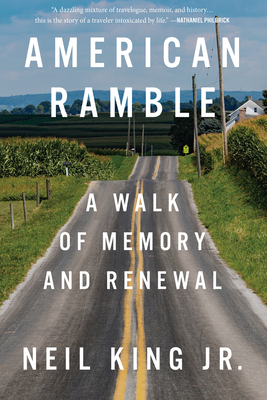
The following is a review of a 2023 book by Neil King, Jr, about his very personal solo walk from Washington DC to New York City in 2021. My son Justin gifted it to me after hearing Neil discussing it at a local talk. Thanks Justin!
It was a book that I related to very personally. I’ve done many long walks in past years and lately have changed most of my serious personal journeys to long bike rides.
But I have to admit the feel of pushing one’s self, even as I get older, is still alluring to me. And, the absolutely free feeling of being solo on a journey is an experience I will never forget. I love being back home with my family but I also love the wanderlust of being on the road.
-Paul
Neil King Jr. confronts aging, a personal battle with cancer, and the broader struggles of COVID-19 and political upheaval. In the midst of these challenges, he embarks on a long walk as an antidote to depression. This walk becomes a deeply focused endeavor, channeling his energy into researching, planning, and executing a journey through history to better understand the present state of the country.
King’s unique journey is more about the creation and leveraging of a personal challenge than the physical feat of walking 330 miles in 26 days. Though the route may appear to be a ramble (a walk for pleasure, typically without a definite goal), it is anything but aimless. King meticulously plans his route and accommodations, choosing interesting and often off-beat places with unique ties to America’s past. Equipped with a simple backpack, he immerses himself in the journey.
His walk from Washington, D.C., to New York City becomes a tapestry of American history, reminding us of Native Americans, revolutionary patriots, immigrants, slavery, and more recent events like 9/11 and the January 6th insurrection. The country has changed significantly, yet remnants of the past remain, often hidden in plain sight. King’s research brings these historical elements to life, allowing for a deeper understanding of our present.
However, King’s book is more than a historical sketch; it captures moments of interaction with the environment and people, making it special. It’s about contemplating how others live, recognizing our similarities and differences, and discovering more about oneself.
Back in 2010, I had a similar experience as I turned 60. While I did not face a health issue, I sought a deeper reflection on my life’s journey. Inspired by JFK’s fitness challenge (50-Mile Hike), I decided to walk 50 miles in one day, following the East Coast Greenway from Metropark in Edison, NJ, to New York City. This path, then a new concept in “pedestrianism,” connected communities for walkers, runners, and cyclists.
The newspapers picked up the story, and to my surprise, over 50 fellow walkers joined me. This overwhelming experience led to the founding of FreeWalkers, a group dedicated to long-distance walking. Today, http://Freewalkers.org has inspired thousands to experience places differently—city to country, historical to new, monuments to industrial waste, in all types of weather. Meeting fellow walkers and people along the way is as natural as walking itself and is a major reason walking has gained popularity. Some prefer the solitary walk King fondly describes, while others enjoy the group experience.
King encapsulates the essence of his journey: “My walk was, in reality, its own explanation. You embark on a long solitary stroll in part so as not to explain it. You go to cast aside distractions. You go for the fun of it, the promise of pure serendipity, and simply because you can….Possum ergo facio – I can, therefore I will.”
I applaud King for writing a book that describes the fascinating patchwork of people and places awaiting anyone who takes up the challenge of walking more than they think they can. His journey helps us appreciate the world around us, both past and present.
The above review was also published on Goodreads.com here.
Ten years ago (April 2014) we were privileged to walk 50 miles in The Netherlands at the oldest continuous one-day Kennedy 50-Mile walk in the world. Imagine 7,000 people all walking and enjoying a communal effort inspired by JFK. We were wowed by the experience and the hospitality of the Dutch.
The following essay first appeared on the Freewalkers.org website about ten years ago (April 2014). It is a slightly edited version describing my unique opportunity to walk in the Netherlands with 7,000 others in this well-established annual event – The Kennedy-Mars Sittard – on the 50th anniversary of the famous “50-Mile Hike.”
The Freewalkers.org walking organization was built upon the spirit of that challenge in 1963 presented by President John F. Kennedy. He challenged Americans to walk 50-miles for their physical fitness and to demonstrate the strength of our nation. Little did he realize that others around the world would also take up that unlikely challenge – and continue the legend – even to today. The Kennedy-Mars Sittard recently celebrated the 60th anniversary of this popular community event!
Paul Kiczek
The Journey (April 2014)
Traveling nearly 4,000 miles for a walk may seem like a long way to go for something that can be done anywhere. But the walks we have been doing as FreeWalkers are more than the walk itself. Mostly, they are about personal challenge and the power of community – things that John F. Kennedy stood for. Far away in Sittard, Netherlands we found a community that continues to honor his lasting legacy each year with a challenging event.
We took advantage of a unique opportunity to visit Holland and a participate in a great community challenge called the Kennedy-Mars Sittard, a 50-mile (80K) walk (aka, “march”) that took place on Saturday, April 19, 2014. Thanks to FreeWalker Ray Smith and event director Ad van der Loo we not only got to participate, but would be guests of several generous Dutch families.
If you are familiar with our FreeWalker events, you know our events tend to be similar long distance walks. In the five years we have been offering events, rarely do we draw over 100 participants. In this age of charity walks and marathons, that’s a fairly small number, but even those events started small when they began.
What we knew of the “Kennedymars Sittard” was that it was the oldest and largest 50-mile walk of its kind that originated with the JFK 50-Mile Hike phenomenon and continues to this day. The idea for a 50-mile hike originated with our President, John F. Kennedy, in 1963 as a challenge to his military to demonstrate their fitness. Part of the reason for issuing the challenge was to support his program on physical fitness and also to show that our troops were ready for action during the “Cold War” – two topics that are still seem particularly relevant today.
Almost immediately, the public took up his military challenge, led by his brother, Attorney General, Robert F. Kennedy who demonstrated it could be done within days of the order. Soon, personal attempts were made throughout the country, and even globally, in such places as the Netherlands, England, and Ireland – even in some of the farther reaches of the old colonial empires.
There was no plan or preparation behind this, just the spontaneous energy of a challenge, almost a dare, coming from a leader that the world respected. Some were motivated to test their limits and share that experience with others. But, why has this tradition continued for over 50 years after his tragic death? We were on a mission to find out.
The Kennedy-Mars Tradition is Born
In the spring of that year, four teenagers in Sittard decided to launch their own walk based on Kennedy’s words. Without diving deep into the history and motivation of the Dutch for walking, there seems to be tradition to walk, and certainly to bike. Remarkably, that’s still in stark evidence today.
Everywhere you go places and streets are designed for the pedestrian on two feet and the cyclist on two wheels. It is second nature to the entire nation. At least in this one place, cars and pedestrians seem to have found a way to co-exist comfortably together. It is said that the Dutch have an ability to differ in opinion yet settle and arrive at solutions that they can all can live with. It’s a mutual respect for each other.
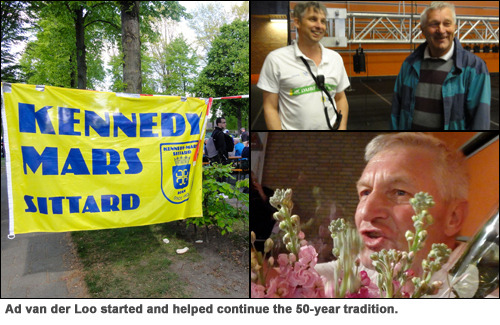
Ad van der Loo, was one of the four teens that started the walk in 1963 and soon took responsibility for organizing the annual event that takes place each year on the Saturday before Easter. Ad had walked the event several times but put his energy into managing the expanding event for the past 43 years, instead of walking it. This year, he was turning control over to a new generation – but not before walking one more time.
Ad had honored us last year by allowing FreeWalker Ray Smith to say a few inspirational words at their 50th Anniversary.. Ray had been stationed in Germany for many years and had participated in the event before.) Ray took back an invitation for other FreeWalkers to come to Sittard and experience their unique event. This event seemed to set the gold standard for what FreeWalker events could become.
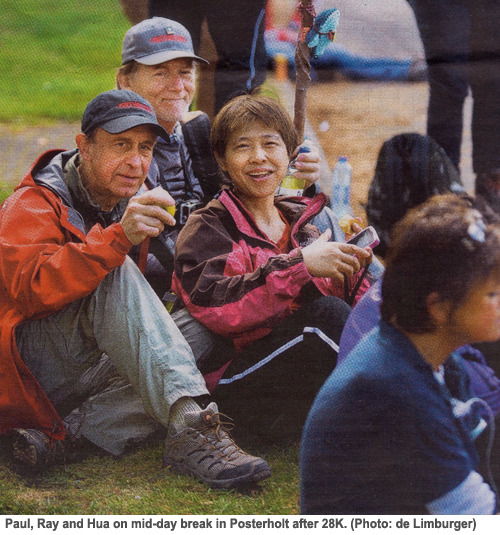
So, with barely a plan we American FreeWalkers – Ray Smith, Hua Davis and I – decided on our own to head to the Netherlands. One thing that should be said about the country is that although their language is Dutch, nearly everyone speaks English. So, even a short stay there was easy. As far as we knew, we were the only Americans participating in the event this year. It is probably 95% a local/regional event. It was a unique opportunity for us and I think an honor for Ad Van der Loo and the Kennedy-Mars Sittard organization to know that we had ventured this far to participate.
Getting Settled in Sittard
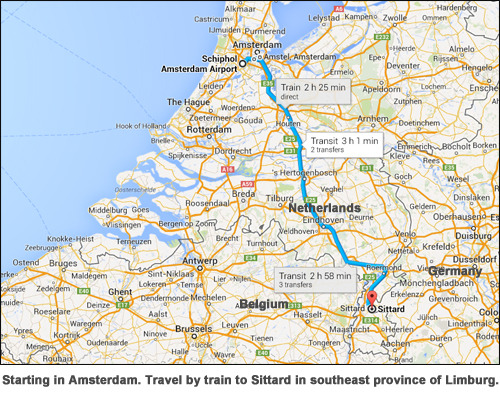
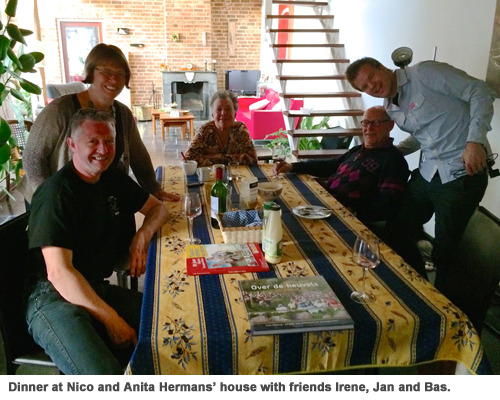
On Thursday, Ray and I arrived together by train in Sittard, having met in Amsterdam that morning. We were met by our hosts, the Hermans (my host family) and de Beurs (Ray’s hosts). We pre-registered for the event and went off to our homes for dinner and a good night’s sleep. Hua’s plan was to fly in on Friday, stay just one night with her host family and take off on a train immediately after completing the 50 mile walk. That was an aggressive plan that most would not try. But if you knew Hua, you would not be surprised nor doubtful that she could do it.
My stay with the Hermans family is worth detailing. I will write more about that great experience in another post. It made the trip at least twice as entertaining and rewarding for me. I know that Ray and Hua felt similarly about their experience and we thank those families for their generosity and time which we all cherished.
Pre-Event Day
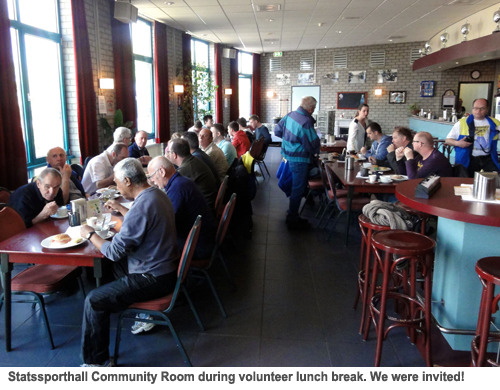
We met Hua Friday afternoon at the train station and headed to see the Statssportshall (large indoor sports hall/gym), where preparations were being made for the event with Ad Van der Loo. Having been the director of the event for so many years, Ad invited us to join him and his volunteers in a light lunch. Ad’s dedication to the event earned him the devotion of every worker there.
At the de Beurs place, we were interviewed by a reporter for the regional newspaper, de Limburger. It was a lengthy interview that signaled to me that they were sincerely interested in the motivation of three Americans coming this far for their regional event. Inevitably, the conversation came to the differences between Americans and the Dutch.
I think they see Americans as creative and impatient and often chasing the wrong goals but they admire us for our positive thinking and ability to take action. The Dutch give more weight to creating a fair society and certainly one that encourages physical activity in a natural way. I think the question that remained is could we tell our story about the Kennedy Sittard and change American attitudes? What if we could get President Obama to march 50 miles? Could that rejuvenate an interest in long distance walking in America? Could we build a bridge to the Netherlands?
Ray, Hua and I borrowed bikes and went out on our own to see the area around Sittard. It was an interesting first-hand experience to see how the roads and traffic signals accommodated bikes and pedestrians. Bike paths and dedicated signals were everywhere. We were back before dinner and each of us went off to our respective host’s home to get an early night’s sleep, as we were due to meet at the start of the event at 4:30 a.m. at the Sportshall.
It’s Time to March
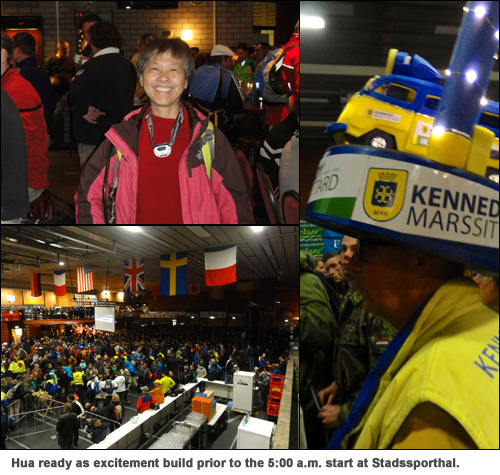
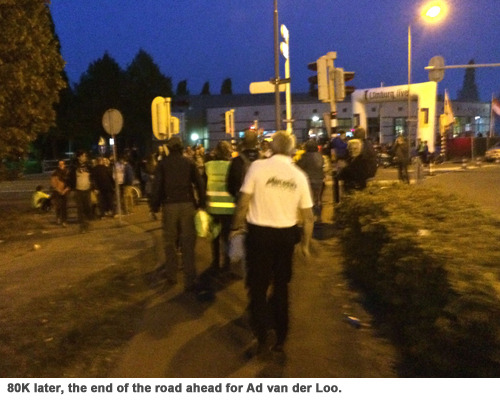
After an early breakfast at my host’s home, Nico drove me to the Sportshall. Before long the hall was packed, bands began to play and announcements were made in Dutch. All we needed to do was follow the crowd. Ray, Hua and I decided to walk together for a while but had no particular strategy. At 5:00 a sea of thousands of people began moving out of the hall and stringing out in the dark along the streets of Sittard. Within an hour we were heading outside of the town into the countryside.
The route for the walk is a loop with 90% in the Netherlands and 10% in Belgium. This year the walk avoided Germany due to security concerns. It is essentially a counterclockwise route heading toward the countryside near Germany and ending through Belgium before returning to Sittard.
As in our FreeWalker events, some groups charge ahead in hopes of finishing at a fast time. This event does have an option for a competitive timed class. Many others, like us, plod along at our normal average of about 3 mph speed. All must walk and running is not allowed.
We were walking somewhere in the middle of the starting 80K group of 2,818 participants. Another 1,758 registered for 40K were scheduled to leave later and 2,871 for a 10K even later in the day. The total was estimated to be about 6,947 participants! 80% crossed the finish line!
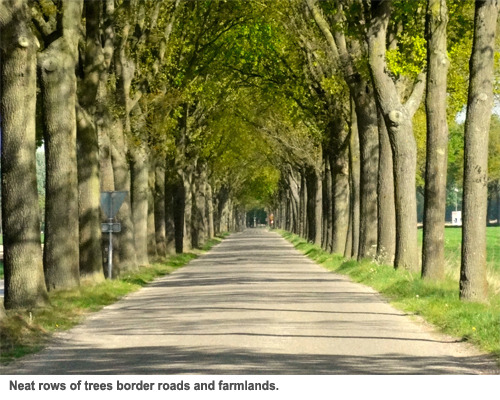
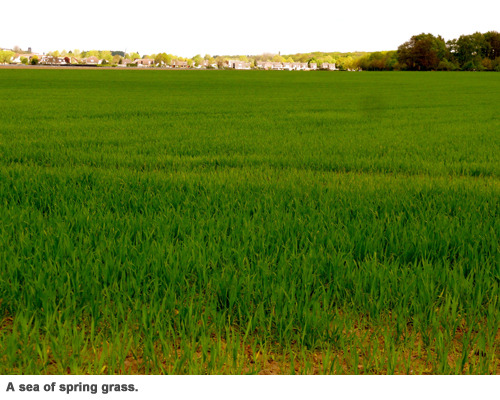
We walked in the dark until sunrise as we left Sittard and headed to open farmland areas. At this time of the year, the ground had been freshly tilled or small vegetables were sprouting up. What is striking is the size and view of the fertile areas. Since the Netherlands was largely built on land reclaimed from the sea, nearly the entire area we walked was flat consisting of dark sandy soil. This makes farmlands appear as vast as an ocean, broken only by a canal, a road or a line of trees here and there. This unique landscape generates an abundance of food for the country and much of Europe.
The skies were constantly changing over the day. At this time of the year, the weather can be unpredicatable. It is just as likely to rain as not. For most of the day, the puffy clouds passed over us with patches of sun shining through and temperatures from the 40s(F) to low 60s. Perfect weather for walking anywhere.
And, what a day for a walk it would be. The vast farmlands seemed never-ending. Much as in the U.S., many farmers have sold their smaller farms to larger companies and moved into the towns. It’s a new generation favoring a different lifestyle.
Towns we pass through seem to be small and quiet residential communities. Houses are clean, orderly and of modest simple design. Care is taken to keep plants trim and neat with a tendency to prune older plants like topiary in a way I have never seen before.
While the Dutch are said to be somewhat private, I found that they were very friendly and open. A woman I met was walking with her husband and another couple for their 23rd Kennedymars. She said, “We started by thinking ‘Why not?’. Now, it’s like a disease. We just can’t stop.”
Then, there was the incredible walking waiter. He was dressed in a tuxedo and held a serving ray with a full glass of beer and an Easter egg. Why is he doing this? He started with a dare and a bet. That was 18 years ago. Today, he still enjoys the challenge each year and the obvious attention and conversations he draws.
A van with big speakers followed us and played pop music to liven the walk, which made me feel at home. We also we walked by many traditional um-pah bands. That, gave us the feeling that we were somewhere special.
Breaks on a long walk are spaced here between 7 to 15 miles. Bathrooms along the way were not easy to find. But, everyone seemed to work it out and no one was complaining. Food support consisted mostly of some fruit along with soft raisin rolls and raisin cookies and hard-boiled colored Easter eggs.
There were no power bars, no sports drinks and no bottled water – things we take for granted in the U.S. Arriving at a support stop usually meant finding a faucet and filling your bottles. Each of the major stops were places where you could also buy food and drink if you wanted. Perhaps that’s a good way to get support from the local businesses and friendly neighbors as we passed.
About half-way on our march the landscape changed. Larger rivers of water appear that probably lead out to the sea. We crossed a large bridge which provided a high view of the land and the waterway.
We were well passed the half-way point, getting tired and anxious to keep going when we came upon a lively party. They were cheering us on when a woman grabbed me and we started to twirl around. Wow! Suddenly, I had a burst of energy as we danced to a cheering crowd. Fantastic. And, just what I needed to find that spirit again we were seaching for.
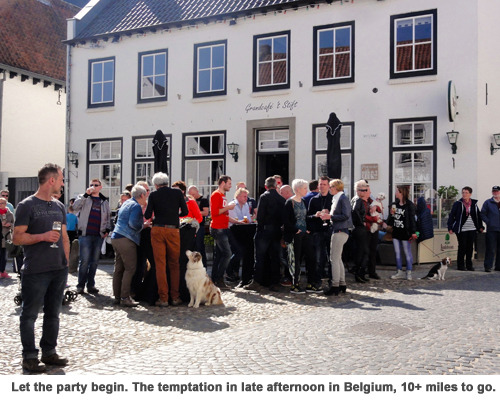
We were in Belgium, although it was not easy to know. We went through some older historic towns and the area became more populated. Cafes suddenly started to appear. I sensed that the mood of the march had changed to a celebration even though we had more than 10 miles to go. Then unexpected treats appeared from the local residents – free Belgium waffles! The best Hua and I had ever had – or at least we thought so at that moment.
At the last rest stop, we met Ad van der Loo again. He was in a great mood after his final massage and ready to make it to the finish. Hua and I stayed together throughout the walk and we decided that it would be great and fortunate to finish with Ad, on this special occasion. For over 40 years he had to manage the event and could not actually walk it. This would be a triumphant occasion for him and us. Nothing could stop us now.
As we saw the city sign for Sittard we picked up the pace and soon we were at the Sportshall with lines of people cheering us on in a European fashion. Granted, I was tired but I had this flash like I had just finished a stage of the Tour de France!
We followed the crowd into the hall and stayed with Ad as he received special awards and recognition not only for finishing but for all his work in building and maintaining the event for over 50 years.
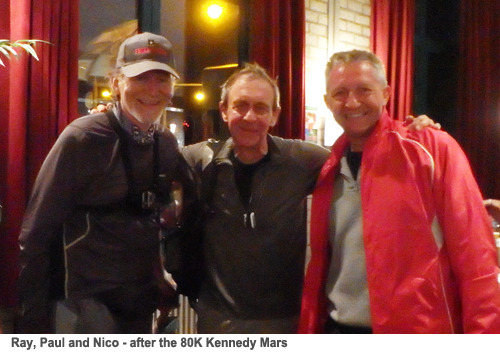
Hua and I had finished the 80K, 50-mile walk at around 9:20 p.m. Saturday evening. My feet were achy and tender. I thought I developed a blister but just avoided one. Ray had finished about an hour ahead of us and was waiting with my new friend and host, Nico Hermans. We sat for a while talking about the day over that beer I had been dreaming about in Belgium 15 miles and 5 hours ago.
What We Found
The Kennedy Legend lives on in the Netherlands! If you look back on films, recordings, writings, and witnesses to the time its easy to see that one man did make a difference. Although he didn’t invent the idea of a long walk or maybe even anticipate that it would spawn global community events, his words had meaning and continue to change our lives. It’s better to give, better to participate, better to try and better to reach out to others than to accept less than we are capable of. And, Ad van der Loo is still a living example of those principles of JFK.
We had learned that memories of Kennedy and what he stood for are still alive in Sittard. And, so it must be in other places that host similar events. It gives us incentive to continue our FreeWalkers journey to build similar events that offer others the challenge and enjoyment of a community experience that challenges our physical and mental endurance. Our hope is that our new friends in the Netherlands will join us at one of our events in the future. We “Walked the Walk” and we were glad we did.
The 125 miles (171 km) in New Brunswick Canada we walked proved to be a welcoming experience, just as advertised.
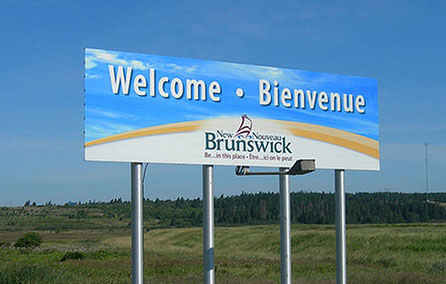
The most common sign in New Brunswick is “Welcome / Bienvenue” which seems to not only be a slogan but a north star for most Canadians. In our week-long Beyond Borders Walk walking journey along the Coastal Link Trail in New Brunswick we were fortunate to have experienced, many times, what Canadian hospitality and friendliness is all about.
All public signs issued by the federal government, but only those issued by the Province of New Brunswick, must be in French and English. This area values its tourism and its importance as a melting pot for all making their way east and west or even north and south from the U.S.
A Welcome Promise
Our excursion into Canada was a direct result of a welcome pledge our group was given four years ago. At that time, Loredana Delucchi, a member of our U.S.-based FreeWalkers, walking group, crossed the border with Ken Kurland And Nancy Jonap to St. Stephen to present Mayor Allan MacEachern a Canadian penny, a New York City subway token and a knitted bear doll as a gesture of a special friendship and their accomplishment of walking along the East Coast Greenway from New York to Canada over a period of years. Borders were crossed and lives were changed by reaching out. That effort culminated in a promise by the mayor, in turn, to not only welcome them back again but to build a new pedestrian trail along the St. Croix River.
Going Beyond Borders … Again
Our plan was to walk the 125-mile (171-km) newly charted Coastal Link Trail from Saint John ending in St. Stephen. We started our journey walking across the U.S./Canadian border in St. Stephen where Cherie Stewart, Implementation Manager of the Coastal Link Trail waited to drive us for over an hour to Saint John where we would start our week of walking. We had just driven over 12 hours to the border. Without her help to get to the start, the entire walk would not have happened.
Beyond Borders Walk – Jul 31 – Aug 6, 2022 – Canadian Coastal Link Trail
Canadian Hospitality
Tracking us throughout our journey was Susan Hill, Executive Director Charlotte County Tourism. From the start, Susan tracked our movement throughout New Brunswick. About a third into our trip, she met us in Pogologan and popped up occasionally all day long to check in on how we were doing. She was there to see us off, invite us to her home in Penfield and show us the harbor and fishing industry in St. George, where her husband and many of the population worked. Susan became our guide about the area and the fishing business that has become the most successful industry in the area. Now, it was time for tourism to add even more to the economy.
Welcomes are most obvious when staying at a B&B. One host couple in St. John was eager to share their story of the dream of immigrating to Canada to create a better life over a generous breakfast.
Another host, Dave, proudly talked of his days working in radio and his love of rock music easily displayed in walls of vinyl records. Dave and I both shared a passion for the music of Bruce Springsteen, a New Jersey icon, who often transcends geographic, generational and cultural boundaries. Dave was also kind enough to lend me his bicycle to ride around the town, saying “Don’t bother locking the bike!”, backed by lessons learned years living in this area.
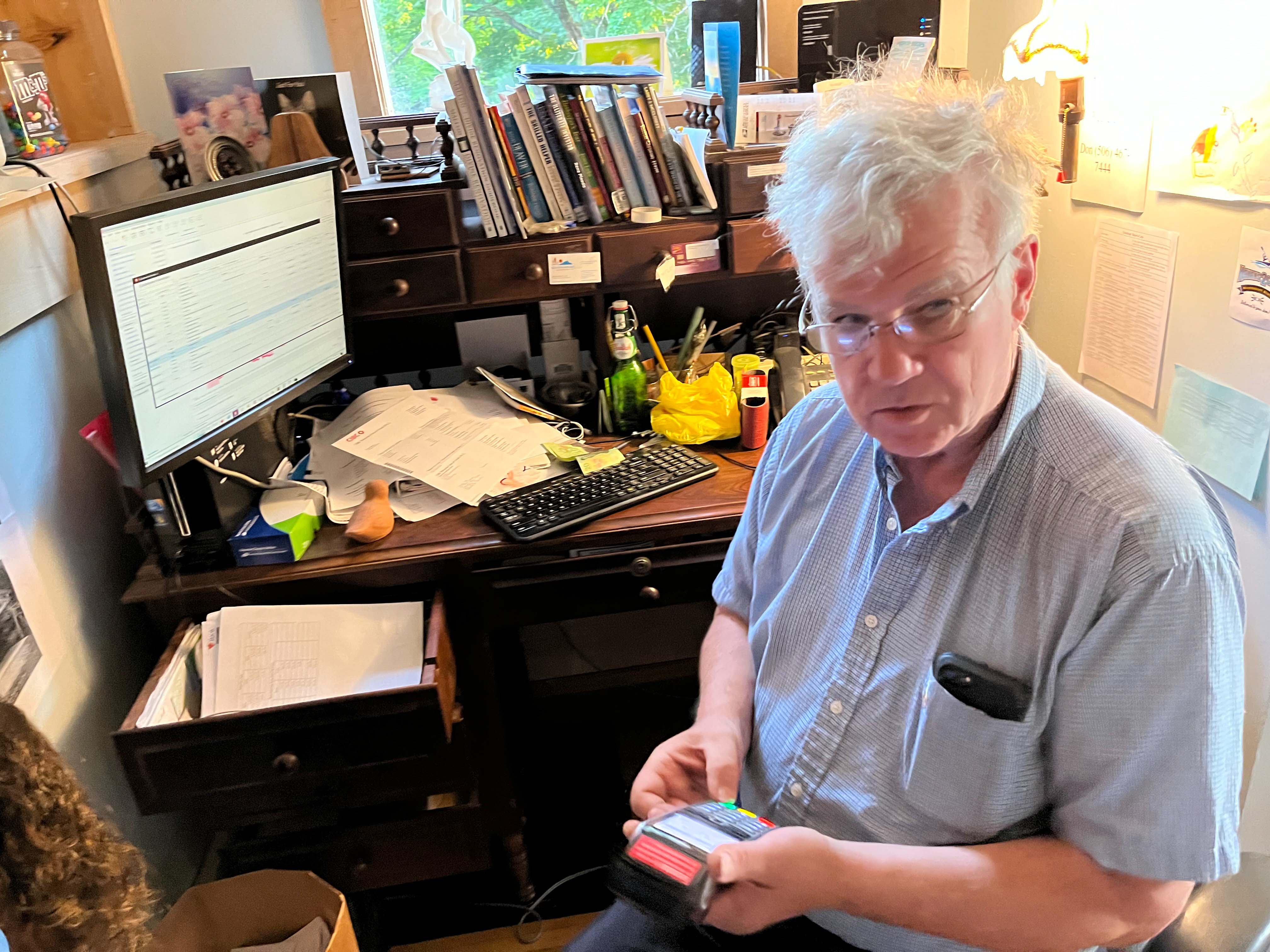
Don was the welcoming, thoughtful and philosophical B&B host. This old Victorian home in the Chamcook area where we stayed was filled with curious pictures, furniture and curios that spoke of mystery and a different time that was still treasured. He represented an interesting dichotomy of the old and new. He respected the old but was an advocate of building new trails and opening up the area to tourism. He was even kind enough to drive us a few miles into St. Andrews for dinner and pick us up while giving us a brief history of the resort town and the places to see.
Just as noticeable were small gestures of friendship along the way: Kathy and Junior opened up the Musquash Rec center to provide water, a friendly ATV operator, Stephen, stopped to see if we needed help, the EMS tech that helped get Ken to the hospital after a muscle spasm, the restaurant owner Rachel from Comeau’s Seafood Restaurant who gave us free lunch, the Taylor’s who shared water, their art and their life story, the St. Andrews retiree, Hans who said although his job had taken him all around the world, there was nothing better than where he was now, or the golfer’s surprise at seeing me accidentally riding a bike onto the Algonquin course at Joe’s Point in the middle of his teeing up and just saying, “Isn’t it beautiful? But, you know beauty can be found anywhere, if you look hard enough.”
A St. Stephen Welcome
On Saturday, August 6 we met with Cherie and Mayor Allan and other trail officials for a casual walk on the new pedestrian path that the Mayor had led over the last four years. In addition, the mayor led us to a large mural that was in the process of being finished. To our surprise, the artist would paint into the mural both the image of FreeWalker Loredana and Mayor Alan walking together on the newly created riverfront trail.
FreeWalker Loredana Delucchi and Mayor Allan MacEachern at new mural wall
The trip was about fulfilling a promise to return, renew friendships and walk the new trails of New Brunswick. We had become the first group to walk the full Coastal Link Trail, a trail that now connects the enormous Trans Canada Trail system with the East Coast Greenway in the U.S.providing access to thousands of miles (or kilometers) of walking, hiking, and biking trails.
We discovered that what we all cherish most is more access and less borders and obstacles that keep us apart.
Ken, Paul, Loredana and Tom @ the U.S. / Canadian Border in St. Stephen
Serendipity happens when you most need it. A retired New Brunswick couple share their lives with us.
It was hump-day, Wednesday, probably the hardest day of our 125-mile (171 km), week-long, Beyond Borders Walk from Saint John, New Brunswick to St. Stephen, the last Canadian border town near the tip of Maine.
Walking a lonely road
Today, there were 23 miles of walking from St. George to the Chamcook Forest Lodge near St. Andrews. Ken, our fourth team member was out with a back spasm. We started walking country roads which eventually turned into highways. It was not quite like walking an Interstate, but close. By mid-afternoon, the temperature reached the high 80’s, only made hotter by the asphalt, so much so you could feel heat through your shoes. The only relief was an occasional bay breeze near the top of a hill.
This is a relatively undeveloped area of the Provence of New Brunswick just a few miles from the shore. St. George’s lush woods soon gave way to a desolate area with few houses and no commercial business for miles. Even traffic seemed rare. The only thing interesting out here is dead porcupine roadkill.
As the day heated up, I realized I had made a rookie mistake. A long hot day walking requires more than a couple bottles of water, especially when there is no place to refill. About 18 miles (6 hours) into the walk I find myself light-headed and completely empty in every respect. I’m in that state where you watch the heat create mirage waves on the road and begin to wonder “How am I going to make it to the end?”
Miraculously, while heading up a long stretch of highway there appears a sign in the road saying, “Taylor’d Art” an “Open” flag waving underneath. This area was dotted with lakes with a few homes set back. This one though could be seen clearly. Although, we did not come this far to see and appreciate local art, we had no choice and no willpower left to pass this by.
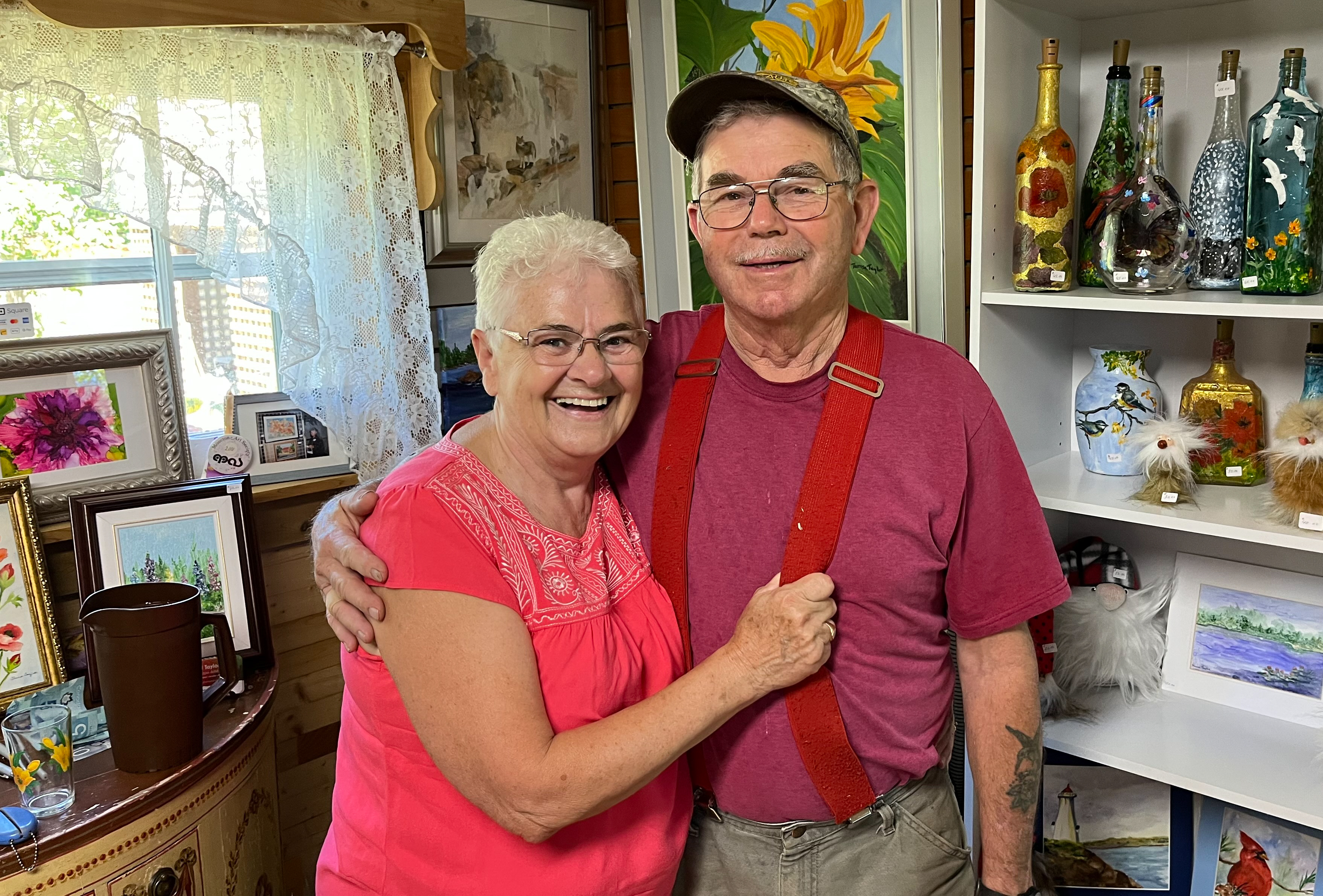
Theresa and Burl Taylor are about as happy couple as I ever met. Married just 52 years ago they were most welcoming to the three of us as we asked (we would have begged) for water. Theresa has maybe 200 natural setting paintings here in a small shed which she had created. She has experimented with various artistic methods from watercolors to oils, flock to canvas and many other methods I had never heard of. Being efficient walkers, we opted to buy a few beautiful refrigerator magnets that pretty much exemplified her work in miniature.
Burl came by with a big pitcher of water and we began talking about life out here as we began to revive. They had moved into a smaller version of this home 50 years ago and discovered this was the place they always wanted to be. Years went by and Burl expanded the house, built a garage, chicken coop, workshop and swimming pool. Much of this prior to his retiring as a forestry engineer. His property and projects look like he put a lot of thought into them.
Theresa is a self-taught artist. As she describes it, one day she just started scribbling and copying things until she began painting a scene, going over and over it until it was right. She presented it to Burl and said this is what she wanted to do and he agreed. Decades later she continues to paint, mainly for the pleasure of it. She painted so much they needed to move some out pieces and Taylor’d Art was born.
They had a son who Theresa mentions often as he developed into an talented artist who’s paintings she still sells. Unfortunately, he passed away a while ago but you can tell he’s very much part of their lives.
There are no other children but a very large extended family. Theresa was one of 21 children! Her mother, whom they speak about with reverence, gave birth to all 21 children individually, no twins or triplets! And, she passed away at the age of 46 due to cancer. Theresa said she spent a great deal of her time with her many siblings and keeps in touch with them often. We are in awe. Can you imagine what a family reunion must look like?
After much water and talk we had to go. Time is very unforgiving when you are walking. I think they enjoyed our company as much as we did their’s. We could have easily stayed for hours learning more about how Theresa and Burl share what they do together – their art, building, hunting, fishing, getting by in the winter and the life between them.
When you are out here you have to be flexible, forgiving, innovative and self-reliant. The Taylor's have figured a way to make the most of their lives and offer an oasis to others.
Just getting started on our walk. Getting adequate sleep in strange places is a must.
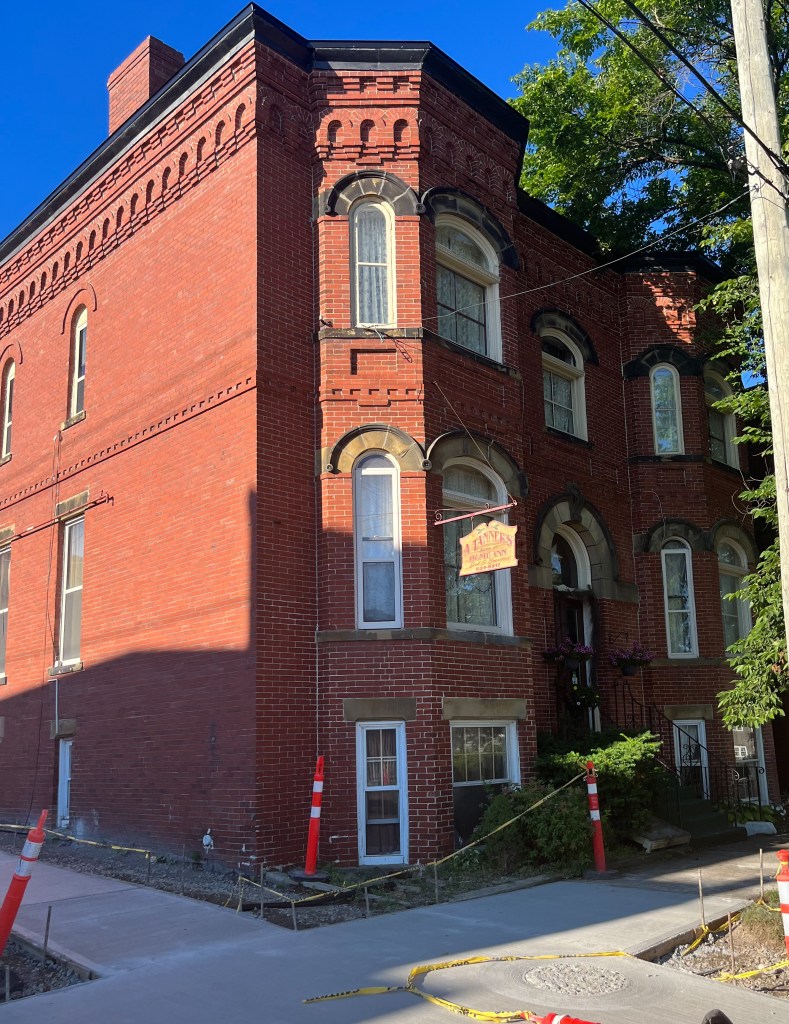
Jul 31 – Day 1 Walking – Sunday was our first full day in Canada. Tom and I stayed Saturday night at “A Tanner’s Home B&B” which was once a curiously old (148 years old) home of a wealthy gentleman who made his fortune in tanning leather goods and real estate. Today, it was an airbnb-like home which had a 1800s historical vibe but updated to accommodate tourists. It’s still a work in progress.
A Tanners Home B&B, Saint John NB
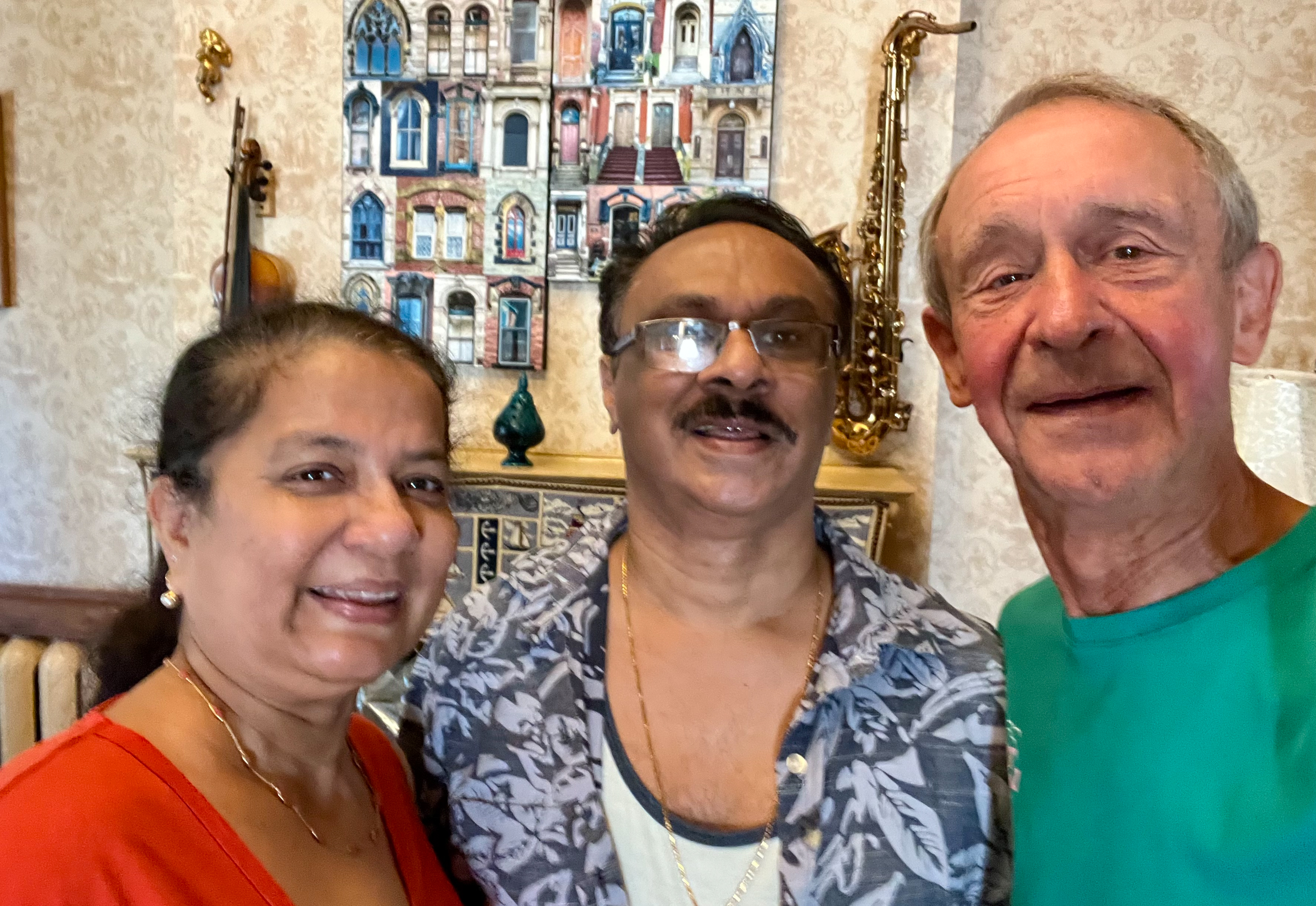
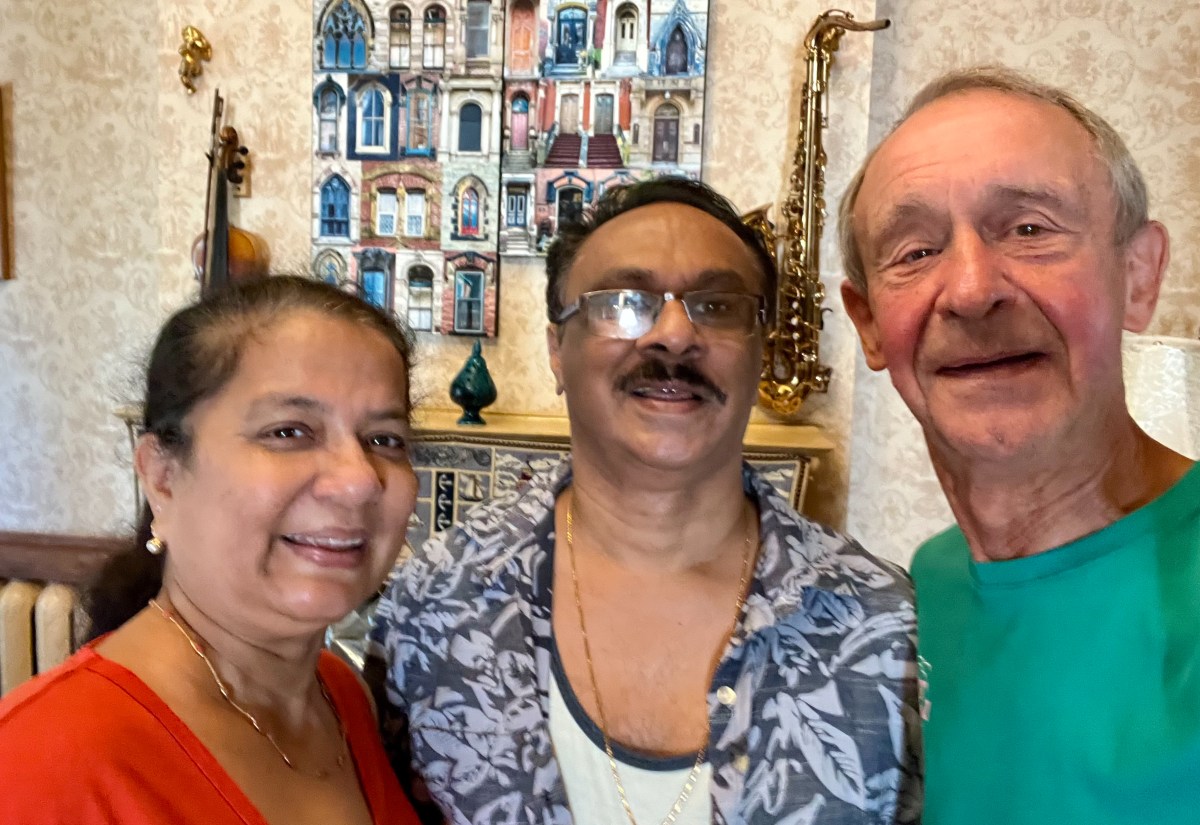
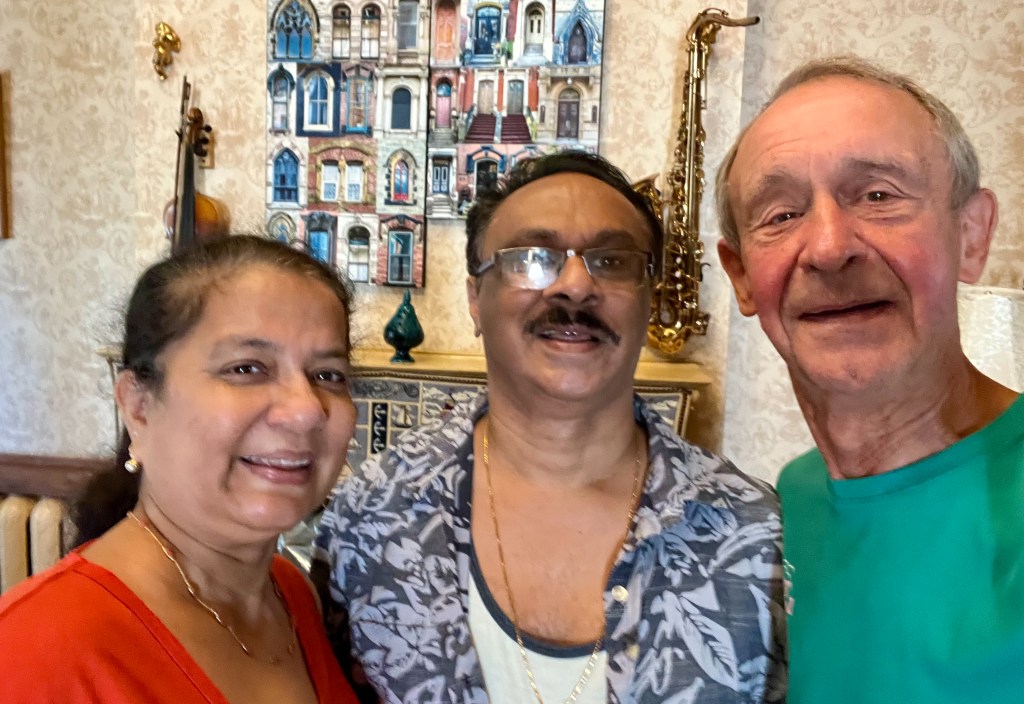
Our hosts, Doreen and Sebastian were proud ex-pat Indians who found their formula for retirement hosting this B&B in the warmer months and flying back to Mumbai the rest of the year. Sebastian, a former sea captain, hates the cold but loves Canada.
Like many parents in search of the best for their family while planning for the next phase of retirement, Canada seemed to fit. There is an active Indian population here in Saint John and a government more inclined to take in immigrants than most. The price you pay is an investment of capital in a legitimate ongoing business to get the benefits of citizenship. This enabled Sebastian to send his kids to Canadian universities where they established residency in Toronto.. They are planning that big wedding for their daughter who had to marry quietly during the pandemic. Hope is that grandchildren will soon be in the picture.
Tom and Loredana – Proud of finishing the half marathon in Saint John
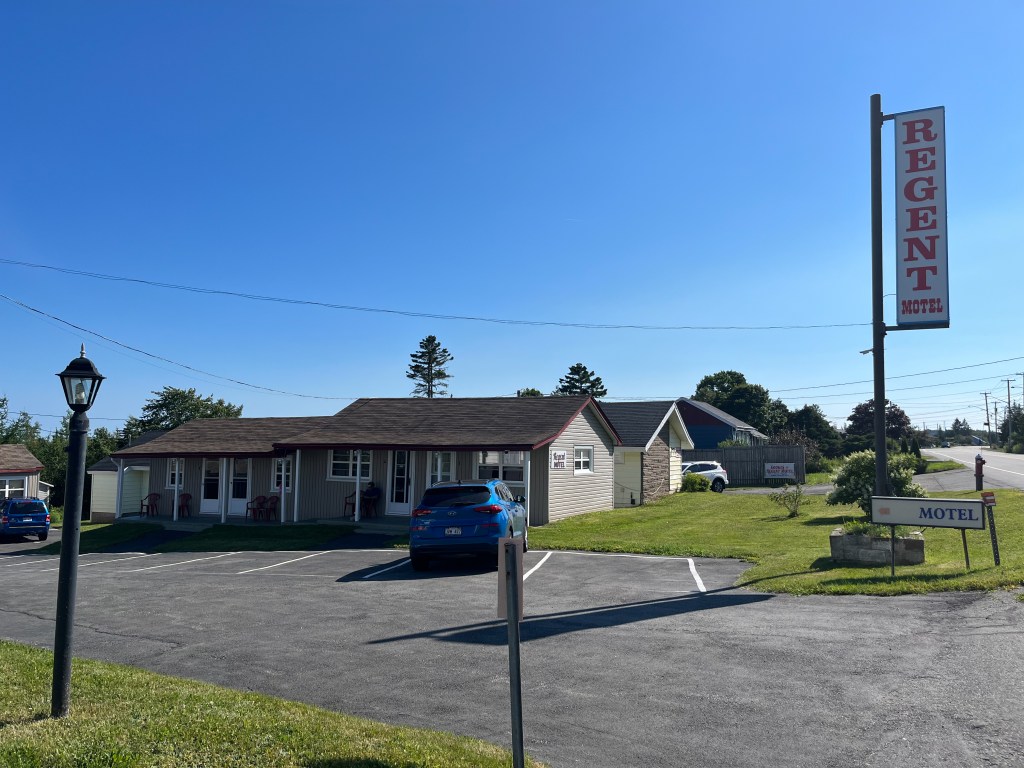
Meanwhile, Tom and Loredana set out on on Sunday to run a half marathon before we started our long Beyond Borders Walk later that day. The “Marathon by the Sea” mostly follows the pedestrian trail along the waterfront and ends around noon. After a shower and change, the four of us begin walking the trail out of Saint John, heading for St. Stephen an almost unimaginable 125 miles away. But today we planned an easy day of only 7 miles to get to our next destination, the Regent Hotel just on the outskirts of Saint John.
Regent Motel – 2nd night
The Regent was as basic a motel as you could get. But it helped us get a start on the journey. Rooms were dingy but clean. Little tiny soap bars, shampoo in sealed envelopes and no air conditioning. Luckily the single ceiling fan was all we needed. The only problems were no coffee and no place to eat within walking distance. Luckily we found a restaurant that delivered in this remote outskirts of Saint John. With pleasant weather and a single outdoor picnic table the four of us shared a good-enough Chinese dinner.
Its not difficult to find people that want to talk to strangers here at the motel or anywhere in this area. One couple was coming from Manitoba with plans to retire in Nova Scotia. Another guy, with sunburned face and head, struck up a conversation about how he had moved to Alberta only to find his partner had decided she need to be alone. Now he was back to rekindle a relationship with his children and grandkids. Glad to be back “home” he looked forward to seeing his son drive race cars. His sunburned head and face were proof of how he just witnessed a drag car hitting 210 miles per hour. A happy camper glad to be back.
Motels and B&B’s serve a useful purpose in helping us move on. We need sleep to move forward in the morning. But, every host and guest has a story from the past and a story yet to come.
Check out more information and stay up to date on the Beyond Borders Walk here.
We were coming to the saints – to march from one to the other.
It was a long, twisted journey that seemed to grow out of reach. Our objective was to walk in New Brunswick province Canada from Saint John to St. Stephen, a distance of approximately 125 miles. We seemed to be “The first group of walkers to travel the newly created Coastal Link Trail on foot.”
Loredana Delucchi, a friend and experienced fellow Freewalker (freewalkers.org), had struck up a relationship with the mayor of St. Stephen, the Canadian border town, a few years ago when she fulfilled an obsession of walking to Canada from New York City. She somehow convinced others to join her along the way. You can begin to understand how this happened reading her personal story called The Return of the Canadian Penny.
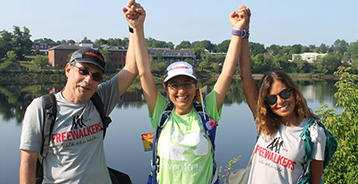
To be brief, I got sucked into the new extended challenge in Canadian territory along with her traveling companion Ken Kurland and a mutual friend Tom Glynn. We were all experienced long distance walkers who had walked similar distances before; even internationally. It seems much of the world appreciates the benefits of walking as a great exercise, form of social communication, travel experience and personal challenge. We were here to do it again but in a new place.
Why the Saint Cities?
Mayor Allan MacEachern had noted in the past that Canadians were excited about the new Coastal Link Trail and others that connected their country through the huge Trans Canada Trail system and appreciated the fact that the East Coast Greenway in the U.S. ended right at the border of Calais, Maine and St. Stephen, NB. It gave the small city hope and focus for revival not only by increasing commerce but improving the health of the community.
So a new challenge was born we called the “Beyond Borders Walk.” Connecting trails means more places to walk and more opportunities to connect to others, even across borders. We soon began planning our walking event, not really understanding the challenges ahead.
Is the Trail Ready for Us?
First, there’s the logistics of the walk. The Coastal Link Trail is pretty well defined but as in most early trail efforts their are lots of questions as to where it goes, traffic, conveniences, lodging and even trail marks that show the way. Loredana worked with the trail group to iron these things out but we are pretty sure we are in for some surprises along the way.
Getting to Canada
We all know that Canada is one of the friendliest countries in the world and usually easy to cross, but this is a Covid time with a wierd business cycle. It turns out we figured the Covid restrictions were eased before we went although they do have a strict protocol for tracking vaccinations. The value of the US dollar is even stronger than ever. But one obstacle that we did not foresee is the airline problem.
About three weeks before our travel, Air Canada cancelled our flights to Saint John from Newark via Montreal. We were left with a grand detailed plan but no way to get there. We quickly scrambled to find a rental car and drive the 600+ miles to Calais, the last U.S. town before Canada. With the help of a Calais resident, Bruce Killian, we were able to leave the rental and get a ride to the border where we crossed on foot. On the other side was Cherie Stuart, of the Southwest New Brunswick Service Commission, to meet us and drive us over 100 miles to Saint John where our “walking adventure” would just begin.
The Journey Begins
We arrived in Saint John at about 10:30 p.m. after starting our journey around 6:00 a.m. Loredana and Tom were registered to do a half-marathon in the morning. While Ken and I could at least sleep-in.
But tomorrow would be the first day of our seven day walk which starts July 31 and ends Saturday August 6. The first day will be relatively easy with a walk of only 7 miles. But Tom and Loredana will already have run 14 miles as their part of the marathon. I don’t envy them.
While walking or running great distances can be an extreme challenge it would be impossible without the help of all the trail staff, local politicians, friends and dreams of trail visionaries and dreamers like Loredana. Kudos to you all.
Learning life lessons from the Ambassador of Forbidden Drive.
It’s not uncommon to meet people along a trail when you are on a walk. My theory is that there are almost always interesting people there to meet, if you care to engage. Walkers are not alike but we all understand the benefit of a good long walk.
Colleen and Me
Fellow FreeWalker, Colleen Griglock, and I, along with a couple dozen other FreeWalkers and EverWalk members were strolling a drop-dead gorgeous trail on a beautiful Fall day this past Saturday. It was the last few miles of the FreeWalkers (13.1 half) Marathon Walk on the outskirts of Philadelphia.
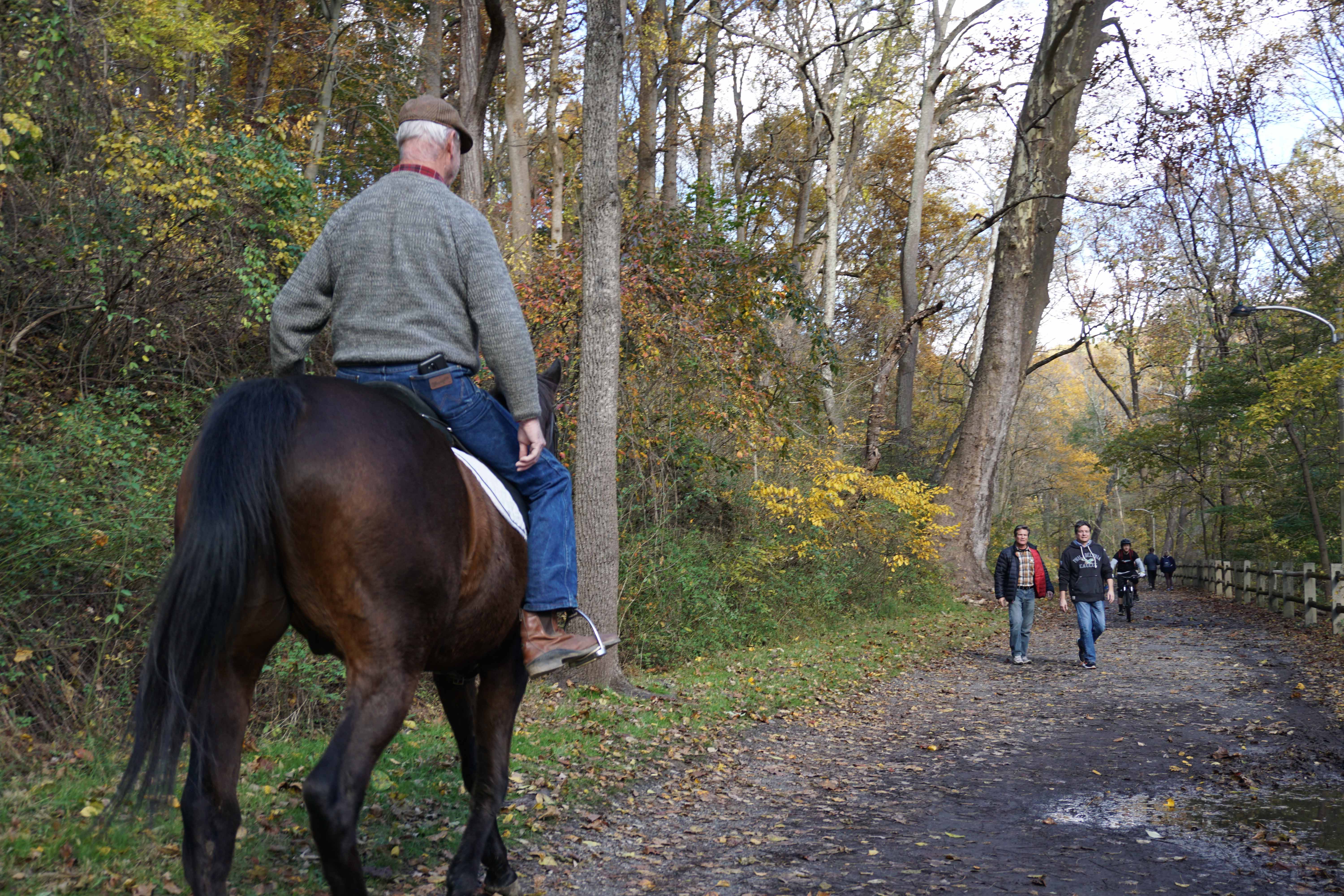
The trail we were on has ironically been known as “Forbidden Drive” since the 1920s when automobiles were first banned from this gravel road. Now, it’s a popular wide trail that follows Wissahickon Creek Northwest of the city. It was recently named “Trail of Year 2018” by Pennsylvania Department of Natural Resources. And, it’s a most inviting trail to pedestrians, cyclists and equestrians with plenty of room for everyone.
Forbidden Drive
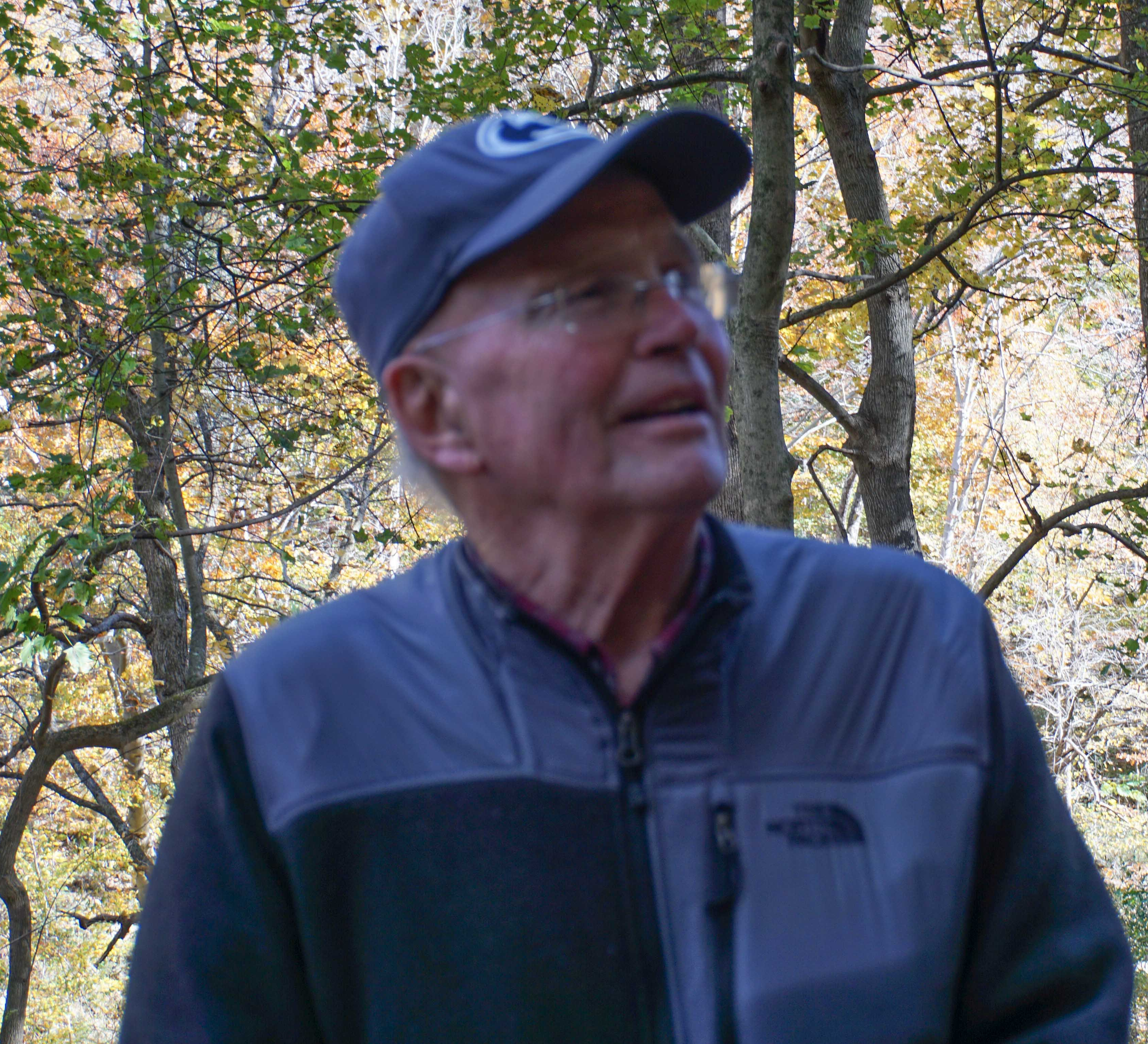
We approached a gentleman walking briskly and confidently with a cane and struck up a conversation. There was something about his smile and energy that belied his years. (Hey, I just joined the Septuagenarian club and and am curious when I sense someone has a secret aging process going.)Walt Dinda is an 83 year-young, long time resident of the area and a regular walker on these trails. I would call him the Ambassador of Forbidden Drive.
Walt Dinda, the Ambassador of Forbidden Drive
As an attorney, he and his wife raised a family of 6 children which has now grown to 19 grandkids, with the hope of great-grandkids in the near future. I can relate to all this having 6 grandkids myself and looking forward to the possibilities.
Walt is wearing his Penn State hat he says he “borrowed” from his son. Everyone seems to be connected to Penn State here, including most of his family. As Colleen suggests, most fans make the pilgrimage to Happy Valley (Penn State) this time of year. Maybe, one not so big secret here is Pennsylvanians love their communities.
Walt began telling us about the trail and the area before greetings came from others along the way. It seems Walt has been walking Forbidden Drive for years. He even credits this particular walk for much of the good things in his life.
“Walking this trail has taught me more about life than any classroom or degree I ever got. And I continue to learn from it.”
Walt has met hundreds of people of all types on the trail over the years and he has gotten to know and care about them. Walt’s parents were Eastern European immigrants that came to this country and settled in the area. His father initially had a hard time finding work and his mother worked as a domestic for a wealthy family in Philadelphia. Walt goes on,
“I’m basically a conservative guy, but I have learned to accept and embrace others.”
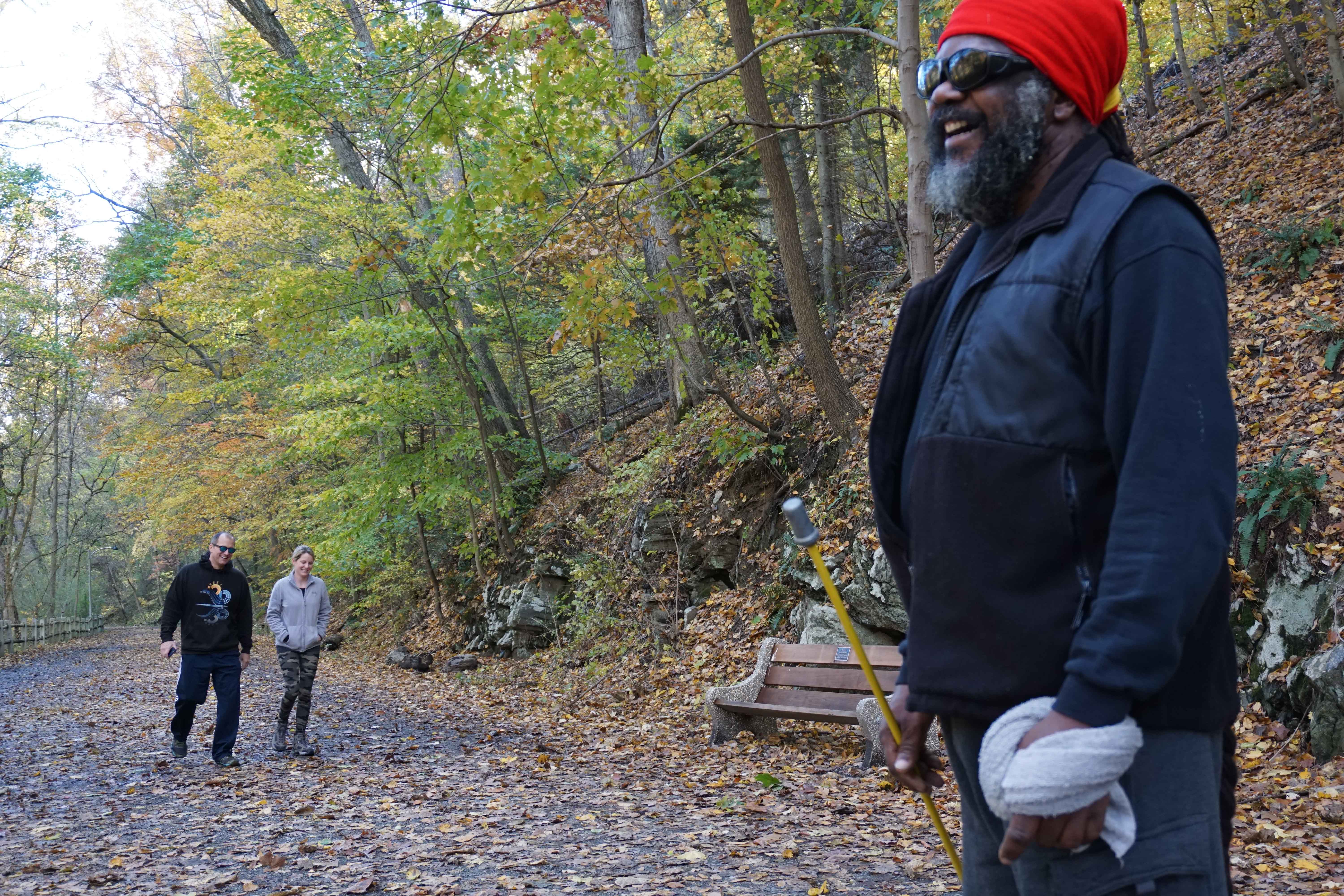
It appears there are many regulars on the trail that he checks in on, or asks about. They are true trail buddies whose lives revolve around the trail.
One of Walt’s buddies asks about the health of an 87 year old mutual friend.
So, the trail is Walt’s extended family. Add a couple dozen of these trail friends to his already large family and the complexity of relationships in his life is astounding. But, I believe it might be the secret to his longevity, or at least his happiness. Walt goes on to say,
“If only the rest of the world had more caring. Caring like we have with friends and family. Most of the problems of the world could be solved or would not exist if we saw each other as part of a family.”
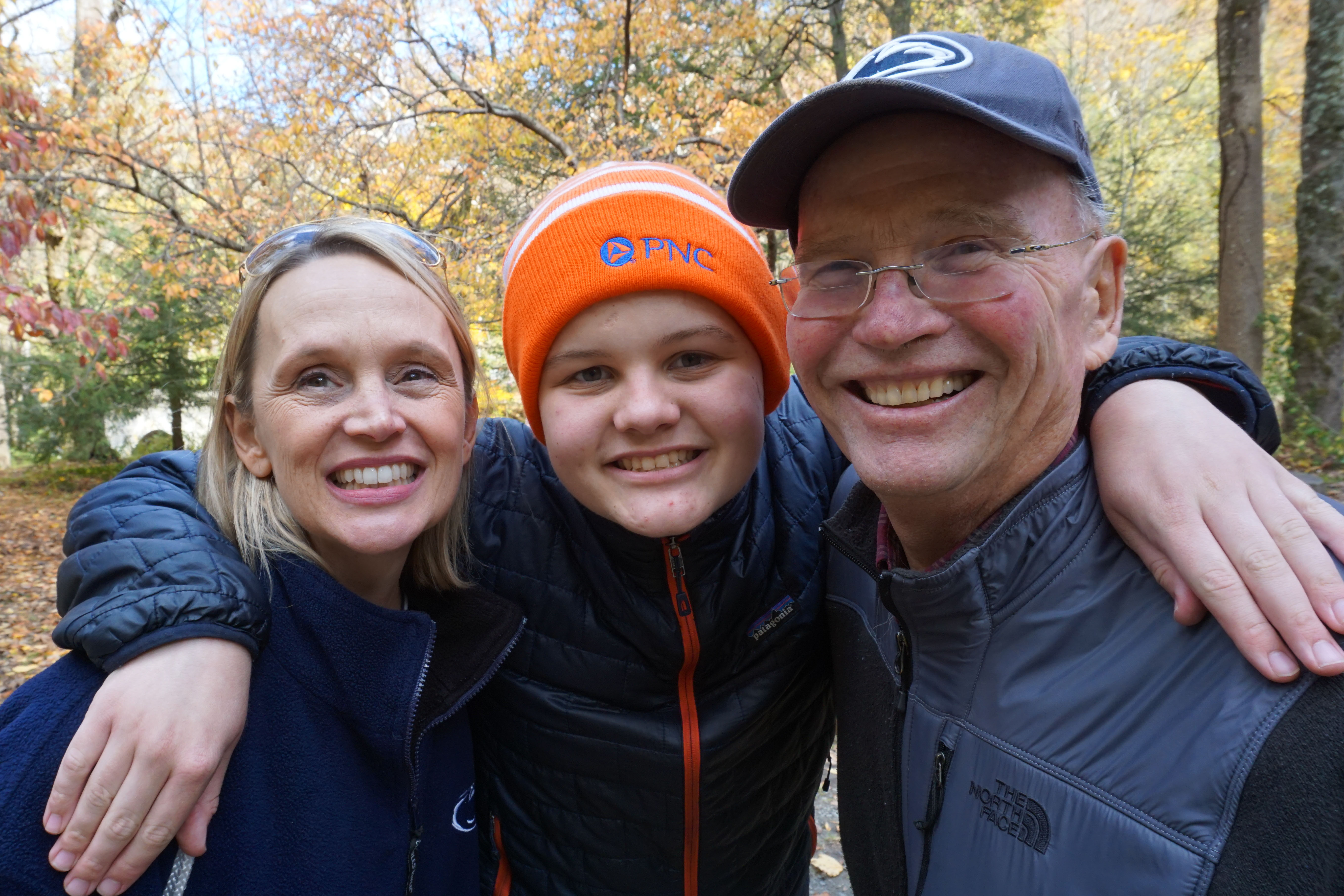
I think it’s fair to say that Walt had a certain personal chemistry that attracted people to him. Or, maybe there was something about walking this particular trail. But, I was fascinated by his story. After talking to him about careers and kids for 15 minutes or so, his daughter in law and grandson showed up giving each other a great big hug. This is what we all want – love and understanding. Walt has earned it in spades and has reminded me how best to grow old.


















 My Plan C