Three Days in Kraków

A brief look at three days in the cultural capital of our motherland. It was our reward for a week’s worth of exploring family history in Poland.

Three days were not enough! But we gave it our best shot. There’s plenty to see and do in this old classic European City. It’s probably the best place to truly understand Poland and its rich history.

As we approached Kraków, the highway gave way to a grand boulevard. Stylish pedestrians strolled past modern storefronts housed in historic buildings. After five days as an odd trio of Americans navigating a land both unfamiliar yet strikingly reminiscent of suburban America, we found ourselves in a quintessential European city. Kraków exuded all the charm, energy, and grandeur of the world’s great cities.

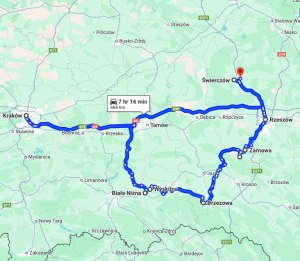
Thanks to our guide and translator, Lucjan Cichochi, we had managed to overcome the language barrier during our PolishOrigins tour. As we prepared to part ways with him and venture out on our own, we reflected on how a few key phrases and a friendly attitude could go a long way in bridging communication gaps. Now, it was time for a little indulgence: the ease of English accessibility, the freedom of being a tourist, and the vibrancy of Kraków awaited us.

Ethan (my son), Ethan Luke (my grandson), and I had traveled over 200 miles across southeastern Poland by van, tracing our family roots. Over the past week, we experienced moments of wonder and joy as we discovered familial connections, met new relatives, and explored beautiful locales. Even when our leads seemed to run dry, the journey offered insights into Polish life and history, connecting us with our ancestors’ world. 

After an enriching week in Poland’s rural heartlands, we turned our attention to Kraków—our final destination. Over the next three days, we planned to immerse ourselves in the city’s rich history and culture, which serve as a proud testament to Poland’s enduring spirit.

See all posts for this 2024 Poland tour here.

A Timeless City

Kraków, one of Poland’s oldest and most significant cities, became the country’s capital in 1038. Situated along the Vistula River, it has long been a hub for trade, linking the Baltic and Black Seas. During the Middle Ages, Poland grew into one of Europe’s most influential nations, with shifting borders reflecting its complex history of alliances, invasions, and leadership changes. Though the political capital moved to Warsaw in 1596, Kraków remained the intellectual, cultural, and historical heart of the nation.

Kazimierz: A Neighborhood with a Soul 

Friday, June 14, 2024

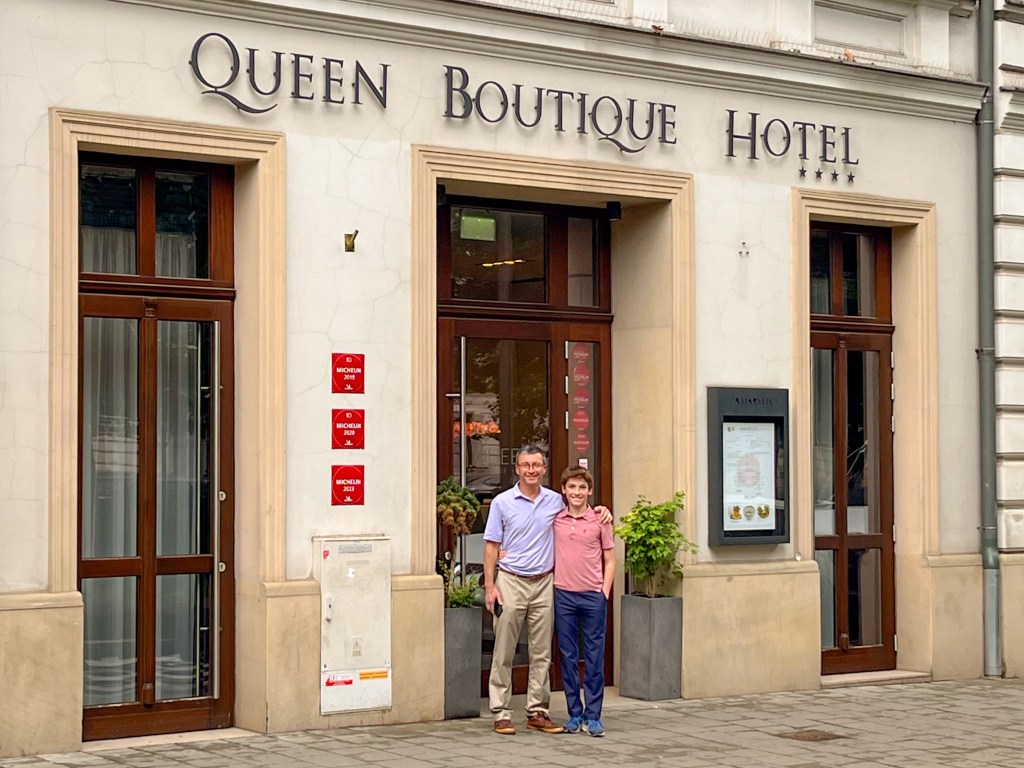
We arrived in the afternoon at the Queen Boutique Hotel, a four-star gem nestled in the heart of Kraków’s Kazimierz district. With spacious rooms priced at a reasonable $130 per night, the hotel’s central location made it an ideal base for exploring nearby landmarks, including Wawel Castle, Old Town, and Podgórze.
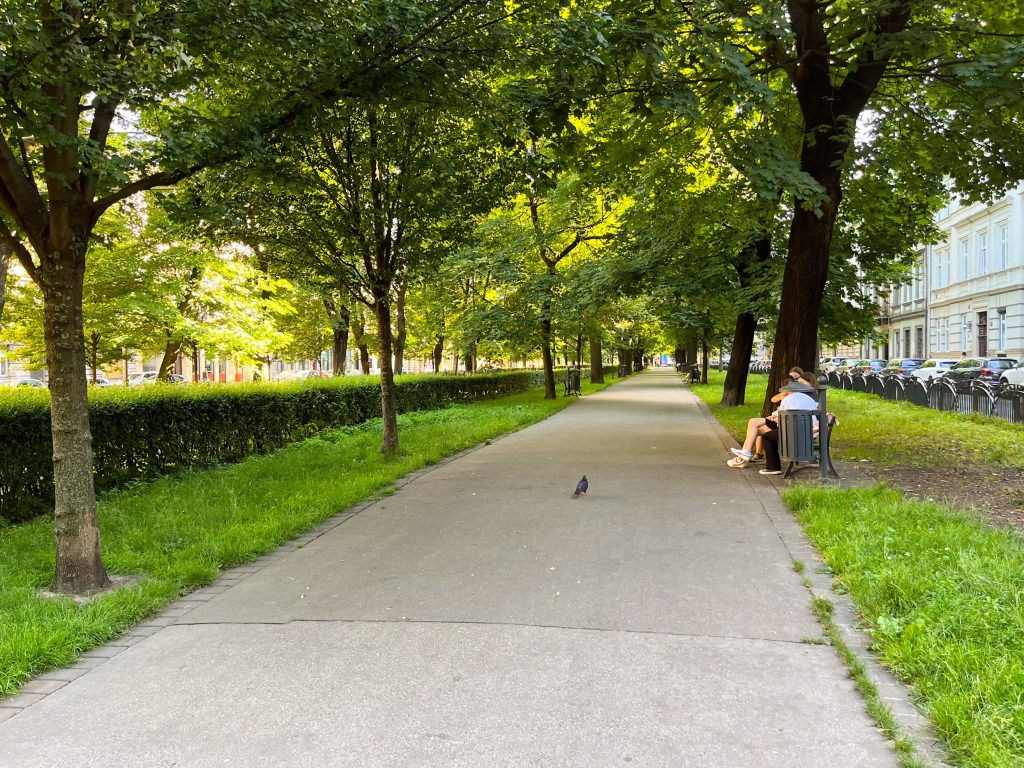
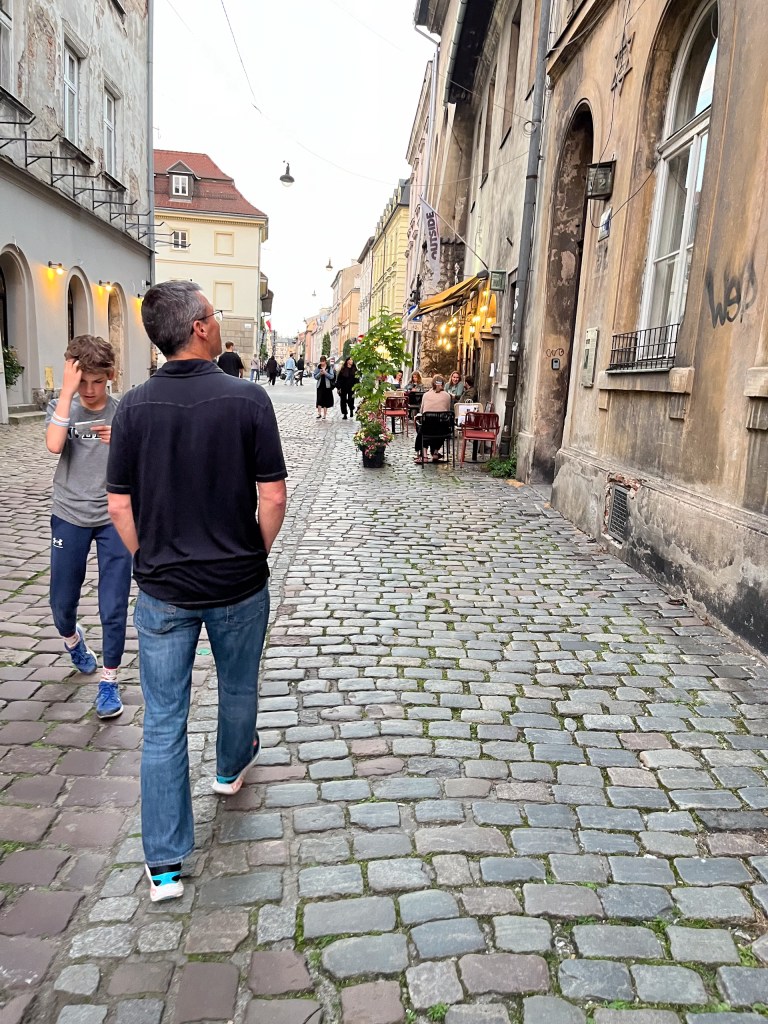
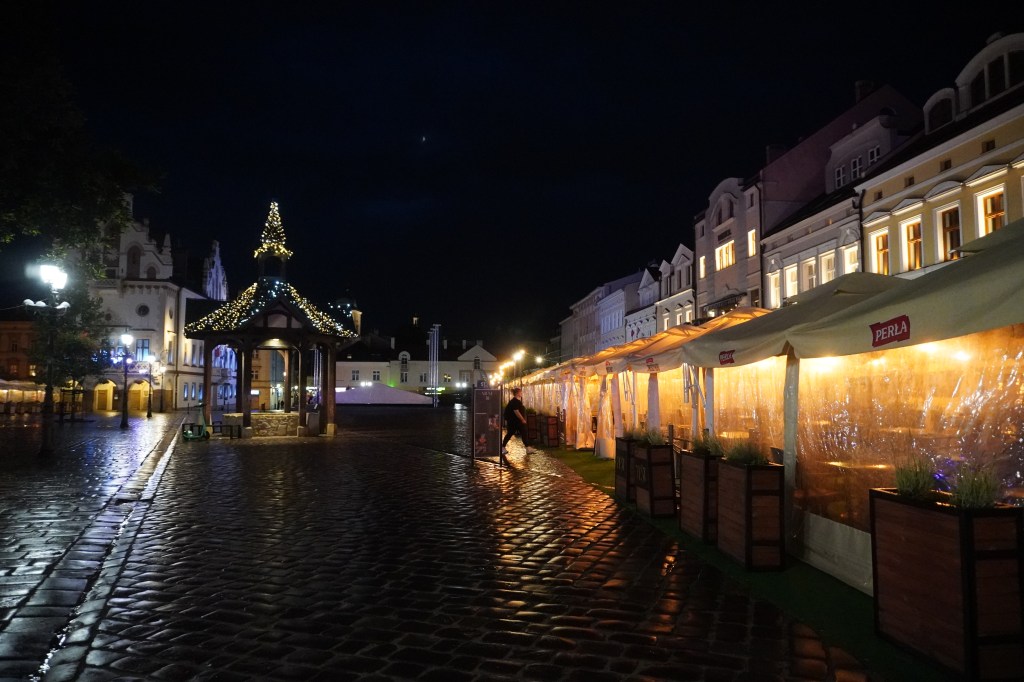
That evening, we ventured out, guided by local restaurant recommendations. Just beyond our hotel, we crossed the leafy Dietla boulevard and entered Kazimierz. The area’s weathered facades, adorned with graffiti and steeped in history, told a story of resilience and rebirth.
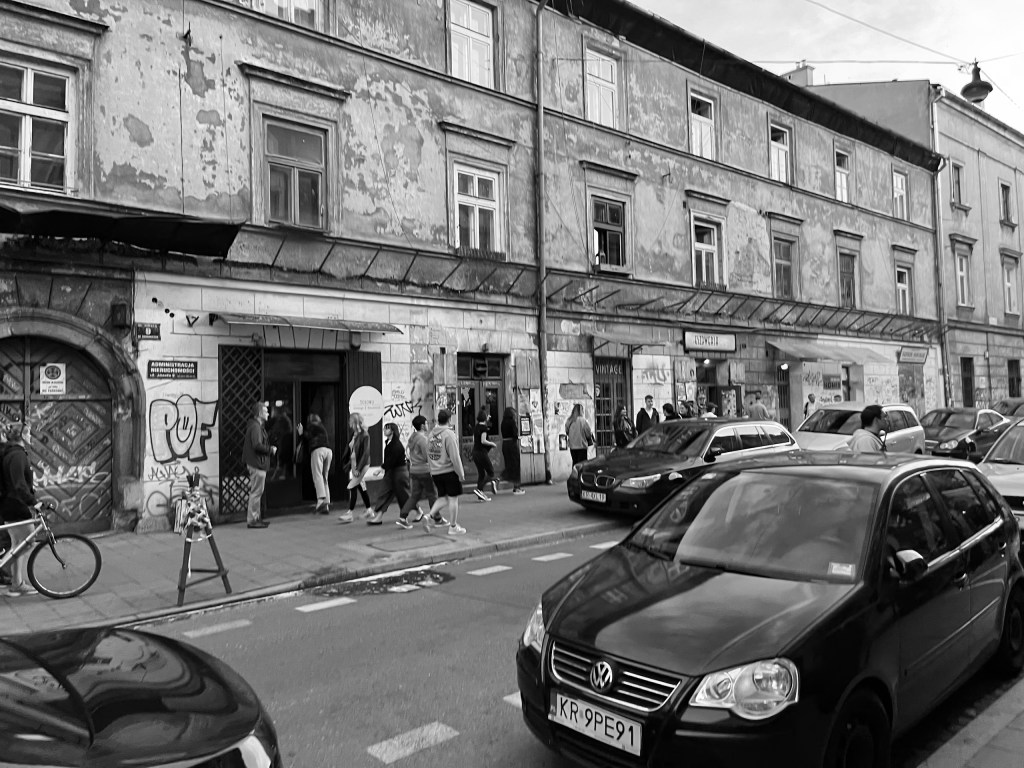
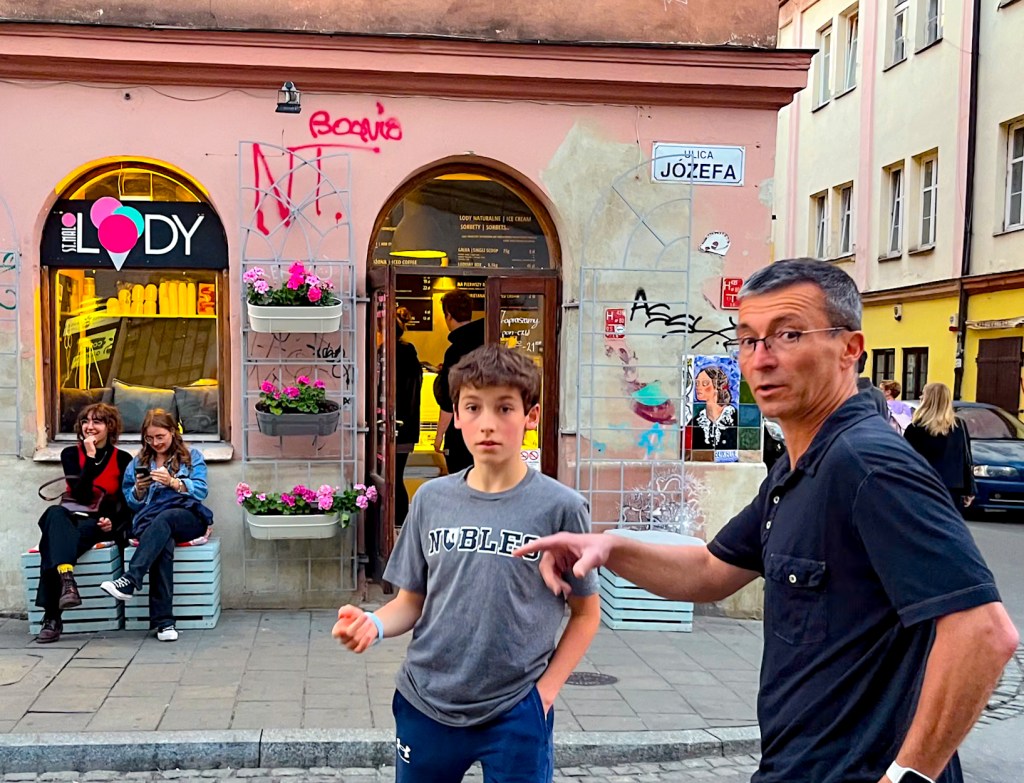
A Challenging History

Once an independent town, Kazimierz became a haven for Jewish refugees fleeing persecution. By World War II, it had evolved into Kraków’s Jewish quarter, only to be devastated by the Nazis. During the communist era, Kazimierz remained neglected until the 1990s, when the movie Shindler’s List sparked a cultural revival.

Savoring Flavors and Music

Drawn by lively music, we stumbled upon a cozy plaza surrounded by restaurants. The weather at 7:30 p.m. in mid-June was still bright (darkness around 10:00 p.m.) and comfortable, perfect for eating outside and watching the crowd of visitors. We dined outside at AWIW, a Jewish-Polish café, as we broadened our culinary tastes with a mix of Polish, Jewish, and Middle Eastern dishes, all accompanied by traditional klezmer music.

After dinner we decided to explore more of Kasimierz. While looking rundown and dirty, this was the liveliest and most creative section in town, filled with historical buildings, galleries, and restaurants.

Tonight we set aside our hunt for the past and searched for the best homemade ice cream for dessert. It was not easy. There were too many places to choose from and it seemed we were not the only ones on that mission.   


A Day in Polish History

Saturday, June 15, 2024
Wawel Hill

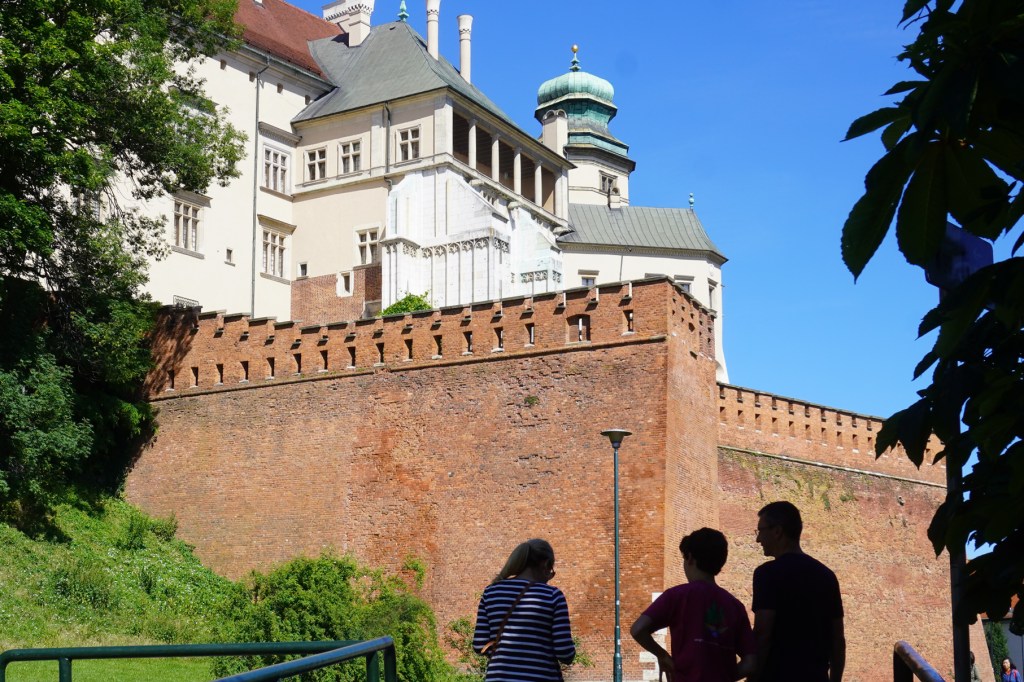
The next morning, we met our guide Johanna and walked to Wawel Hill, home to Kraków’s iconic Wawel Castle. Perched above the Vistula River, the castle complex dates back to the 14th century, though the site has been inhabited since the 4th century.

The Legend of the Wawel Dragon

One version of the legend (there are many) of Smok Wawelski, the dragon, claims that this troublesome monster lived in the limestone cave at the base of Wawel Hill and liked to eat maidens. Knights came from all over to slay the dragon but instead were eaten alive. It took a shoemaker to devise a plan to kill the dragon by offering it a sheep with sulfur sewn inside which the dragon ate and then died. For his reward he married the princess. Today, there is a statue of the dragon that occasionally spews fire at the base of Wawel Hill reminding us of the city’s very own famous dragon.
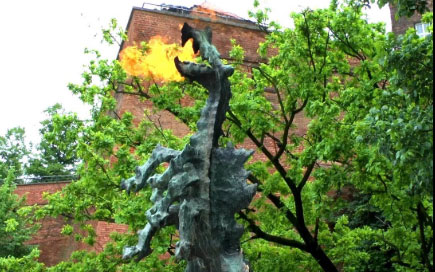
Fire-breathing Krakow Dragon Monument
Wawel Castle

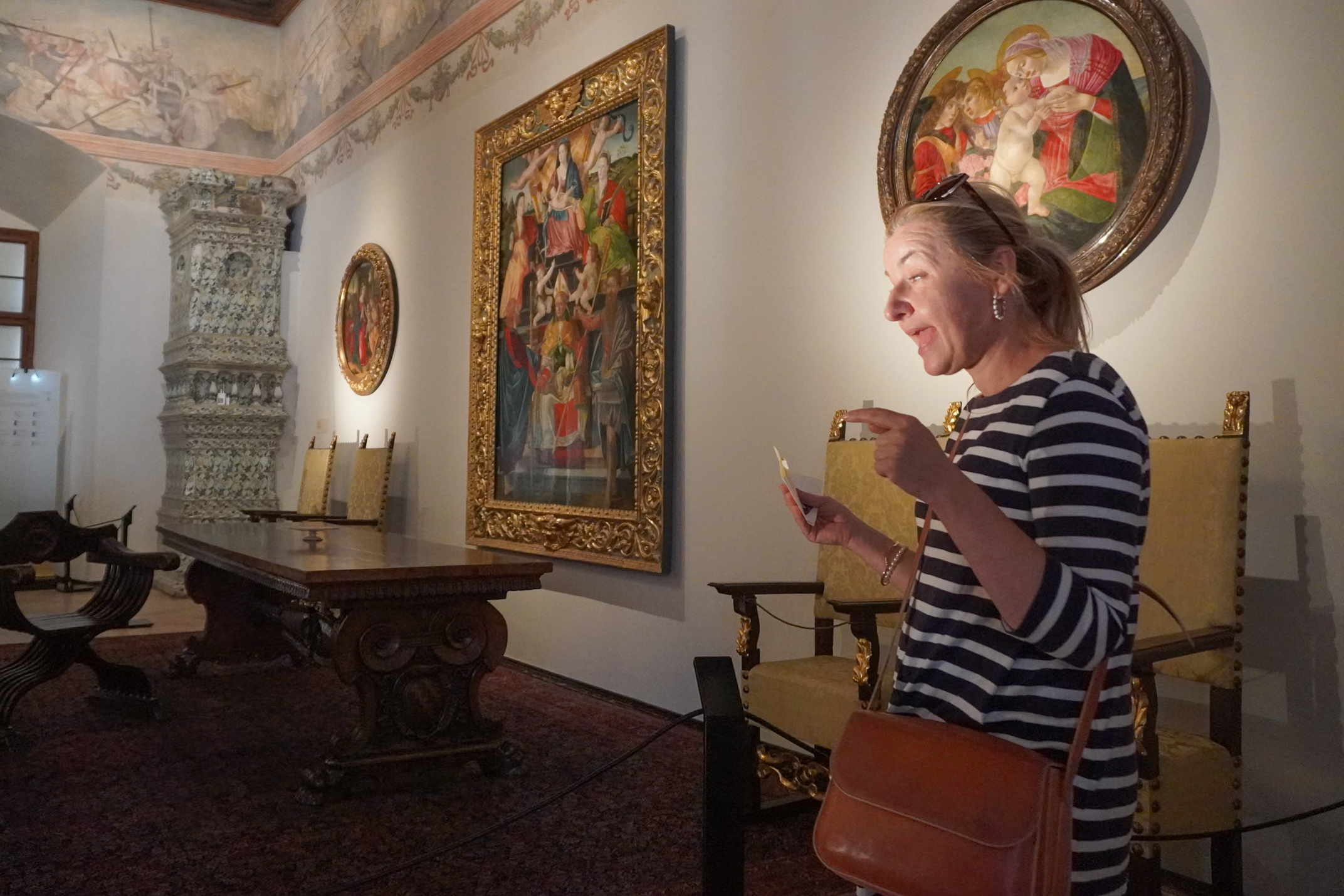
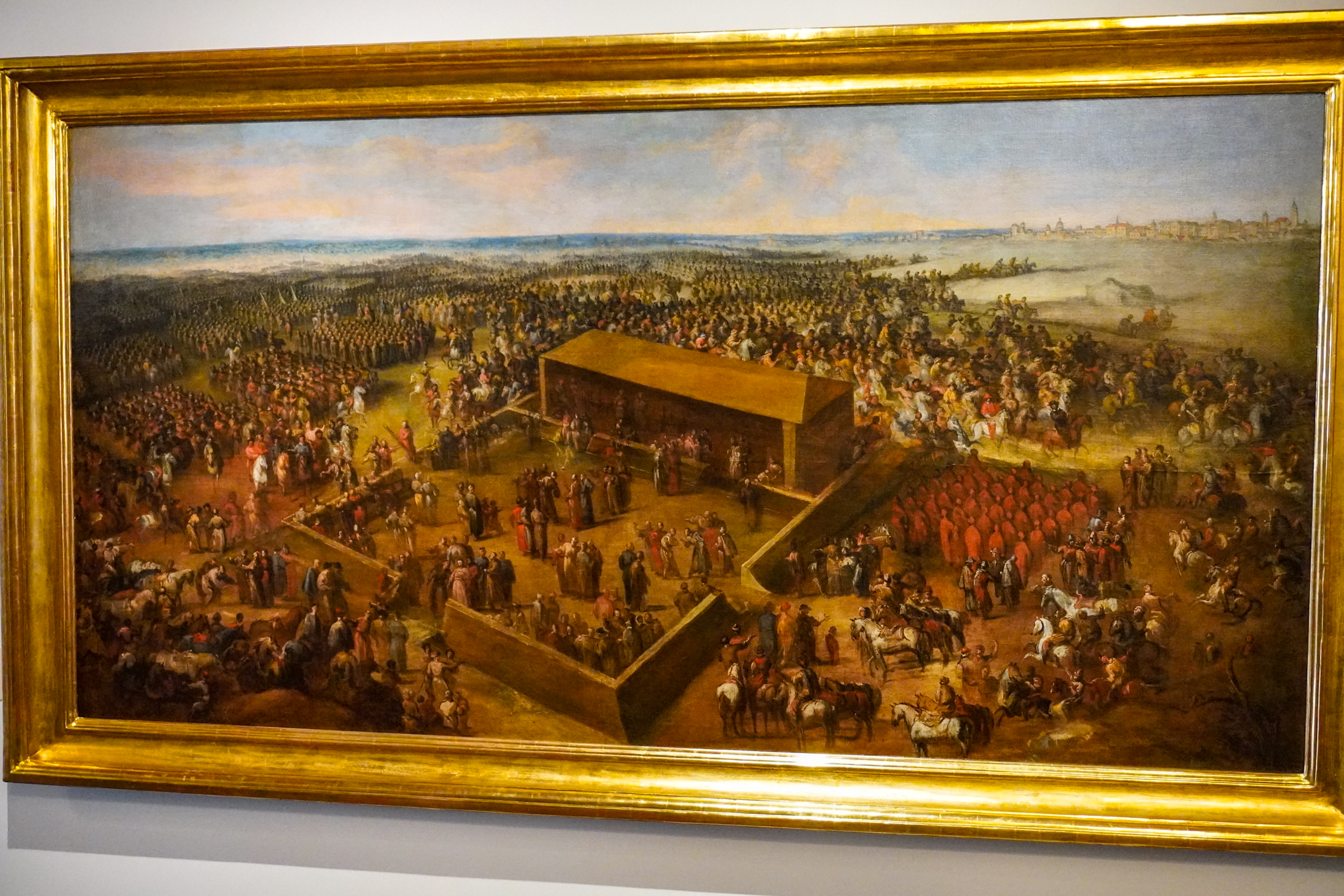
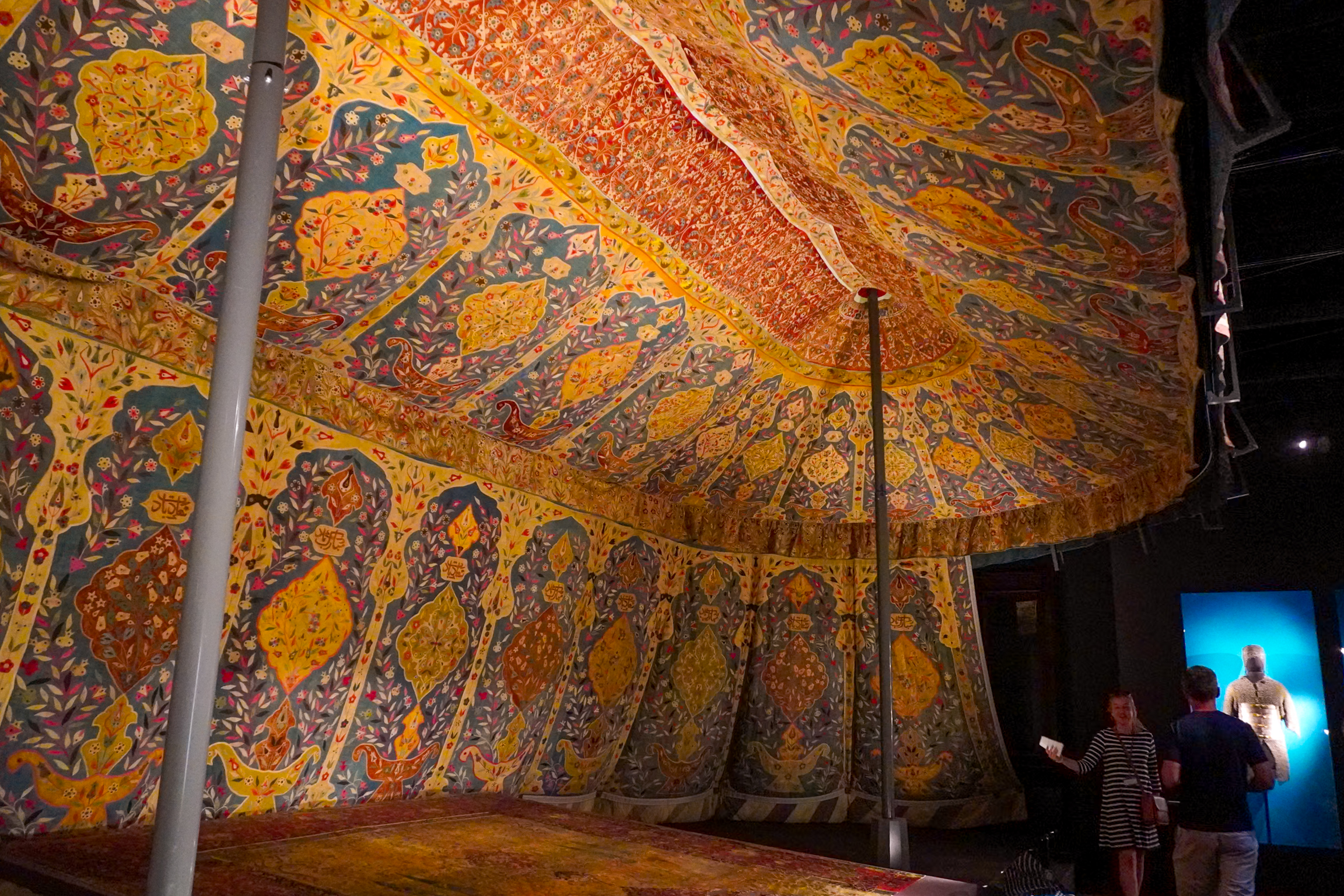
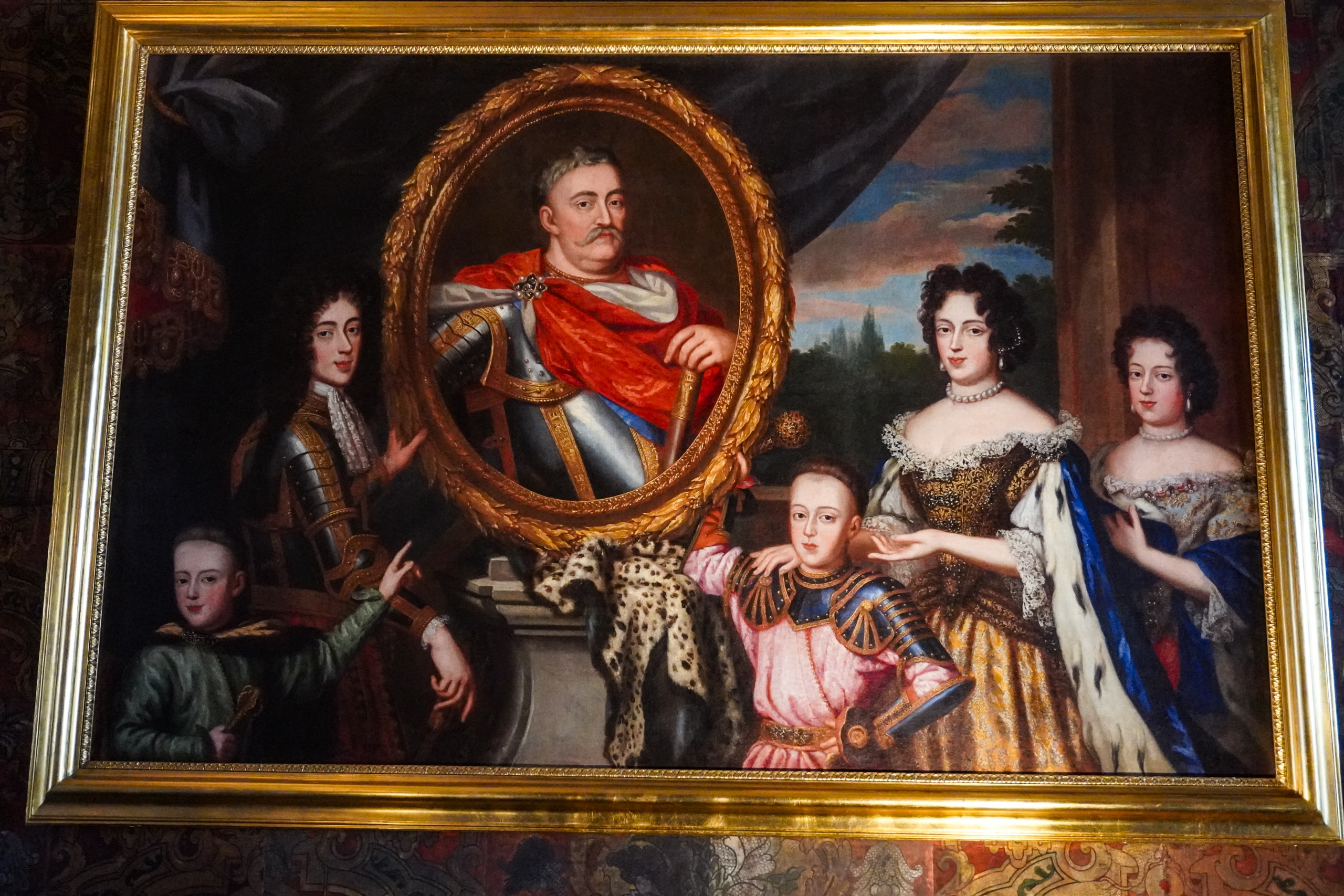
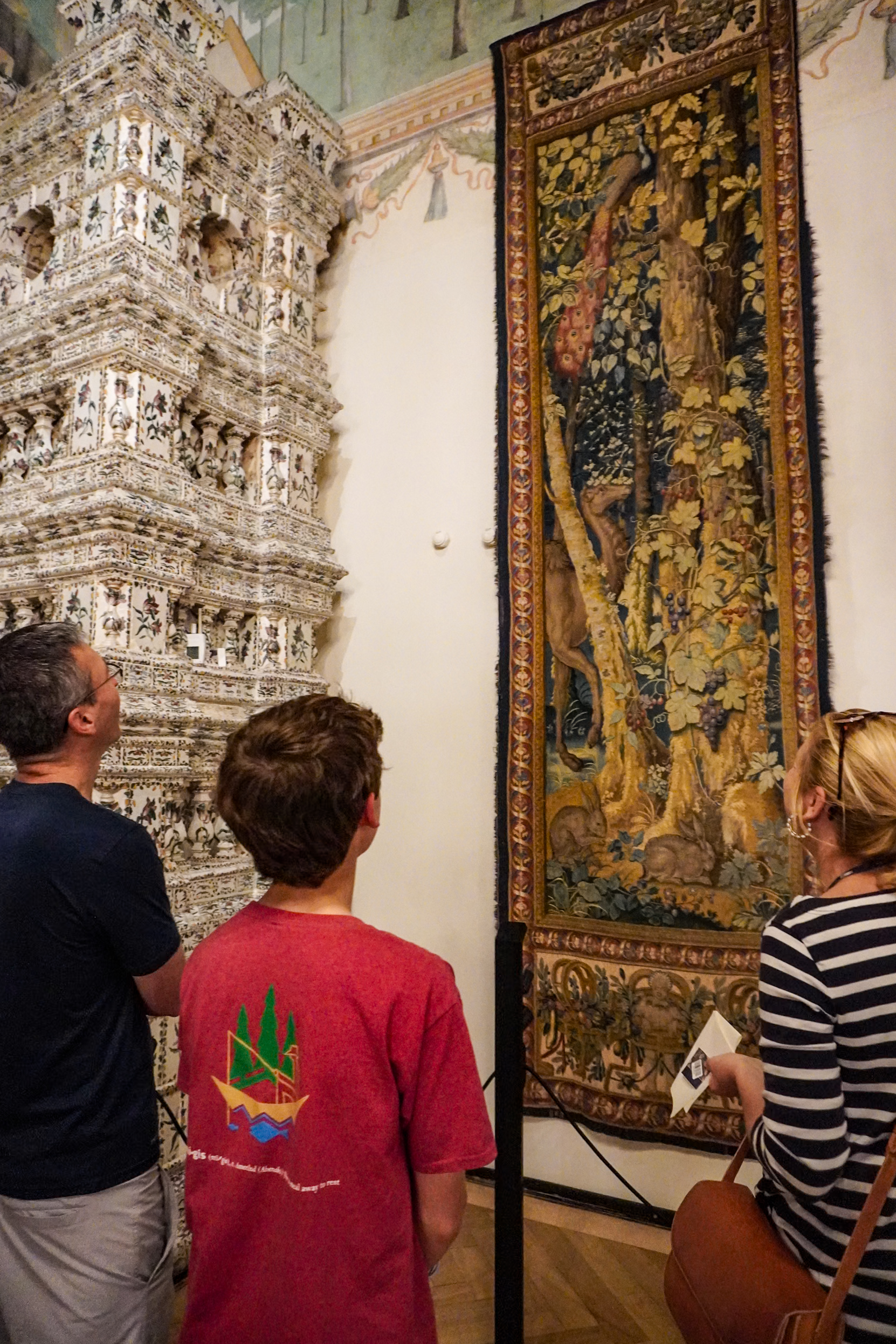
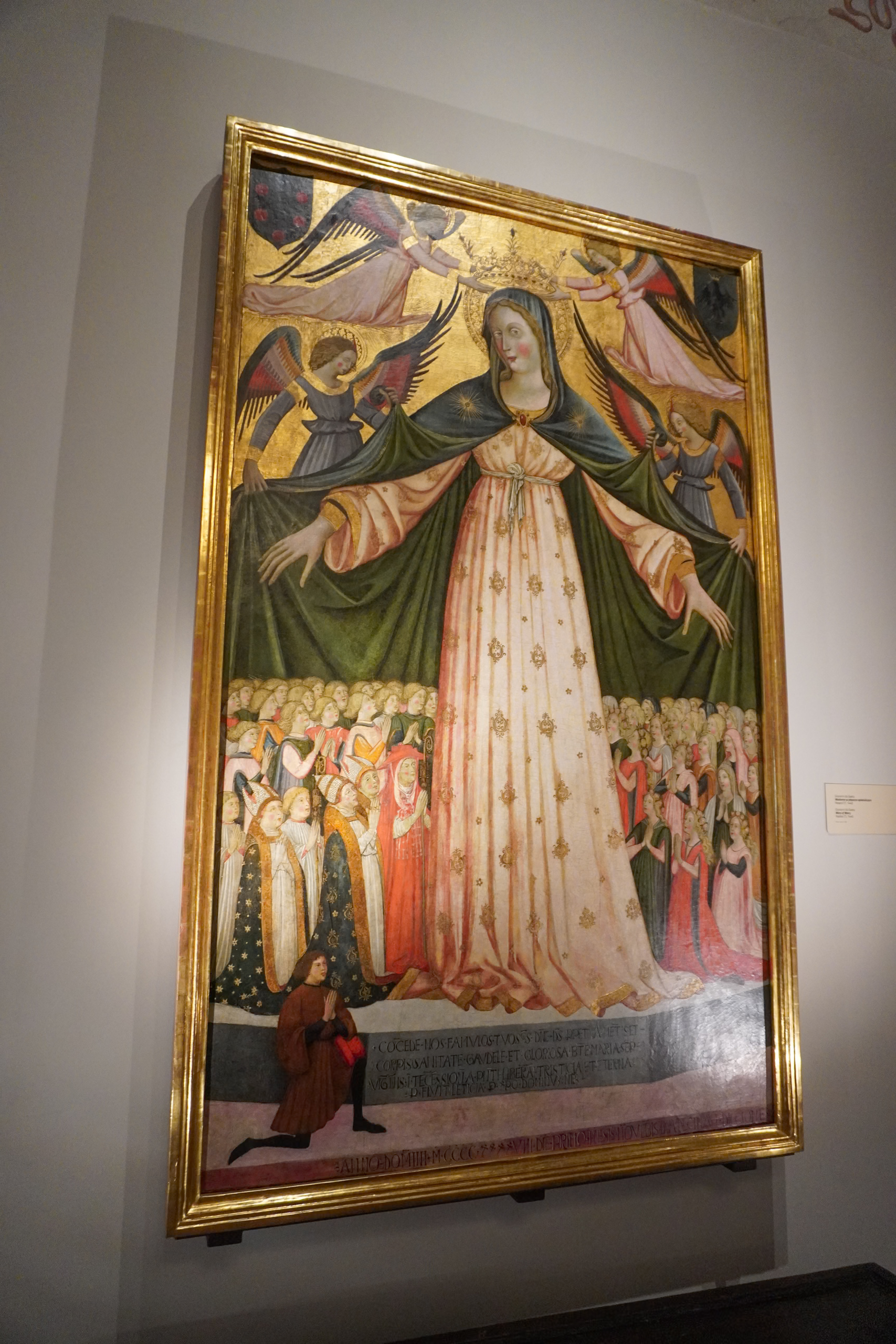
Our tour began with the castle’s Royal Apartments, brimming with centuries-old treasures: ornate armor, tapestries, and murals depicting Poland’s storied past. We also explored an Oriental Art exhibition, featuring intricate artifacts from 17th-century Turkey.
The National Shrine
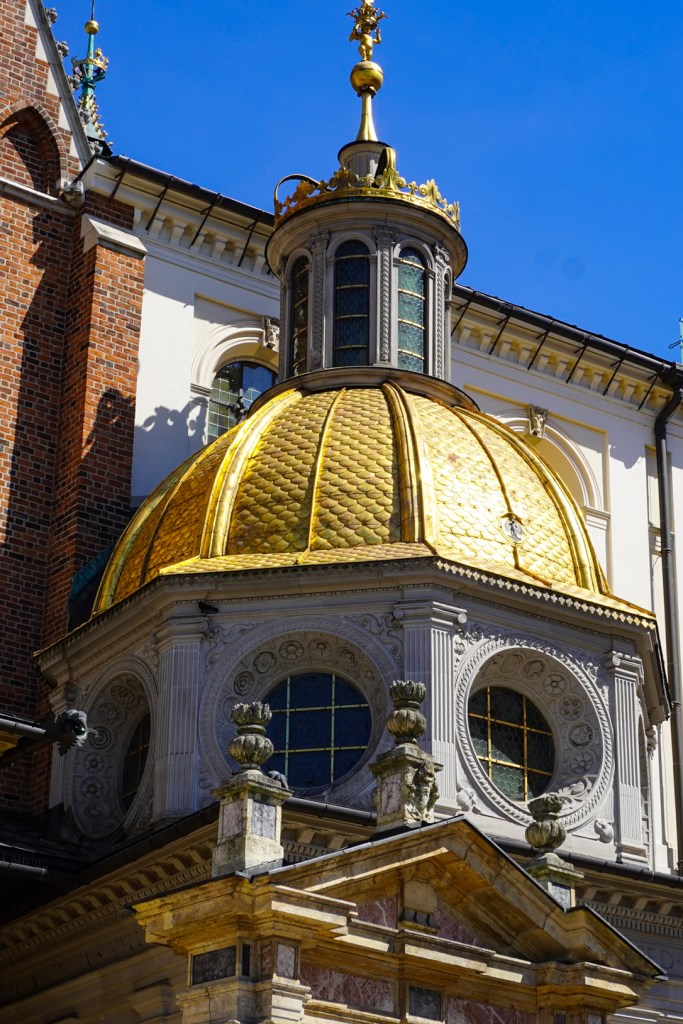
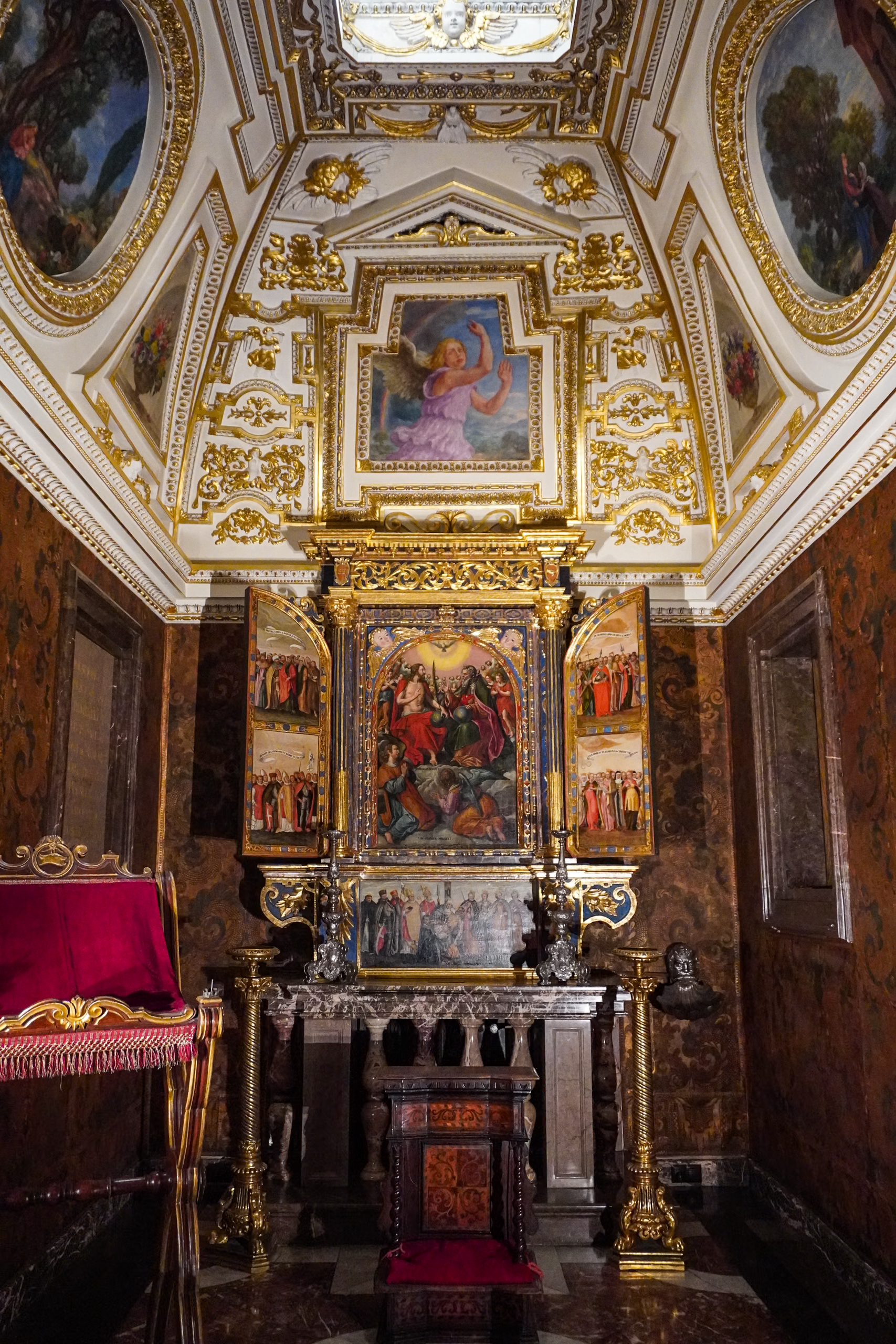
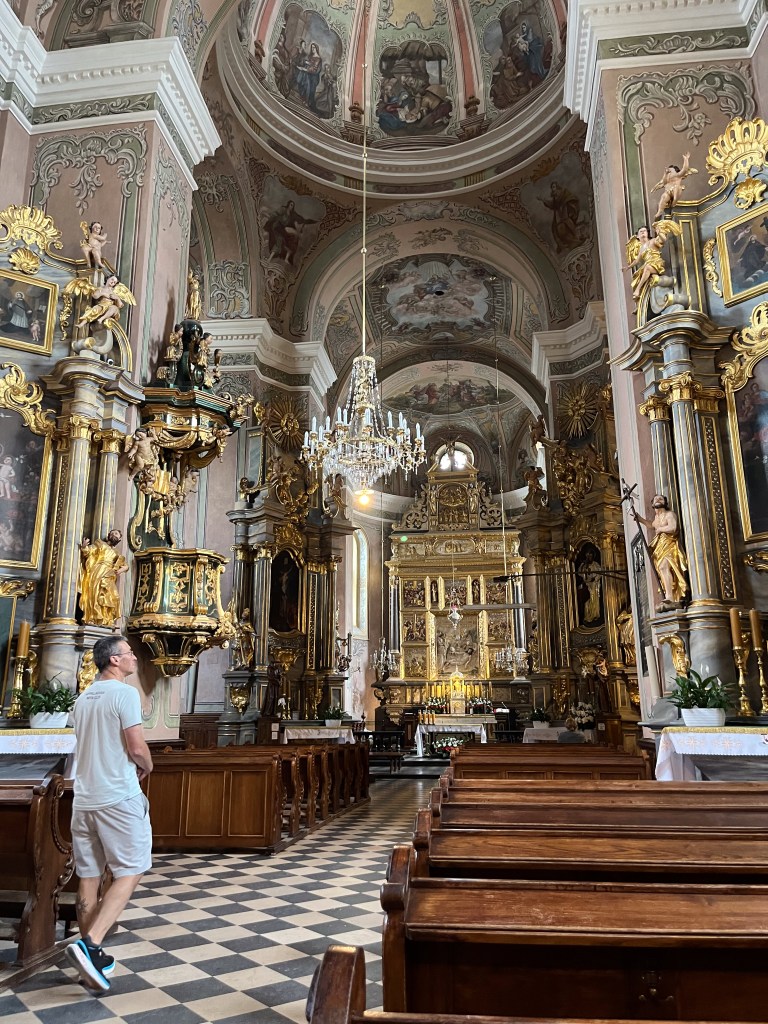
Next up was a visit to Wawel Cathedral is the sacred center of Krakow and possibly the entire country. Sigismund Chapel is notable for its 24kt gold domb. Since the 1300’s kings and other notable Poles have been coronated and buried here. You can see the actual sarcophagi tombs carved with images of the dead. Even the national hero, Tadeusz Kosciusko, who led American troops during the Revolutionary War, is buried here.  

For Whom the Bells Toll

Of special interest, is climbing the 70 tight wooden steps up to the Cathedral bell tower. Here there is a great view of the castle and old town areas. But, our destination was the huge bells above us as we climbed.
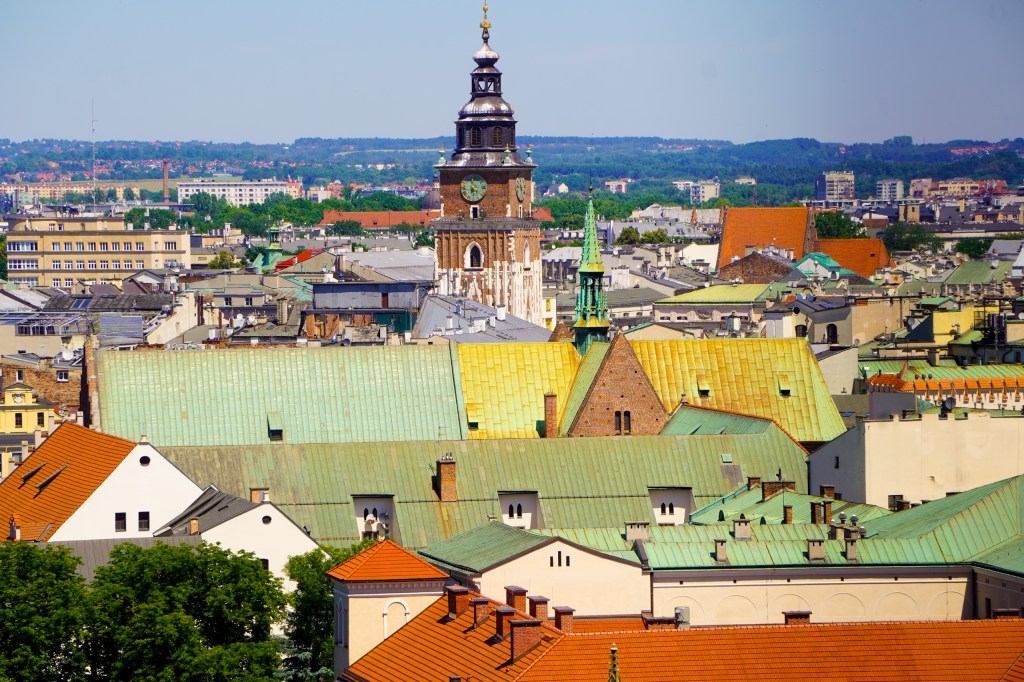
View from the Wawel Cathedral Bell Tower

The huge, 12-ton Sigismond Bell (cast in 1520), is said to have a magical sound and is only rung on momentous occasions for Poland, such as national celebrations, major religious holidays, or times of great sorrow. 
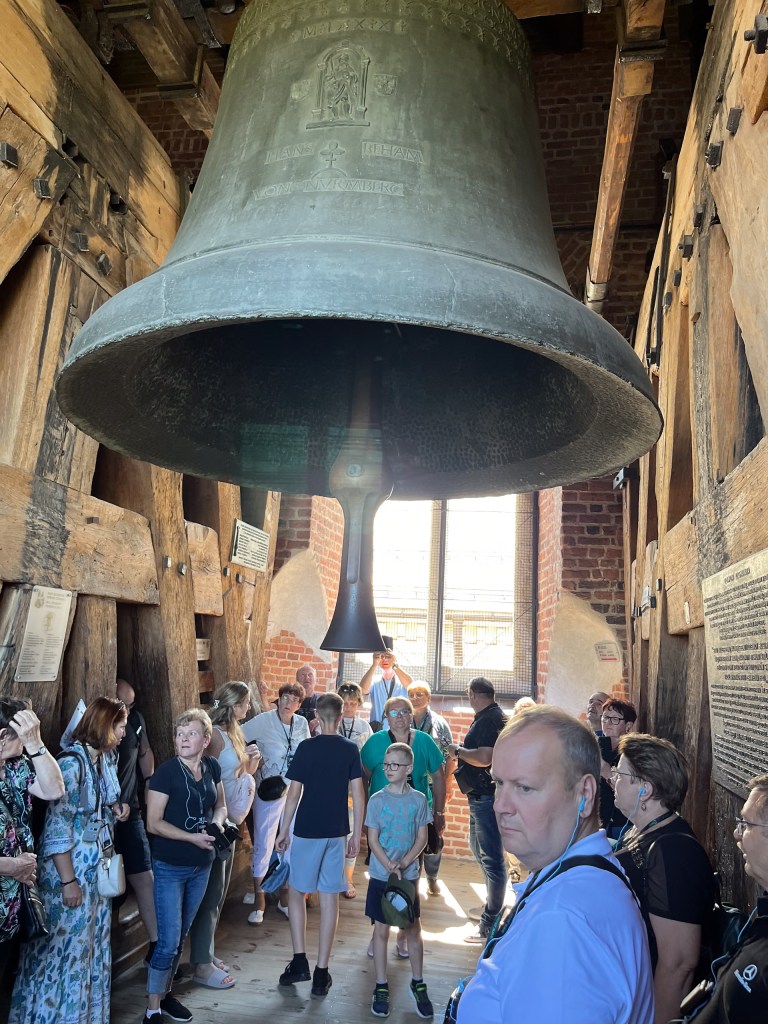
Sigismond Bell

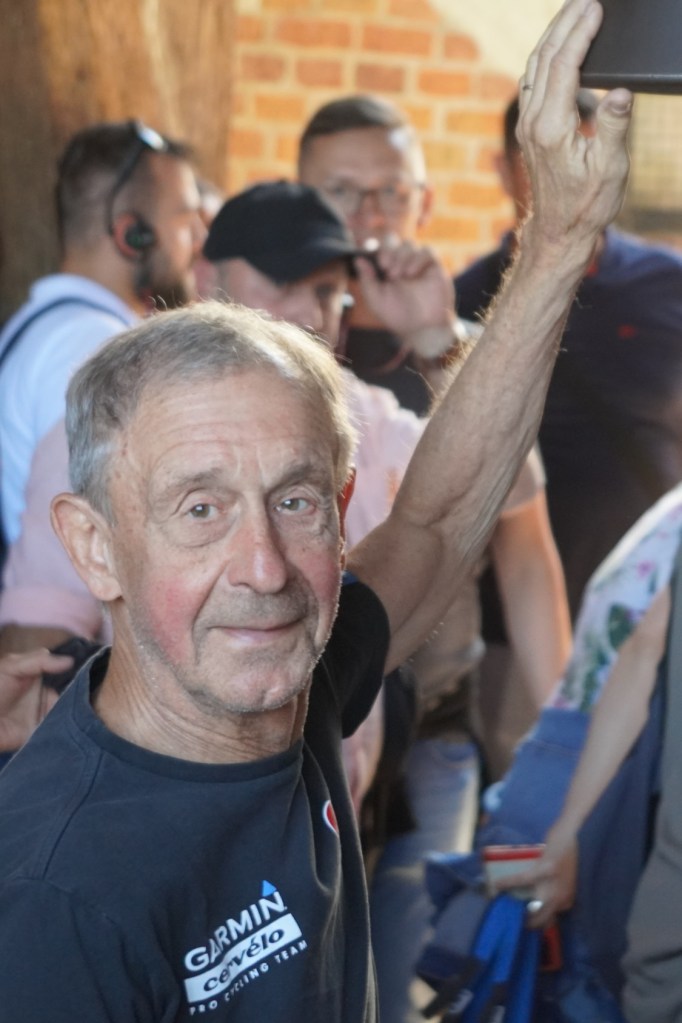
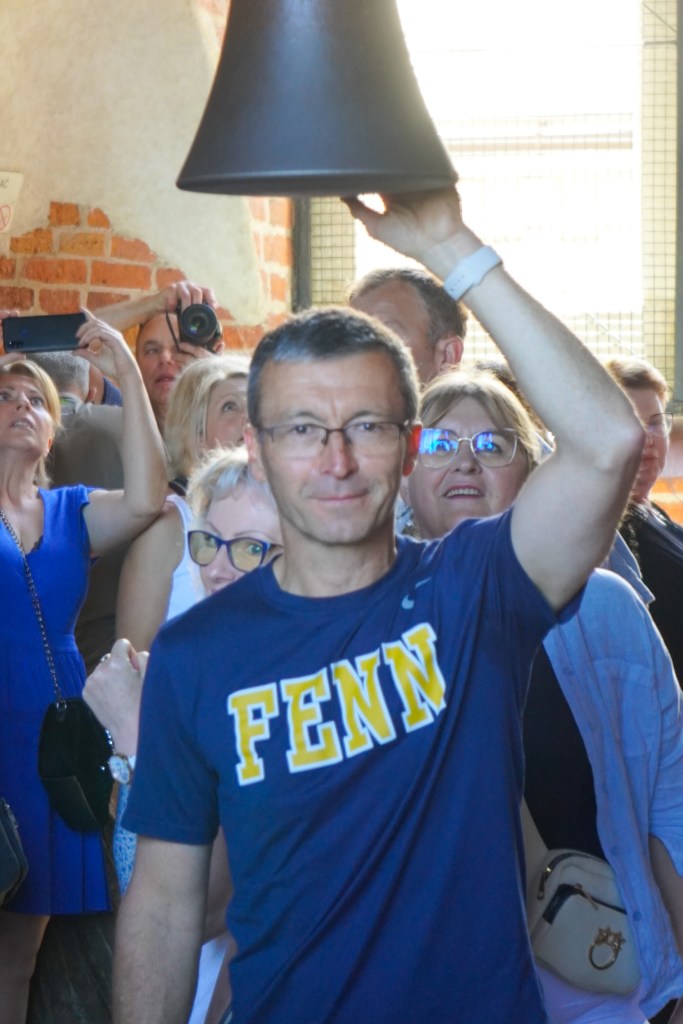
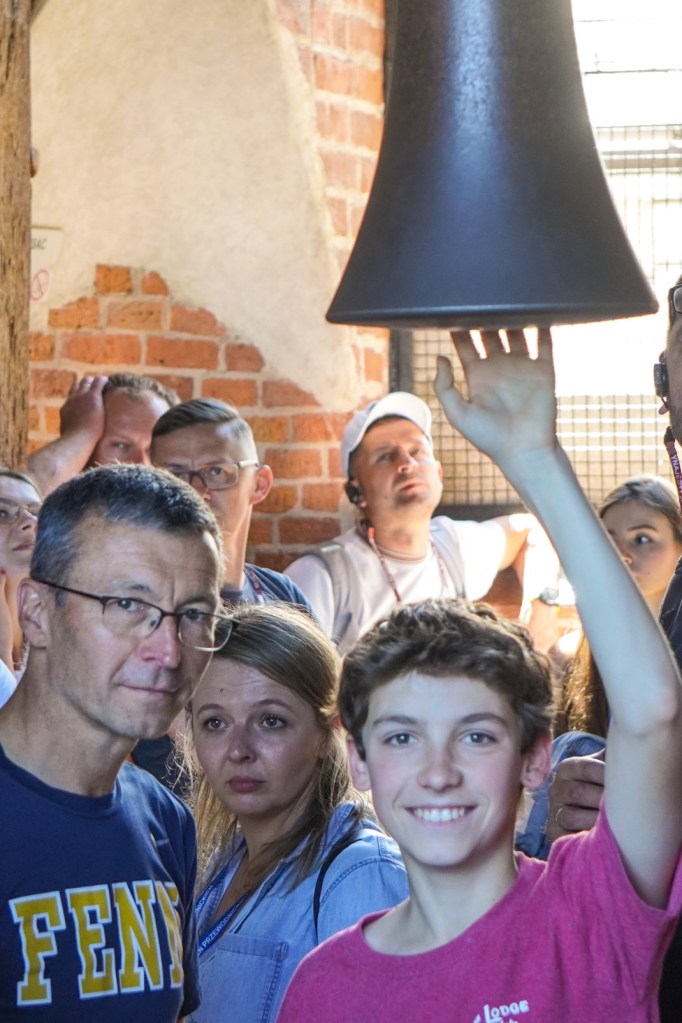
Of lesser importance, in the bell tower, but even more popular, is the Bell of St. John. The bell should be touched with the left hand while making a wish. especially in matters of the heart, such as love and marriage. Each of us touched the bell with our own private wish.
Old Buildings in the Old Town

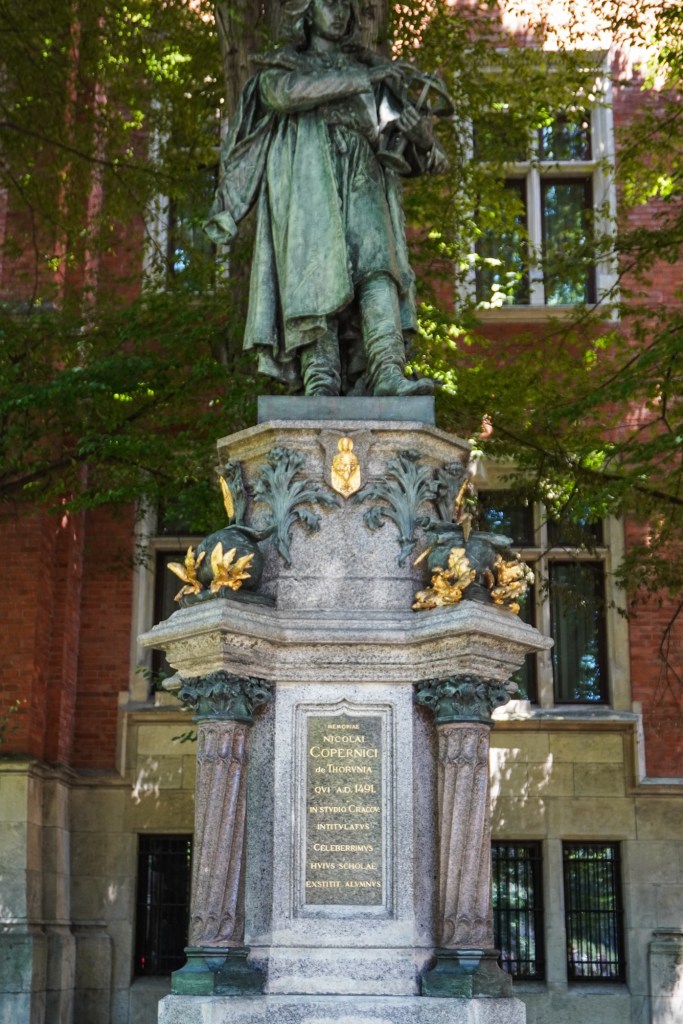
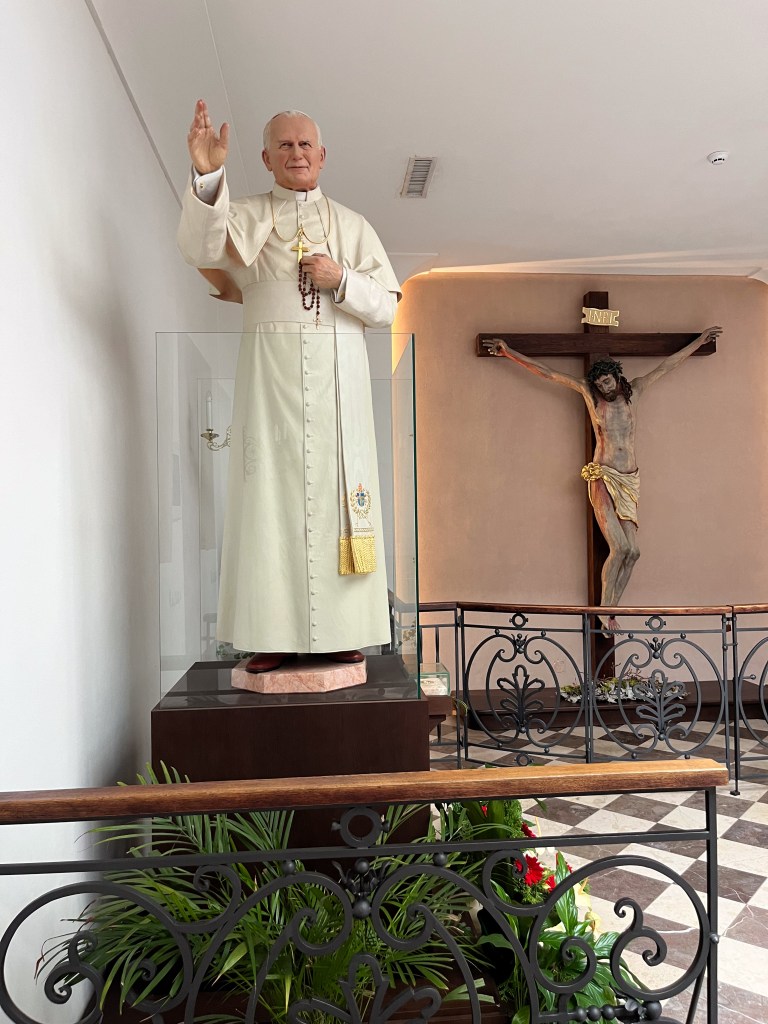
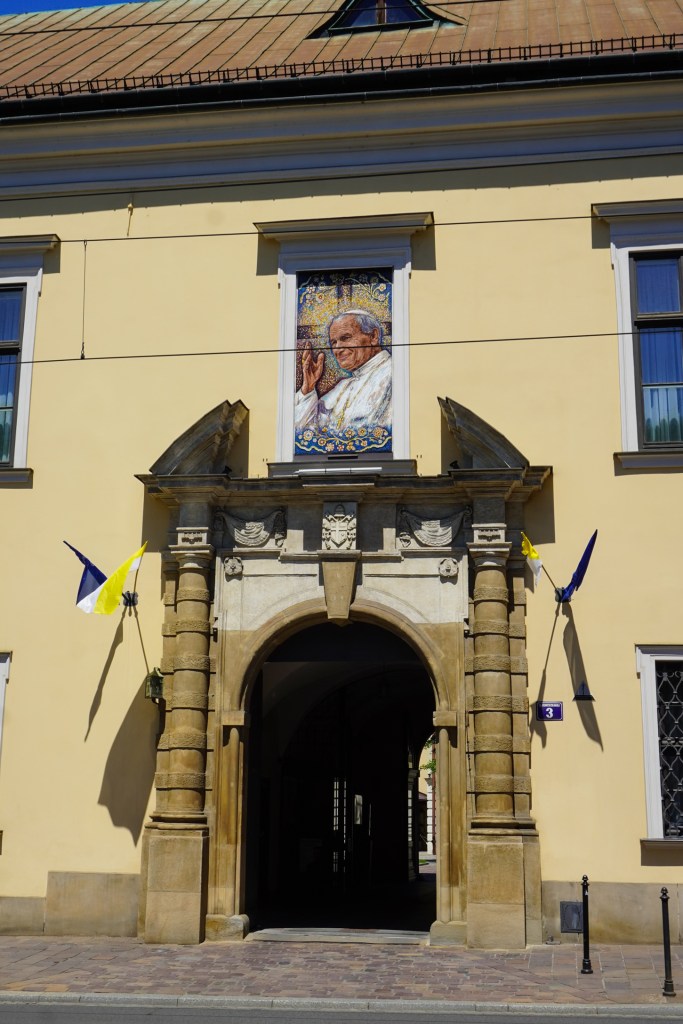
We left the castle area to briefly view a few other historical buildings. The Papel Window in the bishop’s palace where favorite-son Karol Wojtyla (who later became Pope John Paul II) would address his followers, the Church of Saints Peter and Paul and the Jagiellonian University, one of the oldest universities in Europe (1364).
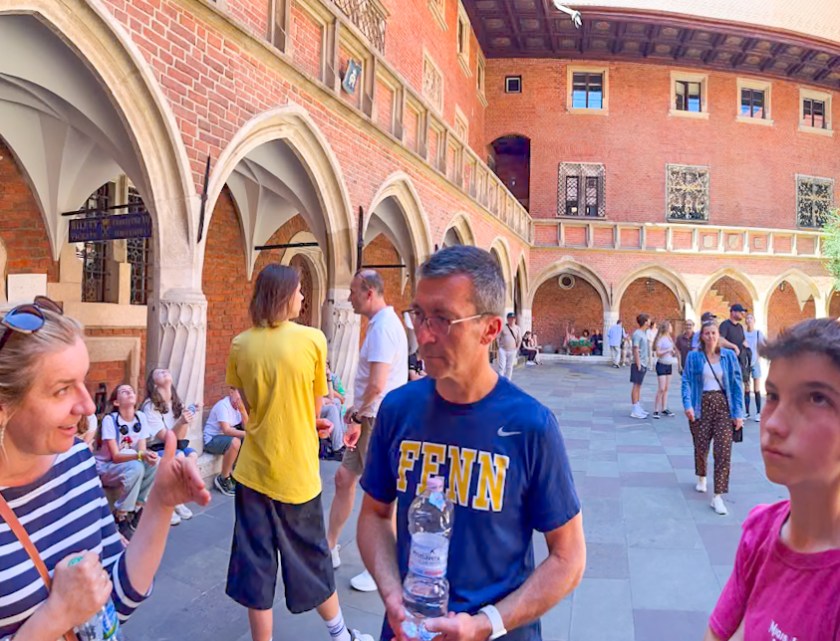
A Gothic Masterpiece

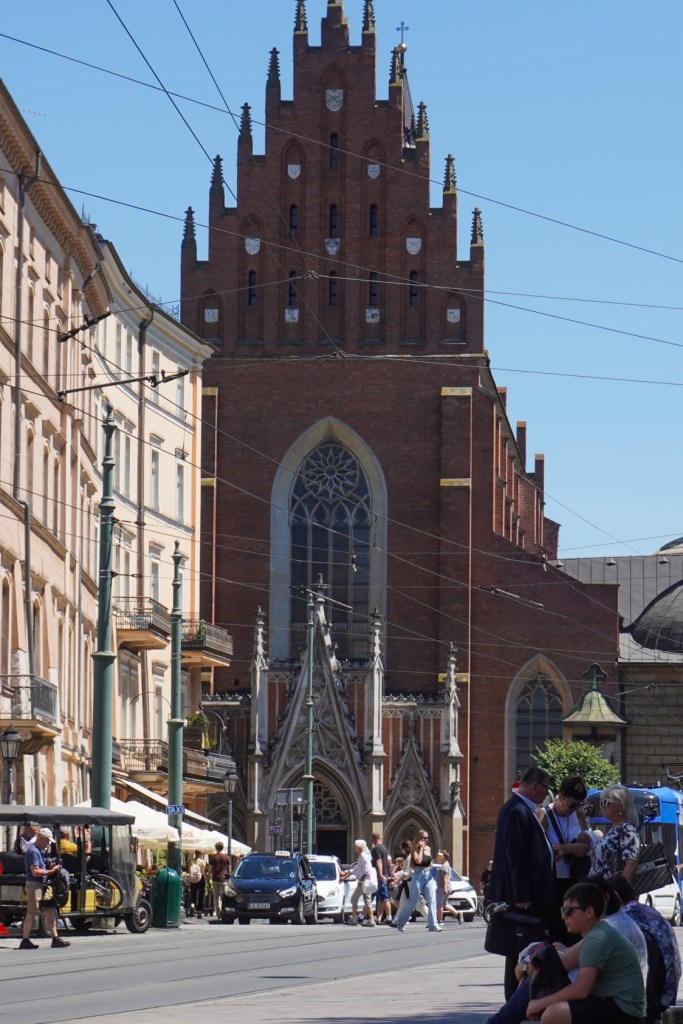
Chief among other nearby historical buildings St. Mary’s Basilica know for its magnificent stained-glass windows and famous altarpiece, a pentaptych by Veit Stoss, is said to be the greatest Gothic work of art in Poland.

Roaming Around

Our three hour tour ended with us heading toward Rynek Glowny (aka Rynek Main Marketplace) for lunch and then a nap back at our hotel, only a few blocks away.

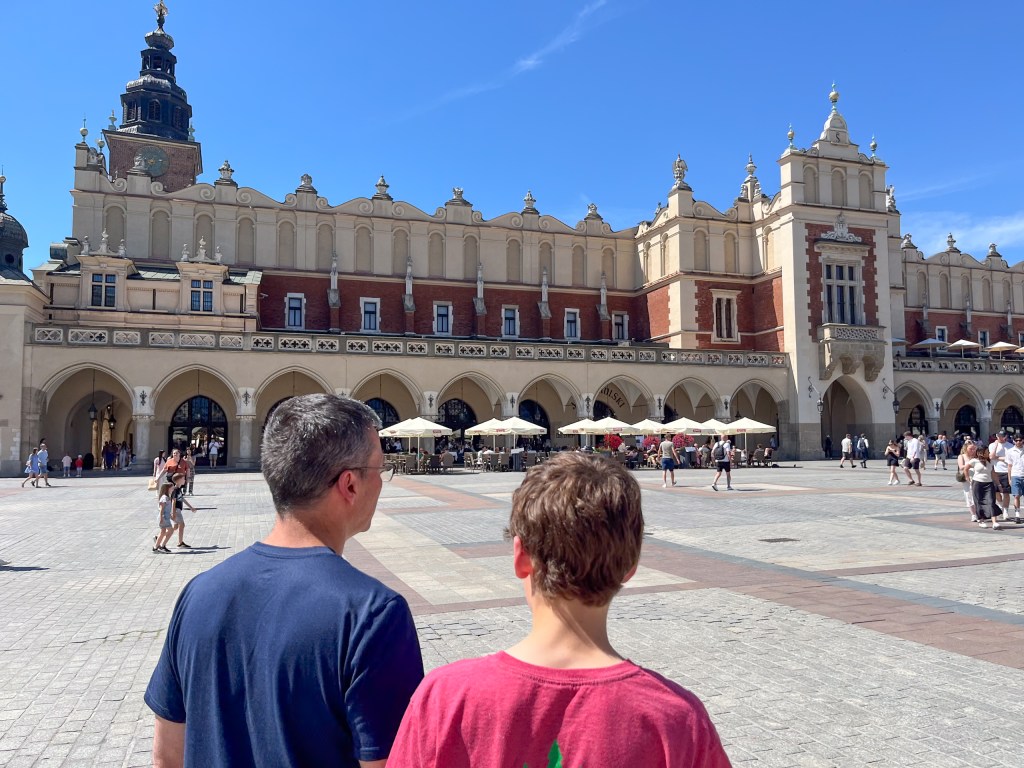
We were surprised by the size of this plaza, said to be the biggest in Europe. In the middle of the plaza, was a large building called Cloth Hall, a very old medieval marketplace where vendors would sell goods, especially clothing. Tip: Here was a great place to buy amber jewelry and Boleslawiec pottery, specialties of this area. We found just what we needed to bring home at a reasonable price solving our souvenir anxiety quickly.
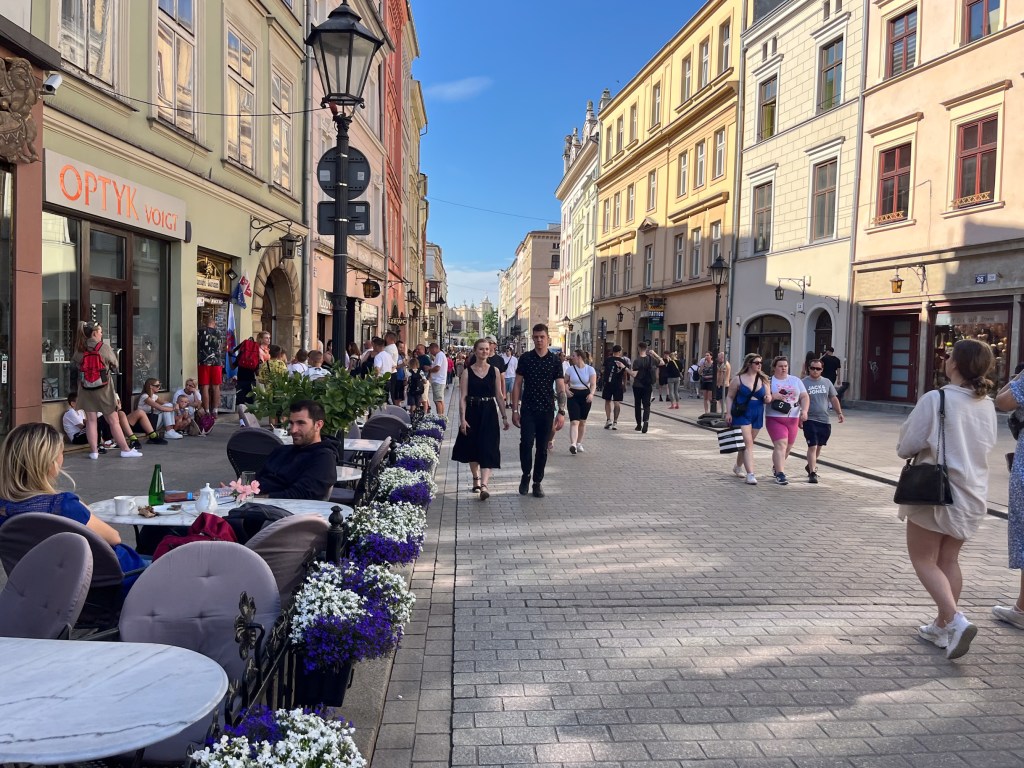
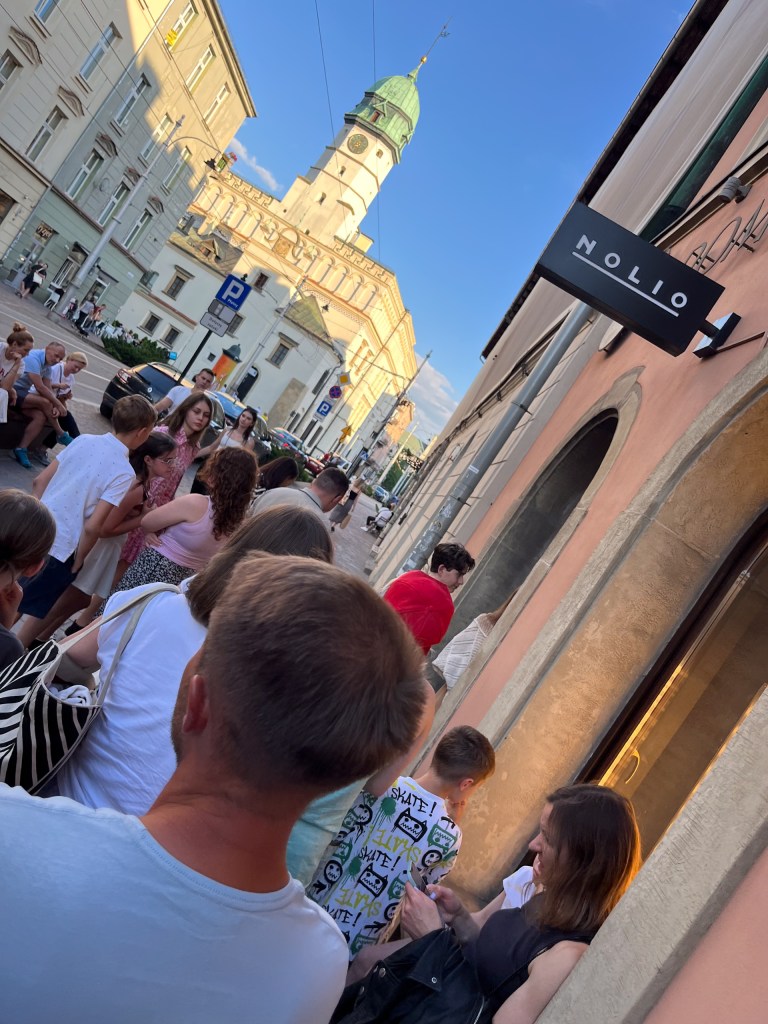
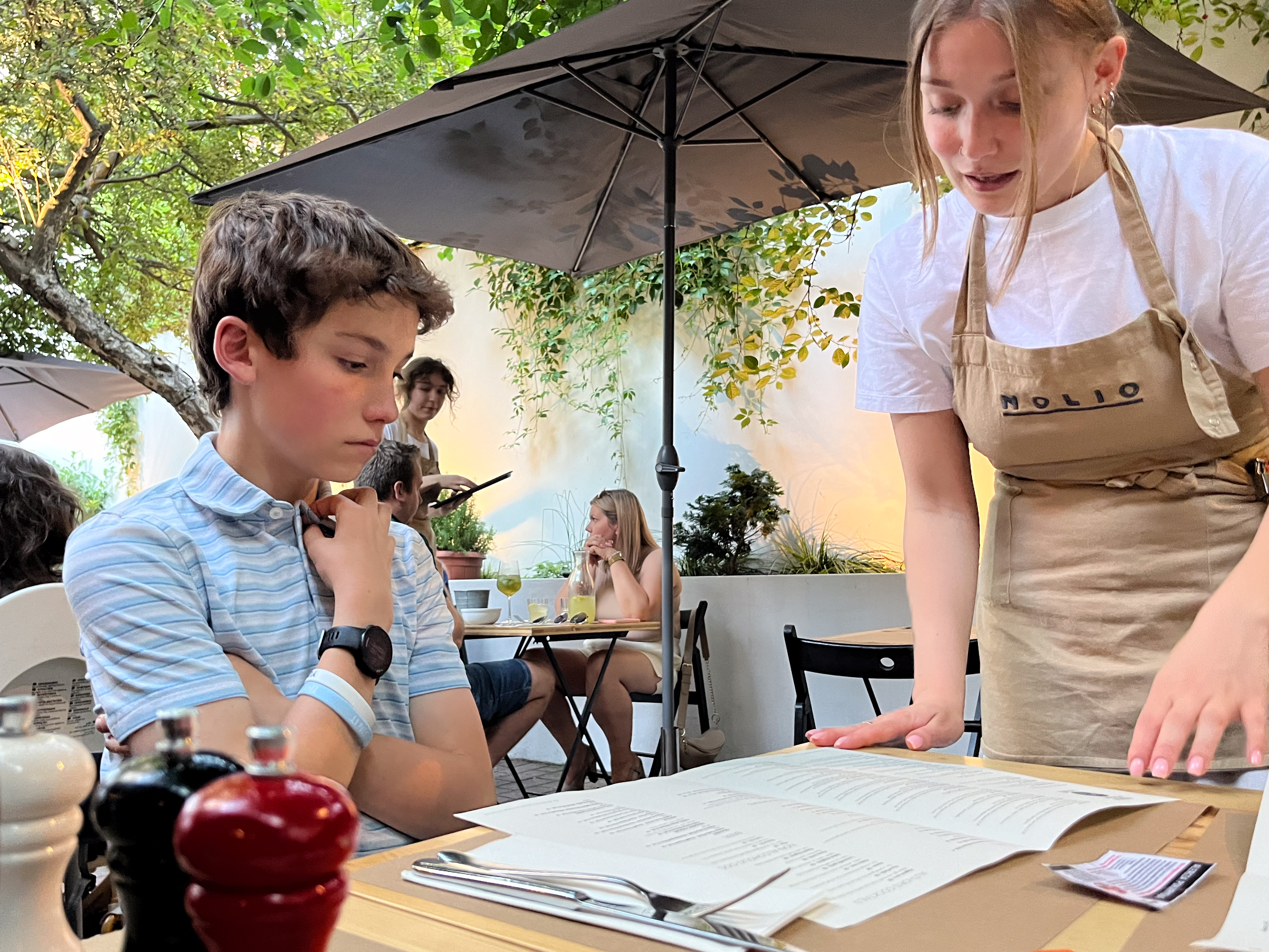
That evening we explored more of the Kazimierz and Old Town sections. We followed the crowds and found maybe the best Italian/pizza restaurant in town, Nolio’s. It was a very lively night with people of all ages, appreciating the good vibes and weather.
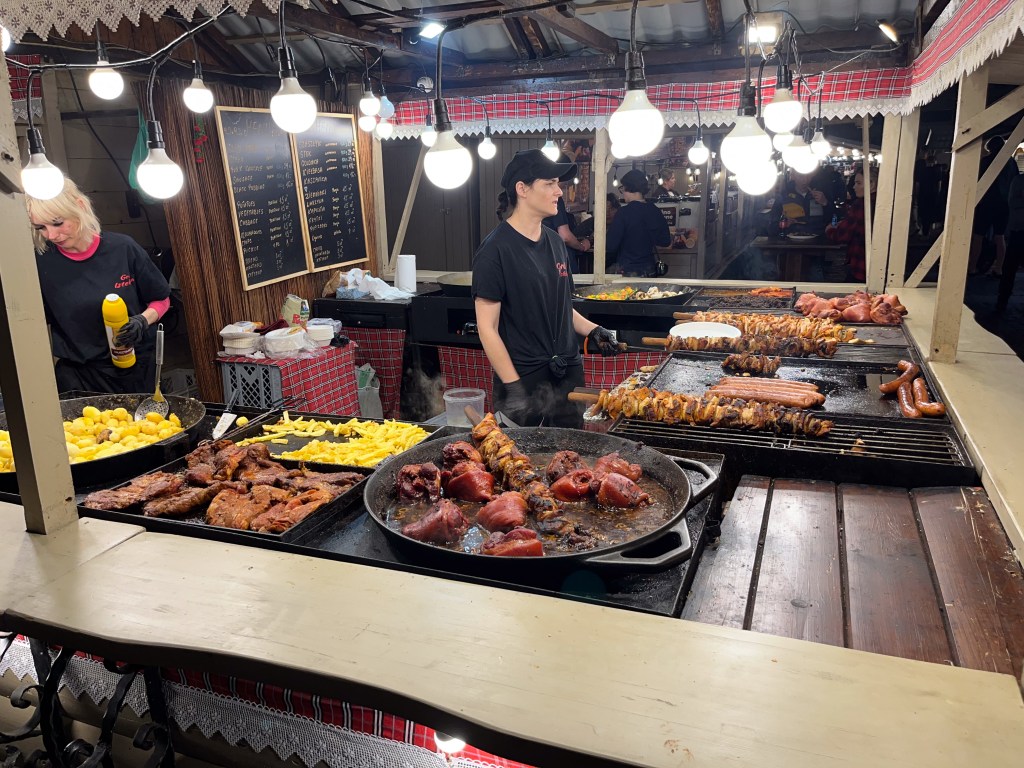
A Day of Reflection

Sunday, June 16, 2024
Auschwitz-Birkenau


Our final day in Kraków took a somber turn with a visit to Auschwitz-Birkenau. Located a short drive from the city, the concentration camp stands as a harrowing reminder of humanity’s capacity for cruelty. Touring the grounds was a powerful, emotional experience, leaving us with a renewed commitment to remembering and learning from history.
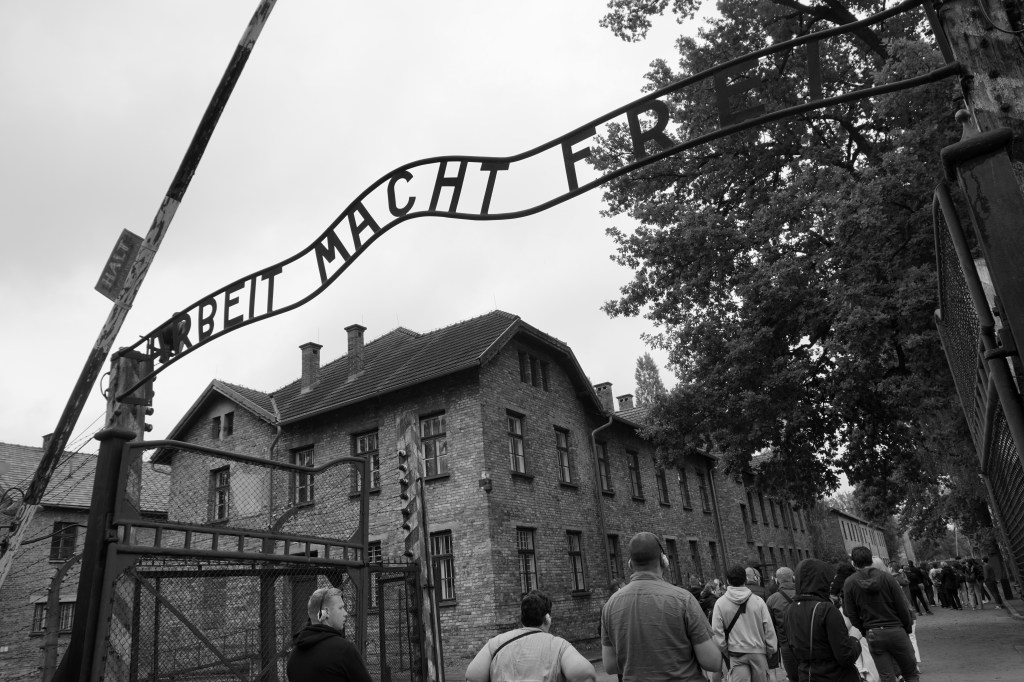
Auschwitz Entry Gate – (translation) “Work Will Set You Free”

Click here for my post on that visit including a video of our experience at Auschwitz- Birkenau.

A Celebration of Family

Returning to Kraków that evening, we marked Father’s Day with a celebratory dinner at Kogel Mogul, a Michelin-star restaurant specializing in gourmet Polish cuisine. The meal, a gift from Ethan’s wife Amanda, was the perfect way to cap off our journey.
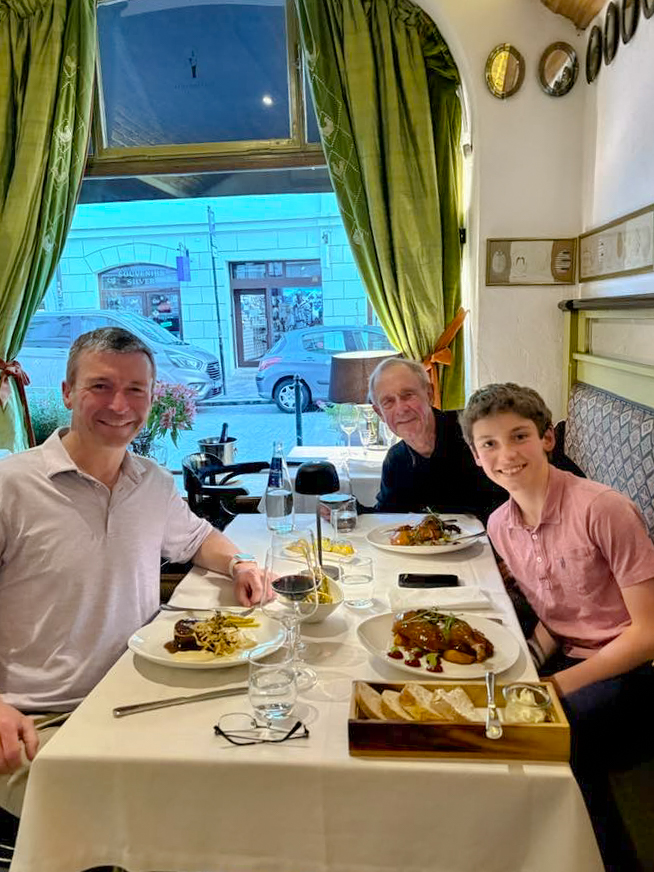
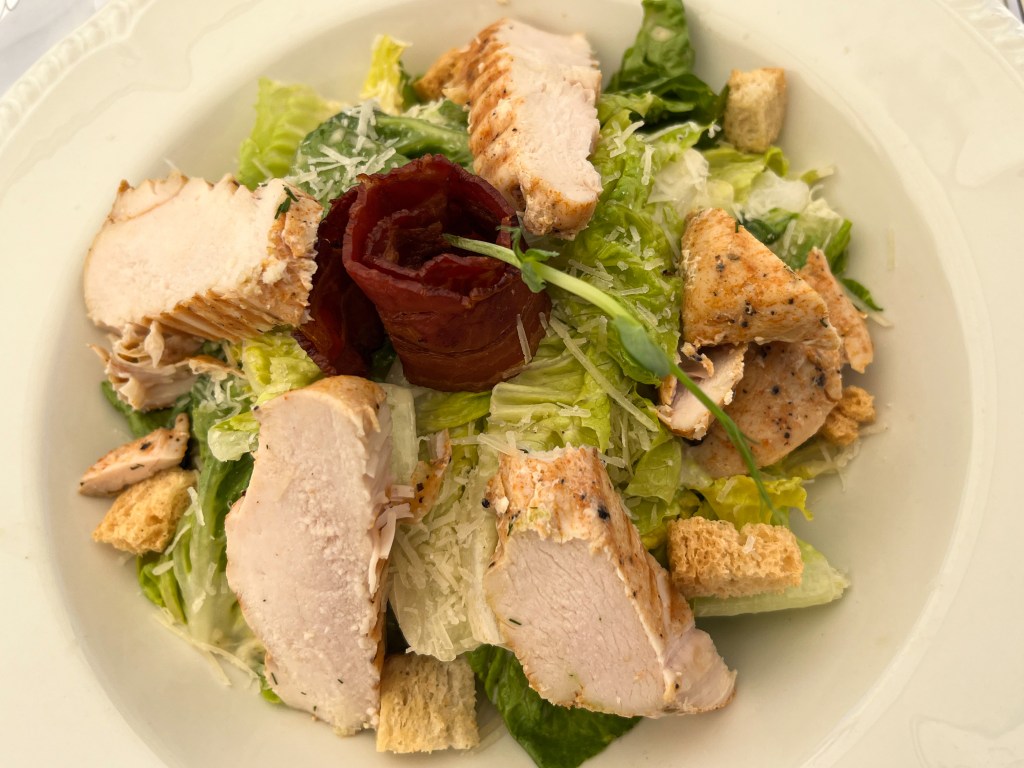
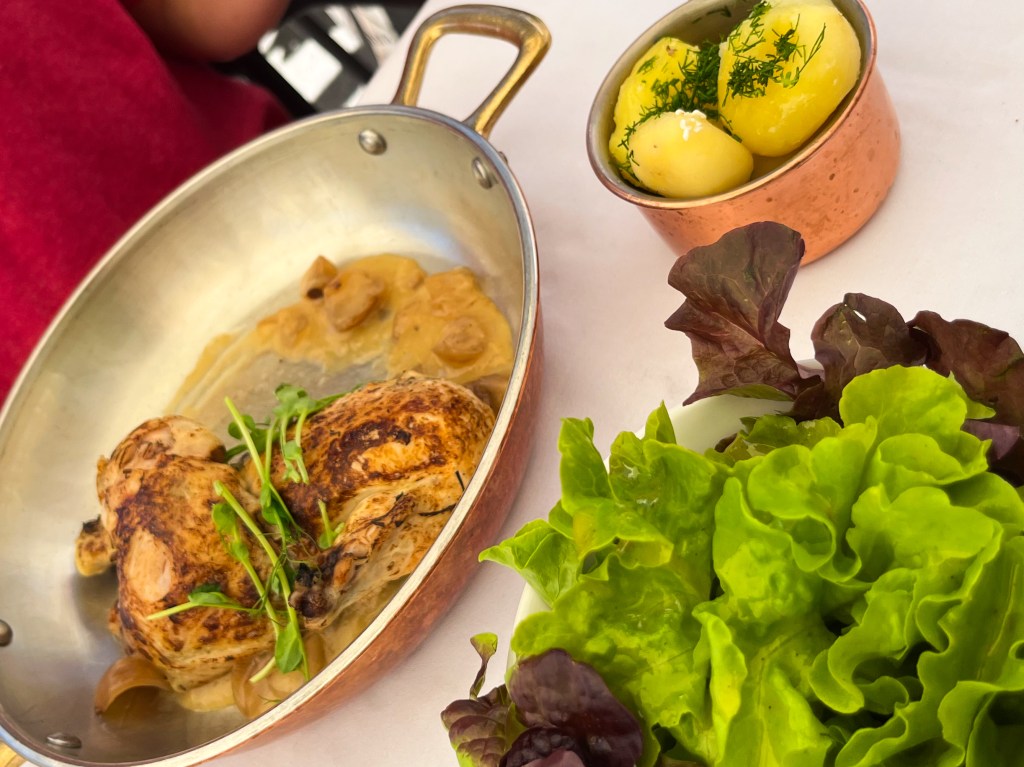
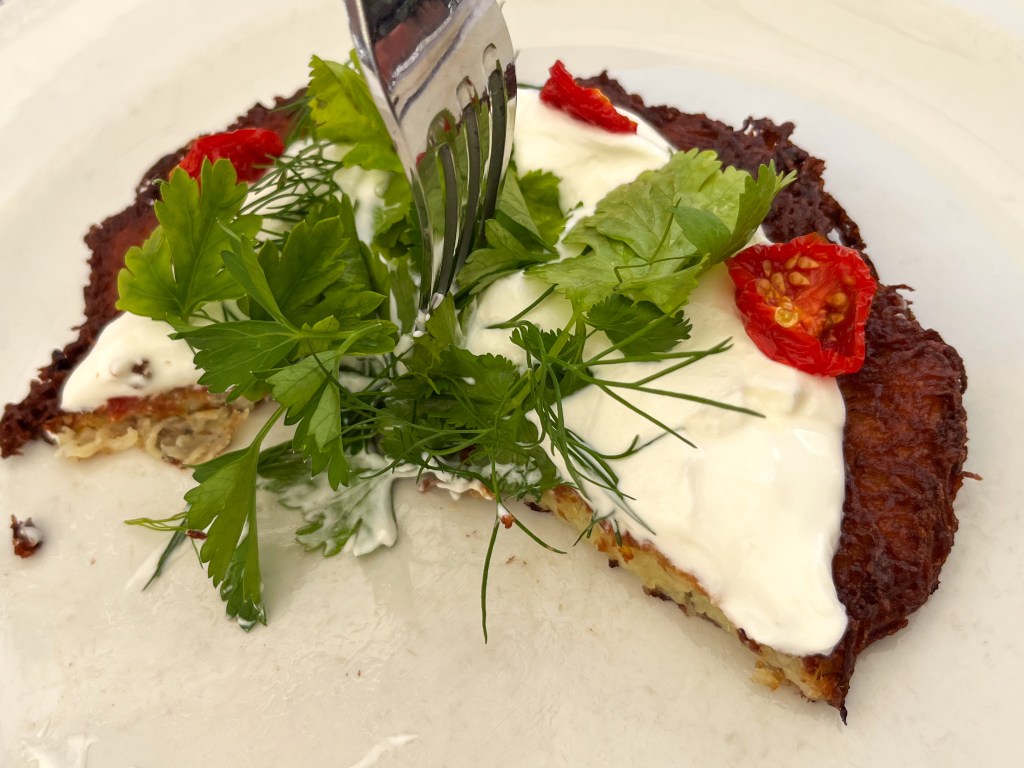
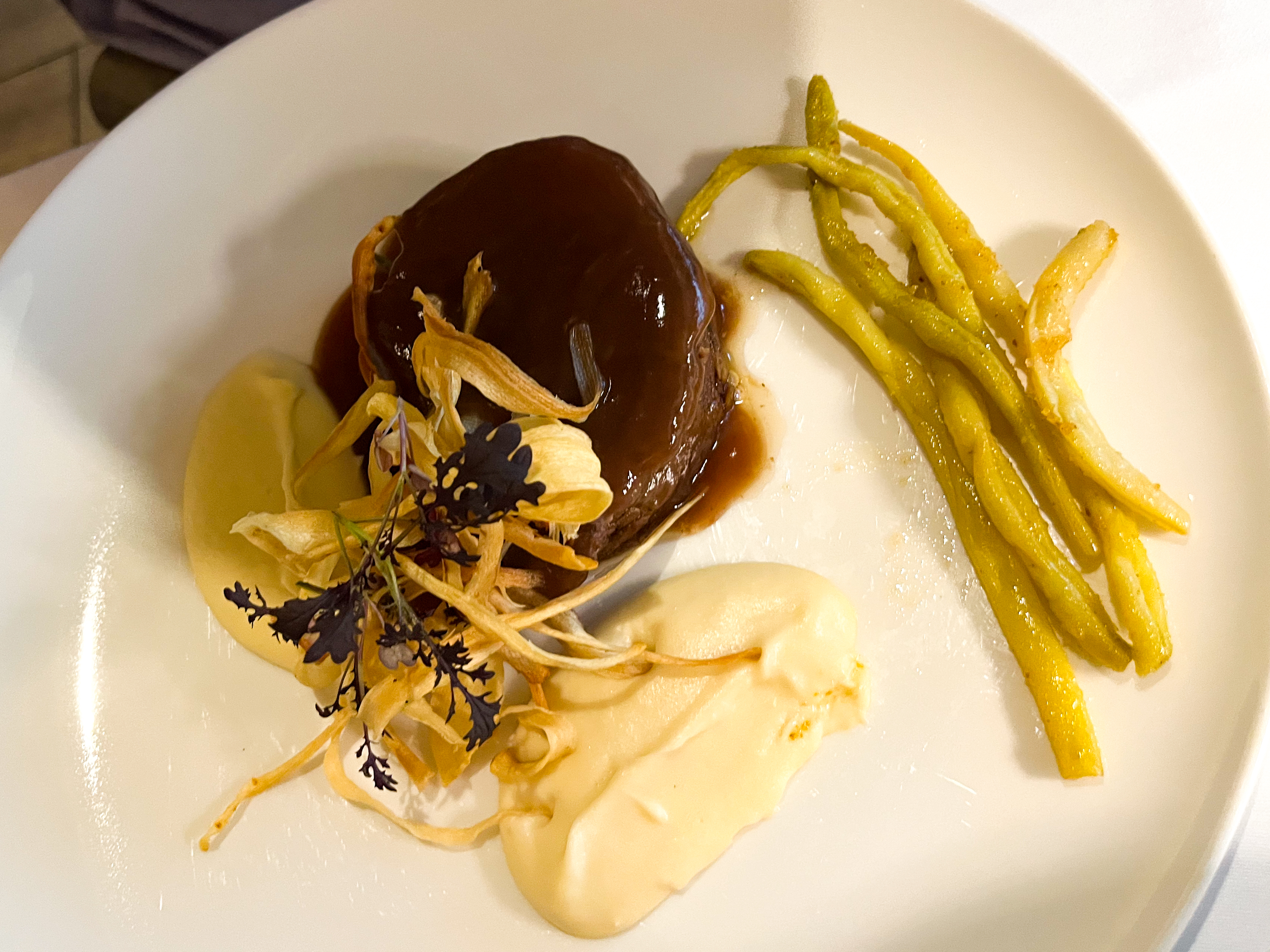
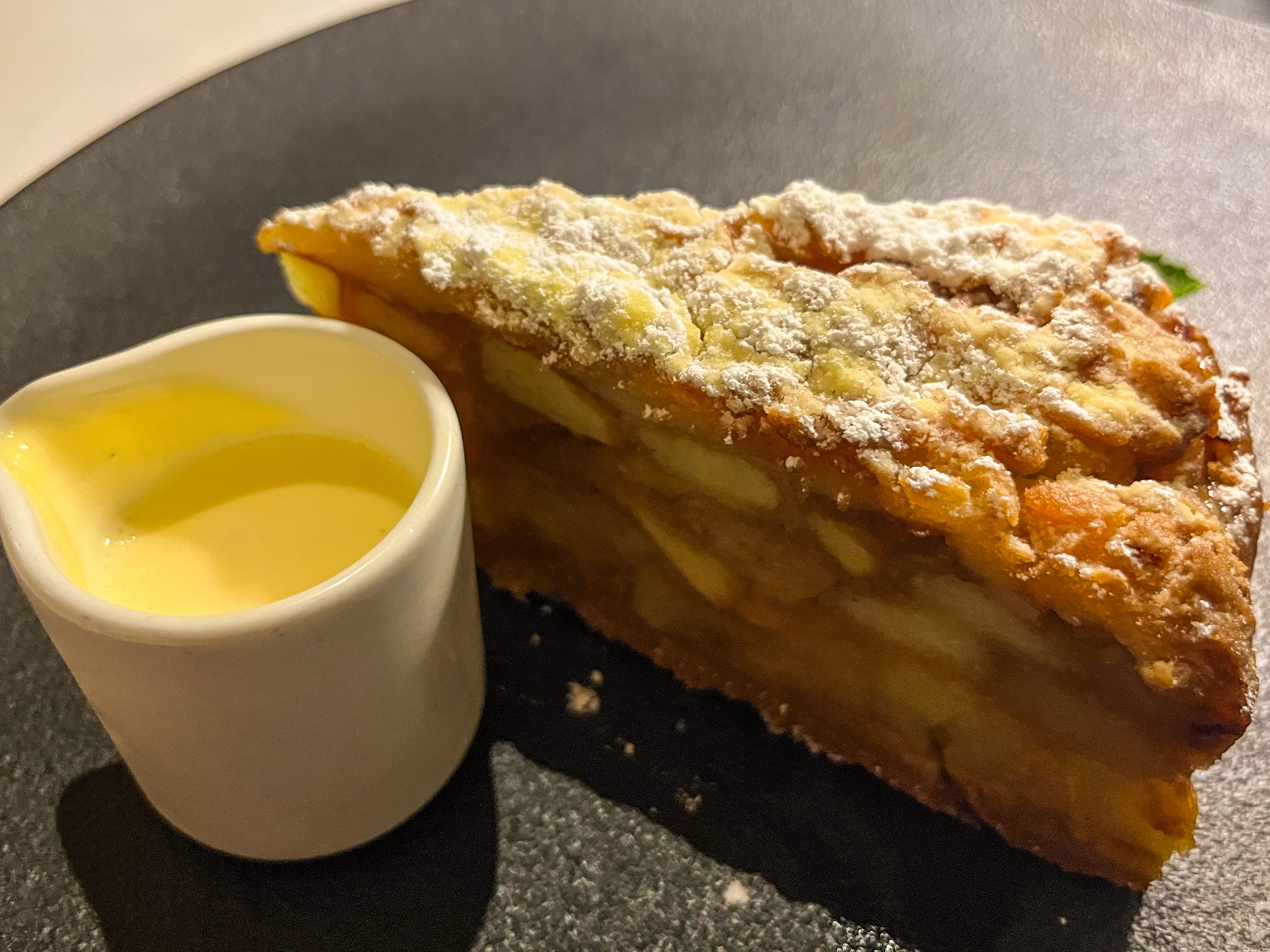
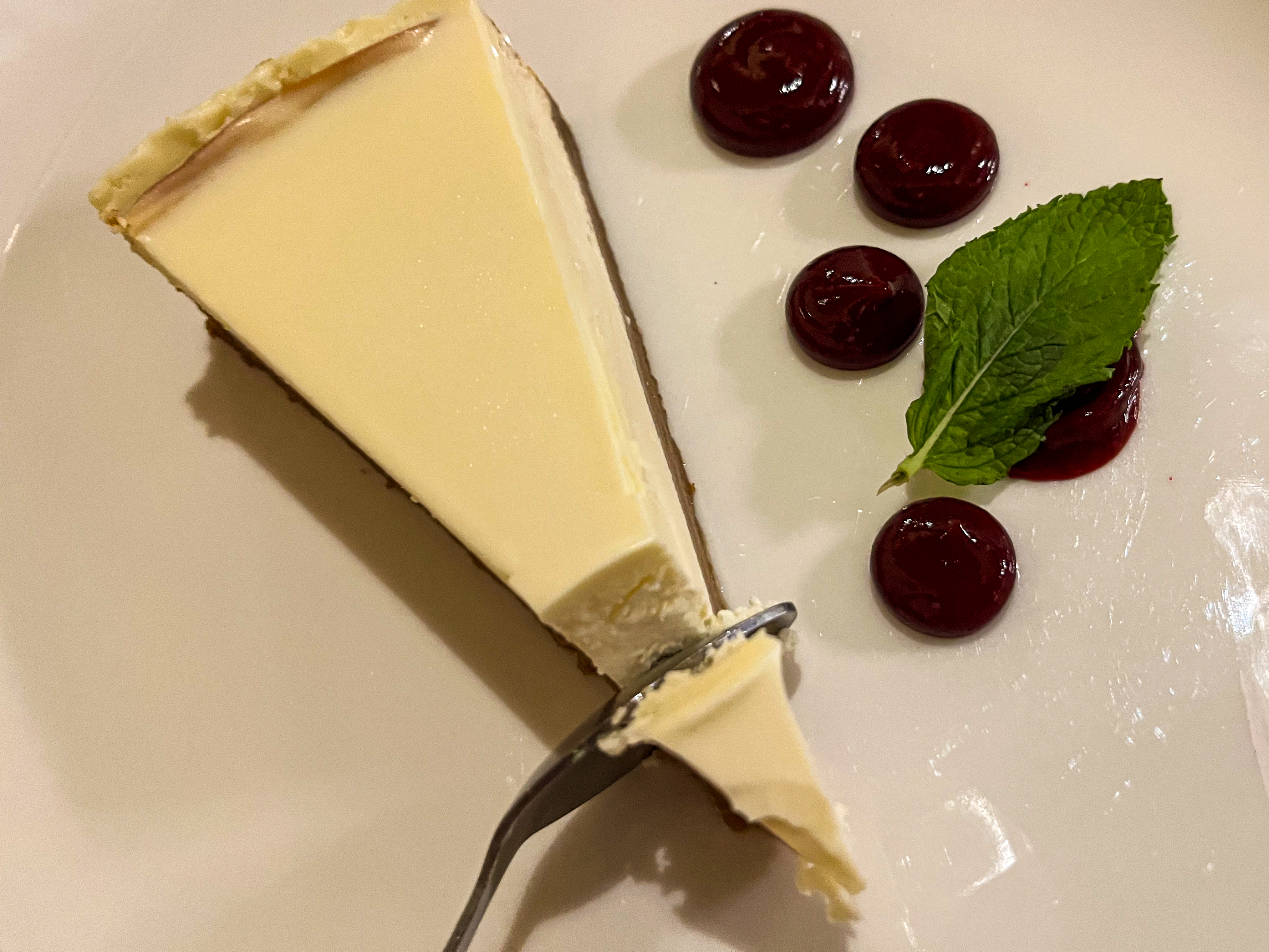
A Michelin-star restaurant in Old Town called Kogel Mogul had been recommended to me by a friend. They specialized in gourmet Polish food. Both the food and service was outstanding and prices were reasonable for that level of quality. We would recommend it to anyone looking for a special dinner in Krakow.

Click here for my post “Eating Polish” for a broader review on eating everywhere on this tour in Poland.

England in Poland

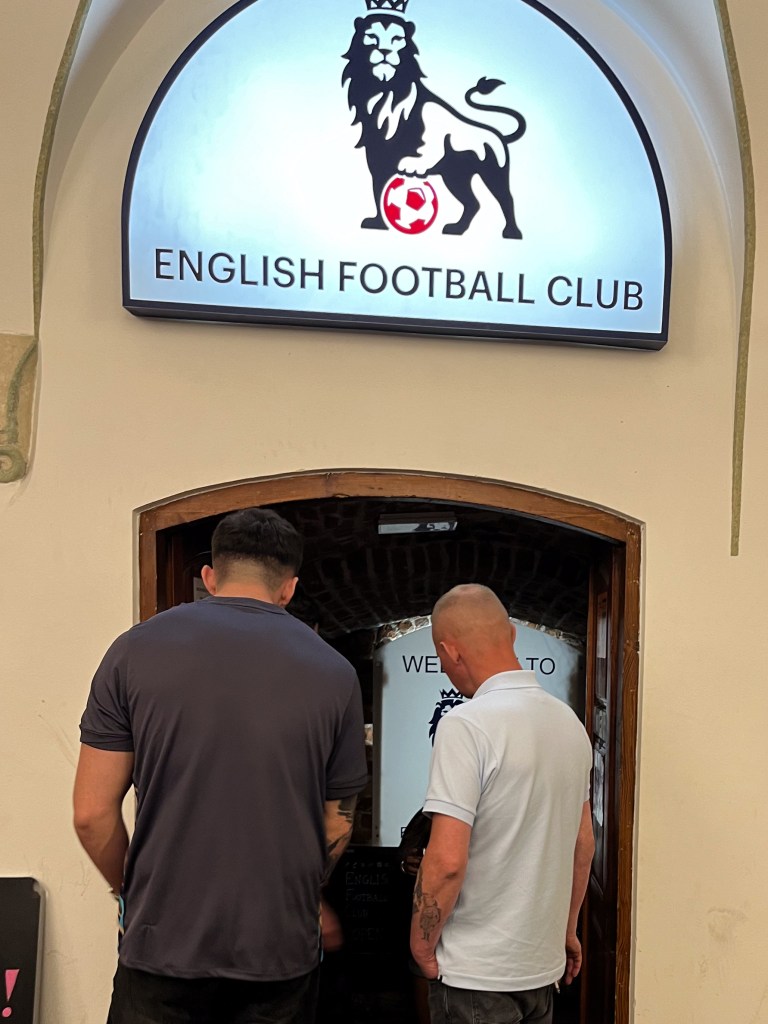
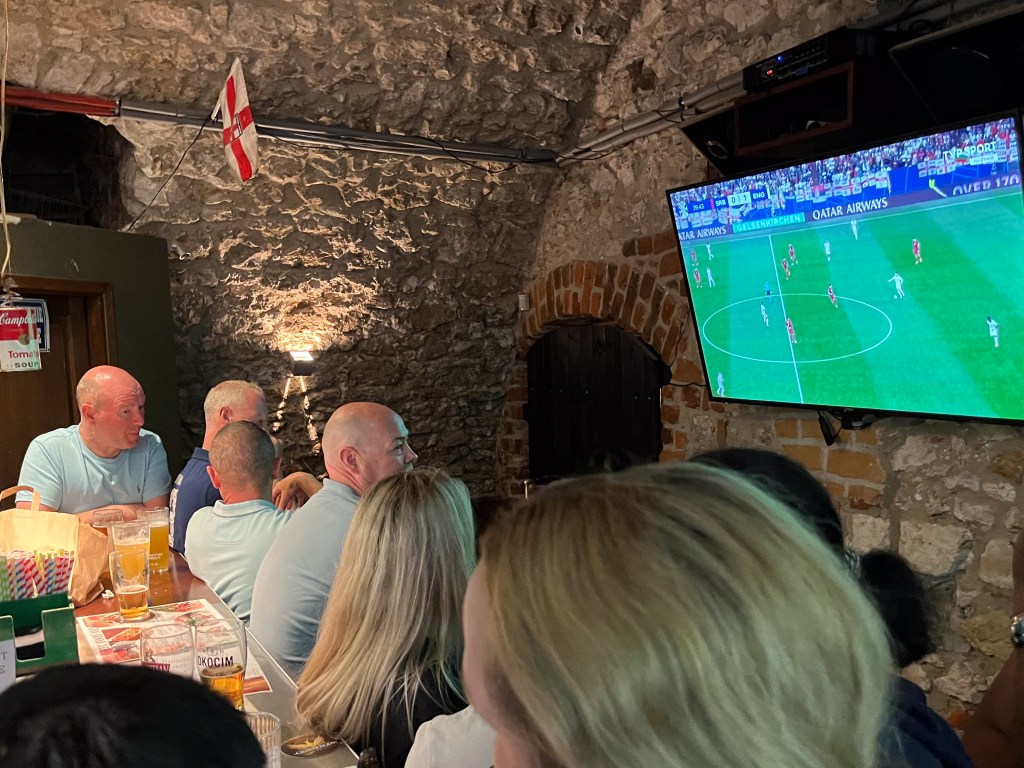
Leaving the restaurant after a leisurely meal we walked around the old town which was still lively but less crowded. We followed a stream of people heading to what looked like a cellar bar  with called the “English Football Club”. Seemed a bit out of place here in Poland but especially relevant because the Euro 2024 Tournament was underway, as my young grandson Ethan Luke (15 years old and a BIG “soccer” fan) reminded us.

We ended up in a jam-packed bar of what we presume were mostly British ex-pats cheering on the England against Serbia. Wow! For a few moments we were transported to a different part of Europe with all the spirit and camaraderie we seek in our travels. The crowd was so tight that we could not even buy a drink, which would have been nice but not necessary to enjoy the fun.
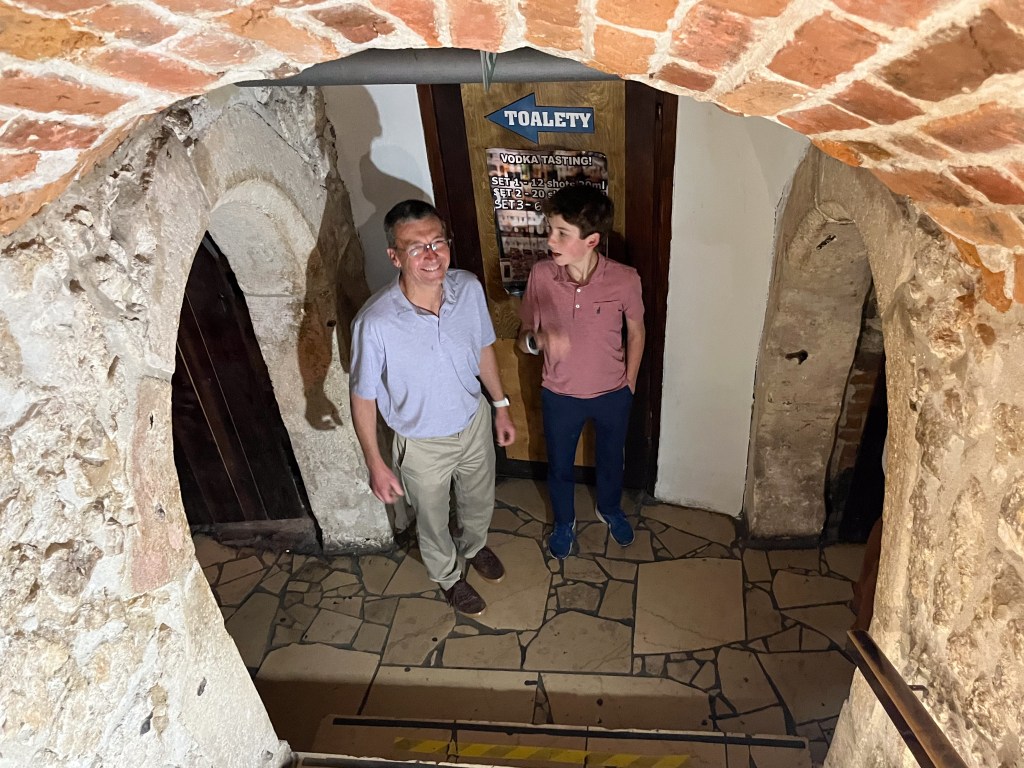
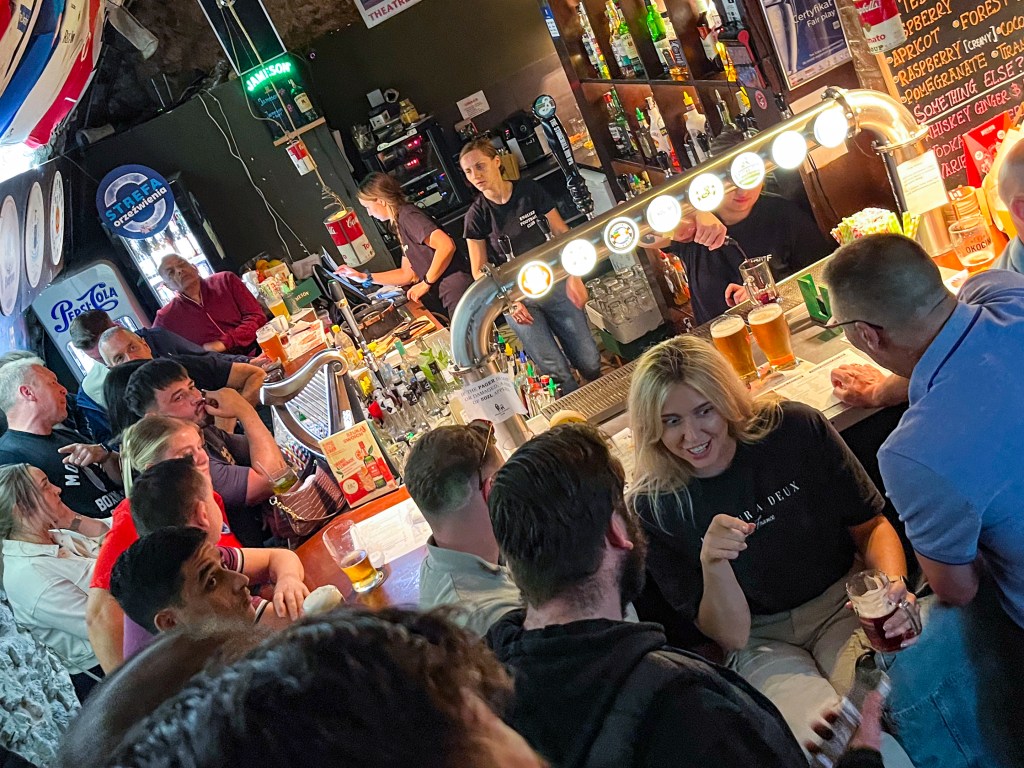
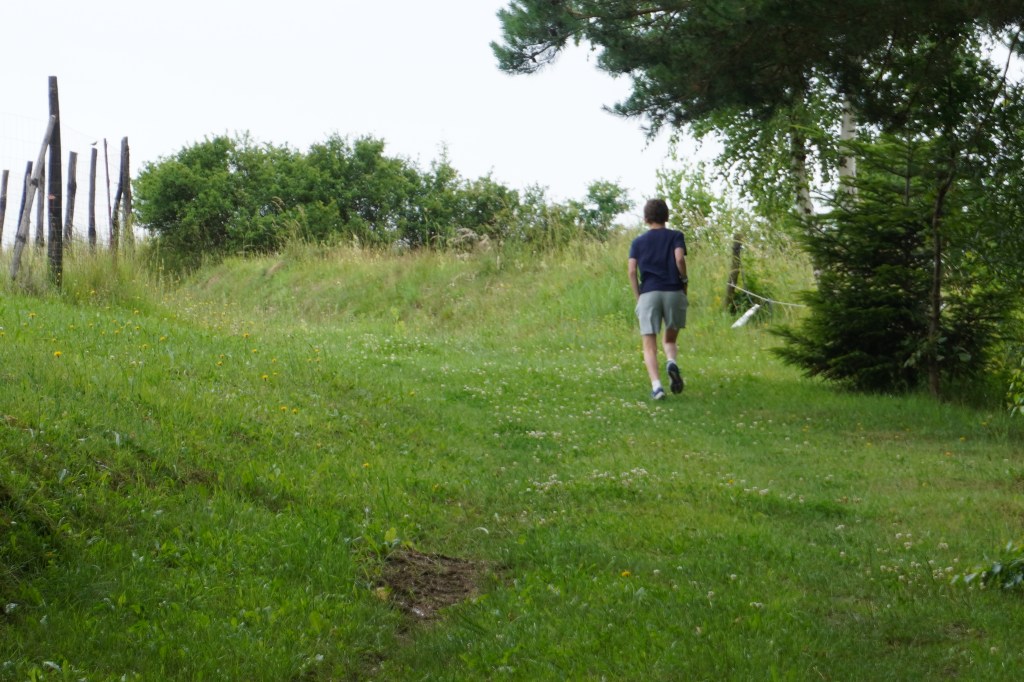
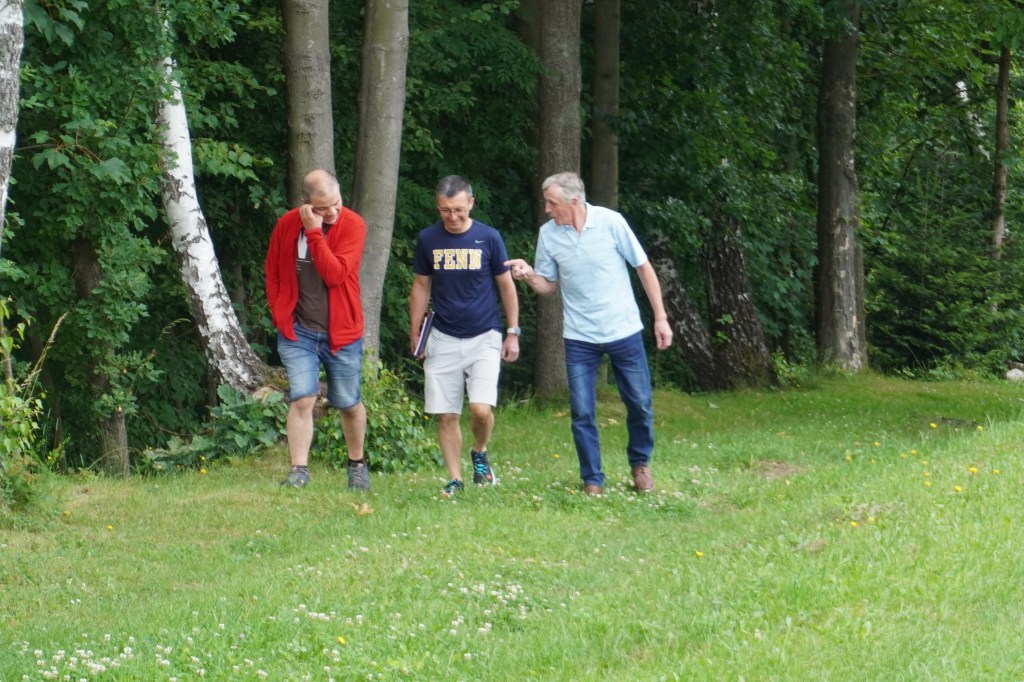
We continued exploring the Old Town section for a while that last night while father and son duked it out on where to go next. Next, would be back to the hotel for some sleep after a long day.


Final Thoughts

Kraków captivated us with its unique blend of history, culture, and modernity. Its welcoming atmosphere, vibrant neighborhoods, and proud heritage left an indelible impression. While we regretted not having time to explore every corner, we left with a deep appreciation for the city and its people—and a resolve to return.

As a Polish American, this journey was more than a vacation; it was a homecoming.

More On Our Polish Heritage Tour

See all photos for this tour here.

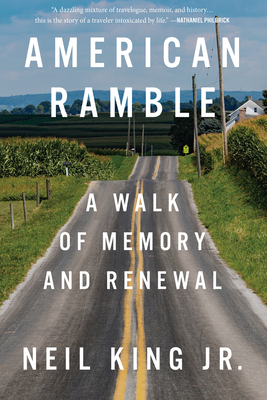
Review of American Ramble: by Neil King, Jr.

A great book on a 2021 solo walk from Washington DC to NYC. King unearth’s the past with the present in his personal journey.

The following is a review of a 2023 book by Neil King, Jr, about his very personal solo walk from Washington DC to New York City in 2021. My son Justin gifted it to me after hearing Neil discussing it at a local talk. Thanks Justin!

It was a book that I related to very personally. I’ve done many long walks in past years and lately have changed most of my serious personal journeys to long bike rides.

But I have to admit the feel of pushing one’s self, even as I get older, is still alluring to me. And, the absolutely free feeling of being solo on a journey is an experience I will never forget. I love being back home with my family but I also love the wanderlust of being on the road.

-Paul

Neil King Jr. confronts aging, a personal battle with cancer, and the broader struggles of COVID-19 and political upheaval. In the midst of these challenges, he embarks on a long walk as an antidote to depression. This walk becomes a deeply focused endeavor, channeling his energy into researching, planning, and executing a journey through history to better understand the present state of the country.

King’s unique journey is more about the creation and leveraging of a personal challenge than the physical feat of walking 330 miles in 26 days. Though the route may appear to be a ramble (a walk for pleasure, typically without a definite goal), it is anything but aimless. King meticulously plans his route and accommodations, choosing interesting and often off-beat places with unique ties to America’s past. Equipped with a simple backpack, he immerses himself in the journey.

His walk from Washington, D.C., to New York City becomes a tapestry of American history, reminding us of Native Americans, revolutionary patriots, immigrants, slavery, and more recent events like 9/11 and the January 6th insurrection. The country has changed significantly, yet remnants of the past remain, often hidden in plain sight. King’s research brings these historical elements to life, allowing for a deeper understanding of our present.

However, King’s book is more than a historical sketch; it captures moments of interaction with the environment and people, making it special. It’s about contemplating how others live, recognizing our similarities and differences, and discovering more about oneself.

Back in 2010, I had a similar experience as I turned 60. While I did not face a health issue, I sought a deeper reflection on my life’s journey. Inspired by JFK’s fitness challenge (50-Mile Hike), I decided to walk 50 miles in one day, following the East Coast Greenway from Metropark in Edison, NJ, to New York City. This path, then a new concept in “pedestrianism,” connected communities for walkers, runners, and cyclists.

The newspapers picked up the story, and to my surprise, over 50 fellow walkers joined me. This overwhelming experience led to the founding of FreeWalkers, a group dedicated to long-distance walking. Today, http://Freewalkers.org has inspired thousands to experience places differently—city to country, historical to new, monuments to industrial waste, in all types of weather. Meeting fellow walkers and people along the way is as natural as walking itself and is a major reason walking has gained popularity. Some prefer the solitary walk King fondly describes, while others enjoy the group experience.
King encapsulates the essence of his journey: “My walk was, in reality, its own explanation. You embark on a long solitary stroll in part so as not to explain it. You go to cast aside distractions. You go for the fun of it, the promise of pure serendipity, and simply because you can….Possum ergo facio – I can, therefore I will.”


I applaud King for writing a book that describes the fascinating patchwork of people and places awaiting anyone who takes up the challenge of walking more than they think they can. His journey helps us appreciate the world around us, both past and present.

The above review was also published on Goodreads.com here.

Eating Polish

Eating our way through eight days of genealogical touring in southeastern Poland. Searching for relatives brings back old memories of a different kind.

I didn’t go on my recent trip to Poland for the food, although I probably should have given it more consideration. Our mission was to discover family ties, but we soon realized that food is a major link to our past and remains a proud tradition for all Poles.

I’m a child of second-generation Polish parents who turn out to be from families that once lived in roughly the same southeastern region of Poland, about an hour’s drive from the Ukrainian border. While my father and mother were both born in the U.S., their parents came from Poland around the turn of the century. My parents never had the opportunity to visit the old country.

My mom learned to cook from her mom, our “babci(grandmother in Polish). That’s how most Polish dishes were passed down in the family, a tradition likely still true for many immigrant families. While Polish dishes were not regularly scheduled unless it was a holiday, we probably ate Polish food at least once every week or two. Those hearty dishes were different from what our friends and neighbors ate. Little did we know that we would come to miss that food and wonder what else we were missing from our heritage.

For the last 45 years, I’ve been lucky enough to be married to a notable Italian chef, Mary Ann, who reigns over our kitchen. Mary Ann learned most of her important cooking skills from her “nonna(grandmother in Italian), and so it goes. I would never argue which country’s cuisine is best, but occasionally she will cook something Polish, like kielbasa or pierogies. It’s been decades since my mom passed, but recently I got to go full “Polish” again during my visit to our country of origin.

During our week-long stay, except for an afternoon dinner at our relatives’ home, we ate fast food for lunch and full dinners in the evenings. Polish food options were everywhere, but there were also American and international cuisine choices. Payment and tipping were similar to anywhere in Europe today—quick and painless using a credit card or smartphone. Most credit card companies automatically convert the currency at a favorable rate. Tipping is minimal; 10% is advised for exceptional service but not necessary. Being American, we tipped more.

Poland uses the zloty for its currency, not the Euro. The good news is that the zloty is trading at about $0.25 to the $1 (U.S.). Even more importantly, everything seemed cheaper, and food seemed half the cost in Poland compared to the U.S.

A Traveler’s Breakfast

If you have traveled to Europe, you know breakfast offerings are similar in places you stay and are usually free at your hotel. The hospitality in Poland is no different. Hotels offer a full-choice free breakfast buffet with pastries, fruit, meats, yogurt, eggs, etc., along with juice, tea, and coffee. Coffee, of course, is mostly served in smaller, fancier ways like espresso or cappuccino. A large cup of “American” coffee is almost unheard of, except where Starbucks has landed in the bigger cities. All of our hotels seemed to use the same self-serve, high-end coffee machine that offered a choice of any type as long as it fit into an 8-ounce cup or smaller. Coffee limitations aside, breakfast buffets are a great standard solution to start your day. It’s even possible to grab some breakfast items “to go” and save them for lunch on the road or later as a snack.

Eating on the Road

Since we were traveling on the road most of the days during the week, we would find a place to eat a sandwich, slice of pizza, dish of pierogies, or better yet, look for a McDonald’s (young Ethan Luke’s preference). It’s commonly believed that McDonald’s food tastes better here because they use local sourcing for burgers, chicken, and dairy products.

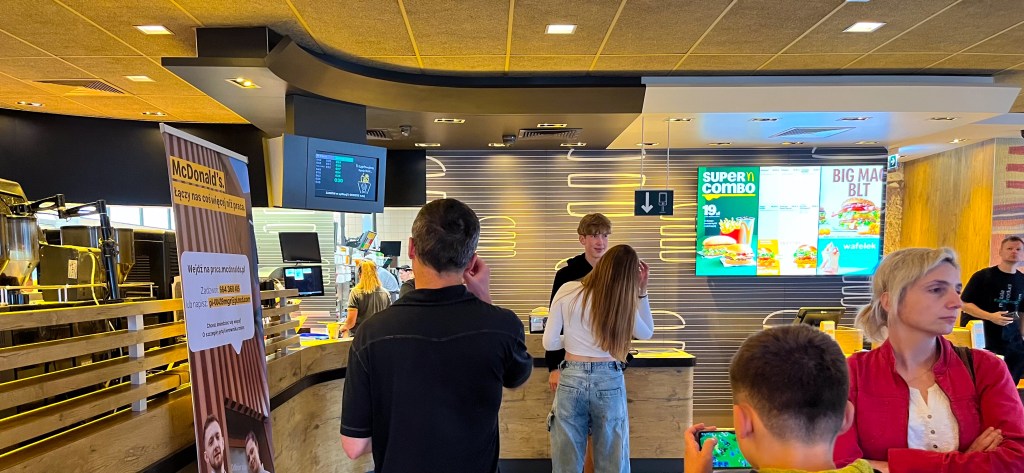
Inside McDonald’s in Poland

These are ultra-modern McDonald’s with the familiar menu kiosk (English translations available), but with small differences in the style of burgers, chicken, and wraps with special sauces. Probably the most popular (the one our 14-year-old Ethan Luke preferred) was the WieśMac or Country Mac, a variation of the Big Mac but with a mustard-horseradish sauce—only available in Poland.

At least the vegetarian wrap and Polish sausage sandwich seemed different. Of course, as in the states, you can order online, use a credit card, or pay by phone app. No need for cash. That was true almost everywhere we went.

Playing the Food Guessing Game

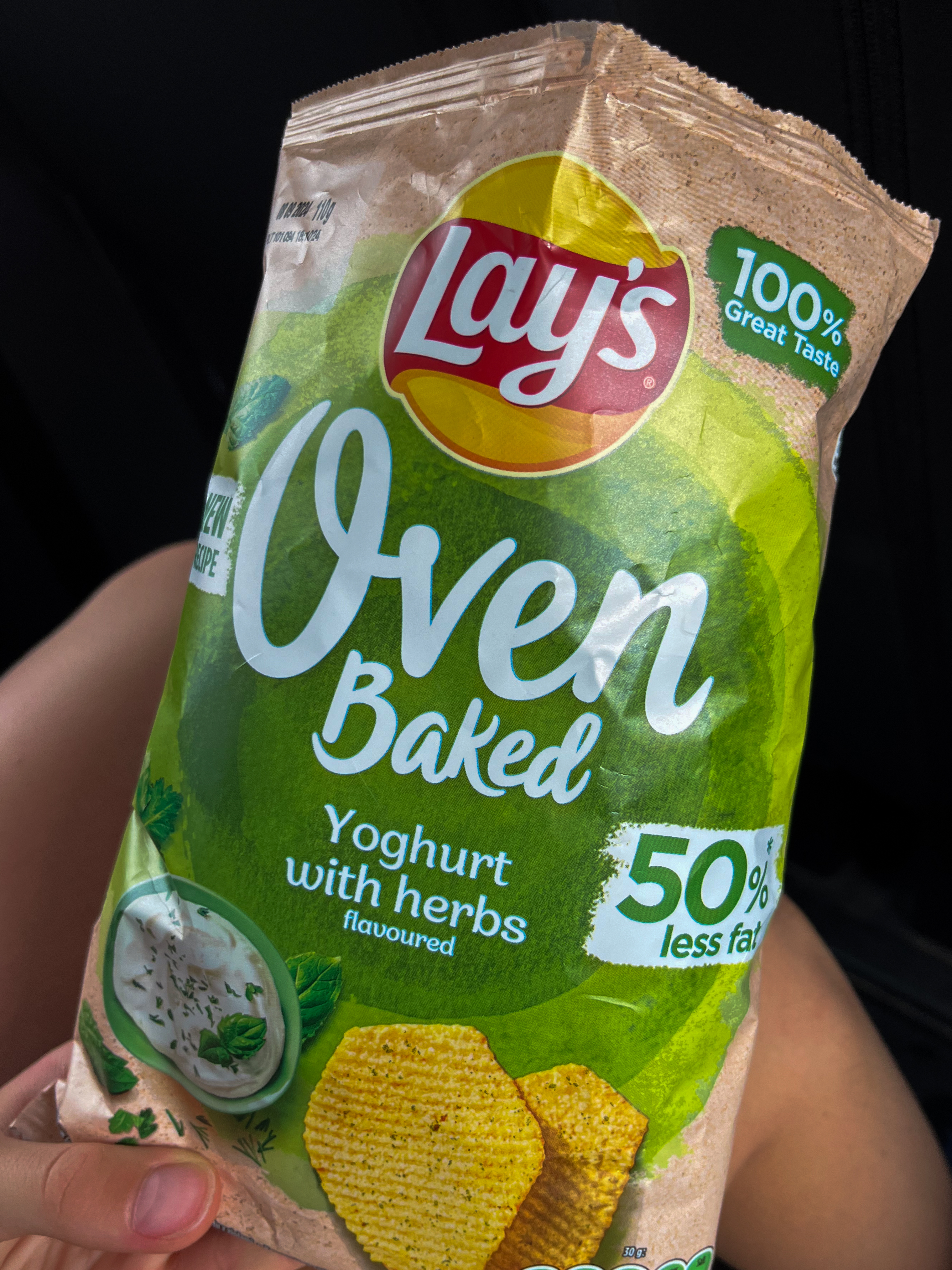
My teenage grandson was incredibly patient over the five days and 300 miles of travel. But he gradually became obsessed with Polish products on sale at local convenience stores like chips, candy, and drinks. It became a game to seek out different products, sometimes using Google Translate to figure out what the product was. Some were variations of familiar products or branded with popular Euro stars, like Lionel Messi. Others were just something we had never seen before, like different flavors of chips or thick nectar fruit drinks.

How to Manage a Food Allergy

Ethan Luke has a nut allergy, so he has to be careful what he eats. Ethan had a very useful card with him that explained the allergy condition and foods he must avoid, including those that might have been in contact with nuts. It was in English on one side and Polish on the other.

So, he would present the card as he ordered. It seemed to work well. (Purchase online at Equal Eats) And, we enjoyed seeing him navigate what to order with the waitresses! Everywhere we went, the wait staff seemed eager to accommodate Ethan Luke and point out dishes that would be off-limits.

What’s for Dinner?

Dinnertime was where we got to really enjoy the cuisine of Poland. Our dinners were mostly at our hotels, which were all excellent. Most restaurants served traditional Polish and other international dishes. Ethan and I were looking forward to tasting and remembering old family dishes. For young Ethan Luke, this was an adventure in travel, language, and eating something new. He settled mostly on pierogies for dinner and became our pierogi expert by the end of the week.

Pierogi is King

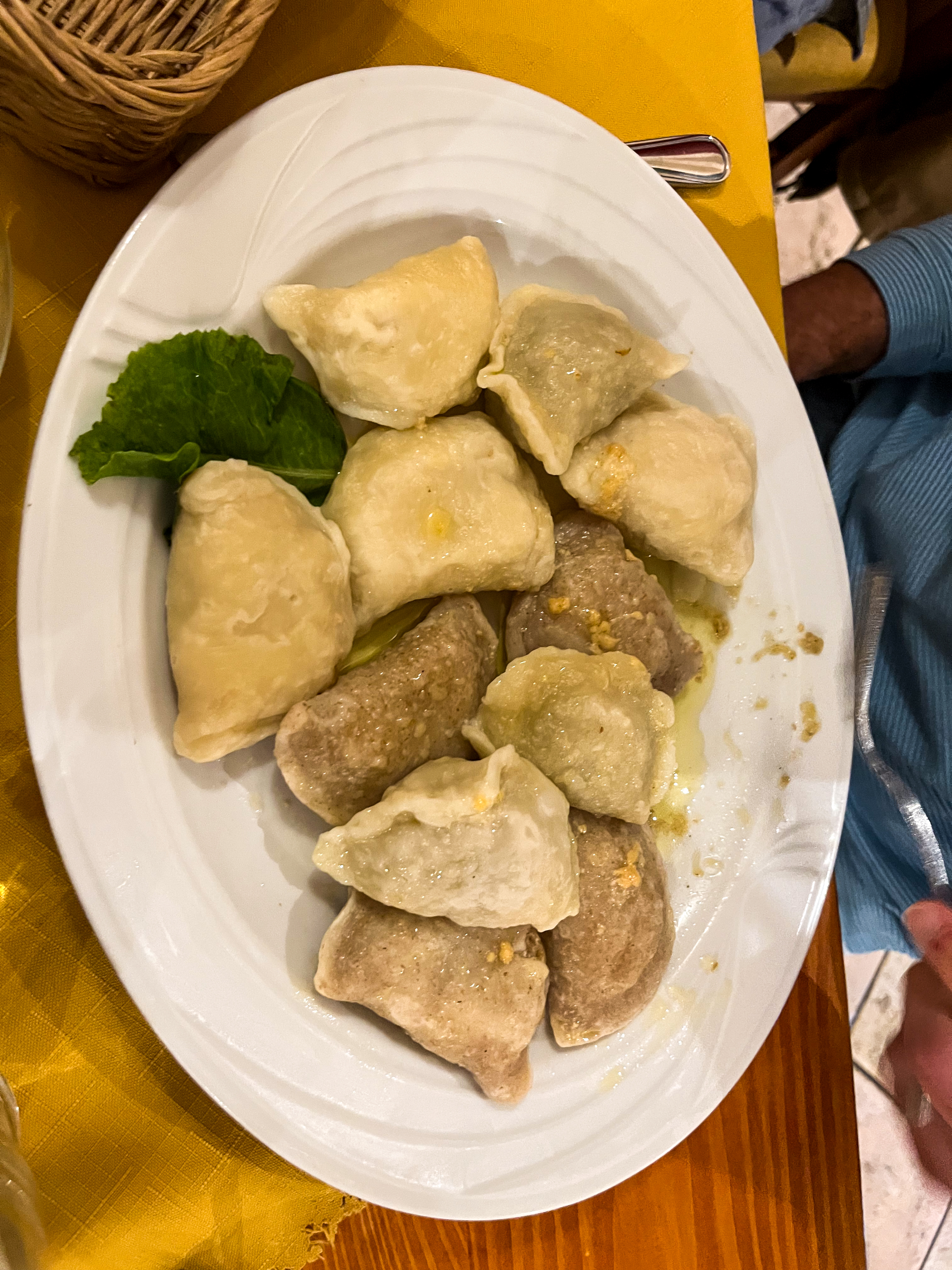
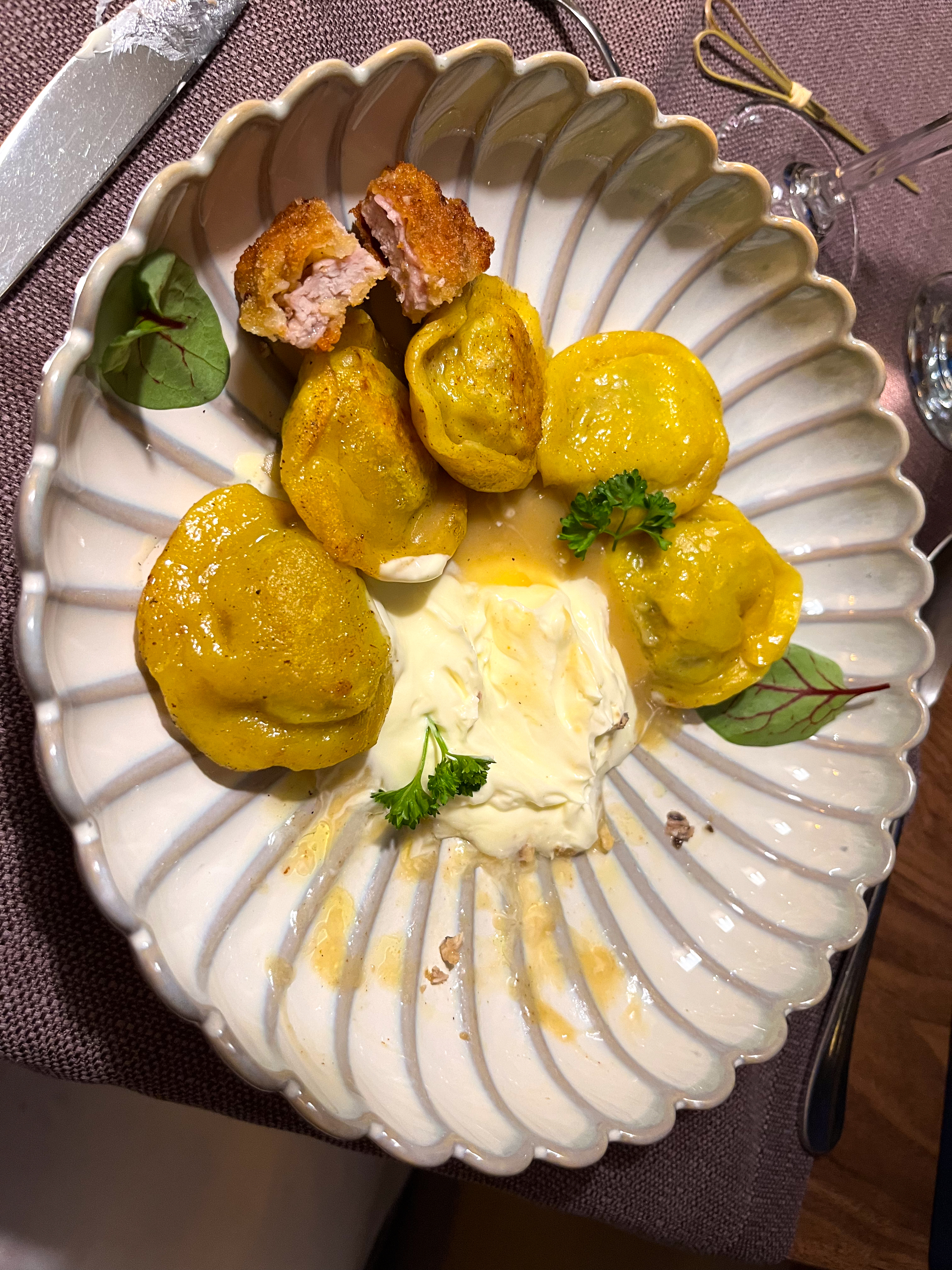
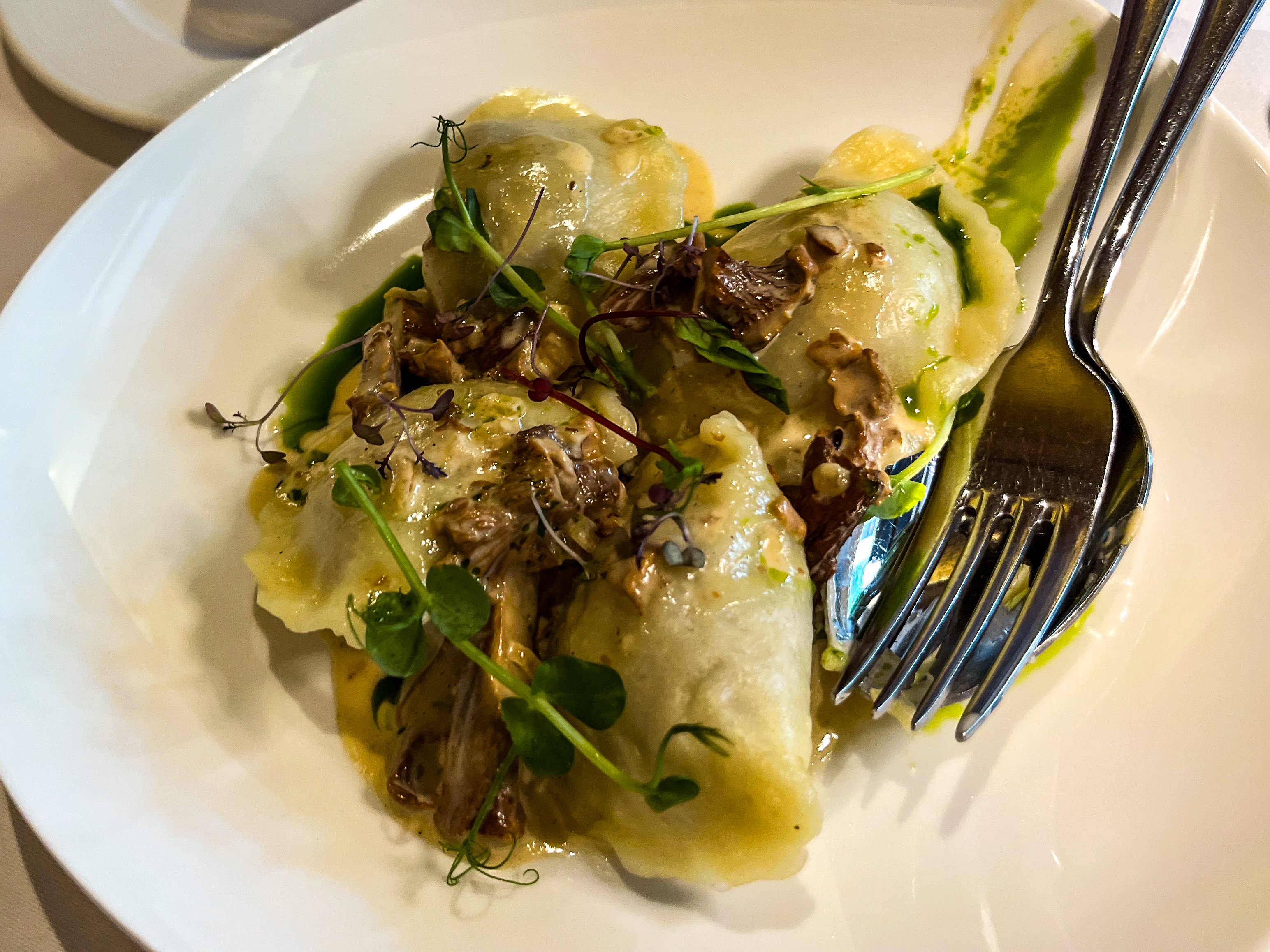
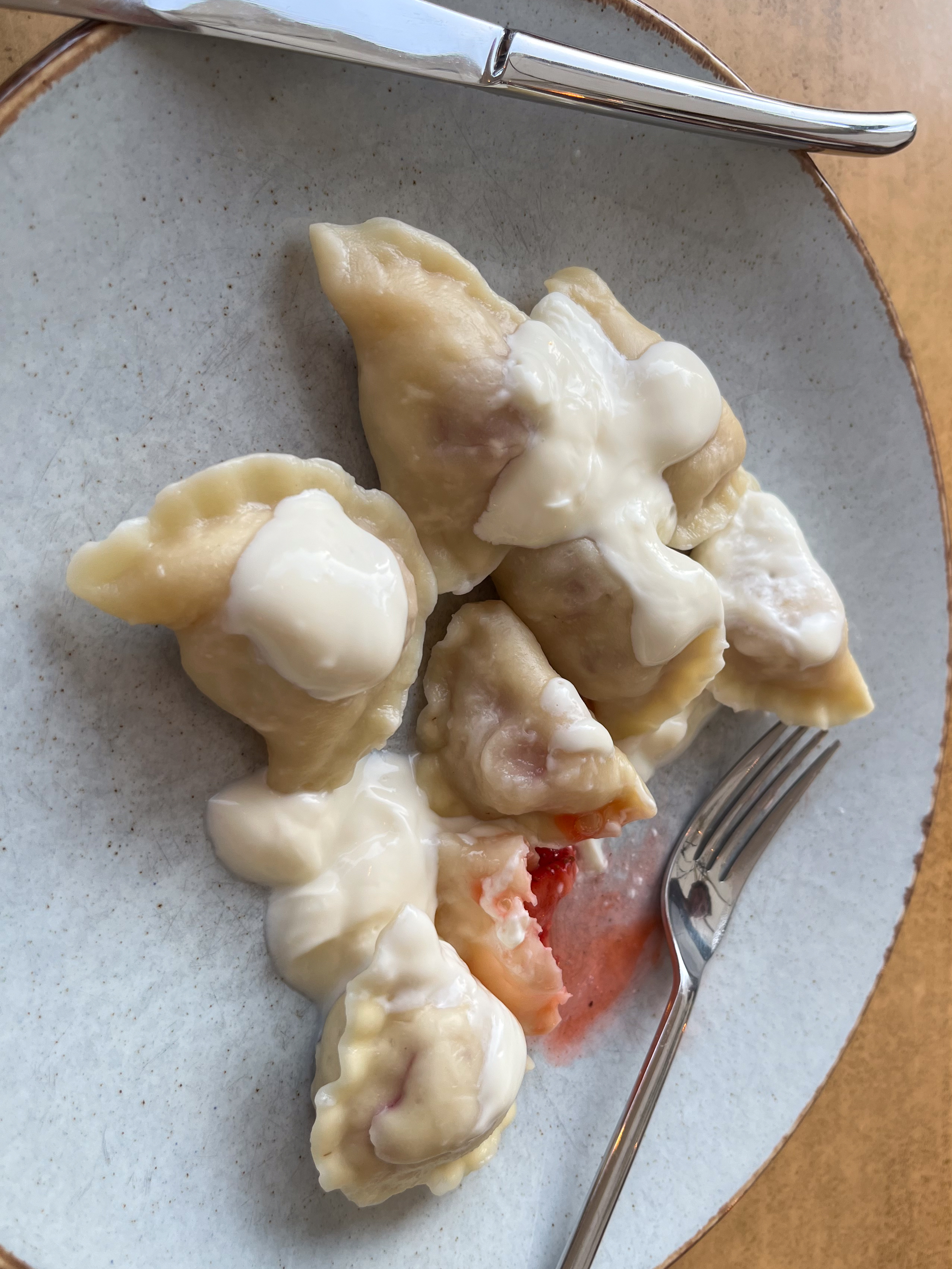
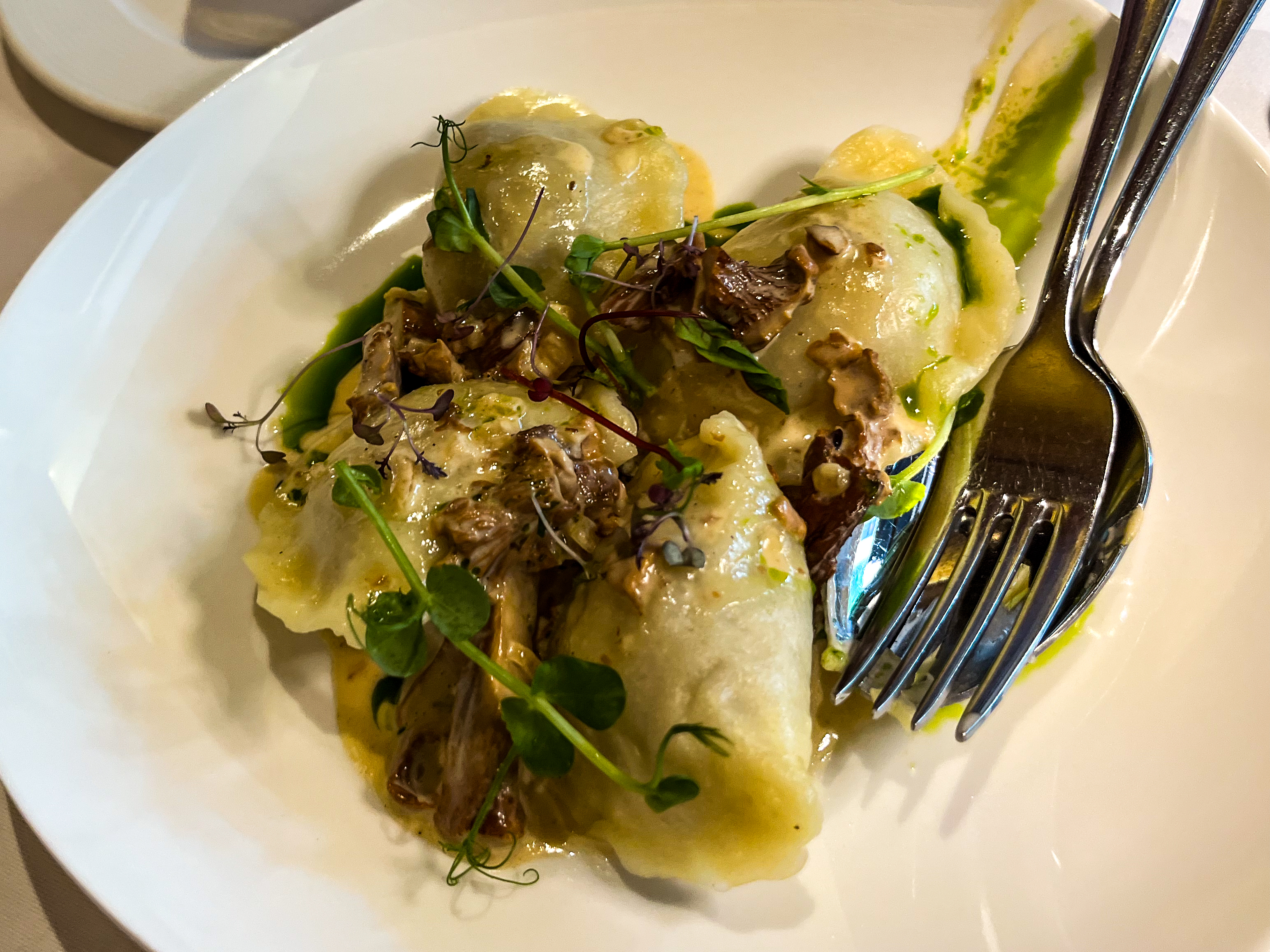
Pierogies are considered a staple in Poland and can be found almost everywhere. Pierogies are stuffed dumplings usually filled with either meat or vegetables in a buttery garlic and onion sauce, served with sour cream on the side. Absolutely delicious in any flavor.

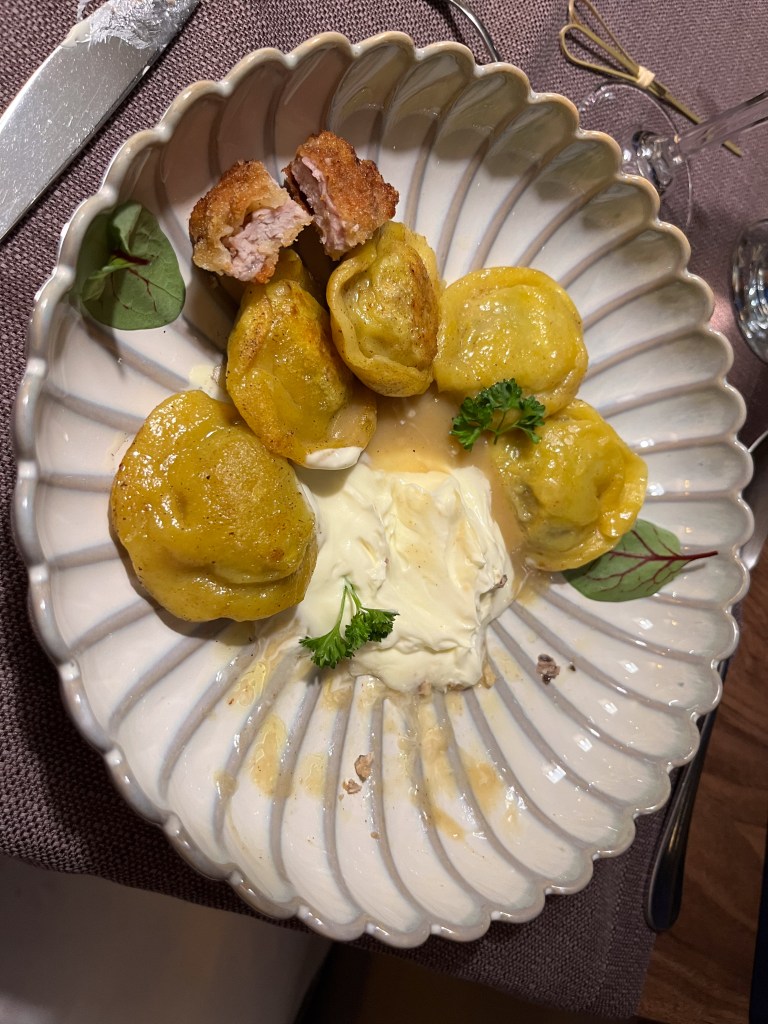
However, there were many more variations in almost every restaurant. In addition to the standards—cheese, meat, mushroom, potato, and sauerkraut—we tried pierogies filled with veal, buckwheat, and strawberries. With such choices available and a lighter texture than ravioli, they are considered the most popular national dish. But it seemed like every place we went had its own favorite way of offering pierogis!

Playing the Oldies but Goodies

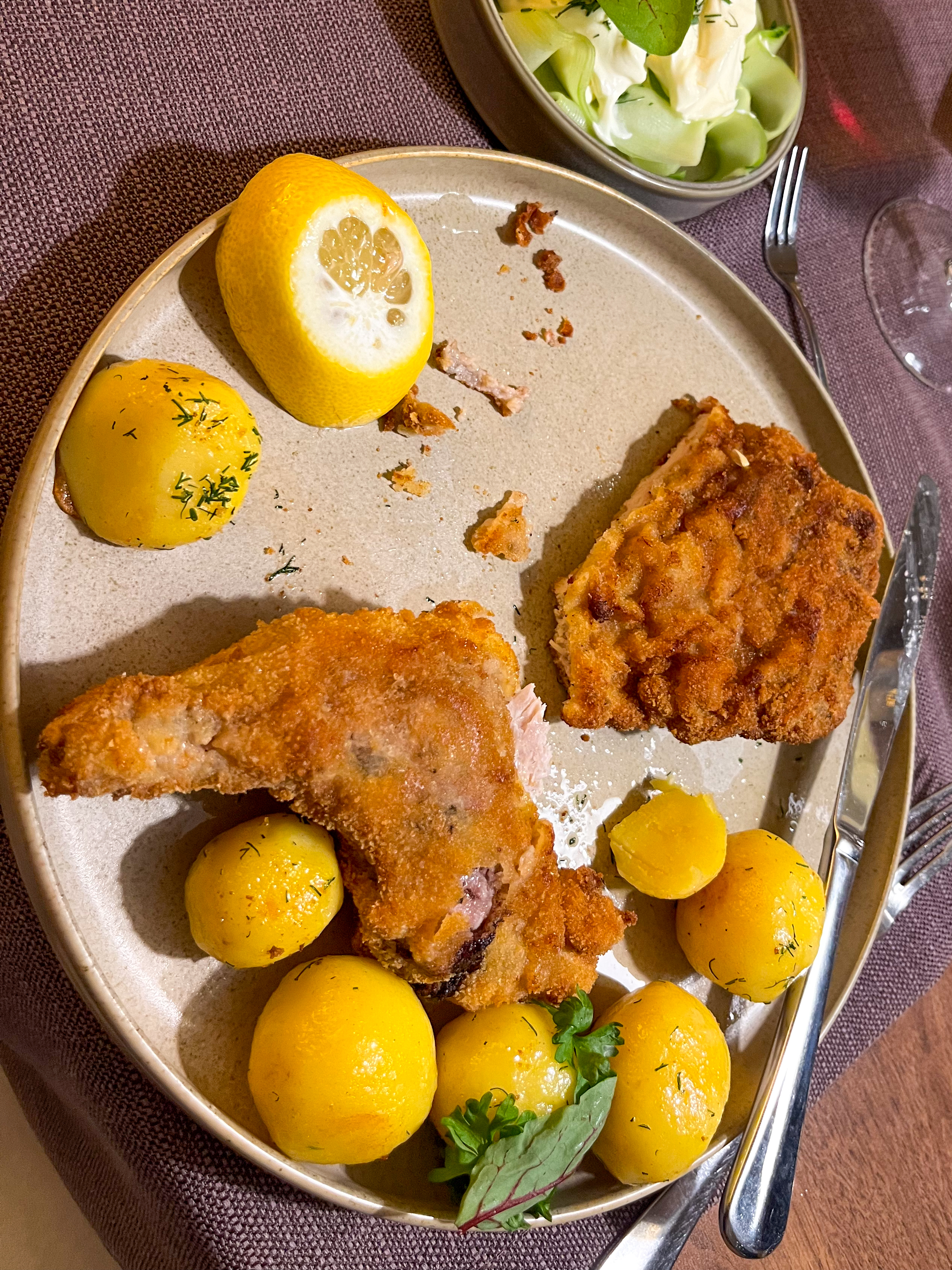
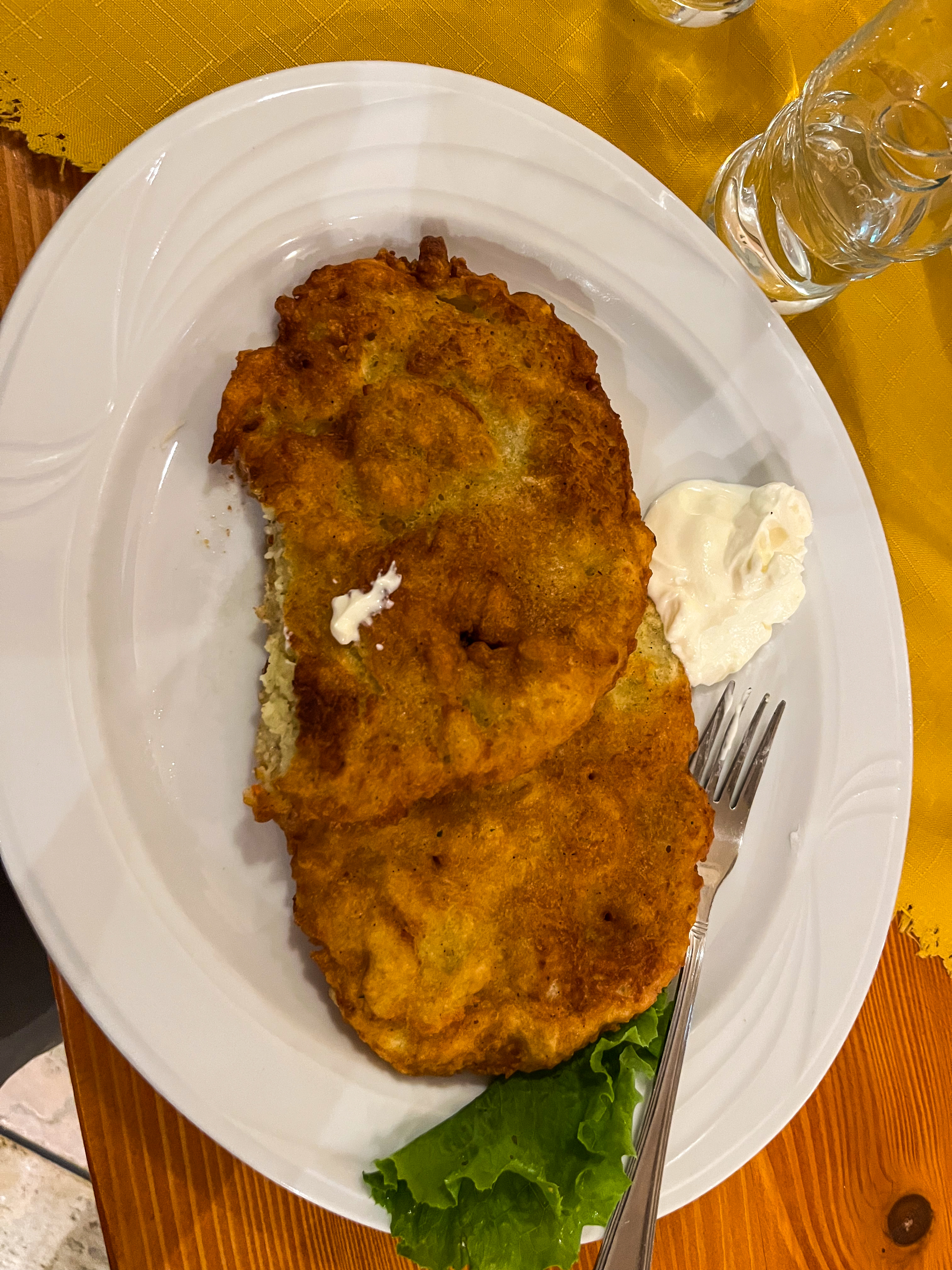
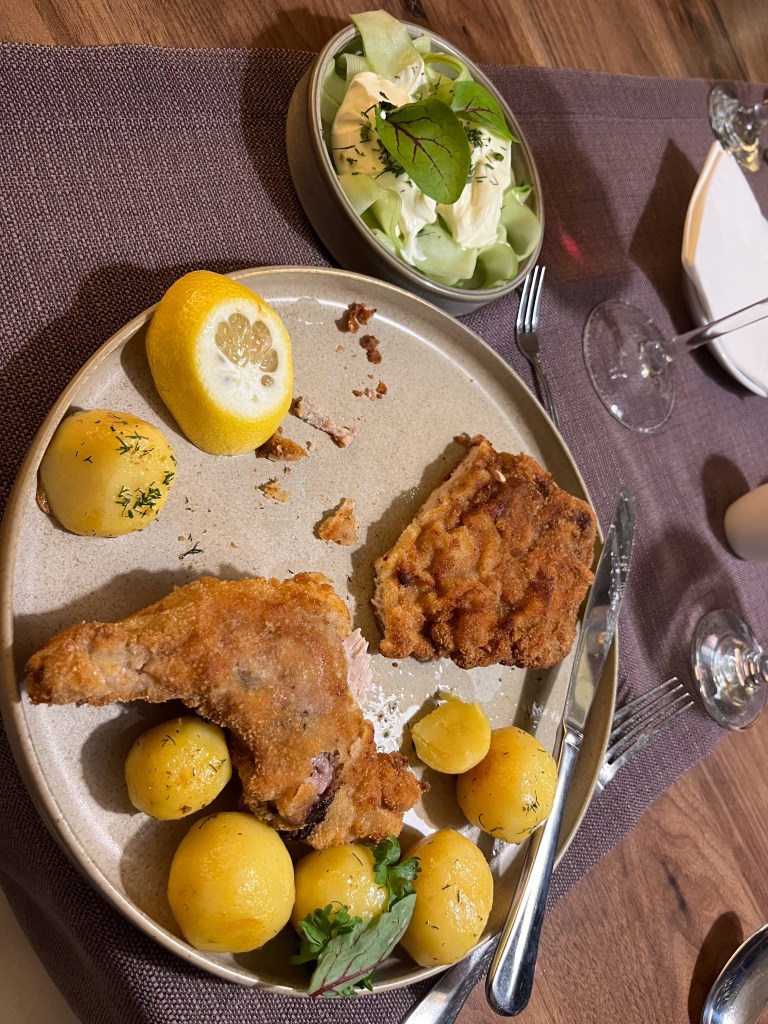
I hadn’t been thinking much about old Polish dishes I hadn’t tried in years until they started appearing on the menu. Fried breaded pork chops were a personal past favorite that I got to enjoy our first night at the Grand Hotel restaurant in Rzeszów. Memories of potato pancakes (placki) with sour cream came back as I ordered them for dinner at the Bartna Chata Restaurant at the bee farm Sądecki Bartnik. We were “buzzing” about the place for days.

I’m pretty sure it was because there was so much else to try, and kielbasa is so well known, that we never ordered it during our entire stay. The one dish I sought out but was not on the menu when I wanted it was gołąbki, cabbage rolls stuffed with a mixture of rice and beef and served in a thin tomato sauce. It’s a common dish, less likely to be seen on a fancy menu. I still have fond memories of helping my mom make those by rolling together the chopped beef, rice, egg, breadcrumbs, and onions into those cooked leaves of cabbage. We would grab small chunks of the filling and eat the filling raw!

Different Eating Habits

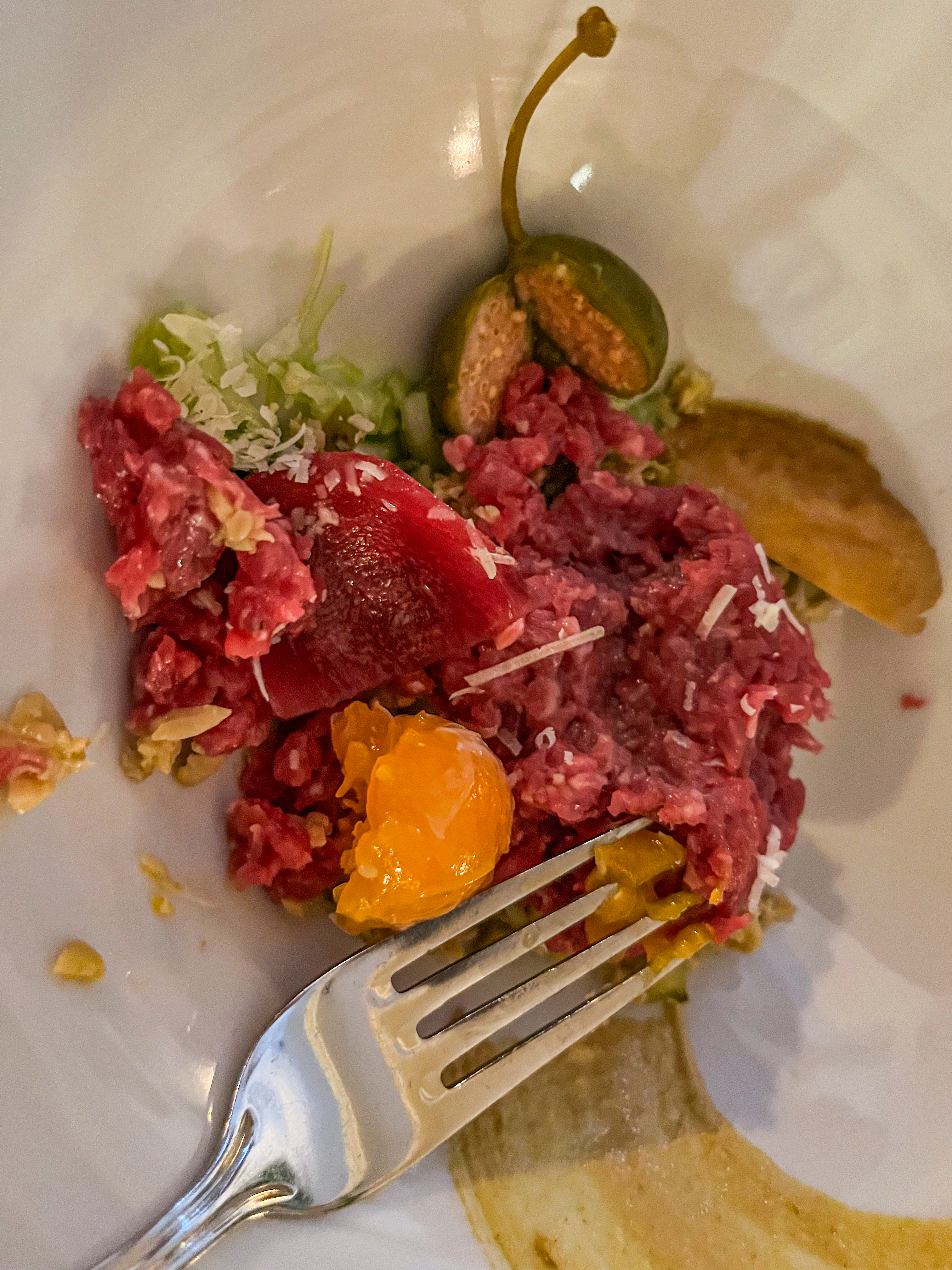
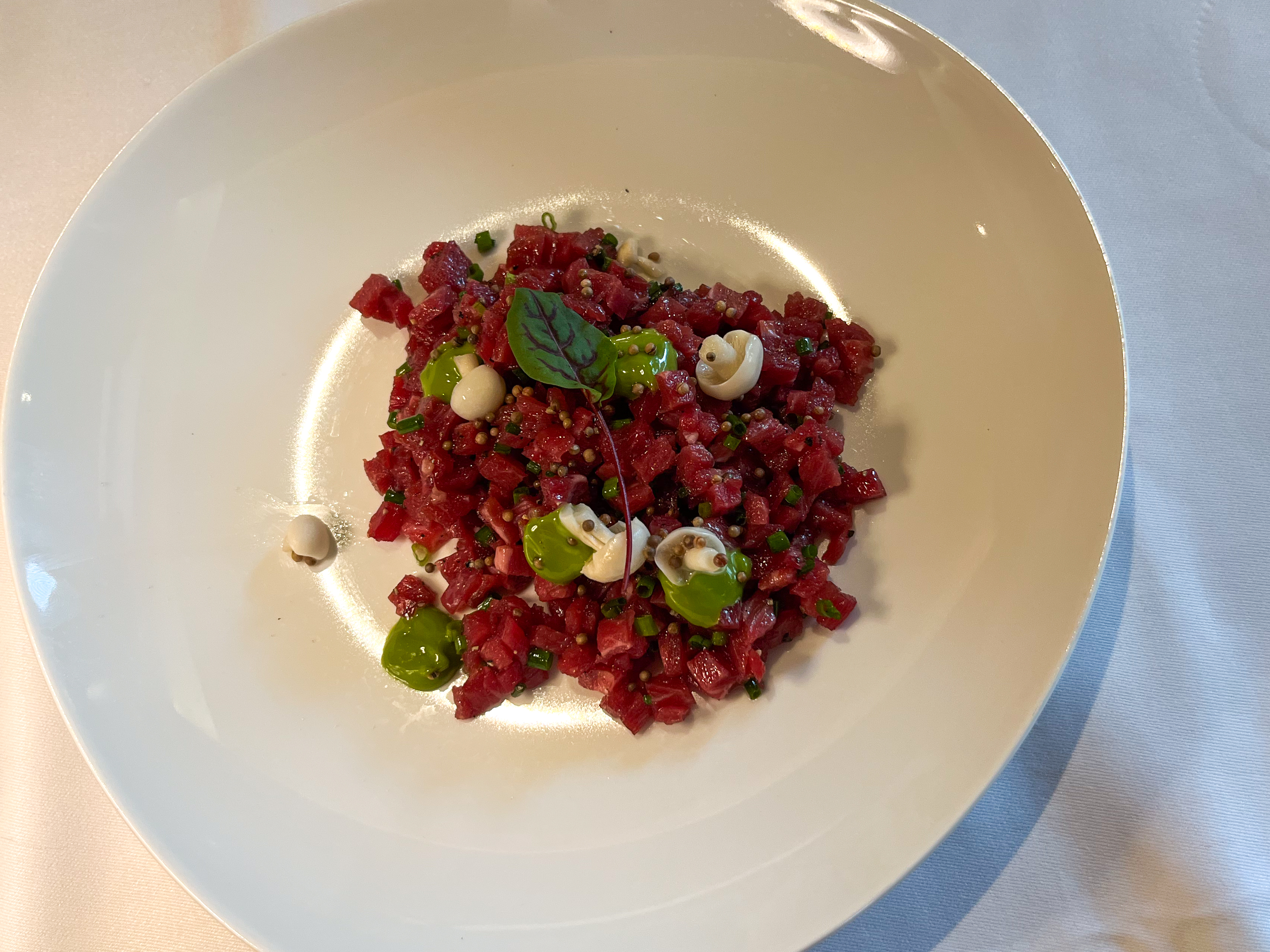
Speaking of eating raw meat, all the dinner restaurants we ate at offered steak tartare as an appetizer. Ethan and I ordered it several times and thought the taste was amazing. I’m not sure what the current food handling laws are in Poland, but the food is not highly industrialized and considered safe even raw. I’m pretty sure this is a “rare” dish in the U.S., in a different way.
Another country favorite is soup as an appetizer. My impression was that most restaurants expected you to order an appetizer, and there was always a variety of soups to choose from. Żurek, a sour rye soup, is often seen on the menu. Probably the most popular is borscht (aka barszcz), a clear beet soup with a sour finish from added lemon and/or vinegar with Polish mushrooms. I wish I had tried it, but it seemed there was always something else to try instead. I went for the cream of asparagus soup our first night, and it was outrageously good.

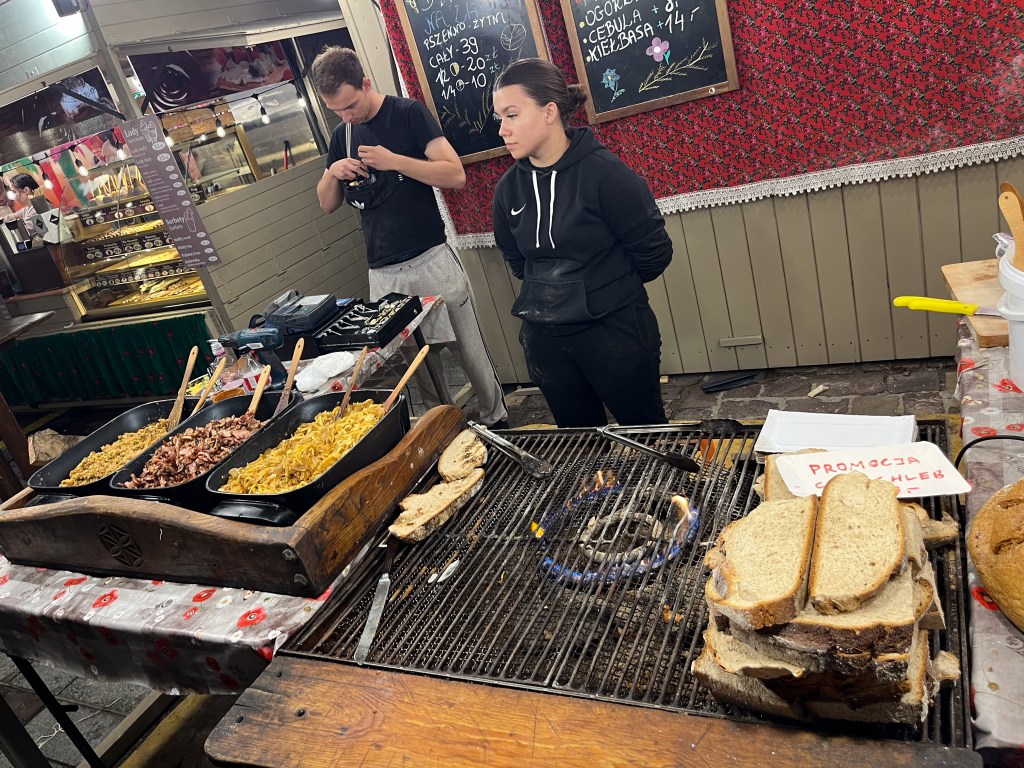
Of course, our visit would not have been complete without sampling the wide variety of international food in Krakow. We got to try Jewish and Middle Eastern dishes and one of the best pizzas I ever had in Kazimierz, the old Jewish section of town, where practically every type of food could be found.

Memorable Polish Dining

Dinner @ Kogel Mogel in Krakow

For our last night out, we ate at Kogel Mogel, a Michelin-starred restaurant in the old section of Kraków. Amanda, Ethan’s wife, treated us (remotely) to a Father’s Day dinner for the three of us at one of the best restaurants in town. I had the roasted duck, the house specialty, which was amazing, as were all the other dishes we tasted there.

No doubt, the highlight of our culinary experience was to take place mid-week at our cousin’s home. We got to enjoy a surprise homemade afternoon dinner at the home of Bogumilia and Zdzislaw Furtek in Brzezanka. Bogumilia is a sister of cousin Krystyna Onacki, who had helped plan the visit to the place where our related family was born.

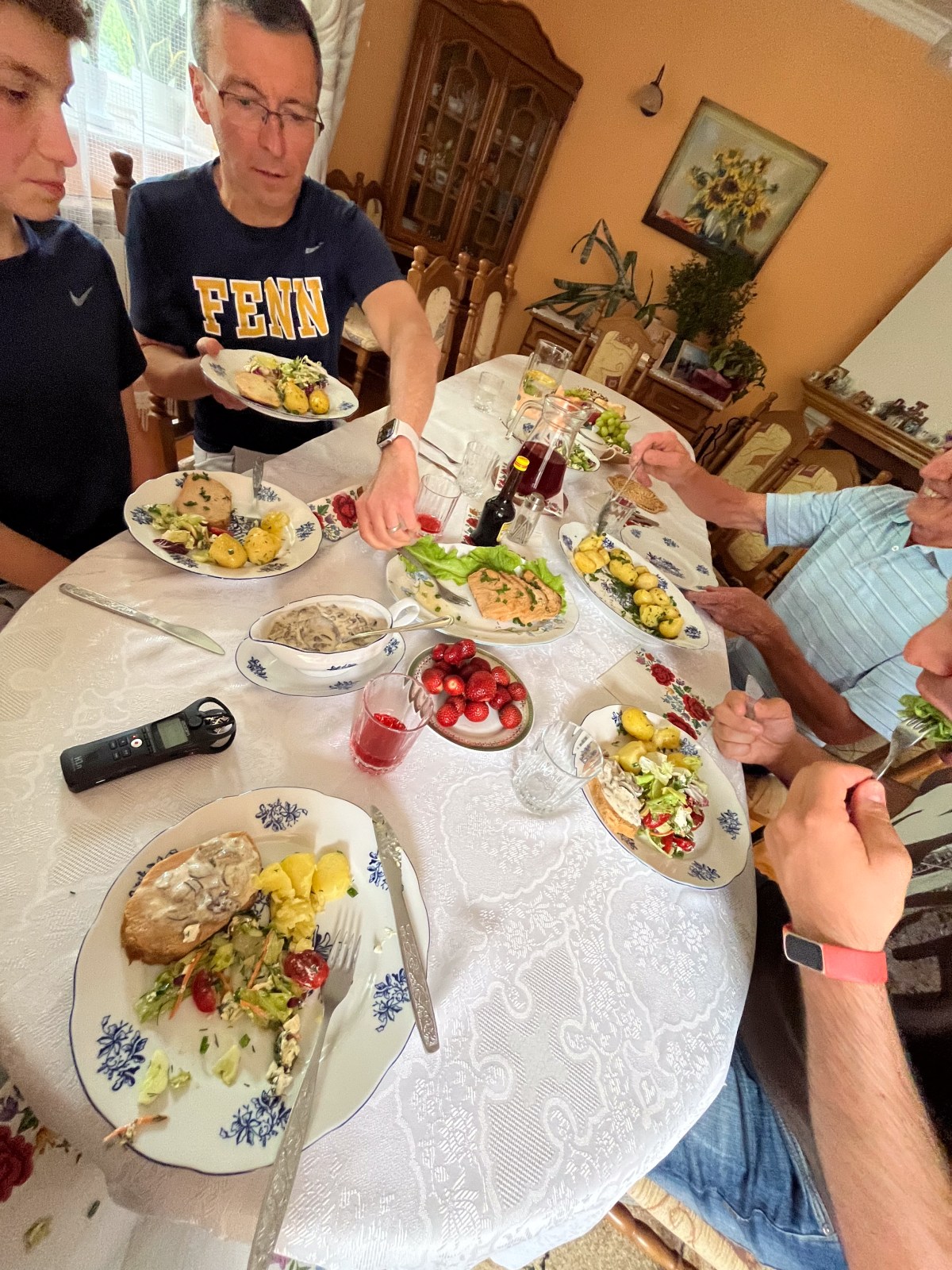
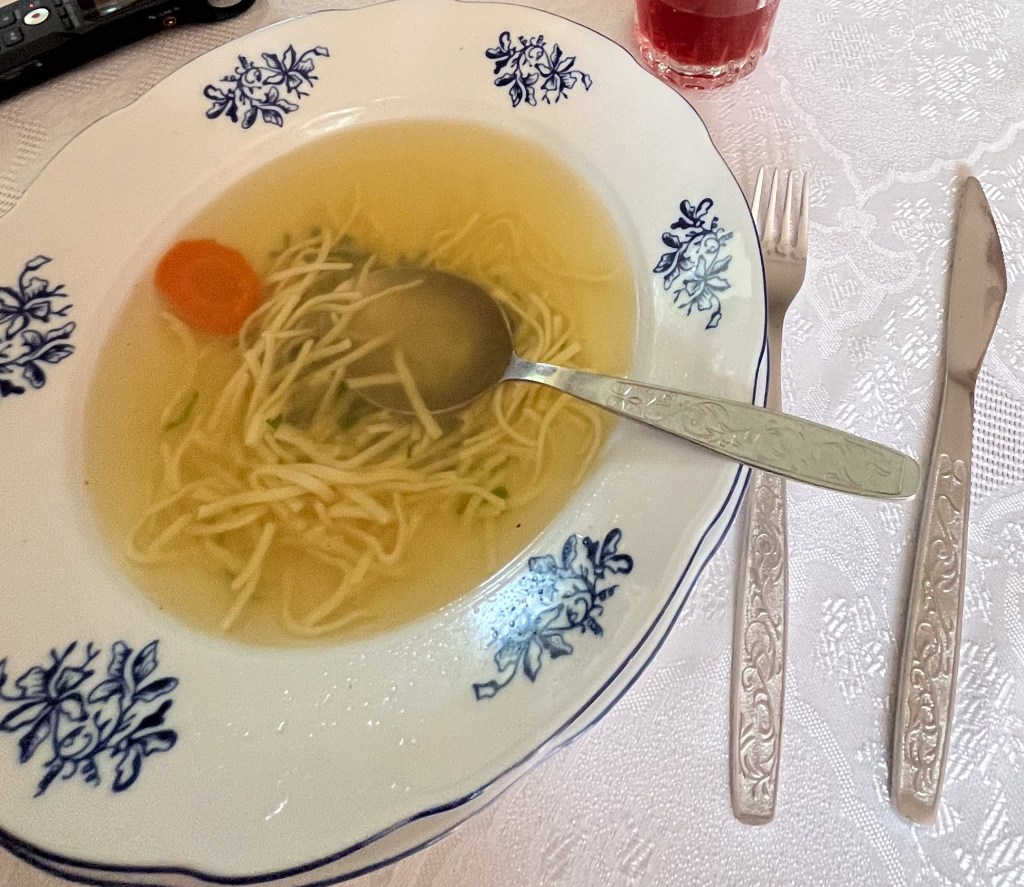
We had a chicken consume soup followed by a roast pork dinner with mushroom gravy, dill potatoes, and fresh salad – all sourced directly from their farm. 

Memories for Dessert

It’s funny how food often so basic that we take it for granted. What helped make this trip so special is that it brought back a flood of fond memories while opening up a new horizon of taste to explore. We did not get to try many of my old favorites and some new ones like the street food of Krakow and the famous filled Paczki donut. 

Food may not be the top reason to come back but it will be another major reason to revisit the friendly people and delicious cuisine of Poland.

Smacznego!

4o

Witnessing Auschwitz

Our family of three generations of Polish-Americans tour Auschwitz-Birkenau in search of its history and cautionary message. Can anything so brutal ever happen again?

We decided to add a visit to the Memorial and Museum Auschwitz-Birkenau as a final point of interest on our genealogical trip to Poland. It was about an hour and a half cab ride north of Krakow. As you can imagine, touring a concentration camp is not a pleasant task, but it was an important one for a trip themed around life and death.

All of our sources suggested purchasing tour tickets well in advance, as it is an “important” tourist destination. Much of the concentration camp area is free and open to the public. However, the museum offers reasonably priced small group tours in various languages, including English. The professional guide leads about 30 ticket holders throughout Auschwitz and the neighboring Birkenau camp, providing the necessary historical background in a roughly 90-minute tour.

There were busloads of visitors this Sunday (June 16) starting at the new visitors’ center, which seemed well-equipped and organized to handle large daily crowds in the thousands. The visitors’ center, a year-old, mostly concrete structure, is sparsely designed but well-thought-out as a waiting area to keep visitors moving. There seemed to be a bit of irony as we followed our somber guide, almost blindly, in military order to Auschwitz and then by bus to Birkenau. The place naturally has that kind of aura.
We visited a handful of the many buildings in a progression that seemed to heighten the senses to the scale of this horrific place. We started with an understanding of the scale of this project, which began in 1939 when the Nazis annexed the town of Oswiecim to create an industrial base with a work camp at Auschwitz, a former WWI Polish barracks. The success in exploiting and then murdering prisoners led to a huge expansion at nearby Birkenau and other smaller camps in the area. The camps held over 1.5 million prisoners, 1.1 million of whom were murdered. In just a few years, the Nazis had learned how to efficiently kill and plunder Jews (largest number by far), Poles, Russians, Gypsies, and others from all over Europe.

The tour, buildings, and grounds are preserved much as they would have been back then. Auschwitz does not look particularly threatening from the outside of the buildings until you learn what happened on the inside. The museum tour continues quickly through several buildings, each with a specific focus such as medical experimentation, extermination, proof of crime, interrogation, punishment, and cremation.

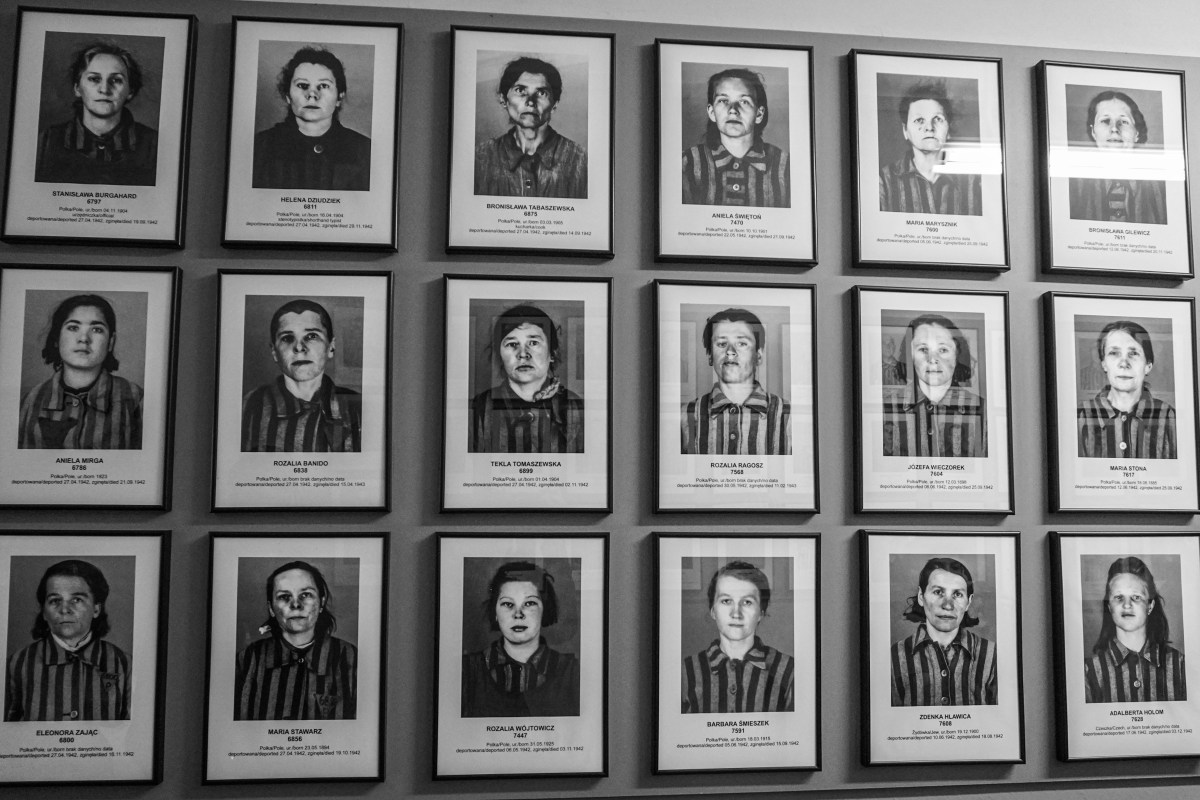
All this is explained and examined through the many glass-enclosed statements and artifacts. Surprisingly, the photos on display do not show the ravaged bodies of the starved and tortured, but rather pensive and scared individuals waiting for the worst to come. This is not a multimedia experience. We see and hear only the story, but by being in the actual place, we can more easily imagine what happened. Imagination here can be more powerful than simulation.

The final third of the tour was a short bus trip to Birkenau after touring Auschwitz. I was surprised by the larger scale of the Birkenau camp. Its 365 acres are wide open except for a dozen or so buildings and the ever-present electrified barbed wire fence. There is a dominant headquarters building and guardhouse with train tracks running right through it. The tracks and train end about a half-mile into the camp, where thousands of prisoners would end their final journey.

Auschwitz remains important as a reminder to all of us of man’s ability to do wrong, especially to each other. One can only imagine how anyone could be so cruel, although there is plenty of reason today to think that it could happen again. On the other hand, we know that people can change too. Germany and Japan today are positive examples. It’s worth a visit to Auschwitz at least once in your life to give that some serious consideration.

For this particular visit I chose to create one slide show video with pics we took while on the tour with the theme from Shindler’s List playing in the backgroud. While we were all lost for words, the pictures are memorable and speak much louder than words.

Slideshow Video of Photos taken at Tour of Auschwitz-Birkenau

Discovering Relative Gold

Day two on the road looking for relatives and we uncover some of the mysteries of the family.

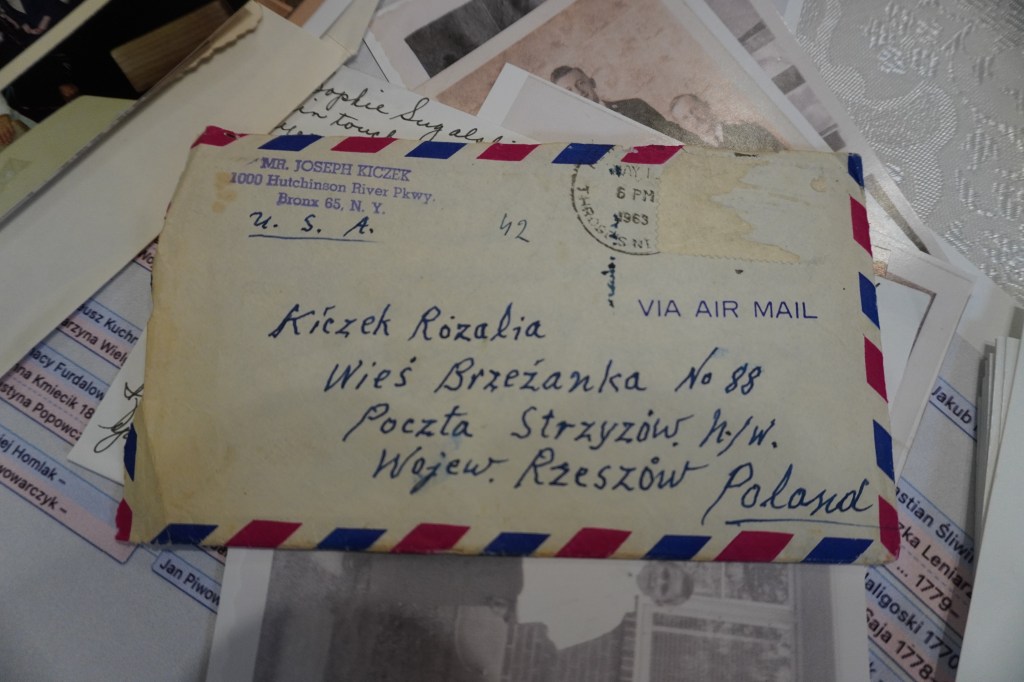
It’s day two of actual relative hunting. Our first objective was to find a Slawinska family relative which was the maiden name of my paternal grandmother, Marianna Kiczek. We knew she was born in 1847 in Poland through a marriage record which showed she was from a small village area called Źaranowa, about 40 miles south of Rzeszów, where we had stayed the last two days. The terrain became more hilly and rural the further we traveled.

Convenience Store Clues

We did not have a specific address so our guide Lucjan suggested we stop and ask at a convenience store if anyone knew of a Slawinska family. To him this was a logical professional move. To us it was more like following a detective trying to track a criminal.

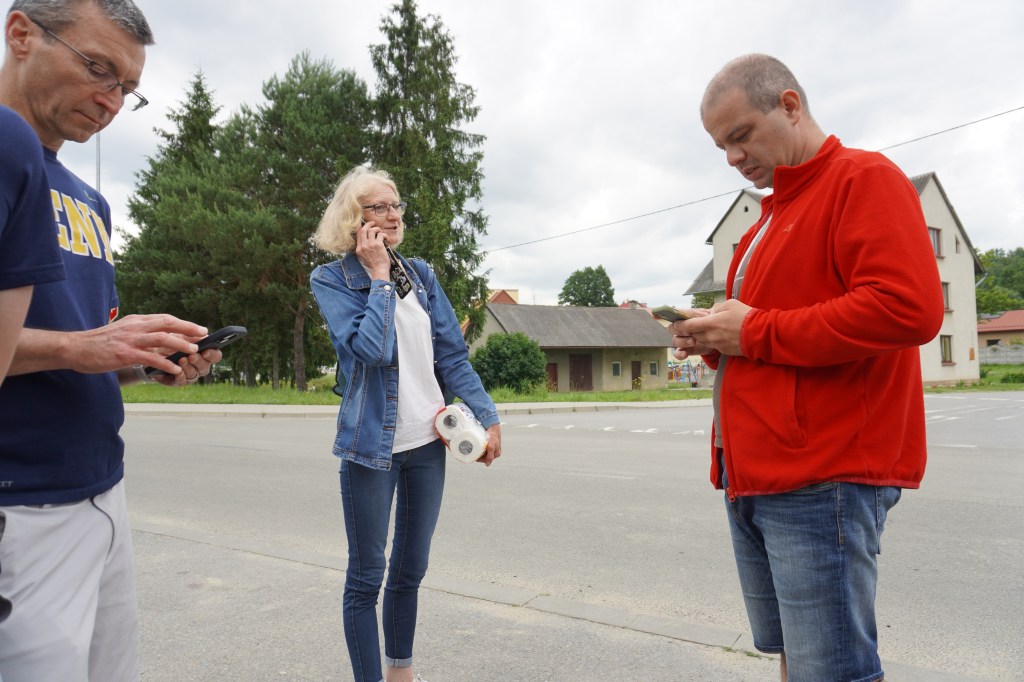
While the store clerk was not able to help, we stumbled upon a nice looking, fit older woman outside the rough-looking store who said she knew of a family that might have had a family connection with the Slawinska’s and could be related. We volunteered to drive her to her home a couple miles away. Like amateur detectives ourselves, we deduced this was how she kept in shape, walking up and down these hills these steep hills would be tough for any of us.

No one seemed to be home at the possible family house but a next-door neighbor took our email address and promised to pass on our interest. We had made a loose connection but could not be sure if our detective work would pay off. Now, we began to realize this could be a slow process and may turn up as a dead end. On the other hand, luck might be on our side and practically everyone we met seemed eager to help.

There’s Gold in These Hills

Our second goal for the day was actually a planned visit to Bogumila and Zdzislaw Furtek. Bogumila is the sister of Krystyna Onacki, my distant cousin who had discovered our family connection many years ago. We share the same great grandfather but have different great grandmothers.

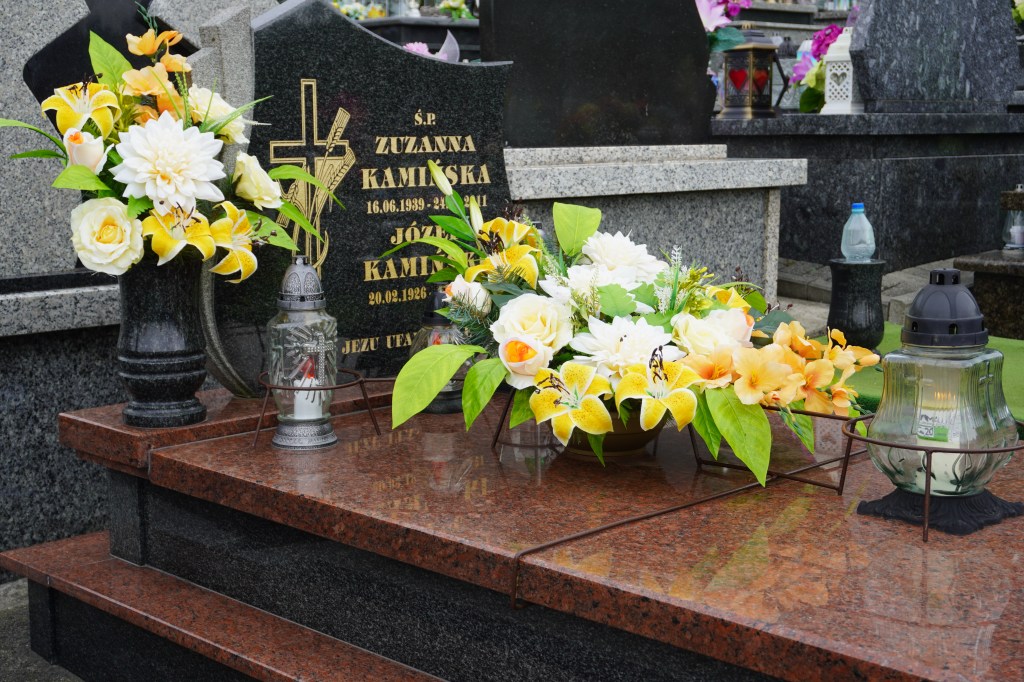
Josef Kiczek married Zofia Kielar and had three children before she passed away, one of which was Zusanna. Zuzanna married Victor Kaminska and had three children of her own, among them was Bogumila and Krystyna. Josef remarried Marianna Slawinska after Zofia’s death and had three more children, one of which was Joseph Kiczek, my paternal grandfather. Whew!

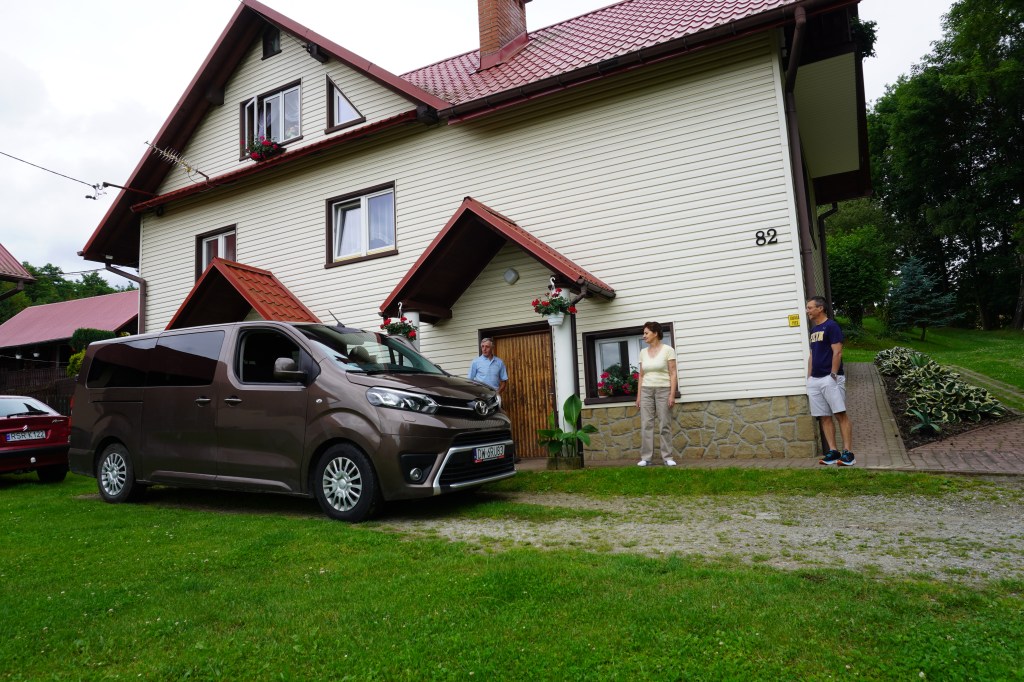
Krystyna and her husband John Onacki currently live in Roselle, NJ and are extremely warm people that embrace our shared Kiczek family connection. We have kept in touch over the years but this trip was an ideal way to share in our family heritage since much of her family still either lived in Poland or maintained connections there. This was a perfect time to actually meet and understand more about our family. And, Bogumila was the perfect personal connection to make it happen. While Krystyna could not join us physically she set up our meeting with Bogumila at her home in Breźanka just a few miles away from Źaranowa.

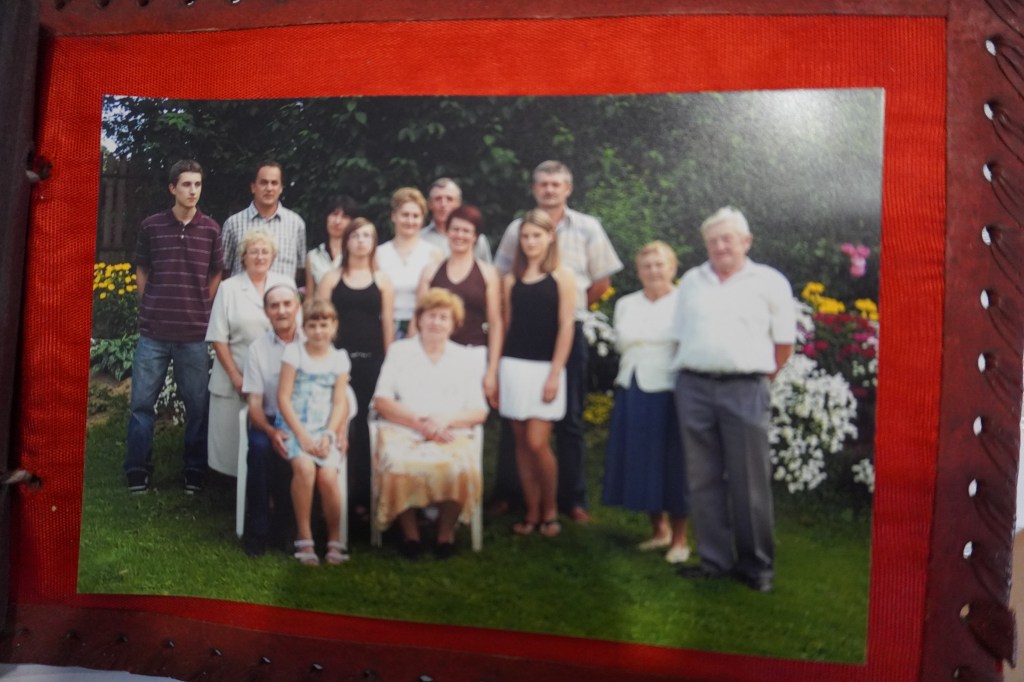
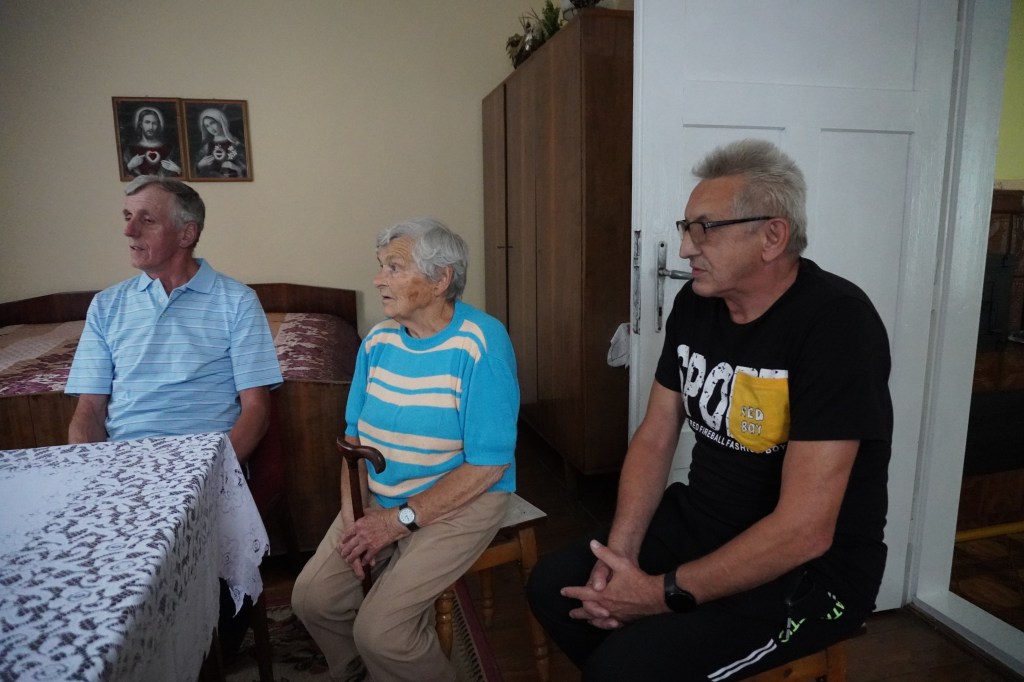
You could see both a physical and personal connection between the sisters. While Krystyna is younger they both have a warm beauty and personality. Bogumila and her husband, Zdzislaw, invited us into her home in the dining room and immediately talked about the family with Lucjan acting as our translator.

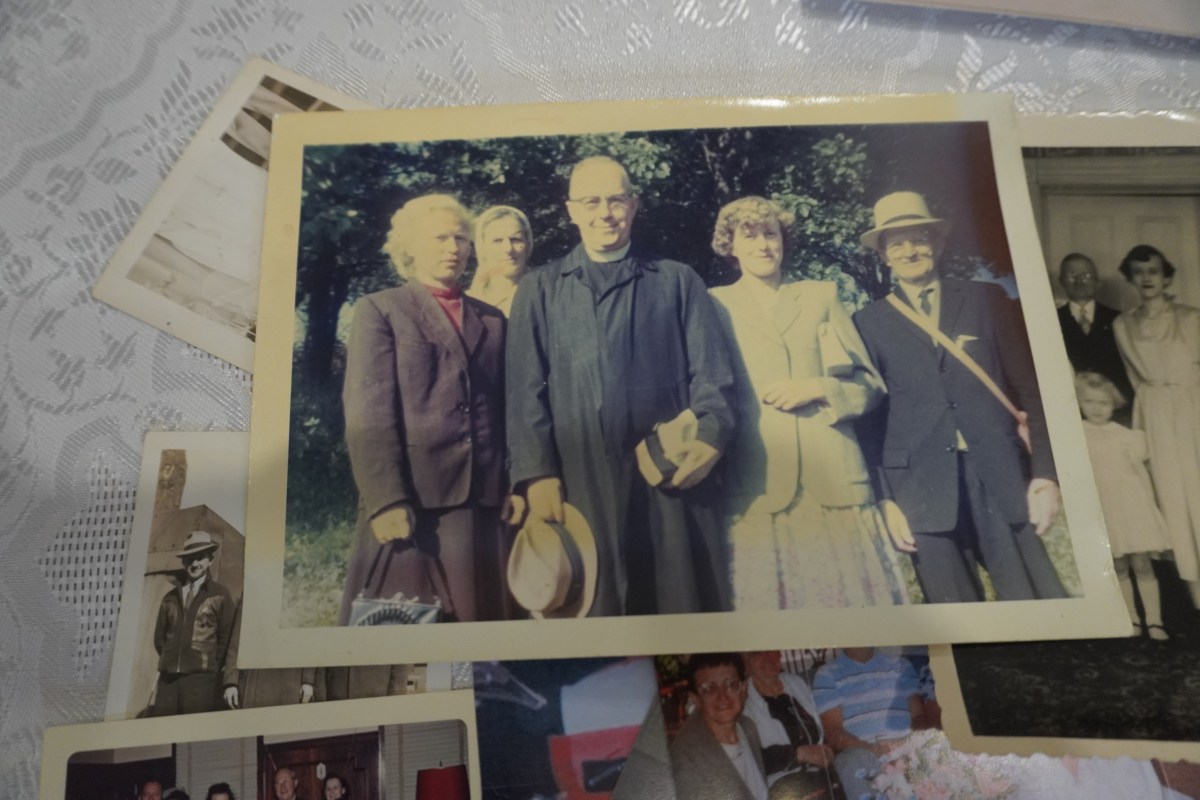
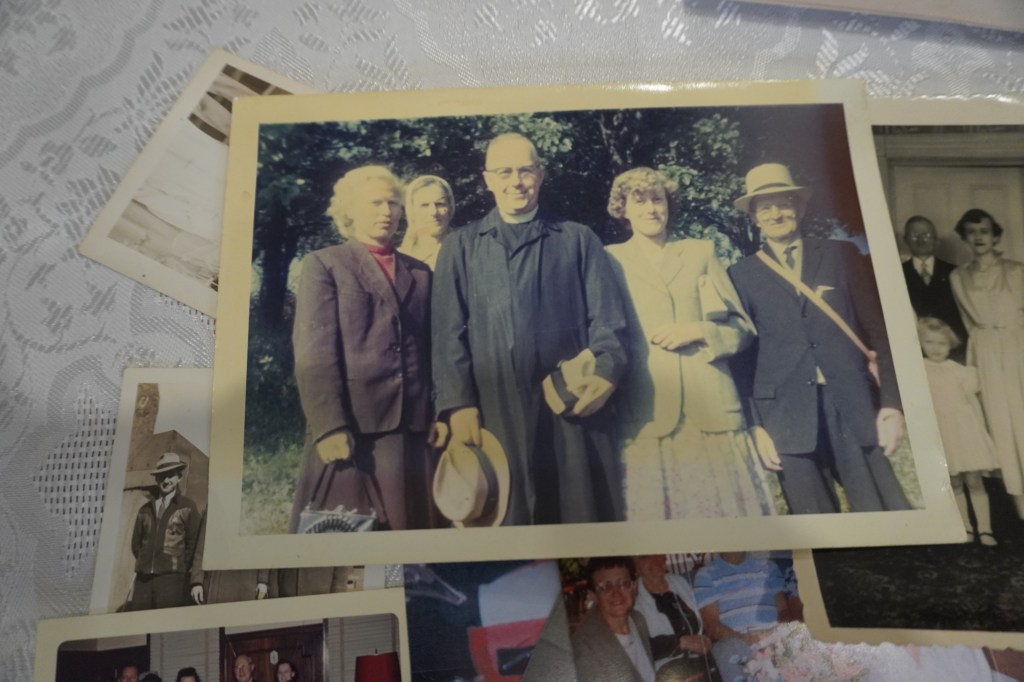
It seemed awkward at first but we quickly grew accustomed to the dialog. Next, she brought out several photo albums with old and new family pictures. I, in turn, had brought some of our old and new family pictures to share. We laughed when we realized that we both actually had a few of the same photos.

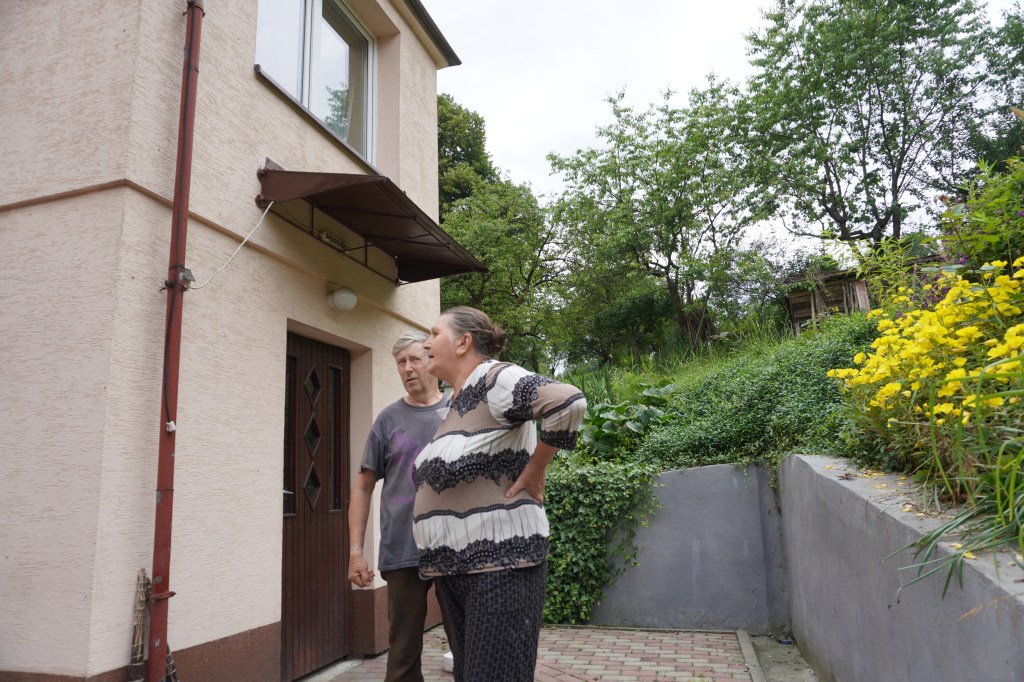
Bogumila planned lunch with us and a visit to the land and house where our common great grandfather Josef had lived. There was a new owner now and the place had been renovated many times over the years. An older woman and her nephew lived there now. Her husband had passed away and her nephew had come to take care of her. They graciously invited us in for coffee and cake as we spoke about old times there. You can’t seem to escape hospitality here!

We eventually returned to Bogumila’s home where a full lunch of Polish food including soup, salad, roast pork and dessert awaited us. After lunch we took a walk around her property, a large tract of land which they continue to farm part-time.The house and farm are situation on beautiful rolling countryside hills broken occasionally by patches of forest. It reminded me of those alive hills in the Sound of Music.

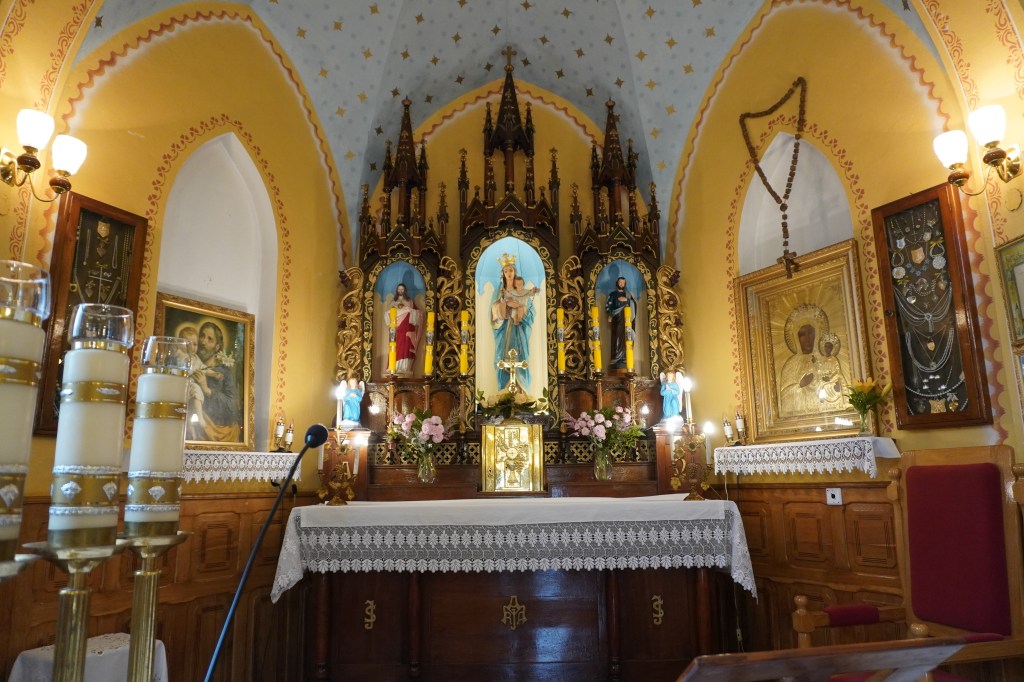
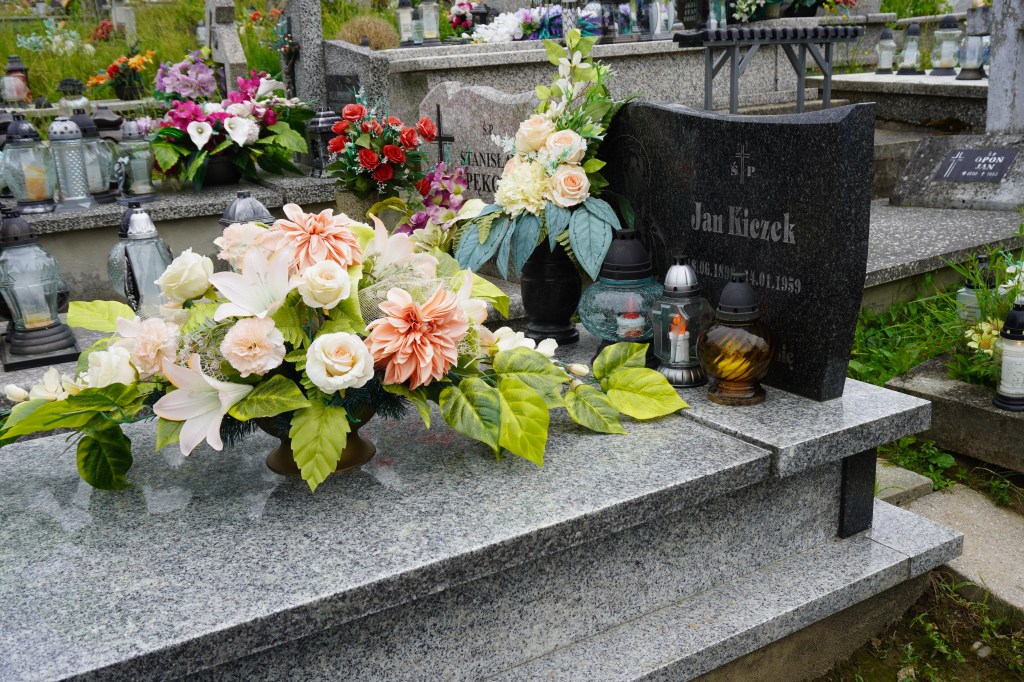
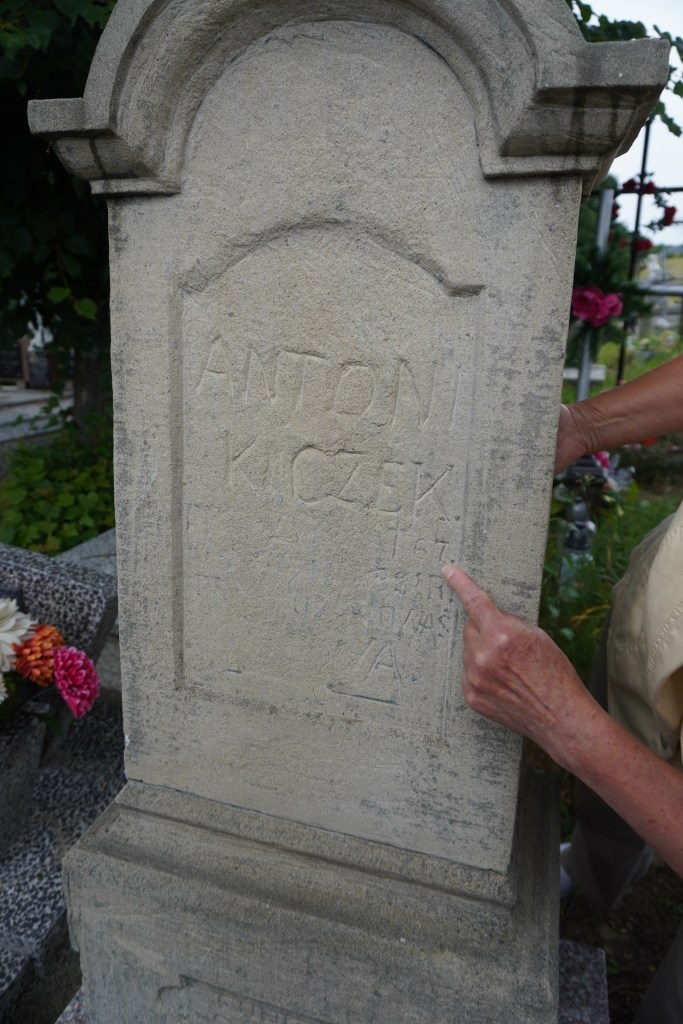
Late in the afternoon we exchanged gifts and goodbyes. But that was not before calling Krystyna in Roselle and telling her all about our adventure. Finally, we agreed to go with Bogumila and Zdzislaw to visit the local church and cemetery to see the graves of many in the family.

The Legend of Uncle Joe

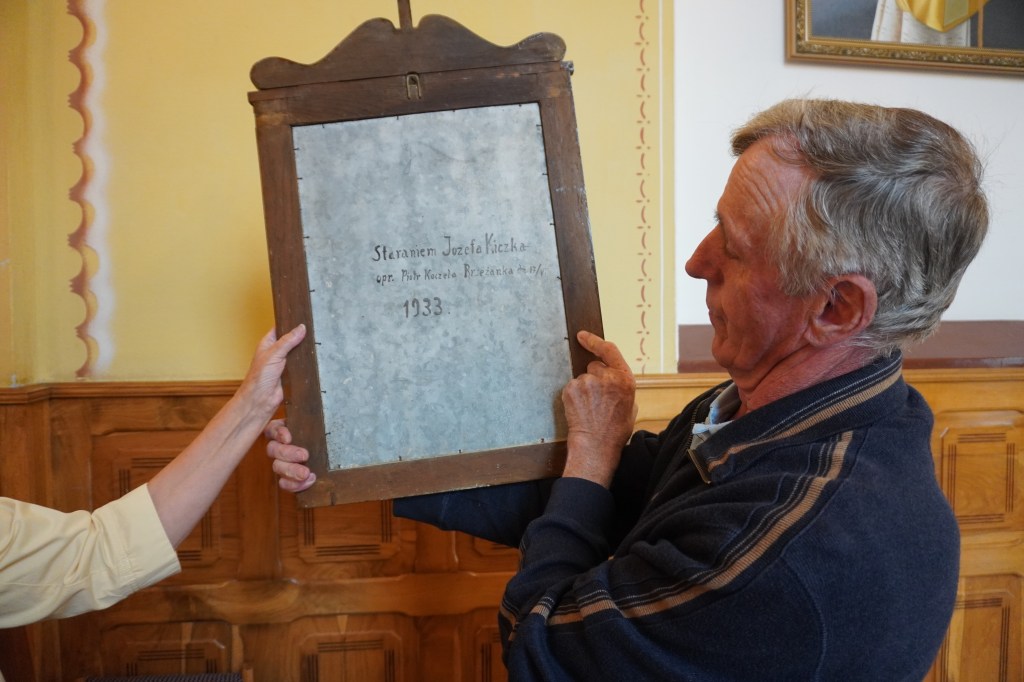
My father had a close cousin Joe who was always a mystery to me growing up. He was the physical connection to the old country, living in Bayonne and working for a school for the deaf in New York City. He was a sharp dresser and a very buttoned-up character who had a worldly view traveling frequently between the U.S. and Poland and having us help our distant family in Poland in many ways. Joe also was responsible for helping to build the neighborhood church, earning him such respect that he still seeems to have earned sainthood here in the town of Breźanka.

Cemetary Life

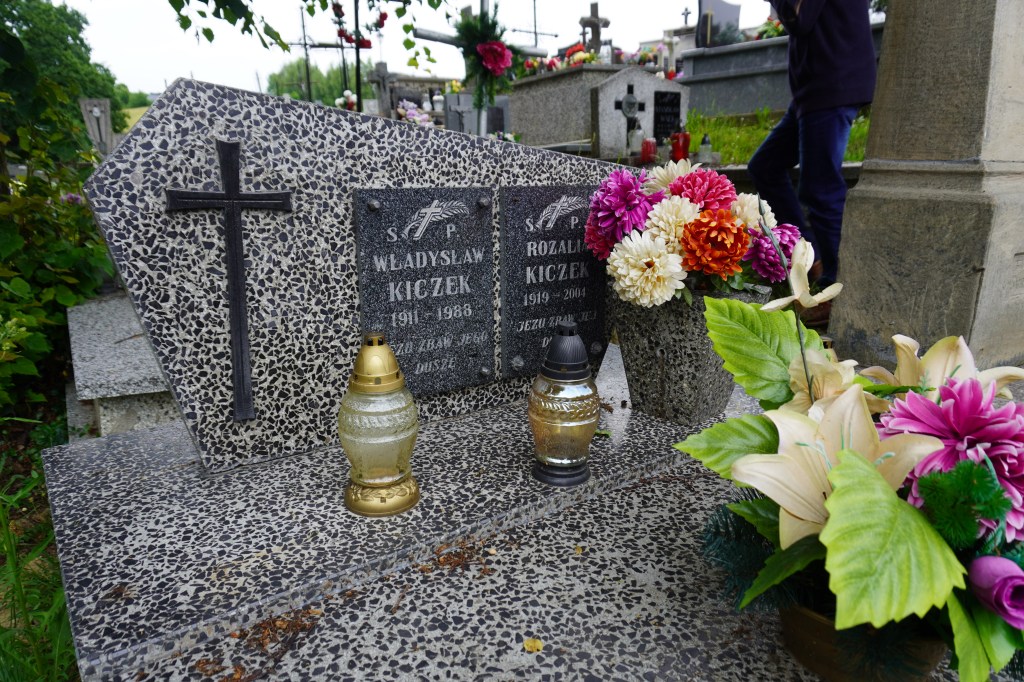
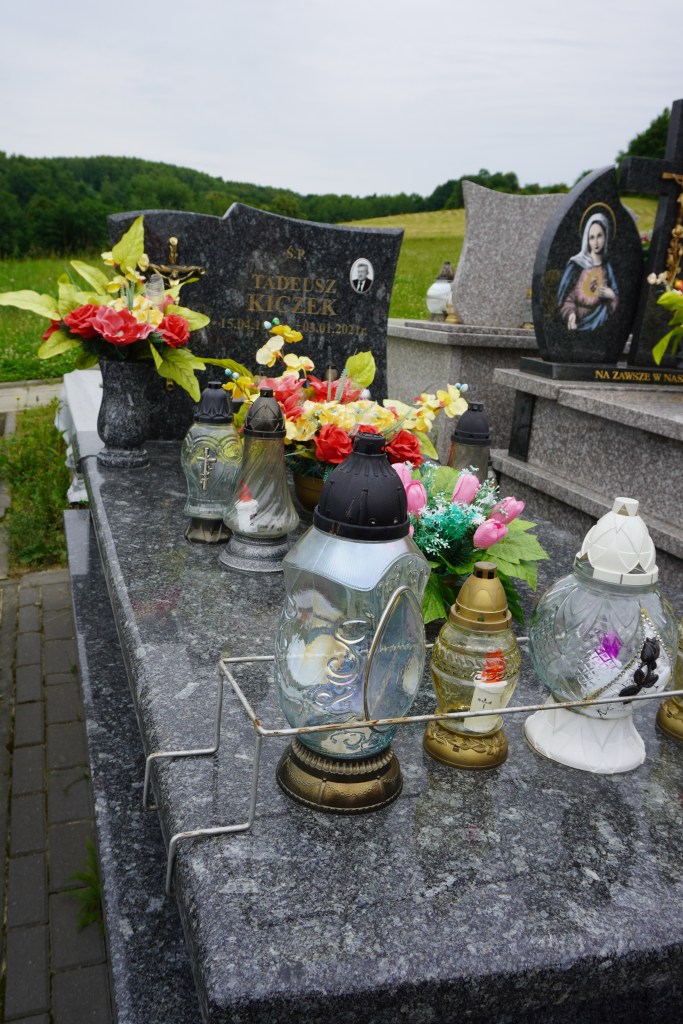
The Poles have a special reverence for the dead and for past generations which we seem to have lost here in the U.S. It’s the final evidence of lives lived and gone. And, maybe reminding us that we’ll all be gone too someday. Nothing lasts forever but memories can linger for generations.

Visiting Rzeszów: Polish City with Promise

We visit a charming Polish city before we embark on our hereditary journey.

June 10, 2024 Rzeszów, Poland

Our 8-hour LOT Polish Airlines flight from Newark Liberty flew into Rzeszów at 11:00 a.m. The two Ethan’s managed to catch a few hours sleep in our deluxe Business Class seats. In spite of my recent habit of catching daily naps (goes with the age) I could not sleep. Worse was the lack of WiFi and decent entertainment. Maybe it was the stress of the last couple days and the anticipation of what lie ahead that kept me up in spite of the excellent service and onboard meals.

We landed on time but had to wait for a back up driver to take us to our hotel in Rzeszów (pronounced shesh ov) about 10 miles away. Rzeszów is a regional capital of southeastern Poland bordering Ukraine. Much of our week would be close to an hour away from Ukraine. In fact, Ethan noticed when landing that we had passed several Patriot-type missile launchers along the way and we continued to see the subtle presence of military personnel. Poland is not currently threatened but their is a whiff of anxiety in the air and a common hatred of Russians.

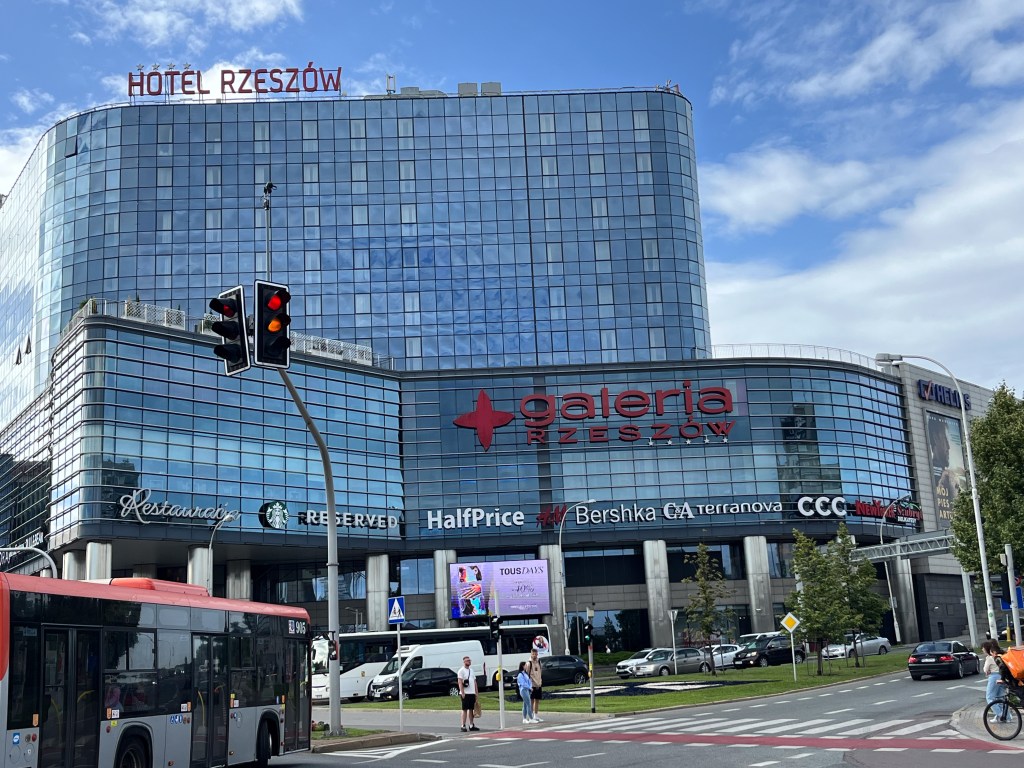
We were staying 2 nights in the boutique Grand Hotel in the heart of the old part of the city. While we had no real preconceptions of Rzeszów, we also knew it was not one of the big cities but had some interesting history going back centuries and future promise. Its an interesting blend of “Old European”, Soviet-styled cement buildings and monuments and brand new office buildings and even a shopping mall that resembled those in New York and New Jersey. In fact many of the stores were very familiar, including H&M, McDonalds’s and Starbucks. We loved the cobble stone streets and open piazza similar to Italy and Spain, with outdoor restaurants and cafes. To me its a modest city with lots of potential.

The Grand Hotel was pretty grand in its open court setting and service, although rooms were not particularly great or big, they had plenty of amenities like a spa area with exercise room, pool, hot tub and sauna which seemed were ours alone. In fact the hotel looked less than half full, although we could not figure if that was a seasonal thing. Even the outdoor cafes seemed relatively empty for this time of year. Maybe we were on the early side of the summer season.

After going out for a burger lunch at one of the local cafes we headed back to the room for a “power nap” to try and get our bodies used to the 6-hour shift in timezone. The afternoon consisted of walking around, visiting churches, a big shopping mall and killing a couple hours at the spa/gym. A nice dinner followed at our hotel where we began to try the excellent local Polish cuisine, much of it brought back old memories of my Mom’s cooking as I grew up.

The more time we spent in Poland the more felt disappointed in myself for not studying the language more as Ethan and Ethan Luke were able to enthusiastically converse much more with the natives. They even had fun and enjoyed trying their new skills, even if they had a limited vocabulary. I think I am a hopeless case with a mental block. Languages were never my strong suit and Polish is a particularly hard language to learn.

Tomorrow (Tuesday) is a day in Zarębki and Šwierczów about an hour north of Rzeszów. This is ou first stop on exploring for relatives. This first stop involves my son Ethan’s mom, Judy’s family, in particular Judy’s mother’s side of the family. We have a few clues, birth records and an address to visit. With our trusty genealogist, Lujan, we hope to learn more. It seems a long shot but anything can happen.

Searching for the Kennedy Spirit

Ten years ago (April 2014) we were privileged to walk 50 miles in The Netherlands at the oldest continuous one-day Kennedy 50-Mile walk in the world. Imagine 7,000 people all walking and enjoying a communal effort inspired by JFK. We were wowed by the experience and the hospitality of the Dutch.

The following essay first appeared on the Freewalkers.org website about ten years ago (April 2014). It is a slightly edited version describing my unique opportunity to walk in the Netherlands with 7,000 others in this well-established annual event – The Kennedy-Mars Sittard – on the 50th anniversary of the famous “50-Mile Hike.”

The Freewalkers.org walking organization was built upon the spirit of that challenge in 1963 presented by President John F. Kennedy. He challenged Americans to walk 50-miles for their physical fitness and to demonstrate the strength of our nation. Little did he realize that others around the world would also take up that unlikely challenge – and continue the legend – even to today. The Kennedy-Mars Sittard recently celebrated the 60th anniversary of this popular community event!

Paul Kiczek

The Journey (April 2014)

Traveling nearly 4,000 miles for a walk may seem like a long way to go for something that can be done anywhere. But the walks we have been doing as FreeWalkers are more than the walk itself. Mostly, they are about personal challenge and the power of community – things that John F. Kennedy stood for. Far away in Sittard, Netherlands we found a community that continues to honor his lasting legacy each year with a challenging event.

We took advantage of a unique opportunity to visit Holland and a participate in a great community challenge called the Kennedy-Mars Sittard, a 50-mile (80K) walk (aka, “march”) that took place on Saturday, April 19, 2014. Thanks to FreeWalker Ray Smith and event director Ad van der Loo we not only got to participate, but would be guests of several generous Dutch families.

If you are familiar with our FreeWalker events, you know our events tend to be similar long distance walks. In the five years we have been offering events, rarely do we draw over 100 participants. In this age of charity walks and marathons, that’s a fairly small number, but even those events started small when they began.

What we knew of the “Kennedymars Sittard” was that it was the oldest and largest 50-mile walk of its kind that originated with the JFK 50-Mile Hike phenomenon and continues to this day. The idea for a 50-mile hike originated with our President, John F. Kennedy, in 1963 as a challenge to his military to demonstrate their fitness. Part of the reason for issuing the challenge was to support his program on physical fitness and also to show that our troops were ready for action during the “Cold War” – two topics that are still seem particularly relevant today. 

Almost immediately, the public took up his military challenge, led by his brother, Attorney General, Robert F. Kennedy who demonstrated it could be done within days of the order. Soon, personal attempts were made throughout the country, and even globally, in such places as the Netherlands, England, and Ireland – even in some of the farther reaches of the old colonial empires. 

There was no plan or preparation behind this, just the spontaneous energy of a challenge, almost a dare, coming from a leader that the world respected. Some were motivated to test their limits and share that experience with others. But, why has this tradition continued for over 50 years after his tragic death? We were on a mission to find out.

The Kennedy-Mars Tradition is Born

In the spring of that year, four teenagers in Sittard decided to launch their own walk based on Kennedy’s words. Without diving deep into the history and motivation of the Dutch for walking, there seems to be tradition to walk, and certainly to bike. Remarkably, that’s still in stark evidence today.

Everywhere you go places and streets are designed for the pedestrian on two feet and the cyclist on two wheels. It is second nature to the entire nation. At least in this one place, cars and pedestrians seem to have found a way to co-exist comfortably together. It is said that the Dutch have an ability to differ in opinion yet settle and arrive at solutions that they can all can live with. It’s a mutual respect for each other.

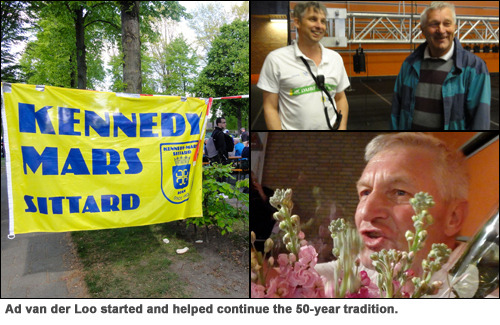
Ad van der Loo, was one of the four teens that started the walk in 1963 and soon took responsibility for organizing the annual event that takes place each year on the Saturday before Easter. Ad had walked the event several times but put his energy into managing the expanding event for the past 43 years, instead of walking it. This year, he was turning control over to a new generation – but not before walking one more time.

Ad had honored us last year by allowing FreeWalker Ray Smith to say a few inspirational words at their 50th Anniversary.. Ray had been stationed in Germany for many years and had participated in the event before.) Ray took back an invitation for other FreeWalkers to come to Sittard and experience their unique event. This event seemed to set the gold standard for what FreeWalker events could become. 

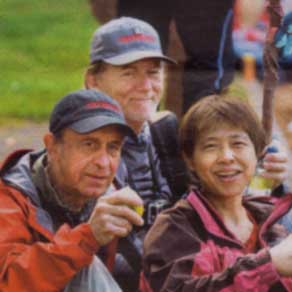
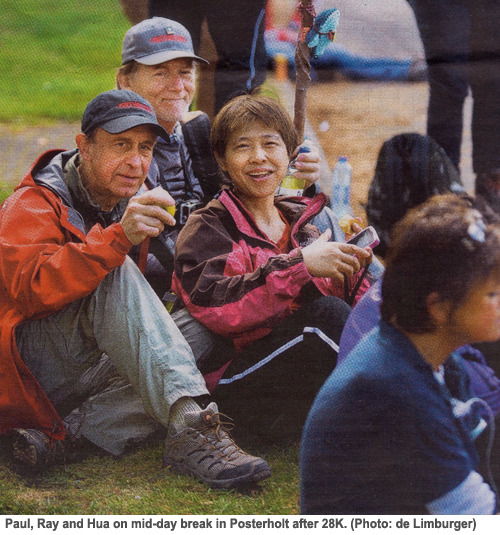
So, with barely a plan we American FreeWalkers – Ray Smith, Hua Davis and I – decided on our own to head to the Netherlands. One thing that should be said about the country is that although their language is Dutch, nearly everyone speaks English. So, even a short stay there was easy. As far as we knew, we were the only Americans participating in the event this year. It is probably 95% a local/regional event. It was a unique opportunity for us and I think an honor for Ad Van der Loo and the Kennedy-Mars Sittard organization to know that we had ventured this far to participate.

Getting Settled in Sittard

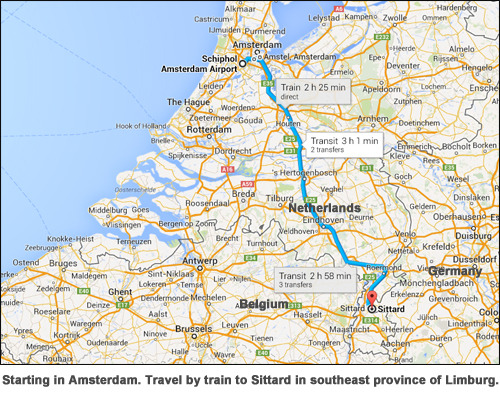
On Thursday, Ray and I arrived together by train in Sittard, having met in Amsterdam that morning. We were met by our hosts, the Hermans (my host family) and de Beurs (Ray’s hosts). We pre-registered for the event and went off to our homes for dinner and a good night’s sleep. Hua’s plan was to fly in on Friday, stay just one night with her host family and take off on a train immediately after completing the 50 mile walk. That was an aggressive plan that most would not try. But if you knew Hua, you would not be surprised nor doubtful that she could do it.

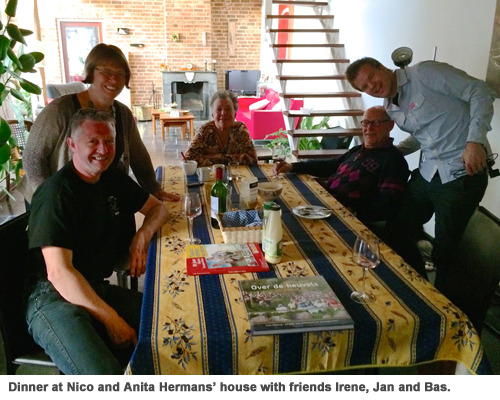
My stay with the Hermans family is worth detailing. I will write more about that great experience in another post. It made the trip at least twice as entertaining and rewarding for me. I know that Ray and Hua felt similarly about their experience and we thank those families for their generosity and time which we all cherished.

Pre-Event Day

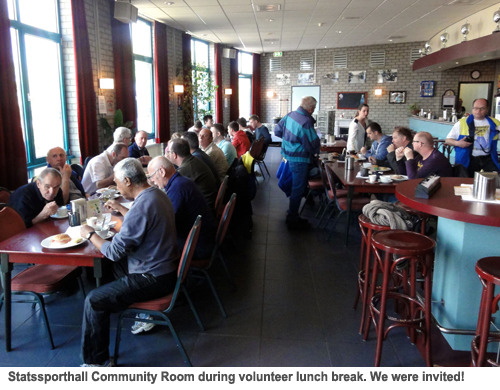
We met Hua Friday afternoon at the train station and headed to see the Statssportshall (large indoor sports hall/gym), where preparations were being made for the event with Ad Van der Loo. Having been the director of the event for so many years, Ad invited us to join him and his volunteers in a light lunch. Ad’s dedication to the event earned him the devotion of every worker there.

At the de Beurs place, we were interviewed by a reporter for the regional newspaper, de Limburger. It was a lengthy interview that signaled to me that they were sincerely interested in the motivation of three Americans coming this far for their regional event. Inevitably, the conversation came to the differences between Americans and the Dutch.

I think they see Americans as creative and impatient and often chasing the wrong goals but they admire us for our positive thinking and ability to take action. The Dutch give more weight to creating a fair society and certainly one that encourages physical activity in a natural way. I think the question that remained is could we tell our story about the Kennedy Sittard and change American attitudes? What if we could get President Obama to march 50 miles? Could that rejuvenate an interest in long distance walking in America? Could we build a bridge to the Netherlands? 

Ray, Hua and I borrowed bikes and went out on our own to see the area around Sittard. It was an interesting first-hand experience to see how the roads and traffic signals accommodated bikes and pedestrians. Bike paths and dedicated signals were everywhere. We were back before dinner and each of us went off to our respective host’s home to get an early night’s sleep, as we were due to meet at the start of the event at 4:30 a.m. at the Sportshall.

It’s Time to March

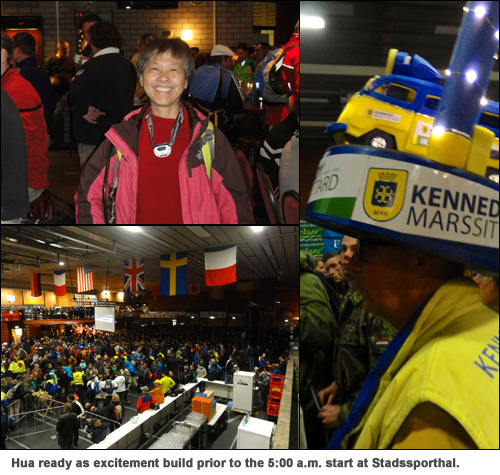
After an early breakfast at my host’s home, Nico drove me to the Sportshall. Before long the hall was packed, bands began to play and announcements were made in Dutch. All we needed to do was follow the crowd. Ray, Hua and I decided to walk together for a while but had no particular strategy. At 5:00 a sea of thousands of people began moving out of the hall and stringing out in the dark along the streets of Sittard. Within an hour we were heading outside of the town into the countryside.

The route for the walk is a loop with 90% in the Netherlands and 10% in Belgium. This year the walk avoided Germany due to security concerns. It is essentially a counterclockwise route heading toward the countryside near Germany and ending through Belgium before returning to Sittard.

As in our FreeWalker events, some groups charge ahead in hopes of finishing at a fast time. This event does have an option for a competitive timed class. Many others, like us, plod along at our normal average of about 3 mph speed. All must walk and running is not allowed.

We were walking somewhere in the middle of the starting 80K group of 2,818 participants. Another 1,758 registered for 40K were scheduled to leave later and 2,871 for a 10K even later in the day. The total was estimated to be about 6,947 participants! 80% crossed the finish line!

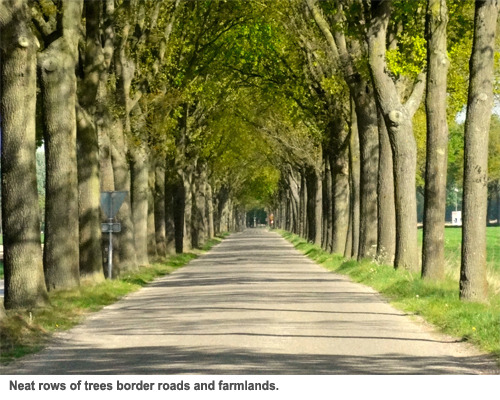
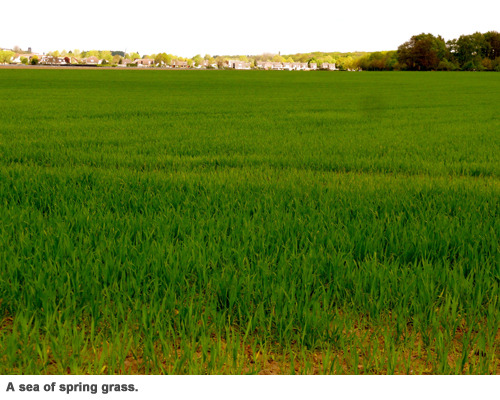
We walked in the dark until sunrise as we left Sittard and headed to open farmland areas. At this time of the year, the ground had been freshly tilled or small vegetables were sprouting up. What is striking is the size and view of the fertile areas. Since the Netherlands was largely built on land reclaimed from the sea, nearly the entire area we walked was flat consisting of dark sandy soil. This makes farmlands appear as vast as an ocean, broken only by a canal, a road or a line of trees here and there. This unique landscape generates an abundance of food for the country and much of Europe.

The skies were constantly changing over the day. At this time of the year, the weather can be unpredicatable. It is just as likely to rain as not. For most of the day, the puffy clouds passed over us with patches of sun shining through and temperatures from the 40s(F) to low 60s. Perfect weather for walking anywhere.

And, what a day for a walk it would be. The vast farmlands seemed never-ending. Much as in the U.S., many farmers have sold their smaller farms to larger companies and moved into the towns. It’s a new generation favoring a different lifestyle.

Towns we pass through seem to be small and quiet residential communities. Houses are clean, orderly and of modest simple design. Care is taken to keep plants trim and neat with a tendency to prune older plants like topiary in a way I have never seen before.

While the Dutch are said to be somewhat private, I found that they were very friendly and open. A woman I met was walking with her husband and another couple for their 23rd Kennedymars. She said, “We started by thinking ‘Why not?’. Now, it’s like a disease. We just can’t stop.”

Then, there was the incredible walking waiter. He was dressed in a tuxedo and held a serving ray with a full glass of beer and an Easter egg. Why is he doing this? He started with a dare and a bet. That was 18 years ago. Today, he still enjoys the challenge each year and the obvious attention and conversations he draws.

A van with big speakers followed us and played pop music to liven the walk, which made me feel at home. We also we walked by many traditional um-pah bands. That, gave us the feeling that we were somewhere special.

Breaks on a long walk are spaced here between 7 to 15 miles. Bathrooms along the way were not easy to find. But, everyone seemed to work it out and no one was complaining. Food support consisted mostly of some fruit along with soft raisin rolls and raisin cookies and hard-boiled colored Easter eggs.

There were no power bars, no sports drinks and no bottled water – things we take for granted in the U.S. Arriving at a support stop usually meant finding a faucet and filling your bottles. Each of the major stops were places where you could also buy food and drink if you wanted. Perhaps that’s a good way to get support from the local businesses and friendly neighbors as we passed.

About half-way on our march the landscape changed. Larger rivers of water appear that probably lead out to the sea. We crossed a large bridge which provided a high view of the land and the waterway.

We were well passed the half-way point, getting tired and anxious to keep going when we came upon a lively party. They were cheering us on when a woman grabbed me and we started to twirl around. Wow! Suddenly, I had a burst of energy as we danced to a cheering crowd. Fantastic. And, just what I needed to find that spirit again we were seaching for.

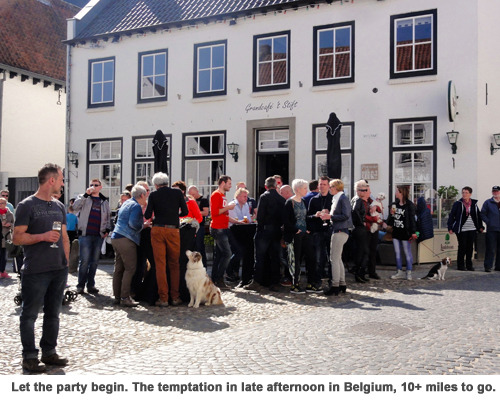
We were in Belgium, although it was not easy to know. We went through some older historic towns and the area became more populated. Cafes suddenly started to appear. I sensed that the mood of the march had changed to a celebration even though we had more than 10 miles to go. Then unexpected treats appeared from the local residents – free Belgium waffles! The best Hua and I had ever had – or at least we thought so at that moment.

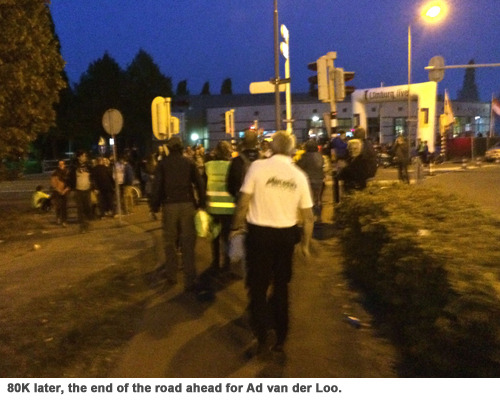
At the last rest stop, we met Ad van der Loo again. He was in a great mood after his final massage and ready to make it to the finish. Hua and I stayed together throughout the walk and we decided that it would be great and fortunate to finish with Ad, on this special occasion.  For over 40 years he had to manage the event and could not actually walk it. This would be a triumphant occasion for him and us. Nothing could stop us now.

As we saw the city sign for Sittard we picked up the pace and soon we were at the Sportshall with lines of people cheering us on in a European fashion. Granted, I was tired but I had this flash like I had just finished a stage of the Tour de France!

We followed the crowd into the hall and stayed with Ad as he received special awards and recognition not only for finishing but for all his work in building and maintaining the event for over 50 years.

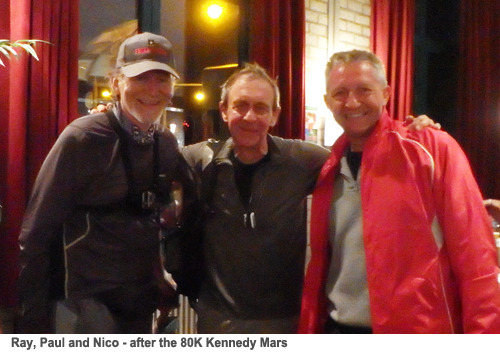
Hua and I had finished the 80K, 50-mile walk at around 9:20 p.m. Saturday evening. My feet were achy and tender. I thought I developed a blister but just avoided one. Ray had finished about an hour ahead of us and was waiting with my new friend and host, Nico Hermans. We sat for a while talking about the day over that beer I had been dreaming about in Belgium 15 miles and 5 hours ago.

What We Found

The Kennedy Legend lives on in the Netherlands! If you look back on films, recordings, writings, and witnesses to the time its easy to see that one man did make a difference. Although he didn’t invent the idea of a long walk or maybe even anticipate that it would spawn global community events, his words had meaning and continue to change our lives. It’s better to give, better to participate, better to try and better to reach out to others than to accept less than we are capable of. And, Ad van der Loo is still a living example of those principles of JFK.

We had learned that memories of Kennedy and what he stood for are still alive in Sittard. And, so it must be in other places that host similar events. It gives us incentive to continue our FreeWalkers journey to build similar events that offer others the challenge and enjoyment of a community experience that challenges our physical and mental endurance. Our hope is that our new friends in the Netherlands will join us at one of our events in the future. We “Walked the Walk” and we were glad we did.

Learn More >>

  1. FreeWalkers Photos of the Event and near Sittard
  2. FreeWalkers.org website
  3. Kennedy-Mars Sittard website (Home-Dutch)
  4. Kennedy-Mars Sittard Photo Album
  5. 50-Mile Hike Phenomenon Essay

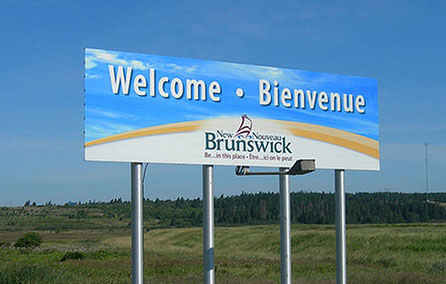
Welcome / Bienvenue

The 125 miles (171 km) in New Brunswick Canada we walked proved to be a welcoming experience, just as advertised.

The most common sign in New Brunswick is “Welcome / Bienvenue” which seems to not only be a slogan but a north star for most Canadians. In our week-long Beyond Borders Walk walking journey along the Coastal Link Trail in New Brunswick we were fortunate to have experienced, many times, what Canadian hospitality and friendliness is all about. 

All public signs issued by the federal government, but only those issued by the Province of New Brunswick, must be in French and English. This area values its tourism and its importance as a melting pot for all making their way east and west or even north and south from the U.S.

A Welcome Promise

Our excursion into Canada was a direct result of a welcome pledge our group was given four years ago. At that time, Loredana Delucchi, a member of our U.S.-based FreeWalkers, walking group, crossed the border with Ken Kurland And Nancy Jonap to St. Stephen to present Mayor Allan MacEachern a Canadian penny, a New York City subway token and a knitted bear doll as a gesture of a special friendship and their accomplishment of walking along the East Coast Greenway from New York to Canada over a period of years. Borders were crossed and lives were changed by reaching out. That effort culminated in a promise by the mayor, in turn, to not only welcome them back again but to build a new pedestrian trail along the St. Croix River.

Going Beyond Borders … Again

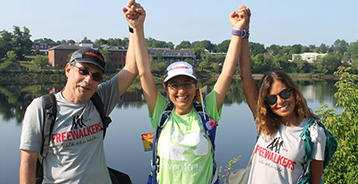
Our plan was to walk the 125-mile (171-km) newly charted Coastal Link Trail from Saint John ending in St. Stephen. We started our journey walking across the U.S./Canadian border in St. Stephen where Cherie Stewart, Implementation Manager of the Coastal Link Trail waited to drive us for over an hour to Saint John where we would start our week of walking. We had just driven over 12 hours to the border. Without her help to get to the start, the entire walk would not have happened. 

Beyond Borders Walk – Jul 31 – Aug 6, 2022 – Canadian Coastal Link Trail

Canadian Hospitality

Tracking us throughout our journey was Susan Hill, Executive Director Charlotte County Tourism. From the start, Susan tracked our movement throughout New Brunswick. About a third into our trip, she met us in Pogologan and popped up occasionally all day long to check in on how we were doing. She was there to see us off, invite us to her home in Penfield and show us the harbor and fishing industry in St. George, where her husband and many of the population worked. Susan became our guide about the area and the fishing business that has become the most successful industry in the area. Now, it was time for tourism to add even more to the economy.

Welcomes are most obvious when staying at a B&B. One host couple in St. John was eager to share their story of the dream of immigrating to Canada to create a better life over a generous breakfast.

Another host, Dave, proudly talked of his days working in radio and his love of rock music easily displayed in walls of vinyl records. Dave and I both shared a passion for the music of Bruce Springsteen, a New Jersey icon, who often transcends geographic, generational and cultural boundaries. Dave was also kind enough to lend me his bicycle to ride around the town, saying “Don’t bother locking the bike!”, backed by lessons learned years living in this area.

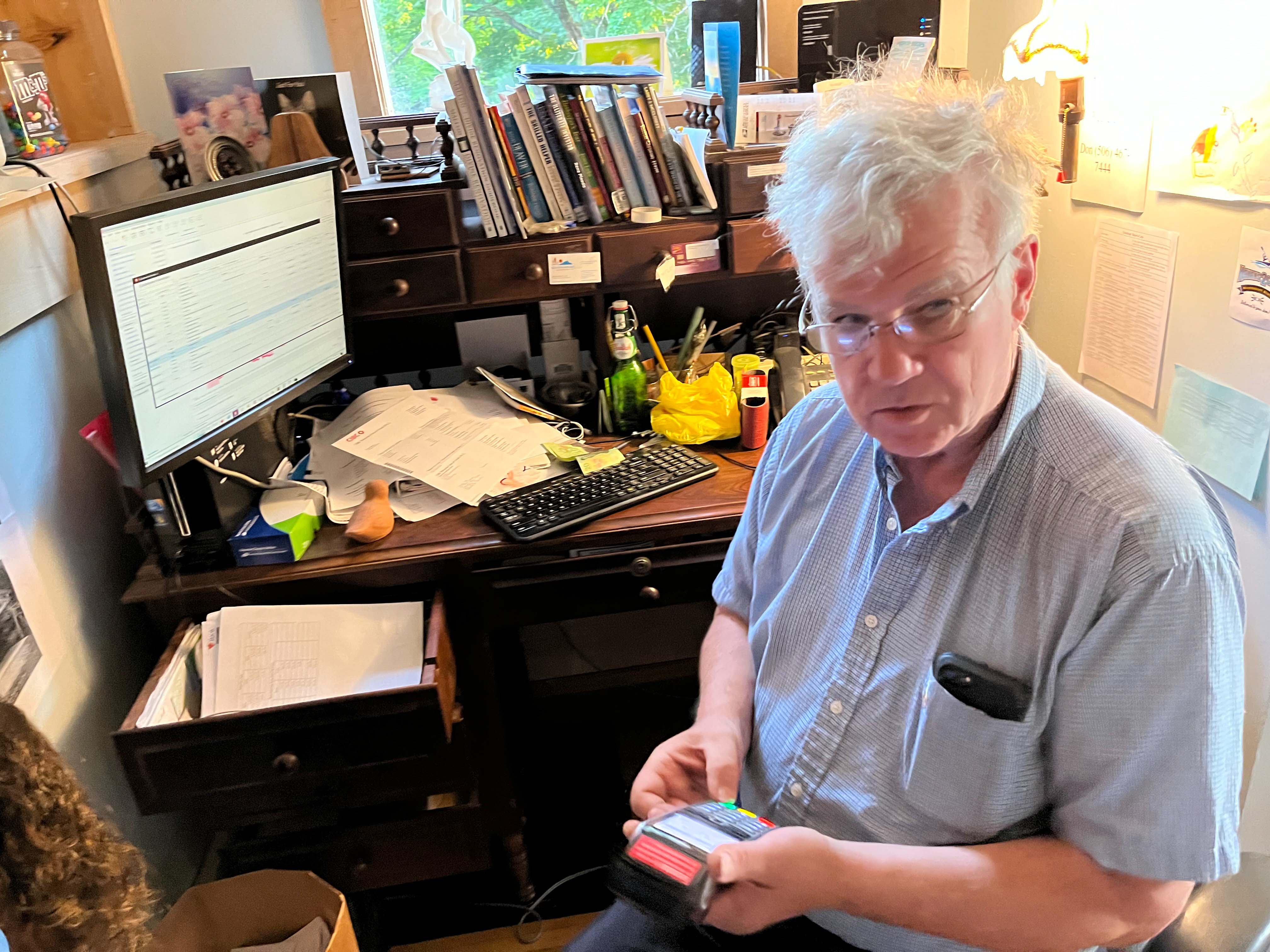
Don was the welcoming, thoughtful and philosophical B&B host. This old Victorian home in the Chamcook area where we stayed was filled with curious pictures, furniture and curios that spoke of mystery and a different time that was still treasured. He represented an interesting dichotomy of the old and new. He respected the old but was an advocate of building new trails and opening up the area to tourism. He was even kind enough to drive us a few miles into St. Andrews for dinner and pick us up while giving us a brief history of the resort town and the places to see. 

Just as noticeable were small gestures of friendship along the way: Kathy and Junior opened up the Musquash Rec center to provide water, a friendly ATV operator, Stephen, stopped to see if we needed help, the EMS tech that helped get Ken to the hospital after a muscle spasm, the restaurant owner Rachel from Comeau’s Seafood Restaurant who gave us free lunch, the Taylor’s who shared water, their art and their life story, the St. Andrews retiree, Hans who said although his job had taken him all around the world, there was nothing better than where he was now, or the golfer’s surprise at seeing me accidentally riding a bike onto the Algonquin course at Joe’s Point in the middle of his teeing up and just saying, “Isn’t it beautiful? But, you know beauty can be found anywhere, if you look hard enough.”

A St. Stephen Welcome

On Saturday, August 6 we met  with Cherie and Mayor Allan and other trail officials for a casual walk on the new pedestrian path that the Mayor had led over the last four years. In addition, the mayor led us to a large mural that was in the process of being finished. To our surprise, the artist would paint into the mural both the image of FreeWalker Loredana and Mayor Alan walking together on the newly created riverfront trail. 

FreeWalker Loredana Delucchi and Mayor Allan MacEachern at new mural wall

The trip was about fulfilling a promise to return, renew friendships and walk the new trails of New Brunswick. We had become the first group to walk the full Coastal Link Trail, a trail that now connects the enormous Trans Canada Trail system with the East Coast Greenway in the U.S.providing access to thousands of miles (or kilometers) of walking, hiking, and biking trails.

We discovered that what we all cherish most is more access and less borders and obstacles that keep us apart.
Ken, Paul, Loredana and Tom @ the U.S. / Canadian Border in St. Stephen

A Taylor’d Oasis

Serendipity happens when you most need it. A retired New Brunswick couple share their lives with us.

It was hump-day, Wednesday, probably the hardest day of our 125-mile (171 km), week-long, Beyond Borders Walk from Saint John, New Brunswick to St. Stephen, the last Canadian border town near the tip of Maine.

Walking a lonely road

Today, there were 23 miles of walking from St. George to the Chamcook Forest Lodge near St. Andrews. Ken, our fourth team member was out with a back spasm. We started walking country roads which eventually turned into highways. It was not quite like walking an Interstate, but close. By mid-afternoon, the temperature reached the high 80’s, only made hotter by the asphalt, so much so you could feel heat through your shoes. The only relief was an occasional bay breeze near the top of a hill.

This is a relatively undeveloped area of the Provence of New Brunswick just a few miles from the shore. St. George’s lush woods soon gave way to a desolate area with few houses and no commercial business for miles. Even traffic seemed rare. The only thing interesting out here is dead porcupine roadkill.

As the day heated up, I realized I had made a rookie mistake. A long hot day walking requires more than a couple bottles of water, especially when there is no place to refill. About 18 miles (6 hours) into the walk I find myself light-headed and completely empty in every respect. I’m in that state where you watch the heat create mirage waves on the road and begin to wonder “How am I going to make it to the end?”

Miraculously, while heading up a long stretch of highway there appears a sign in the road saying, “Taylor’d Art” an “Open” flag waving underneath. This area was dotted with lakes with a few homes set back. This one though could be seen clearly. Although, we did not come this far to see and appreciate local art, we had no choice and no willpower left to pass this by.

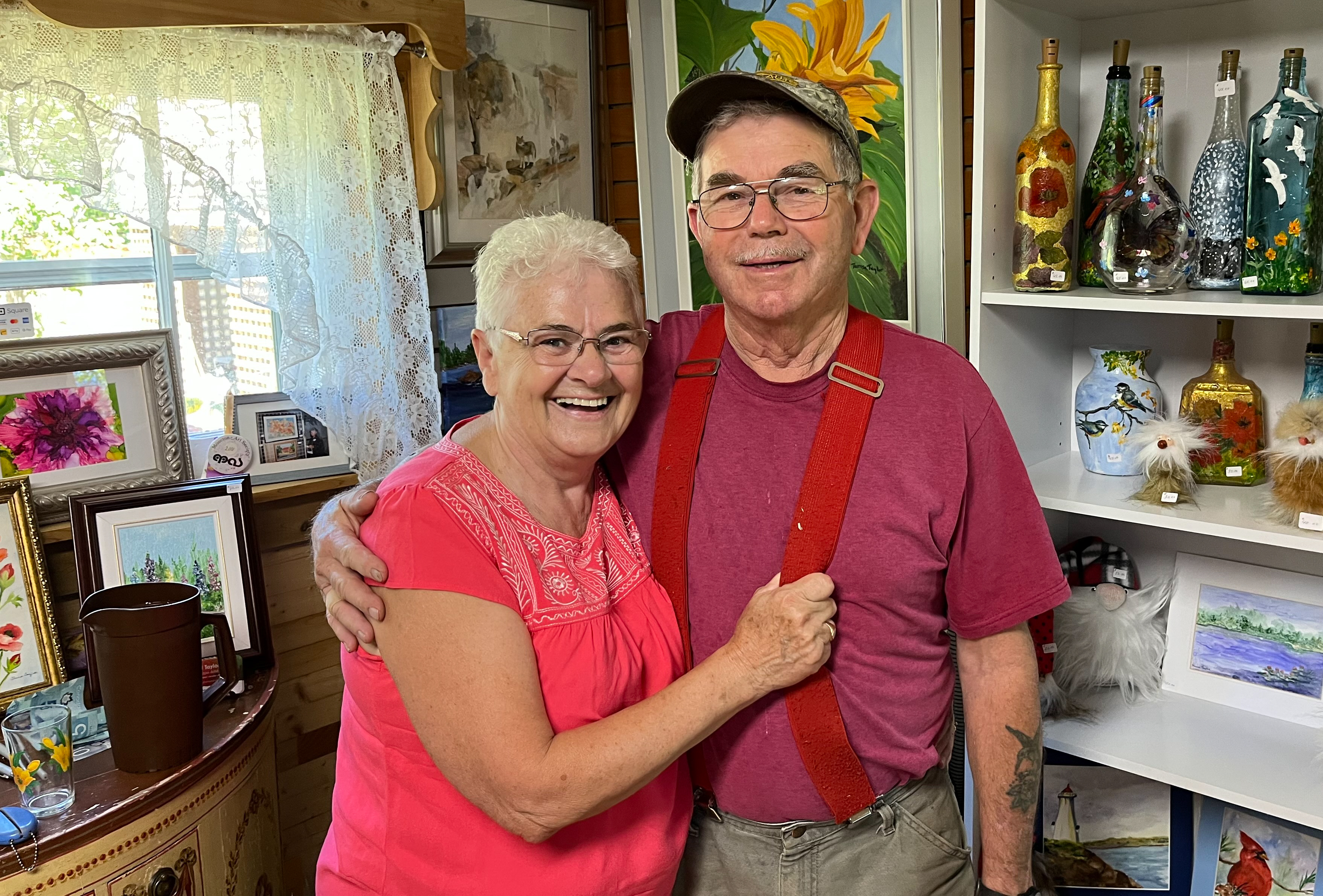
Theresa and Burl Taylor are about as happy couple as I ever met. Married just 52 years ago they were most welcoming to the three of us as we asked (we would have begged) for water. Theresa has maybe 200 natural setting paintings here in a small shed which she had created. She has experimented with various artistic methods from watercolors to oils, flock to canvas and many other methods I had never heard of. Being efficient walkers, we opted to buy a few beautiful refrigerator magnets that pretty much exemplified her work in miniature.

Burl came by with a big pitcher of water and we began talking about life out here as we began to revive. They had moved into a smaller version of this home 50 years ago and discovered this was the place they always wanted to be. Years went by and Burl expanded the house, built a garage, chicken coop, workshop and swimming pool. Much of this prior to his retiring as a forestry engineer. His property and projects look like he put a lot of thought into them.

Theresa is a self-taught artist. As she describes it, one day she just started scribbling and copying things until she began painting a scene, going over and over it until it was right. She presented it to Burl and said this is what she wanted to do and he agreed. Decades later she continues to paint, mainly for the pleasure of it. She painted so much they needed to move some out pieces and Taylor’d Art was born.

They had a son who Theresa mentions often as he developed into an talented artist who’s paintings she still sells. Unfortunately, he passed away a while ago but you can tell he’s very much part of their lives.

There are no other children but a very large extended family. Theresa was one of 21 children! Her mother, whom they speak about with reverence, gave birth to all 21 children individually, no twins or triplets! And, she passed away at the age of 46 due to cancer. Theresa said she spent a great deal of her time with her many siblings and keeps in touch with them often. We are in awe. Can you imagine what a family reunion must look like?

After much water and talk we had to go. Time is very unforgiving when you are walking. I think they enjoyed our company as much as we did their’s. We could have easily stayed for hours learning more about how Theresa and Burl share what they do together – their art, building, hunting, fishing, getting by in the winter and the life between them.

When you are out here you have to be flexible, forgiving, innovative and self-reliant. The Taylor's have figured a way to make the most of their lives and offer an oasis to others.

One Night Stays

Just getting started on our walk. Getting adequate sleep in strange places is a must.

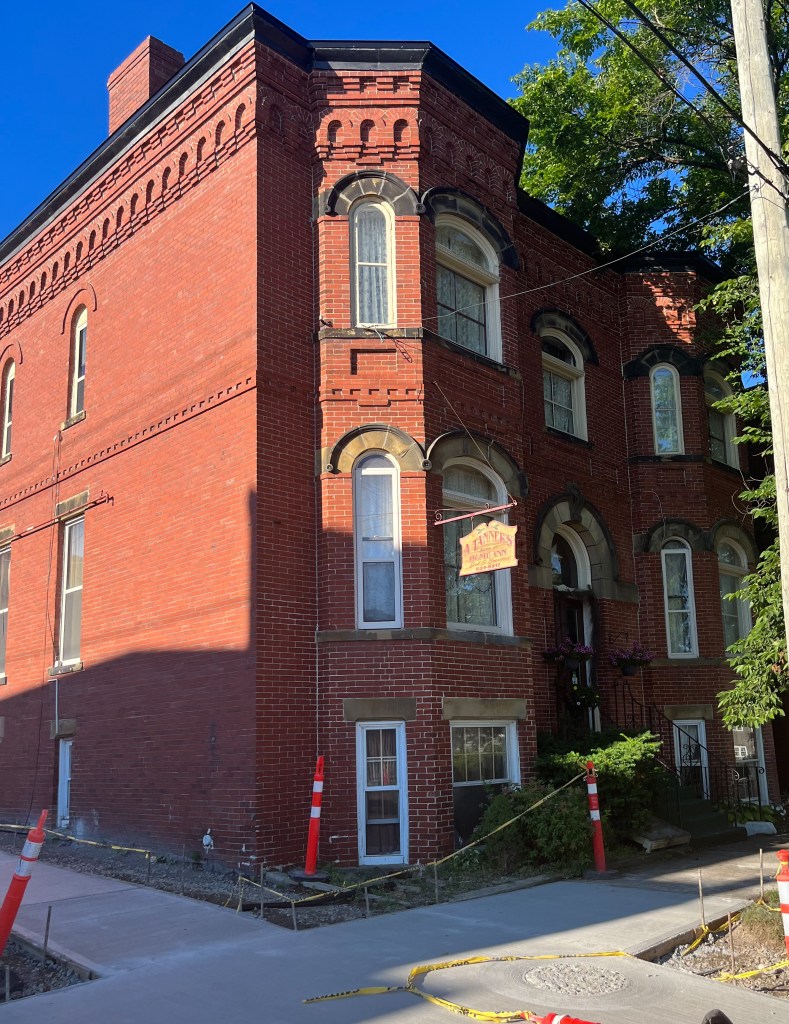
Jul 31 – Day 1 Walking – Sunday was our first full day in Canada. Tom and I stayed Saturday night  at “A Tanner’s Home B&B” which was once a curiously old (148 years old) home of a wealthy gentleman who made his fortune in tanning leather goods and real estate. Today, it was an airbnb-like home which had a 1800s historical vibe but updated to accommodate tourists. It’s still a work in progress.

A Tanners Home B&B, Saint John NB

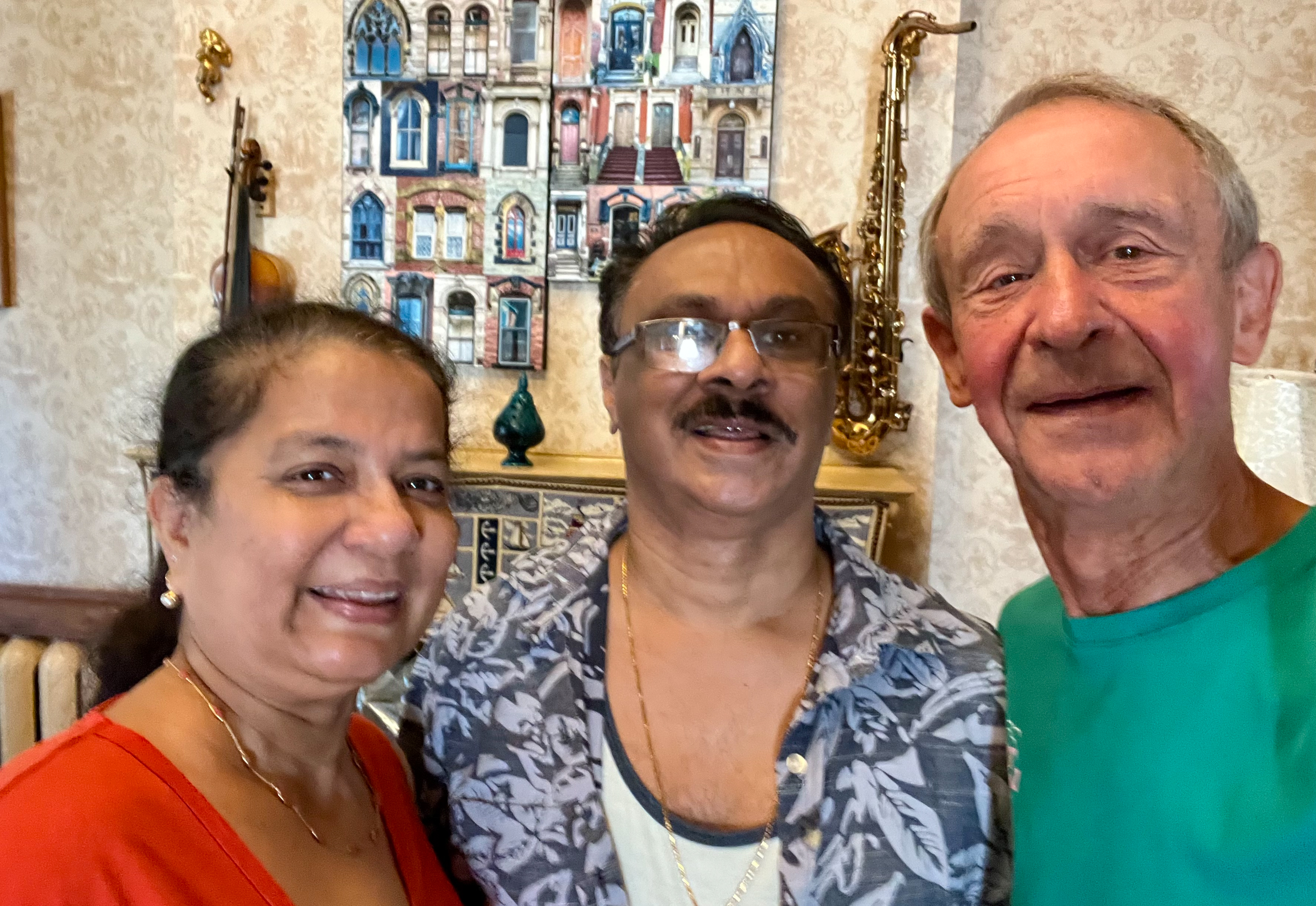
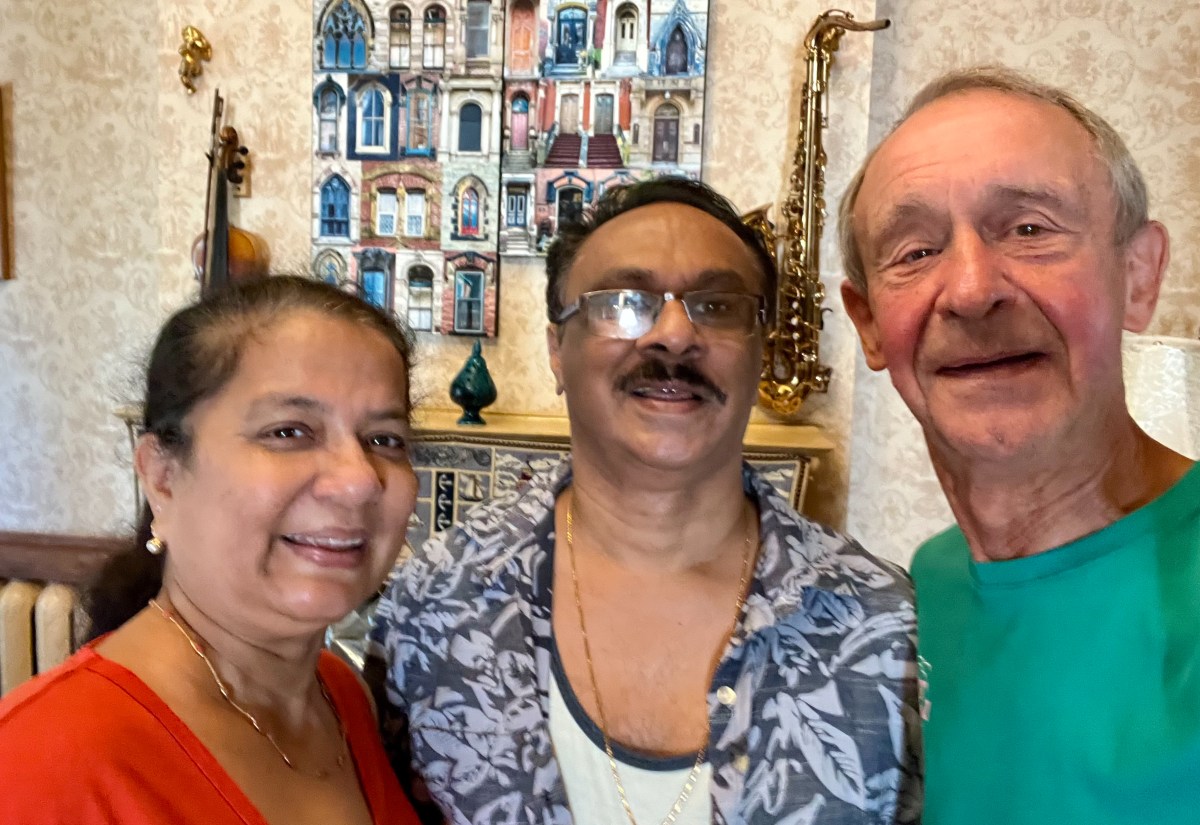
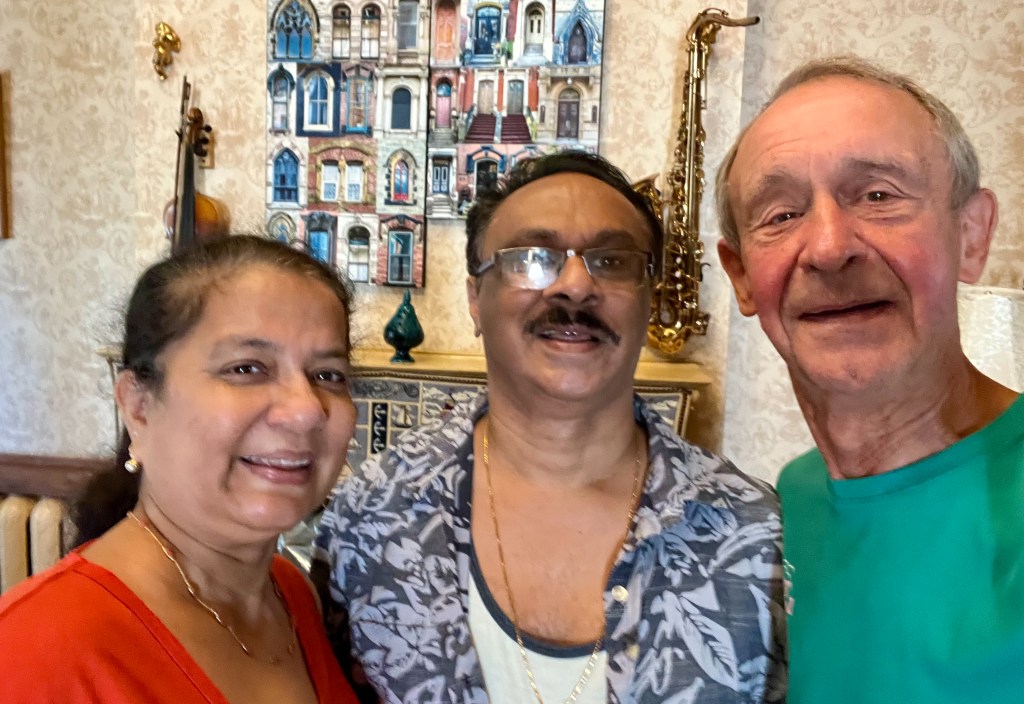
Our hosts, Doreen and Sebastian were proud ex-pat Indians who found their formula for retirement hosting this B&B in the warmer months and flying back to Mumbai the rest of the year. Sebastian, a former sea captain, hates the cold but loves Canada. 

Like many parents in search of the best for their family while planning for the next phase of retirement, Canada seemed to fit. There is an active Indian population here in Saint John and a government more inclined to take in immigrants than most. The price you pay is an investment of capital in a legitimate ongoing business to get the benefits of citizenship. This enabled Sebastian to send his kids to Canadian universities where they established residency in Toronto.. They are planning that big wedding for their daughter who had to marry quietly during the pandemic. Hope is that grandchildren will soon be in the picture.

Tom and Loredana – Proud of finishing the half marathon in Saint John

Meanwhile, Tom and Loredana set out on on Sunday to run a half marathon before we started our long Beyond Borders Walk later that day. The “Marathon by the Sea” mostly follows the pedestrian trail along the waterfront and ends around noon. After a shower and change, the four of us begin walking the trail out of Saint John, heading for St. Stephen an almost unimaginable 125 miles away. But today we planned an easy day of only 7 miles to get to our next destination, the Regent Hotel just on the outskirts of Saint John. 

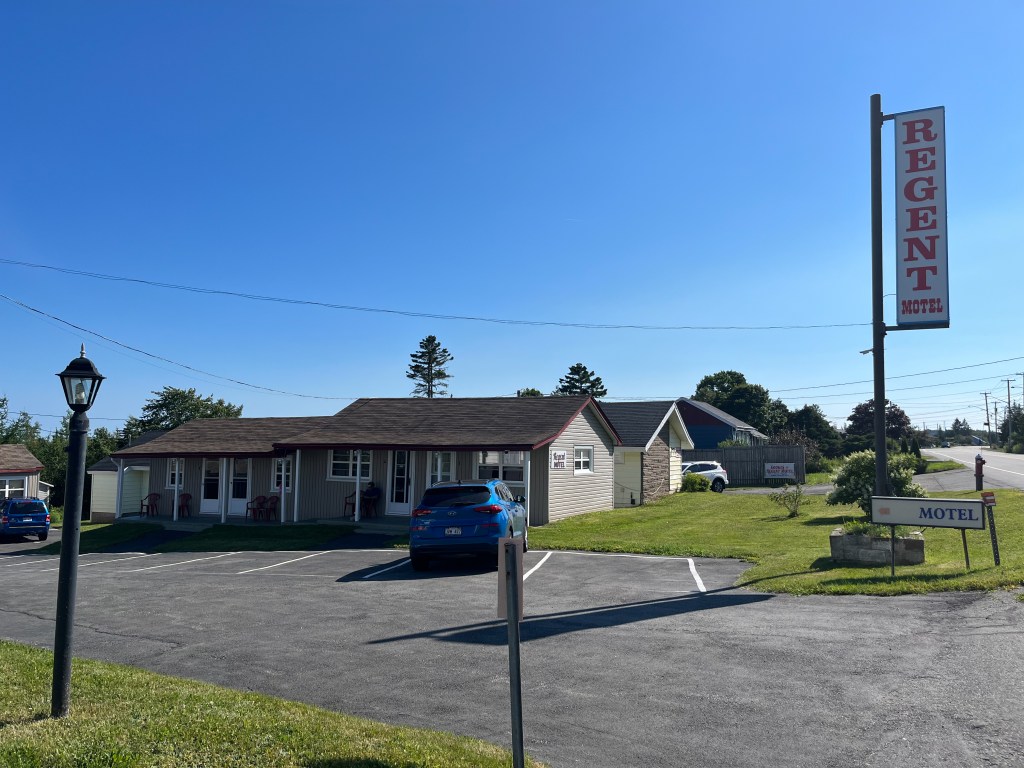
Regent Motel – 2nd night

The Regent was as basic a motel as you could get. But it helped us get a start on the journey. Rooms were dingy but clean. Little tiny soap bars, shampoo in sealed envelopes and no air conditioning. Luckily the single ceiling fan was all we needed. The only problems were no coffee and no place to eat within walking distance. Luckily we found a restaurant that delivered in this remote outskirts of Saint John. With pleasant weather and a single outdoor picnic table the four of us shared a good-enough Chinese dinner.

Its not difficult to find people that want to talk to strangers here at the motel or anywhere in this area. One couple was coming from Manitoba with plans to retire in Nova Scotia. Another guy, with sunburned face and head, struck up a conversation about how he had moved to Alberta only to find his partner had decided she need to be alone. Now he was back to rekindle a relationship with his children and grandkids. Glad to be back “home” he looked forward to seeing his son drive race cars. His sunburned head and face were proof of how he just witnessed a drag car hitting 210 miles per hour. A happy camper glad to be back.

Motels and B&B’s serve a useful purpose in helping us move on. We need sleep to move forward in the morning. But, every host and guest has a story from the past and a story yet to come. 

Check out more information and stay up to date on the Beyond Borders Walk here.