A New Branch for STEM

My recent visit to Students 2 Science’s Apollo Technology Center offers hands-on STEM experiences, aiming to inspire underserved New Jersey students. By fostering curiosity and ambition, S2S cultivates future innovators, relying on corporate and individual support for its mission.

I recently had the opportunity to visit a new kind of technology center designed not just to educate, but to inspire students in STEM (Science, Technology, Engineering, and Math) through hands-on experiences. Students 2 Science’s Apollo Technology Center is an ambitious new facility devoted to giving every New Jersey student, especially those from underserved communities, access to real-world science.

Welcome to S2S Tech Center
Students 2 Science Welcome

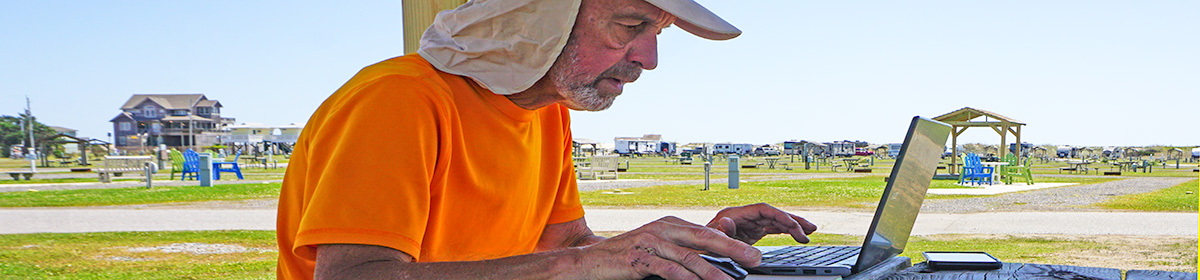
As a self-identified techie (at least I used to be), I’ve always been drawn to science, even if math was never my strongest subject. What has always fascinated me is how science and technology can amaze us and improve our lives. That’s probably why my career centered on using technology to solve problems and make things work better.

Today, science faces growing skepticism and misinformation. Healthy questioning is one thing, but the outright rejection of evidence and expertise has become troubling and discouraging for young people who might otherwise pursue careers in the sciences.

My son-in-law, John Dempsey, a trustee of Students 2 Science (S2S), had long spoken highly of the organization and invited me to the opening of their brand-new Apollo Technology Center. I knew little about how science is taught today or what truly motivates students but I was eager to find out.

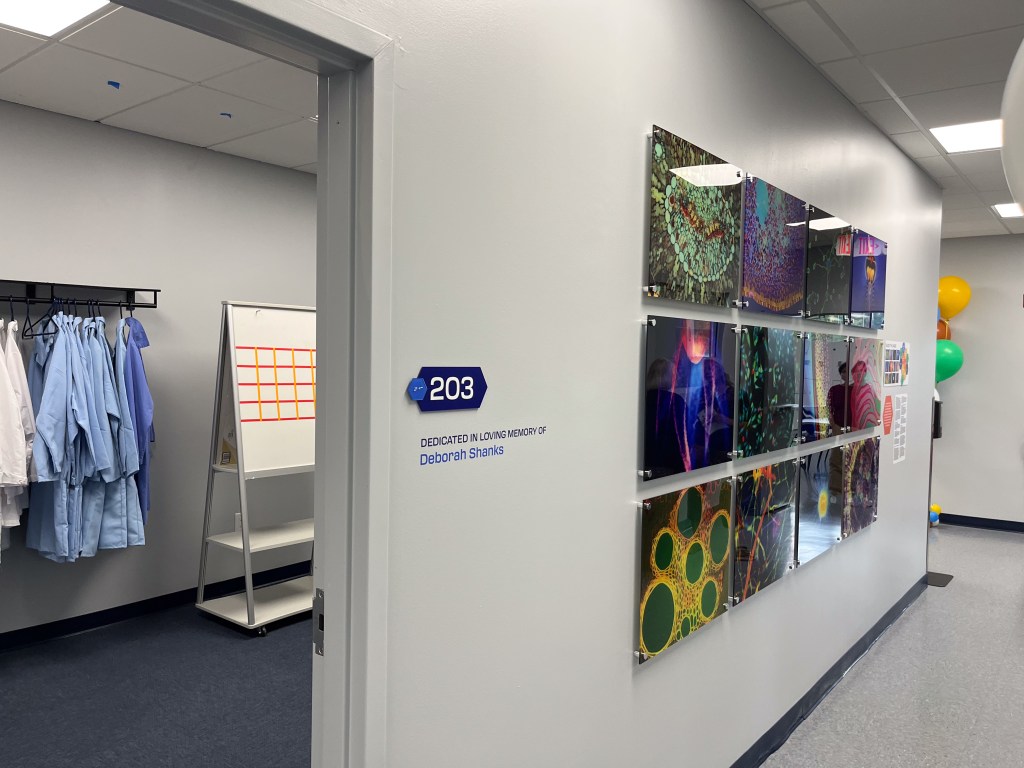
What I discovered was an impressive nonprofit that has spent years building a professional team of educators, corporate partners, and volunteers dedicated to one mission: making STEM education accessible to all. S2S has already reached nearly 250,000 students across Newark and 25 other New Jersey school districts. The Apollo Center in Whippany, a newly renovated, 20,000-square-foot facility in a once-vacant office building, represents the culmination of those efforts. I wanted to see firsthand how science itself could be re-imagined to inspire the next generation.

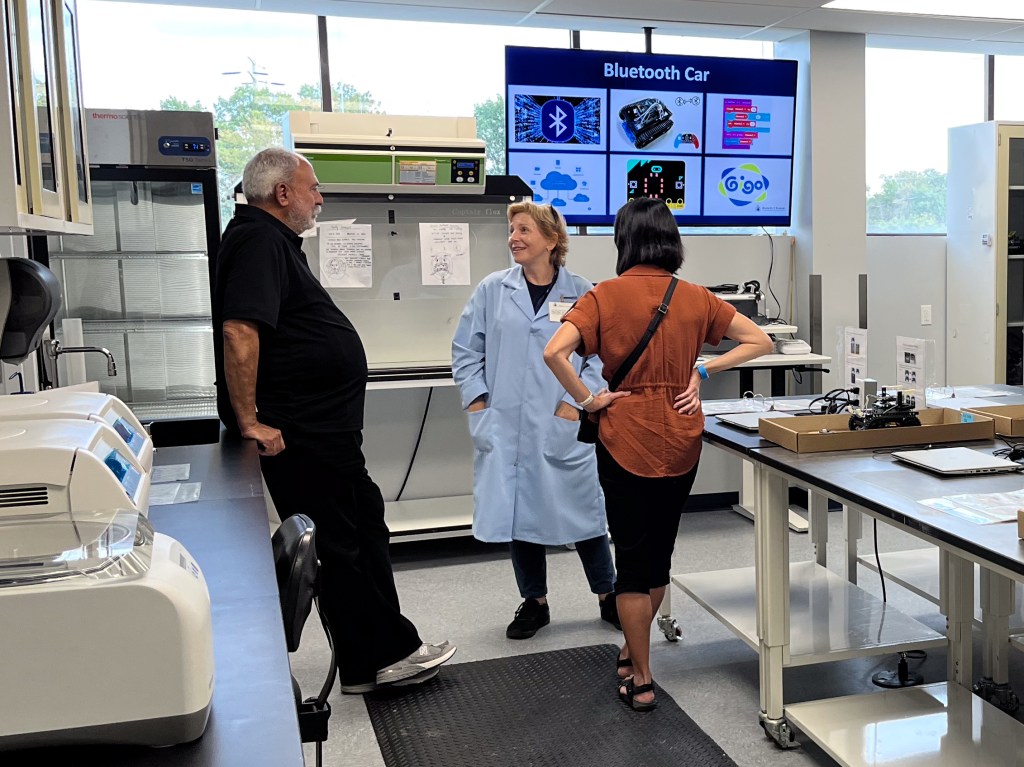
During the Open House, visitors could tour the labs and classrooms of this unique facility. I watched demonstrations in ecology, electronics, communications, biology, and medical science. The equipment was modern and professional-grade; the instructors and staff were enthusiastic and eager to share their work.

Two labs especially stood out. The Virtual Lab featured a microscope linked to a digital display, allowing instructors to project real-time images, like a magnified view of bees, to large monitors and even broadcast them live to classrooms across the state via Zoom. Few school districts could replicate this kind of technology and expertise on their own, but through S2S, they can all share in it.

Virtual Lab

The Medical Diagnostics Lab was equally impressive. Designed for high school students, it simulates real-world medical problem-solving. Teams of students are presented with a (hypothetical) patient in crisis and use vital signs and blood test results from actual diagnostic equipment to identify the condition and propose treatment. It’s the kind of immersive, problem-based learning that makes science come alive.

Medical Diagnostic Lab

Experiencing the energy of these labs and meeting the scientists, educators, and volunteers behind them convinced me that Students 2 Science offers something truly special. Programs like this not only teach skills, they spark curiosity, confidence, and ambition. With the growing demand for professionals in science and technology, we need more initiatives like this to cultivate future innovators.

Students 2 Science is a nonprofit organization that relies on the generosity of its corporate partners, volunteers, and donors. Companies can contribute equipment, expertise, and mentorship, while individuals can volunteer their time or make donations to support the mission.

If this new “branch” of STEM education is any indication, the future of science in New Jersey and beyond is looking bright and growing.
A Review – The Ministry for the Future

A review of a 2021 sci-fi book of how we confront a huge world-wide crisis, globally join forces to avert environmental disaster and create a new future for the planet. Is it wishful thinking?

The following is my Goodreads review of a 2021 sci-fi book that may be fiction but optimistically expands on current technology, some new scientific ideas and a global willingness to confront our environmental disaster. Where most science fiction stories paint a grim picture of the future, this one is a story of how we beat the odds and created a wiser and more humane world.

While much of Robinson’s works have described the far away future, this book contemplates a horrific disaster only years away that is the catalyst for finally changing the way we treat our environment on a global scale. Totally impossible to believe on its timescale and scope of change, it nevertheless provides some hopeful consolation that a bright future may still be possible for our planet.

PK

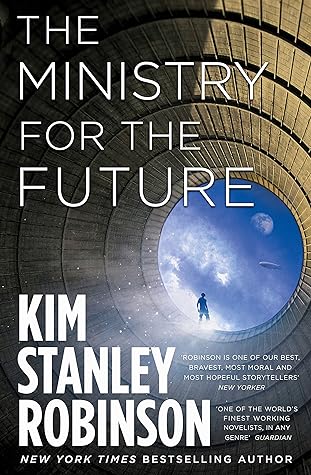
The Ministry for the Future
 by Kim Stanley Robinson

 My rating: 3 of 5 stars


I’m generally not a sci-fi reader unless a book is strongly recommended or I hear it contains some interesting new ideas. The author KSR is obviously well known for his thinking and writing about the future by extrapolating present ideas or emerging technologies. I learned about this book while following Molly Wood’s “Everybody In the Pool” newsletter and podcast on environmental tech. There really is a growth of invention and investment in that sector – affirming a reality that there is capital and interest in solving our doomsday environment conundrum.

While this book has a weak storyline, it grabs the reader at the beginning with Frank living through the horrors of “The Great Indian Heat Wave” an event that kills millions within a single week. It shocks the entire world into finally becoming aware that the environmental problems need to be addressed. What seems to be implausible is that India becomes the model for solving these issues and the rest of the world seems willing to actually act together in solving it on a global scale. The Ministry of the Future become the catalyst for laying out big plans and our protagonist, Mary, is the cool director of the Ministry that can save the planet.

KSR asks us to believe that countries just a few years into the future will be willing to see past the politics and change their nationalistic attitudes for the good of the planet. Even China is seen as an enlightened, wise collaborator. This collaborative approach causes the planet to see benefits quickly with innovative solutions and within one lifetime.

Like most who read this book, I really enjoyed the innovative solutions that KSR presents like a carbon capture coin investment strategy (similar to bitcoin), pumping up trapped water from the polar icecaps, swarm drones, wide use of airships and the birth of a new beneficial social network. There’s even a mind-bending thought of using sanctioned positive terrorism on the bad environmental actors. His material is best with creative new ideas that have some basis in fact today. If only they were that simple to evolve.

After the initial few exciting chapters, the book shifts back and forth between different points of view and how the evolution of the Ministry creates the bureaucratic plan. The environment improves quickly. The storyline seems lost but observations on possible new solutions are worth the read. The Ministry has helped create a world that works together living peacefully on the same planet.


View all my reviews