Haunted by Images: Review of “The Rest is Memory” by Lily Tuck

The dreams and nightmares of a 14 yr old Auschwitz prisoner is part of what has been haunting me. Ghosts are all around and are trying to warn us.

Visiting Auschwitz was a profoundly emotional, yet strangely analytical experience. Your senses and mind struggle to comprehend the unimaginable atrocities that unfolded there.

Since that visit, I’ve often felt haunted by echoes of what I witnessed. Evidence of this haunting continues to surface.

Shortly after our trip to Poland, I watched A Real Pain, a film about two Jewish cousins, David (Jesse Eisenberg) and Benji (Kieran Culkin), on a Polish heritage tour. While the film is mostly a comedy, their visit to the Majdanek concentration camp bore an unsettling resemblance to my own experience.

Not long after, The Zone of Interest was released. The film focuses on Auschwitz commandant Rudolf Höss and his wife Hedwig, who live a comfortable family life just beyond the fence of the concentration camp. In their home, domestic routines play out against the distant backdrop of prison sounds and the ever-present specter of death.

More recently, I read a review of Lily Tuck’s book in the New York Times. The book, inspired by a single photograph of a 14-year-old girl, imagines the life of an inmate before and during the Holocaust. That led to my expanded interest in the holocaust.

Then came Holocaust Remembrance Day, marking the 80th anniversary of Auschwitz’s liberation. Media coverage was filled with stories from the few remaining survivors, all children during that horrific time. Their voices served as reminders that the past still lingers.


My Goodreads Book Review: The Rest is Memory

It was less than a year ago, on a heritage tour of Poland, that I had an opportunity to visit the Auschwitz-Birkenau Museum. That visit was still fresh in my mind. So, when I learned of Lily Tuck’s new book The Rest is Memory,” a portrayal of a young prisoner, I immediately dove into the book to see if it could provide a perspective of what it was like as a teenager to experience this manufactured hell.

Visiting Auschwitz is an otherworldly experience. The tour is an extremely efficient, almost military process, led by knowledgeable docents who lead you through various buildings and exhibits. The guide touches on who was imprisoned there, how they were treated and the unfathomable amount of death and destruction that occurred. The fact that over a million prisoners died in this one camp, the great majority between just 1942 and 1944, is hard to comprehend.

To see my personal remembrance of the tour click here.

There is a special quiet and solemn feeling shared by all throughout the tour. Occasionally, you would hear someone in the tour breakdown in tears. But, most of us were absorbed in trying to comprehend what happened and how we could reconcile that with our understanding of humanity. Our tour guide explained in simple, cold terms the operation of the camp and how a prisoner might live and die here. The grounds and exhibits were obvious evidence of the holocaust.

Seeing prisoner ID portrait photos on a wall was my most vivid memory. They personalized life in a concentration camp. No photo could even begin to tell the story of what a person went through, although they looked like they knew what was ahead. However, there were some survivors, including the camp photographer, Willhelm Brasse, who managed to save 40,000 photos along with his memories.

The Rest is Memory is a story of the star-crossed life of Czeslawa Kowka, a 14-year old female prisoner, who’s camp portrait became an obsession for Tuck as she imagined what it must have been like for her. It is told in a style that recalls my Auschwitz tour guide’s careful, factual and unemotional telling. The language is sparse and almost banal. There’s no need here for elaboration or exaggeration when imagination based on facts is a more powerful agent.

Czeslawa’s personal story is necessarily made up by Tuck. Czeslawa was tattooed as prisoner number 26947 and immediately lost her identity when she arrived in Auschwitz in 1942. There is little trace of her real life, except for a few basic facts like birth date (August 15, 1928), internment date (December 13, 1942) and death (March 12, 1943). Tuck appears to have looked back at her hometown area and constructed a possible tale of a normal life before the Nazi invasion. Its a life of a pre-war ordinary teenager with a romantic interest in Anton, an older guy with a motorcycle. She’s close with her mother Katarzyna, friends, community and church (she is Polish Catholic). Although she has an abusive, distant father, she has an enjoyable life and a promising future, maybe even as a teacher. All this will be violently taken from her within a couple of years.

Tuck seems just as committed to telling the horrific story of how the Polish people were completely controlled and abused. The Nazis declared war on Poland in September 1939 and in twenty-six days gained full control of the entire country. Hitler declared “The destruction of Poland is our primary task.” Germany needed “Lebensraum” (living space) for its survival and expansion. Most of the populations of Central and Eastern Europe would have to be removed permanently through mass deportation, extermination, or enslavement. The country of Poland was to be resettled with Germans.

Czeslawa lived in the small town of Wólka Złojecka outside of the historic eastern city of Zamosc. This area would be among the first to be repopulated in 1941. Over 110,000 would eventually move. She and her mother were forced off their farm with other women and eventually sent to Auschwitz to do forced labor. We learn her father (Pawel), uncle and other farmers in her village are shot and buried in a mass grave. Her would-be boyfriend Anton escapes on his motorcycle only to be beaten, imprisoned and die in Russia. Even though Russia fought Germany, it also had its designs on Polish territory and inflicted its own cruelty on the Poles. There appeared to be no escape for the Poles.

The book alternates timelines: from a broad historical view, to the innocent mind of a young girl before all this happens and then to the mundane sadness of a prisoner of which there is no hope. Although we don’t dwell on the suffering it seems to be everywhere. If you juxtapose that with the privileged life of the SS guards and their Commandant Rudolph Höss, it becomes hard to imagine a crueler place.

Pleasant and unpleasant memories are all that are left for Czeslawa. Occasionally, there are flashes of what might have been. Dreams of food, friends, wizards, dragons and even dogs are all warped by the environment where scarcity is everywhere and hope is nowhere to be found.

The book weighing in at 112 pages is a blessedly short read. My normal reading self would have craved for more details. But, I think in this case, Tuck sets the limit on what we need to know. For me, reading The Rest is Memory was like re-visiting Auschwitz. It is not a pleasant experience but a re-awakening of my senses and imagination. Unfortunately, we see many of the same cruel signs of those times around us today. Its always worth considering what are the limits of humanity and acknowledge that if it happened once, it can happen again.

A Review – When Harry Met Pablo

An interesting and obscure story of how cultural change in art and politics clashed and came together – at least briefly and symbolically – when Truman meets Picasso.

The following is my Goodreads review of an interesting historical period of change in the art world and in politics during the Cold War period. Truman, who was responsible for using the Atom bomb to end the war and in the act destroyed thousands of lives, meets Picasso who was a staunch pacifist and communist supporter. Truman sees “modern art” as “ham and eggs art” but recognizes Picasso’s talent and fame. Both are at the twilight of their careers.

Through a brief history of how modern art began to flourish and how politics was woven into art, Algeo provides and entertaining look at how the times changed art, politics and maybe even personal attitudes.

PK

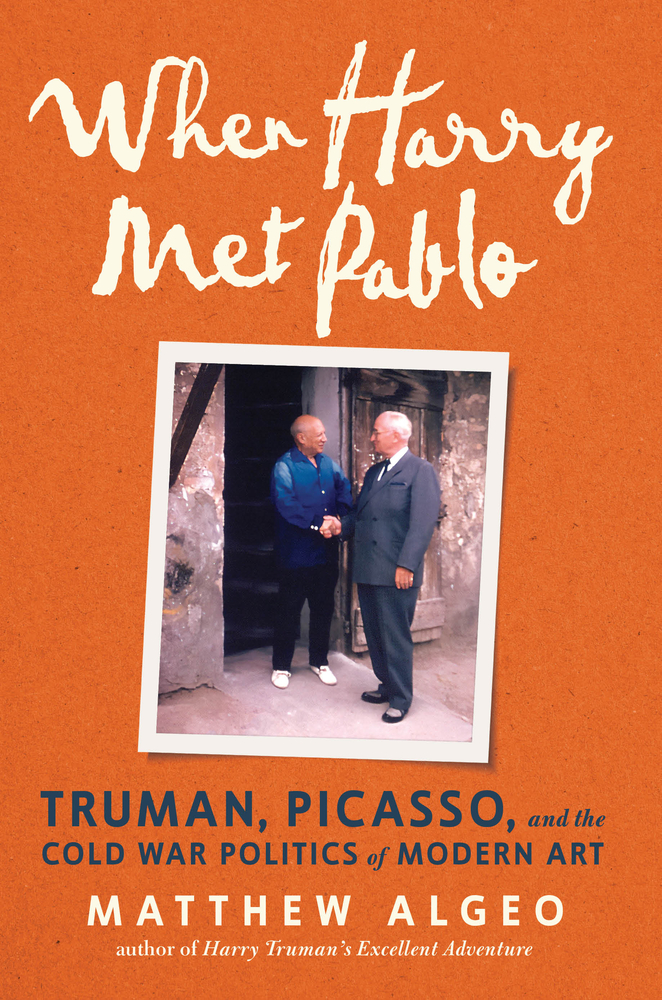
When Harry Met Pablo: Truman, Picasso, and the Cold War Politics of Modern Art by Matthew Algeo

 My rating: 4 of 5 stars

In the great tug of war of existential beliefs, there’s always a point and counterpoint. But, it’s a universal law that everything changes with the passing of time. Maybe we soften or maybe we learn to live with opposing points of view. This is a story of how contradictory lives and beliefs co-exist and come together, at least briefly, in odd and unexpected ways.

A photo of Picasso shaking hands with Truman seemed to have been the perfect set piece for Algeo’s travel back in time to explore a hopeful period where stark contractions co-existed. It was clear. There was a good, bad and ugly. But, in the post World War II era everything was re-aligning in art, music and politics.

Their 1958 meeting occurred during the cold war after one of the most violent and consequential periods known to man. Truman, a popular democratic everyman, used his might to win a war by unrepentantly authorizing the killing of millions to justify the end. Picasso, on the other hand, was a famous recluse artist who promoted peace and was an unrepentant communist. They were polar opposites in almost every way. If a photo is worth a thousand words this one was worth a thousand questions,

When Harry Meets Pablo provides an intriguing history of how the definition of art was changing in the mid 1900’s. The first half of the book paints a picture of how America was reacting to the awakening of a new form of “modern art” exemplified by Picasso and other European artists. The book discusses how the new art form was received and nurtured by creating such institutions as MoMA. Special gallery events and even a traveling show were promoted to allow the public to experience the new form of art. Even the government promoted a cultural awakening to art through the Advancing American Art program.

At the time of the “red scare”, a relatively unknown, but deeply conservative, Republican Michigan congressman named George A. Dondero played an outsized role in stopping government art programs, much as was played out in the McCarthy hearings at the time. He declared modern art an infiltration of communism and blacklisted many artists as communist sympathizers – even though communist dictators like Stalin would have nothing to do with it.

Slowly, in America, the existing convention of realistic art gave way to an acceptance of the modern style by the middle of the century. But not everyone agreed that this was “art”. Truman, for one, often called it “ham and eggs” art disparaging the skill and impact it had. He was not alone. But at least Harry appreciated the difference of opinion and fought for an artist’s freedom of expression.

The second half of the book offers a unique look at a world attempting to regain its post-war balance. After his presidency, Truman planned to slip away to his Missouri home from Washington on a public train and once again lead a normal civilian life. Harry soon learned that the public was still interested in his life and thoughts. He was chased down by fans and the press everywhere he went.

Sam Rosenman, an ex-judge and close advisor to Franklin Roosevelt helped create the New Deal strategy. He was to continue to become a “consiglieri” to Harry while he was president. He and his wife Dorothy became close personal friends with Harry and Bess. Sam’s law partner Ralph Colin, a well-known collector of modern art and trustee at MoMA, educated Sam on the new modern style. Soon, Rosenman and Truman were two friends with at least one contrary point of view – “What is art”?

Truman asked Rosenman and his wife Dorothy to join him and Bess on a European vacation in mid-1958. The cross-Atlantic voyage by ship would take them to ports in Italy and eventually Cannes in France. Coincidentally, Picasso’s home was in Vallauris, in the hills above Cannes

A plot for a meeting was apparently hatched clandestinely by Alfred Barr, founder and chief executive of MoMA who had helped Picasso gain recognition in America and wanted to promote modern art. Truman a family man of modest means was to meet Picasso, a rich and famous womanizer at Picasso’s home. No doubt Sam Rosenman also had a hand in arranging the meeting. But how was that to be done when the two men, in the twilight of their careers, seemed to have nothing in common except their age?

Here’s where the story becomes hazy as Picasso, famously a recluse, graciously agrees to meet with Truman at his Villa La Californie for the day. The Truman’s and Rosenman’s spend most of the day together with Picasso graciously showing them around his studio and nearby town famous for his pottery. There is no real reporting of what transpired between them but photos seem to reveal a cordial if not enjoyable visit. We see photos and speculate what that day might have been. The rest is up to our imagination.

The meeting made a small story buried in the news, as other world events stole the limelight. We don’t know if the meeting made an impact on anyone. Perhaps it just was a courteous and friendly call or maybe a sign that time had soften the difference between different points of view. Not knowing the details, leaves the reader with unanswered questions of what might have happened when opposites come together.

View all my reviews

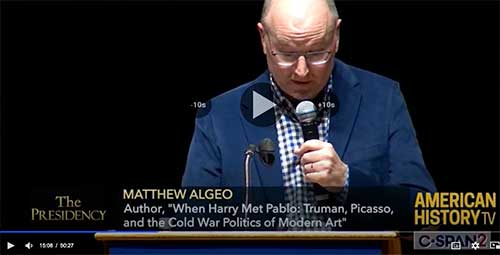
Click below for Matt Algeo’s entertaining November 2022 book presentation at the Harry S. Truman library via CSPAN.

A Review – The Ministry for the Future

A review of a 2021 sci-fi book of how we confront a huge world-wide crisis, globally join forces to avert environmental disaster and create a new future for the planet. Is it wishful thinking?

The following is my Goodreads review of a 2021 sci-fi book that may be fiction but optimistically expands on current technology, some new scientific ideas and a global willingness to confront our environmental disaster. Where most science fiction stories paint a grim picture of the future, this one is a story of how we beat the odds and created a wiser and more humane world.

While much of Robinson’s works have described the far away future, this book contemplates a horrific disaster only years away that is the catalyst for finally changing the way we treat our environment on a global scale. Totally impossible to believe on its timescale and scope of change, it nevertheless provides some hopeful consolation that a bright future may still be possible for our planet.

PK

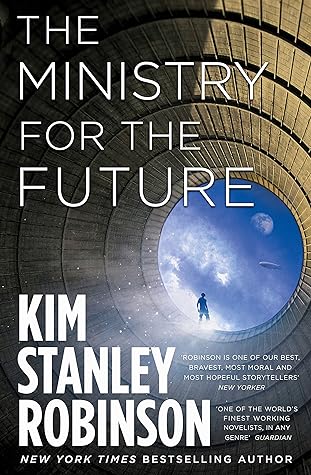
The Ministry for the Future
 by Kim Stanley Robinson

 My rating: 3 of 5 stars


I’m generally not a sci-fi reader unless a book is strongly recommended or I hear it contains some interesting new ideas. The author KSR is obviously well known for his thinking and writing about the future by extrapolating present ideas or emerging technologies. I learned about this book while following Molly Wood’s “Everybody In the Pool” newsletter and podcast on environmental tech. There really is a growth of invention and investment in that sector – affirming a reality that there is capital and interest in solving our doomsday environment conundrum.

While this book has a weak storyline, it grabs the reader at the beginning with Frank living through the horrors of “The Great Indian Heat Wave” an event that kills millions within a single week. It shocks the entire world into finally becoming aware that the environmental problems need to be addressed. What seems to be implausible is that India becomes the model for solving these issues and the rest of the world seems willing to actually act together in solving it on a global scale. The Ministry of the Future become the catalyst for laying out big plans and our protagonist, Mary, is the cool director of the Ministry that can save the planet.

KSR asks us to believe that countries just a few years into the future will be willing to see past the politics and change their nationalistic attitudes for the good of the planet. Even China is seen as an enlightened, wise collaborator. This collaborative approach causes the planet to see benefits quickly with innovative solutions and within one lifetime.

Like most who read this book, I really enjoyed the innovative solutions that KSR presents like a carbon capture coin investment strategy (similar to bitcoin), pumping up trapped water from the polar icecaps, swarm drones, wide use of airships and the birth of a new beneficial social network. There’s even a mind-bending thought of using sanctioned positive terrorism on the bad environmental actors. His material is best with creative new ideas that have some basis in fact today. If only they were that simple to evolve.

After the initial few exciting chapters, the book shifts back and forth between different points of view and how the evolution of the Ministry creates the bureaucratic plan. The environment improves quickly. The storyline seems lost but observations on possible new solutions are worth the read. The Ministry has helped create a world that works together living peacefully on the same planet.


View all my reviews

A Review – Richard Ford’s Be Mine

Here’s a review of Richard Ford’s latest novel in the Frank Bascombe series. Frank has his son’s health problem to deal with as well as reconciling his past, present and future as he ages.

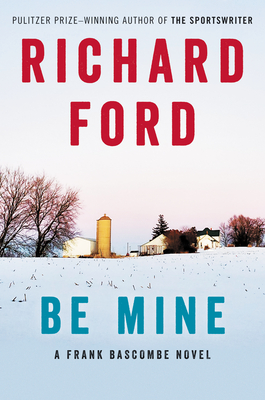
The following is my Goodreads review for this new Richard Ford book, one of my favorite authors. Ford’s famous for his character Frank Bascombe, a fictitious character now appearing in a fourth Bascombe novel. He’s full of wisdom and wit and always a pleasure to read. His everyman characters live ordinary, yet unique lives set in places and people you recognize – including many places in New Jersey! This one takes place mostly in a cold mid-west winter under uncomfortable circumstances. Not a joyful read, but always entertaining.

PK
Be MineBe Mine by Richard Ford
My rating: 5 of 5 stars

Wisdom is the currency Frank Bascombe has to offer readers who choose to explore the pages of Be Mine, or for that matter any of the other four Bascombe novels on living a life in these times. When I plumb my life (I’m 75) at the age of Frank (He’s 74), I can’t help but think he knows exactly where I am and what I’m thinking and experiencing.

Crafted by an extraordinarily talented writer and storyteller, Ford can make even the drollest facts interesting and draw you into a storyline that might otherwise turn off readers. The art is in the storytelling. His subtle magic will suck you in as you begin to discover a reality and hope that exists at any age.

Here he starts by posing the question, “What exactly is happiness”? Putting the messy details aside, he posits that it may be as simple as the “absence of unhappiness”. Yet how do we become and stay happy? Frank is reminded of this by memories of his mother and a high school reunion which impress upon him the secret of life is just to be happy; as if we could tailor our our actions and our circumstances to make it so.

Frank is in the that retirement stage of life of being partially connected to an old career by shifting into an easy, part time job working for Mike Mahoney, his ex-real estate partner who remains a friend and ally to Frank. Those past tumultuous years (documented so well in all the Frank Bascombe novels) of being a writer, teacher, real estate agent, husband, father, lover and friend have gone by. Life is simpler now with a stressless job, a few trusted friends, a comfortable home and a realization of his successes and failures in his life, family and career. In a word, Frank is “happy”. That’s not in a joyful way but in resignation. The absence of unhappiness gives him no right to complain.

Frank has previously survived a young child dying, a divorce, an estranged daughter, a second wife leaving him and numerous other challenges that life has put in front of him. Yet through all this he has found that life is good and there’s little left to go after. It is a waiting game as to what’s coming up next?

Frank’s immediate dilemma that has shaken his world is the fact that his 47-year old bachelor son, Paul, has been given a terminal diagnosis of fast staging ALS. Paul lives alone but near his dad. His sister can provide limited help remotely. So, Frank decides his life must change as he moves from his comfortable home in New Jersey to Minnesota to assist him. Suddenly, Frank is shaken from his comfortable “happy” life with the idea that he must do something to help Paul.

Knowing Paul’s ildeocycrancies – he has many – Frank offers to take him on a crazy last car trip to visit the Badlands and Mt. Rushmore. It’s a quirky road adventure that fit both their personalities and the bizarre timeline they find themselves in. This is mid-winter, February (around Valentine’s Day) at the Mayo Clinic where Paul is a participant in an advanced ALS research program which only leads to the prognosis that he has little time left.

It’s a story of both father and son estrangement and love for each other. Maybe the biggest gift they can give each other is their remaining time together. Both share a similar sense of humor in their dialog that offers the reader a hundred different funny and entertaining moments they share together, for the last time. Both are self-deprecating. Despite his serious disease Paul insists on calling his ALS condition “Al’s). Paul’s life career goal was to be a ventriloquist which never fully materialized. But his years developing greeting cards for Hallmark shows in his dialog with Frank.

Ford knows how to make the most of words and branding to help bring home the commercial and absurd aspects of our everyday lives. For example, he points out businesses like “Free Will Cleaners, Lint Free or Dye”, “Little Pharma Drugs” and “Vietnamese-American Hospitality”. One of Paul’s favorite t-shirts says “Cornhole IS America”. Many commercial brands from Walmart to Starbucks to Dunkin Donuts are woven into the story which lends to its legitimacy.

The adventure takes him through mid-western America as two keen observers like modern-day Tocqueville’s. Visits to the Comanche Mall, the Northern Lights Octoplex. the Corn Palace, Fawning Buffalo Casino and Mt. Rushmore tell a different story of today’s America. They meet medical staff, protestors, nurses, ex-military, loving couples and ethnic strivers. Just common good folks out in this cold unforgiving land of promise.

On Comanche Mall…
Shopping malls all emit the same climate of endgame up and down their carnivorous expanse. (They were never meant to be places where people belonged.) The mealy light emanates from nowhere. Air is a warm-cool Temperature found only here, and riding it is a cotton candy aroma, like at a state fair. “When you wish upon a Star” sung by a cricket is being piped in on top of everything.”


On Mt. Rushmore…
(Paul’s observation to Frank)– “It’s completely pointless and ridiculous, and It’s great.” His eyes are jittering and gleaming. “There’s not enough in the world that’s intentionally that stupid.” (Frank’s observation)He is smiling beatifically, as if he’s experienced an extraordinary discovery and surprise. A confirmation. I’m merrily happy to believe we see the same thing the same way once – more or less. It is pointless and it is stupid. And if seeing it can’t fix him, it can a little. “We’re bonded,” Paul says slyly still smiling, gazing with complete awareness toward the presidents. I am his favorite turd.


There’s no happy ending to this story as you might expect. Frank appears to have reached a new awareness of his late stage in life and a resignation that he had done all he could. Maybe it’s time to look at things fresh again and renew friendships. With Paul gone, he has eliminated the “unhappiness” of seeing his child pass but re-gained a stable“happiness”. At least for now. With happiness there is hope.

My hope is there’s more Frank Bascombe to come.

View all my reviews