

The following is my Goodreads review of an interesting historical period of change in the art world and in politics during the Cold War period. Truman, who was responsible for using the Atom bomb to end the war and in the act destroyed thousands of lives, meets Picasso who was a staunch pacifist and communist supporter. Truman sees “modern art” as “ham and eggs art” but recognizes Picasso’s talent and fame. Both are at the twilight of their careers.
Through a brief history of how modern art began to flourish and how politics was woven into art, Algeo provides and entertaining look at how the times changed art, politics and maybe even personal attitudes.
PK
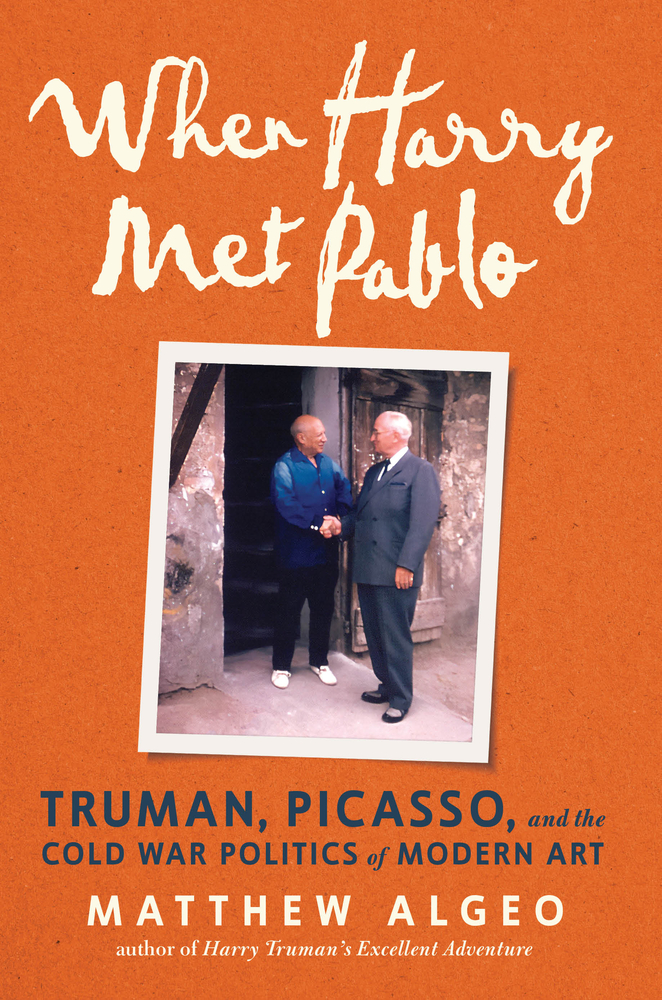 When Harry Met Pablo: Truman, Picasso, and the Cold War Politics of Modern Art by Matthew Algeo
My rating: 4 of 5 stars
In the great tug of war of existential beliefs, there’s always a point and counterpoint. But, it’s a universal law that everything changes with the passing of time. Maybe we soften or maybe we learn to live with opposing points of view. This is a story of how contradictory lives and beliefs co-exist and come together, at least briefly, in odd and unexpected ways.
A photo of Picasso shaking hands with Truman seemed to have been the perfect set piece for Algeo’s travel back in time to explore a hopeful period where stark contractions co-existed. It was clear. There was a good, bad and ugly. But, in the post World War II era everything was re-aligning in art, music and politics.
Their 1958 meeting occurred during the cold war after one of the most violent and consequential periods known to man. Truman, a popular democratic everyman, used his might to win a war by unrepentantly authorizing the killing of millions to justify the end. Picasso, on the other hand, was a famous recluse artist who promoted peace and was an unrepentant communist. They were polar opposites in almost every way. If a photo is worth a thousand words this one was worth a thousand questions,
When Harry Meets Pablo provides an intriguing history of how the definition of art was changing in the mid 1900’s. The first half of the book paints a picture of how America was reacting to the awakening of a new form of “modern art” exemplified by Picasso and other European artists. The book discusses how the new art form was received and nurtured by creating such institutions as MoMA. Special gallery events and even a traveling show were promoted to allow the public to experience the new form of art. Even the government promoted a cultural awakening to art through the Advancing American Art program.
At the time of the “red scare”, a relatively unknown, but deeply conservative, Republican Michigan congressman named George A. Dondero played an outsized role in stopping government art programs, much as was played out in the McCarthy hearings at the time. He declared modern art an infiltration of communism and blacklisted many artists as communist sympathizers – even though communist dictators like Stalin would have nothing to do with it.
Slowly, in America, the existing convention of realistic art gave way to an acceptance of the modern style by the middle of the century. But not everyone agreed that this was “art”. Truman, for one, often called it “ham and eggs” art disparaging the skill and impact it had. He was not alone. But at least Harry appreciated the difference of opinion and fought for an artist’s freedom of expression.
The second half of the book offers a unique look at a world attempting to regain its post-war balance. After his presidency, Truman planned to slip away to his Missouri home from Washington on a public train and once again lead a normal civilian life. Harry soon learned that the public was still interested in his life and thoughts. He was chased down by fans and the press everywhere he went.
Sam Rosenman, an ex-judge and close advisor to Franklin Roosevelt helped create the New Deal strategy. He was to continue to become a “consiglieri” to Harry while he was president. He and his wife Dorothy became close personal friends with Harry and Bess. Sam’s law partner Ralph Colin, a well-known collector of modern art and trustee at MoMA, educated Sam on the new modern style. Soon, Rosenman and Truman were two friends with at least one contrary point of view – “What is art”?
Truman asked Rosenman and his wife Dorothy to join him and Bess on a European vacation in mid-1958. The cross-Atlantic voyage by ship would take them to ports in Italy and eventually Cannes in France. Coincidentally, Picasso’s home was in Vallauris, in the hills above Cannes
A plot for a meeting was apparently hatched clandestinely by Alfred Barr, founder and chief executive of MoMA who had helped Picasso gain recognition in America and wanted to promote modern art. Truman a family man of modest means was to meet Picasso, a rich and famous womanizer at Picasso’s home. No doubt Sam Rosenman also had a hand in arranging the meeting. But how was that to be done when the two men, in the twilight of their careers, seemed to have nothing in common except their age?
Here’s where the story becomes hazy as Picasso, famously a recluse, graciously agrees to meet with Truman at his Villa La Californie for the day. The Truman’s and Rosenman’s spend most of the day together with Picasso graciously showing them around his studio and nearby town famous for his pottery. There is no real reporting of what transpired between them but photos seem to reveal a cordial if not enjoyable visit. We see photos and speculate what that day might have been. The rest is up to our imagination.
The meeting made a small story buried in the news, as other world events stole the limelight. We don’t know if the meeting made an impact on anyone. Perhaps it just was a courteous and friendly call or maybe a sign that time had soften the difference between different points of view. Not knowing the details, leaves the reader with unanswered questions of what might have happened when opposites come together.
View all my reviews
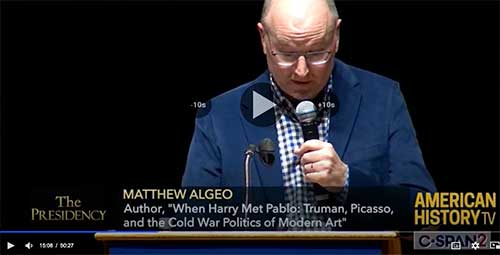
Click below for Matt Algeo’s entertaining November 2022 book presentation at the Harry S. Truman library via CSPAN.

 My Plan C